
Browse by Genre
Industrial Music / Industrial Metal / Aggro Industrial / Electro Metal
Industrial Noise / Power Noise / Harsh Noise
Synth Pop / Electro Pop / Synth-Electronica
Techno / Trance / Goa / Drum'n'Bass / Jungle / Tribal / Trip-Hop
Ambient / Electronica / Ethereal / Dub / Soundscapes / Abstract
Experimental / Avantgarde / Weird & Wired / Glitch / Noise / Field Recording
Dark / Gothic / Wave / New Wave / Dark Wave / Industrial Gothic
New Music / Downtown / Avantgarde Jazz / New Classical / World
Search Reviews
Music Reviews
Egil Kalman: Forest of Tines: Egil Kalman Plays the Buchla 200

Artist: Egil Kalman (@)
Title: Forest of Tines: Egil Kalman Plays the Buchla 200
Format: 12" x 2
Label: iDEAL
Rated:

Title: Forest of Tines: Egil Kalman Plays the Buchla 200
Format: 12" x 2
Label: iDEAL
Rated:
Egil Kalman’s "Forest of Tines" - one of releases that I missed, after getting buried by a plenty of promo releases - isn’t so much an album as it is a sonic séance, a chance to commune with the spirit of Don Buchla and the ghostly echoes of the EMS studios in Stockholm. If you're looking for something that will gently accompany your morning coffee, this isn't it. Kalman’s follow-up to his "Kingdom of Bells" feels more like the soundtrack to a David Lynch fever dream, conjured from the depths of a modular labyrinth where time and space seem to fold in on themselves.
Let’s start with the Buchla 200, the storied beast of an instrument that dominates this album. For the uninitiated, the Buchla 200 is not your everyday synth — it’s an analog behemoth with a will of its own, and Kalman, rather than taming it, seems content to let it run wild. You can almost hear the Buchla’s circuits sighing with relief as they’re finally given the freedom to stretch out after years of being cooped up in EMS's vaults. The result is a collection of tracks that oscillate between the hypnotic and the unsettling, with Kalman’s skillful touch guiding the machine through its paces without ever fully imposing his will on it.
“Diffused”, the album’s opener, eases you in gently, like stepping into a warm bath of just-tuned drones. But before you can get too comfortable, “Glint” follows with a flurry of pointillistic improvisations, each note like a sudden glimmer of light in a dark forest. Kalman’s approach here is meticulous, yet there’s an underlying spontaneity that keeps you on your toes. It’s as if he’s coaxing the Buchla into revealing its secrets one by one, but only when it’s good and ready.
And then there’s “Blageten”, a traditional Scandinavian folk tune that Kalman somehow manages to fit into this digital dystopia without it feeling out of place. It’s a brief but poignant reminder of Kalman’s roots, a glimpse of the past that’s quickly swallowed up by the towering trees of the "Forest of Tines". The title track, “Forest of Tines”, feels like the album’s dark heart — its oscillating tones and eerie reverb suggesting something ancient and untamable lurking just beneath the surface.
But the album isn’t all gloom and doom. There are moments of genuine beauty, like the shimmering “Autumn Leaves”, where the Buchla’s tones seem to hang in the air like the last rays of sunlight on a crisp fall evening. And then there’s “Dub One”, a track that nods to Kalman’s love of hypnotic ostinatos, its repetitive patterns slowly building into a kind of meditative trance.
Yet for all its sonic variety, "Forest of Tines" is a remarkably cohesive album, each track flowing into the next like chapters in a strange, otherworldly novel. Even the shorter pieces, like the minute-long “Electric Music Box pt. 1”, feel essential to the album’s narrative arc. Kalman’s decision to record everything live, without any overdubs, only adds to the album’s sense of immediacy. You can hear the Buchla in all its raw, untamed glory — no post-production tricks, no glossy veneer, just pure, unfiltered sound.
Comparisons could be drawn to the work of Morton Subotnick or Suzanne Ciani, both of whom have explored the Buchla’s unique sound world, but Kalman’s approach feels distinctly his own. There’s a deep reverence for the instrument’s history here, but also a willingness to push it into new and uncharted territories. Where Subotnick’s "Silver Apples of the Moon" was all about controlled chaos, Kalman seems more interested in the spaces between the notes, in the textures and tones that linger in the air like smoke after a fire.
But for all its technical prowess and avant-garde posturing, "Forest of Tines" is also an intensely emotional record. There’s a melancholic undertone that runs through the album, a sense of longing for something just out of reach. Tracks like “7th” and “From Stone” feel almost elegiac, their sparse melodies evoking a kind of deep, existential sadness that’s hard to shake.
And then there’s the final track, “Ocquet”, which closes the album on a note of quiet resignation. It’s a fitting end to a record that feels like a journey through a forest of sound, each track a different path leading deeper into the unknown. By the time the last notes fade away, you’re left with the sense that you’ve been somewhere strange and beautiful, a place that exists just on the edge of reality. Kalman has created something truly special here—a record that honors the legacy of the Buchla 200 while also forging its own path.
Let’s start with the Buchla 200, the storied beast of an instrument that dominates this album. For the uninitiated, the Buchla 200 is not your everyday synth — it’s an analog behemoth with a will of its own, and Kalman, rather than taming it, seems content to let it run wild. You can almost hear the Buchla’s circuits sighing with relief as they’re finally given the freedom to stretch out after years of being cooped up in EMS's vaults. The result is a collection of tracks that oscillate between the hypnotic and the unsettling, with Kalman’s skillful touch guiding the machine through its paces without ever fully imposing his will on it.
“Diffused”, the album’s opener, eases you in gently, like stepping into a warm bath of just-tuned drones. But before you can get too comfortable, “Glint” follows with a flurry of pointillistic improvisations, each note like a sudden glimmer of light in a dark forest. Kalman’s approach here is meticulous, yet there’s an underlying spontaneity that keeps you on your toes. It’s as if he’s coaxing the Buchla into revealing its secrets one by one, but only when it’s good and ready.
And then there’s “Blageten”, a traditional Scandinavian folk tune that Kalman somehow manages to fit into this digital dystopia without it feeling out of place. It’s a brief but poignant reminder of Kalman’s roots, a glimpse of the past that’s quickly swallowed up by the towering trees of the "Forest of Tines". The title track, “Forest of Tines”, feels like the album’s dark heart — its oscillating tones and eerie reverb suggesting something ancient and untamable lurking just beneath the surface.
But the album isn’t all gloom and doom. There are moments of genuine beauty, like the shimmering “Autumn Leaves”, where the Buchla’s tones seem to hang in the air like the last rays of sunlight on a crisp fall evening. And then there’s “Dub One”, a track that nods to Kalman’s love of hypnotic ostinatos, its repetitive patterns slowly building into a kind of meditative trance.
Yet for all its sonic variety, "Forest of Tines" is a remarkably cohesive album, each track flowing into the next like chapters in a strange, otherworldly novel. Even the shorter pieces, like the minute-long “Electric Music Box pt. 1”, feel essential to the album’s narrative arc. Kalman’s decision to record everything live, without any overdubs, only adds to the album’s sense of immediacy. You can hear the Buchla in all its raw, untamed glory — no post-production tricks, no glossy veneer, just pure, unfiltered sound.
Comparisons could be drawn to the work of Morton Subotnick or Suzanne Ciani, both of whom have explored the Buchla’s unique sound world, but Kalman’s approach feels distinctly his own. There’s a deep reverence for the instrument’s history here, but also a willingness to push it into new and uncharted territories. Where Subotnick’s "Silver Apples of the Moon" was all about controlled chaos, Kalman seems more interested in the spaces between the notes, in the textures and tones that linger in the air like smoke after a fire.
But for all its technical prowess and avant-garde posturing, "Forest of Tines" is also an intensely emotional record. There’s a melancholic undertone that runs through the album, a sense of longing for something just out of reach. Tracks like “7th” and “From Stone” feel almost elegiac, their sparse melodies evoking a kind of deep, existential sadness that’s hard to shake.
And then there’s the final track, “Ocquet”, which closes the album on a note of quiet resignation. It’s a fitting end to a record that feels like a journey through a forest of sound, each track a different path leading deeper into the unknown. By the time the last notes fade away, you’re left with the sense that you’ve been somewhere strange and beautiful, a place that exists just on the edge of reality. Kalman has created something truly special here—a record that honors the legacy of the Buchla 200 while also forging its own path.
Daniel Lentz: Lips

Artist: Daniel Lentz
Title: Lips
Format: Download Only (MP3 + Lossless)
Label: Unseen Worlds (@)
Rated:

Title: Lips
Format: Download Only (MP3 + Lossless)
Label: Unseen Worlds (@)
Rated:
Daniel Lentz’s "Lips" is the kind of album that sneaks up on you, wrapping itself around your senses like the lingering fog over a California coastline. It’s a compilation of works from 1965 to 1989, an era when Lentz was absorbing the sights, sounds, and cultures of California, much like a sponge left too long in the ocean. The results are a collection of pieces that simultaneously disorient and captivate, pushing the boundaries of what music can be—often frustratingly so, but always with purpose.
Right from the opening track, “North American Eclipse”, it’s clear that Lentz isn’t interested in holding your hand through this experience. This 20-minute epic, recorded in a Stockholm church of all places, draws from the ritual dances of the Seneca people, using vocal loops, bone rasps, and small bells to create a soundscape that feels like a disintegrating echo of a long-lost culture. Lentz’s fascination with fragmented phonemes takes center stage here, each syllable hanging in the air like a question mark, demanding to be answered but never quite resolving. The effect is both haunting and disorienting, like watching a solar eclipse through the eyes of someone who’s never seen the sun.
“Song(s) of the Sirens”, composed in 1973, is perhaps the most emblematic of Lentz’s style during this period. The piece captures the essence of his California years — looped vocals, broken texts, and a harmonic language that flirts with both the sensual and the surreal. Lentz sets fragments of Homer’s tale of Odysseus and the Sirens to music that feels as if it’s been plucked from the breeze off the Pacific. There’s a dreamy quality here, but it’s not the kind of dream you want to wake up from; rather, it’s one where you’re content to float along, letting the music’s layers wash over you like gentle waves. The clarinet melody that emerges toward the end ties everything together in a way that’s almost too neat for Lentz—but then again, maybe that’s the point. In Lentz’s world, even chaos has its own kind of order.
The real emotional gut punch comes with “Requiem, In Memoriam Wolfgang Stoerchle – Songs in a Medieval Manner”. This isn’t just a piece of music; it’s a eulogy for a friend, an exploration of grief wrapped in the sounds of wine glasses, kalimbas, and harps. Lentz eschews his usual loops here, opting instead for a more straightforward (for him) vocal arrangement that allows the personal nature of the tribute to shine through. It’s a deeply moving piece, one that highlights Lentz’s ability to channel raw emotion into something ethereal and otherworldly. The use of Latin texts from the Requiem Mass only adds to the sense of timelessness, as if Lentz is reaching back through history to find comfort in the rituals of the past.
Then there’s “Talk Radio”, a piece that feels as much a product of its time as it does a reflection of Lentz’s environment. Composed in 1989, near the end of Lentz’s Californian period, this track is a chaotic collage of the sounds of Los Angeles—AM radio chatter, freeway noise, and snippets of early music all thrown into the mix like ingredients in a particularly avant-garde stew. It’s a piece that captures the frenetic energy of LA’s highways, the kind of thing you’d expect to hear while stuck in traffic, scrolling through radio stations as the city’s smog settles in around you. There’s a certain brilliance to this chaos, a reflection of Lentz’s ability to find beauty in the most unlikely places.
But if "Lips" has a centerpiece, it’s “Uitoto”, a sprawling 25-minute piece inspired by the creation story of the Uitoto people of Colombia and Peru. This is Lentz at his most expansive, using layers of piano arpeggios to create a soundscape that’s as vast and unfathomable as the Pacific Ocean itself. The gradual shift in harmony, combined with the hypnotic repetition of the loops, gives the piece a sense of inevitability, as if the music is slowly drawing you back to some primordial state. The voice that enters halfway through is like a guide through this soundscape, reciting the creation story before dissolving into the very fabric of the music. It’s a stunning piece, one that encapsulates Lentz’s ability to blend the ancient with the modern, the concrete with the abstract.
But of course, "Lips" wouldn’t be complete without the oddball outlier that is “Fünke”. This 1965 piece, composed before Lentz’s Californian days, is a strange beast — part bebop, part serialism, with a dash of Stockhausen thrown in for good measure. It’s an early example of Lentz’s obsession with “music as becoming”, a piece that only reveals its true nature with its final note. In the context of the rest of the album, it feels like a glimpse into the mad scientist’s laboratory before he found his true calling. It’s a piece that stands apart from the rest of "Lips", yet somehow, it fits—a reminder that even in the most experimental of artists, certain tendencies are always there from the start.
In the end, "Lips" is an album that demands to be experienced rather than simply listened to. It’s a journey through Daniel Lentz’s world, one that’s as much about the people and landscapes of California as it is about the music itself. It’s not an easy journey — there are moments of disorientation, confusion, and even frustration — but for those willing to take the plunge, it’s one that’s richly rewarding. "Lips" is music in a state of becoming, constantly shifting and evolving, much like the landscape that inspired it. And in that sense, it’s a perfect encapsulation of Lentz’s artistic vision—chaotic, beautiful, and utterly unique.
Right from the opening track, “North American Eclipse”, it’s clear that Lentz isn’t interested in holding your hand through this experience. This 20-minute epic, recorded in a Stockholm church of all places, draws from the ritual dances of the Seneca people, using vocal loops, bone rasps, and small bells to create a soundscape that feels like a disintegrating echo of a long-lost culture. Lentz’s fascination with fragmented phonemes takes center stage here, each syllable hanging in the air like a question mark, demanding to be answered but never quite resolving. The effect is both haunting and disorienting, like watching a solar eclipse through the eyes of someone who’s never seen the sun.
“Song(s) of the Sirens”, composed in 1973, is perhaps the most emblematic of Lentz’s style during this period. The piece captures the essence of his California years — looped vocals, broken texts, and a harmonic language that flirts with both the sensual and the surreal. Lentz sets fragments of Homer’s tale of Odysseus and the Sirens to music that feels as if it’s been plucked from the breeze off the Pacific. There’s a dreamy quality here, but it’s not the kind of dream you want to wake up from; rather, it’s one where you’re content to float along, letting the music’s layers wash over you like gentle waves. The clarinet melody that emerges toward the end ties everything together in a way that’s almost too neat for Lentz—but then again, maybe that’s the point. In Lentz’s world, even chaos has its own kind of order.
The real emotional gut punch comes with “Requiem, In Memoriam Wolfgang Stoerchle – Songs in a Medieval Manner”. This isn’t just a piece of music; it’s a eulogy for a friend, an exploration of grief wrapped in the sounds of wine glasses, kalimbas, and harps. Lentz eschews his usual loops here, opting instead for a more straightforward (for him) vocal arrangement that allows the personal nature of the tribute to shine through. It’s a deeply moving piece, one that highlights Lentz’s ability to channel raw emotion into something ethereal and otherworldly. The use of Latin texts from the Requiem Mass only adds to the sense of timelessness, as if Lentz is reaching back through history to find comfort in the rituals of the past.
Then there’s “Talk Radio”, a piece that feels as much a product of its time as it does a reflection of Lentz’s environment. Composed in 1989, near the end of Lentz’s Californian period, this track is a chaotic collage of the sounds of Los Angeles—AM radio chatter, freeway noise, and snippets of early music all thrown into the mix like ingredients in a particularly avant-garde stew. It’s a piece that captures the frenetic energy of LA’s highways, the kind of thing you’d expect to hear while stuck in traffic, scrolling through radio stations as the city’s smog settles in around you. There’s a certain brilliance to this chaos, a reflection of Lentz’s ability to find beauty in the most unlikely places.
But if "Lips" has a centerpiece, it’s “Uitoto”, a sprawling 25-minute piece inspired by the creation story of the Uitoto people of Colombia and Peru. This is Lentz at his most expansive, using layers of piano arpeggios to create a soundscape that’s as vast and unfathomable as the Pacific Ocean itself. The gradual shift in harmony, combined with the hypnotic repetition of the loops, gives the piece a sense of inevitability, as if the music is slowly drawing you back to some primordial state. The voice that enters halfway through is like a guide through this soundscape, reciting the creation story before dissolving into the very fabric of the music. It’s a stunning piece, one that encapsulates Lentz’s ability to blend the ancient with the modern, the concrete with the abstract.
But of course, "Lips" wouldn’t be complete without the oddball outlier that is “Fünke”. This 1965 piece, composed before Lentz’s Californian days, is a strange beast — part bebop, part serialism, with a dash of Stockhausen thrown in for good measure. It’s an early example of Lentz’s obsession with “music as becoming”, a piece that only reveals its true nature with its final note. In the context of the rest of the album, it feels like a glimpse into the mad scientist’s laboratory before he found his true calling. It’s a piece that stands apart from the rest of "Lips", yet somehow, it fits—a reminder that even in the most experimental of artists, certain tendencies are always there from the start.
In the end, "Lips" is an album that demands to be experienced rather than simply listened to. It’s a journey through Daniel Lentz’s world, one that’s as much about the people and landscapes of California as it is about the music itself. It’s not an easy journey — there are moments of disorientation, confusion, and even frustration — but for those willing to take the plunge, it’s one that’s richly rewarding. "Lips" is music in a state of becoming, constantly shifting and evolving, much like the landscape that inspired it. And in that sense, it’s a perfect encapsulation of Lentz’s artistic vision—chaotic, beautiful, and utterly unique.
Black Decelerant: Reflections Vol. 2
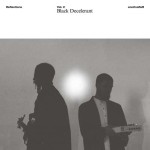
Here we are, diving into the swirling, meditative depths of "Reflections Vol. 2: Black Decelerant", an album that feels like the sonic equivalent of staring into the abyss — and finding the abyss staring right back. Khari Lucas (aka Contour) and Omari Jazz, the architects behind Black Decelerant, have gifted us with a work that’s as dense as it is delicate, as abstract as it is intentional. It’s an album that begs you to sit down, slow down, and confront some big questions — whether you want to or not.
Let’s not mince words here: this isn’t easy listening. But then again, what did you expect from a project that takes its name from an article about the intersection of Accelerationism and Black ontology? If you’re coming to "Reflections Vol. 2" looking for catchy hooks or toe-tapping rhythms, you’ve wandered into the wrong neighborhood. This is music for those who like their jazz served with a side of existential dread and a dash of ontological inquiry.
Take "two", the album’s first single and perhaps its most accessible track, if only because it’s the one that clocks in at a digestible two and a half minutes. Here, Jawwaad Taylor’s spectral trumpet improvisations float above a tundra of resonant signals and weathers, creating an eerie, otherworldly atmosphere that feels like it could dissolve at any moment. It’s a track that encapsulates the album’s ethos perfectly: a meditation on Black being and non-being, life and mourning, all wrapped up in a freeform jazz improvisation that somehow manages to be both disorienting and comforting.
But let’s not get too comfortable. The rest of the album takes you on a journey that’s as challenging as it is rewarding. Tracks like "one" and "three" unfold slowly, layering liquefied piano keys and bubbly bass lines over a bed of modulated soundscapes that feel both vast and intimate. It’s music that refuses to be rushed, demanding that you meet it on its own terms. And just when you think you’ve found your footing, along comes "seven 1/2", a brief, one-minute interlude that feels like a glimpse into some parallel universe where time has no meaning.
Lucas and Jazz have made it clear that this album was born out of a time of great existential stress, both personal and political. And it shows. "Reflections Vol. 2" is an album that grapples with some heavy themes — anti-Blackness, encroaching fascism, the very nature of existence itself — and yet, it never feels overwrought or self-indulgent. Instead, it’s a study in restraint, in using improvisation not as a way to show off, but as a means of exploration, of asking questions rather than providing answers.
Comparisons to other artists feel almost beside the point here, but if you must draw some lines, think of the spiritual jazz explorations of Pharoah Sanders, the ambient soundscapes of Brian Eno, or even the more esoteric corners of Sun Ra’s discography. But even these comparisons don’t quite capture what’s happening on "Reflections Vol. 2", because this is an album that exists very much in its own space, its own time — one that Lucas and Jazz have meticulously crafted for us to inhabit, even if only for a little while. They're maybe making in nu jazz territories what LTJ Bukem managed to do in the ones of drum'n'bass many years ago.
It’s worth noting, too, that this album is part of RVNG Intl.’s "Reflections" series, which is all about contemporary collaborations that push boundaries and challenge conventions. In that context, Black Decelerant fits right in, offering a work that’s both deeply rooted in tradition and utterly forward-thinking. This isn’t just music for the here and now; it’s music that’s reaching out towards some future we can’t quite see yet.
So, what’s the takeaway from "Reflections Vol. 2"? It’s not an album that’s going to give you easy answers, or even easy listening. But it is an album that’s going to make you think, make you feel, and maybe, just maybe, make you a little more aware of the world around you—and the worlds within you. And really, isn’t that what music is supposed to do? And in a world that’s increasingly obsessed with speed, with productivity, with doing more, there’s something radical, something almost revolutionary, about an album that asks you to slow down, to listen, and to reflect. "Reflections Vol. 2" is an invitation to do just that. Whether you accept it or not is up to you.
Let’s not mince words here: this isn’t easy listening. But then again, what did you expect from a project that takes its name from an article about the intersection of Accelerationism and Black ontology? If you’re coming to "Reflections Vol. 2" looking for catchy hooks or toe-tapping rhythms, you’ve wandered into the wrong neighborhood. This is music for those who like their jazz served with a side of existential dread and a dash of ontological inquiry.
Take "two", the album’s first single and perhaps its most accessible track, if only because it’s the one that clocks in at a digestible two and a half minutes. Here, Jawwaad Taylor’s spectral trumpet improvisations float above a tundra of resonant signals and weathers, creating an eerie, otherworldly atmosphere that feels like it could dissolve at any moment. It’s a track that encapsulates the album’s ethos perfectly: a meditation on Black being and non-being, life and mourning, all wrapped up in a freeform jazz improvisation that somehow manages to be both disorienting and comforting.
But let’s not get too comfortable. The rest of the album takes you on a journey that’s as challenging as it is rewarding. Tracks like "one" and "three" unfold slowly, layering liquefied piano keys and bubbly bass lines over a bed of modulated soundscapes that feel both vast and intimate. It’s music that refuses to be rushed, demanding that you meet it on its own terms. And just when you think you’ve found your footing, along comes "seven 1/2", a brief, one-minute interlude that feels like a glimpse into some parallel universe where time has no meaning.
Lucas and Jazz have made it clear that this album was born out of a time of great existential stress, both personal and political. And it shows. "Reflections Vol. 2" is an album that grapples with some heavy themes — anti-Blackness, encroaching fascism, the very nature of existence itself — and yet, it never feels overwrought or self-indulgent. Instead, it’s a study in restraint, in using improvisation not as a way to show off, but as a means of exploration, of asking questions rather than providing answers.
Comparisons to other artists feel almost beside the point here, but if you must draw some lines, think of the spiritual jazz explorations of Pharoah Sanders, the ambient soundscapes of Brian Eno, or even the more esoteric corners of Sun Ra’s discography. But even these comparisons don’t quite capture what’s happening on "Reflections Vol. 2", because this is an album that exists very much in its own space, its own time — one that Lucas and Jazz have meticulously crafted for us to inhabit, even if only for a little while. They're maybe making in nu jazz territories what LTJ Bukem managed to do in the ones of drum'n'bass many years ago.
It’s worth noting, too, that this album is part of RVNG Intl.’s "Reflections" series, which is all about contemporary collaborations that push boundaries and challenge conventions. In that context, Black Decelerant fits right in, offering a work that’s both deeply rooted in tradition and utterly forward-thinking. This isn’t just music for the here and now; it’s music that’s reaching out towards some future we can’t quite see yet.
So, what’s the takeaway from "Reflections Vol. 2"? It’s not an album that’s going to give you easy answers, or even easy listening. But it is an album that’s going to make you think, make you feel, and maybe, just maybe, make you a little more aware of the world around you—and the worlds within you. And really, isn’t that what music is supposed to do? And in a world that’s increasingly obsessed with speed, with productivity, with doing more, there’s something radical, something almost revolutionary, about an album that asks you to slow down, to listen, and to reflect. "Reflections Vol. 2" is an invitation to do just that. Whether you accept it or not is up to you.
Halo: In The Company Of No One
If ever there was an album that could make procrastination seem like a stroke of artistic genius, Halo’s "In The Company of No One" would be it. After more than a decade of lying dormant, this Berlin duo — Masha Qrella and Julia Kliemann — finally decided to dust off their hard drives, and thank goodness they did. The result? A collection of songs so effortlessly graceful, they make you wonder why we ever rush anything in life.
Halo, a name as ambiguous as it is fitting, could be a celestial ring of light or just the dark circles under your eyes after a sleepless night spent listening to this album on repeat. And much like its namesake, the music oscillates between light and shadow, a delicate balance of indie pop and electronic whispers that harks back to the indietronic sounds of the late '90s. Think New Order meets Stereolab, but with a Berlin twist that only Qrella and Kliemann could deliver.
The opener, "All the Years", feels like a reunion with an old friend — familiar yet tinged with the bittersweetness of lost time. The track’s lush, atmospheric production is both airy and grounded, with Qrella and Kliemann’s harmonizing voices weaving together like the threads of a well-worn sweater. It’s the kind of song that makes you want to stare out of a rainy window and contemplate every life choice you’ve ever made.
Then there’s "Cups & Laps", a track that takes the mundane—drinking coffee, sitting in a kitchen — and transforms it into something almost cinematic. This is the magic of Halo: their ability to take the microcosm of everyday life and infuse it with a sense of grandeur. There’s a touch of nostalgia here, but it’s never cloying. Instead, it’s a gentle reminder that beauty often lies in the simplest moments.
"Codeine" slows things down with a narcotic lull, its hypnotic beat and whispered vocals lulling you into a dreamlike state. But don’t get too comfortable — "Sunshine & Roses" jolts you back with its bright synths and infectious chorus, a burst of energy that feels like stepping out into the sun after days of rain. It’s this push and pull between introspection and exuberance that keeps the album dynamic, never settling into one mood for too long.
By the time you reach "Company of No One", the album’s centerpiece, you’re fully under Halo’s spell. This track is a masterclass in restraint—building slowly, layer by layer, until it reaches a crescendo that’s as cathartic as it is understated. It’s the kind of song that would have been a festival anthem in the early 2000s, had it been released back then. But here, in 2024, it feels like a quiet triumph, a testament to the enduring power of music that takes its time to reveal itself.
Closing out the album, "Bandaranaik" is a fitting finale — a sprawling, almost cinematic piece that leaves you with the sense that you’ve been on a journey, even if you haven’t moved from your chair. The track’s intricate production and sweeping melodies are a reminder that sometimes, the best things in life are worth the wait.
Comparisons to the likes of New Order, Stereolab, or even their own past projects like MINA and KOMËIT are inevitable, but Halo carves out a niche all their own. This isn’t just a throwback to the indietronic heyday; it’s a reimagining of what that sound can be, filtered through years of life experience and artistic growth. Qrella’s multi-instrumental prowess and Kliemann’s knack for melody combine to create an album that feels both timeless and timely, a rarity in an age of instant gratification.
But for all its brilliance, "In The Company of No One" is an album that grows with each listen, much like the relationship between its creators — a slow burn that, once ignited, is impossible to extinguish. Halo may have taken over a decade to get here, but with music this good, we can only hope it won’t take another ten years for their next release. Then again, if it does, we’ll be more than happy to wait.
Halo, a name as ambiguous as it is fitting, could be a celestial ring of light or just the dark circles under your eyes after a sleepless night spent listening to this album on repeat. And much like its namesake, the music oscillates between light and shadow, a delicate balance of indie pop and electronic whispers that harks back to the indietronic sounds of the late '90s. Think New Order meets Stereolab, but with a Berlin twist that only Qrella and Kliemann could deliver.
The opener, "All the Years", feels like a reunion with an old friend — familiar yet tinged with the bittersweetness of lost time. The track’s lush, atmospheric production is both airy and grounded, with Qrella and Kliemann’s harmonizing voices weaving together like the threads of a well-worn sweater. It’s the kind of song that makes you want to stare out of a rainy window and contemplate every life choice you’ve ever made.
Then there’s "Cups & Laps", a track that takes the mundane—drinking coffee, sitting in a kitchen — and transforms it into something almost cinematic. This is the magic of Halo: their ability to take the microcosm of everyday life and infuse it with a sense of grandeur. There’s a touch of nostalgia here, but it’s never cloying. Instead, it’s a gentle reminder that beauty often lies in the simplest moments.
"Codeine" slows things down with a narcotic lull, its hypnotic beat and whispered vocals lulling you into a dreamlike state. But don’t get too comfortable — "Sunshine & Roses" jolts you back with its bright synths and infectious chorus, a burst of energy that feels like stepping out into the sun after days of rain. It’s this push and pull between introspection and exuberance that keeps the album dynamic, never settling into one mood for too long.
By the time you reach "Company of No One", the album’s centerpiece, you’re fully under Halo’s spell. This track is a masterclass in restraint—building slowly, layer by layer, until it reaches a crescendo that’s as cathartic as it is understated. It’s the kind of song that would have been a festival anthem in the early 2000s, had it been released back then. But here, in 2024, it feels like a quiet triumph, a testament to the enduring power of music that takes its time to reveal itself.
Closing out the album, "Bandaranaik" is a fitting finale — a sprawling, almost cinematic piece that leaves you with the sense that you’ve been on a journey, even if you haven’t moved from your chair. The track’s intricate production and sweeping melodies are a reminder that sometimes, the best things in life are worth the wait.
Comparisons to the likes of New Order, Stereolab, or even their own past projects like MINA and KOMËIT are inevitable, but Halo carves out a niche all their own. This isn’t just a throwback to the indietronic heyday; it’s a reimagining of what that sound can be, filtered through years of life experience and artistic growth. Qrella’s multi-instrumental prowess and Kliemann’s knack for melody combine to create an album that feels both timeless and timely, a rarity in an age of instant gratification.
But for all its brilliance, "In The Company of No One" is an album that grows with each listen, much like the relationship between its creators — a slow burn that, once ignited, is impossible to extinguish. Halo may have taken over a decade to get here, but with music this good, we can only hope it won’t take another ten years for their next release. Then again, if it does, we’ll be more than happy to wait.
PC Nackt: Der Einzige Und Sein Eigentum

PC Nackt’s latest offering, "Der Einzige Und Sein Eigentum", arrives with all the subtlety of a marching band at a library — if that band were composed of pianos, voices, and percussion instruments orchestrating a symphony of postgenre perplexity. Released on July 5th, 2024, under the auspices of Naked Records, this album promises to be an audial journey that oscillates between the intimate and the abstract, challenging listeners to redefine their perceptions of music and meaning.
From the outset, the liner notes set an ambitious tone, describing the music as a "memory of an experience, a dream, open to speculation". One might expect a collection of ethereal soundscapes that gently caress the senses, but PC Nackt, ever the provocateur, invites us to "strip the lion skin off the donkey" and celebrate the "fertilising harmony of chaos". Intriguing, if not slightly bewildering — a fitting introduction to an album that refuses to be easily categorized.
The album kicks off with "Der Einzige Und Sein Eigentum A", a sprawling 20-minute opus that could easily be mistaken for a modern art installation rather than a musical composition. Here, PC Nackt deftly combines piano, vocals, and percussion, weaving them into a tapestry that is as thought-provoking as it is sonically rich. The track rewards the attentive listeners with layers of complexity that unfold like the petals of a nocturnal bloom.
As the album progresses, tracks like "Lass Es Sein" and "Jetzt Und Hier" showcase PC Nackt's ability to balance minimalist composition with emotional depth. The piano melodies are both haunting and soothing, each note carefully chosen to evoke a sense of nostalgia and introspection. Vocals, provided by Chérie on "Jetzt Und Hier", add an even gentler touch, their ethereal quality blending seamlessly with the instrumental backdrop.
The album's structure is both deliberate and disorienting, with tracks like "Kristall" and "Falling In Love" offering brief yet impactful interludes that punctuate the longer compositions. These shorter pieces serve as palate cleansers, allowing listeners to reset their expectations before delving back into the album’s more immersive soundscapes.
One cannot discuss "Der Einzige Und Sein Eigentum" without addressing its theatrical roots. As the soundtrack for Sebastian Hartmann's production at Deutsches Theater Berlin, the music inherently carries a narrative weight. Yet, PC Nackt manages to transcend its origins, crafting compositions that stand alone as personal statements rather than mere accompaniments to a visual experience. This duality is both a strength and a challenge, as the album demands engagement on multiple levels — both as a listener and as an observer of its theatrical counterpart.
Comparatively, PC Nackt sits comfortably alongside artists like Max Richter and Nils Frahm, who similarly explore the intersections of classical instrumentation and modern sensibilities. However, PC Nackt distinguishes himself through his unabashed embrace of chaos and structure, often within the same track. This approach creates a dynamic tension that keeps the listener perpetually on edge, never quite knowing what to expect next.
The production quality is remarkable, a testament to PC Nackt’s extensive experience in both studio recording and live performance. Recorded by Tilman Hopf at Chez Chérie Berlin and mastered by Gogo Engst, the album boasts a clarity and depth that allows every nuance to shine. The interplay between instruments is crisp, each element occupying its own space within the sonic landscape without ever overshadowing the others.
Yet, for all its brilliance, "Der Einzige Und Sein Eigentum" is not without its quirks. Some tracks linger in the realm of the esoteric, challenging listeners to find meaning in their abstract arrangements. It is an album that defies easy categorization, blending elements of postgenre, piano music, and vocal experimentation into a cohesive yet fragmented whole. While its ironic complexities and choosy intricacies may alienate some, those willing to engage deeply will find a richly rewarding experience that resonates on both emotional and intellectual levels.
From the outset, the liner notes set an ambitious tone, describing the music as a "memory of an experience, a dream, open to speculation". One might expect a collection of ethereal soundscapes that gently caress the senses, but PC Nackt, ever the provocateur, invites us to "strip the lion skin off the donkey" and celebrate the "fertilising harmony of chaos". Intriguing, if not slightly bewildering — a fitting introduction to an album that refuses to be easily categorized.
The album kicks off with "Der Einzige Und Sein Eigentum A", a sprawling 20-minute opus that could easily be mistaken for a modern art installation rather than a musical composition. Here, PC Nackt deftly combines piano, vocals, and percussion, weaving them into a tapestry that is as thought-provoking as it is sonically rich. The track rewards the attentive listeners with layers of complexity that unfold like the petals of a nocturnal bloom.
As the album progresses, tracks like "Lass Es Sein" and "Jetzt Und Hier" showcase PC Nackt's ability to balance minimalist composition with emotional depth. The piano melodies are both haunting and soothing, each note carefully chosen to evoke a sense of nostalgia and introspection. Vocals, provided by Chérie on "Jetzt Und Hier", add an even gentler touch, their ethereal quality blending seamlessly with the instrumental backdrop.
The album's structure is both deliberate and disorienting, with tracks like "Kristall" and "Falling In Love" offering brief yet impactful interludes that punctuate the longer compositions. These shorter pieces serve as palate cleansers, allowing listeners to reset their expectations before delving back into the album’s more immersive soundscapes.
One cannot discuss "Der Einzige Und Sein Eigentum" without addressing its theatrical roots. As the soundtrack for Sebastian Hartmann's production at Deutsches Theater Berlin, the music inherently carries a narrative weight. Yet, PC Nackt manages to transcend its origins, crafting compositions that stand alone as personal statements rather than mere accompaniments to a visual experience. This duality is both a strength and a challenge, as the album demands engagement on multiple levels — both as a listener and as an observer of its theatrical counterpart.
Comparatively, PC Nackt sits comfortably alongside artists like Max Richter and Nils Frahm, who similarly explore the intersections of classical instrumentation and modern sensibilities. However, PC Nackt distinguishes himself through his unabashed embrace of chaos and structure, often within the same track. This approach creates a dynamic tension that keeps the listener perpetually on edge, never quite knowing what to expect next.
The production quality is remarkable, a testament to PC Nackt’s extensive experience in both studio recording and live performance. Recorded by Tilman Hopf at Chez Chérie Berlin and mastered by Gogo Engst, the album boasts a clarity and depth that allows every nuance to shine. The interplay between instruments is crisp, each element occupying its own space within the sonic landscape without ever overshadowing the others.
Yet, for all its brilliance, "Der Einzige Und Sein Eigentum" is not without its quirks. Some tracks linger in the realm of the esoteric, challenging listeners to find meaning in their abstract arrangements. It is an album that defies easy categorization, blending elements of postgenre, piano music, and vocal experimentation into a cohesive yet fragmented whole. While its ironic complexities and choosy intricacies may alienate some, those willing to engage deeply will find a richly rewarding experience that resonates on both emotional and intellectual levels.