
Wednesday, June 17, 2026
Browse by Genre
Industrial Music / Industrial Metal / Aggro Industrial / Electro Metal
Industrial Noise / Power Noise / Harsh Noise
Synth Pop / Electro Pop / Synth-Electronica
Techno / Trance / Goa / Drum'n'Bass / Jungle / Tribal / Trip-Hop
Ambient / Electronica / Ethereal / Dub / Soundscapes / Abstract
Experimental / Avantgarde / Weird & Wired / Glitch / Noise / Field Recording
Dark / Gothic / Wave / New Wave / Dark Wave / Industrial Gothic
New Music / Downtown / Avantgarde Jazz / New Classical / World
Search Reviews
Music Reviews
?jeRum: Cut Paper Flowers

There’s something deeply unsettling about the way øjeRum's "Cut Paper Flowers" refuses to stay in one place. Like a flower that seems almost real but crumbles into paper dust when touched, this album is both captivating and disorienting — a collection of soundscapes that feel both organic and artificial, natural yet not quite of this world.
Danish artist Paw Grabowski, who records under the moniker øjeRum, has a knack for creating these kinds of sonic paradoxes. With a discography that spans numerous labels and includes releases on esteemed imprints like Room40, Quiet Details, and LINE, øjeRum has established himself as a master of minimal, emotive, and deeply textural music. "Cut Paper Flowers", his latest release on LINE, continues this exploration with four pieces that are as hypnotic as they are haunting.
The album opens with "Coreless Whisper", an eight-minute meditation that feels like the sonic equivalent of walking through a garden at dusk. The sounds here are delicate and airy, like leaves rustling in a gentle breeze, but there’s a weight to the composition that suggests something more ominous lurking beneath the surface. Acoustic elements blend seamlessly with electronic textures, creating a soundscape that’s both familiar and alien. It’s a track that lulls you into a false sense of security, only to leave you with a lingering sense of unease.
This unease continues with "Sine Garden", the album’s 15-minute centerpiece. Here, øjeRum crafts a dreamlike landscape where sine waves flutter like insects, hovering over a bed of lush, vegetative sounds. There’s an almost hypnotic quality to the way the track unfolds, with its cyclical motifs and slow, deliberate pacing. But as you’re drawn deeper into the garden, you start to notice the cracks in the facade — the dissonant tones that disrupt the tranquility, the moments of silence that feel more like voids than pauses. It’s a track that invites you to lose yourself in its beauty, only to remind you that you’re never truly safe.
"Wound Flower" takes this sense of unease even further. At nearly 17 minutes, it’s the longest track on the album, and also the most disorienting. The title alone suggests something that’s both beautiful and broken, and the music reflects this duality. The piece begins with a gentle, almost comforting melody, but it quickly devolves into something more fragmented and chaotic. The sounds here are jagged and abrasive, like petals torn from a flower, yet there’s still a sense of fragility that makes the track impossible to turn away from. It’s as if øjeRum is challenging you to find beauty in the brokenness, to see the flower even as it wilts.
The album closes with "A Shiver in the Reeds", a track that feels like the calm after a storm. The sounds here are more subdued, more reflective, but there’s still a tension that lingers, a sense that something has been lost. The track is a fitting end to an album that’s all about contrasts — tranquility and unrest, organic and artificial, beauty and decay. It leaves you with more questions than answers, but maybe that’s the point. In a world where everything is so neatly categorized, "Cut Paper Flowers" is a reminder that some things are better left undefined.
Comparisons to other LINE artists like William Basinski and Triac are inevitable, but øjeRum’s work feels more visceral, more grounded in the physical world. There’s a tactile quality to his music, as if you can almost reach out and touch the sounds, feel the paper petals crumbling between your fingers. It’s music that’s meant to be experienced, not just heard—a sonic journey through a garden that’s both real and imagined, where the flowers are made of organs and paper, and the air is thick with the hum of sine waves.
In "Cut Paper Flowers", øjeRum has created an album that’s as enigmatic as it is beautiful, a work of art that challenges you to look beyond the surface and find the hidden meanings within. It’s an album that lingers long after the last note has faded, like the scent of flowers in a garden that you can never quite find your way back to.
Danish artist Paw Grabowski, who records under the moniker øjeRum, has a knack for creating these kinds of sonic paradoxes. With a discography that spans numerous labels and includes releases on esteemed imprints like Room40, Quiet Details, and LINE, øjeRum has established himself as a master of minimal, emotive, and deeply textural music. "Cut Paper Flowers", his latest release on LINE, continues this exploration with four pieces that are as hypnotic as they are haunting.
The album opens with "Coreless Whisper", an eight-minute meditation that feels like the sonic equivalent of walking through a garden at dusk. The sounds here are delicate and airy, like leaves rustling in a gentle breeze, but there’s a weight to the composition that suggests something more ominous lurking beneath the surface. Acoustic elements blend seamlessly with electronic textures, creating a soundscape that’s both familiar and alien. It’s a track that lulls you into a false sense of security, only to leave you with a lingering sense of unease.
This unease continues with "Sine Garden", the album’s 15-minute centerpiece. Here, øjeRum crafts a dreamlike landscape where sine waves flutter like insects, hovering over a bed of lush, vegetative sounds. There’s an almost hypnotic quality to the way the track unfolds, with its cyclical motifs and slow, deliberate pacing. But as you’re drawn deeper into the garden, you start to notice the cracks in the facade — the dissonant tones that disrupt the tranquility, the moments of silence that feel more like voids than pauses. It’s a track that invites you to lose yourself in its beauty, only to remind you that you’re never truly safe.
"Wound Flower" takes this sense of unease even further. At nearly 17 minutes, it’s the longest track on the album, and also the most disorienting. The title alone suggests something that’s both beautiful and broken, and the music reflects this duality. The piece begins with a gentle, almost comforting melody, but it quickly devolves into something more fragmented and chaotic. The sounds here are jagged and abrasive, like petals torn from a flower, yet there’s still a sense of fragility that makes the track impossible to turn away from. It’s as if øjeRum is challenging you to find beauty in the brokenness, to see the flower even as it wilts.
The album closes with "A Shiver in the Reeds", a track that feels like the calm after a storm. The sounds here are more subdued, more reflective, but there’s still a tension that lingers, a sense that something has been lost. The track is a fitting end to an album that’s all about contrasts — tranquility and unrest, organic and artificial, beauty and decay. It leaves you with more questions than answers, but maybe that’s the point. In a world where everything is so neatly categorized, "Cut Paper Flowers" is a reminder that some things are better left undefined.
Comparisons to other LINE artists like William Basinski and Triac are inevitable, but øjeRum’s work feels more visceral, more grounded in the physical world. There’s a tactile quality to his music, as if you can almost reach out and touch the sounds, feel the paper petals crumbling between your fingers. It’s music that’s meant to be experienced, not just heard—a sonic journey through a garden that’s both real and imagined, where the flowers are made of organs and paper, and the air is thick with the hum of sine waves.
In "Cut Paper Flowers", øjeRum has created an album that’s as enigmatic as it is beautiful, a work of art that challenges you to look beyond the surface and find the hidden meanings within. It’s an album that lingers long after the last note has faded, like the scent of flowers in a garden that you can never quite find your way back to.
France Jobin + Yamil Rezc: Un dia en Mexico

Artist: France Jobin + Yamil Rezc (@)
Title: Un dia en Mexico
Format: Download Only (MP3 + Lossless)
Label: Line (@)
Rated:


Title: Un dia en Mexico
Format: Download Only (MP3 + Lossless)
Label: Line (@)
Rated:
In an age where musical collaborations often feel more like marketing strategies than genuine creative exchanges, "Un día en México" by France Jobin and Yamil Rezc stands out as an authentic meeting of minds. This three-track album is the product of a chance connection and an impromptu day of music-making in Mexico City — a day that has been distilled into 43 minutes of beautifully crafted soundscapes.
The genesis of this album is as serendipitous as the music itself. Jobin, a Montreal-based sound artist with a penchant for minimalist audio environments, discovered Rezc’s work while preparing for a residency in Mexico. Struck by the soundtrack he composed for the Mexican-American series "El Candidato", she reached out to Rezc without expecting a reply. But reply he did, and this led to their first meeting in Mexico City in April 2022. As they wandered along La Reforma, they recorded the ambient sounds of the city — a foreshadowing of the deeply atmospheric album that would eventually emerge from their collaboration.
The opening track, "La Reforma", named after Mexico City’s famous boulevard, is a fitting introduction. At just over nine minutes, it’s a meditative stroll through urban soundscapes, where the organic and synthetic merge seamlessly. Jobin’s minimalist approach, known for her ability to create “sound-sculptures,” is on full display here, with layers of analog drones punctuated by the everyday noises of the city. The track feels like a sonic map, guiding you through the hustle and bustle while offering a sense of detachment, as if you’re observing the city from a distance. Rezc’s influence can be heard in the subtle melodic undertones that add a touch of warmth and humanity to what might otherwise be a cold, sterile soundscape.
Then there’s "El Lago", the album’s sprawling 29-minute centerpiece. Recorded at Casa Del Lago in Chapultepec Park, this track is less a piece of music and more an immersive experience. It’s a slow, deliberate exploration of space and time, with Jobin and Rezc using a wide range of synthesizers—Prophet 5, arp2600, Lyra, and more—to create an evolving, almost liquid soundscape. The field recordings they captured during their stroll are woven into the mix, grounding the track in a specific place while allowing the listener’s mind to drift elsewhere. The Buchla 200 and Serge modular systems add an extra layer of depth and complexity, turning the piece into a labyrinth of sound that invites repeated exploration. It’s a track that rewards patience, demanding that you lose yourself in its ebb and flow.
The album concludes with "Cómo llego aquí?", a brief but poignant five-minute piece that translates to “How did I get here?”. The title is both a literal and metaphorical question, encapsulating the sense of disorientation that comes at the end of a long journey—whether that journey is a day spent wandering Mexico City or a lifetime of experiences leading to an unexpected collaboration. Musically, the track is the most abstract of the three, with fragmented melodies and dissonant tones that create a sense of unease. The use of the SYNTRX and Monopoly synths adds to this feeling, creating a soundscape that feels simultaneously familiar and alien. It’s a fitting end to an album that constantly blurs the line between the known and the unknown, the concrete and the abstract.
"Un día en México" is a masterclass in subtlety and restraint. Both Jobin and Rezc bring their own unique sensibilities to the table — Jobin’s minimalist sound art and Rezc’s cinematic compositions — yet the album never feels like a clash of styles. Instead, it’s a seamless blend, a true collaboration where each artist’s strengths are amplified by the other. The field recordings, captured during their day together, are not just background noise but integral components of the music, adding layers of context and meaning to each track.
While the album’s minimalist approach and lengthy compositions may not appeal to everyone, those willing to engage deeply with the music will find it richly rewarding. "Un día en México" is not just a snapshot of a day in the life of two artists; it’s a meditation on place, memory, and the unexpected connections that can arise from a single moment of curiosity.
The genesis of this album is as serendipitous as the music itself. Jobin, a Montreal-based sound artist with a penchant for minimalist audio environments, discovered Rezc’s work while preparing for a residency in Mexico. Struck by the soundtrack he composed for the Mexican-American series "El Candidato", she reached out to Rezc without expecting a reply. But reply he did, and this led to their first meeting in Mexico City in April 2022. As they wandered along La Reforma, they recorded the ambient sounds of the city — a foreshadowing of the deeply atmospheric album that would eventually emerge from their collaboration.
The opening track, "La Reforma", named after Mexico City’s famous boulevard, is a fitting introduction. At just over nine minutes, it’s a meditative stroll through urban soundscapes, where the organic and synthetic merge seamlessly. Jobin’s minimalist approach, known for her ability to create “sound-sculptures,” is on full display here, with layers of analog drones punctuated by the everyday noises of the city. The track feels like a sonic map, guiding you through the hustle and bustle while offering a sense of detachment, as if you’re observing the city from a distance. Rezc’s influence can be heard in the subtle melodic undertones that add a touch of warmth and humanity to what might otherwise be a cold, sterile soundscape.
Then there’s "El Lago", the album’s sprawling 29-minute centerpiece. Recorded at Casa Del Lago in Chapultepec Park, this track is less a piece of music and more an immersive experience. It’s a slow, deliberate exploration of space and time, with Jobin and Rezc using a wide range of synthesizers—Prophet 5, arp2600, Lyra, and more—to create an evolving, almost liquid soundscape. The field recordings they captured during their stroll are woven into the mix, grounding the track in a specific place while allowing the listener’s mind to drift elsewhere. The Buchla 200 and Serge modular systems add an extra layer of depth and complexity, turning the piece into a labyrinth of sound that invites repeated exploration. It’s a track that rewards patience, demanding that you lose yourself in its ebb and flow.
The album concludes with "Cómo llego aquí?", a brief but poignant five-minute piece that translates to “How did I get here?”. The title is both a literal and metaphorical question, encapsulating the sense of disorientation that comes at the end of a long journey—whether that journey is a day spent wandering Mexico City or a lifetime of experiences leading to an unexpected collaboration. Musically, the track is the most abstract of the three, with fragmented melodies and dissonant tones that create a sense of unease. The use of the SYNTRX and Monopoly synths adds to this feeling, creating a soundscape that feels simultaneously familiar and alien. It’s a fitting end to an album that constantly blurs the line between the known and the unknown, the concrete and the abstract.
"Un día en México" is a masterclass in subtlety and restraint. Both Jobin and Rezc bring their own unique sensibilities to the table — Jobin’s minimalist sound art and Rezc’s cinematic compositions — yet the album never feels like a clash of styles. Instead, it’s a seamless blend, a true collaboration where each artist’s strengths are amplified by the other. The field recordings, captured during their day together, are not just background noise but integral components of the music, adding layers of context and meaning to each track.
While the album’s minimalist approach and lengthy compositions may not appeal to everyone, those willing to engage deeply with the music will find it richly rewarding. "Un día en México" is not just a snapshot of a day in the life of two artists; it’s a meditation on place, memory, and the unexpected connections that can arise from a single moment of curiosity.
Soloi Sounds: Saiha

Enter Soloi Sounds, the Tokyo-based ambient project helmed by Yosuke Goto. With "Saiha", Soloi Sounds ventures into a cultural paradox, confronting the artificiality embedded within modern Japanese identity. It’s a theme that many might gloss over, but for Goto, it’s the wave he rides, and boy, does he surf it well — albeit on a very strange, makeshift board.
Let’s get something straight from the outset: "Saiha" is not your typical ambient album. It’s a carefully curated experiment, a cultural and sonic collage that pulls together the Taishogoto — a bizarre chimera of a koto and a typewriter — and the environmental sounds of Japan’s diverse landscapes. If that sounds too niche or cerebral, worry not. This is an album that offers as much intellectual stimulation as it does emotional resonance, and it will likely leave you pondering what it means to exist in a world that is perpetually borrowing from itself.
The Taishogoto, with its metallic strings and clunky keys, feels like an apt metaphor for the theme Goto seeks to explore. The instrument is a product of Japan’s early 20th-century desire to fuse Western and Japanese musical traditions, yet it has the distinct sound of something that’s trying very hard to be something else. In the hands of Goto, it’s less about what the instrument could be and more about what it’s not — a statement on the artificiality of cultural amalgamation, perhaps, or just a musician delighting in the absurdity of his chosen tool. Either way, it’s an instrument that plays beautifully into the album’s narrative.
The album kicks off with "Hako", a track that feels like a microcosm of Goto’s broader thesis. The Taishogoto’s jangly, almost hesitant notes float over a bed of subtle field recordings — sounds that could be anything from distant traffic to the rustling of leaves. It’s an introduction that doesn’t try to impress with grandeur but rather with intimacy, drawing you in closer to listen to the imperfections. And imperfections, as it turns out, are where "Saiha" really shines.
Take "Lesson", for example, a track that seems to revel in its own clumsiness. The Taishogoto’s awkward phrasing, paired with Goto’s minimalistic use of effects, gives the track an almost naïve charm. It’s as if you’re listening to someone trying to figure out how to play an instrument for the first time, and in that process, creating something unexpectedly beautiful. The track feels like a quiet rebellion against the polished perfection that so much of contemporary music strives for. Here, the missteps are the point.
"Dawn" is where the album takes a deeper turn, both literally and figuratively. At over 11 minutes long, it’s the album’s centerpiece, and it feels like the sonic equivalent of watching the sunrise over a sprawling metropolis. The Taishogoto here is less intrusive, allowing the ambient field recordings to take center stage. Goto creates a soundscape that feels both vast and intimate, as if you’re simultaneously standing on a mountaintop and sitting in a tiny room. It’s a track that lingers long after it ends, leaving you with a sense of both wonder and unease.
Then there’s "Shade", perhaps the album’s most contemplative piece. The title suggests a retreat from the light, and that’s exactly what the track delivers. It’s darker, more brooding, with the Taishogoto’s notes plucked slowly, deliberately, as if each one carries the weight of a decision made or a path not taken. The environmental sounds here are more subdued, creating an atmosphere that feels almost claustrophobic in its introspection.
The album concludes with "Hours", a track that seems to encapsulate the passing of time in its most languid form. There’s a sense of resignation here, as if Goto is finally allowing the waves to break over him, surrendering to the artificiality he’s been wrestling with throughout the album. The Taishogoto’s notes echo out into the void, unanswered, fading into the distance as the album comes to a close.
If there’s a criticism to be made, it’s that "Saiha" may be too thematically dense for its own good. Goto’s exploration of cultural artificiality is fascinating, but it’s not always accessible. The album requires multiple listens to fully appreciate, and even then, it might not resonate with everyone. But for those willing to dive in, "Saiha" offers a rewarding experience — a deep, thoughtful meditation on what it means to exist in a world that’s constantly borrowing from itself.
Let’s get something straight from the outset: "Saiha" is not your typical ambient album. It’s a carefully curated experiment, a cultural and sonic collage that pulls together the Taishogoto — a bizarre chimera of a koto and a typewriter — and the environmental sounds of Japan’s diverse landscapes. If that sounds too niche or cerebral, worry not. This is an album that offers as much intellectual stimulation as it does emotional resonance, and it will likely leave you pondering what it means to exist in a world that is perpetually borrowing from itself.
The Taishogoto, with its metallic strings and clunky keys, feels like an apt metaphor for the theme Goto seeks to explore. The instrument is a product of Japan’s early 20th-century desire to fuse Western and Japanese musical traditions, yet it has the distinct sound of something that’s trying very hard to be something else. In the hands of Goto, it’s less about what the instrument could be and more about what it’s not — a statement on the artificiality of cultural amalgamation, perhaps, or just a musician delighting in the absurdity of his chosen tool. Either way, it’s an instrument that plays beautifully into the album’s narrative.
The album kicks off with "Hako", a track that feels like a microcosm of Goto’s broader thesis. The Taishogoto’s jangly, almost hesitant notes float over a bed of subtle field recordings — sounds that could be anything from distant traffic to the rustling of leaves. It’s an introduction that doesn’t try to impress with grandeur but rather with intimacy, drawing you in closer to listen to the imperfections. And imperfections, as it turns out, are where "Saiha" really shines.
Take "Lesson", for example, a track that seems to revel in its own clumsiness. The Taishogoto’s awkward phrasing, paired with Goto’s minimalistic use of effects, gives the track an almost naïve charm. It’s as if you’re listening to someone trying to figure out how to play an instrument for the first time, and in that process, creating something unexpectedly beautiful. The track feels like a quiet rebellion against the polished perfection that so much of contemporary music strives for. Here, the missteps are the point.
"Dawn" is where the album takes a deeper turn, both literally and figuratively. At over 11 minutes long, it’s the album’s centerpiece, and it feels like the sonic equivalent of watching the sunrise over a sprawling metropolis. The Taishogoto here is less intrusive, allowing the ambient field recordings to take center stage. Goto creates a soundscape that feels both vast and intimate, as if you’re simultaneously standing on a mountaintop and sitting in a tiny room. It’s a track that lingers long after it ends, leaving you with a sense of both wonder and unease.
Then there’s "Shade", perhaps the album’s most contemplative piece. The title suggests a retreat from the light, and that’s exactly what the track delivers. It’s darker, more brooding, with the Taishogoto’s notes plucked slowly, deliberately, as if each one carries the weight of a decision made or a path not taken. The environmental sounds here are more subdued, creating an atmosphere that feels almost claustrophobic in its introspection.
The album concludes with "Hours", a track that seems to encapsulate the passing of time in its most languid form. There’s a sense of resignation here, as if Goto is finally allowing the waves to break over him, surrendering to the artificiality he’s been wrestling with throughout the album. The Taishogoto’s notes echo out into the void, unanswered, fading into the distance as the album comes to a close.
If there’s a criticism to be made, it’s that "Saiha" may be too thematically dense for its own good. Goto’s exploration of cultural artificiality is fascinating, but it’s not always accessible. The album requires multiple listens to fully appreciate, and even then, it might not resonate with everyone. But for those willing to dive in, "Saiha" offers a rewarding experience — a deep, thoughtful meditation on what it means to exist in a world that’s constantly borrowing from itself.
Sun Araw: Cetacean Sensation

Artist: Sun Araw (@)
Title: Cetacean Sensation
Format: Download Only (MP3 + Lossless)
Label: Discrepant (@)
Rated:
Title: Cetacean Sensation
Format: Download Only (MP3 + Lossless)
Label: Discrepant (@)
Rated:
Let’s start with the obvious: "Cetacean Sensation" is not your typical Sun Araw album. It’s an oceanic odyssey, a deep dive into the marine mysteries of the natural world, and it stands as one of Cameron Stallones’ most adventurous and challenging works to date. Crafted from hydrophone recordings of whales and dolphins, this album goes beyond mere ambient soundscapes—it’s a subaquatic experience that merges field recordings with digital synthesis to create something utterly unique.
If you’re coming into this expecting the warm, sun-soaked psych-rock vibes of "On Patrol" or the dub-infused explorations of "Ancient Romans", prepare to adjust your expectations. "Cetacean Sensation" is all about immersion, not in the shallow waters of relaxation but in the deep, dark currents of the ocean where sounds from the natural world are refracted and reinterpreted through Stallones’ singular vision.
From the very first track, "Beluga Spraymax", Stallones introduces us to his marine milieu. The title itself hints at a playful twist—imagine the graceful beluga whales with a splash of digital processing, creating a track that’s at once organic and synthetic. The hydrophone recordings of these whales aren’t just presented as they are; they’re transformed into textures that ebb and flow, pulling you into a world where aquatic life and electronic manipulation intertwine. The result is a track that feels both familiar and alien, a shimmering entry point into the album’s depths.
The title track, "Cetacean Sensation", does exactly what it says on the tin. This isn’t just a field recording of whale songs; it’s a reimagining of those songs, bent and stretched into new forms that challenge our perceptions of both the natural world and the digital tools used to manipulate it. Stallones doesn’t just want you to hear these cetacean calls — he wants you to feel them, to get lost in their otherworldly beauty. The track flows like water, its sounds morphing and shifting, evoking the sensation of being carried along by the ocean’s currents, with the occasional burst of cetacean communication surfacing above the waves.
"Dance of the Minke" brings a different flavor to the album. Here, Stallones introduces a distinctive ringing MIDI tone that seems almost out of place in this watery world, but somehow it works. The Minke whale is known for its curious nature, and this track seems to echo that inquisitiveness, with the MIDI tones dancing around the hydrophone recordings in a way that feels both playful and poignant. There’s a sense of nostalgia here, too — a callback to the early days of digital exploration, when the possibilities of technology were as uncharted as the ocean itself.
As we move deeper into the album, tracks like "Spider Crab Elegy" and "The Spider Crab Point" take us to the ocean floor, where the mood becomes more introspective. The spider crab, with its slow, deliberate movements and eerie appearance, serves as a fitting metaphor for the album’s closing moments. "Spider Crab Elegy" is a sparse, almost funereal piece, where the sounds of the ocean seem to mourn the loss of something unnamed, while "The Spider Crab Point" feels like a meditation on directionlessness, with synth tones wandering aimlessly like the crabs themselves.
Stallones masterfully uses these tracks to evoke not just the physical environment of the ocean, but the emotional resonance of its inhabitants. The hydrophone recordings, far from being merely documentary, are treated as raw material — processed, layered, and combined with digital synthesis to create soundscapes that are as much about feeling as they are about listening. These tracks aren’t just about the sounds of whales and crabs; they’re about the experience of being submerged in a world that’s vast, mysterious, and ultimately unknowable.
If you’re coming into this expecting the warm, sun-soaked psych-rock vibes of "On Patrol" or the dub-infused explorations of "Ancient Romans", prepare to adjust your expectations. "Cetacean Sensation" is all about immersion, not in the shallow waters of relaxation but in the deep, dark currents of the ocean where sounds from the natural world are refracted and reinterpreted through Stallones’ singular vision.
From the very first track, "Beluga Spraymax", Stallones introduces us to his marine milieu. The title itself hints at a playful twist—imagine the graceful beluga whales with a splash of digital processing, creating a track that’s at once organic and synthetic. The hydrophone recordings of these whales aren’t just presented as they are; they’re transformed into textures that ebb and flow, pulling you into a world where aquatic life and electronic manipulation intertwine. The result is a track that feels both familiar and alien, a shimmering entry point into the album’s depths.
The title track, "Cetacean Sensation", does exactly what it says on the tin. This isn’t just a field recording of whale songs; it’s a reimagining of those songs, bent and stretched into new forms that challenge our perceptions of both the natural world and the digital tools used to manipulate it. Stallones doesn’t just want you to hear these cetacean calls — he wants you to feel them, to get lost in their otherworldly beauty. The track flows like water, its sounds morphing and shifting, evoking the sensation of being carried along by the ocean’s currents, with the occasional burst of cetacean communication surfacing above the waves.
"Dance of the Minke" brings a different flavor to the album. Here, Stallones introduces a distinctive ringing MIDI tone that seems almost out of place in this watery world, but somehow it works. The Minke whale is known for its curious nature, and this track seems to echo that inquisitiveness, with the MIDI tones dancing around the hydrophone recordings in a way that feels both playful and poignant. There’s a sense of nostalgia here, too — a callback to the early days of digital exploration, when the possibilities of technology were as uncharted as the ocean itself.
As we move deeper into the album, tracks like "Spider Crab Elegy" and "The Spider Crab Point" take us to the ocean floor, where the mood becomes more introspective. The spider crab, with its slow, deliberate movements and eerie appearance, serves as a fitting metaphor for the album’s closing moments. "Spider Crab Elegy" is a sparse, almost funereal piece, where the sounds of the ocean seem to mourn the loss of something unnamed, while "The Spider Crab Point" feels like a meditation on directionlessness, with synth tones wandering aimlessly like the crabs themselves.
Stallones masterfully uses these tracks to evoke not just the physical environment of the ocean, but the emotional resonance of its inhabitants. The hydrophone recordings, far from being merely documentary, are treated as raw material — processed, layered, and combined with digital synthesis to create soundscapes that are as much about feeling as they are about listening. These tracks aren’t just about the sounds of whales and crabs; they’re about the experience of being submerged in a world that’s vast, mysterious, and ultimately unknowable.
Yorkshire Modular Society: Fiery the Angels Fell
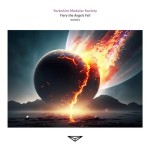
Artist: Yorkshire Modular Society
Title: Fiery the Angels Fell
Format: Download Only (MP3 + Lossless)
Label: Dragon's Eye Recordings (@)
Rated:
Title: Fiery the Angels Fell
Format: Download Only (MP3 + Lossless)
Label: Dragon's Eye Recordings (@)
Rated:
In the vast and often overcrowded galaxy of ambient music, where every droning synth pad risks becoming as forgettable as the next, Yorkshire Modular Society’s "Fiery the Angels Fell" lands like a meteor, searing through the dark with a defiant glow. Clocking in at just over an hour, this longform ambient piece is more than just a soundtrack for your existential dread — it’s a full-blown immersion into a neon-lit dystopia, drawing inspiration from the shadowy, rain-soaked worlds of "Blade Runner" and "Akira". But don’t let the references fool you; this isn’t just another homage to cyberpunk aesthetics. No, this album has a heartbeat, one that pulses with the deep, melancholic echoes of the human condition.
Let’s start with the title, "Fiery the Angels Fell". It’s not just a dramatic phrase plucked from "Blade Runner"'s Roy Batty; it’s a portent, a declaration that what you’re about to experience is more than just a piece of music — it’s a descent into the core of something hauntingly beautiful and deeply human. The piece unfurls slowly, like smoke curling from a dying fire, its textures layered with a patience that’s both frustrating and mesmerizing. And here lies the irony: in a genre that often prides itself on minimalism, "Fiery the Angels Fell" dares to be maximalist in its emotional scope.
As the piece begins, you might be tempted to think, “Oh, another ambient drone track, let me just settle in and zone out”. But hold on. This is not background music for your daily meditation or a sound bath for your chakras. Yorkshire Modular Society demands more from you. The slow-building oscillations are like whispers from a forgotten world, beckoning you deeper into a maze of sound. It’s as if the modular synths are alive, each modulation a conscious choice, each LFO a deliberate push into the unknown. This is music that asks you to lean in, to feel every shift and pulse.
The real genius of "Fiery the Angels Fell" lies in its use of space — or perhaps, the illusion of it. Reverb and delay are wielded like sonic architects, constructing towering structures of sound that feel both infinite and claustrophobic. It’s the sonic equivalent of walking through a decaying urban landscape, where every echo off the cold concrete walls tells a story of loss, of time passing, of lives lived and forgotten. And just when you think you’ve found your footing, the ground shifts beneath you. Time unravels and reconstitutes, pulling you further into the album’s hazy depths.
But for all its technical prowess, this album is deeply, almost painfully, personal. The music carries the weight of grief and loss, the kind that doesn’t scream but instead lingers, a constant companion that you’ve come to accept even as it breaks your heart. There’s a rawness here, a vulnerability that’s rare in electronic music. And it’s in this emotional honesty that Yorkshire Modular Society truly shines. This is not just an album for synth enthusiasts or ambient aficionados — this is an album for anyone who’s ever felt the sting of sorrow, the ache of nostalgia, or the quiet devastation of love lost.
Of course, this isn’t to say that "Fiery the Angels Fell" is without its challenges. The hour-long runtime might test the patience of listeners used to more conventional structures, and the absence of any distinct “tracks” might make it difficult to latch onto specific moments. But that’s the point, isn’t it? This is music that exists outside of time, outside of the usual confines of melody and rhythm. It’s a journey, one that you’re meant to experience in its entirety, without interruption.
So where does that leave us? In a world where music is often consumed in bite-sized chunks, where albums are picked apart for playlists, Yorkshire Modular Society has offered us something different — a sprawling, uncompromising work that asks for our full attention. And in return, it gives us a glimpse into a world that’s at once familiar and alien, beautiful and broken.
Let’s start with the title, "Fiery the Angels Fell". It’s not just a dramatic phrase plucked from "Blade Runner"'s Roy Batty; it’s a portent, a declaration that what you’re about to experience is more than just a piece of music — it’s a descent into the core of something hauntingly beautiful and deeply human. The piece unfurls slowly, like smoke curling from a dying fire, its textures layered with a patience that’s both frustrating and mesmerizing. And here lies the irony: in a genre that often prides itself on minimalism, "Fiery the Angels Fell" dares to be maximalist in its emotional scope.
As the piece begins, you might be tempted to think, “Oh, another ambient drone track, let me just settle in and zone out”. But hold on. This is not background music for your daily meditation or a sound bath for your chakras. Yorkshire Modular Society demands more from you. The slow-building oscillations are like whispers from a forgotten world, beckoning you deeper into a maze of sound. It’s as if the modular synths are alive, each modulation a conscious choice, each LFO a deliberate push into the unknown. This is music that asks you to lean in, to feel every shift and pulse.
The real genius of "Fiery the Angels Fell" lies in its use of space — or perhaps, the illusion of it. Reverb and delay are wielded like sonic architects, constructing towering structures of sound that feel both infinite and claustrophobic. It’s the sonic equivalent of walking through a decaying urban landscape, where every echo off the cold concrete walls tells a story of loss, of time passing, of lives lived and forgotten. And just when you think you’ve found your footing, the ground shifts beneath you. Time unravels and reconstitutes, pulling you further into the album’s hazy depths.
But for all its technical prowess, this album is deeply, almost painfully, personal. The music carries the weight of grief and loss, the kind that doesn’t scream but instead lingers, a constant companion that you’ve come to accept even as it breaks your heart. There’s a rawness here, a vulnerability that’s rare in electronic music. And it’s in this emotional honesty that Yorkshire Modular Society truly shines. This is not just an album for synth enthusiasts or ambient aficionados — this is an album for anyone who’s ever felt the sting of sorrow, the ache of nostalgia, or the quiet devastation of love lost.
Of course, this isn’t to say that "Fiery the Angels Fell" is without its challenges. The hour-long runtime might test the patience of listeners used to more conventional structures, and the absence of any distinct “tracks” might make it difficult to latch onto specific moments. But that’s the point, isn’t it? This is music that exists outside of time, outside of the usual confines of melody and rhythm. It’s a journey, one that you’re meant to experience in its entirety, without interruption.
So where does that leave us? In a world where music is often consumed in bite-sized chunks, where albums are picked apart for playlists, Yorkshire Modular Society has offered us something different — a sprawling, uncompromising work that asks for our full attention. And in return, it gives us a glimpse into a world that’s at once familiar and alien, beautiful and broken.