
Browse by Genre
Industrial Music / Industrial Metal / Aggro Industrial / Electro Metal
Industrial Noise / Power Noise / Harsh Noise
Synth Pop / Electro Pop / Synth-Electronica
Techno / Trance / Goa / Drum'n'Bass / Jungle / Tribal / Trip-Hop
Ambient / Electronica / Ethereal / Dub / Soundscapes / Abstract
Experimental / Avantgarde / Weird & Wired / Glitch / Noise / Field Recording
Dark / Gothic / Wave / New Wave / Dark Wave / Industrial Gothic
New Music / Downtown / Avantgarde Jazz / New Classical / World
Search Reviews
Music Reviews
Column One: W. TRANSMISSION 1‐5 (SET)

When was the last time you subjected yourself to a five-hour, five-CD journey into the heart of experimental sound? No, not the last time you fell asleep in a malfunctioning MRI machine — this is "W. TRANSMISSION 1-5", collecting transmissions by Column One. This Berlin-based collective has never been about easy listening, but this huge collection of releases feels like a challenge issued directly to anyone who dares to call themselves an audiophile.
Column One, the avant-garde pioneers, always tried to push the boundaries of what can be considered music. This magnum opus, "W. TRANSMISSION 1-5 (SET)", is not just a collection of past sparse releases of what is normally labelled as 'transmission' in the not so esoteric language of industrial music, but a meticulously curated sensory experience that takes shape through this editorial attempt of amalgamating material crafted over an extended time span. Packaged in a limited edition wooden box (because why not?) - that it got sold out -, this collection is both a physical and auditory testament to the group's dedication to deconstructing sound and reality.
"W. TRANSMISSION 1" kicks off with recordings from the early 90s, a time when the band was just beginning to explore their unique blend of coded key sounds and immersive environments. Tracks like “A M: M” and “SCHILDERUNG” are less about melody and more about creating an atmosphere. The real gems here are “NEW-RE-GENERATION II” and "T ALLOY", two ritual track that encapsulates the band's early experimentation with tape, field recordings and ritualistic amalgamation of resounding entities.
Moving on to "W. TRANSMISSION 2", originally released by A.N.COLUMN, we see the band further exploring the physicality of sound. This chapter/transmission sounds more like an exercise in layering and space, creating a soundscape that demands continuous listening to reach a proper full immersion (and maybe some altered state of consciousness) from the listener.
"W. TRANSMISSION 3" is where things get truly fascinating in my opinion. Recorded live in a church, the use of dual microphones captures the acoustics of the sacred space (a third microphone was connected to effects and a record player, AMP, and speakers), making tracks like “Religious Tools Part 1” feel almost spiritual. The band manipulates the space itself, turning the building where the transmission was forged into an authentic instrument.
"W. TRANSMISSION 4" documents a 1998 event in Berlin, blending ritualistic sounds with recordings of native peoples and unconventional instruments. The result is a hypnotic mix that is both disorienting and captivating. “WORLD TRANSMISSION 4 PART 2” stands out for its sheer audacity, layering vibrations and sounds to create a truly immersive experience.
Finally, "W. TRANSMISSION 5" brings the series to a close with recordings from 2001 and 2010. This final chapter, “Continuum”, is a fitting end to the series, exploring the themes of time and space with tracks like “Continuum Part 1” and “Continuum Part 2”. Each sound is carefully chosen to evoke a sense of finality and introspection.
For those familiar with the works of Throbbing Gristle or Nurse With Wound, Column One’s latest release will feel like a natural progression in the world of experimental music. However, for the uninitiated, it might be akin to being dropped into the deep end of the avant-garde pool.
Let’s not forget the physical aspect of this release. Limited to 100 copies, with only 50 hand-numbered for sale, this is not just an album but a collector's item. The wooden box set includes five CDs in eco packs, a bag with the Column One logo, three photos marked by band members, three pins, a double-sided poster, and a certificate of authenticity is sadly sold out. By the way, both the digital and the ordinary CD editions are still available. This meticulous attention to detail mirrors the care and precision in the audio content, making it a must-have for collectors of avant-garde and experimental music.
In the end, if you find yourself yearning for something more than just music — something that challenges your perceptions and pushes the boundaries of sound — this encyclopedic release by Polish label Zoharum is an epic saga (or I should rather call it a sublime slog!) just for you. Just be prepared to emerge from this sonic pilgrimage changed, for better or worse.
Column One, the avant-garde pioneers, always tried to push the boundaries of what can be considered music. This magnum opus, "W. TRANSMISSION 1-5 (SET)", is not just a collection of past sparse releases of what is normally labelled as 'transmission' in the not so esoteric language of industrial music, but a meticulously curated sensory experience that takes shape through this editorial attempt of amalgamating material crafted over an extended time span. Packaged in a limited edition wooden box (because why not?) - that it got sold out -, this collection is both a physical and auditory testament to the group's dedication to deconstructing sound and reality.
"W. TRANSMISSION 1" kicks off with recordings from the early 90s, a time when the band was just beginning to explore their unique blend of coded key sounds and immersive environments. Tracks like “A M: M” and “SCHILDERUNG” are less about melody and more about creating an atmosphere. The real gems here are “NEW-RE-GENERATION II” and "T ALLOY", two ritual track that encapsulates the band's early experimentation with tape, field recordings and ritualistic amalgamation of resounding entities.
Moving on to "W. TRANSMISSION 2", originally released by A.N.COLUMN, we see the band further exploring the physicality of sound. This chapter/transmission sounds more like an exercise in layering and space, creating a soundscape that demands continuous listening to reach a proper full immersion (and maybe some altered state of consciousness) from the listener.
"W. TRANSMISSION 3" is where things get truly fascinating in my opinion. Recorded live in a church, the use of dual microphones captures the acoustics of the sacred space (a third microphone was connected to effects and a record player, AMP, and speakers), making tracks like “Religious Tools Part 1” feel almost spiritual. The band manipulates the space itself, turning the building where the transmission was forged into an authentic instrument.
"W. TRANSMISSION 4" documents a 1998 event in Berlin, blending ritualistic sounds with recordings of native peoples and unconventional instruments. The result is a hypnotic mix that is both disorienting and captivating. “WORLD TRANSMISSION 4 PART 2” stands out for its sheer audacity, layering vibrations and sounds to create a truly immersive experience.
Finally, "W. TRANSMISSION 5" brings the series to a close with recordings from 2001 and 2010. This final chapter, “Continuum”, is a fitting end to the series, exploring the themes of time and space with tracks like “Continuum Part 1” and “Continuum Part 2”. Each sound is carefully chosen to evoke a sense of finality and introspection.
For those familiar with the works of Throbbing Gristle or Nurse With Wound, Column One’s latest release will feel like a natural progression in the world of experimental music. However, for the uninitiated, it might be akin to being dropped into the deep end of the avant-garde pool.
Let’s not forget the physical aspect of this release. Limited to 100 copies, with only 50 hand-numbered for sale, this is not just an album but a collector's item. The wooden box set includes five CDs in eco packs, a bag with the Column One logo, three photos marked by band members, three pins, a double-sided poster, and a certificate of authenticity is sadly sold out. By the way, both the digital and the ordinary CD editions are still available. This meticulous attention to detail mirrors the care and precision in the audio content, making it a must-have for collectors of avant-garde and experimental music.
In the end, if you find yourself yearning for something more than just music — something that challenges your perceptions and pushes the boundaries of sound — this encyclopedic release by Polish label Zoharum is an epic saga (or I should rather call it a sublime slog!) just for you. Just be prepared to emerge from this sonic pilgrimage changed, for better or worse.
Light Machina (Joao Valinho, Luis Vicente, Marcelo dos Reis, Salvoandrea Lucifora): s/t

Artist: Light Machina (Joao Valinho, Luis Vicente, Marcelo dos Reis, Salvoandrea Lucifora) (@)
Title: s/t
Format: CD + Download
Label: Multikulti Project (@)
Rated:

Title: s/t
Format: CD + Download
Label: Multikulti Project (@)
Rated:
In "Light Machina", we have yet another deeply nuanced offering from the Portuguese experimental scene, demonstrating the fine art of creating something truly avant-garde while tiptoeing on the edge of chaos and coherence. The quartet of João Valinho (drums), Luís Vicente (trumpet), Marcelo dos Reis (electric guitar), and Salvoandrea Lucifora (trombone) weave a complex tapestry that blends structured improvisation with moments of spontaneous combustion. Recorded live just before the world turned upside down with the pandemic, this album encapsulates the raw, unfiltered energy of the moment.
"Machina Girl" opens the album with a haunting, almost dirge-like quality. Lucifora’s trombone sets the tone, reminiscent of a melancholic call to arms, slowly evolving into repetitive phrases that tug at the listener’s heartstrings. Marcelo dos Reis provides an eerie backdrop with drone-like guitar tones, while Valinho’s drumming is sparse yet impactful, creating an atmosphere of desolate beauty. Vicente’s trumpet enters the fray, echoing the sorrowful tones of the trombone, both instruments leaning on each other like grieving comrades. The piece builds gradually, with dos Reis introducing subtle guitar chords, opening the sonic landscape for Vicente’s trumpet to soar, supported by Valinho’s arhythmic, rumbling drums.
"Saving Pigs" is where things get truly interesting. The track begins with a cacophony of organic noise, mimicking the aimless wanderings of pigs in a pen. Lucifora slowly extends his phrases, injecting melody into the chaos, but it is Vicente who shines here with a beautifully lyrical trumpet line that cuts through the disarray. The guitar and drums remain defiantly unconventional, adding raw, disruptive sounds that push the trombone into a near-panic state. The middle section of the piece is an almost-silent interlude, disturbed only by the faintest whispers of the trumpet and the rhythmic strumming of the guitar, creating an eerie, tension-filled soundscape.
"The RainGoat" starts on a lighter note, with a playful dialogue between the trombone and trumpet. The two horns echo each other’s rhythmic bursts, creating a conversational feel that is both intimate and lively. As Valinho’s drumming intensifies, Vicente starts constructing phrases that gradually evolve into a discernible theme. Dos Reis delivers a raw, angular guitar solo that invites both horns to join in a warm, unison theme—totally unexpected but immensely satisfying. The piece then dives back into ferocious territory, ending with an intense, explosive finale.
The dynamic between Vicente and dos Reis is the album's core strength. Dos Reis’s electric guitar work is a revelation, eschewing traditional roles for an array of extended techniques that serve the overall texture of the music. Vicente’s trumpet playing is both multidimensional and emotionally charged, using microtonal shifts and timbral changes to convey a wide range of emotions. Lucifora’s trombone adds a rich, resonant layer to the ensemble, while Valinho’s drumming provides a solid yet fluid foundation, punctuating the music with precision and subtlety.
"Light Machina" is a compelling listen, striking a delicate balance between raw ferocity and gentle sensitivity. The live recording captures the immediacy and intensity of the performance, making you feel as if you’re right there in Salão Brazil, experiencing the creative alchemy firsthand. The album’s unorthodox structure and spontaneous interplay make it a challenging yet rewarding experience, one that keeps revealing new layers with each listen.
The quartet’s ability to push the boundaries of improvised music while maintaining a cohesive, engaging sound places them in a league of their own. This album is a must-listen for anyone interested in the cutting edge of contemporary jazz and improvised music.
"Machina Girl" opens the album with a haunting, almost dirge-like quality. Lucifora’s trombone sets the tone, reminiscent of a melancholic call to arms, slowly evolving into repetitive phrases that tug at the listener’s heartstrings. Marcelo dos Reis provides an eerie backdrop with drone-like guitar tones, while Valinho’s drumming is sparse yet impactful, creating an atmosphere of desolate beauty. Vicente’s trumpet enters the fray, echoing the sorrowful tones of the trombone, both instruments leaning on each other like grieving comrades. The piece builds gradually, with dos Reis introducing subtle guitar chords, opening the sonic landscape for Vicente’s trumpet to soar, supported by Valinho’s arhythmic, rumbling drums.
"Saving Pigs" is where things get truly interesting. The track begins with a cacophony of organic noise, mimicking the aimless wanderings of pigs in a pen. Lucifora slowly extends his phrases, injecting melody into the chaos, but it is Vicente who shines here with a beautifully lyrical trumpet line that cuts through the disarray. The guitar and drums remain defiantly unconventional, adding raw, disruptive sounds that push the trombone into a near-panic state. The middle section of the piece is an almost-silent interlude, disturbed only by the faintest whispers of the trumpet and the rhythmic strumming of the guitar, creating an eerie, tension-filled soundscape.
"The RainGoat" starts on a lighter note, with a playful dialogue between the trombone and trumpet. The two horns echo each other’s rhythmic bursts, creating a conversational feel that is both intimate and lively. As Valinho’s drumming intensifies, Vicente starts constructing phrases that gradually evolve into a discernible theme. Dos Reis delivers a raw, angular guitar solo that invites both horns to join in a warm, unison theme—totally unexpected but immensely satisfying. The piece then dives back into ferocious territory, ending with an intense, explosive finale.
The dynamic between Vicente and dos Reis is the album's core strength. Dos Reis’s electric guitar work is a revelation, eschewing traditional roles for an array of extended techniques that serve the overall texture of the music. Vicente’s trumpet playing is both multidimensional and emotionally charged, using microtonal shifts and timbral changes to convey a wide range of emotions. Lucifora’s trombone adds a rich, resonant layer to the ensemble, while Valinho’s drumming provides a solid yet fluid foundation, punctuating the music with precision and subtlety.
"Light Machina" is a compelling listen, striking a delicate balance between raw ferocity and gentle sensitivity. The live recording captures the immediacy and intensity of the performance, making you feel as if you’re right there in Salão Brazil, experiencing the creative alchemy firsthand. The album’s unorthodox structure and spontaneous interplay make it a challenging yet rewarding experience, one that keeps revealing new layers with each listen.
The quartet’s ability to push the boundaries of improvised music while maintaining a cohesive, engaging sound places them in a league of their own. This album is a must-listen for anyone interested in the cutting edge of contemporary jazz and improvised music.
In Layers: Pliable

"Pliable" by In Layers is a masterclass in experimental jazz improvisation, if your idea of a masterclass is being left in a room with abstract soundscapes and no clear instructions. This live recording from the Salão Brazil in Coimbra, captured on May 17th, 2018, is a testament to the quartet's relentless pursuit of musical exploration, leaving no note unturned and no genre boundary uncrossed.
The ensemble — Marcelo dos Reis on guitar, Luís Vicente on trumpet, Onno Govaert on drums, and Kristján Martinsson on piano—delivers a performance that oscillates between the gentle and the abrasive, much like a cat that can’t decide if it wants to be petted or attack your hand. The album's tracks — “Supple”, “Malleable”, “The Whippy”, “Elastic”, “Ductile”, and “Pliant” — are a playful nod to the band’s flexible approach.
Marcelo dos Reis continues to redefine what an acoustic guitar can do, ignoring traditional roles like harmony and soloing in favor of an arsenal of extended techniques. His contributions feel like the musical equivalent of abstract art: not always easy to interpret, but undeniably engaging. On “Elastic”, his slowly ascending guitar chords create a tension that is beautifully interspersed with the rumbling drums, driving the track towards a crescendo that is both unsettling and exhilarating.
Luís Vicente’s trumpet work is equally unconventional. His microtonal shifts and timbral changes produce sounds that range from melancholy moans to jubilant exclamations. In “Supple”, Vicente’s stretched phrases weave through the improvisation like a narrative thread, adding emotional depth to the abstract soundscape. His playing on “Ductile” is rhythmically repetitive, creating a hypnotic effect that draws you in despite its complexity.
Kristján Martinsson on piano and Onno Govaert on drums provide the backbone of this ensemble, yet calling them a rhythm section would be an oversimplification. Martinsson’s minimalistic runs on the keys in “The Whippy” create a playful interaction with the guitar and drums, generating a spontaneous dance of sound. Govaert, with his intense drumming, adds emphasis and subtle contrasts without ever overpowering the other instruments. His ability to provide both structure and freedom is a highlight of the album.
The live aspect of "Pliable" adds to its charm. The recording captures the raw energy of the performance, making you feel as if you’re right there in the audience, experiencing the music in real-time. The sound quality, thanks to Rafael Silva’s mixing and mastering, is superb, allowing each instrument to shine without overshadowing the others.
Comparisons with similar artists reveal the unique niche that In Layers occupies. While they share the exploratory spirit of groups like The Necks or the cerebral improvisation of artists such as Evan Parker, In Layers’ sound is distinctly their own. Their music is less about individual virtuosity and more about the collective creation of an evolving soundscape. If you appreciate music that challenges your expectations and offers something new with each listen, "Pliable" will not disappoint. Just be prepared to spend some time unraveling its many surprises — this is an album that keeps on giving, listen after listen.
The ensemble — Marcelo dos Reis on guitar, Luís Vicente on trumpet, Onno Govaert on drums, and Kristján Martinsson on piano—delivers a performance that oscillates between the gentle and the abrasive, much like a cat that can’t decide if it wants to be petted or attack your hand. The album's tracks — “Supple”, “Malleable”, “The Whippy”, “Elastic”, “Ductile”, and “Pliant” — are a playful nod to the band’s flexible approach.
Marcelo dos Reis continues to redefine what an acoustic guitar can do, ignoring traditional roles like harmony and soloing in favor of an arsenal of extended techniques. His contributions feel like the musical equivalent of abstract art: not always easy to interpret, but undeniably engaging. On “Elastic”, his slowly ascending guitar chords create a tension that is beautifully interspersed with the rumbling drums, driving the track towards a crescendo that is both unsettling and exhilarating.
Luís Vicente’s trumpet work is equally unconventional. His microtonal shifts and timbral changes produce sounds that range from melancholy moans to jubilant exclamations. In “Supple”, Vicente’s stretched phrases weave through the improvisation like a narrative thread, adding emotional depth to the abstract soundscape. His playing on “Ductile” is rhythmically repetitive, creating a hypnotic effect that draws you in despite its complexity.
Kristján Martinsson on piano and Onno Govaert on drums provide the backbone of this ensemble, yet calling them a rhythm section would be an oversimplification. Martinsson’s minimalistic runs on the keys in “The Whippy” create a playful interaction with the guitar and drums, generating a spontaneous dance of sound. Govaert, with his intense drumming, adds emphasis and subtle contrasts without ever overpowering the other instruments. His ability to provide both structure and freedom is a highlight of the album.
The live aspect of "Pliable" adds to its charm. The recording captures the raw energy of the performance, making you feel as if you’re right there in the audience, experiencing the music in real-time. The sound quality, thanks to Rafael Silva’s mixing and mastering, is superb, allowing each instrument to shine without overshadowing the others.
Comparisons with similar artists reveal the unique niche that In Layers occupies. While they share the exploratory spirit of groups like The Necks or the cerebral improvisation of artists such as Evan Parker, In Layers’ sound is distinctly their own. Their music is less about individual virtuosity and more about the collective creation of an evolving soundscape. If you appreciate music that challenges your expectations and offers something new with each listen, "Pliable" will not disappoint. Just be prepared to spend some time unraveling its many surprises — this is an album that keeps on giving, listen after listen.
Marta Warelis, Carlos "Zíngaro", Helena Espvall, Marcelo dos Reis: Turquoise Dream
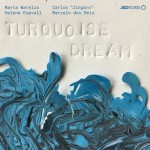
Artist: Marta Warelis, Carlos "Zíngaro", Helena Espvall, Marcelo dos Reis
Title: Turquoise Dream
Format: CD
Label: JACC Records (@)
Rated:

Title: Turquoise Dream
Format: CD
Label: JACC Records (@)
Rated:
A "Turquoise Dream", maybe because who hasn’t dreamt of a world where classical string instruments meet avant-garde free improvisation in a minimalist soundscape? This live recording from the 2019 Jazz ao Centro Festival in Coimbra promises to take you on a journey through shimmering sonic fragments and delicate musical interactions. Spoiler: it mostly delivers, though whether it’s a dream or a contemplative nap might depend on your tolerance for the avant-garde.
The ensemble — featuring Marta Warelis on piano, Carlos "Zíngaro" on violin, Helena Espvall on cello and effects, and Marcelo dos Reis on acoustic guitar — offers a performance that's more about creating an atmosphere than playing actual music. Think of it as a soundtrack to a minimalist art installation: beautiful, intriguing, but at times, a touch too elusive.
The opening track, "Finer Grades", sets the tone with a soundscape that feels like it’s tiptoeing around the edges of melody. Warelis, a Polish native rising star from the Amsterdam free improv scene, showcases her ability to balance hypnotic piano runs with unexpected sounds, creating a dialogue with Zíngaro’s youthful yet seasoned violin. Espvall, with her extensive background in rock, folk, and avant-garde, adds layers of texture that are both comforting and unsettling.
Carlos "Zíngaro", the granddaddy of this quartet, reminds us why he’s a staple in the experimental music world. His violin work, always fresh, is a lesson in keeping things interesting without overpowering the ensemble. Meanwhile, dos Reis’s guitar provides a backbone of repetitive elements that guide the other musicians without dictating the terms.
"Pale Bluish" is where the album truly shines. This track encapsulates the album’s ethos — nervous interplay and quiet intensity. There’s no real soloing (even if in the middle, Marcelo dos Reis tried a kind of solo fugue by his acoustic guitar, that sounds very catchy here - or harmonic development, just an intricate web of sound where every note is a tiny piece of a larger, fragile mosaic. It’s like watching a spider weave a web: mesmerizing, meticulous, and a bit unnerving if you’re not into spiders.
"Specific Gravity" and "Revealing a Line" continue this trend, offering moments of calm punctuated by bursts of chaotic creativity. Espvall’s cello and effects shine here, creating a haunting backdrop that feels both organic and otherworldly. It’s music that doesn’t demand your attention but rewards it if you choose to listen closely.
By the time we reach the final track, "Blue to Green", we’ve been gently guided through a landscape of abstract shapes and colors. The title aptly describes the music’s flow—smooth, gentle, and ever-changing. This piece, like the album as a whole, invites you to get lost in its dreamstate, suggesting forms and patterns without ever fully committing to them.
"Turquoise Dream" is definitely not about catchy melodies or toe-tapping rhythms. It’s more about creating a space where music and silence coexist, where each note and gesture is part of a delicate dance. The ensemble’s diversity — be it in background, age, or style — adds to the richness of the soundscape, making this a fascinating, if somewhat niche, listen. If you’re a fan of minimalism, avant-garde, or just need a soundtrack for your next existential crisis, "Turquoise Dream" might just be your cup of tea. Just don’t expect to hum along — it’s a dream best experienced with your eyes closed and your mind wide open.
The ensemble — featuring Marta Warelis on piano, Carlos "Zíngaro" on violin, Helena Espvall on cello and effects, and Marcelo dos Reis on acoustic guitar — offers a performance that's more about creating an atmosphere than playing actual music. Think of it as a soundtrack to a minimalist art installation: beautiful, intriguing, but at times, a touch too elusive.
The opening track, "Finer Grades", sets the tone with a soundscape that feels like it’s tiptoeing around the edges of melody. Warelis, a Polish native rising star from the Amsterdam free improv scene, showcases her ability to balance hypnotic piano runs with unexpected sounds, creating a dialogue with Zíngaro’s youthful yet seasoned violin. Espvall, with her extensive background in rock, folk, and avant-garde, adds layers of texture that are both comforting and unsettling.
Carlos "Zíngaro", the granddaddy of this quartet, reminds us why he’s a staple in the experimental music world. His violin work, always fresh, is a lesson in keeping things interesting without overpowering the ensemble. Meanwhile, dos Reis’s guitar provides a backbone of repetitive elements that guide the other musicians without dictating the terms.
"Pale Bluish" is where the album truly shines. This track encapsulates the album’s ethos — nervous interplay and quiet intensity. There’s no real soloing (even if in the middle, Marcelo dos Reis tried a kind of solo fugue by his acoustic guitar, that sounds very catchy here - or harmonic development, just an intricate web of sound where every note is a tiny piece of a larger, fragile mosaic. It’s like watching a spider weave a web: mesmerizing, meticulous, and a bit unnerving if you’re not into spiders.
"Specific Gravity" and "Revealing a Line" continue this trend, offering moments of calm punctuated by bursts of chaotic creativity. Espvall’s cello and effects shine here, creating a haunting backdrop that feels both organic and otherworldly. It’s music that doesn’t demand your attention but rewards it if you choose to listen closely.
By the time we reach the final track, "Blue to Green", we’ve been gently guided through a landscape of abstract shapes and colors. The title aptly describes the music’s flow—smooth, gentle, and ever-changing. This piece, like the album as a whole, invites you to get lost in its dreamstate, suggesting forms and patterns without ever fully committing to them.
"Turquoise Dream" is definitely not about catchy melodies or toe-tapping rhythms. It’s more about creating a space where music and silence coexist, where each note and gesture is part of a delicate dance. The ensemble’s diversity — be it in background, age, or style — adds to the richness of the soundscape, making this a fascinating, if somewhat niche, listen. If you’re a fan of minimalism, avant-garde, or just need a soundtrack for your next existential crisis, "Turquoise Dream" might just be your cup of tea. Just don’t expect to hum along — it’s a dream best experienced with your eyes closed and your mind wide open.
Jacques Demierre: The Hills Shout
Jacques Demierre's "The Hills Shout" is a singular, sprawling sonic tapestry, a 40-minute solo piano performance that ambitiously attempts to capture the fleeting essence of a live concert experience. Touted as a "live memory of a past concert", this album is less a straightforward recital and a more postmodern exploration of sound, memory, and the artist's internal landscape.
Named after a handwritten poem by Robert Lax (1980), the album kicks off with an intriguing soundscape, where the piano is manipulated to resemble a metallic harp. This is Demierre at his finest — eschewing conventional techniques to create something that is both familiar and disconcertingly new. The first seven minutes alone are a tour de force of musical shape-shifting: from the gentle serenity reminiscent of Erik Satie to a frenetic burst that could be mistaken for a drum solo, and then plunging back into the innards of the piano for some prepared piano wizardry. It's an audacious start that sets the tone for the rest of this mercurial journey.
Demierre’s ability to morph his instrument into a multitude of personas is nothing short of remarkable. The entire piece is constructed like an abstract, cubist painting, each section a distinct “brick” that contributes to the overall structure. One moment you’re enveloped in a soft, velvety atmosphere, the next you're navigating a harsh, icy soundscape. It's as if Demierre is building a wall where each brick is a different material — feathers, ice, origami, you name it. This metaphorical wall not only stands, but fascinates with its diversity and complexity.
Labeling Demierre’s approach as merely "extended technique" feels inadequate, almost reductive. His command over the piano extends beyond the mechanical and enters the realm of pure artistry. There’s a precision to his explosive outbursts and a delicate subtlety to his quieter passages that can only come from a deep, almost symbiotic relationship with his instrument. His piano isn't just played; it's conversed with, interrogated, and ultimately, transformed.
The production quality of "The Hills Shout" deserves a mention as well. Recorded live in January 2020 and meticulously edited during the pandemic lockdown, the sound is both raw and polished, retaining the immediacy of a live performance while benefiting from thoughtful post-production tweaks. The result is a sound that is intimate yet expansive, capturing the nuance of every keystroke and the resonance of the performance space.
Comparisons to other avant-garde pianists are inevitable. There's a touch of John Cage’s experimental ethos, the lyrical introspection of Morton Feldman, and the boundary-pushing audacity of Cecil Taylor. But comparisons could let readers think Demierre forged something only for uppity haints. It's actually not just an academic exercise in pushing the limits of the piano; it's a deeply personal, almost autobiographical statement rendered in sound.
It's true that "The Hills Shout" isn’t for everyone, considering that its abstract nature and lack of traditional melodic or rhythmic anchors might frustrate listeners looking for something more conventional. But for those willing to embrace its challenges, the album offers a rewarding, thought-provoking and other than inaccessible experience. It’s a piece that demands active listening, engagement, and perhaps a bit of patience. Whether you find it maddening or mesmerizing, one thing is certain: you won’t forget it.
Named after a handwritten poem by Robert Lax (1980), the album kicks off with an intriguing soundscape, where the piano is manipulated to resemble a metallic harp. This is Demierre at his finest — eschewing conventional techniques to create something that is both familiar and disconcertingly new. The first seven minutes alone are a tour de force of musical shape-shifting: from the gentle serenity reminiscent of Erik Satie to a frenetic burst that could be mistaken for a drum solo, and then plunging back into the innards of the piano for some prepared piano wizardry. It's an audacious start that sets the tone for the rest of this mercurial journey.
Demierre’s ability to morph his instrument into a multitude of personas is nothing short of remarkable. The entire piece is constructed like an abstract, cubist painting, each section a distinct “brick” that contributes to the overall structure. One moment you’re enveloped in a soft, velvety atmosphere, the next you're navigating a harsh, icy soundscape. It's as if Demierre is building a wall where each brick is a different material — feathers, ice, origami, you name it. This metaphorical wall not only stands, but fascinates with its diversity and complexity.
Labeling Demierre’s approach as merely "extended technique" feels inadequate, almost reductive. His command over the piano extends beyond the mechanical and enters the realm of pure artistry. There’s a precision to his explosive outbursts and a delicate subtlety to his quieter passages that can only come from a deep, almost symbiotic relationship with his instrument. His piano isn't just played; it's conversed with, interrogated, and ultimately, transformed.
The production quality of "The Hills Shout" deserves a mention as well. Recorded live in January 2020 and meticulously edited during the pandemic lockdown, the sound is both raw and polished, retaining the immediacy of a live performance while benefiting from thoughtful post-production tweaks. The result is a sound that is intimate yet expansive, capturing the nuance of every keystroke and the resonance of the performance space.
Comparisons to other avant-garde pianists are inevitable. There's a touch of John Cage’s experimental ethos, the lyrical introspection of Morton Feldman, and the boundary-pushing audacity of Cecil Taylor. But comparisons could let readers think Demierre forged something only for uppity haints. It's actually not just an academic exercise in pushing the limits of the piano; it's a deeply personal, almost autobiographical statement rendered in sound.
It's true that "The Hills Shout" isn’t for everyone, considering that its abstract nature and lack of traditional melodic or rhythmic anchors might frustrate listeners looking for something more conventional. But for those willing to embrace its challenges, the album offers a rewarding, thought-provoking and other than inaccessible experience. It’s a piece that demands active listening, engagement, and perhaps a bit of patience. Whether you find it maddening or mesmerizing, one thing is certain: you won’t forget it.