
Browse by Genre
Industrial Music / Industrial Metal / Aggro Industrial / Electro Metal
Industrial Noise / Power Noise / Harsh Noise
Synth Pop / Electro Pop / Synth-Electronica
Techno / Trance / Goa / Drum'n'Bass / Jungle / Tribal / Trip-Hop
Ambient / Electronica / Ethereal / Dub / Soundscapes / Abstract
Experimental / Avantgarde / Weird & Wired / Glitch / Noise / Field Recording
Dark / Gothic / Wave / New Wave / Dark Wave / Industrial Gothic
New Music / Downtown / Avantgarde Jazz / New Classical / World
Search Reviews
Music Reviews
WIELORYB: Ritual
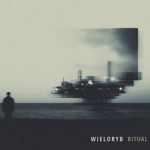
Some musicians treat rhythm like a polite suggestion. Others treat it like a hammer. On "Ritual", Pawe Kmiecik, operating under the long-standing moniker WIELORYB, clearly belongs to the second category. This is music that does not stroll into the room. It kicks the door open, drags in a stack of steel drums, and starts assembling a factory.
Originally released digitally in 2021 and now resurrected on CD by Zoharum with additional tracks and fresh artwork, "Ritual" stretches across more than seventy-eight minutes of dense rhythmic machinery. Fifteen tracks, most of them built around relentless industrial pulses, form something that feels less like a conventional album and more like a prolonged mechanical ceremony.
WIELORYB’s history runs deeper than casual listeners might assume. Founded in the mid-1990s, the project emerged during the formative years of Poland’s industrial and EBM underground, alongside acts like Agressiva 69. Back then the project functioned as a duo and occasionally a trio, navigating the raw electronic aesthetics that defined that era. Since 2010, however, the project has essentially become Kmiecik’s personal laboratory, a place where industrial structures slowly mutated into something closer to rhythmic noise: harsher, more physical, and considerably less concerned with traditional song forms.
"Ritual" embodies that evolution rather clearly. The opening track “Methods” wastes no time establishing the album’s grammar: pounding mechanical beats, layered textures that grind against one another like rusted gears, and an atmosphere thick enough to require ventilation. The sound design feels claustrophobic in a strangely deliberate way, as if the listener has been locked inside the basement of a particularly determined drum machine.
Yet beneath that oppressive density lies careful construction. Kmiecik’s approach to rhythm is surprisingly architectural. Patterns stack, fracture, and reform; percussion elements emerge briefly before dissolving back into the larger machine. “Many” and “Korangar” expand the palette with shifting layers of metallic percussion and subtle industrial drones, creating the sensation of wandering through a labyrinth of interconnected engines.
The title track “Ritual” itself appears almost like a compressed manifesto. Shorter than many of the surrounding pieces, it distills the project’s aesthetic into a concentrated burst of tribal-mechanical energy. The rhythm is hypnotic, almost ceremonial, as if ancient drum patterns had been translated into the language of malfunctioning circuitry.
That strange balance between archaic and mechanical impulses appears repeatedly throughout the record. “Tribal Order” and “Sacrifice” lean heavily into the idea of rhythm as communal invocation, although here the tribe in question might just be a gathering of malfunctioning robots chanting in a warehouse at three in the morning. The mood is dark but never static. Kmiecik frequently shifts the density of the arrangement, allowing brief moments of space before the percussion inevitably surges back.
Some tracks reveal unexpected nuance within the noise. “Las” introduces a slightly more atmospheric dimension, its textures suggesting distant environmental echoes rather than pure mechanical aggression. “Meadow”, intriguingly titled for such a harsh sonic environment, momentarily softens the album’s relentless momentum, as if someone briefly opened a door and allowed a gust of fresh air into the factory.
Still, subtlety is not the record’s primary mission. The sheer endurance test of listening through seventy-plus minutes of rhythmic noise is part of the experience. Albums like this operate less as background listening and more as immersive environments. One does not casually sip tea while "Ritual" plays. The music demands attention, physical engagement, perhaps even a mild tolerance for sonic blunt force.
The bonus tracks included in this new edition extend that atmosphere further rather than altering it. “Dragstore”, “Echoes in the Night”, and “Fly” function as additional corridors in the same industrial complex, each reinforcing the sense that the album’s universe is vast, echoing, and faintly menacing.
In a cultural landscape currently saturated with polite ambient drones and tasteful electronic minimalism, "Ritual" feels refreshingly stubborn. It refuses to be elegant. It refuses to be soothing. Instead it builds a massive rhythmic structure and invites the listener to stand inside it while the walls vibrate.
Not everyone will enjoy that experience. Some listeners prefer their music to behave nicely. "Ritual" does not. It marches, pounds, and reverberates like an underground ceremony conducted by machines that have developed their own theology.
And honestly, considering the current state of the world, a few industrial drums beating in the dark might be the most honest soundtrack available.
Originally released digitally in 2021 and now resurrected on CD by Zoharum with additional tracks and fresh artwork, "Ritual" stretches across more than seventy-eight minutes of dense rhythmic machinery. Fifteen tracks, most of them built around relentless industrial pulses, form something that feels less like a conventional album and more like a prolonged mechanical ceremony.
WIELORYB’s history runs deeper than casual listeners might assume. Founded in the mid-1990s, the project emerged during the formative years of Poland’s industrial and EBM underground, alongside acts like Agressiva 69. Back then the project functioned as a duo and occasionally a trio, navigating the raw electronic aesthetics that defined that era. Since 2010, however, the project has essentially become Kmiecik’s personal laboratory, a place where industrial structures slowly mutated into something closer to rhythmic noise: harsher, more physical, and considerably less concerned with traditional song forms.
"Ritual" embodies that evolution rather clearly. The opening track “Methods” wastes no time establishing the album’s grammar: pounding mechanical beats, layered textures that grind against one another like rusted gears, and an atmosphere thick enough to require ventilation. The sound design feels claustrophobic in a strangely deliberate way, as if the listener has been locked inside the basement of a particularly determined drum machine.
Yet beneath that oppressive density lies careful construction. Kmiecik’s approach to rhythm is surprisingly architectural. Patterns stack, fracture, and reform; percussion elements emerge briefly before dissolving back into the larger machine. “Many” and “Korangar” expand the palette with shifting layers of metallic percussion and subtle industrial drones, creating the sensation of wandering through a labyrinth of interconnected engines.
The title track “Ritual” itself appears almost like a compressed manifesto. Shorter than many of the surrounding pieces, it distills the project’s aesthetic into a concentrated burst of tribal-mechanical energy. The rhythm is hypnotic, almost ceremonial, as if ancient drum patterns had been translated into the language of malfunctioning circuitry.
That strange balance between archaic and mechanical impulses appears repeatedly throughout the record. “Tribal Order” and “Sacrifice” lean heavily into the idea of rhythm as communal invocation, although here the tribe in question might just be a gathering of malfunctioning robots chanting in a warehouse at three in the morning. The mood is dark but never static. Kmiecik frequently shifts the density of the arrangement, allowing brief moments of space before the percussion inevitably surges back.
Some tracks reveal unexpected nuance within the noise. “Las” introduces a slightly more atmospheric dimension, its textures suggesting distant environmental echoes rather than pure mechanical aggression. “Meadow”, intriguingly titled for such a harsh sonic environment, momentarily softens the album’s relentless momentum, as if someone briefly opened a door and allowed a gust of fresh air into the factory.
Still, subtlety is not the record’s primary mission. The sheer endurance test of listening through seventy-plus minutes of rhythmic noise is part of the experience. Albums like this operate less as background listening and more as immersive environments. One does not casually sip tea while "Ritual" plays. The music demands attention, physical engagement, perhaps even a mild tolerance for sonic blunt force.
The bonus tracks included in this new edition extend that atmosphere further rather than altering it. “Dragstore”, “Echoes in the Night”, and “Fly” function as additional corridors in the same industrial complex, each reinforcing the sense that the album’s universe is vast, echoing, and faintly menacing.
In a cultural landscape currently saturated with polite ambient drones and tasteful electronic minimalism, "Ritual" feels refreshingly stubborn. It refuses to be elegant. It refuses to be soothing. Instead it builds a massive rhythmic structure and invites the listener to stand inside it while the walls vibrate.
Not everyone will enjoy that experience. Some listeners prefer their music to behave nicely. "Ritual" does not. It marches, pounds, and reverberates like an underground ceremony conducted by machines that have developed their own theology.
And honestly, considering the current state of the world, a few industrial drums beating in the dark might be the most honest soundtrack available.
Steril / Latex: Essentiels

There was a time when electro did not ask for permission. It arrived in black vinyl, smelling faintly of smoke machines and futurism, and assumed your body would comply. "Essentiels" revisits that era without embalming it.
Michi Bormann, operating under the Latex and Steril aliases, has long occupied a specific corridor of European electronic music: sleek, slightly perverse, rhythmically insistent. Through releases on Muller Records and earlier outings on labels such as Gigolo and Lasergun, he carved out a sound that balanced cold machinery with nightclub pulse. This compilation gathers what are described as the “best tracks”, newly mastered and processed, which in practice means the chrome has been polished without removing the fingerprints.
The Latex material dominates the first stretch of the album, and it becomes clear quickly that Bormann understood the architecture of the dance floor. “Life on Earth” and “Latex Gloves” hinge on taut basslines and crisp, almost surgical drum programming. There is a precision here that avoids sterility. The grooves feel engineered but not inert. Repetition becomes propulsion rather than redundancy.
Titles like “Bio Metric” and “Remote Control” underline Bormann’s fascination with technology as both aesthetic and metaphor. These tracks carry the minimal discipline of classic electro while flirting with the decadent edge of early 2000s European club culture. Synth lines glide with a certain aerodynamic arrogance, never bloated, always streamlined. When melodies appear, they are functional, almost coded, as if designed to unlock muscle memory rather than sentiment.
“Rain in the Night” and “Love” reveal another facet. Beneath the rigid frameworks, there is a faint romantic undercurrent, though it is filtered through circuitry. Emotion is present, but it is expressed through modulation rather than confession. Bormann rarely indulges in overt drama. He prefers suggestion.
The repetition of “Remote Control” in two versions is not redundancy but a reminder of how elastic these structures are. Small shifts in processing alter the atmosphere significantly. The new mastering lends added depth and clarity, emphasizing low-end punch while sharpening the metallic edges. The tracks feel revitalized rather than refurbished.
The Steril selections close the compilation with a darker shade. “Grey”, “Orbital Bombardement”, and “White Dressed Domina” move closer to industrial territory. The rhythms hit harder, the textures feel more abrasive. Where Latex tends toward polished seduction, Steril leans into confrontation. Yet even here, the dance impulse remains intact. This is severity you can move to.
What makes "Essentiels" more than a nostalgic exercise is its coherence. Despite being drawn from different periods and aliases, the tracks share a distinct sonic identity. Bormann’s sense of economy stands out. He does not overcrowd his arrangements. Each element earns its position. The space between sounds becomes as important as the sounds themselves.
In the current landscape of hyper-saturated electronic releases, this compilation feels almost instructive. It demonstrates how minimal components, when assembled with conviction, can generate lasting impact. No excessive layering. No ornamental clutter. Just rhythm, tone, and a clear understanding of tension.
The limited vinyl edition underscores the record’s physical roots. These tracks were built for speakers that move air, for rooms that amplify bass into communal experience. Yet they also withstand solitary listening, revealing structural finesse beneath the surface sheen.
"Essentiels" does not attempt to rewrite history. It reframes it with sharper edges and renewed weight. The future that these tracks once imagined may have arrived in slightly altered form, but the pulse remains persuasive. Some machines age poorly. These still function, humming steadily, waiting for the next body on the floor.
Michi Bormann, operating under the Latex and Steril aliases, has long occupied a specific corridor of European electronic music: sleek, slightly perverse, rhythmically insistent. Through releases on Muller Records and earlier outings on labels such as Gigolo and Lasergun, he carved out a sound that balanced cold machinery with nightclub pulse. This compilation gathers what are described as the “best tracks”, newly mastered and processed, which in practice means the chrome has been polished without removing the fingerprints.
The Latex material dominates the first stretch of the album, and it becomes clear quickly that Bormann understood the architecture of the dance floor. “Life on Earth” and “Latex Gloves” hinge on taut basslines and crisp, almost surgical drum programming. There is a precision here that avoids sterility. The grooves feel engineered but not inert. Repetition becomes propulsion rather than redundancy.
Titles like “Bio Metric” and “Remote Control” underline Bormann’s fascination with technology as both aesthetic and metaphor. These tracks carry the minimal discipline of classic electro while flirting with the decadent edge of early 2000s European club culture. Synth lines glide with a certain aerodynamic arrogance, never bloated, always streamlined. When melodies appear, they are functional, almost coded, as if designed to unlock muscle memory rather than sentiment.
“Rain in the Night” and “Love” reveal another facet. Beneath the rigid frameworks, there is a faint romantic undercurrent, though it is filtered through circuitry. Emotion is present, but it is expressed through modulation rather than confession. Bormann rarely indulges in overt drama. He prefers suggestion.
The repetition of “Remote Control” in two versions is not redundancy but a reminder of how elastic these structures are. Small shifts in processing alter the atmosphere significantly. The new mastering lends added depth and clarity, emphasizing low-end punch while sharpening the metallic edges. The tracks feel revitalized rather than refurbished.
The Steril selections close the compilation with a darker shade. “Grey”, “Orbital Bombardement”, and “White Dressed Domina” move closer to industrial territory. The rhythms hit harder, the textures feel more abrasive. Where Latex tends toward polished seduction, Steril leans into confrontation. Yet even here, the dance impulse remains intact. This is severity you can move to.
What makes "Essentiels" more than a nostalgic exercise is its coherence. Despite being drawn from different periods and aliases, the tracks share a distinct sonic identity. Bormann’s sense of economy stands out. He does not overcrowd his arrangements. Each element earns its position. The space between sounds becomes as important as the sounds themselves.
In the current landscape of hyper-saturated electronic releases, this compilation feels almost instructive. It demonstrates how minimal components, when assembled with conviction, can generate lasting impact. No excessive layering. No ornamental clutter. Just rhythm, tone, and a clear understanding of tension.
The limited vinyl edition underscores the record’s physical roots. These tracks were built for speakers that move air, for rooms that amplify bass into communal experience. Yet they also withstand solitary listening, revealing structural finesse beneath the surface sheen.
"Essentiels" does not attempt to rewrite history. It reframes it with sharper edges and renewed weight. The future that these tracks once imagined may have arrived in slightly altered form, but the pulse remains persuasive. Some machines age poorly. These still function, humming steadily, waiting for the next body on the floor.
Gabi Delgado & Marc Hurtado: Neue Weltumfassende Resistance
Artist: Gabi Delgado & Marc Hurtado
Title: Neue Weltumfassende Resistance
Format: CD
Label: play loud! (@)
Rated:

Title: Neue Weltumfassende Resistance
Format: CD
Label: play loud! (@)
Rated:
Let’s clear the fog immediately. This long-delayed debut is not a polite archival release, not a museum piece gently dusted off for historical reasons. It is a living, breathing artifact of friction. Sound against word, body against machine, urgency against time. If you were hoping for a neat posthumous tribute wrapped in reverence and safety glass, you are in the wrong room.
"Neue Weltumfassende Resistance" is the audible trace of a dialogue that unfolded across borders, cables, and years. Germany, Spain, France. Emails, files, voices sent into the void and sent back altered. Gabi Delgado and Marc Hurtado were not collaborating in the friendly sense of the word. They were colliding. The project, founded in 2004 and refined through rare but intense physical encounters, works like a 360-degree cinematic drift. Fast, volatile, sometimes graceful, sometimes feral. No map. No master plan. Just motion.
Delgado, permanently etched into history through DAF, always treated minimalism as a weapon. Few words, heavy meaning, bodies forced into attention. Hurtado, with decades of work through Étant Donnés and his solo universe Sol Ixent, approaches sound as ritual, poetry as combustion, art as a total field. Put them together and you do not get compromise. You get exposure.
The album moves like a fractured dream. Short pieces bleed into longer ones. Languages slip past each other. French, German, Spanish coexist without translation, because translation would weaken the spell. Tracks like "Erotique Narcotique" pulse with a tense, narcotic sensuality, while "Embrasse-moi" and "Ouvre-moi" feel less like invitations and more like doors being forced open. Intimacy here is not comforting. It is invasive, necessary, slightly dangerous.
There are moments where Delgado’s ghost of EBM discipline surfaces. "Master" and "Business ist Business" echo the skeletal, confrontational economy he perfected decades ago. But this is not nostalgia, and certainly not revivalism. The rhythms feel less designed for movement and more for insistence. They repeat until meaning leaks out of them. They stare you down until you blink first.
Other tracks dissolve into something closer to sonic prose. "Ich trÄume nur" drifts with a fragile, dreamlike melancholy. "Traumfabrik" hums like a half-functioning factory of illusions. "Europa" sounds weary, ambiguous, unresolved, which feels appropriate. The final "Resistance (NWR)" stretches out into a slow-burning incantation. Not a climax, more a state of being. Resistance not as slogan, but as ongoing tension between spirit and structure.
Poetry here is not decorative. It does not sit politely on top of the music. It scratches, interrupts, destabilizes. Sometimes the voice leads, sometimes it dissolves into the electronics. Sometimes both happen at once. The result feels less like songs and more like transmissions intercepted mid-flight. Incomplete. Urgent. Necessary.
Knowing that Gabi Delgado passed away in 2020 adds weight, but the album does not trade on absence or sentimentality. It does not look backward. If anything, it feels impatient with the past. This is not a farewell. It is a statement that arrived late only because it refused to arrive prematurely.
"Neue Weltumfassende Resistance" is not comfortable listening. It resists easy categorization, easy pleasure, easy consumption. It demands attention and repays it unevenly. Some moments burn. Some hover. Some pass like brief hallucinations. Taken together, they form a work that refuses closure.
This is not a record that explains itself. It does not want your approval. It wants your presence. You do not listen to it so much as stand inside it, while two uncompromising artistic wills argue, embrace, and vanish into noise. And somehow, against all odds, it still feels alive.
"Neue Weltumfassende Resistance" is the audible trace of a dialogue that unfolded across borders, cables, and years. Germany, Spain, France. Emails, files, voices sent into the void and sent back altered. Gabi Delgado and Marc Hurtado were not collaborating in the friendly sense of the word. They were colliding. The project, founded in 2004 and refined through rare but intense physical encounters, works like a 360-degree cinematic drift. Fast, volatile, sometimes graceful, sometimes feral. No map. No master plan. Just motion.
Delgado, permanently etched into history through DAF, always treated minimalism as a weapon. Few words, heavy meaning, bodies forced into attention. Hurtado, with decades of work through Étant Donnés and his solo universe Sol Ixent, approaches sound as ritual, poetry as combustion, art as a total field. Put them together and you do not get compromise. You get exposure.
The album moves like a fractured dream. Short pieces bleed into longer ones. Languages slip past each other. French, German, Spanish coexist without translation, because translation would weaken the spell. Tracks like "Erotique Narcotique" pulse with a tense, narcotic sensuality, while "Embrasse-moi" and "Ouvre-moi" feel less like invitations and more like doors being forced open. Intimacy here is not comforting. It is invasive, necessary, slightly dangerous.
There are moments where Delgado’s ghost of EBM discipline surfaces. "Master" and "Business ist Business" echo the skeletal, confrontational economy he perfected decades ago. But this is not nostalgia, and certainly not revivalism. The rhythms feel less designed for movement and more for insistence. They repeat until meaning leaks out of them. They stare you down until you blink first.
Other tracks dissolve into something closer to sonic prose. "Ich trÄume nur" drifts with a fragile, dreamlike melancholy. "Traumfabrik" hums like a half-functioning factory of illusions. "Europa" sounds weary, ambiguous, unresolved, which feels appropriate. The final "Resistance (NWR)" stretches out into a slow-burning incantation. Not a climax, more a state of being. Resistance not as slogan, but as ongoing tension between spirit and structure.
Poetry here is not decorative. It does not sit politely on top of the music. It scratches, interrupts, destabilizes. Sometimes the voice leads, sometimes it dissolves into the electronics. Sometimes both happen at once. The result feels less like songs and more like transmissions intercepted mid-flight. Incomplete. Urgent. Necessary.
Knowing that Gabi Delgado passed away in 2020 adds weight, but the album does not trade on absence or sentimentality. It does not look backward. If anything, it feels impatient with the past. This is not a farewell. It is a statement that arrived late only because it refused to arrive prematurely.
"Neue Weltumfassende Resistance" is not comfortable listening. It resists easy categorization, easy pleasure, easy consumption. It demands attention and repays it unevenly. Some moments burn. Some hover. Some pass like brief hallucinations. Taken together, they form a work that refuses closure.
This is not a record that explains itself. It does not want your approval. It wants your presence. You do not listen to it so much as stand inside it, while two uncompromising artistic wills argue, embrace, and vanish into noise. And somehow, against all odds, it still feels alive.
VV.AA.: Światłowód

Artist: VV.AA.
Title: Światłowód
Format: CD + Download
Label: Zoharum (http://zoharum.com/) (@)
Rated:

Title: Światłowód
Format: CD + Download
Label: Zoharum (http://zoharum.com/) (@)
Rated:
"Swiatlowod" arrives like a bonfire at dawn: still warm, already turning to smoke, stubbornly luminous against the cold. Marketed plainly as a farewell album, it behaves less like a goodbye note and more like a carefully braided nerve - signals still firing even as the body prepares to change shape. Fitting, given the title: a fiber optic line, a conduit of light, information, memory. ROD unplug the cable, but the glow lingers in your retinas.
ROD, the electro-folk trio from Wejherowo, have always worked in that fertile tension between archaic ritual and contemporary circuitry. Pagan echoes, folk bones, northern chill: these aren’t costumes here, but weather conditions. On "Swiatlowod", that climate fractures into individual trajectories. Alongside four final ROD tracks, we hear solo statements from Hansollo, DN (Loki), and RIP (Cichy), each carving their own runic notch into the same piece of wood. Different hands, same tree.
What’s striking - and slightly suspicious, like a coincidence that’s too neat - is how cohesive the record feels despite its patchwork origin. Different sessions, methods, and temporal coordinates, yet the album flows like a single nocturnal walk from forest edge to city street. That coherence doesn’t come from production gloss or genre loyalty, but from a shared gravity: a pull toward folklore not as nostalgia, but as a way of thinking about sound, land, and time. This is music that believes the past is not behind us, but under our feet.
The ROD tracks proper feel like condensed rituals: short, sharp, purposeful. There’s no indulgence, no ambient sprawl pretending to be depth. "Swiatlowod" and "Portelabend" crackle with restrained urgency, while "Wole Las" and "Gwozdz" lean into blunt repetition, as if insisting that simplicity can still bruise. These pieces feel communal - songs meant to be carried by breath, stomped into dirt, or shouted into fog.
When the album fractures into solo paths, the light refracts. DN’s pieces are austere and inward-looking, almost diaristic, like dates etched into ice. Hansollo’s tracks foreground his background in electronics: colder, cleaner, but still haunted, as if analog ghosts are rattling inside digital cages. RIP’s contributions - co-shaped by Cichy - pull the album toward song form again, pivoting between forest and city, human voice and environment, intimacy and distance. "Leny" and "Miejski" aren’t opposites so much as mirror states: the same unease wearing different coats.
There’s a quiet humor in how "Swiatlowod" refuses grand finales. No epic closer, no sentimental swell. Instead, it disperses. The band says this is the end, but the record behaves like a threshold - less obituary, more trailhead. It gently suggests that dissolution can be productive, that breaking apart doesn’t mean vanishing, just changing bandwidth.
In the end, "Swiatlowod" feels like a document of transmission rather than closure. Signals sent forward, backward, sideways. A reminder that traditions don’t survive by being preserved in amber, but by being re-routed, re-wired, and occasionally cut loose altogether. ROD step away, but the line stays hot.
ROD, the electro-folk trio from Wejherowo, have always worked in that fertile tension between archaic ritual and contemporary circuitry. Pagan echoes, folk bones, northern chill: these aren’t costumes here, but weather conditions. On "Swiatlowod", that climate fractures into individual trajectories. Alongside four final ROD tracks, we hear solo statements from Hansollo, DN (Loki), and RIP (Cichy), each carving their own runic notch into the same piece of wood. Different hands, same tree.
What’s striking - and slightly suspicious, like a coincidence that’s too neat - is how cohesive the record feels despite its patchwork origin. Different sessions, methods, and temporal coordinates, yet the album flows like a single nocturnal walk from forest edge to city street. That coherence doesn’t come from production gloss or genre loyalty, but from a shared gravity: a pull toward folklore not as nostalgia, but as a way of thinking about sound, land, and time. This is music that believes the past is not behind us, but under our feet.
The ROD tracks proper feel like condensed rituals: short, sharp, purposeful. There’s no indulgence, no ambient sprawl pretending to be depth. "Swiatlowod" and "Portelabend" crackle with restrained urgency, while "Wole Las" and "Gwozdz" lean into blunt repetition, as if insisting that simplicity can still bruise. These pieces feel communal - songs meant to be carried by breath, stomped into dirt, or shouted into fog.
When the album fractures into solo paths, the light refracts. DN’s pieces are austere and inward-looking, almost diaristic, like dates etched into ice. Hansollo’s tracks foreground his background in electronics: colder, cleaner, but still haunted, as if analog ghosts are rattling inside digital cages. RIP’s contributions - co-shaped by Cichy - pull the album toward song form again, pivoting between forest and city, human voice and environment, intimacy and distance. "Leny" and "Miejski" aren’t opposites so much as mirror states: the same unease wearing different coats.
There’s a quiet humor in how "Swiatlowod" refuses grand finales. No epic closer, no sentimental swell. Instead, it disperses. The band says this is the end, but the record behaves like a threshold - less obituary, more trailhead. It gently suggests that dissolution can be productive, that breaking apart doesn’t mean vanishing, just changing bandwidth.
In the end, "Swiatlowod" feels like a document of transmission rather than closure. Signals sent forward, backward, sideways. A reminder that traditions don’t survive by being preserved in amber, but by being re-routed, re-wired, and occasionally cut loose altogether. ROD step away, but the line stays hot.
Assemblage 23: Null
After five years of radio silence, Tom Shear resurfaces with "Null", a title that sounds like a shrug but behaves more like a loaded pause. Zero, nothing, reset - pick your poison. This is Assemblage 23 looking at the void and deciding it’s still worth singing into it, preferably with a four-on-the-floor pulse and a keyboard line sharp enough to cut through fog.
Shear has always been a strange case in electro-industrial history: an American who elbowed his way into a scene long dominated by European aesthetics, and then stayed there by being unapologetically earnest. "Null" doesn’t reinvent that wheel, nor does it pretend to. Instead, it polishes it, tightens the bolts, and sends it rolling straight over the anxieties of mid-life, disillusionment, endurance, and the weary optimism of someone who has survived himself more than once.
Musically, the album sits comfortably in the Assemblage 23 continuum: clean, muscular synth lines, disciplined structures, and beats that know exactly when to push and when to step back. There’s a clarity here that feels intentional - not sterile, but focused. Tracks like “Believe” and “Tolerate” aren’t designed to surprise so much as to hold: they loop emotional states the way club music loops rhythm, letting repetition do the psychological work. It’s future pop stripped of its chrome excess, less neon apocalypse, more fluorescent-lit honesty.
What still sets Shear apart is his relationship with language. His lyrics have never hidden behind abstraction, and "Null" continues that tradition with almost stubborn directness. These are songs that talk about limits, exhaustion, compromise, and persistence without theatrical despair. When he sings about absence, it’s not romanticized emptiness; it’s the practical kind - emotional balances checked at 3 a.m., relationships reduced to their remainder. Zero, again, depending on context.
There’s a subtle tension throughout the record between control and collapse. The production is precise, even sleek, while the themes gnaw from the inside. “Normal” and “Last” in particular feel like internal monologues disguised as club tracks - music you can dance to while quietly realizing you might not be fine, but you’re still here. In Assemblage 23 terms, that’s practically a love letter.
"Null" may not shock longtime listeners, but it doesn’t need to. It’s an album that understands its own legacy and refuses to cosplay youth or despair. Instead, it documents the sound of someone standing in the middle of nothing and choosing to articulate it anyway. In a genre that often fetishizes extremes, there’s something almost radical about that restraint.
Zero can mean failure, or it can mean a clean slate. "Null" lives in that uncomfortable overlap - not a comeback record, not a farewell, but a steady signal saying: I’m still transmitting. And sometimes, that’s more than enough.
Shear has always been a strange case in electro-industrial history: an American who elbowed his way into a scene long dominated by European aesthetics, and then stayed there by being unapologetically earnest. "Null" doesn’t reinvent that wheel, nor does it pretend to. Instead, it polishes it, tightens the bolts, and sends it rolling straight over the anxieties of mid-life, disillusionment, endurance, and the weary optimism of someone who has survived himself more than once.
Musically, the album sits comfortably in the Assemblage 23 continuum: clean, muscular synth lines, disciplined structures, and beats that know exactly when to push and when to step back. There’s a clarity here that feels intentional - not sterile, but focused. Tracks like “Believe” and “Tolerate” aren’t designed to surprise so much as to hold: they loop emotional states the way club music loops rhythm, letting repetition do the psychological work. It’s future pop stripped of its chrome excess, less neon apocalypse, more fluorescent-lit honesty.
What still sets Shear apart is his relationship with language. His lyrics have never hidden behind abstraction, and "Null" continues that tradition with almost stubborn directness. These are songs that talk about limits, exhaustion, compromise, and persistence without theatrical despair. When he sings about absence, it’s not romanticized emptiness; it’s the practical kind - emotional balances checked at 3 a.m., relationships reduced to their remainder. Zero, again, depending on context.
There’s a subtle tension throughout the record between control and collapse. The production is precise, even sleek, while the themes gnaw from the inside. “Normal” and “Last” in particular feel like internal monologues disguised as club tracks - music you can dance to while quietly realizing you might not be fine, but you’re still here. In Assemblage 23 terms, that’s practically a love letter.
"Null" may not shock longtime listeners, but it doesn’t need to. It’s an album that understands its own legacy and refuses to cosplay youth or despair. Instead, it documents the sound of someone standing in the middle of nothing and choosing to articulate it anyway. In a genre that often fetishizes extremes, there’s something almost radical about that restraint.
Zero can mean failure, or it can mean a clean slate. "Null" lives in that uncomfortable overlap - not a comeback record, not a farewell, but a steady signal saying: I’m still transmitting. And sometimes, that’s more than enough.