
Browse by Genre
Industrial Music / Industrial Metal / Aggro Industrial / Electro Metal
Industrial Noise / Power Noise / Harsh Noise
Synth Pop / Electro Pop / Synth-Electronica
Techno / Trance / Goa / Drum'n'Bass / Jungle / Tribal / Trip-Hop
Ambient / Electronica / Ethereal / Dub / Soundscapes / Abstract
Experimental / Avantgarde / Weird & Wired / Glitch / Noise / Field Recording
Dark / Gothic / Wave / New Wave / Dark Wave / Industrial Gothic
New Music / Downtown / Avantgarde Jazz / New Classical / World
Search Reviews
Music Reviews
Derision Cult: Flyover Noise
Artist: Derision Cult (@)
Title: Flyover Noise
Format: Download Only (MP3 + Lossless)
Label: self-released
Rated:


Title: Flyover Noise
Format: Download Only (MP3 + Lossless)
Label: self-released
Rated:
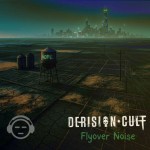
There’s something refreshingly unpretentious about Flyover Noise: a title that already shrugs, smirks, and lights a cigarette under a buzzing highway lamp. Derision Cult don’t come bearing grand manifestos or shiny futurisms here; instead, they roll up with two covers, a sense of lineage, and the kind of affection that only comes from having your DNA scrambled by someone else’s songs years ago.
Derision Cult, long-time operators in the American underground with roots tangled in industrial rock, EBM grit, and post-punk abrasion, have always understood that influence isn’t a museum piece. It’s a living, dented thing. On this short EP they turn their attention to two Illinois acts that clearly left bruises worth revisiting, and they do so without irony, pastiche, or cosplay. This isn’t karaoke with distortion pedals - it’s translation.
“Rocket Science” (originally by The Goodyear Pimps) comes out sounding like a confession shouted into an empty Midwestern parking lot. The song’s wounded romanticism - equal parts bravado and self-loathing - fits Derision Cult like a thrift-store jacket already broken in. They lean into the vulnerability without sanding down the rough edges, letting the repeated mantras spiral into something obsessive, almost claustrophobic. It’s love as fixation, identity as something you trip over rather than build. Not pretty, but honest in that unflattering way mirrors tend to be.
“Better Than Me”, pulled from Sister Machine Gun’s canon, shifts the EP into darker industrial territory. The nihilism here is blunt, almost weaponized: self-erasure as freedom, desire as the only remaining law. Derision Cult amplify the track’s fatalistic swagger, making it feel less like rebellion and more like a tired truth muttered through clenched teeth. The groove burns steadily, not explosively - controlled combustion, the kind that keeps you warm while everything else goes cold.
What makes Flyover Noise work isn’t nostalgia, but proximity. These songs aren’t treated as relics from a “golden age” of industrial or alt rock; they’re dragged into the present and scuffed up accordingly. Derision Cult understand that the so-called flyover states have always produced music heavy with contradiction: aggression and vulnerability, arrogance and defeat, movement without escape. This EP hums with that tension.
It’s short, sure. It doesn’t pretend to reinvent anything. But Flyover Noise knows exactly what it is: a nod between bands across time, a reminder that influence isn’t about geography or prestige, but about which songs lodged themselves in your nervous system and never quite left. Two covers, zero filler, and a lot of feeling packed into under eight minutes. Sometimes that’s all you need - just enough noise to remember where you came from, and why you’re still here.
Derision Cult, long-time operators in the American underground with roots tangled in industrial rock, EBM grit, and post-punk abrasion, have always understood that influence isn’t a museum piece. It’s a living, dented thing. On this short EP they turn their attention to two Illinois acts that clearly left bruises worth revisiting, and they do so without irony, pastiche, or cosplay. This isn’t karaoke with distortion pedals - it’s translation.
“Rocket Science” (originally by The Goodyear Pimps) comes out sounding like a confession shouted into an empty Midwestern parking lot. The song’s wounded romanticism - equal parts bravado and self-loathing - fits Derision Cult like a thrift-store jacket already broken in. They lean into the vulnerability without sanding down the rough edges, letting the repeated mantras spiral into something obsessive, almost claustrophobic. It’s love as fixation, identity as something you trip over rather than build. Not pretty, but honest in that unflattering way mirrors tend to be.
“Better Than Me”, pulled from Sister Machine Gun’s canon, shifts the EP into darker industrial territory. The nihilism here is blunt, almost weaponized: self-erasure as freedom, desire as the only remaining law. Derision Cult amplify the track’s fatalistic swagger, making it feel less like rebellion and more like a tired truth muttered through clenched teeth. The groove burns steadily, not explosively - controlled combustion, the kind that keeps you warm while everything else goes cold.
What makes Flyover Noise work isn’t nostalgia, but proximity. These songs aren’t treated as relics from a “golden age” of industrial or alt rock; they’re dragged into the present and scuffed up accordingly. Derision Cult understand that the so-called flyover states have always produced music heavy with contradiction: aggression and vulnerability, arrogance and defeat, movement without escape. This EP hums with that tension.
It’s short, sure. It doesn’t pretend to reinvent anything. But Flyover Noise knows exactly what it is: a nod between bands across time, a reminder that influence isn’t about geography or prestige, but about which songs lodged themselves in your nervous system and never quite left. Two covers, zero filler, and a lot of feeling packed into under eight minutes. Sometimes that’s all you need - just enough noise to remember where you came from, and why you’re still here.
Icon of Coil: Serenity is the Devil (25th Anniversary Remaster)
Artist: Icon of Coil
Title: Serenity is the Devil (25th Anniversary Remaster)
Format: 12" + Download
Label: Metropolis (@)
Rated:
Title: Serenity is the Devil (25th Anniversary Remaster)
Format: 12" + Download
Label: Metropolis (@)
Rated:
There are albums that age gracefully, like wine. Then there are albums that age like club walls: layered with memories, sweat-stained, and still vibrating faintly if you press your ear against them. Icon of Coil’s "Serenity Is the Devil" belongs proudly to the latter category - a futurepop cornerstone that never really left the dance floor, even when the bodies did.
Now, twenty-five years later, Metropolis Records resurrects it in a remastered double-LP edition, translucent orange like the warning light on a club exit you’re too euphoric to notice. And yes, the sound is slicker, louder, shinier - a bit like someone ran a microfiber cloth over a cyborg.
Icon of Coil’s origin story is almost mythological in the dark-electro world: Andy LaPlegua, who later unleashed Combichrist on the world, starts a project in ’97. Sebastian Komor joins in ’99, Christian Lund in 2000. The trio builds a sonic engine designed for sweaty basements and black-clad crowds who take their synths emotional and their beats punitive. The result: a debut that shot up the German alternative charts and helped cement futurepop as its own neon-lit kingdom.
Listening to this remaster in 2025 is a peculiar pleasure - like opening an old box of club flyers and realizing half of them still smell faintly of hairspray. Tracks such as “Regret” and “Shallow Nation” remain unreasonably catchy, balancing angst and uplift the way only Scandinavian EBM could back then: serious themes carried by melodies that border on pop, delivered with that signature LaPlegua baritone, half-brooding, half-inviting, always ready to lead you somewhere vaguely dangerous.
The production touch-ups don’t fundamentally change the album’s DNA. The kicks still hit with that early-2000s determination - before “compression wars” were a term and after everyone discovered sidechain. The synth leads have that chrome sheen, equal parts melancholy and propulsion, like a city skyline reflected in rain puddles. And “Floorkiller” still does what it says on the tin: ten minutes of unabashed club intent, big boots stomping in unison.
Perhaps the biggest surprise is the inclusion of “SEC FOUR”, previously unreleased - a small reward for longtime devotees, an archival whisper from a past that still thinks the future is blue, silver, and slightly menacing.
Is the album a masterpiece? Depends on whom you ask. Fans will still swear it changed their molecular structure. Skeptics will say it’s dated. They’re both right. That’s the charm: "Serenity Is the Devil" is a relic of a very specific era - a time when people earnestly believed in the emotional depth of vocoders, when synth pads felt like salvation, and when dancing felt like participating in the mythology of machines.
But give it time - preferably around 5 minutes and 26 seconds, i.e. the length of “Activate” - and the album’s magic returns. Not because it’s timeless, but because it’s proudly of its time, and somehow that honesty feels refreshing now.
This remaster doesn’t just polish an artifact. It reminds us of a world where the future sounded synthetic and strangely hopeful, and where a Norwegian trio could make entire rooms believe that melancholy and euphoria were simply two endpoints of the same flickering circuit.
The devil may be in the title, but the serenity comes from dancing.
Now, twenty-five years later, Metropolis Records resurrects it in a remastered double-LP edition, translucent orange like the warning light on a club exit you’re too euphoric to notice. And yes, the sound is slicker, louder, shinier - a bit like someone ran a microfiber cloth over a cyborg.
Icon of Coil’s origin story is almost mythological in the dark-electro world: Andy LaPlegua, who later unleashed Combichrist on the world, starts a project in ’97. Sebastian Komor joins in ’99, Christian Lund in 2000. The trio builds a sonic engine designed for sweaty basements and black-clad crowds who take their synths emotional and their beats punitive. The result: a debut that shot up the German alternative charts and helped cement futurepop as its own neon-lit kingdom.
Listening to this remaster in 2025 is a peculiar pleasure - like opening an old box of club flyers and realizing half of them still smell faintly of hairspray. Tracks such as “Regret” and “Shallow Nation” remain unreasonably catchy, balancing angst and uplift the way only Scandinavian EBM could back then: serious themes carried by melodies that border on pop, delivered with that signature LaPlegua baritone, half-brooding, half-inviting, always ready to lead you somewhere vaguely dangerous.
The production touch-ups don’t fundamentally change the album’s DNA. The kicks still hit with that early-2000s determination - before “compression wars” were a term and after everyone discovered sidechain. The synth leads have that chrome sheen, equal parts melancholy and propulsion, like a city skyline reflected in rain puddles. And “Floorkiller” still does what it says on the tin: ten minutes of unabashed club intent, big boots stomping in unison.
Perhaps the biggest surprise is the inclusion of “SEC FOUR”, previously unreleased - a small reward for longtime devotees, an archival whisper from a past that still thinks the future is blue, silver, and slightly menacing.
Is the album a masterpiece? Depends on whom you ask. Fans will still swear it changed their molecular structure. Skeptics will say it’s dated. They’re both right. That’s the charm: "Serenity Is the Devil" is a relic of a very specific era - a time when people earnestly believed in the emotional depth of vocoders, when synth pads felt like salvation, and when dancing felt like participating in the mythology of machines.
But give it time - preferably around 5 minutes and 26 seconds, i.e. the length of “Activate” - and the album’s magic returns. Not because it’s timeless, but because it’s proudly of its time, and somehow that honesty feels refreshing now.
This remaster doesn’t just polish an artifact. It reminds us of a world where the future sounded synthetic and strangely hopeful, and where a Norwegian trio could make entire rooms believe that melancholy and euphoria were simply two endpoints of the same flickering circuit.
The devil may be in the title, but the serenity comes from dancing.
Pain Magazine: Violent God

Artist: Pain Magazine
Title: Violent God
Format: CD & 12" + Download
Label: Humus Records (@)
Rated:
Title: Violent God
Format: CD & 12" + Download
Label: Humus Records (@)
Rated:
When you hear that Pain Magazine is a collaboration between Louisahhh and Maelstrom - the techno-punk alchemists behind RAAR - and French post-hardcore institution "Birds in Row", you might expect the resulting album to sound like a violent argument in an abandoned factory. And you’d be right, but only partially. "Violent God" isn’t just confrontation; it’s communion through chaos. It’s the moment when the amps catch fire and everyone keeps playing because, for once, the flames make sense.
This record was born from a sixteen-day creative siege - two worlds colliding like tectonic plates. On one side, Birds in Row’s cracked fury and emotional honesty; on the other, Louisahhh and Maelstrom’s industrial pulse, all machines and menace. The collision didn’t destroy either camp - it forged a new alloy, one that’s simultaneously tender and terrifying, melodic and merciless.
There’s a thread of apocalyptic beauty running through "Violent God". The title track howls against faith and failure with an almost liturgical rage. “Weak and Predatory” dismantles capitalism with a groove so heavy it could level office towers. “Dead Meat” turns the post-hardcore breakup song into a weapon, a blunt instrument of a catharsis that could vaguely resemble the cinematic one by certai outputs by Unkle. And “Magic” - perhaps the album’s most haunting moment - reframes addiction not as sin but as a struggle for transcendence, its synths flickering like dying neon in a holy dive bar.
Louisahhh’s presence is the album’s electric core - shifting between preacher, prophet, and punk banshee. Her voice drips with conviction and corrosion. Beside her, Bart Balboa and Quentin Sauvé provide the kind of roaring, scorched-earth intensity that made "Birds in Row" one of the most human bands in hardcore. The production, handled by Joris Saïdani, is a marvel of contrast: each sound feels like it’s on the edge of collapse, yet nothing falls apart. The record breathes, bleeds, and somehow still dances.
What makes "Violent God" so compelling is that it doesn’t posture. It doesn’t sell despair as rebellion or rage as fashion. Instead, it documents survival - in a world that often rewards numbness, this is an album about feeling too much. Pain Magazine doesn’t glorify the wound; it insists on looking at it until you see its shape, its pulse, its terrible beauty.
If Birds in Row once tore at the social fabric with guitars, and Louisahhh once sought transcendence through industrial rhythms, "Violent God" is where their impulses meet in the middle - a ritual of noise and care, fury and empathy. The title isn’t metaphorical. This is sacred violence, the kind that breaks illusions, not bones.
By the end - after the elegiac “Husk” fades like smoke - what lingers is not pain, but possibility. Pain Magazine, improbably, have made one of 2025’s most urgent and oddly healing records. "Violent God" doesn’t just confront the apocalypse - it sings in it, dances in it, and dares to call it home.
This record was born from a sixteen-day creative siege - two worlds colliding like tectonic plates. On one side, Birds in Row’s cracked fury and emotional honesty; on the other, Louisahhh and Maelstrom’s industrial pulse, all machines and menace. The collision didn’t destroy either camp - it forged a new alloy, one that’s simultaneously tender and terrifying, melodic and merciless.
There’s a thread of apocalyptic beauty running through "Violent God". The title track howls against faith and failure with an almost liturgical rage. “Weak and Predatory” dismantles capitalism with a groove so heavy it could level office towers. “Dead Meat” turns the post-hardcore breakup song into a weapon, a blunt instrument of a catharsis that could vaguely resemble the cinematic one by certai outputs by Unkle. And “Magic” - perhaps the album’s most haunting moment - reframes addiction not as sin but as a struggle for transcendence, its synths flickering like dying neon in a holy dive bar.
Louisahhh’s presence is the album’s electric core - shifting between preacher, prophet, and punk banshee. Her voice drips with conviction and corrosion. Beside her, Bart Balboa and Quentin Sauvé provide the kind of roaring, scorched-earth intensity that made "Birds in Row" one of the most human bands in hardcore. The production, handled by Joris Saïdani, is a marvel of contrast: each sound feels like it’s on the edge of collapse, yet nothing falls apart. The record breathes, bleeds, and somehow still dances.
What makes "Violent God" so compelling is that it doesn’t posture. It doesn’t sell despair as rebellion or rage as fashion. Instead, it documents survival - in a world that often rewards numbness, this is an album about feeling too much. Pain Magazine doesn’t glorify the wound; it insists on looking at it until you see its shape, its pulse, its terrible beauty.
If Birds in Row once tore at the social fabric with guitars, and Louisahhh once sought transcendence through industrial rhythms, "Violent God" is where their impulses meet in the middle - a ritual of noise and care, fury and empathy. The title isn’t metaphorical. This is sacred violence, the kind that breaks illusions, not bones.
By the end - after the elegiac “Husk” fades like smoke - what lingers is not pain, but possibility. Pain Magazine, improbably, have made one of 2025’s most urgent and oddly healing records. "Violent God" doesn’t just confront the apocalypse - it sings in it, dances in it, and dares to call it home.
Paradox Obscur: Ikona

There’s something deliciously contradictory about Ikona: it worships at the altar of the digital while sounding almost primitive in its physicality. Here, Greek duo Paradox Obscur - Kriistal Ann and Toxic Razor - trade much of their beloved analog circuitry for digital hardware, but without surrendering to the sterile perfection that usually comes with it. The result is a record that feels pixelated yet sweaty, neon-lit but still human - like a love story written in binary code and lipstick.
Kriistal Ann remains the album’s pulsing heart: her voice slips between command and confession, dominatrix and dreamer. In “Vulgar Sequence”, she turns the erotic into the algorithmic, spitting syllables like voltage spikes. “Like a Freak” goes full body mechanic - a tongue-in-cheek homage to acid basslines and dancefloor delirium. Elsewhere, “Impulse” and “Rodeo” play with synth-pop’s glitter while keeping one heel in the dungeon.
Despite the digital shift, Ikona keeps Paradox Obscur’s real-time ethos intact: no DAW, no safety net, no fake perfection. Every track sounds played, lived, exhaled. Even the rework of Armin Van Buuren’s “Lose This Feeling” feels like an act of reclamation - taking trance euphoria and translating it into noir futurism.
What makes Ikona stand out is not its adherence to genre, but its refusal of purity. It’s EBM for the emotionally literate, electro for the romantically unhinged. Paradox Obscur prove again that machines don’t kill passion - they can amplify it, distort it, turn it into something divine and indecent at once.
An album of flesh wearing a digital mask, smiling seductively through the glitch.
Kriistal Ann remains the album’s pulsing heart: her voice slips between command and confession, dominatrix and dreamer. In “Vulgar Sequence”, she turns the erotic into the algorithmic, spitting syllables like voltage spikes. “Like a Freak” goes full body mechanic - a tongue-in-cheek homage to acid basslines and dancefloor delirium. Elsewhere, “Impulse” and “Rodeo” play with synth-pop’s glitter while keeping one heel in the dungeon.
Despite the digital shift, Ikona keeps Paradox Obscur’s real-time ethos intact: no DAW, no safety net, no fake perfection. Every track sounds played, lived, exhaled. Even the rework of Armin Van Buuren’s “Lose This Feeling” feels like an act of reclamation - taking trance euphoria and translating it into noir futurism.
What makes Ikona stand out is not its adherence to genre, but its refusal of purity. It’s EBM for the emotionally literate, electro for the romantically unhinged. Paradox Obscur prove again that machines don’t kill passion - they can amplify it, distort it, turn it into something divine and indecent at once.
An album of flesh wearing a digital mask, smiling seductively through the glitch.
HRV: Actually Not A Lifeparty
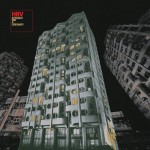
The title lies beautifully. Or maybe it tells the truth too literally. Actually Not A Lifeparty sounds like a rejection, but the body of the record contradicts it with rhythm, voltage, and pulse. HRV - the Polish producer who here revisits a decade shadowed by depression - turns his private collapse into a form of propulsion. The result: something between therapy and EBM séance.
“Actually Not” opens like a hesitant entrance onto a dancefloor no one asked for - beats that twitch rather than groove, basslines that crawl up the spine like static memory. It’s not joyous, but it moves, insistently, like a body refusing to lie still.
“A12” sharpens the edges: electro patterns compress and release in hypnotic cycles, a reminder that control can coexist with chaos. HRV’s production is clean but wounded, every hi-hat and synth stab carrying the trace of something brittle underneath.
“Lifeparty”, the title track, sounds almost celebratory until you listen closely - its rhythm too tight, too self-conscious, as if joy itself were under surveillance. It’s the kind of song you could dance to while thinking about the futility of dancing - which is, admittedly, the best kind.
The final track, “Actually Not (Pray)”, loosens the tension, substituting release for resignation. There’s rhythm still, but slower, like a heart after an argument - tired, but beating.
What HRV achieves here is paradoxical: music of despair that’s bodily, tactile, even seductive. Where many explore darkness by retreating into drones, he faces it through movement - four tracks that translate psychological weight into kinetic ritual.
It’s not a lifeparty, no. But it’s what happens after the lights go out and the body, stubbornly, keeps swaying.
“Actually Not” opens like a hesitant entrance onto a dancefloor no one asked for - beats that twitch rather than groove, basslines that crawl up the spine like static memory. It’s not joyous, but it moves, insistently, like a body refusing to lie still.
“A12” sharpens the edges: electro patterns compress and release in hypnotic cycles, a reminder that control can coexist with chaos. HRV’s production is clean but wounded, every hi-hat and synth stab carrying the trace of something brittle underneath.
“Lifeparty”, the title track, sounds almost celebratory until you listen closely - its rhythm too tight, too self-conscious, as if joy itself were under surveillance. It’s the kind of song you could dance to while thinking about the futility of dancing - which is, admittedly, the best kind.
The final track, “Actually Not (Pray)”, loosens the tension, substituting release for resignation. There’s rhythm still, but slower, like a heart after an argument - tired, but beating.
What HRV achieves here is paradoxical: music of despair that’s bodily, tactile, even seductive. Where many explore darkness by retreating into drones, he faces it through movement - four tracks that translate psychological weight into kinetic ritual.
It’s not a lifeparty, no. But it’s what happens after the lights go out and the body, stubbornly, keeps swaying.