
Sunday, November 22, 2026
Browse by Genre
Industrial Music / Industrial Metal / Aggro Industrial / Electro Metal
Industrial Noise / Power Noise / Harsh Noise
Synth Pop / Electro Pop / Synth-Electronica
Techno / Trance / Goa / Drum'n'Bass / Jungle / Tribal / Trip-Hop
Ambient / Electronica / Ethereal / Dub / Soundscapes / Abstract
Experimental / Avantgarde / Weird & Wired / Glitch / Noise / Field Recording
Dark / Gothic / Wave / New Wave / Dark Wave / Industrial Gothic
New Music / Downtown / Avantgarde Jazz / New Classical / World
Search Reviews
Music Reviews
Pyrroline: Ambiguity
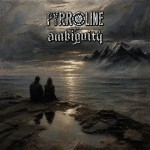
Always when I put on Pyrroline's last album "Struggling" I'm still deeply impressed with its quality and the fact that I can still find new sounds, ideas, and effects on the tracks of this timeless, epic-sounding Dark Electro-album, although it is already 5 years old. Now this German duo returns and continues their path to grow and develop deeper and more detailed into cinematic-sounding classic Dark Electro-music.
With "Ambiguity", Arnte and Schmoun present their newest full-length output once again via Electro Aggression Records (EAR), a label that has steadily built a reputation for championing authentic, multi-layered Dark Electro. Right from the beginning, it becomes obvious that Pyrroline isn't at all interested in delivering cheap, repetitive dancefloor-food for the hyperactive, glowstick-twirling Hellectro brigade. Instead, the duo digs deep into their studio arsenal to squeeze out dense, intricate synthesizer-pads, shifting soundscapes, and biting, pummeling bassline-sequencing works that clearly bows down to the golden mid-90s era of the genre without ever sounding dusty or outdated.
The album opens with the title track "Ambiguity", immediately drawing the listener into a wide, atmospheric scenario with epic string- and pad-layers before the driving beats and Arnte's tense, expressive vocals kick in to lead the way. What separates Pyrroline from many of their colleagues is their remarkable sense for song progression and dynamics. While tracks like "Transition Fault" push forward with sharp rhythmic precision and crisp drum-programming, special praise has to be given to the instrumental "Britzelgritzel" (what a strange-sounding track title!) for its wide, cinematic, and almost Ambient-like passages that showcase the duo's impressive talent for pure atmospheric storytelling without needing a single vocal line.
A special sonic dimension is added when Arnte's female partner Schmoun steps up to the microphone, bringing in her smooth, natural vocal performance as an effective human counterpart to the cold and mechanic music expression of Pyrroline. On "Ambiguity", this contrast shines brightly on "Crossroads Of Progress", where her clear voice weaves gracefully through the intricate electronic structures, as well as on "Day 45", where she takes over the chorus - a brooding track that listeners might already recognize from its pre-release video on YouTube.
To pick out single highlights out of these 12 cohesive tracks is a bit challenging, because the album works best as a complete, immersive sonic journey. However, one track that definitely stands out is the faster-paced "Eventually" with its thick and richly detailed sound layers. The way the atmospheric synth-textures, dystopian lyrical themes, and subtle sonic effects interlock here shows Pyrroline at the absolute peak of their craft - so it comes as no surprise that the duo also submitted this masterpiece to the prestigious HOFA Song Contest in the Industrial category, bringing their authentic underground sound onto a wider stage.
Aside from these gems, I am also quite fine with "Relentless", another track that was already introduced beforehand via a video release on YouTube and features a strong vocal collaboration with TC75, adding an extra dose of raw, energetic pressure to the mix.
Meanwhile, deeper and more atmospheric tunes like "Already Defined?" or the closing "Inner Resonance" showcase the duo's talent for slower, ominous, and filmic soundscapes - leaving plenty of subtle details to discover even after multiple spins, just like on "Struggling".
As for a minor point of criticism on this album – if you want to call it that at all – Pyrroline simply acts like Pyrroline. You know exactly what you will get here: of course delivered on the highest thinkable level of quality and craftsmanship, yet the duo completely avoids surprising style changes or unexpected flirts with other genres. They stay strictly inside their well-defined musical territory without taking risky stylistic detours, which might leave listeners hoping for a bold reinvention slightly wanting.
Finally, some praising words have to be given to the visual presentation of the digipak CD release, crafted by Michael Renfield (R010R), alongside with Arnte. Seeing the silhouettes of the two protagonists sitting in front of a stormy sea during a sundown looks almost romantic, almost natural – what a refreshing contrast to the raw and ominous, cold and mechanic-looking cover artworks of several colleagues in this scene!
"Ambiguity" is undoubtedly another strong addition to Pyrroline's discography. While casual club-goers might miss some instant, straightforward beats here and there, dedicated listeners of classic, well-crafted Dark Electro will be rewarded with a rich, matured album full of subtle details to explore. Whether you prefer adding the well-crafted physical CD-digipak to your shelf or grabbing the digital download, this release deserves a solid spot in any serious Dark Electro-collection.
Sleepwalk: Dystopia
Finally and long awaited, here comes the triumphant return of the Swiss-based Dark Electro-project Sleepwalk. The release of their new album "Dystopia" has taken far too long, especially considering the fact that their previous album "Tempus Vincit Omnia" was released back in 2017. This new 2CD set fulfills the well-known release strategy of the Electro Aggression Records label: to offer the listener as much musical content as possible, with both CDs of this set jam-packed with almost 80 minutes of playing time each. For the band members themselves—now operating as the core duo of founding member Bruno Ruch and vocalist/producer Andreas Lehmann—it was also a long wait until the physical release finally saw the light of day, largely because collecting and assembling the extensive content of the second CD, "Interpretations", proved to be quite time-consuming for various reasons. (Note: A strictly limited 2LP vinyl edition of the main album already saw an earlier release in 2025, while this 2CD package now completes the full picture.)
With roots reaching all the way back to the early 90s in Bern, Sleepwalk have always stood for a complex, multi-layered approach to old-school Dark Electro and EBM rather than simple, one-dimensional club formulas. Mastered once again by Arnte, the 15 original tracks on Disc One prove that the nine-year studio break hasn't dulled their creative edge at all. On the contrary, "Dystopia" unites their trademark ominous, brooding atmosphere with surprisingly accessible melodies and a punchy, contemporary production. The album also carries a deeply personal note, featuring a dedication in memory of Willem Witte of Pantser Fabriek (1978–2025 - RIP).
Right from the ominous opener "Welcome To...", the listener is drawn into a bleak scenario before the title track "Dystopia" immediately emerges as an early highlight—not through sheer club speed, but thanks to its remarkable atmospheric density, woven from brooding, multi-layered synthesizer pads and Andreas Lehmann's distinct, expressive vocal delivery. Immediately following that, "Devil In Disguise" shifts gears and stands out as a particularly well-crafted dancefloor filler, effortlessly uniting infectious, body-moving EBM rhythms with the duo's dark sonic signature. "Psychosis" keeps that club-friendly momentum high, while songs like "Intermediate World" or the slightly more melodic "Phoenix" showcase the band's songwriting depth, taking their time to unfold with plenty of subtle details beneath the surface.
Equally impressive are the two instrumental tracks "Synthetic" and "Force", which truly stand out for their intricate, high-level synthesizer programming and complex rhythmic architecture, proving that Sleepwalk can easily captivate the listener even without vocals. Later in the tracklist, "Ruthless Aggression" and "Egomania" turn up the pressure again, before the eight-minute closer "Last Words" wraps up the main album on a suitably epic and haunting note.
Then there is Disc Two, "Interpretations", compiled by Mr. EAR himself, which offers 17 tracks and truly deserves the highest praise across the board. Far more than a mere bonus disc, it presents 14 cover versions of classic Sleepwalk recordings where every single participating project clearly took their assignment seriously, delivering top-notch, respectful, and deeply dedicated reinterpretations rather than quick throwaway tracks.
Whether it is scene veterans like Plastic Noise Experience ("After Life") and Individual Totem ("Banishment"), or EAR labelmates and peers such as Pyrroline ("Land Under Fire"), T.A.N.K. ("Soul Of Hate"), G.O.L.E.M. ("Your Decision"), Second Disease ("Goddess Of Delight"), Synaptic Defect ("Suppression"), Trilogy ("Hidden Faces"), R010R ("Killing Memories"), Serpents ("Burning In Hell"), Pantser Fabriek ("My Revenge"), Brain Leisure ("Modern Slaves"), and To Avoid ("Grip To The Needle"), there is simply not a single weak spot to be found—even former Sleepwalk co-founder Oliver Spring joins in with Nine Seconds to deliver a remarkable version of "Wheel Of Time". Rounding off this stellar second disc are three noteworthy remixes of new album tracks: Onenine's "Essence Mix" of "Synthetic", Terminal State's gripping rework of "Demons", and especially Pyrroline's brilliant remix of "Dystopia", which opens up so many additional, richly textured facets of the title track that it easily stands on equal footing with the original.
In the end, "Dystopia" is a massive, highly rewarding package for every connoisseur of authentic, multi-layered Dark Electro and classic EBM. Waiting nine years for a new Sleepwalk album was definitely a test of patience, but with 32 tracks in total, strong songwriting on the main disc, and a phenomenal companion disc where every single contributor shines, this 2CD set delivers true value for money and earns an unconditional purchase recommendation—go and get it.
Portion Control: 1983-86 - Hit The Pulse to Purge…

Artist: Portion Control (@)
Title: 1983-86 - Hit The Pulse to Purge…
Format: CD x 4 (quadruple CD boxset)
Label: Artoffact (@)
Rated:

Title: 1983-86 - Hit The Pulse to Purge…
Format: CD x 4 (quadruple CD boxset)
Label: Artoffact (@)
Rated:
There is something pleasingly perverse about a band called Portion Control delivering a four-CD collection that contains enough material to keep an industrial dancefloor occupied until the building is condemned. Formed in London in 1979, Portion Control emerged from the post-punk underground with an approach to electronic music that was abrasive, rhythmically inventive and distinctly uninterested in behaving itself. Their importance is often measured through the artists who followed their lead, from Depeche Mode and Nitzer Ebb to Skinny Puppy, Front Line Assembly, Nine Inch Nails and Orbital. Yet influence can be a rather lazy form of historical recognition: it tells us who borrowed from whom, but not necessarily why the original music still deserves attention. "1983-86 - Hit The Pulse to Purge…" makes a fairly convincing case for listening to the source rather than merely admiring its descendants.
The collection covers a particularly fertile stretch of the group's history, bringing together the "Hit The Pulse" mini-album (1983), "..Step Forward" (1984), "Psycho-Bod Saves The World" (1986), the "Purge" EP and a selection of singles, B-sides, rarities, remixes, demos and live recordings. Its opening disc establishes the group's distinctive vocabulary: sequenced electronic patterns, hard-edged percussion, rough vocal delivery and bass lines that seem to have been designed with the express purpose of making furniture nervous. But the music is not simply an exercise in mechanical aggression. There is a strong sense of songcraft beneath the rough surfaces, with hooks, structural shifts and an instinct for rhythmic tension that prevent the material from becoming a monotonous parade of electronic blunt instruments.
The early tracks retain something of post-punk's unruly spirit, although guitars are largely replaced by synthesiser sequences and sampled fragments. Portion Control's relationship with technology was experimental in a practical rather than romantic sense. In the early days, the group worked with an ARP Axxe, Roland CR-78 drum machine and the Greengate DS:3 sampling system running on an Apple II computer, an arrangement whose limitations were apparently more productive than discouraging. Sampling was still a relatively young technique, and the available equipment offered little of the convenience that contemporary producers take for granted. The band's solution was not to wait for better tools, but to find ways of making the existing ones misbehave. Their early fascination with dub, particularly its use of echo, space and repetition, also helped distinguish their sound from the more straightforward electronic constructions of the period.
That mixture of rhythmic discipline and unruly detail is especially evident in "Hit The Pulse" and the material surrounding it. Tracks such as “Chew You To Bits”, “Discord” and “Death By Venom” have a wiry, confrontational energy, while “Abbo Dabbo” demonstrates that the group's sense of humour was not confined to the occasional eccentric title. The subsequent singles “Raise The Pulse”, “Rough Justice” and “Go-Talk” move more decisively towards the dancefloor, stretching the rhythmic framework into longer forms without sanding away the band's abrasive character. Their appeal lies partly in the tension between physical immediacy and sonic oddness: these are records that can make a body move while leaving the brain wondering what exactly has just happened.
"..Step Forward" marks another important stage in that development. The increased use of sequenced synthesiser lines, including the Roland MC-202, gives the music a more defined electronic architecture. “Havoc Man” and “Refugee” are particularly revealing examples of the band's ability to construct momentum through interlocking patterns rather than relying on conventional instrumental gestures. There is a curious balance between precision and volatility: the sequences are tightly controlled, but the vocals and surrounding textures retain a distinctly human roughness. The result is neither polished synth-pop nor industrial noise in its most uncompromising form. Portion Control occupied a productive patch of territory between the two, and seemed quite happy to leave the borders unmarked.
The second disc brings "Psycho-Bod Saves The World" into focus, alongside the "Purge" material and later reconstructions. The album's title alone suggests that the group had no intention of allowing solemnity to become a permanent condition. Its music continues the band's interest in forceful electronic rhythm, but the collection's broader range becomes more apparent here. “Brain Scraper Death Dive”, “Siren City”, “Danger Zone” and “Cut And Thrust” demonstrate different shades of the group's approach, from compact rhythmic assaults to more developed, dance-oriented constructions. The humour embedded in the titles is worth noting, too. Portion Control have always understood that darkness need not be accompanied by a compulsory facial expression suggesting a particularly difficult tax audit.
The "Purge" versions of “Raise The Pulse”, “Go-Talk” and “The Great Divide” provide an interesting opportunity to compare the band's treatment of familiar material. The latter, in particular, appears in several forms across the set, making its development one of the collection's recurring reference points. Rhys Fulber's rebuild of “Refugee” adds a later perspective, connecting the original recording with one of the artists whose work grew out of the same electro-industrial lineage. It is a useful inclusion, although the original remains essential to understanding the band's own musical language.
The third disc, devoted to B-sides, compilation appearances and demos, is where the collection becomes especially valuable to listeners interested in the mechanics of the creative process. Some of this material is less immediately accessible than the principal album tracks, but that is hardly a fault. “The Man Who Did Backwards Somersaults”, “Upside Down” and “Justice” reveal a group willing to explore less predictable structures, while the two demos of “H.O.T. Matter” offer a glimpse of how a composition can change during development. The Arthur Baker demo mix of “Conscience” is another welcome archival detail. These recordings do not merely pad out the running time; they broaden the picture of a band whose catalogue was never limited to a handful of genre-defining singles.
The final disc moves from the studio to two live recordings, captured in Amsterdam in 1984 and Lausanne in 1985. Their value is partly historical, but also musical: tracks such as “Eat Your Heart”, “Go-Talk”, “Raise The Pulse”, “Karateka” and “Havoc Man” acquire a different character when heard in performance. The sound is less controlled, the transitions more exposed, and the material's physical qualities become harder to ignore. These are documents rather than pristine concert productions, which is precisely why they belong here. They offer a useful reminder that Portion Control's music was never intended to remain safely inside the circuitry of a recording studio.
As an archival release, "1983-86 - Hit The Pulse to Purge…" is impressively comprehensive. All the material has been remastered by Paul Lavigne at Kontrast Mastering, while the 24-page booklet and archive photographs give the package a welcome visual dimension. The limited red-vinyl edition, with ten selected tracks, offers a more compact entry point, but the four-CD version is plainly the more rewarding option for anyone wanting to understand the full scope of this period. Its sheer length can occasionally test one's attention, and not every demo or alternate version is likely to become indispensable. That is an inevitable consequence of opening the archive rather than simply selecting the most obvious highlights.
Portion Control's subsequent return in the 2000s, followed by records such as "Wellcome", "Filthy White Guy" and "Pure Form", demonstrated that the group was not interested in treating its early catalogue as a museum exhibit. Their later work continued to develop the same interest in electronic construction, texture and rhythmic force, using newer tools without abandoning the independence that had shaped their beginnings. This collection therefore feels less like a nostalgic detour than an opportunity to reconsider a group whose historical importance has sometimes exceeded its public visibility.
The best thing about "1983-86 - Hit The Pulse to Purge…" is that it does not need to rely on influence as its main selling point. The music remains inventive, energetic and occasionally gloriously peculiar on its own terms. Portion Control were not simply preparing the ground for other artists to build something more commercially successful upon it. They were making records with their own personality, their own sense of rhythm and a healthy disregard for the boundaries between experimentation and entertainment. Forty years later, the pulse is still very much present. The purge, apparently, can wait.
Elektrikill: Macabre Masquerade
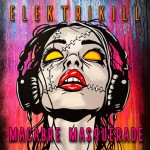
Halloween is generally the one night of the year when people willingly dress as monsters, although the rest of the calendar offers ample evidence that the distinction between costume and character is becoming increasingly academic. Elektrikill's "Macabre Masquerade" takes this observation rather seriously, then proceeds to have a thoroughly unhealthy amount of fun with it. The second full-length album released by Steve Vil's New Jersey project in 2026 is a thirteen-track gathering of vampires, parasites, demons, digital phantoms and assorted human malfunctions, held together by pounding electronic rhythms, industrial abrasion and a decidedly crooked sense of humour. It is a record that knows its horror references, enjoys its own theatrical excesses, and occasionally seems to suspect that the most frightening creature in the room might be the person holding the smartphone.
The album is conceived as a continuous Halloween celebration, but its construction is more interesting than a simple parade of seasonal curiosities. Alongside new material, Vil revisits earlier Elektrikill compositions, gives them new treatments and invites Kill Vector, Kontrol Phreak and SPKTR to contribute remixes. DarkHeart Syndicate also joins the project on “Digital Ghosts”. The result is a mixture of original tracks, alternate versions, collaborations and short interludes, arranged to maintain the impression of one extended nocturnal event. The approach has its risks: thirteen tracks built around a common horror aesthetic could easily become a rather exhausting exercise in graveyard decoration. Yet the changes in rhythm, texture and attitude give the album enough variation to keep its monsters from looking like identical extras in a low-budget zombie film.
The opening title track is a short spoken introduction to the proceedings, establishing the album's deliberately exaggerated atmosphere. Its references to supernatural creatures, corrupted machines and questionable refreshments set the tone, while the closing suggestion that eternity is a very long time provides a useful reminder that even the undead might eventually become bored. “Vampire Blond (Revamped)” follows with a more recognisable song structure, combining dark electronic propulsion with a camp horror narrative. The Russian setting, sinister seductress and undead witch are handled with a knowing theatricality that owes as much to the tradition of gothic pulp as to industrial music. The track's revised treatment also makes sense within the album's broader logic: Vil is not merely recycling older material, but dressing it for a different occasion.
The first substantial shift arrives with “Digital Ghosts”, a collaboration with DarkHeart Syndicate. Here the monsters are no longer supernatural, but technological and social. The lyrics address surveillance, data extraction, manufactured outrage, algorithmic distraction and the gradual surrender of individual agency to digital systems. It is the album's most overtly contemporary subject, and arguably its most convincing conceptual moment. The idea of electronic ghosts haunting the machinery of everyday life is hardly new, but it acquires a suitably uncomfortable dimension when placed alongside the record's more traditional horror imagery. The track suggests that the supernatural has been made almost redundant by systems capable of recording, measuring and monetising practically every human impulse. Dracula wanted your blood; the modern vampire prefers your behavioural data, and has a much better customer-retention strategy.
“I See Demons (Michael Myers Murder Mix)” turns the focus inward. Its horror is psychological, built around the disturbing possibility that evil is not always something encountered in another person. The repeated uncertainty between what is perceived and what is desired gives the track a more paranoid character, while the references to a smiling public face concealing something murderous play effectively with the album's interest in masks and deception. The Michael Myers designation places it firmly within the slasher-film universe, but the underlying subject is less about a masked killer than about the capacity for self-deception. The monster, as usual, has an inconvenient habit of looking familiar.
Kontrol Phreak's “Parasite (Darkest Fear Mix)” brings a more direct club-oriented energy. Its repetitive vocal structure reinforces the idea of an intrusive presence taking up residence in somebody else's mind, turning psychological dependency into something almost physically invasive. The remix treatment gives the track a more pronounced electronic insistence, and its relatively straightforward construction makes it one of the album's more immediate moments. “I Used To Be Human (Body Horror Mix)” is considerably less playful in its implications. The repeated loss of empathy, innocence and conscience is framed as a transformation into something monstrous, with the body-horror reference extending beyond physical mutation towards a more disturbing alteration of character. It is one of the record's bleakest ideas: the creature is not born evil, but manufactured through damage, exploitation and betrayal. The distinction is important, even if the resulting monster is unlikely to receive an invitation to the neighbourhood barbecue.
Kill Vector's contribution to “Ravenous (Rave Noose Mix)” shifts the emphasis towards appetite, instinct and predation. The title is a particularly effective piece of wordplay, suggesting both the compulsive energy of rave culture and the more sinister implications of being caught in an endless cycle of desire. The remix gives the track a strong rhythmic identity, while the lyrics abandon the comforting fiction that humanity has somehow escaped its animal origins. The distinction between survival and cruelty becomes increasingly difficult to maintain. It is a suitably carnivorous moment, although one suspects that the refreshments at this particular party should be inspected rather carefully.
“The Scream (Screamix)” returns to the album's technological unease, with the hum of electrical systems, photographic records and the unreliability of perception providing the basis for another confrontation with the self. Its central image is that of an internal voice that remains unheard until it becomes impossible to ignore. The track's expanded treatment gives the material room to develop beyond a simple horror reference, while the title also nods towards the cinematic language that informs much of the record. The subsequent “Drugs & Candy (Trick Mixxx by SPKTR)” is almost absurdly concise, reducing its subject to a deliberately provocative collision between childhood treats and chemical temptation. It is the kind of joke that might make a health-and-safety officer reach for the emergency exit, but its brevity works in its favour.
“You Are The Love Of My Death” brings a more explicitly romantic form of morbidity into the picture. Its imagery of lovers bound together beyond the grave is melodramatic by design, but there is something rather appealing about the album's refusal to separate affection from danger. Here love is not a reassuring antidote to darkness; it is another pact whose consequences may be difficult to escape. “Monster” then returns to the central question of responsibility, suggesting that the creature's violence may be a response to the cruelty of the world that created it. The narrative moves from persecution to revenge, raising the familiar horror-film question of who, exactly, deserves to be called monstrous. The answer is not particularly comforting.
The two closing pieces, “Drugs & Candy (Treat Mix)” and “Hellhole (Unending Torment Mix)”, function as brief, deliberately exaggerated codas. The former uses fragments of spoken material to push its dark joke into more uncomfortable territory, while the latter reduces the finale to a handful of apocalyptic declarations. Neither is intended as a fully developed composition; they are closer to the last scraps of noise and conversation after the main event has become thoroughly unmanageable. Ending with a short descent into infernal absurdity feels entirely appropriate. There is no attempt to restore order, and frankly, after this many monsters, a tidy conclusion would have seemed suspicious.
Elektrikill is the solo project of Steve Vil, based in Alpha, New Jersey. His debut full-length, "Monsters", appeared in 2023 and established the project's interest in the darker aspects of human behaviour, combining club-oriented industrial electronics with material informed by Vil's experience composing music for film and visual media. The album's structure already demonstrated an interest in moving between dance-oriented tracks and more cinematic, atmospheric passages. Subsequent releases, including "Propaganarchy!" and the 2026 EPs, developed the project's confrontational relationship with political hypocrisy, manipulation and social decay. "Küntzpiracy", released earlier in 2026, continued that direction with a more explicitly political emphasis. "Macabre Masquerade" draws on the same concerns but approaches them through horror imagery, black comedy and the deliberately theatrical language of genre cinema. Elektrikill has also appeared on the "Electronic Saviors 7" compilation, released through Distortion Productions and Metropolis Records, with the exclusive track “Titan Of Will”.
Musically, Vil's palette draws on the familiar vocabulary of EBM, dark electro, industrial rock and electronic dance music, with distorted synthesiser textures, forceful programmed rhythms and a vocal delivery designed to cut through the arrangements. There are obvious points of reference in the history of industrial music, from the mechanical aggression of Ministry and Skinny Puppy to the more accessible electronic structures associated with KMFDM and Laibach. But "Macabre Masquerade" is not especially interested in historical reconstruction. Its strongest moments come when Vil uses these established forms to support the album's particular mixture of social criticism and horror entertainment. The remixes also help prevent the material from settling into a single production formula, introducing different rhythmic emphases and approaches to the source songs.
The record's principal limitation is also connected to its greatest strength. Its imagery is deliberately unsubtle, and the lyrics sometimes favour blunt declarations over ambiguity. The monsters are named, the villains are identified, and the moral conclusions are rarely left entirely unresolved. Listeners looking for the psychological complexity of David Lynch or the restrained dread of a genuinely unsettling horror soundtrack may find the album rather too eager to explain its own nightmares. But subtlety is not the only available artistic virtue, and there is a certain pleasure in an album that understands the value of theatrical excess. Its humour is often broad, its references unmistakable, and its appetite for grotesque imagery seemingly limitless. Not every Halloween party needs to be an exercise in existential refinement.
What gives "Macabre Masquerade" a little more substance than its seasonal premise might suggest is the continuity between its supernatural and contemporary subjects. Vampires, demons and parasites are not merely decorative characters; they become metaphors for exploitation, addiction, surveillance and the corruption of human relationships. The album's most effective moments occur when the distinction between these categories begins to disappear. Its monsters may have fangs, claws and supernatural appetites, but the most recognisable horrors are often those that require no special effects at all.
In the end, "Macabre Masquerade" is a lively, unapologetically theatrical industrial album that understands the value of a good fright and an even better punchline. It does not attempt to reinvent dark electronic music, nor does it need to. Instead, Steve Vil assembles a suitably unruly celebration from his own catalogue, new material and outside contributions, giving familiar themes a fresh set of masks. The party may be eternal, but at least the soundtrack knows when to change the record. And if something starts scratching at the door after the final track, it is probably best not to check whether it has brought candy.
Choke Chain: Decomposition EP
Artist: Choke Chain (@)
Title: Decomposition EP
Format: 12" + Download
Label: Negative Gain Productions (@)
Rated:

Title: Decomposition EP
Format: 12" + Download
Label: Negative Gain Productions (@)
Rated:
Humanity has spent centuries developing philosophy, medicine, diplomacy and an impressive assortment of devices for making life easier. It has also perfected the art of turning minor disagreements into mass graves, so the overall progress report remains mixed. "Decomposition", the latest release from Milwaukee’s Choke Chain, approaches this discrepancy without much faith in a happy ending. Mark Trueman’s seven-track EP is a harsh dispatch from a mind struggling with personal trauma and a wider world whose capacity for cruelty appears to outstrip its ability to learn from experience. There is no shortage of industrial music that treats despair as an attractive accessory, preferably accompanied by black clothing and suitably menacing typography. Trueman’s approach feels less decorative. The anger has a personal source, and its targets extend beyond the usual dystopian scenery to the actual human beings who keep making the world so difficult to inhabit.
Choke Chain began around 2018 as Trueman’s vehicle for bringing together dark electro, electronic body music and the raw aggression of hardcore punk. His musical vocabulary draws on the abrasive electronics of the 1990s, from Skinny Puppy and Front Line Assembly to Leæther Strip, Placebo Effect and Mentallo & The Fixer. Yet the punk influence is not merely a historical reference pinned to an electronic production. It shapes the music’s attitude: impatient, confrontational and suspicious of anything that makes anger sound too sophisticated to be sincere. Trueman’s programming supplies the muscular pulse, while the vocals deliver their distress without the polished theatricality that can make industrial aggression feel like a particularly elaborate stage costume. The result is music designed to exert pressure, but also to communicate something more specific than a general enthusiasm for unpleasant noises.
"Misunderstood" opens with the bluntness its title suggests. The track establishes an atmosphere of antagonism through forceful electronic rhythms and a vocal presence that seems unwilling to negotiate for the listener’s approval. There is an old-school EBM discipline beneath the aggression, a sense that the rhythm must remain physically compelling even as the surrounding textures turn abrasive. This is one of Trueman’s strengths: the music does not abandon its bodily purpose in favour of atmospheric misery. You can imagine a dance floor responding to it, although the mood is closer to a mass meeting of people who have all received the same deeply disappointing email.
The title track pushes further into the EP’s central concern. "Decomposition" evokes a process in which something once functioning begins to break down, and the idea applies equally well to personal resilience, social trust and the larger fantasy that civilisation is steadily improving. Industrial music has long used mechanical repetition to suggest systems that continue operating after their original purpose has become questionable. Trueman works within that tradition, using insistent rhythm and harsh electronic timbres to create a sense of activity without reassurance. The machinery keeps going; the question is whether anything worthwhile is being accomplished. This is not a particularly comforting thought, but comfort is clearly not the service being offered.
At just under three minutes, "Morgue" is the EP’s shortest original track, and its title leaves little room for interpretative optimism. Its compact form suits the subject: there is no need to stretch the atmosphere into a lengthy exercise in gothic solemnity when a more direct impact will do. "Life Ends", by contrast, has more time to develop the record’s oppressive momentum. Together, these pieces make mortality less an abstract philosophical theme than the blunt limit against which human cruelty becomes especially difficult to excuse. The grimness is deliberate, but the EP is not simply trying to win a competition for the most alarming song title. Its fixation on death follows from its concern with the damage people inflict on themselves and one another while the clock continues to run.
"Imprisoned" turns the emphasis towards confinement, a concept that can be understood psychologically as well as socially. Trueman’s electronic arrangements reinforce the feeling of restricted movement, their repetitive drive offering propulsion without much suggestion of escape. The combination of rigid rhythm and raw vocal delivery makes the music feel caught between the desire to break free and the exhaustion that can accompany prolonged struggle. There is an uncomfortable familiarity to that tension. Not every prison requires walls, and not every attempt to escape begins with a convincing plan. Sometimes it begins with the refusal to accept that the present arrangement is normal.
The final two tracks revisit "Decomposition" and "Imprisoned" through remixes by MVTANT and Mortal Realm. Their inclusion expands the EP beyond Trueman’s own framing, allowing other producers to reinterpret its material rather than simply repeat its emotional conclusions. Remix culture can sometimes resemble the administrative process of moving the same paperwork into a different folder, but here the alternate versions provide a useful change of perspective. The source material remains recognisable while the emphasis shifts, testing how much the tracks’ oppressive character depends on their original construction and how much is embedded in the underlying ideas. They also prevent the EP from ending as a sealed statement: the music is subjected to further handling, altered by another set of decisions.
The title "Decomposition" might suggest total collapse, but the EP’s force comes from the fact that it remains active. These tracks are not inert monuments to hopelessness. They move, strike and insist, using the energy of dark electro and punk to turn distress into something that can be heard and physically registered. Trueman has spoken about writing the material during a period when he came close to giving up, while also attempting to address personal trauma that he had previously avoided in his music. That context lends the record a more difficult dimension than simple misanthropy. There is a difference between declaring that the world is rotten because it sounds suitably dramatic and making music from a period when despair has become a genuine problem to confront. The distinction cannot be measured by distortion levels, but it can be felt in the urgency of the performance.
The EP’s unrelieved darkness may limit its emotional range for listeners who need contrast to make intensity meaningful. Its relentless hostility can also become wearing, particularly when the themes of cruelty, death and confinement reinforce one another across the tracklist. But this refusal of easy relief is integral to the record’s purpose. Trueman is not offering a reassuring narrative in which suffering becomes wisdom and everything eventually falls into place. Nor does he appear interested in making misery fashionable. The bluntness is part of the statement: some experiences are ugly, and a musical response does not have to make them palatable before it can be useful.
What makes "Decomposition" more compelling than a routine exercise in industrial pessimism is the friction between its electronic precision and its emotional rawness. The rhythms are controlled, the production forceful, the structures purposeful, yet the underlying perspective remains unsettled. The machines can be programmed; the feelings that motivate them cannot be made so cooperative. Choke Chain’s achievement is to turn that contradiction into a record that is both physically direct and psychologically exposed. It does not pretend that music can repair the damage it describes, and it does not confuse bleakness with profundity simply because both look good in black. It gives anger a form, trauma a means of expression and despair a pulse that refuses to lie still. In a world so adept at manufacturing reasons for hopelessness, that is not a cure. It is, at least, a refusal to keep quiet.