
Saturday, November 21, 2026
Browse by Genre
Industrial Music / Industrial Metal / Aggro Industrial / Electro Metal
Industrial Noise / Power Noise / Harsh Noise
Synth Pop / Electro Pop / Synth-Electronica
Techno / Trance / Goa / Drum'n'Bass / Jungle / Tribal / Trip-Hop
Ambient / Electronica / Ethereal / Dub / Soundscapes / Abstract
Experimental / Avantgarde / Weird & Wired / Glitch / Noise / Field Recording
Dark / Gothic / Wave / New Wave / Dark Wave / Industrial Gothic
New Music / Downtown / Avantgarde Jazz / New Classical / World
Search Reviews
Music Reviews
Martin Küchen: Chase the Demons Out
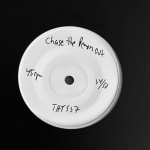
Artist: Martin Küchen (@)
Title: Chase the Demons Out
Format: 7"
Label: Thanatosis Produktion (@)
Rated:

Title: Chase the Demons Out
Format: 7"
Label: Thanatosis Produktion (@)
Rated:
There are records that invite contemplation, records that demand attention, and then there are records that seem to grab you by the collar and ask what exactly you think you are doing with your life. "Chase the Demons Out" belongs rather firmly to the third category.
Martin Küchen has spent much of his career demonstrating that improvisation can accommodate enormous structures, from the expansive work of Angles to his collaborations with figures such as Phil Minton, Mark Sanders, Burkhard Beins and Keith Rowe. His solo work, however, has repeatedly shown another side of that vocabulary: less concerned with architectural grandeur than with what happens when sound is reduced to its most combustible components.
This three-part release is almost aggressively economical. Küchen plays sopranino saxophone, hand drums, cymbals, metal plates and bowls, with no overdubs, recorded in Malmö in October 2024. The equipment list might look like the inventory of an unusually argumentative kitchen, but the result is considerably more purposeful.
The opening “Chase the Demons Out” is an immediate confrontation. The sopranino doesn't so much sing as claw its way through the air, while percussion provides a dense, unstable ground beneath it. Notes splinter, drums thud, metal flashes. There is no attempt to make anger aesthetically convenient. The piece takes its title from a phrase associated with Chinese state propaganda of the 1970s and its rhetoric of eliminating ideological enemies, turning the historical reference into something uncomfortably contemporary. Yet what makes the piece compelling is that Küchen doesn't simply translate political outrage into loudness. He makes it physical. The saxophone seems to struggle against the percussion rather than merely ride above it, creating a strange sensation of resistance happening in real time. Every sound appears to have to earn its existence.
Then comes “Mach kein Krach!”, whose title translates roughly as “don't make noise”. The joke is almost too perfect. The childhood injunction to be quiet becomes, in Küchen's hands, an argument for precisely the opposite. This isn't noise for noise's sake. It is the sound of refusing to disappear politely. The percussion becomes more insistently bodily, while the saxophone acquires an almost wounded insistence, as though someone has finally decided that obedience was a rather poor career choice.
The final “Mit Ach und Krach” extends the idea through a German expression describing something accomplished only with considerable difficulty. It is an appropriate conclusion because this music never gives the impression that resistance is glamorous. There is nothing heroic about these sounds. They sweat. They scrape. They wheeze. They keep going. That distinction matters. Experimental music occasionally falls into the trap of confusing extremity with profundity, as if turning the volume up automatically grants access to political truth. Küchen avoids that trap because the extremity here is structural rather than decorative. The violence of the music is inseparable from its fragility. The sopranino can sound furious one moment and almost unbearably exposed the next. The drums don't establish a reassuring pulse; they create pressure.
The three pieces consequently feel less like separate compositions than different stages of one psychological mechanism: witnessing something intolerable, refusing silence, then discovering that resistance itself is exhausting. It is not exactly a cheerful progression. Humanity, in its infinite wisdom, has once again provided Küchen with plenty of source material. There is also something refreshingly old-fashioned about the record's politics. Not simplistic, but direct. At a time when protest is routinely converted into branding, content and algorithm-friendly outrage, Küchen offers three instruments and roughly sixteen minutes of sound that refuses to package its anger into a slogan. The music doesn't tell us what to think so much as recreate the sensation of being unable to accept what we are seeing.
This is particularly evident in the relationship between the title track and the closing piece. "Chase the Demons Out" looks outward, toward authoritarianism, violence and collective fear. "Mit Ach und Krach" turns the same energy inward, toward the sheer difficulty of doing anything about it. Between them stands "Mach kein Krach!", the beautifully absurd parental command that becomes a miniature manifesto: don't be quiet merely because quiet is more convenient for everybody else. And then there is the physicality of the recording. Because there are no overdubs, everything happens within the same precarious moment. The metallic surfaces, drums and saxophone occupy the same breathing space. You can almost hear Küchen negotiating the limits of his own body. This isn't an edited representation of fury; it is fury having to operate through lungs, hands, skin, metal and time.
That makes "Chase the Demons Out" a surprisingly intimate record beneath its abrasive exterior. Its anger is not theatrical. It feels closer to moral fatigue, the exhaustion that comes from repeatedly encountering reasons to shout and discovering that shouting is still one of the few things available to you. Thanatosis, fittingly, has issued it as a very limited 7-inch edition of only 50 numbered copies, alongside the digital release. A tiny physical object containing a disproportionate amount of fury. Human beings do love putting enormous emotional problems into small cardboard sleeves.
Küchen's answer is not to defeat the demons, at least not musically. He makes them audible, then refuses to give them the final word. The record ends not in resolution but in effort, the sound of someone continuing to push against whatever is pressing back.
Sometimes resistance is majestic. Sometimes it is bloody, clumsy and noisy. This one chooses noise. And, for once, that's probably the point.
Flocks: Lagoon

There is a particular kind of musical deception involved in "Lagoon": it sounds as though Werner Durand and Uli Hohmann have wandered into some primordial landscape, discovered a forgotten civilisation still making instruments out of reeds, shells, strings and animal noises, and decided not to ask too many questions. In reality, the archaeology is largely self-inflicted. Many of the instruments on this record were built by the musicians themselves, which makes "Lagoon" less a reconstruction of some imaginary elsewhere than a convincing argument for inventing your own elsewhere.
The Berlin duo's second album follows their self-titled 2023 debut, extending an approach based on Durand's drones and winds, Hohmann's percussion and strings, and an assortment of electronics. The palette is remarkably tactile: tenor saxophone, extended shakuhachi, pan-ney, circular water ney, frog horn, PVC clarinets and horns meet daf, kanjira, riq, ghatam, Tibetan bells, Venetian shells, bamboo-tube zither and other homemade devices. It is quite a list. One suspects that if you invited these two men round to assemble an IKEA shelf, they would return three hours later with a new species of flute.
What makes "Lagoon" compelling, however, is that the instruments never become curiosities for their own sake. Their unfamiliar timbres are absorbed into a remarkably coherent musical ecosystem. The stated reference points, Krautrock and Jon Hassell's Fourth World, are certainly audible, but Flocks do not sound like a tribute act rummaging through somebody else's record collection. The relationship between drone, breath and percussion is too organic for that. Contemporary descriptions of the album have similarly emphasised its long-form, immersive character and the way Durand and Hohmann create a kind of minimal orchestral density from their small arsenal of sounds.
The opening “Whirls” takes ten minutes to establish the rules, which is probably why it works. There is no grand entrance. A tone emerges, another begins to orbit it, percussion appears almost as a disturbance in the air rather than a conventional rhythmic statement. Gradually the piece develops a peculiar rotational quality. The title is accurate without being annoyingly literal: the music seems to turn around itself, but never quite closes the circle.
Durand's playing is particularly important here. His wind instruments don't behave like conventional melodic voices. They breathe, rasp, drone and occasionally seem to vibrate at the edge of recognisable pitch. The saxophone becomes less a vehicle for jazz phrasing than an organism inside the larger texture. Hohmann responds with percussion that is equally liberated from the obligation to keep time. A strike can be a pulse, a colour, a punctuation mark or simply a physical event. That tension between rhythm as structure and rhythm as atmosphere becomes one of the album's defining characteristics.
“Tidal”, at almost eleven minutes, makes the relationship clearer. This is probably the closest "Lagoon" comes to the hypnotic propulsion associated with Krautrock, but its motor is wonderfully imperfect. The rhythm doesn't march forward like a sequencer. It swells and contracts, gathers momentum and then seems to reconsider its intentions. Over it, Durand's winds accumulate in translucent layers.
This is where the Jon Hassell connection becomes especially persuasive. Hassell's Fourth World concept famously imagined a music capable of existing beyond the simplistic opposition between Western modernity and supposedly “traditional” cultures. Flocks approach that territory through a similarly hybrid vocabulary, but their solution is much more handmade. Electronic and acoustic sounds don't compete for ideological territory. They simply coexist. And that matters because "Lagoon" could easily have fallen into the trap that often accompanies so-called “world music”: treating instruments from different traditions as exotic seasoning for Western composition. Instead, the duo's own history provides a more convincing basis for the encounter. Durand studied saxophone as well as Indian and Persian flutes and has worked extensively with artists including Amelia Cuni, David Behrman, Ellen Fullman and Catherine Christer Hennix. Hohmann studied Ghanaian percussion with Mustapha Tettey Addy and Persian tombak and daf with Nemad Darman, while also constructing his own string instruments. Their shared practice therefore feels less like stylistic tourism than a long-running investigation into how different sonic traditions might inhabit the same physical space.
Then comes the twenty-minute “Lagoon”, and suddenly the album's title stops sounding like a convenient metaphor. The piece is not a climax in the conventional sense. It is more like an environment becoming visible after you've already been standing inside it for some time. The percussion establishes a slowly mutating rhythmic field while winds and drones pass through it in overlapping currents. Nothing demands attention, yet nothing is entirely passive. The track has the unusual ability to make duration itself feel like an instrument. This is perhaps where Flocks distinguish themselves most clearly from ordinary drone practice. A drone can easily become an excuse for removing decisions. Just hold the note, add some reverb, stare philosophically at a window. Humanity has produced an impressive quantity of such music. "Lagoon" instead treats sustained sound as a condition in which decisions can become smaller, subtler and therefore more consequential. A percussion stroke shifts the balance. A breath alters the harmonic centre. A new overtone changes the apparent size of the room. The effect is strangely physical. You don't merely hear layers accumulating. You develop the impression of being somewhere where those layers are already present.
There is also something wonderfully anti-digital about the album, even though electronics are part of its vocabulary. The sounds have fingerprints. They squeak, buzz, resonate, decay and occasionally behave badly. The homemade PVC instruments and bamboo constructions don't aspire to the perfection of manufactured instruments. Their imperfections become compositional information. That makes the record feel closer to ecology than architecture. An ecosystem does not require every organism to perform the same function, and it doesn't need a metronome to prove that time is passing. Things coexist, interfere with one another, adapt and disappear. "Lagoon" operates according to much the same principle. The recent reception of the album has picked up on this sense of multiplicity and transformation, describing its three extended pieces as a kind of sonic geography in which drone, breath and percussion continually alter their proportions. The description is apt, although geography may actually be a too static word. These pieces feel more like weather systems. And this is where the title "Lagoon" becomes particularly intelligent. A lagoon is neither entirely land nor entirely sea. It is a transitional space, shaped by movement and separation at the same time. Flocks inhabit a comparable zone: neither traditional music nor experimental abstraction, neither ambient suspension nor rhythmic composition, neither acoustic ritual nor electronic construction.
The album does not resolve those oppositions. It makes them unnecessary. There is a temptation to describe music like this with words such as “ancient”, “tribal”, “mystical” and “primordial”, because apparently whenever humans hear a homemade flute over a drone they immediately start looking for the nearest cave. "Lagoon" deserves better vocabulary. Its fascination is not that it sounds ancient. It is that it makes the distinction between ancient and contemporary seem rather less useful than we normally assume. The music is built from old things: breath, skin, wood, metal, vibration, repetition. It is also unmistakably the product of contemporary experimentation, recording technology and an artistic culture that has spent decades dismantling the boundaries between composition, improvisation, sound art and electronic music.
So perhaps "Lagoon" isn't taking us backwards at all. Perhaps it is simply taking us sideways. By the time the final minutes of the title track arrive, the distinction between Durand's winds and Hohmann's percussion has become pleasantly unstable. The music seems to have stopped presenting individual sounds and started presenting relationships. One element exists because another is there to answer it. Remove one and the whole environment changes. That is the quiet achievement of "Lagoon": it makes collaboration audible without ever turning collaboration into a slogan.
Three tracks. Forty-one minutes. A ridiculous number of homemade instruments. Two musicians who clearly have very little interest in behaving sensibly. And an album that manages to suggest a whole continent of sound without ever pretending that it has discovered one. Sometimes the most convincing way to invent a new world is simply to make your own instruments and listen carefully to what happens when they start talking to each other.
Hara Alonso: Music of Many Nows

There is something faintly rebellious about paying attention to ordinary life. Not in the heroic sense, obviously. Nobody is going to erect a statue for the person who noticed the rain hitting a pavement differently on a Tuesday morning. Modern life has decided that attention should be monetised, accelerated and preferably accompanied by a notification. Hara Alonso's "Music of Many Nows" quietly refuses the arrangement.
Instead, she listens.
The premise is deceptively modest: spontaneous recordings made on a phone, gathered from the places where Alonso walks, works and simply happens to exist. A choir rehearsal overheard through a window, a badly tuned piano, fountains in Granada, rain, fragments of urban ambience. On paper this sounds like the sort of project that could easily become a tasteful field-recording diary, complete with a photograph of moss and an unnecessarily serious paragraph about "presence". Thankfully, Alonso is a musician first, and the material is treated as composition rather than evidence.
The result is a five-track work lasting barely twenty-six minutes, but its temporal scale is considerably stranger. "Music of Many Nows" seems to stretch the instant without freezing it. Its "now" is plural because there is never only one present: there is the street, the memory of the street, the sound entering the microphone, the sound reconstructed later, and the listener's own moment of hearing it. Alonso turns these overlapping temporalities into something resembling a sonic notebook, although one whose pages have been exposed to weather, electricity and mild philosophical instability.
That makes “Everything is Moving” a particularly apt beginning. The title could sound like a statement from someone having a bad day at the railway station, but here movement is less about destination than permeability. Sounds seem to pass through one another rather than line up obediently. Alonso's electronic language, developed through her work with piano, extended techniques, signal processing and granular textures, has always had a physical component. She is a pianist and composer concerned with the body and with the way space can become part of the instrument. Her current practice also extends into research around listening and corporeal experience at Stockholm University of the Arts.
On "Music of Many Nows", that concern becomes almost invisible. And that is precisely its strength.
“A Second is a Choir”, featuring cellist Lia Kohl, is where the album's method becomes especially persuasive. Rather than presenting environmental recordings as exotic specimens, Alonso allows them to become musical partners. The distinction is important. A fountain is not included because fountains are supposedly relaxing. Rain is not present because someone has recently discovered that rain sounds good on headphones. These sounds retain their ambiguity, their accidents and their slightly grubby reality. They are not turned into wallpaper.
The cello adds another layer of human intentionality without sealing the piece shut. The track can feel simultaneously composed and overheard, as though somebody had carefully arranged an accident and then had the decency not to tell the accident. It is one of the album's most affecting contradictions.
This is also where Alonso's earlier work casts a useful shadow. Her discography has moved between piano and electronics, free improvisation, ambient composition, collaborative work and more explicitly somatic approaches. "Somatic Suspension" established one vocabulary; "Notions of Hope" explored a considerably more exposed piano language; "touch•me•not", released by FUU in 2025, brought field recordings, prepared piano, Juno 6, voice, double bass and percussion into another tactile environment. "Music of Many Nows" feels like a logical continuation, but one in which the microphone has become less a recording device than an extension of attention.
“Soft Wanderlust” consequently does not need to take you anywhere spectacular. Its wandering is internal and acoustic. The title suggests travel, but this isn't tourism for the ears. There is no postcard Granada, no carefully lit Stockholm, no picturesque European melancholy manufactured for people who own expensive headphones. Instead, Alonso seems interested in the tiny perceptual shifts that happen while moving through familiar surroundings. A place becomes different because the listener has changed position, speed, mood or simply noticed something that had been there all along.
This quality has been picked up by early radio attention too. "Music of Many Nows" was featured on Rai Radio 3's "Battiti", while Australian radio programme "Utility Fog" singled out Alonso's ability to combine casual recordings, a choir and found piano into vignettes whose musical depth exceeds the apparent simplicity of their ingredients.
The fourth piece, “Another Period of Time”, introduces electric guitarist Helga J, and the collaboration subtly alters the album's gravitational field. Guitar brings a different kind of memory to the music, something more historically loaded and physically recognisable. Yet it does not suddenly turn the record into an ambient-rock experiment. Instead, the guitar becomes another surface across which Alonso's sounds can travel. The title is wonderfully slippery: another period of time might mean nostalgia, anticipation, déjà vu, geological time, or simply the strange sensation that five minutes spent staring out of a window somehow lasted both five seconds and half an hour.
Human beings are extraordinarily bad at experiencing time consistently. Alonso seems to know this.
Finally, “Linnéplatsen” closes the album without offering the conventional emotional punctuation. It feels less like a conclusion than the moment when you stop walking and realise you have been listening for longer than expected. The album's scattered environments have become strangely intimate, although nothing has been forced into intimacy. This is perhaps the most sophisticated aspect of the whole project: Alonso does not tell us what to feel about these sounds. She makes room for us to discover that we have already begun feeling something.
There is a quiet philosophical proposition underneath "Music of Many Nows": attention changes the thing being attended to. A fountain remains a fountain, a piano remains out of tune, a distant choir continues rehearsing behind a wall. Yet once listened to carefully, they acquire relationships, rhythms and histories. They become part of a composition without losing their status as ordinary things.
The album therefore occupies an interesting middle ground between field recording and autobiography. Alonso's biography is present everywhere, but never as confession. We hear where she has been because we hear what she noticed. Granada, Stockholm, Barcelona, Gothenburg and Chicago become less geographical locations than layers in a personal acoustical map.
And perhaps this is why the cassette format makes peculiar sense. A tape is an object with a slightly stubborn relationship to time. It suggests diaries, mixtapes, private archives and things recorded because someone wanted to remember them rather than because the world had demanded their publication. "Music of Many Nows" has exactly that quality. It feels recovered rather than announced.
There is no monumental gesture here, no attempt to turn everyday life into something grander than it is. Alonso does something more difficult: she makes the everyday sufficiently strange that we might actually look at it again.
The world is already full of enormous sounds. Sirens, advertisements, arguments, explosions, engines, algorithms shouting for attention. "Music of Many Nows" proposes that perhaps the more radical act is to hear the little things underneath them.
A choir behind a window.
Rain.
An imperfect piano.
Water falling somewhere nearby.
A guitar entering the frame.
And, suddenly, the present is no longer singular.
It has become five pieces of music, several cities, countless unnoticed details, and twenty-six minutes in which ordinary life gets to be complicated without having to become important.
That is a rather beautiful form of resistance.
Kasper Agnas: Stockholm 2019-2023

There is a peculiar irony in "Stockholm 2019-2023": Kasper Agnas arrives at meticulously notated music after spending years becoming very good at doing precisely the opposite. A guitarist deeply rooted in Swedish jazz and improvisation, Agnas has built much of his reputation around the unpredictable possibilities of playing in the moment. He has worked with musicians including David StackenÄs, Joakim Milder and Per “Texas” Johansson, and as part of Agnas Bros he has become one of the more recognisable names in Sweden's adventurous jazz scene. His 2017 Montreux Jazz Festival guitar prize confirmed the technical side of that reputation, while releases such as "Grain" and "1305" increasingly revealed a composer unwilling to leave the instrument's possibilities safely inside the jazz department.
"Stockholm 2019-2023" takes the next step. Over four years Agnas wrote around thirty compositions for different chamber formations, selecting six for this album. The instrumentation changes from piece to piece, bringing together guitars, pianos, violins, cello, trumpet, voice and drums. The result is neither conventional chamber music nor jazz stripped of improvisation. It occupies a more curious middle ground, where repetition, counterpoint, timbral colour and tiny rhythmic displacements generate movement without relying on spontaneous intervention.
The crucial question is therefore not whether the music is improvised. It isn't. The more interesting question is why it often "feels" as though it could be.
That sensation becomes immediately apparent in “Parus Major”. The piece is brief, but its compactness is deceptive. Small figures appear to circulate among the instruments, each repetition slightly altering the listener's sense of where the musical centre lies. There is no grand exposition followed by development in the traditional sense. Instead, the music seems to observe itself changing. This is one of Agnas's most distinctive qualities as a composer: he seems fascinated by the difference between repetition and recurrence. A repeated figure is never entirely the same because the context around it has shifted. A phrase returns, but another instrument has moved half a step in perception, if not literally in pitch. A rhythmic cell acquires a different weight because the silence before it has changed. The music behaves like an object being turned slowly under a lamp.
“Springs” makes this particularly evident through its treatment of trumpet lines. Phrases overlap with a slight delay, producing something close to a musical afterimage. The effect is almost comic at times, as though one instrument has heard the other and decided that copying it three seconds later would be an excellent idea. But beneath the simplicity lies considerable structural precision. The pieces do not simply repeat. They pursue.
This sense of musical pursuit becomes even more pronounced in “Nostalgi I-IX”, the album's longest composition. Written for two guitars and cello, it works with small melodic units that are repeatedly rearranged through different temporal relationships. The title promises nostalgia, but the music is not particularly sentimental. Instead, it examines what nostalgia might actually consist of: the recognition of something familiar that is never quite reproduced in the same form. Memory, after all, is a terrible archivist. It keeps the outline and loses the furniture. “Nostalgi I-IX” understands this beautifully. A tiny musical fragment can become almost hypnotic through repetition, then suddenly seem unfamiliar because another voice has changed its position around it. The piece feels less like a story than a sequence of rooms connected by doors that are all slightly misplaced.
This is also where Agnas's transition away from improvisation becomes philosophically interesting. His own reasoning is that improvisation may not possess an inherent artistic value simply because it is improvised. What matters may instead be the sensation of immediacy, the impression that the music is unfolding rather than merely being reproduced. That is a dangerous thought for a jazz musician. It is also an unusually productive one. Because if spontaneity is partly a "perception", then composition can attempt to manufacture that perception. Agnas does exactly this. He builds pieces in which musicians follow predetermined structures, yet the interaction of their lines creates enough instability to suggest that the music might take another route at any moment.
“Agogics I” is perhaps the clearest demonstration. Written for guitar, two violins and piano, it layers independent repetitive processes whose speeds and points of emphasis do not always coincide. The resulting texture is both orderly and slippery. You can hear the mechanisms, but you cannot quite predict the next convergence. The music resembles several clocks placed in the same room, all accurate, none quite agreeing about what time it is. Human beings have spent centuries inventing clocks and then becoming upset when they disagree. Agnas turns the problem into composition. What makes “Agogics I” particularly effective is that its complexity does not depend upon density. There is plenty of space between events. The listener can isolate individual lines, follow their trajectories, lose them, rediscover them. The piece therefore rewards both analytical listening and passive absorption.
That balance is central to the album. Agnas's music is constructed with enough detail to withstand close examination, but it does not punish anyone who simply lets it happen. This is important because minimalist and repetitive music can sometimes become an exercise in endurance disguised as profundity. Here, repetition is not used to tell the listener that patience is morally superior to pleasure. There are things to enjoy.
“Waves, surge, float” is the most immediately evocative title on the record, and the music lives up to it without becoming illustrative. Its gestures seem to swell, recede and return, creating a gentle sense of instability. The piece has an almost physical relationship with motion: not the dramatic movement of a crescendo, but the continuous shifting of something suspended in water.
The final “Agogics II” brings the album's concerns back into sharper focus. The title itself refers to expressive changes in rhythm and tempo, and Agnas uses that territory not as decoration but as structural material. Timing becomes melody. Acceleration becomes colour. A pause can alter the shape of an entire phrase.
The musicians on the album are crucial to making these ideas convincing. Mandus and Sabina Agnas join Kasper on guitars; Johan and Max Agnas contribute piano; Alva Press and Josefin Runsteen play violin; Linnea Talp cello; Urban and Joakim Agnas trumpet; Stina Agnas voice; and Nils Agnas drums. It is a sizeable ensemble by the standards of much contemporary chamber music, yet the sound rarely becomes crowded. That restraint is one of the album's strengths.
The instruments are not arranged as competing personalities. They behave more like different materials inside a single mechanism. Brass can provide a pulse rather than a fanfare. Guitars can function almost percussively. Strings become lines of duration rather than emotional decoration. The piano may establish a harmonic field only to have that field gradually destabilised by repetition.
There is something almost architectural about the whole thing. Not architecture in the grand, monumental sense. More like a carefully designed building where you only notice the geometry after walking around inside it for a while. This is perhaps why the album's title matters. "Stockholm 2019-2023" sounds deliberately administrative, almost bureaucratic. A location and a date range. No poetic subtitle, no grand conceptual declaration. Yet those five years contain a significant transition in Agnas's musical thinking.
The album documents a period in which he stopped treating improvisation as an unquestionable good and began asking what composition could do once that assumption had been removed. The answer is not rigidity. It is freedom of another kind.
When musicians are no longer responsible for inventing the material in real time, Agnas can construct relationships that would be difficult to sustain through spontaneous playing. Tiny temporal shifts can be repeated precisely. Multiple processes can coexist. A phrase can return at exactly the right moment, then be displaced just enough to alter its meaning. Paradoxically, removing improvisation gives the composer more room to manipulate uncertainty. That is the album's real conceptual achievement.
It does not reject jazz so much as examine one of its fundamental assumptions from the outside. The improviser is not necessarily freer because everything is open. Sometimes freedom comes from knowing exactly where you are, precisely enough to notice what happens when the surrounding structures move. And there is a quiet emotional dimension to this process.
The album is not cold mathematics. Its repetitive figures accumulate a peculiar tenderness. Perhaps that is because repetition is inherently human. We repeat things when we practise, when we remember, when we worry, when we love, when we fail to say something properly the first time. We return to the same places hoping that this time the view will be different. Agnas's compositions understand that instinct without turning it into sentimentality. The music keeps moving. Not dramatically. Not urgently. It moves because standing still, in music as in life, is usually just another form of motion measured badly.
"Stockholm 2019-2023" is therefore an unexpectedly convincing argument for composition as a form of controlled uncertainty. Its precision does not eliminate spontaneity; it relocates it. Instead of asking musicians to invent the material, Agnas asks them to inhabit a structure so carefully that the structure itself begins to breathe.
For a guitarist who came from improvisation, that is quite a beautiful contradiction. The musician who once trusted the instant has learned to write it down.
And somehow, the instant survives.
Alex Zhang Hungtai: Dras
A saxophone is usually expected to do certain things. It can sing, howl, swing, whisper, shriek, seduce, irritate the neighbours. It can be virtuosic, lyrical, vulgar, majestic. Alex Zhang Hungtai takes the instrument and appears to ask a considerably less sociable question: what happens if the saxophone forgets it was ever supposed to be a saxophone? "Dras" is the answer.
The nine pieces collected here originated in 2019, recorded inside Montreal's Saint Joseph Oratory during late-night sessions, with the vast church providing the initial acoustic environment. They then sat on Hungtai's hard drive through the pandemic before being completed during lockdown in Los Angeles. The delay is more than an interesting piece of chronology. It seems to have given the recordings time to lose their original identity. What emerged years later is not a document of a saxophonist playing inside a church, but a work assembled from the memory of that event, with digital manipulation pushing the instrument into unfamiliar territory while preserving the physical evidence of breath and pressure.
Hungtai, of course, has been doing this sort of disappearing act with musical identity for a long time. Best known initially as the force behind Dirty Beaches, he developed a deliberately elusive relationship with genre, moving through lo-fi rock'n'roll, experimental composition, free improvisation, jazz-adjacent work and increasingly abstract instrumental music. His earlier solo releases already demonstrated an interest in stripping away the recognisable functions of an instrument until something more elemental remained. On "Dras", that process becomes almost forensic.
“Erg”, the opening track, is an excellent example. There is saxophone here, but its conventional vocabulary has already begun to dissolve. Repeated figures appear and recede, tones are stretched into resonance, and the acoustic source seems to hover somewhere between instrument and environment. The piece does not announce itself with the usual gesture of a soloist entering a room. It feels as if the room was already making the sound and Hungtai merely discovered how to disturb it. The effect is strangely intimate despite the scale. This is partly because the saxophone's breath remains audible. However much the sound is processed, there is still a human body somewhere behind the electronics. The instrument strains, exhales, cracks and resonates. The digital treatment does not sterilise these qualities. Instead, it enlarges them.
“Dras” itself is considerably more severe. Tones appear to be pulled apart from within, creating metallic edges and dense resonant masses. The sound can be abrasive, but its aggression is oddly restrained. Nothing here feels like an attempt to overpower the listener. The physical force comes from the tension between recognisable instrumental origin and increasingly alien result. You know there is a saxophone in there. You just aren't sure whether it knows. That uncertainty becomes one of the album's central pleasures.
“El Khela” works through fractured gestures and spectral responses, allowing sounds to appear as though they are arriving from different depths of the same enormous acoustic chamber. The church is no longer simply an echoing venue. It becomes an invisible participant, a kind of acoustic memory that has been carried forward into the digital processing.
This is where the Saint Joseph Oratory recordings acquire their real significance. The building is enormous, with a famously resonant interior, and Hungtai recorded there under conditions designed to minimise outside noise. The resulting material contains an extraordinary amount of spatial information, but "Dras" does not behave like a field recording. Hungtai takes that spatial residue and rearranges it until physical location becomes psychological atmosphere. “Xilitla” and “Estado” make this transformation especially clear. The former seems to float away from its instrumental source almost completely, settling into sustained tones that could be mistaken for electronic composition if one did not know where they originated. “Estado” is subtler, with barely perceptible rhythmic movement giving the music a sense of direction without turning it into anything resembling a beat.
These pieces are among the album's most convincing because they demonstrate that Hungtai is not interested in hiding the saxophone. He is interested in changing the conditions under which we hear it. That is a different proposition. The distinction matters because experimental music can sometimes become obsessed with disguising its sources. Here the opposite happens. The further the sound travels from the conventional saxophone, the more one becomes aware of the instrument's physical characteristics: the vibration of metal, the pressure of air, the instability of pitch, the human effort necessary to make the sound exist. The machine does not erase the body. It puts the body under a magnifying glass.
The track titles add another layer of geographical and material suggestion. “Rub' Al Khali”, named after the vast Arabian Empty Quarter, and “Pulque”, referring to the traditional Mexican fermented drink, seem to open doors onto places and sensations without turning the music into literal travelogue. “White Dwarf” shifts the scale completely, moving from geography to astrophysics. These names are useful precisely because they refuse to explain the sounds. They provide coordinates, not destinations. And then there is “White Dwarf” itself, one of the album's most luminous moments. Its progression has a rare sense of warmth, with tones gradually revealing harmonic relationships beneath the apparent abstraction. After so much erosion, the emergence of something recognisably melodic feels almost startling. But Hungtai does not let melody settle comfortably. The tonal material remains surrounded by grain, distortion and spatial ambiguity. Beauty appears, but it arrives with its fingerprints still dirty.
This is perhaps where "Dras" differs from the more purely austere traditions of drone and electroacoustic music. Hungtai's work retains a sense of song even when the song has been almost entirely dismantled. There is an instinct for melody underneath the abstraction, a memory of phrasing that keeps resurfacing. The record never becomes purely textural because the saxophone continues to suggest a human voice.
That voice becomes most powerful on “Mazil”, the closing piece. Low, guttural tones emerge beneath thinner melodic traces, creating the sensation of something enormous moving underneath the music. The piece does not build toward a conventional climax. Instead, it gradually reveals the full physical character of the instrument. After all the processing, fragmentation and spectral manipulation, the saxophone finally seems to stand in front of us rather than behind layers of transformation. It is almost like meeting the suspect after spending an hour interviewing the fingerprints. The emotional effect is surprisingly strong.
There is loneliness in "Dras", but not the theatrical loneliness of an empty landscape. It feels more like the solitude of somebody listening carefully to their own thoughts and discovering that the thoughts have echoes. The album's repetitions and transformations suggest memory without ever becoming nostalgic. A phrase returns altered. A tone loses its original shape. Something familiar becomes difficult to recognise and then, suddenly, familiar again.
The pandemic history inevitably casts a shadow over the record, but "Dras" is fortunate enough not to sound like a “pandemic album”. There are no obvious attempts to document a particular historical moment. Instead, the long gap between recording and completion becomes part of the music's character. The sounds were captured in 2019, but their final form emerged through a period in which ordinary relationships with space, silence and physical presence were radically disrupted. That may help explain why the album feels simultaneously solitary and communal.
Hungtai made the original recordings alone with his instrument, yet the finished work is concerned with space, resonance and the sensation of sound occupying a place. It is intimate music that nevertheless seems to require a room around it.
This is also why the vinyl format makes sense. "Dras" is not background music. Its details depend on volume, physical space and the listener's willingness to remain inside sounds that do not immediately resolve themselves. The record rewards attention, but it does not demand analytical concentration. One can simply allow the textures to accumulate until the distinction between listening to music and listening to a room begins to disappear.
There is a paradox here that Hungtai handles remarkably well. The album is constructed from a very limited palette: essentially one saxophone, extensively processed. Yet it feels enormous. Conversely, the recordings were made inside one of Montreal's great architectural spaces, but the finished music often feels intensely internal.
Exterior becomes interior. Architecture becomes memory. Breath becomes electricity. And the saxophone becomes something that could almost be mistaken for a machine until the human body suddenly returns through a single cracked note.
That is the real achievement of "Dras". It does not simply demonstrate that one instrument can produce unconventional sounds. Plenty of experimental musicians have established that fact, and humanity has been dismantling musical instruments with commendable determination for decades. Hungtai goes further. He makes the transformation emotionally meaningful.
The unfamiliar noises are not trophies of technique. They are stages in a process of searching. Melodies fracture because they are being examined. Repetitions accumulate because they are trying to find a way through. Distortion becomes less an aesthetic effect than a method of seeing what remains when the familiar surface has been disturbed.
The album consequently feels less like a collection of compositions than nine examinations of resonance, each asking how much identity a sound can lose before it becomes something else. The answer, intriguingly, is: quite a lot. But not everything. The breath remains. That is enough.
"Dras" is austere without being cold, abstract without abandoning melody, and imposing without ever becoming merely loud. Its strange beauty lies in the contradiction between the enormous spaces suggested by the recordings and the unmistakably human effort contained inside every sound.
The saxophone does not disappear. It dreams itself into another form.