
Browse by Genre
Industrial Music / Industrial Metal / Aggro Industrial / Electro Metal
Industrial Noise / Power Noise / Harsh Noise
Synth Pop / Electro Pop / Synth-Electronica
Techno / Trance / Goa / Drum'n'Bass / Jungle / Tribal / Trip-Hop
Ambient / Electronica / Ethereal / Dub / Soundscapes / Abstract
Experimental / Avantgarde / Weird & Wired / Glitch / Noise / Field Recording
Dark / Gothic / Wave / New Wave / Dark Wave / Industrial Gothic
New Music / Downtown / Avantgarde Jazz / New Classical / World
Search Reviews
Music Reviews
Large Unit: Ana

Maybe the cover artwork doesn't help in guessing the content of this interesting hybridization that Norwegian drummer Paul-Nilssen-Love and his Large Unit, a super-group of fourteen musicians - including two drummers, two saxophonists, one trombonist, a trumpet player, two percussionists, two tuba players, one guitarist, two (one electric, and one acoustic) basses and, last but not least, a guy on electronics -. It could look like the cover artwork of a techno album, but what this ensemble began to plan just some hours after a superb concert at the Oslo Jazz Festival in August of 2015 is one of the most striking crossbreeds of Western contemporary jazz and Brazilian music. It coincidentally occurred something that enhanced the listening of the whole album: just some minutes before pressing play, I watched to some clips, which documented the protest against the Olympic Games by some Brazilian people, who threw objects against torch-bearers surrounded by local police and some of the "skronkest" moments of this release, particularly the ones featuring the second part of the final "Circle In The Round", which could be the perfect soundtrack of those scenes. Besides this totally casual association, this fabulous suite, where an important stylistic and tonal dosage of Brazilian music came from Paulinho Bicolor (cuica, triangle, and tamborin) and Celio de Carvalho (congas, bongos, tamborin, pandeiro, berimbau, caxixi, and drums), as well as by the way by which some wind instruments performed, combined some astonishing polyrhythmic sessions, really eruptive electronic grasps, unexpected instrumental explosions, the bizarre dynamics of free jazz and some more or less energetic and joyful phrasing of different styles of Brazilian music (particularly the sonorities of Bahia). According to Nilssen-Love, the bridge between his musical searching and Brazilian music lies in the fact that both of them could be considered as "a celebration of life – a celebration that should be loud, rhythmic and intense" and such an intensity is vividly perceivable in the whole sonic stream that this enlarged team managed to render (superlative the 28 minutes of the main suite "Riofun"). It could deserve a place on the podium as one of the fuzziest free jazz outputs in recent times.
Isabelle Duthoit, Alexander Frangenheim, Roger Turner: Kochuu

Artist: Isabelle Duthoit, Alexander Frangenheim, Roger Turner (@)
Title: Kochuu
Format: CD
Label: Creative Sources (@)
Rated:


Title: Kochuu
Format: CD
Label: Creative Sources (@)
Rated:
I follow Alexander Frangenheim's adventures in the sonic universe with an individual interest, so that after having introduced some of his stuff (and more recently his solo album "Talk For A Listener") on this webzine, here it is another awesome collaborative output. The title "Kochuu" refers to an idea belonging to Japanese architecture: it means "in the jar" - ...and there's no whiskey into it! - and relates to the tradition of creating small physical spaces to create a sort of detached universe from the surrounding environment. If you are interested in this kind of subjects, I could recommend a documentary by Jesper Wachtmeister, dating back 2003. The sound that Alexander on double bass rendered together with percussionist Roger Turner and the amazing French vocalist Isabelle Duthoit (performing on clarinet as well) manages to develop such a concept using guessed stylistic choices. Full of unpredictable twists and turns that could remind that branch of Japanese theatre, where nothing seems to happen all over the play before that dramatic moment that disrupts a supposedly stable balance, the seven tracks on this album got titled as parts of an imaginary agonizing body: since the opening "Blind Stomach", where Isabelle'0s voice seems to emulate the voice of a starving stomach, whose almost soul-breaking need for food and unuseful discharge of gastric acids match the piercing instrumental and rising dramatic instrumental parts, to the final "Dark Haunch", a visionary crescendo that seems to portray of a prisoner on its last legs, the sound on "Kochuu" evokes a scenario where an imagined confinement got easily turned into a sort of sonically acceptable madness. In many moments of the album (particularly on "Deaf Heart" and the almost disturbing "Loose Liver"), the style this trio explored (the release is a recording of an improvisational session they performed at Berlin-based Frangenheim's studioboerne45 in April 2013) sounded so subversive that even some of the boldest free-jazz improvisations could look like stuff for weenuses.
Ryan Choi: Whenmill
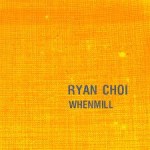
You may recall that not too long ago I reviewed Hawaiian baritone ukulelist Ryan Choi's initial release, 'Three Dancers'. For those not familiar with Choi's style, clear your head of any notions of traditional ukulele music from Hawaii. This certainly is not that. Think of it as more akin to improvisational classical and jazz guitar with some avant-garde leanings. Although 'Three Dancers' and 'Whenmill' are both CD EPs, the similarity ends there. For one, 'Three Dancers' was very busy, and all over the map at times. It was as Choi was attempting to showcase his skills and various techniques throughout the EP. Here on 'Whenmill,' Choi seems much more confident in his improvisations and hence, the music is only busy when it has to be. There is also a marked classical tone throughout, signifying a serious, rather than playful attitude. 'Whenmill' consists of four pieces - "Quixano" (2012), "Inn Blue" (2012), "Whenmill" (2013), and "South Aleksandr" (2011), the last being the longest at 12:23, while the others are well under six minutes each. "Quixano" has a distinctly Spanish flavor, and although it employs numerous classical guitar techniques, it never develops a distinctive theme or motif. "Inn Blue" seems far more introspective and oblique, and somewhat enigmatic. "Whenmill" pushes even further into the obscure, and just when you think you've got a handle on this piece, Choi changes it up and blows away any preconceived notions you may have had about it. The playing here ranges from strictly genteel to hard-charging. "South Aleksandr" is the show-stopper though, with Choi starting out in a rather mellow vein, but then moving into a fantasia of differing forms. As it progresses, Choi strays from the classical leaning previously exhibited moving into jazzy and bluesy territory without ever being solidly grounded in either. Towards the end, Choi's playing becomes harder and more intense, really wailing on the uke. Played live, this piece would likely bring an audience to its feet by its conclusion. 'Whenmill' shows Choi's growth as an artist composer with his uncompromising vision. It may be a little more difficult to grok than his previous release, but for those who do, ultimately rewarding.
Oren Ambarchi / Stefano Pilia / Massimo Pupillo: Aithein

Artist: Oren Ambarchi / Stefano Pilia / Massimo Pupillo
Title: Aithein
Format: 12"
Label: Karlrecords (@)
Rated:
Title: Aithein
Format: 12"
Label: Karlrecords (@)
Rated:
The name of the brilliant Australian composer and multi-instrumentalist Oren Ambarchi is maybe the better known name of this trio, having been one of the most incontinent musician in the last 20 years by means of an incredible number of collaborations - the most famous ones are maybe those with John Zorn, Phil Niblock, Sunn O))), Evan Parker, Jim O'Rourke, Keiji Haino, Z'EV, Otomo Yoshihide and Richard Pinhas - and solo works, but it could be a matter of statistics as the Italian virtuosos that grouped together Oren have a likewise enviable musical path. Electric bass player Massimo Pupillo was one of the founding member of jazz-core trio ZU and could brag about excellent collaborations such as the ones with Mats Gustafsson, Paul Nilssen-Love, Lasse Marhaug and both Brötzmann (father Peter and son Caspar), while Stefano Pilia worked on many awesome sound installation after a strong activism in the Italian punk and rock more or less underground area and grouping together two other big names of the contemporary scene like David Grubbs and Andrea Belfi. I could have been influenced by the inspiring cover artwork that Sara D'Uva made for the silk-screened sleeve of this release, but their guitar-driven blend in between progressive, avant-garde, post-rock and drone sound to me as a possible soundtrack for this sort of Kali Yuga that mankind is currently experiencing at the mercy of the numbing power of media and technology. A plenty of whirling emotions and thoughts are going to run over the 33 minutes lasting suite from the very first sonic slices of the first titled "Burn" - whose preface sounds like the one of a sci-fi movie - to the rising shimmering explosions of the last minutes of "Shine". Have a check.
Aidan Casserly: Music X
This 29-minute, 9-track album is Aidan Casserly's third album release of 2016 and we're barely halfway through the year. Aidan wears his heart on his sleeve and this is a brief musical journey through both sadness and optimism, and as the prolific speed of his output might suggest, there's a raw, immediate, and in some places almost improvised feel to it.
It's predominantly works for solo piano, or solo piano with subtle orchestral accompaniment. There are some powerful melodies and heartfelt performances in there, that wouldn't seem at all out of place in a film score- mostly accompanying the end-of-Act-2 scenarios when the hero begins to worry that all is lost and that no rescue is possible. Some of the orchestration is impressively arranged, though on a couple of tracks, such as "Bullet Valentine", the extent to which synths can sound like genuine full live orchestras is just slightly over-stepped.
"Echoes Backward" is the first of two songs on the album, a very brief piano-and-voice number with an unusual melody which at some points sounds like it could potentially have been recorded backwards. The other vocal track is the album closer "My Father Sleeps", deeply raw and sorrowful in its lyrics yet moderately restrained in the musical arrangement, and once you reach it, you suddenly feel like the entire album has been gradually working towards this point, like this was the story all along. The pathos is strong and well earned.
Of the instrumentals, "Walking To Drift" stands out as a highlight, with its angry synthetic opening is a rare flourish of anger in an otherwise melancholic collection. "Eye Of Horus" with its broad ethnic feel and almost jazzy flute playing is worth a listen too, and could perhaps have spent longer with the flute and less with the piano.
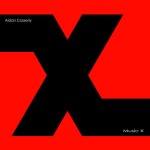
This is a short but powerful bit of emotional self-expression from an artist who's far away from the synthpop home turf on which I first heard him. The only thing I don't like about it would be the bold artwork and faintly naff title "Music X", that seems over-simplistic, over-modern, and somehow at odds with the nuanced music.
It's predominantly works for solo piano, or solo piano with subtle orchestral accompaniment. There are some powerful melodies and heartfelt performances in there, that wouldn't seem at all out of place in a film score- mostly accompanying the end-of-Act-2 scenarios when the hero begins to worry that all is lost and that no rescue is possible. Some of the orchestration is impressively arranged, though on a couple of tracks, such as "Bullet Valentine", the extent to which synths can sound like genuine full live orchestras is just slightly over-stepped.
"Echoes Backward" is the first of two songs on the album, a very brief piano-and-voice number with an unusual melody which at some points sounds like it could potentially have been recorded backwards. The other vocal track is the album closer "My Father Sleeps", deeply raw and sorrowful in its lyrics yet moderately restrained in the musical arrangement, and once you reach it, you suddenly feel like the entire album has been gradually working towards this point, like this was the story all along. The pathos is strong and well earned.
Of the instrumentals, "Walking To Drift" stands out as a highlight, with its angry synthetic opening is a rare flourish of anger in an otherwise melancholic collection. "Eye Of Horus" with its broad ethnic feel and almost jazzy flute playing is worth a listen too, and could perhaps have spent longer with the flute and less with the piano.
This is a short but powerful bit of emotional self-expression from an artist who's far away from the synthpop home turf on which I first heard him. The only thing I don't like about it would be the bold artwork and faintly naff title "Music X", that seems over-simplistic, over-modern, and somehow at odds with the nuanced music.