
Browse by Genre
Industrial Music / Industrial Metal / Aggro Industrial / Electro Metal
Industrial Noise / Power Noise / Harsh Noise
Synth Pop / Electro Pop / Synth-Electronica
Techno / Trance / Goa / Drum'n'Bass / Jungle / Tribal / Trip-Hop
Ambient / Electronica / Ethereal / Dub / Soundscapes / Abstract
Experimental / Avantgarde / Weird & Wired / Glitch / Noise / Field Recording
Dark / Gothic / Wave / New Wave / Dark Wave / Industrial Gothic
New Music / Downtown / Avantgarde Jazz / New Classical / World
Search Reviews
Music Reviews
David Grubbs: Prismrose
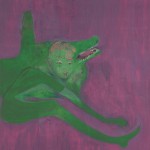

Now almost better known as a writer, after his impressive "Records Ruin the Landscape", Prismrose reminds about one of the figures that built the genre known as post-rock. However, instead of returning on paths already taken, this albums is mostly a guitar-only one, featuring only the drums of Eli Keszler and the voice of the author as an exception, and could be seen as an exploration, or a return, of a classical form in music: the piece for guitar.
The long opening track of this release, "How to Hear What's Less than Meets the Ear", reminds to a rock form that is canonical at a sound level but is avant at harmonic level: an almost simple melodic guitar arpeggio is developed by variation in the first part until is transformed in a chord leading the entrance of the others instruments. "Cheery Eh" is a guitar meditation vaguely based upon classical tunes for guitar while "Learned Astronomer" is a proper song. "Manifesto in Clear Language" oscillates between meditative moment and harsher ones using the some notes with a clear sound or a distorted one. "Nightfall in the Covered Cage" is a quiet piece for guitar and "The Bonsai Waterfall" sounds like his prosecution as if the previous piece was for single notes, this features open chords in the first part, the second part, which juxtaposes a distorted guitar line, closes this release with the fading of the amplifier.
This release underlines the writing quality of David Grubbs that publish a record that could seem far for any ground-breaking moments but reveal a concern for form which is really rare these days. For the ones which doesn't listen only "the next big thing".
The long opening track of this release, "How to Hear What's Less than Meets the Ear", reminds to a rock form that is canonical at a sound level but is avant at harmonic level: an almost simple melodic guitar arpeggio is developed by variation in the first part until is transformed in a chord leading the entrance of the others instruments. "Cheery Eh" is a guitar meditation vaguely based upon classical tunes for guitar while "Learned Astronomer" is a proper song. "Manifesto in Clear Language" oscillates between meditative moment and harsher ones using the some notes with a clear sound or a distorted one. "Nightfall in the Covered Cage" is a quiet piece for guitar and "The Bonsai Waterfall" sounds like his prosecution as if the previous piece was for single notes, this features open chords in the first part, the second part, which juxtaposes a distorted guitar line, closes this release with the fading of the amplifier.
This release underlines the writing quality of David Grubbs that publish a record that could seem far for any ground-breaking moments but reveal a concern for form which is really rare these days. For the ones which doesn't listen only "the next big thing".
Erlend Apneseth Trio: Det Andre Rommet

The almost incessant work in digging into interesting musical artifacts in the Norwegian improvisational scene by Hubro brought to the discovery of another fantastic release, signed by a trio named after the most prominent instrument player in this output, the young fiddler Erlend Apneseth, whose style of performing on Hardanger fiddler manages to mantle listeners by evoking symphonies that often seem hanging in between Norwegian and Japanese musical traditions. He involved Øyvind Hegg-Lunde (drummer of Electric Eye, Building Instrument - we already talked about this awesome project - and José González) and Stephan Meidell (guitarist of Cakewalk and Krachmaker), who already joined him for the last track of the critically acclaimed album "Blikkspor", the impressive debut by Erlend. They enhanced Erlend's performance by unobtrusive details that embellished any moment of this album, where Erlend shields the powerful hooks of his music over a broad set of different semblances: the opening "Trollsuiten" is going to immerse listener in an enchanted set, where the lukewarm heating of a bonfire sets the stage for the discovery of forgotten Nordic legends, inspired by the vaguely oriental nuances of "Sapporo", the flowing symphonies of "Dialog", the charming meeting of organic and electronic entities in "under Isen", the rising dissonant title track "Det Andre Rommet", the folk breezes of "St.Thomas klokkene", the flipping percussive medley of "Natkatt", the surprising veer towards Radiohead-like declension of rock in the lovely "Magma", the reprise of spores of all the above-mentioned influences on "Hugskot" and the blissful finale on "Draum Om Regn". Highly recommended listening experience!
Song Circus: Anatomy of Sound
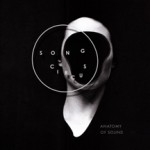
Song Circus is a five-piece female vocal chamber ensemble from Stravanger, Norway led by Liv Runesdatter. 'Anatomy of Sound' is comprised of two works - "Landscape with Figures," composed by Reuben Sverre Gjertsen, who also supplies the electronics for the piece, and
the second work - "Persefone" by Ole Henrik Moe. I should mention that the latter work is an acoustic piece written for five female voice and wine glasses. Already from the little that I've mentioned you must be getting the impression that this is serious avant-garde modern classical music, and you'd be absolutely correct in that assumption, but what you will actually hear here subtly takes sound beyond the confines and preconceived notions of what you've ever experienced before. For your listening pleasure, you have two options - (it is a two disc set) Blue-ray surround sound (your choice of three different modes), or SACD. I found the Blu-ray to be the most rewarding experience, putting the sublime into perspective and best emulating a live performance scenario, although even the SACD will give you a wonderful sonic experience.
The collaborative "Landscape with Figures" took four years for Song Circus to work out with Reuben Sverre Gjertsen, and it's an epic 45 minute excursion into what voices and electronics can accomplish together. As the liner notes state: "The composition stretches the limits of tonal flexability and microtonal precision." Gjertsen studied Wishart and Ferneyhoug (New Complexity) for their systems of notation and composition to achieve this (yes, all the music was actually scored, not merely improvised) so you know this is pretty heady stuff.
Although not required, a familiarity with works by such composers as Morton Feldman, John Cage, George Crumb, Edgard Varese, Anton Webern, Harry Partch, Karlheinz Stockhausen, Luciano Berio and others in this field would be helpful, but not essential in appreciating these works. While not musique concrète in the strictest sense, "Landscape with Figures" does seem to have sonic similarities - episodic and sporadic events in both vocals and electronics, radical sound characteristic variations, and impressions of extensive electronic manipulation of both voice and synthesizer. The voices however have not been electronically altered (to my knowledge) but some of the vocal techniques employed may give one that impression. The best way of describing "Landscape" is an aural dreamworld that sometimes mixes natural ambient (although no field recordings were employed) with snippets of other-worldly elements, and also whispers. Vocally, the composition ranges from onomatpoetic utterings to seductive, siren-like glissandoes. Electronically, well, much of it is what you'd expect in an avant-garde composition of this nature, and some of it is not. There is almost no concession to anything musically traditional, and the multitude of electronic variation used ranges from passages of subtle drone to bit of random sample and hold, tinkling belliish tones, something that sounds like a sink drain being unclogged, gong-like sonorities, and random orchestral elements that aren't actually orchestral. There is no rhythm; just a multitude of events that float along occasionally combining and intertwining leaving the listeners to form their own impression. The majority of this work is low-key and jarring events are in the minority. It never seems chaotic, cacophonous or claustrophobic, but rather playful and open, even though it can be a little alien at times. A portion of this piece uses combined fragments of anagrams from a passage of Joyce's "Finnegan's Wake" vocally, but don't expect that to be prominent in the listening experience. The piece is also divided into 12 tracks (sections) but you'd be hard-pressed to separate one from the next. In fact, it slips so seamlessly into "Persefone" that you'd hardly know you were on to another composition.
Ole Henrik Moe's "Persefone,' the piece for five voice and wine glasses, is radically different from the preceding work, being a textural study of vocal sound, dynamics and microtonality inspired by Morton Feldman. The description in the liner notes say "...in the first part he stretches silence and slowness so far that any sense of a horizontal timeline dissolves into a music of state." That's pretty much on off mark. It will be difficult to discern the sustained voices from the wine glasses here. Voice and glass harmonize in a mostly smooth 12 minute moan that has little in the way of hiccups until
near the end. After listening it is easy to hear why this composition was included in the recording.
I readily admit that most of my interest in avant-garde modern music stemmed from an earlier time when I was ever so curious about music that did not conform to convention and transcended traditional form. 'Anatomy of Sound' however has rekindled a spark for this kind of thing, being some of the best "new music" I've heard in a long, long while. While the performers and composers are to be lauded for these works, the whole is greater than the sum of the parts, and discerning listeners are sure to be rewarded, especially with the proper playback equipment.
the second work - "Persefone" by Ole Henrik Moe. I should mention that the latter work is an acoustic piece written for five female voice and wine glasses. Already from the little that I've mentioned you must be getting the impression that this is serious avant-garde modern classical music, and you'd be absolutely correct in that assumption, but what you will actually hear here subtly takes sound beyond the confines and preconceived notions of what you've ever experienced before. For your listening pleasure, you have two options - (it is a two disc set) Blue-ray surround sound (your choice of three different modes), or SACD. I found the Blu-ray to be the most rewarding experience, putting the sublime into perspective and best emulating a live performance scenario, although even the SACD will give you a wonderful sonic experience.
The collaborative "Landscape with Figures" took four years for Song Circus to work out with Reuben Sverre Gjertsen, and it's an epic 45 minute excursion into what voices and electronics can accomplish together. As the liner notes state: "The composition stretches the limits of tonal flexability and microtonal precision." Gjertsen studied Wishart and Ferneyhoug (New Complexity) for their systems of notation and composition to achieve this (yes, all the music was actually scored, not merely improvised) so you know this is pretty heady stuff.
Although not required, a familiarity with works by such composers as Morton Feldman, John Cage, George Crumb, Edgard Varese, Anton Webern, Harry Partch, Karlheinz Stockhausen, Luciano Berio and others in this field would be helpful, but not essential in appreciating these works. While not musique concrète in the strictest sense, "Landscape with Figures" does seem to have sonic similarities - episodic and sporadic events in both vocals and electronics, radical sound characteristic variations, and impressions of extensive electronic manipulation of both voice and synthesizer. The voices however have not been electronically altered (to my knowledge) but some of the vocal techniques employed may give one that impression. The best way of describing "Landscape" is an aural dreamworld that sometimes mixes natural ambient (although no field recordings were employed) with snippets of other-worldly elements, and also whispers. Vocally, the composition ranges from onomatpoetic utterings to seductive, siren-like glissandoes. Electronically, well, much of it is what you'd expect in an avant-garde composition of this nature, and some of it is not. There is almost no concession to anything musically traditional, and the multitude of electronic variation used ranges from passages of subtle drone to bit of random sample and hold, tinkling belliish tones, something that sounds like a sink drain being unclogged, gong-like sonorities, and random orchestral elements that aren't actually orchestral. There is no rhythm; just a multitude of events that float along occasionally combining and intertwining leaving the listeners to form their own impression. The majority of this work is low-key and jarring events are in the minority. It never seems chaotic, cacophonous or claustrophobic, but rather playful and open, even though it can be a little alien at times. A portion of this piece uses combined fragments of anagrams from a passage of Joyce's "Finnegan's Wake" vocally, but don't expect that to be prominent in the listening experience. The piece is also divided into 12 tracks (sections) but you'd be hard-pressed to separate one from the next. In fact, it slips so seamlessly into "Persefone" that you'd hardly know you were on to another composition.
Ole Henrik Moe's "Persefone,' the piece for five voice and wine glasses, is radically different from the preceding work, being a textural study of vocal sound, dynamics and microtonality inspired by Morton Feldman. The description in the liner notes say "...in the first part he stretches silence and slowness so far that any sense of a horizontal timeline dissolves into a music of state." That's pretty much on off mark. It will be difficult to discern the sustained voices from the wine glasses here. Voice and glass harmonize in a mostly smooth 12 minute moan that has little in the way of hiccups until
near the end. After listening it is easy to hear why this composition was included in the recording.
I readily admit that most of my interest in avant-garde modern music stemmed from an earlier time when I was ever so curious about music that did not conform to convention and transcended traditional form. 'Anatomy of Sound' however has rekindled a spark for this kind of thing, being some of the best "new music" I've heard in a long, long while. While the performers and composers are to be lauded for these works, the whole is greater than the sum of the parts, and discerning listeners are sure to be rewarded, especially with the proper playback equipment.
Kim Myhr & Jenny Hval ft.Trondheim Jazz Orchestra: In The End His Voice Will Be The Sound Of Paper
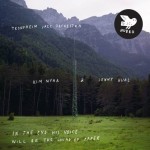
Artist: Kim Myhr & Jenny Hval ft.Trondheim Jazz Orchestra (@)
Title: In The End His Voice Will Be The Sound Of Paper
Format: CD
Label: Hubro (@)
Rated:

Title: In The End His Voice Will Be The Sound Of Paper
Format: CD
Label: Hubro (@)
Rated:
While listening to this lovely release, the result of a collaboration between inventive improviser, performer and guitarist Kim Myhr and Trondheim Jazz Orchestra, where Kim himself invited Jenny Hval to borrow her eerie vocals, you could guess they used they made a wrong gender agreement in the use of possessive adjective due to the significant part played by a voice that enchanted many listeners all over the world in critically acclaimed albums such as "Apocalypse, girl" (2015, Sacred Bones) and "Innocence is Kinky" (2013, Rune Grammofon) as well as in many different collaborative projects (particularly the ones with Jessica Sligter and Håvard Volden - Nude on Sand -). In reality the title "In the End His Voice Will Be The Sound of Paper", which could have no real connection to what you're going to listen and has no reference to the way of speaking/singing by Jenny, got inspired by a conversation about the aging of Bob Dylan's voice. Jenny's voice got astonishingly colour-changing over the wisely crafted atmospheres of the album: the 12 chords of Kim's guitar and other instrumental elements - Christian Wallumrod's piano, Tor Haugerud's drums and Morten Olsen's percussions above all - sound like rendering the intricate web of tree's branches of a dense woodland in tracks like the opening "Seed" or the entrancing "The Beak", where Jenny's voice sound like flying as a blind bird; she could vaguely resemble the languid and somehow sorrowful intensity by Beth Gibbons over some moments of "Something New"; she sings like an invisible nymph on songs like the gently trembling "Soft As Tongues" or the lovely final elegy of "Silence a Beat". Premiered at the Ultima Oslo Contemporary Music Festival in 2012 - it was described as a musical combination of improvisation, contemporary Feldmanian music, pop and spoken words on that occasion -, recorded at Rainbow Studio in Oslo in August 2014 and finally mixed at Amper Tone Studio together with technician Johnny Skalleberg, Jenny described the compositional approach and the whole collaborative experience as well as her own part for this release as follows: "Kim gave me a lot of sketches and music, I wrote the melody and lyrics, and we improvised. This is a collaborative effort, even if it is mostly Kim’s music. It’s his artistic vision, and it was a great honour for me to be able to take part in it, because you can learn a lot by working with fantastic people. Sometimes I feel that improvised and abstract music is trying desperately to avoid the emotional elements that can be inherent in the music. This was something I thought a lot about when we were going to work with this recording. That’s why I wanted to write romantic lyrics. There is a sense of longing in these lyrics. I wanted to combine something charming, in both the lyrics and the melody, something that wants to be loved, with this more abstract and fragmentary music. I’m interested in vulnerability; the music must have a kind of vulnerability at some level.".
Daniel Higgs: The Fools Sermon, Part 1
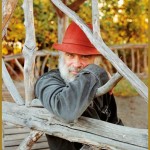
I've never been a great fan of Lungfish - the Baltimore-based post-hardcore band that profoundly marked the artistic path by Daniel Higgs-, as a matter of fact: even if they developed some interesting ideas from the exquisitely musical viewpoint, the lyrical content of their somehow pretentious songs never made that good of an impression on me, due to my personal mistrust for an excessively "flamboyant mystical hook" (to call it so). If you know some of the past releases by Mister Higgs, the smiling man (I do like that sort of panama hat, that looks like having been crafted and coloured by some imaginary hatmaker for gnome's market!) on the cover artwork giving that vague sense of reassurance that would inspire the desire to listen his tales nearby the fireplace, you won't be wondered by the way of storytelling he explores in this release, the first part of a sermon, which doesn't look like a proper sermon in spite of some biblical allusions (besides the matching between death, love and transformation, the listener or the addressee of the sermon got named as "Lazarus" at a certain point). Likewise Lungfish's songs, I'm not impressed by this sort of little poem: the succession of verses often get closer to the wondering of a fool, more than its supposed praying. I do appreciate the limpidity of vocal recordings, but I got mostly impressed by the way the sonic entities that run together Higgs'story-telling got interlaced to the semantic relevance of some lines, including the whooshing sound matched to the quotation of a "Warholian" banana peel amidst a set of supposedly fervid and vaguely raving mystical uttering. A follow-up got already released on a more limited edition on a cassette by Jimmy Joe Roche's imprint Ultraviolet Light, featuring Stephen Strohmeier, another skilled Baltimore-based artist on a Farfisa organ, but I've not checked it yet. In spite of my opinion on such a kind of works and shamanic-like outputs, I could recommend it as an interesting essay on story-telling and sonic inoculation; that could even resemble a sort of radiophonic nuance of some visionary spelling by William Blake or ancient bards. Copies of The Fools Sermon book (the whole poem) should be available on fountainsun.com, if you are interested in checking them.