
Friday, November 20, 2026
Browse by Genre
Industrial Music / Industrial Metal / Aggro Industrial / Electro Metal
Industrial Noise / Power Noise / Harsh Noise
Synth Pop / Electro Pop / Synth-Electronica
Techno / Trance / Goa / Drum'n'Bass / Jungle / Tribal / Trip-Hop
Ambient / Electronica / Ethereal / Dub / Soundscapes / Abstract
Experimental / Avantgarde / Weird & Wired / Glitch / Noise / Field Recording
Dark / Gothic / Wave / New Wave / Dark Wave / Industrial Gothic
New Music / Downtown / Avantgarde Jazz / New Classical / World
Search Reviews
Music Reviews
Ivo Perelman, Elliot Sharp, Cyro Baptista: Triacontagon

A triacontagon is a polygon with thirty sides, which sounds like the sort of fact someone might bring up at a party when the conversation has become dangerously enjoyable. But the title of this collaboration between Brazilian saxophonist Ivo Perelman, American experimental guitarist Elliott Sharp and Brazilian percussionist Cyro Baptista makes more sense as a description of how its music behaves than as a geometry lesson. Thirty sides imply neither symmetry in any immediately useful sense nor a particularly convenient way of getting from one point to another. They suggest a shape with too many possible approaches to be grasped at a glance. Across six lengthy improvisations, these three musicians construct something similarly difficult to reduce to a single perspective, though there is nothing random about the results. The music has its own internal logic, even when that logic seems to have been drafted by a committee whose members refuse to attend the same meeting.
Perelman has spent decades developing a tenor-saxophone language that can move from searching lyricism to an almost physical confrontation with the instrument. His early musical education included classical guitar, but the saxophone eventually became his principal means of expression, leading to a formidable catalogue of recordings and collaborations with figures such as Matthew Shipp and William Parker. Sharp comes from another corner of the experimental universe, with a practice encompassing guitar, electronics, composition, mathematical systems and the unruly history of New York’s downtown scene. Baptista, meanwhile, brings a percussion vocabulary informed by Brazilian traditions but never confined to them. His work can be rhythmic, theatrical, mischievous or unexpectedly delicate, sometimes within the space of a few seconds. The three are not merely specialists brought together to demonstrate their respective expertise. They are musicians with strong personal identities, and the interest lies in what happens when none is granted permanent control.
The first surprise is that Perelman does not automatically get first word. "Dionysus in the Amazon" begins with Sharp and Baptista establishing a restless exchange of guitar figures and percussion, a rhythmic presence that feels more like an invitation to move than a conventional beat. When the saxophone enters, it does not simply rise above the other instruments and claim the foreground. Perelman bends, stretches and roughens his phrases in response to the activity already underway. The sound can be exuberant without becoming celebratory, as though Dionysus had arrived at the party only to discover that the furniture had been assembled incorrectly and the guests were enjoying themselves anyway. Baptista’s contributions are especially important here: his percussion gives the music momentum while remaining too unpredictable to function as a dependable rhythmic floor.
That balance becomes more elusive in "Sacred Geometry of the Tropics". Sharp’s guitar can sound brittle, granular or strangely luminous, with tones that appear to have been drawn out of the instrument by methods its manufacturer would prefer not to discuss. Baptista responds with an assortment of timbres rather than a fixed pattern, while Perelman moves between piercing cries and phrases that seem to circle an idea without settling on a final statement. The tropical imagery in the title might encourage expectations of exotic colour or an imagined wilderness, but the music does not offer an easy postcard version of either. Its atmosphere emerges from the interaction of the players: a humid density one moment, a sudden opening the next, then another layer of activity that changes the apparent scale of everything around it. The geometry is less about orderly design than about the way separate lines keep altering one another’s direction.
"Inside a Broken Circle" makes that instability more explicit. A circle should, in theory, be reassuring: continuous, closed, uncomplicated by corners. Break it, however, and its parts begin to imply different destinations. The trio explores that possibility through shifts in density and emphasis, allowing individual sounds to acquire prominence before being absorbed into the ensemble again. Sharp’s guitar can supply a recognisable pulse, only for its texture to make that pulse feel uncertain; Baptista can suggest a rhythm without obliging it to behave; Perelman’s saxophone responds with a mixture of breath, pressure and melodic fragments. There is a strong sense of mutual listening, but not the polite kind in which everyone waits for their turn to speak. These musicians listen in order to interfere productively.
Then comes "Electric Bacchanalia", the one piece that begins with Perelman’s saxophone. Its title promises excess, and the performance has a more immediate physical charge, with the saxophone pushing forward while Sharp and Baptista create a lively, sometimes abrasive framework around it. Yet the track is not simply a release of pent-up energy. Even at its most animated, the music retains a flexibility that prevents it from becoming a prolonged contest in who can play loudest or fastest. Baptista’s sense of theatrical timing and Sharp’s ability to make the guitar function as both a rhythmic instrument and a source of unstable texture keep the proceedings mobile. It is the closest the album comes to an unruly celebration, though anyone hoping for a tidy chorus to take home will have to settle for the memory of a good argument.
The two closing pieces offer different kinds of resistance. "Irregular Forms in Humid Space" is particularly effective when the musicians allow small sounds to remain exposed before introducing something that unsettles their apparent significance. Baptista’s vocalisations and unusual percussive gestures can lend the music a distinctly playful character, while Sharp’s guitar and Perelman’s saxophone make the atmosphere more ambiguous. There is humour here, but it is not the humour of a novelty act. It comes from the musicians’ willingness to make sounds that might be conventionally labelled inappropriate and then demonstrate that they belong exactly where they are. "Disordered Continuum", shorter than its predecessors, closes the album without pretending to resolve the questions raised by the preceding hour. Its jagged exchanges and shifting momentum feel less like a conclusion than the point at which the recording decides it has made its case and declines to provide further documentation.
The album’s freedom is not the absence of structure. It is a structure that develops through attention, reaction and the capacity to abandon an idea before it becomes an obligation. That distinction matters, because free improvisation can sometimes mistake the removal of rules for the removal of responsibility. Here, each player has to do more than produce an identifiable sound: each must recognise what the others are doing and decide whether to reinforce it, oppose it or change the conditions altogether. Sharp’s textural ingenuity, Baptista’s rhythmic imagination and Perelman’s expressive range create a group dynamic in which no contribution remains entirely private. Even the more abrasive moments carry traces of exchange rather than mere collision.
There are passages where the density and extended duration may test listeners who prefer improvisation to provide a clearer sense of arrival. The six pieces occupy more than an hour, and their titles sometimes promise a conceptual precision that the music deliberately refuses to deliver. But that mismatch is part of the record’s appeal. "Triacontagon" gives us neither a mathematical proof nor a ceremonial performance with a clearly defined beginning, middle and end. Instead, it captures three musicians working out a temporary set of relationships, with all the mischief, concentration and occasional confusion that entails. Thirty sides may be an awkward shape to draw, but these three players make a persuasive case for listening from more than one direction. The final result is adventurous without being self-important, physically engaging without leaning on brute force, and funny in the way serious creative people can be funny when they stop trying to look serious. It leaves the pleasing suspicion that the music has discovered several more possibilities than it has actually had time to explore.
Mógil: Norðlandínus

There are people who spend their lives trying to fit into the world, and people who make such a spectacularly poor job of fitting in that the world eventually has to invent a category for them. Sölvi Helgason belonged firmly to the latter group. Nineteenth-century Icelandic wanderer, self-taught artist, inveterate writer and philosopher, he travelled despite laws designed to keep the poor tied to particular places, endured punishment for his independence, and filled paper with intricate drawings and grand reflections. He also adopted an assortment of illustrious names, as if the standard issue identity supplied by society were an especially uninspiring offer. Mógil’s "Norðlandínus" takes this restless, contradictory figure as its point of departure, drawing music and lyrics from his life and writings without reducing him to either a romanticised eccentric or a historical curiosity. The result is an album concerned with the price of independence, the indignities of poverty and the stubborn conviction that a person might still claim the right to think freely.
Mógil’s five musicians have the unusual advantage of being able to suggest several musical traditions without becoming comfortably settled in any of them. Heiða Árnadóttir’s voice occupies the centre, while Hilmar Jensson’s guitar, Joachim Badenhorst’s clarinets and keyboards, Kristín Thóra Haraldsdóttir’s viola and Eiríkur Orri Ólafsson’s trumpet create an ensemble sound in which chamber-music precision can coexist with folk-like directness, jazz inflection and the gradual accumulation of post-rock. Nothing here needs to announce itself as a genre experiment. The instruments simply seem to have arrived from different neighbourhoods and discovered that, despite their disagreements, they have something important to discuss. The arrangements make room for silence and small changes in emphasis, allowing a phrase to acquire weight without being forced into a dramatic climax. There is a delicacy to the music, but it is not the delicacy of something fragile and protected. It is closer to the resourcefulness of someone who has learned to work with whatever materials are available.
The opening "Hugleiðingar" establishes a contemplative atmosphere, its reflections on thought and consciousness setting up one of the album’s central tensions: the mind may be free to wander even when the body is not. "Allsstaðar er flóttamaðurinn einmanna" brings loneliness into sharper focus, while "Ingiríður" introduces the name of Helgason’s mother into a personal mythology in which ordinary biography and self-invention are difficult to separate. The titles of the short pieces that follow, invoking figures and aliases such as Hegel, Schiller and Sólon Íslandus, can initially resemble a hurried roll call at an eccentric philosophy department. Yet their brevity matters. Rather than expanding every reference into a fully developed song, Mógil let these miniature sections interrupt the album’s larger movements, like fragments of a mind continually moving between the immediate business of survival and the grander business of understanding the universe. The sequence is playful without making Helgason’s ambition a joke.
The longer songs carry the greatest emotional force. In "Ég er guðleg vera", the assertion of divine stature, universal knowledge and humility makes for an intriguing combination: the speaker claims almost everything while insisting on modesty. It could be read as grandiosity, comic self-fashioning or a declaration of dignity from someone whom society has denied much else. Mógil leave those possibilities productively entangled. The vocal delivery does not need to wink at the listener, and the music avoids turning the text into theatrical caricature. Instead, the claim hangs in the air with its mixture of vulnerability and audacity intact.
"Flækingur framan úr sveit" is more explicitly painful. Its account of leaving home, enduring hardship, growing weary of blows and seeking somewhere better to live gives the album a human scale that the philosophical names cannot supply on their own. The desire to learn, read, paint and write freely is not presented as an abstract ideal. It emerges from exhaustion, from the wish to escape a life that has become intolerable to both body and spirit. Here the ensemble’s restraint is especially effective: the music does not need to inflate the suffering into a grand spectacle. The repeated words carry their own insistence, while the arrangement leaves enough space for the longing behind them to register. Freedom, in this context, is not a lofty ornament. It is the possibility of getting through the day without being beaten down.
The album’s most inviting counterweight arrives with "Blóm eilífðarinnar". Its images of love carried over mountains and heaths, of shelter beneath the sky and a shared home without fixed borders, suggest a freedom defined less by conquest than by companionship. The open landscape is not merely picturesque scenery; it becomes an alternative to the social arrangements that have denied the wanderer a secure place. But even here, cold eventually takes command. The promise of an eternal refuge remains vulnerable to physical reality, and the song’s tenderness is sharpened by that knowledge. In a record so attentive to exclusion, the idea of belonging becomes moving precisely because it cannot be taken for granted.
The later sequence is less comforting. "Ranglæti" turns towards injustice and the destruction inflicted by those who crush what is wise and good, while "Und sólu grætur" describes a life abandoned to exile, hunger and misery. The bluntness of these texts prevents the album from drifting into an agreeable mist of historical melancholy. Helgason’s outsider status may invite a fashionable celebration of the misunderstood genius, but his words insist on the material conditions behind the legend. He was not simply a free spirit enjoying the scenery. He was a person living under laws and social expectations that made movement, shelter and self-determination difficult to secure. The record’s quieter musical language gives these accusations room to resonate rather than smoothing them into an aesthetic mood.
That is where Mógil’s combination of traditions proves particularly apt. The trumpet and clarinet can lend a phrase a slightly skewed formality; the viola brings a tensile, almost vocal quality of its own; the guitar can suggest both a folk-derived simplicity and a more unsettled modern texture. Árnadóttir’s voice connects these colours without making the songs sound like exercises in stylistic fusion. The group’s arrangements are composed enough to feel deliberate, but they retain a sense of permeability, as though ideas can enter from the margins and change the direction of the music. The effect suits a figure whose drawings, writings and invented identities refused to remain within neat divisions between art, philosophy and autobiography.
The closing "Lífið er ferðalag" offers a final reflection on life as a journey and on the possibility that those who have travelled far may help guide those just setting out. After the preceding accounts of hardship, the sentiment could easily become a greeting-card platitude. It avoids that fate because the album has already shown what the journey costs, and because Helgason’s authority comes not from having achieved a settled wisdom but from having persisted in the search. Mógil do not claim that suffering automatically makes anyone enlightened. They suggest something subtler: experience can become useful when it is passed on, and even a life dismissed by its contemporaries can leave behind ideas worth carrying forward.
"Norðlandínus" is therefore neither a musical biography in the conventional sense nor a collection of songs dressed in historical costume. It is a thoughtful encounter between a contemporary ensemble and a singular, unruly imagination. At times the succession of brief pieces can feel more fragmentary than cumulative, and listeners expecting a strong melodic hook or a clearly signposted dramatic arc may find the album deliberately elusive. But its shape reflects the nature of its subject: a life assembled from movement, writing, argument, invention and the refusal to accept the place assigned to it. Mógil give that life a musical form that is lyrical without becoming sentimental, intellectually curious without turning into a lecture, and occasionally wry without losing sight of its cruelties. Helgason may have had trouble finding a place in the world, but his ideas have found five capable musicians willing to make room for them.
asamisimasa & Thomas Meadowcroft: Love Songs Without Subjects

Artist: asamisimasa & Thomas Meadowcroft (@)
Title: Love Songs Without Subjects
Format: LP
Label: SOFA Music (@)
Rated:

Title: Love Songs Without Subjects
Format: LP
Label: SOFA Music (@)
Rated:
Love is an awkward subject for music. It inspires some of our most beautiful compositions and some of our least defensible lyrics, often within the same three minutes. Thomas Meadowcroft takes this embarrassing abundance of romantic expression and submits it to a rather elegant experiment: what happens when a statement about desire by Jacques Lacan is made into a song, then placed in conversation with other songs that share its harmonic foundations? The answer, on "love Songs Without Subjects", is a 42-minute composition for voice, chamber ensemble, electronics and fragments of popular music, in which familiarity becomes a slippery business. There is tenderness here, but very little reassurance. Love may be universal, as the greeting-card industry would have us believe, yet the ways we express it are remarkably repetitive. Meadowcroft makes that repetition the subject of his music, and finds something quietly strange hiding inside it.
The work begins with Lacan’s notorious formulation of love as an act of giving something one does not possess to someone who may not want it. It is the sort of proposition that can ruin a dinner party, particularly if delivered by someone who has recently discovered psychoanalysis and is determined to make it everybody else’s problem. Meadowcroft avoids turning it into a philosophical lecture. Instead, the text is carried by the voice of Ditte Marie Braein over a four-measure harmonic pattern built around the descending chromatic bass line traditionally associated with laments. The progression circles through a familiar emotional territory, moving downwards without offering the satisfaction of a final destination. The effect resembles a musical staircase whose steps keep descending while the floor stubbornly refuses to arrive. Love, in this arrangement, is less a destination than a peculiar form of perpetual motion.
Braein’s voice is central to the composition’s ability to remain intimate without becoming sentimental. She delivers the text with delicacy, allowing its contradictions to register without insisting on a single emotional interpretation. Around her, asamisimasa assemble a finely balanced combination of bass clarinet, cello, electric guitar, vibraphone, Fender Rhodes, piano and percussion, while Meadowcroft adds Roland Juno 106 synthesisers and tape delay. The ensemble’s sound is neither conventionally orchestral nor merely an ambient backdrop. The instruments retain their individual contours, but their roles become fluid as the music slowly changes colour. A keyboard figure may suggest a familiar ballad; a low woodwind tone unsettles its sweetness; the electronics introduce a slight blur around the edges, as if the music were being remembered rather than performed in the present. Nothing needs to explode. The unease develops through the patient adjustment of details.
The compositional device that gives the piece its particular intelligence is the way its harmonic progression begins to overlap with other works built around the same descending lament. Henry Purcell’s "Dido’s Lament" appears alongside Prince’s "The Most Beautiful Girl in the World", while the Beatles’ "Michelle" brushes against "My Funny Valentine". These references are not presented as complete quotations or nostalgic cameos. They surface in fragments, entangled with the incidental debris of analogue tape recordings: outtakes, small imperfections and traces of the recording process. Their familiarity is both an invitation and a distraction. The listener recognises something, tries to locate it, and finds that the object of recognition has already shifted. The songs are present without being fully available, like memories that retain their emotional charge while losing the precise circumstances in which they were acquired.
This is where the title’s notion of subjects becomes particularly suggestive. A love song ordinarily appears to have a clear centre: someone sings, someone is loved, and someone else is invited to imagine themselves in the same situation. Here, those positions become unstable. The words belong to Lacan, the harmonic pattern to a long history of musical convention, and the fleeting melodic references to a cultural archive shared by listeners who may have very different relationships with them. No single romantic narrative can comfortably claim the whole piece. What remains is the act of wanting itself, along with the familiar forms through which wanting has learned to express itself. The song becomes an object of desire, but an incomplete one. We hear enough to recognise it, never enough to possess it.
Meadowcroft has long worked across contemporary classical composition, electronics, theatre and radio, often placing recognisable cultural forms in contexts that subtly alter their meaning. That sensibility is well suited to this piece, which neither rejects popular music nor treats it as an inferior language awaiting intellectual rehabilitation. The lament progression is effective precisely because it has been used so widely. Its emotional power is inseparable from repetition, from the way generations of composers and songwriters have found that a descending bass line can make sorrow sound inevitable and desire sound noble. Meadowcroft does not expose this convention as a fraud. He reveals its flexibility, and perhaps its limitations. A familiar progression can make almost anything feel momentous, including a feeling whose object remains unclear. Music has spent centuries refining the art of making emotional uncertainty sound convincing.
The single-track format reinforces the experience. There are no separate songs to provide convenient resting points, no tidy sequence of contrasting moods to suggest that the problem of love can be solved through good programming. Instead, the material unfolds gradually, with its recurring harmonic motion producing a sense of suspension. The music advances, but the progression keeps pulling it back into familiar territory. This can be hypnotic, though the piece is not simply an exercise in slow beauty. Its pleasure comes from noticing the small changes within the repetition, especially when a half-remembered popular melody begins to emerge from the ensemble’s carefully maintained ambiguity. The occasional recognition brings a private thrill, followed by the slightly ridiculous sensation of having been emotionally ambushed by a few notes. Apparently, even the most sophisticated listener remains vulnerable to the musical equivalent of an old text message.
The production contributes to this uncertainty without obscuring the performers. Recorded at the Norwegian Academy of Music in June 2025 and produced by Meadowcroft and percussionist Håkon Mørch Stene, the piece preserves a sense of acoustic space while allowing the tape elements to interrupt its otherwise measured surface. The fragments feel neither like decorative samples nor like a conventional collage. They are part of the composition’s thinking, reminders that music is never entirely separate from the sounds and associations that listeners bring to it. The past enters not as a grand historical statement but as a tune that refuses to remain where it was placed. The result is a subtle negotiation between the composed and the contingent, between a carefully structured score and the cultural clutter that inevitably gathers around a familiar melody.
There is a risk that a work built around Lacan might become so enamoured of its conceptual framework that the music serves merely as an illustration. "love Songs Without Subjects" largely avoids that trap because its central idea is audible rather than simply explained. The descending bass line, the recurring melodic fragments and the gradual displacement of familiar songs allow the listener to experience the argument without needing to agree with Lacan, or even to find him particularly pleasant company. The piece does not claim to solve the paradox of love. It considers what happens when a culture repeatedly gives musical form to an experience that resists clear definition, and how those forms can remain compelling even when their original emotional circumstances are absent.
Ultimately, this is a love song that declines to identify its beloved, and a piece of contemporary composition that understands the value of leaving certain questions unanswered. Its beauty is restrained, its humour dry, and its emotional effects more persistent than dramatic. The familiar tunes never quite become possessions; they remain glimpses, fragments of something that seems close enough to touch but keeps changing shape. Perhaps that is why the music works. Love is rarely short of explanations, declarations or elaborate theories. What it lacks is a reliable method of making desire behave sensibly. Meadowcroft offers no such method. He gives the problem a melody, lets it descend for 42 minutes, and leaves us to decide whether we have heard a confession, a critique or simply another remarkably durable way of being confused.
The Sprigs: For Red Riberbank
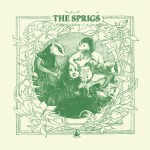

Kenneth Grahame's "The Wind in the Willows" has always contained a curious tension between the pleasures of domestic comfort and the temptation to venture beyond it. Mole, Ratty and Badger enjoy their meals, their homes and the occasional leisurely excursion, apparently unaware that the English countryside is one planning application away from becoming a gated community. On "For Red Riverbank", The Sprigs bring this pastoral idyll into contact with a much uglier reality: developers are approaching, landlords have their own interests, and the people who inhabit a place are not necessarily the people who get to decide its future. The result is an album that sounds as if a children's story has been discovered in a damp box of protest records, then assembled by musicians who cannot resist making the whole thing slightly stranger than it needs to be. Fortunately, that is precisely what it needs.
Initially the solo project of Rory Salter, aka Malvern Brume and Lone Capture Library, The Sprigs have grown into a trio with Ben Murphy and Ben Victor Waggett, the latter also a co-founder of Infant Tree. Their first full-length LP for Bison Records builds on two earlier cassettes and a covers collection, expanding the project into a more fully realised band without sacrificing its ramshackle character. Guitars, recorders, pipes, samples and assorted bits of musical detritus are assembled with a looseness that feels deliberate rather than careless. The recordings have the intimate, slightly battered quality of something made by people more interested in getting a sound to behave interestingly than in persuading it to behave correctly. Salter's experience in experimental music is audible in the way fragments are cut, repeated and placed beside one another, but the songs retain a crooked accessibility that keeps the whole enterprise from becoming an exercise in avant-garde self-importance.
The opening "come along, back home" establishes the album's peculiar emotional geography. Its long duration allows simple guitar figures and rough-edged vocal material to acquire an almost communal quality, though the apparent simplicity is continually unsettled by noises and fragments that seem to have wandered in from another recording altogether. The track feels familiar without being entirely reassuring. There is warmth in its musical gestures, but the surrounding material suggests that the past being recalled was never quite as innocent as nostalgia would prefer. Leon Rosselson's "Stand up for Judas" enters the collage as a reminder that songs can carry political arguments across decades, even when their original circumstances have changed. The effect is not that of a history lesson pasted onto a folk record; rather, the historical material complicates the music's apparent homespun innocence.
"Ratty & the moles get to work" is considerably more playful, its compact form suggesting an industrious little community setting about its business. Yet the title's cheerfulness has a double edge. Work is not simply a charming activity performed by anthropomorphic animals; it is also the means by which people maintain their lives, and the question of who benefits from that labour runs beneath the album's story. The Sprigs are too mischievous to spell out every implication, allowing the contrast between the music's buoyancy and the larger conflict to do the work. One moment the record seems content to potter about in the countryside; the next, the countryside appears to have acquired a planning department.
The shorter pieces that follow, "Lest limbs be reddened and rent" and "...on the wheels that turn for the profit of the few", bring the political dimension closer to the foreground. Their titles are less concerned with bucolic charm than with physical vulnerability and the machinery of economic advantage. The music remains fragmentary, avoiding the neatness of a conventional protest song, but the fragments themselves acquire a sharper purpose. Folk motifs, historical references and rough sonic edges are placed in uneasy proximity, as if the listener were overhearing several different versions of the same argument through thin walls. The collage does not need to become sonically aggressive to communicate conflict. Sometimes a small, apparently harmless tune is more disturbing when you realise what has been placed beside it.
"murmurs from the wide world" offers a brief change of perspective, a pause in which the album's rural setting seems to open onto a larger and less predictable landscape. The title is apt: the world beyond the immediate concerns of Mole and his companions is never entirely absent, and the album's samples make sure that the characters' private troubles cannot be mistaken for an isolated fairy tale. This is not escapist folk music, though it understands the appeal of escape. The Sprigs allow the listener to settle into the music's eccentric rhythms, then quietly remind us that the outside world has a habit of following people home.
The centrepiece, "For Peace & Mild Ale", featuring words and voice by Ash Reid, stretches across more than twelve minutes and gives the album room to develop its most sustained mixture of reflection and social commentary. The title suggests a modest vision of happiness: peace, a drink, the company of others, and perhaps the hope that tomorrow will not require quite so much effort. It is a small, humane aspiration, and that is precisely why the political context matters. The record is not defending an idealised past in which everyone lived harmoniously among hedgerows and hand-knitted waistcoats. It is concerned with the conditions that allow ordinary people to build lives, maintain communities and enjoy the pleasures that make existence tolerable. There is something moving about a record that can acknowledge historical hardship without treating every moment of pleasure as a guilty distraction.
The album's use of British labour history is especially effective because it avoids turning the past into decorative atmosphere. Leon Rosselson's material, including the reference to "Aliezer Coppe" in "Freedom is the mole who will turn the world upside down", brings historical and radical associations into a setting that might otherwise be mistaken for eccentric pastoral nostalgia. The juxtaposition is not merely clever. It exposes a relationship between the ideal of the countryside as a refuge and the material struggle over who can live, work and remain there. Even the animal characters become more than literary mascots. Their struggle to protect their home becomes a way of thinking about the communities that are routinely expected to make room for somebody else's ambitions.
"Freedom is the mole who will turn the world upside down" is the album's most striking change of scale. Its electric intensity pushes the music towards something resembling lo-fi noise rock, with a force that feels earned rather than theatrically imposed. After so much fragile, homespun material, the eruption has the effect of a small revolt finally deciding that politeness has not been especially productive. The title's political implication is unmistakable, but the track retains the band's unruly humour. The Mole, usually associated with domestic comforts and subterranean modesty, becomes an unlikely revolutionary. There is a joke here, but not a dismissive one: perhaps those who have been digging quietly beneath the established order have understood its weaknesses better than anyone standing proudly on top of it.
"The Battle for Red Riverbank" closes the record without tidying up its contradictions. The conflict has become explicit, but there is no reassuring suggestion that a good tune, a few determined woodland creatures and an archive of radical speeches will automatically defeat the developers. The Sprigs are too alert to the world's stubbornness to offer that kind of fairy-tale resolution. Instead, the music leaves the listener with the sense of a struggle that continues beyond the album's duration. The red riverbank is both a specific imagined place and a symbol for the real places whose value cannot be measured solely in terms of what they might earn.
This is where "For Red Riverbank" distinguishes itself from the more sentimental varieties of hauntological folk. Its lo-fi textures and historical fragments certainly evoke a Britain recalled through old recordings, fading memories and the peculiar emotional charge of obsolete media. But the album does not treat the past as a lost golden age whose only remaining function is to make the present seem disappointing. It asks what nostalgia conceals, whose histories are preserved, and what happens when affection for a place is confronted by the economics of its ownership. The musical roughness is essential to this argument. Nothing here has been polished into a reassuring heritage product, and the album's eccentricities keep its political concerns from hardening into a lecture.
There is also a welcome generosity in the music itself. For all its interest in inequality and displacement, the record is not permanently grim. Its tunes can be funny, awkward, catchy and unexpectedly tender; its instrumental passages offer genuine pleasure rather than treating enjoyment as a suspicious bourgeois habit. The Sprigs understand that communities are not held together by political convictions alone. They also depend on songs, shared jokes, familiar places and the small rituals through which people recognise one another. To defend those things is not to deny the seriousness of material conditions. It is to understand what those conditions are supposed to make possible.
The handmade presentation reinforces the record's refusal of mass-produced nostalgia. The screen-printed sleeve, artwork by Ben Victor Waggett and physical pressing produced by Press On in Middlesbrough give the LP a tangible connection to the independent network that sustains this kind of work. The object feels consistent with the music: locally made, slightly unruly and uninterested in disguising the labour involved. In an album so concerned with the relationship between place and value, that detail is more than packaging trivia.
Ultimately, "For Red Riverbank" is an imaginative achievement because it uses the language of folklore without surrendering to folklore's comforting simplifications. The Sprigs turn Grahame's woodland into a contested landscape, where domestic pleasures coexist with class conflict, and where the sounds of the past can illuminate the present without pretending to offer a ready-made solution. The music's rough edges, unexpected turns and occasional bursts of exuberance make the argument feel lived rather than merely stated.
Mole, Ratty and Badger may be fictional animals, but their predicament is recognisable enough. Somebody wants their land, somebody else has calculated its potential value, and the people who already live there are expected to regard the resulting disruption as progress. The Sprigs respond with guitars, recorders, archival voices and a healthy disregard for musical tidiness. It may not be the most efficient way to stop a developer, but it makes a more compelling case for the value of a place than another glossy brochure promising luxury apartments and a communal herb garden. The riverbank, after all, was never just real estate. It was somewhere to live.
Michael Meier & Christoph Franz: The Rhythm of Design
Artist: Michael Meier & Christoph Franz (@)
Title: The Rhythm of Design
Format: 12" + Download
Label: Präsens Editionen (@)
Rated:
Title: The Rhythm of Design
Format: 12" + Download
Label: Präsens Editionen (@)
Rated:
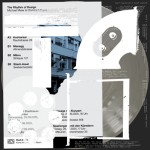
There is something almost perversely appropriate about turning the disappearance of music venues into a record, since vinyl is itself a rather good machine for preserving things that no longer exist. Michael Meier & Christoph Franz’s "The Rhythm of Design" takes this contradiction seriously, but without turning it into an exercise in cultural mourning. The Zürich-based artistic duo, whose research-driven practice repeatedly examines the social and historical layers embedded in built environments, began with six places connected to the city’s music scene: Club Zukunft, Giesshübel, Kochareal, Manegg, Mikro and Stierli-Areal. Some had already disappeared, others were threatened by redevelopment or changing urban priorities. Instead of simply photographing the remains and attaching a solemn text about gentrification, Meier & Franz removed pieces of the places themselves and had them transformed into six playable instruments with the help of specialist instrument builders. It is a beautifully literal idea: if the room is going to vanish, at least let it make some noise on the way out.
The conceptual elegance of "The Rhythm of Design" lies precisely in its refusal to separate architecture from music. The materials are not merely symbolic souvenirs of the venues; they become active components in a new musical process. Kalabrese, Tobibi Ferrari-Bienz, Rafal Skoczek, Lucien Badoux & Jeremy Sauter, Nicola Kazimir and Dualism were each asked to compose for one of these newly constructed instruments, resulting in six pieces whose stylistic coordinates stretch from experimental funk and punk towards kraut, noise and drone. The variety is important. A memorial made from a single aesthetic would risk turning a living musical culture into a tasteful museum exhibit, which is probably the last thing these places would have wanted. Instead, the record remains unruly enough to suggest that a scene is not defined by one sound but by the coexistence of incompatible ones.
The original performances made the idea even more radical. In September 2025, the six pieces were played simultaneously at their respective sites rather than presented as a conventional ensemble work. The audience had to move through the city, listening to isolated portions and constructing the larger composition through geography, memory and imagination. The city itself became the score, with distance functioning almost like another instrument. The LP inevitably changes that proposition. Six scattered events become six consecutive tracks; walking becomes sitting; architectural scale is reduced to a twelve-inch disc. Yet this apparent loss is actually where the album becomes fascinating. The record does not reproduce the original event so much as provide a second life for it. What was once spatial becomes temporal, and what depended upon physical movement can now be revisited through repetition.
That transformation also makes the individual pieces more revealing. “Club Zukunft” by Kalabrese carries the name of a place that belonged to Zürich’s nightlife but now survives here as a musical designation, while “Giesshübel” and “Kochareal” similarly convert addresses into titles that sound almost like coordinates on a map nobody needs to unfold anymore. The music consequently acquires a peculiar relationship with naming. These are not abstract compositions that happen to have urban titles attached to them; their identities are anchored to specific fragments of the city. Even when the listener has never stood in those places, the tracks retain the peculiar gravity of something made for a location rather than simply inspired by one.
The sequence becomes especially effective because the album does not insist on stylistic continuity. “Manegg”, credited to Lucien Badoux and Jeremy Sauter, gives way to Nicola Kazimir’s “Mikro” and finally Dualism’s “Stierli-Areal”, allowing the record to behave less like a unified genre statement than a collection of local dialects. That fragmentation is not a defect to be overcome. It is the point. Urban culture is messy because cities are messy, and the disappearance of a rehearsal room or club does not produce a neat hole in the cultural fabric. It redirects people, practices, friendships and sounds elsewhere, often in ways nobody can predict at the time.
The project also sits naturally within Meier & Franz’s wider artistic concerns. The duo, Michael Meier born in Wiener Neustadt in 1980 and Christoph Franz in Singen in 1982, both studied at the University of the Arts in Linz before completing Fine Arts degrees at Zurich University of the Arts. Their work repeatedly treats places not as neutral scenery but as accumulations of social, political and historical decisions. Earlier projects have dealt with urban transformation, construction, displacement and the strange ways in which apparently ordinary sites carry traces of larger systems. "The Rhythm of Design" extends that method into sound, but importantly does not treat music as an illustration of an architectural problem. Here music becomes evidence in its own right.
The title adds another layer. "The Rhythm of Design" echoes a song by the Zürich band Blue China, associated with the city’s youth and cultural protests of the 1980s. That historical reference prevents the project from presenting contemporary redevelopment as an entirely new phenomenon. Zürich has already had arguments about who gets to occupy the city, what kinds of culture deserve space, and whether urban development necessarily means cultural improvement. Apparently the city has been having this conversation for decades, which is reassuringly human in its inability to reach a final answer.
There is also something quietly political in the decision to preserve not only the memory of the venues but the materials associated with them. Photographs can document a demolished building, and an archive can catalogue its history, but an instrument made from its physical remains introduces another possibility: the past becomes capable of producing something new. The distinction matters. Nostalgia generally wants the vanished thing back exactly as it was. "The Rhythm of Design" accepts that this is impossible and asks a more useful question: what can be made from what remains?
The answer is neither purely musical nor purely architectural. These six pieces occupy the uncomfortable middle ground between document, composition and public artwork. Their real subject is therefore not simply the disappearance of Zürich’s music spaces, but the way culture survives spatial change by mutating. A venue closes; its wood or metal is repurposed; a musician writes for the resulting instrument; a performance takes place somewhere that has already ceased to be what it was; months later the performance becomes a record; eventually the record itself becomes another historical object. The process is almost absurdly elaborate for something as simple as remembering a room, but perhaps memory has always required unnecessary machinery.
That is what makes "The Rhythm of Design" more compelling than a straightforward commemorative release. It does not ask us to mourn six locations. It asks us to listen to what happens when their physical disappearance enters another form. The resulting album is fragmented because the city is fragmented, heterogeneous because scenes are heterogeneous, and slightly unstable because memory itself is a poor filing system. What survives here is not a replica of Zürich as it was, but a set of sonic residues capable of acquiring meanings beyond the places that generated them.
In that sense, the most important rhythm on "The Rhythm of Design" is not necessarily a beat. It is the rhythm of urban change itself: construction, occupation, displacement, adaptation, disappearance, recollection. Cities rarely stop moving long enough to notice what they have erased. This record does. It makes six vanished or endangered spaces audible again, not by pretending that they can be restored, but by giving their remains another function. A rather elegant form of resistance, and considerably more useful than another plaque nobody reads.