
Friday, November 20, 2026
Browse by Genre
Industrial Music / Industrial Metal / Aggro Industrial / Electro Metal
Industrial Noise / Power Noise / Harsh Noise
Synth Pop / Electro Pop / Synth-Electronica
Techno / Trance / Goa / Drum'n'Bass / Jungle / Tribal / Trip-Hop
Ambient / Electronica / Ethereal / Dub / Soundscapes / Abstract
Experimental / Avantgarde / Weird & Wired / Glitch / Noise / Field Recording
Dark / Gothic / Wave / New Wave / Dark Wave / Industrial Gothic
New Music / Downtown / Avantgarde Jazz / New Classical / World
Search Reviews
Music Reviews
Tom Raworth, Giancarlo Nino Locatelli, Pipeline: A Decent Run
Artist: Tom Raworth, Giancarlo Nino Locatelli, Pipeline
Title: A Decent Run
Format: CD x 2 (double CD)
Label: We Insist! (@)
Rated:

Title: A Decent Run
Format: CD x 2 (double CD)
Label: We Insist! (@)
Rated:
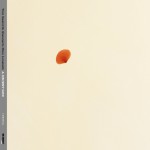
There are easier ways of putting poetry to music. One can read the poem aloud over a tasteful piano chord, add some discreet strings, lower the lights and allow everyone present to feel culturally improved for approximately forty-five minutes. "A Decent Run" has considerably less interest in such civilised procedures. Its relationship with Tom Raworth's poetry is stranger, more physical and much more playful: words are spoken, sung, repeated, displaced, translated into instrumental gestures and sometimes treated almost as raw sound. The music does not accompany the poems so much as get into an argument with them, and, unusually, both parties appear to enjoy it.
The history behind the album makes that relationship particularly significant. Giancarlo Nino Locatelli first met Raworth in 1992, beginning a friendship and artistic collaboration that continued until the poet's death in 2017. The idea for this project dates back to 2000, but it finally took concrete form with recordings made in 2024. Ten pieces use Raworth's poetry, while two more draw on compositions by Steve Lacy, another crucial reference point in Locatelli's musical thinking. The resulting twelve tracks bring together the musicians of Pipeline with a remarkable group of guests, including Carla Kihlstedt, Sebi Tramontana, Alberto Braida, Luca Tilli, Andrea Grossi and Cristiano Calcagnile, alongside a collection of deliberately brief interventions from musicians gathered under the wonderfully suspicious name Clandestines.
Raworth's presence is therefore not simply literary. His recorded voice remains part of the album, making the project a posthumous collaboration rather than a retrospective tribute assembled at a safe distance. That distinction matters. Raworth was one of the central figures of the British Poetry Revival, a movement that challenged conventional poetic forms and embraced American influences from the Black Mountain and Beat traditions. His own writing often worked through rapid shifts of perception, compressed language, sudden associations and an almost gleeful distrust of grammatical stability. He also had a strong interest in visual art, publishing and the physical construction of books.
Such poetry already behaves a little like improvisation. Its syntax can turn before the reader has finished unpacking the previous image; its meanings are often provisional; its fragments seem to generate further fragments rather than obediently marching toward a conclusion. Locatelli understands this. Instead of trying to stabilise Raworth's language, he gives the musicians enough freedom to destabilise it further.
"Situations", which opens the album, immediately establishes the principle. A small music-box sound introduces the piece before Raworth's voice enters with language that refuses the reassuring distinction between sense and nonsense. The ensemble does not provide a conventional backdrop. Clarinet, strings, piano, trombone and percussion seem to examine the spoken words from different angles, sometimes reinforcing them, sometimes apparently ignoring them. The result feels less like an illustration than an alternative syntax running simultaneously alongside the poem.
This is where Locatelli's long experience with Pipeline becomes audible. The ensemble does not behave like a conventional jazz group in which a theme is stated, developed and eventually returned to with everybody congratulating themselves on having remembered it. The instruments retain individual personalities, but their roles remain unstable. A clarinet phrase may become a punctuation mark; a percussion sound may function almost like a consonant; a violin can extend a vowel that the voice has just abandoned. The distinction between musical accompaniment and linguistic structure begins to collapse.
"Poetry" takes the experiment further and, appropriately, does so with humour. Raworth's suspicion of categorisation meets a musical arrangement that refuses to behave categorically either. Carla Kihlstedt's voice shifts the material from speech toward song without turning the poem into a conventional art song, while the ensemble surrounds her with sounds that seem to have been selected partly because nobody informed them that they were supposed to behave like respectable instruments.
There is a mischievous intelligence in this. Raworth's poetry repeatedly questioned the mechanisms by which language acquires authority, while Locatelli questions the mechanisms by which music acquires coherence. Both approaches are interested in what happens when established relationships are nudged out of alignment. The album does not destroy meaning. It makes meaning work overtime.
"In Memoriam L. W." moves into more contemplative territory without becoming solemn in the conventional memorial sense. Raworth was capable of writing about absence, death and memory without allowing those subjects to dictate the emotional temperature of the work. Locatelli follows the same principle. The music leaves gaps rather than filling them, and the ensemble's restraint gives individual sounds considerable consequence.
Then comes "Vita Cortese Tara", where the album's relationship with voice becomes particularly intricate. The material exists in more than one state: spoken and sung, structured and improvised, recognisable and partially dissolved. The distinction is crucial because Raworth's poems are not being treated as fixed literary objects. They are being tested in different physical forms. What happens when the same words are spoken rather than sung? What happens when their semantic meaning becomes less important than their rhythm? What remains when a phrase becomes a sound before it becomes an idea? These are not academic questions dressed up as music. They are audible throughout the album.
"Sign of Time" and "Warm Autumn Problem" continue the process, but the album never settles into a single method. Sometimes the instruments seem to follow the contours of the language; elsewhere they appear to establish an independent conversation. This variation prevents the project from becoming a demonstration of one clever technique repeated twelve times. Locatelli has clearly resisted the temptation to invent a system and then spend an entire album proving that the system works.
That matters because Raworth's writing itself resists uniformity. His poetry could move rapidly between political observation, surreal imagery, mundane details, linguistic jokes and philosophical unease. He published more than forty collections and was also a publisher, editor, translator and visual artist, so the idea of language as something materially constructed was hardly incidental to his practice.
"Colonel Eternal", which appears on the second disc, revisits material related to the opening "Situations". But repetition here does not mean duplication. The return makes the earlier version look provisional, as though the same musical-poetic object has been picked up from another side. This is one of the album's recurring strategies: a piece can reappear without simply repeating itself, because the context has changed and therefore the listener's memory has changed with it.
"Radhopsin Blues" is especially revealing. Raworth's own voice comes forward, while the accompaniment initially seems almost skeletal before acquiring greater weight. There is a curious tension between the apparent looseness of the language and the careful control of the musical setting. The ensemble never tries to make the poem sound more comprehensible than it is. Instead, it gives its verbal movement somewhere to happen. That is probably the central virtue of "A Decent Run": it respects ambiguity without confusing ambiguity with vagueness.
"Translation" is perhaps the album's most mischievous episode. Its subject allows Locatelli to play with the instability of language itself, while the musicians turn the process of semantic distortion into a musical device. Trombone noises, electronic interventions and small instrumental gestures begin to resemble fragments of a conversation whose participants have all received slightly different versions of the dictionary.
It is difficult not to think about contemporary machine translation here, especially when language is stripped of context and rearranged according to rules that technically function while occasionally producing sentences that sound as if an exhausted extraterrestrial has been given access to an online phrasebook. Yet the piece does not merely mock linguistic failure. It suggests that translation is always a transformation, even when performed by humans who supposedly know exactly what they are doing.
"Oppio Inglese" shifts the atmosphere again. The music becomes comparatively spare, allowing the voice and instrumental textures to occupy separate but related spaces. There is something almost botanical in the way the sound grows and then retreats, although the album wisely avoids turning the poem into a soundtrack for a tasteful documentary about flowers. What matters is the fragility of the arrangement. A small change in density can radically alter the perceived weight of the words.
By the time the title track arrives, "A Decent Run" has accumulated enough different approaches that its apparent lack of stylistic uniformity becomes one of its strongest structural features. The project moves between free improvisation, composed material, song, spoken word, chamber-like textures, jazz, noise and electronics without treating genre as a border checkpoint.
This reflects Locatelli's own musical history. Pipeline has operated in different configurations, from trio to larger ensembles, and his approach has repeatedly involved combining written structures with improvisational freedom. Earlier Pipeline work has used compositions as frameworks around which musicians could construct networks of possible responses rather than simply reproducing a finished score.
That philosophy seems perfectly suited to Raworth. The poet's language does not need to be “set” because it already contains movement. Locatelli's role is to create circumstances in which that movement can interact with sound.
The final "Absence" is therefore appropriately unresolved. Its title might suggest a conventional elegy, but the music does something more interesting. Voice, instruments and small sounds occupy a space in which presence and disappearance constantly exchange places. The poem does not simply conclude, and neither does the music provide a grand emotional period at the end of the sentence. The album seems to understand that absence is not silence. It is the continuing effect of something that is no longer physically there.
That idea inevitably carries extra weight because Raworth died seven years before these recordings were made. Yet "A Decent Run" never turns his death into the organising principle of the music. This is not an album about a dead poet. It is an album made with a poet whose voice remains active inside it. That distinction saves the project from sentimentality.
The involvement of the Clandestines is another stroke of intelligence. John Corbett, Terry Kapsalis, Lou Mallozzi, Steve Beresford, Joëlle Léandre, Larry Ochs, Mazen Kerbaj, Gabriele Mitelli and others contribute brief gestures that are incorporated into the final structures. These interventions can be tiny, but their very brevity makes them significant. Instead of building a hierarchy in which the principal musicians produce the important material and guests decorate it, Locatelli treats the ensemble as a network of possible presences.
The album's title consequently acquires a slightly ironic dimension. A “decent run” sounds modest, almost dismissive, as though somebody has returned from an afternoon walk and reported that things went reasonably well. What actually sits behind the phrase is a quarter-century of friendship, correspondence, artistic exchange, a posthumous recording process and an ensemble large enough to make a tax accountant nervous.
But the modesty is appropriate. Raworth's poetry was never particularly interested in grand declarations when a sudden shift in language could do more damage with less effort. Locatelli's music follows a similar economy. Even when the ensemble becomes dense, the individual sounds remain legible. Nobody needs to demonstrate virtuosity by setting fire to the furniture.
The result is unusually generous music. It gives space to the voice without subordinating the instruments, allows improvisation without pretending that structure is unnecessary, and treats composition as something that can remain porous. The musicians listen not only to one another but to the internal rhythm of language.
That makes "A Decent Run" more than a meeting between literature and experimental jazz. It is an investigation into what happens when two different systems of thought are allowed to remain incomplete. Poetry does not become music, and music does not become poetry. Instead, each continually interferes with the other.
Raworth's language survives because it is not embalmed. Locatelli's arrangements survive because they are not overdetermined. Between them, Pipeline creates a music in which words can become rhythm, rhythm can become punctuation, noise can become syntax and silence can become part of the sentence.
There is something quietly moving about that. A project conceived in 2000, completed through recordings made in 2024 and released in 2026 might sound like an exercise in archival patience. Instead, "A Decent Run" feels remarkably alive. Its central idea is not preservation but continuation: the recognition that a friendship can outlast the people who began it, and that a poem can continue changing once its author is no longer available to change it himself.
Perhaps that is the most fitting tribute Raworth could receive. Not a monument, not a solemn anthology, and certainly not a tasteful recital. A set of musicians taking his words seriously enough to interfere with them.
That is what "A Decent Run" does. It listens to the poems, takes them apart, lets them collide with clarinets, trombone, strings, piano, percussion, electronics, voices and small mechanical noises, and then allows the resulting fragments to find their own relations. It is playful without being frivolous, intellectually demanding without becoming academic, and emotionally affecting without asking for the listener's sympathy.
A rare achievement, really. Twelve tracks, one absent poet, a large unruly ensemble, and somehow nobody has felt the need to explain what the music is supposed to mean. Human civilisation may yet have a little hope.
Mats Äleklint & Sten Sandell: Airflow

Artist: Mats Äleklint & Sten Sandell (@)
Title: Airflow
Format: CD & 12" + Download
Label: Aleklint Records
Rated:

Title: Airflow
Format: CD & 12" + Download
Label: Aleklint Records
Rated:
The title "Airflow" sounds almost too sensible for a record involving Mats Äleklint, Sten Sandell and a church organ. Air is, after all, the basic requirement of both instruments: the trombone needs a player's breath, the organ needs a mechanism to push air through pipes. But on this album air is not merely the invisible employee doing the actual work behind the scenes. It becomes the thing being shaped, stretched, interrupted and occasionally made to sound as though it has developed opinions.
Recorded at the Church of Revelation in Saltsjöbaden on March 2nd, 2026, "Airflow" contains six entirely improvised pieces, with Äleklint on trombone and Sandell on pipe organ. The recording was made, mixed and mastered by Äleklint himself, and the circumstances matter. There is no elaborate ensemble architecture here, no rhythm section to provide diplomatic relations between the two protagonists, and no predetermined composition waiting patiently underneath the improvisation. Instead, the music depends almost entirely on how accurately two experienced musicians can sense what the other is doing.
That is hardly an inexperienced pairing. Äleklint has spent decades moving between free improvisation, jazz, large ensembles and projects such as Angles and Fire! Orchestra, while working with figures ranging from Carla Bley and Dave Holland to Paal Nilssen-Love and Mats Gustafsson. Sandell has an equally formidable history, both as a member of Gush and through collaborations with Evan Parker, Sven-Åke Johansson, Paal Nilssen-Love and many others. He is also a composer whose work extends into voice, electronics, text and visual art. Their familiarity is therefore not the interesting part. The interesting part is what they choose to do with it.
"Fanfare" begins by making the trombone sound almost excessively human. Äleklint's breath produces attacks that can be abrupt, grainy or strained, while Sandell gradually establishes the organ's much larger reservoir of resonance. Yet the organ does not simply become an imposing background. It answers, interrupts and changes the apparent scale of what the trombone is doing. The two instruments initially seem to occupy different physical universes, only to discover that their sounds can meet surprisingly close to the same point.
"State of Mind" reduces the rhetoric and concentrates the listening. It is one of the album's more revealing moments because very little needs to happen for the relationship to remain compelling. A sustained organ tone can alter the perceived pitch of the trombone; a small change in Äleklint's embouchure can make the surrounding resonance suddenly feel unstable. Improvisation here is less about spontaneous invention than about extremely quick adjustments to changing circumstances.
The longer "All Aboard" develops this principle without rushing toward some grand climax. The title might suggest departure, movement and a timetable, but the music has no interest in keeping railway time. Its pace is patient, and the tension comes from the changing behaviour of the sounds themselves. Sandell can make the organ seem almost static while its internal colours continue shifting, whereas Äleklint's slide allows him to occupy the unstable territory between fixed pitches. The contrast gives the piece an unusual sense of elasticity.
There is something particularly fascinating about the organ in this context because it is both an instrument and a building-sized proposition. A trombone is carried into a room and immediately depends on the body of its player. A pipe organ remains there, occupying architecture, waiting for somebody to decide which of its enormous possibilities should become audible. Sandell knows how to exploit that disproportion without allowing the organ to win simply because it has more cubic metres.
"Broken Machine" makes the physical mechanics more conspicuous. The sounds become harder, sharper and less obviously instrumental, with the organ acquiring percussive and pneumatic qualities while Äleklint manipulates the trombone into rasping, muted and fractured forms. The title becomes almost literal without becoming descriptive: mechanisms seem to be revealing their joints. Yet there is humour in the situation too. These are two highly sophisticated musicians apparently spending several minutes investigating how much damage can be done to two perfectly respectable instruments without actually breaking either of them.
"Meeting Points", Äleklint's sole individually credited composition on the record, is more fragile. The trombone can suddenly sound intimate, almost vocal, while Sandell chooses colours that reduce the organ's monumental reputation to something thinner and more elusive. It is perhaps the clearest demonstration that "Airflow" is not simply an exercise in weight. The album understands that a large sound is not necessarily a powerful one, and that restraint can make resonance more conspicuous rather than less.
The final "Alloy" brings the album's central relationship into especially sharp focus. The word suggests combination, but also material transformation: different substances retaining their identities while producing something that neither could have produced alone. That is close to what happens throughout the record. Äleklint and Sandell never quite disappear into a single sound, despite occasionally approaching that effect. Their individual timbres remain perceptible, but the listener becomes increasingly interested in the boundary between them.
This is also where the church setting proves more than convenient acoustics. The organ inevitably carries centuries of cultural baggage, from sacred music to grand concert repertoire, while the trombone arrives with an entirely different history of military bands, jazz, popular music and experimental improvisation. "Airflow" does not attempt to reconcile those histories or turn them into some tasteful ecumenical meeting. It simply puts them in the same room and allows their physical properties to negotiate the consequences.
The most successful free improvisation does not necessarily sound free. It can sound remarkably precise because the musicians are responding with enough speed and attention to make uncertainty itself structurally useful. That is what gives "Airflow" its character. The music never feels as though Äleklint and Sandell are searching for a predetermined destination, but neither does it wander aimlessly. Each piece develops through accumulated decisions, with the players repeatedly testing how much tension a sound can carry before it needs to change.
There is also something quietly generous about the album's refusal to over-explain itself. The premise is simple: trombone, organ, air, room, six improvisations. Human beings have spent centuries finding increasingly complicated ways of making music, and then occasionally somebody remembers that two people breathing into things can still be enough.
"Airflow" is one of those occasions. Its real achievement is not that the trombone and organ sometimes become difficult to distinguish. It is that they remain unmistakably different while learning, piece by piece, how to inhabit the same acoustic reality. The music does not dissolve the distance between them. It makes that distance productive.
Marcelo dos Reis & Salvoandrea Lucifora: Low Birds

Artist: Marcelo dos Reis & Salvoandrea Lucifora (@)
Title: Low Birds
Format: CD + Download
Label: Cipsela Records (@)
Rated:
Title: Low Birds
Format: CD + Download
Label: Cipsela Records (@)
Rated:
There is something pleasantly suspicious about a record called "Low Birds" made by an electric guitarist and a tubist. Birds are generally expected to provide altitude, while tubas have spent most of their respectable lives being told to stay near the floor. Marcelo dos Reis and Salvoandrea Lucifora seem happy to ignore this arrangement. Their music does not so much depict birds as examine what happens when two very different instruments are allowed to behave badly in the same room.
Recorded in Amsterdam in June 2025, "Low Birds" is a completely improvised meeting between dos Reis's guitar and Lucifora's tuba, percussion and shells. It is a small-scale setup, but hardly a modest one. The album's seven pieces move through an unusually broad range of density, from the four-part "Low Birds Suite" to the more pointed "Coleman Whisper", the abrasive tension of "Song of the Flying" and the unexpectedly tender "Birds Rave". The result is less a demonstration of instrumental technique than an extended study in how two players can make each other change direction.
Dos Reis has been one of the important figures in Portugal's experimental improvising community for years, both as guitarist and as the person behind Cipsela Records. His discography moves freely between solo work and collaborations with musicians such as Evan Parker, Elliott Sharp, Burton Greene and Carlos “Zíngaro”. His approach to the guitar tends to resist the usual division between melody, texture and noise: a string can suggest a line, a scrape can interrupt it, and the distinction between the two is often less important than what happens next.
Lucifora comes from a somewhat different but equally porous musical territory. Born in Sicily and based in Amsterdam, he is a multi-instrumentalist, composer and multimedia artist whose practice encompasses tuba, trombone and live electronics. His work ranges from collective improvisation to projects incorporating African, Caribbean, Balkan and jazz-derived elements. The tuba, in his hands, is consequently not obliged to behave like the respectable brass instrument one might remember from childhood bandstands. It can grunt, breathe, rasp, flutter and become almost vocal.
That flexibility is crucial to "Low Birds". The opening "Low Birds Suite" unfolds in four connected sections, and its real subject is conversation. Dos Reis rarely treats the guitar as a lead voice requiring accompaniment; Lucifora does not simply supply the bottom end. Instead, both musicians keep proposing incomplete thoughts and listening for consequences. A guitar gesture can hang in the air long enough for the tuba to answer it from underneath, while a low brass resonance can suddenly make a previously delicate guitar figure seem strangely exposed. The music has melody, but melody here behaves less like a destination than like a passing thought.
This is where the recording's intimacy matters. It was made at Lucifora's room in Amsterdam rather than in a large studio or concert hall, and the album benefits from that sense of proximity. There is little temptation toward grandeur. Even when the sounds become forceful, they retain the awkward physicality of two people actually producing them: breath meeting metal, fingers finding strings, objects being struck, resonance beginning and dying. Improvisation becomes audible not as a philosophical principle but as a succession of small decisions.
The four-part structure is particularly effective because it avoids the common free-improvisation problem in which “spontaneous” becomes synonymous with “everything at once.” The duo allows events to accumulate. Rhythmic suggestions appear, disappear and return in altered form; pitches acquire weight through repetition; silence becomes a genuine participant rather than the obligatory gap between noisy episodes. There is a sense of two musicians discovering the dimensions of the same room by approaching it from different angles.
"Coleman Whisper" makes the album's lineage more explicit. Its title points toward Ornette Coleman's harmolodic thinking, but the piece does not turn the reference into a reverential exercise in jazz archaeology. Instead, the idea seems to function as permission: pitch, rhythm and hierarchy can be rearranged without having to destroy the possibility of lyricism. There are also hints of the knotty, conversational logic associated with Henry Threadgill, although the duo ultimately sounds like itself rather than like a bibliography with instruments attached. The reference is useful precisely because it opens a door without telling the musicians what they are supposed to find behind it.
Then comes "Song of the Flying", where Lucifora's extended-breathing techniques push the tuba toward something more unsettled. The title need not be taken literally. What matters is the physical instability of the piece. Dos Reis responds with a more agitated vocabulary, and the music becomes a contest between propulsion and resistance. It is perhaps the album's most physically demanding passage, yet it never collapses into mere demonstration.
"Birds Rave", by contrast, brings the record to an almost mischievous close. Percussion and shells add a different grain to the guitar, while the tuba becomes capable of surprisingly sensual vocal colouring. After all the negotiation, friction and exploratory detours, the final piece does not offer a grand resolution. It simply loosens the knots. That restraint is important: free improvisation is often expected to finish by proving that freedom occurred, usually by setting fire to the furniture. Here the musicians seem content to leave the room intact.
There is also a pleasing continuity between "Low Birds" and dos Reis's broader work. Cipsela has repeatedly documented improvised encounters in which musicians use the recording not merely to preserve an event but to give a particular relationship another life. The label's catalogue includes dos Reis's collaborations with Luís Vicente and Gonçalo Almeida, among others, and "Low Birds" belongs naturally to that lineage while changing its instrumental equation. A previous collaboration between dos Reis and Lucifora had already brought them together in a larger quartet in 2020; five years later, reducing the format to two players reveals just how much information can exist between a guitar and a tuba when neither musician is interested in filling every available centimetre.
What makes "Low Birds" ultimately satisfying is its refusal to confuse simplicity of instrumentation with simplicity of thought. Guitar and tuba are enough, provided the people holding them are prepared to listen more carefully than they play. The album's title may suggest something whimsical, but the music itself is concerned with more substantial matters: weight and lightness, breath and resonance, intention and accident, the delicate social mechanics of improvisation.
The birds can keep the metaphor. What remains is two musicians negotiating space, responding to one another with enough patience to let uncertainty become productive. For an improvised record, that may be the most convincing form of structure available.
Phil Coy: 60bpm 33rpm
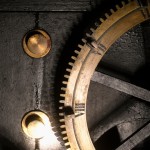
Phil Coy’s "60bpm 33rpm" begins with one of those sounds that civilisation has trained us to ignore: a clock ticking somewhere nearby. We normally hear such sounds only when they stop, which is perhaps the most revealing thing about our relationship with time. The clock is allowed to organise our lives precisely because we have agreed not to listen to it. Coy’s record asks what happens when we do.
The source is the Benjamin Vulliamy turret clock installed at St George’s Church in Ramsgate in 1829, and Coy’s original "sixty beats per minute" was a two-month, site-specific installation there in 2025. Microphones amplified the mechanism into the church nave while a digital timecode followed its rhythm. Every six minutes, however, the system changed direction, sending the previous six minutes backwards through the speakers. The installation effectively turned the church into an instrument whose principal musician was a piece of Victorian engineering.
On record, the spatial complexity inevitably changes. The surround installation becomes an 18-minute stereo piece, and the church itself is no longer physically present. Yet this loss is partly compensated by the peculiar physicality of vinyl. The 33rpm object contains concentric grooves that echo the circular mechanics of the clock, turning the record into something more than a carrier for the sound. It becomes a small, black machine for contemplating machinery. Coy’s first vinyl release therefore makes considerable sense as an object, even before the stylus begins its pilgrimage around the edge.
The first side is remarkably patient. The clock does not announce itself as an artistic device; it simply ticks, while Ramsgate leaks into the recording: birds, distant voices, traffic and the indistinct activity of a town going about its business. The important thing is that the clock does not sit above this material as some grand philosophical narrator. It is embedded in it. Human activity happens underneath the beat, just as it does in ordinary life, where deadlines, school runs, meals, sleep and minor catastrophes all take place under the supposedly neutral authority of the second hand. Then the reversal arrives.
It is an excellent trick because it is so physically wrong. Reversed sound has an immediately recognisable unnatural quality, but Coy avoids turning the effect into a mere piece of audio sleight-of-hand. The backward clock seems to expose the difference between recorded time and lived time. A recording can reverse what has happened. Experience cannot. You can replay an argument, a childhood, a bad decision or an entire decade as many times as you like, but nobody has yet discovered the rewind button for consequences. Human civilisation has managed to invent clocks, databases, surveillance cameras and cloud storage, but apparently not a decent undo function.
That tension gives "60bpm 33rpm" its real weight. The clock represents time as measurement, while the reversal exposes measurement as an agreement rather than an absolute law. Six minutes can be divided, displayed, recorded, repeated and inverted, but none of these operations actually returns the world to the state it occupied six minutes earlier. Coy’s work therefore creates a small but quite unnerving gap between chronological time and perceptual time.
This concern fits naturally within his broader practice. Coy is an interdisciplinary artist whose work moves between sculpture, photography, film, performance and site-sensitive sound, with particular attention to the histories and architectures of specific places. His permanent "Stereo Pair" at Brunel University, for example, emerged from the history of acoustic listening technologies and pre-radar sound mirrors, while his work more generally tends to make architecture behave less like a passive container and more like an active participant.
That background matters here because "60bpm 33rpm" is not really a field recording in the conventional sense. Coy is not merely documenting Ramsgate, nor is he using the clock as convenient atmospheric decoration. He constructs a situation in which the place, the mechanism and the recording technology interfere with one another. The clock produces the pulse; the microphones transform it; the software decides when the past will be replayed; the church colours the sound; and the vinyl subsequently gives the whole process another circular body. Each stage alters what came before.
And then Adrian Sherwood gets involved, which is where the supposedly disciplined clock starts losing its trousers.
The second side consists of four dub treatments of the material, produced and mixed by Sherwood at On-U Sound Studios with Mark Bandolla on guitar and keyboards, Duncan Mackay on trumpet, Alex White on saxophone and flute, and Ivan Hussey on cello. Sherwood is almost absurdly well suited to the task. Since the late 1970s, his work has been built around treating recorded sound as something elastic: delay, echo, repetition, subtraction, distortion and spatial displacement become compositional tools rather than post-production cosmetics.
His contribution changes the philosophical temperature of the project. Where Coy’s side makes time strange by reversing it, Sherwood makes it unstable by multiplying it. The clock’s regular pulse is fed through dub’s familiar machinery and comes back wearing different clothes. Bass, percussion, horns, guitar and echoes establish alternative trajectories around the original beat. The clock is still there, but its authority has been seriously compromised.
This is perhaps the smartest pairing in the project. Dub has always possessed an unusual relationship with chronology. It takes something already recorded and turns it into a new event, often making the studio itself audible in the process. Sherwood does not simply decorate Coy’s concept with reggae-derived effects. He applies a production philosophy that has been concerned for decades with breaking linear musical expectation. The result is a dialogue between two kinds of temporal sabotage: Coy reverses the clock; Sherwood makes the clock proliferate.
The four dub pieces also prevent the album from becoming overly solemn. There is a temptation in sound art involving churches, nineteenth-century clocks, existential time and the crisis of modern temporality to start speaking as though every ticking second were personally responsible for the decline of Western civilisation. Sherwood provides a useful corrective. Suddenly the great mechanical order is wobbling, echoing and acquiring horns. The clock has gone from authority figure to unreliable bandleader.
The locked groove at the end completes the joke with unusual precision. Instead of allowing time to proceed toward an ordinary conclusion, the record becomes physically incapable of reaching one. The stylus keeps circling the same tiny section, producing repetition without progress. It is both a literal property of the medium and an almost embarrassingly efficient metaphor for the human condition. We invented clocks to organise time, records to preserve it, and now the record gets stuck. Somewhere, a Victorian engineer is presumably filing a complaint.
What saves "60bpm 33rpm" from being merely clever is Coy’s sensitivity to sound as evidence. The distant life of Ramsgate remains crucial. The clock does not exist in abstraction; it is surrounded by the unpredictable noises of people, animals, weather and the town itself. When these sounds are reversed, their familiarity becomes subtly grotesque. The past does not return as memory. It returns as material that has been processed incorrectly.
That distinction is important. Coy is not claiming that time can be undone. He demonstrates how easily our perception of sequence can be manipulated. Six minutes forward and six minutes backward are technically composed of the same sonic material, yet they do not feel remotely equivalent. The difference lies not in the sounds themselves but in our expectation of causality. We expect footsteps to follow bodies, voices to emerge from mouths, birds to make noise before silence follows them. Reverse the order and the ordinary world becomes uncanny without any additional sound being introduced.
There is something quietly political in this, too. Mechanical clock time was historically tied to industrial discipline, punctuality, labour and the increasing standardisation of everyday life. The Ramsgate turret clock belongs to precisely that historical transformation, while its contemporary digital counterpart belongs to an era in which time has become even more pervasive: notifications, timestamps, calendars, productivity software, surveillance and the permanently available workplace. Coy’s machine is old, but the problem it exposes is painfully current.
The record does not offer an escape from this system. It does something more useful: it makes the system audible. And once time becomes audible, it stops seeming quite so inevitable.
"60bpm 33rpm" is therefore a modestly sized work with an unusually large subject. Its materials are simple: a clock, a town, a church, microphones, software, vinyl and a dub producer with an apparently inexhaustible supply of echoes. But their combination produces a strange little disturbance in our confidence that yesterday, today and tomorrow are as neatly separated as the numbers on a clockface suggest.
Time keeps moving, naturally. It has never listened to human requests.
But for roughly forty minutes, Coy and Sherwood make a convincing case for refusing to listen to it quite so obediently.
Ingebrigt Håker Flaten (Exit) Knarr: fly

Artist: Ingebrigt Håker Flaten (Exit) Knarr (@)
Title: fly
Format: CD & 12" + Download
Label: Sauajazz (@)
Rated:
Title: fly
Format: CD & 12" + Download
Label: Sauajazz (@)
Rated:
There are bands that play loud, bands that play fast, and bands that apparently regard the distinction between composition and controlled demolition as an unnecessary bureaucratic obstacle. (Exit) Knarr belongs to the third category. On "fly", recorded at Oslo's Victoria Nasjonal Jazzscene at the end of the European tour that followed "Drops", Ingebrigt Håker Flaten's sextet takes material associated with both "Drops" and "Breezy" and subjects it to the peculiar logic of a band that has spent enough time together to stop behaving like a band and start behaving like a single, mildly unstable creature.
This matters because "fly" is not simply the obligatory live album with a little extra perspiration left on the microphones. The pieces have changed. Fragments from earlier compositions have been absorbed into new structures, familiar ideas have acquired different proportions, and the musicians seem increasingly interested in what happens after a composition has stopped being something to reproduce. The result is a record that occupies an awkward and fertile territory between repertoire and improvisation.
Flaten is hardly a newcomer to awkward territories. The Norwegian bassist has spent decades moving between free jazz, improvised music and more formally organised projects, with credits that include The Thing, Atomic, School Days, Free Fall and collaborations with figures such as Joe McPhee, Evan Parker and Håkon Kornstad. His reputation as an extraordinarily active sideman might actually obscure one of his more interesting qualities: he is a composer who understands that a score doesn't necessarily have to tell musicians what to do. Sometimes it has to give them something sufficiently sturdy to attack.
(Exit) Knarr, originally assembled for Vossa Jazz in 2021, has become the ideal vehicle for that philosophy. Previous records already established a peculiar equilibrium between written material, collective freedom, rock propulsion, electronics and the abrasive possibilities of free improvisation. "Breezy" demonstrated how sharply the group could move between melody and eruption, while "Drops" pushed further into graphic-score territory and gave electronics a more prominent role without allowing them to sterilise the human component of the music.
"fly" sounds like the next logical consequence: stop treating those compositions as fixed objects and see what they become when repeatedly thrown into the air.
The opening title piece lasts nearly thirteen minutes, and it earns its duration by refusing the usual dramaturgy of “quiet bit, loud bit, enormous solo, everyone goes home”. The six musicians constantly redistribute the weight. Amalie Dahl's alto and baritone saxophones and Karl Hjalmar Nyberg's tenor occupy different parts of the horn spectrum, sometimes forming a muscular front line, sometimes behaving more like competing weather systems. Marta Warelis can make the piano sound sharply architectural before allowing it to dissolve into the ensemble. Jonathan F. Horne brings a guitar vocabulary that has never seemed particularly interested in respecting the traditional border between jazz and noise. Olaf Olsen supplies the crucial physical momentum, while Flaten's double bass is frequently less a foreground voice than the load-bearing structure on which everyone else can perform acts of vandalism.
That last distinction is important. Flaten's bass playing here is not constantly demanding attention, because he doesn't need it. He creates movement by controlling density, repetition and gravity. When the band accelerates, the acceleration feels collective rather than decorative. When it suddenly withdraws, the silence seems to have been negotiated rather than merely left behind.
Then "breezy" arrives, carrying the ghost of the earlier album but refusing to behave like a reprise. The title has an unavoidable personal resonance, since the original composition was connected to Flaten's late friend and collaborator Jaimie Branch, whose music and attitude clearly remain part of the emotional background of the project. Yet the tribute is not treated as a solemn monument. Earlier versions of "Breezy" already balanced exuberance and elegy, moving through blues-inflected passages, spiritual-jazz colours and more unruly free-jazz terrain.
On "fly", the piece feels less like remembrance carved into stone and more like memory being handled by living musicians. That difference is considerable. The music doesn't freeze Branch into a historical figure. It keeps moving, which is probably the more appropriate form of tribute for an artist whose work was so invested in motion, collision and refusal.
The thirteen-minute "austin birds" is perhaps the clearest indication that this isn't merely a concert souvenir. The title recalls Flaten's Austin environment, but the music doesn't settle into postcard territory. Instead, the ensemble builds a strange geography out of short gestures, horn exchanges, rhythmic disruptions and increasingly unstable interactions. There is melody here, but it behaves like something overheard through several walls.
The group's greatest strength is its ability to make abrupt changes feel earned. A horn figure can become a rhythmic device; a guitar attack can function almost like percussion; Warelis' piano can suddenly turn a dense passage transparent. Electronics are used not as futuristic wallpaper but as another means of damaging the edges of the acoustic instruments. This is particularly revealing given the direction "Drops" had already taken, where electronic processing and graphic notation expanded the band's possibilities without replacing its acoustic core.
And then there is "chaos pad", which has the sort of title that could either be an accurate description or something written on a sticky note five minutes before rehearsal. Here it is both.
The six musicians sound as though they have discovered that chaos is actually quite difficult to achieve properly. Randomness is easy. Genuine instability requires architecture. The piece continually approaches collapse without quite falling into it, maintaining enough rhythmic and compositional information for the listener to sense an underlying design even when the surface becomes gloriously unruly.
This is one of the reasons "fly" feels different from a generic free-jazz blowout. There is plenty of force, certainly, but force isn't the point. Flaten's compositions provide frameworks that can survive being stretched. The band can rip into them, loosen them, fragment them and apparently set fire to the furniture while still retaining a sense of where the walls are.
That balance has been recognised in reactions to both "Breezy" and "Drops": critics have repeatedly pointed to the group's capacity to combine free-jazz intensity with grooves, formal structures and moments of surprising lyricism. The electronics may roughen the picture, but they don't flatten the acoustic musicians into a homogeneous electronic mass.
The live setting makes this quality more obvious because there is nowhere for the music to hide. Studio production can create the illusion of coherence after the fact; a stage has considerably less patience. Here, the coherence is generated in real time.
There is also something almost old-fashioned about the physicality of it. You can hear musicians listening, reacting, leaving space, occupying it again and occasionally behaving as though somebody has removed the emergency brake. The sophistication comes not from restraint but from knowing exactly how much pressure the structure can take before it becomes something else.
That is perhaps the central idea of "fly": transformation without erasure. The compositions from "Breezy" and "Drops" remain somewhere inside these performances, but in much the same way that a tree remains inside a wooden table. The original material has been cut, rearranged and given another function. It is still recognisable if you know where to look, but it has acquired a different life.
Flaten's achievement as a bandleader is therefore not simply that he has assembled six exceptionally capable improvisers. Plenty of people have done that, sometimes with results resembling a meeting where everyone has been given a microphone. His achievement is giving these musicians enough structure to generate collective identity without suffocating their individual instincts.
Amalie Dahl can be fierce without merely becoming “the saxophone soloist”. Nyberg can introduce electronics without turning the group into an electronic project. Warelis can disrupt the harmonic field without abandoning it. Horne can scrape and slash at the music without making noise itself the destination. Olsen can propel the entire mechanism while knowing when not to. Flaten holds all of this together with a bassist's particular understanding of weight: what must remain solid, what can move, and what can be allowed to fall.
The title "fly" consequently feels less like an instruction than a description of what happens when the music has accumulated enough momentum to leave the ground.
It doesn't float. It doesn't glide. It takes off. And when it does, (Exit) Knarr demonstrates that sophisticated ensemble playing need not look sophisticated from a distance. Sometimes it looks like six people making an extraordinarily convincing argument for why the furniture should be moved out of the way.
"fly" is a live album, technically speaking. In practice, it is something more interesting: a snapshot of compositions in transit, caught between their previous identities and whatever they may become next. The music remembers where it came from, but it has no particular interest in going back.
That is probably why the record feels so alive. It isn't documenting a finished thing. It is documenting a band discovering, in public, that its own music is still capable of changing shape.