
Saturday, November 21, 2026
Browse by Genre
Industrial Music / Industrial Metal / Aggro Industrial / Electro Metal
Industrial Noise / Power Noise / Harsh Noise
Synth Pop / Electro Pop / Synth-Electronica
Techno / Trance / Goa / Drum'n'Bass / Jungle / Tribal / Trip-Hop
Ambient / Electronica / Ethereal / Dub / Soundscapes / Abstract
Experimental / Avantgarde / Weird & Wired / Glitch / Noise / Field Recording
Dark / Gothic / Wave / New Wave / Dark Wave / Industrial Gothic
New Music / Downtown / Avantgarde Jazz / New Classical / World
Search Reviews
Music Reviews
Espen Berg Trio: Entropies

There is something faintly comic about naming a jazz album "Entropies" and then spending forty-four minutes demonstrating that everything is, in fact, under control. Espen Berg Trio are hardly interested in letting the furniture fly out of the windows, but neither are they content with keeping every object politely in its assigned place. "Entropies" is music fascinated by the point at which structure begins to loosen, when a pattern remains recognisable while its internal logic quietly starts misbehaving. The result is a piano-trio record that sounds meticulously constructed and surprisingly alive to accidents.
Espen Berg, Bárður Reinert Poulsen and Simon Albertsen have been playing together since 2014, long enough for their communication to have moved beyond the obvious mechanics of piano, bass and drums. Berg has meanwhile developed a substantial career as both pianist and composer, including solo work and collaborations across the Norwegian jazz scene, while the trio has toured extensively in Europe and Asia. Their fifth album arrives after nearly three years of development, and that long gestation is audible in the precision of the writing. Yet "Entropies" never gives the impression of having been ironed flat before being released. The compositions leave room for spontaneous decisions, polymetric structures and changes of density that make the music feel as though it is constantly negotiating with itself.
The opening "Equilibrium Suite" immediately plays a small joke on its own title. Part One establishes a relatively calm field, with Berg's piano moving through supple figures while Poulsen and Albertsen provide a rhythmic environment that is less accompaniment than active weather. The balance is temporary. Part Two takes the material somewhere more animated, allowing patterns to recur in altered forms and rhythmic relationships to become increasingly slippery. The important thing is that the trio does not dramatise this instability. There is no musical siren announcing that Disorder Has Arrived. The musicians simply alter the conditions and carry on.
That ability to make complexity feel conversational is one of Berg's strongest qualities. His piano playing can be extraordinarily busy without becoming cluttered, partly because the left and right hands often seem to inhabit different rhythmic climates. Poulsen does not merely reinforce the lower register, either. His bass frequently acts as a counterweight or alternative route through the composition, while Albertsen has a particularly sharp sense of when not to fill a space. The trio's sophistication lies less in how many things they can play simultaneously than in how precisely they can decide which thing should happen next.
"Rue Saint-Michel" offers a different kind of concentration. Berg wrote several pieces for the album during a 2024 residency in Vence, southern France, and this one took its title from a street there. The music is comparatively open and lyrical, with Flavia Huarachi's flute and Joakim Munkner's cello adding colours that soften the trio's core sound without obscuring it. There is a sense of lightness here, but not relaxation in the conventional smooth-jazz sense. The rhythm section keeps the piece slightly off-centre, as though the melody has been given a beautiful view but is not entirely certain which direction the road goes.
"The Parade" is where the trio's rhythmic personality becomes particularly obvious. Berg's melodic ideas remain sharply defined while the bass and drums continually rearrange their surroundings. Poulsen's playing gives the piece a physical propulsion, and Albertsen seems to regard the beat as something that can be approached from several angles rather than a fixed piece of municipal infrastructure. The music is energetic without simply becoming fast, which is an important distinction. Speed is easy. Momentum is harder.
Then comes "Nap of the Earth", one of the album's most intriguing little pieces precisely because it refuses to behave like a miniature version of the others. Its repeated piano patterns establish a hypnotic framework, while guitar and vocals from Nils Olav Johansen add an unfamiliar texture. The result hints at minimalist repetition without settling comfortably inside it. It is almost a sketch of another album hiding inside this one, a brief suggestion that the trio could take its fascination with repetition, asymmetry and gradual change considerably further.
"XXI" and "Eidsvals" return the focus to the trio itself. Here the balance between composition and interaction becomes increasingly difficult to separate. Berg's themes are strong enough to survive substantial rhythmic manipulation, but they do not dictate every movement. "Eidsvals" in particular gives Poulsen space to step forward, showing why the bass is so important to the album's sense of motion. Albertsen remains comparatively economical, yet his interventions repeatedly change the apparent weight of the music. Three players can produce an enormous amount of information without sounding as though they are competing for the last available microphone.
And then there is "Russians", the inevitable moment when someone decides that a Sting song belongs on a contemporary Norwegian piano-trio album. On paper, it is exactly the sort of idea that could collapse under the weight of its own cleverness. In practice, Berg's arrangement treats the melody as something malleable rather than sacred. The song is recognisable, but its familiar emotional architecture is gradually opened up. The trio gives it more space, lets the harmony breathe differently, and allows the instrumental interplay to become the real subject. The presence of Munkner's cello adds another layer to an arrangement that manages to avoid both reverence and parody.
The closing "Transients" is brief and restless, and its title feels appropriate without needing to become a thesis statement. Fragments appear, disappear and reconfigure themselves with a slightly nervous energy. After the album's more expansive compositions, this compression is effective. It leaves the impression of a system still moving after the formal conclusion has already been reached. The record does not end because all the questions have been resolved. It ends because the musicians have decided that forty-four minutes is probably enough time to make their point before entropy starts sending them the bill.
The album's influences are broad enough to be potentially dangerous: Berg has cited figures such as Craig Taborn, Nik BÄrtsch, Keith Jarrett and Brad Mehldau, musicians whose approaches to rhythm, harmony and improvisation could easily produce an album sounding like an academic conference with cymbals. "Entropies" avoids that trap because those influences are absorbed into a trio identity that has developed over more than a decade. The music does not resemble a collection of references. It sounds like musicians who have listened widely and then gone back to arguing among themselves.
What makes the album particularly convincing is that its central opposition, order versus dissolution, never becomes simplistic. The music is not divided into “composed” passages and “free” passages, as though two teams had been assigned opposite halves of the pitch. Instead, composition creates the conditions in which freedom becomes meaningful. A melody can be memorable precisely because the rhythm destabilises it. A repeated figure can become expressive because it refuses to return identically. Silence can carry weight because the musicians have established enough density for its absence to register.
There is a certain Scandinavian stereotype that contemporary Norwegian jazz must either involve melancholy, weather or a man staring at a fjord while contemplating the mortality of spruce trees. "Entropies" is considerably less solemn. Its technical sophistication is matched by a sense of play, and its most complicated structures are often the places where the trio sounds most amused by its own possibilities. That playfulness is not decorative. It is what prevents the album's conceptual ambitions from becoming heavy-handed.
Ultimately, "Entropies" is not really about disorder. It is about the elasticity of order: how far a pattern can be bent before it becomes something new, how much freedom a composition can accommodate before its identity disappears, and how three musicians can remain unmistakably themselves while continually changing the circumstances in which they operate. Berg writes the maps, Poulsen and Albertsen keep moving the landmarks, and the listener is left to work out whether the resulting landscape is carefully planned or merely very good at pretending to be accidental.
Probably both. Which, for a piano trio, is a rather productive state of confusion.
Leo Svensson Sander: La belle année (Original Motion Picture Soundtrack)

Artist: Leo Svensson Sander (@)
Title: La belle année (Original Motion Picture Soundtrack)
Format: Download Only (MP3 + Lossless)
Label: Thanatosis Produktion (@)
Rated:

Title: La belle année (Original Motion Picture Soundtrack)
Format: Download Only (MP3 + Lossless)
Label: Thanatosis Produktion (@)
Rated:
Film music has an awkward job. It is supposed to make us feel something without announcing that it is making us feel something, support an image without stealing its clothes, and disappear into the film while somehow remaining memorable afterwards. Leo Svensson Sander’s "La belle année" solves the problem by doing something much simpler: it behaves like memory. It arrives in fragments, repeats itself with slight alterations, changes scale, disappears before it has quite finished explaining itself, and occasionally returns wearing a different face.
The soundtrack was written for Angelica Ruffier’s hybrid documentary "La belle année", a film born from the aftermath of her estranged father’s death and the rediscovery of an intense teenage fascination with her history teacher. The film premiered in the Tiger Competition at Rotterdam in 2026, where it received the Special Jury Award, and subsequently travelled through the festival circuit. Its structure moves between present-day observation, diary material and more openly constructed or dreamlike sequences, making the distinction between remembered experience and recreated experience deliberately unstable.
Svensson Sander responds with remarkable economy. Rather than covering the screen in an orchestral blanket, he largely works with solo instruments: cello, piano, clarinet, synthesizer, bass recorder and voice. The decision is crucial. These sounds retain the physical individuality of the people producing them. A cello does not merely signify sadness, a piano does not automatically mean memory, and a clarinet has thankfully not been sentenced to spend its entire existence representing European melancholy. Instead, the instruments become almost tactile extensions of the characters and their surroundings.
The composer is particularly well suited to this kind of ambiguity. Stockholm-based, born in Skåne in 1975, Svensson Sander began within classical music before moving through Scandinavian folk, pop, improvisation and experimental music. He was a member of The Tiny and has worked with artists and ensembles ranging from Time Is a Blind Guide and Fire! Orchestra to Goran Kajfeš and Lena Willemark, while his parallel career has increasingly involved composition for film, theatre and dance. He also studied film-music composition at Stockholm’s Royal College of Music. That mixture of disciplines explains why these pieces rarely sound as though they belong exclusively to the concert hall or the cinema. They occupy the rather more interesting territory between the two.
The opening "Spegel" is a perfect example. Alex Zethson’s piano provides the entire piece with an almost miniature sense of architecture, while its mirrored melodic behaviour reflects one of the film's central ideas: identity as something produced through fascination with another person. The musical material moves in opposite directions, creating a tiny mechanism of attraction and resistance. It lasts less than two minutes, but its brevity is part of the point. A memory does not generally wait around until the composer has completed a satisfactory development section.
"Efter" and "Sysslorna" bring Svensson Sander's cello into the more mundane side of the film's emotional landscape. The distinction matters. Ruffier’s story is not constructed solely from dramatic recollection; there are houses to empty, objects to move, practical tasks to complete after someone has died. Grief, in other words, has paperwork. Svensson Sander understands that mourning is often experienced through repetition and routine rather than permanent cinematic thunder. The cello therefore feels close to the body, sometimes conversational, sometimes almost like a voice that has decided not to use words.
Then "Rosen" expands the emotional vocabulary without abandoning its intimacy. Zethson's piano can suggest tenderness without becoming sugary, partly because Svensson Sander is interested in how a small motif changes rather than in manufacturing an obvious emotional payoff. Across the soundtrack, fragments are stretched, compressed, multiplied or displaced. Some return in altered forms, creating relationships that become clearer only retrospectively. This is an unusually intelligent approach to film scoring because it imitates the way memory actually behaves: it edits us without asking permission.
The night sequence begins to loosen that restraint. "In i natten", with synth and drums, changes the physical character of the album almost immediately. The music no longer seems attached to the practical world of rooms, boxes and household chores. It enters a less stable territory in which desire and imagination can interfere with chronology. "Dimman", featuring Per “Texas” Johansson on clarinet alongside Svensson Sander on bass recorder, makes that transition even stranger. The combination is fragile, slightly archaic and almost impossible to place historically. It sounds like two people trying to remember the same dream and discovering that their versions disagree.
Johansson's clarinet becomes particularly evocative in "Dag mot skymning" and "Farfar". There is an unusual amount of expressive information contained in the instrument's breath and attack, and Svensson Sander wisely does not over-orchestrate it. The clarinet can sound intimate one moment and oddly distant the next, which suits a film concerned with people who exist simultaneously as present individuals and remembered figures. It also reinforces the album's central movement from day toward night, from physical obligation toward imagination.
The soundtrack's most revealing trick is perhaps its refusal to distinguish neatly between the personal and the fictional. "Hon heter Sylvie", with cello and voice, turns the name itself into musical material. The history teacher who occupies the protagonist's teenage imagination is neither simply a remembered person nor simply a character in an old fantasy. She has become part of the machinery through which the protagonist understands herself. The score consequently does not need to tell us that memory can invent people. It demonstrates the process musically.
By the time "Vattenfall" arrives, piano and percussion create a slightly more kinetic surface, before "Vidare" returns to cello for the final minute. That last title, meaning “forward” or “onward,” could easily have produced a motivational-calendar ending. Fortunately, Svensson Sander has better taste. The piece does not triumphantly resolve the story. It simply continues. After death, desire, memory, adolescence and all the domestic debris left behind, continuation is perhaps the most honest conclusion available.
At only around twenty-seven minutes, "La belle année" is concise enough to feel almost like a suite of recollected photographs. Yet its brevity makes the relationships between the pieces more important, not less. Motifs behave like recurring thoughts; instrumentation marks changes in psychological temperature; the alternation between daytime practicality and nocturnal fantasy gives the sequence a subtle dramatic rhythm. Heard away from the film, the music retains enough ambiguity to create its own images. Heard in relation to the film, those images become more complicated rather than merely more obvious.
That is ultimately what makes this soundtrack successful as an independent release. It does not attempt to reproduce the film in audio form. Instead, it preserves its method: observation interrupted by imagination, the ordinary invaded by the remembered, the present continually negotiating with versions of the past. Svensson Sander's music understands that intimacy rarely requires a large gesture. Sometimes it needs only a cello, a few piano notes, a clarinet breathing slightly differently, and enough silence around them to let the memory become unreliable.
"La belle année" is therefore less a collection of cues than a small album about the peculiar mechanics of remembering. It knows that the past does not return intact, that desire edits history, and that even grief has to coexist with washing dishes and emptying rooms. The clever part is that none of this is presented as a grand philosophical revelation. It simply appears in twelve short pieces, quietly changing shape as they pass. Memory, like film music, apparently prefers to work while nobody is looking.
Gellért Szabó's Ideal Orchestra: Vom Willen und Tod
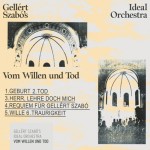
Artist: Gellért Szabó's Ideal Orchestra (@)
Title: Vom Willen und Tod
Format: Download Only (MP3 + Lossless)
Label: Boomslang Records (@)
Rated:

Title: Vom Willen und Tod
Format: Download Only (MP3 + Lossless)
Label: Boomslang Records (@)
Rated:
There are musicians who approach death with a whisper, and there are those who apparently feel that the appropriate response is to assemble an orchestra, a choir, three percussionists, an organ, an accordion, a tuba, several saxophones and enough low frequencies to make the afterlife check its foundations. Gellért Szabó belongs rather firmly to the second category. Yet "Vom Willen und Tod" is not simply an exercise in musical excess. For all its enormous forces and operatic emotional temperature, this is an album preoccupied with something surprisingly intimate: what happens to the self when the things that once gave it direction begin to disappear.
Szabó, a Leipzig-based composer, conductor and electric guitarist, studied guitar at the Franz Liszt Hochschule für Musik Weimar with Frank Möbus and also pursued composition with Ulrich Kreppein and Stefan Schultze. His Ideal Orchestra, founded in Leipzig, grew out of experimental and improvisational practice, bringing together musicians from jazz, free improvisation and contemporary music. That background matters because "Vom Willen und Tod" is much more than an attempt to write a conventional large-scale orchestral work. Szabó has learned from improvisation how unstable a large ensemble can be, and from composition how to turn that instability into deliberate architecture. The result is music that sounds capable of falling apart at any moment while being, in fact, exceptionally controlled.
The album begins with "Geburt", only two and a half minutes long, but its brevity is deceptive. It does not so much introduce the record as throw open a door onto a much larger psychological space. "Tod" then takes nearly twelve minutes to examine the opposite pole, and here Szabó's peculiar gift becomes obvious: he can make density feel dramatic without reducing it to mere loudness. Brass, reeds, strings, percussion and voices accumulate until the ensemble becomes less a collection of individual timbres than a single organism with too many lungs. There are eruptions, but also moments when the mass seems to inhale and hesitate. Death is not represented as a theatrical villain. It is a force constantly altering the behaviour of everything around it.
The two Brahms-derived pieces are crucial precisely because they prevent the album from becoming a closed system of Szabó mythology. "Herr, lehre doch mich" brings in the historical weight of the "German Requiem", but the treatment is not antiquarian. The familiar sacred material becomes a point of contact between centuries, between inherited consolation and contemporary uncertainty. Then "Requiem für Gellért Szabó" follows, a title that initially sounds almost indecently self-dramatising until the album's personal context makes it stranger and sadder: this is not simply a fantasy of one's own funeral, but part of a work shaped by the death of Szabó's father and by questions of origin, belonging and inheritance. The personal and the theatrical keep looking at one another across the music, neither entirely willing to blink.
And then comes "Wille", the eighteen-minute centre of gravity. This is where the orchestra's accumulated vocabulary finally seems to escape its containers. The music moves through enormous clusters, sharply etched instrumental attacks, choral presences and stretches of near-overwhelming orchestral pressure, but the important thing is not simply scale. "Wille" is about directed force. The German word suggests will, desire, determination, perhaps even stubbornness, and the piece behaves accordingly. It keeps pushing forward even when the music seems to have reached a point at which forward movement should no longer be possible. At its most intense, it has the slightly alarming quality of an orchestra trying to think itself into existence through sheer volume.
This is also where Szabó's relationship with improvisation becomes most revealing. The Ideal Orchestra originally developed through conducted improvisation and unusual forms of collective coordination, but "Vom Willen und Tod" sounds considerably more composed and concentrated than some of the ensemble's earlier material. That does not mean the exploratory impulse has disappeared. It has been compressed into the writing itself. Individual instruments periodically emerge from the mass like thoughts surfacing from a fever, while the percussion section supplies an almost physical sense of resistance. The orchestra does not merely perform the score; it seems to wrestle with it.
The voices are equally important. Rather than using the singers as conventional narrators, Szabó often treats the human voice as another unstable colour inside the larger body of the ensemble. This is especially effective because the record repeatedly moves between gigantic collective gestures and vulnerable fragments. After the accumulated pressure of "Wille", the closing "Traurigkeit" is almost brutally simple in its effect. The German title means sadness, but the music does not need to explain the emotion. After all that force, a relatively exposed musical gesture can feel more devastating than another crescendo. Apparently even twenty musicians eventually discover that volume is not the only way to frighten the heart.
The church in which the album was recorded adds an important physical dimension. Sacred architecture is not treated here merely as picturesque background. Its resonance becomes part of the composition, extending the orchestra beyond the number of bodies actually present. The organ, meanwhile, is another reminder that Szabó is not afraid of historical baggage. Brahms, church acoustics, requiem traditions, Mahlerian scale, modern improvisation and contemporary experimental composition are all allowed into the same room. This could easily become a catalogue of cultural references. Instead, the music makes them compete for oxygen.
There is a danger in work this emotionally charged: existential seriousness can very quickly become self-important. "Vom Willen und Tod" occasionally walks right up to that cliff, looks over it, and then somehow keeps going. Its saving grace is physicality. The brass crack, the percussion hits, the strings scrape and swell, the voices tremble, and the organ adds another layer of historical gravity. The music never sounds like an essay about mortality. It sounds like a group of people physically trying to contain an idea that is too large for them.
That may be why the album's most affecting moments are not necessarily its biggest ones. Szabó understands that grandeur only becomes meaningful when something fragile is placed inside it. The gigantic passages acquire their emotional force because somewhere underneath them there is a person mourning a father, remembering where he came from, wondering what remains when inheritance becomes memory. The orchestra can construct an almost absurdly vast sonic body, but it cannot prevent the small human fact at its centre: someone is gone.
"Vom Willen und Tod" consequently feels less like a requiem in the conventional sense than an argument between the desire to transcend mortality and the stubborn fact of having a body that cannot come along. Its scale is enormous, but its subject is not. It is grief, ambition, memory, love and the rather inconvenient human conviction that our individual existence ought to mean something. Szabó simply gives that conviction twenty musicians and asks them to make it audible. The result is excessive, vulnerable, occasionally terrifying and, at its best, genuinely moving. Death gets the final word eventually, as it has a notoriously good contract, but for almost forty minutes Szabó's orchestra makes a considerable amount of noise in reply.
Federico Perotti: Quadro
There are albums about places, and then there are albums that seem to have been made because a place refused to shut up. "Quadro" belongs to the second category. Federico Perotti’s recording is ostensibly an album for organ, but that description is about as adequate as calling a cathedral “a building with a roof”. The real subject is absence: specifically, the absence of Raphael’s "Sistine Madonna" from the Basilica of San Sisto in Piacenza, where it remained from the sixteenth century until the Benedictines sold it in 1754 to Augustus III of Saxony. The original now hangs in Dresden, while the Piacenza church has a copy above its altar.
Perotti’s ingenious response is not to recreate the missing painting in sound. Instead, he asks what has remained in the building since it left. The answer is an organ. More precisely, the Facchetti-Lanzi organ, whose oldest material dates to Giovanni Battista Facchetti’s construction of 1544-45 and which was subsequently expanded by Carlo and Giuseppe Lanzi. Its history is therefore inseparable from the building and from the historical period Perotti is investigating. The instrument becomes a kind of unwilling witness, an object that could not leave when the painting did. Paintings travel rather well, as history has repeatedly demonstrated. Organs have the slightly less glamorous problem of being buildings with pipes.
That distinction gives "Quadro" its peculiar emotional force. The album does not attempt to make us imagine what the "Sistine Madonna" looked like. It makes us listen to what it means for something no longer to be there.
Perotti, born in Piacenza in 1993, is a composer, organist and conductor whose work repeatedly examines the relationship between music, material history and the traces left by time. He studied organ and composition in Como and Milan, subsequently working with composers including Salvatore Sciarrino and Francesco Filidei, and his practice moves comfortably between historical performance, contemporary composition and experimentation with the physical possibilities of the organ. His own website describes an interest in damaged objects, missing things and imaginary parallel histories, which makes "Quadro" feel less like an isolated project than a particularly concentrated expression of his wider artistic concerns.
The album begins with Claudio Maria Veggio’s "La Fugitiva", a brief opening that immediately places us inside a musical history older than the loss itself. Veggio, a Piacentine composer of the sixteenth century, also returns at the end with "Donna, per Dio vi giuro". Between those two pieces, Perotti constructs a historical corridor involving Michelangelo Rossi, Girolamo Frescobaldi and Claudio Monteverdi, interspersed with his five "Toccate Sistine", composed between 2017 and 2025. The track sequence therefore does not behave like a conventional recital programme. It resembles an architectural excavation in which different layers are exposed without pretending that the building has ever had only one age.
The first three "Toccate Sistine" are concerned with the basilica itself: its light, form and scent. This might sound dangerously close to the territory of tasteful heritage tourism, but Perotti's conception is considerably stranger. The pieces attempt to imagine a place outside ordinary chronological progression, where repetition has replaced development and where the building seems to exist in a permanent present. The organ's sustained sonorities make this idea tangible. Rather than using historical timbre simply as an authenticity certificate, Perotti treats the instrument as an acoustic environment with its own memory.
His relationship with the organ is particularly revealing. The Facchetti-Lanzi is not merely old. Its construction, later alterations and restoration have left it materially layered, and its meantone temperament contributes to a sound that is markedly different from the homogenised pitch environment familiar from much modern keyboard music. The surviving instrument includes a 1545 core and later interventions, with the current specification reflecting centuries of alteration and preservation. On "Quadro", that history is audible without having to be explained first.
Then comes "Toccata Sistina IV", the album's rupture. Here Perotti deliberately deprives the organ of its normal wind pressure. The consequence is not simply that the sound becomes quieter. The pipes begin to destabilise: harmonics sag, collide and produce a strangely dusty, exhausted sonority. This is an unusually effective compositional metaphor because it operates physically rather than illustratively. The historical rupture is not represented by a dramatic musical quotation or some cinematic minor chord. The instrument itself is made to behave differently. It is one of the album's best ideas. The organ, which has spent centuries being asked to produce controlled pitches, suddenly begins revealing all the unstable frequencies that ordinary performance suppresses. The “wrong” pressure releases another personality hidden inside the pipes. Perotti's missing painting consequently finds an unexpected sonic equivalent: not an image, but a disturbance in the mechanism that has remained behind.
The effect is especially striking because the surrounding repertoire establishes such a strong historical continuity. Frescobaldi's "Toccata seconda" and "Partite sopra Passacagli", Rossi's "Toccata VII" and "Toccata XII", and Veggio's music belong to different points along the development of Italian keyboard writing, yet they are all made to inhabit this one physical instrument. Perotti's compositions do not attempt to disguise their modernity. Instead, they enter into conversation with the older works through the very thing they share: the organ's body.
That is where "Quadro" becomes more interesting than a historical reconstruction. Reconstruction wants to restore an imagined past. Perotti seems more interested in exposing the impossibility of restoration.
The fourth "Toccata Sistina" therefore functions almost like a crack in the album's architecture. Before it, the basilica exists in a state of repetition and continuity. After it, history has acquired a wound. The fifth toccata deals with what followed: the centuries after the painting's departure and the continuing attempt to make sense of what is missing. The music does not “heal” the absence so much as repeatedly touch its edges.
Monteverdi's "Lamento della ninfa", arranged here for organ, is an especially apt intervention. A vocal lament transferred to an instrument that cannot literally sing turns loss into a problem of translation. The organ can sustain, imitate and colour, but it cannot reproduce the human voice's physical vulnerability. The absence has therefore multiplied: the painting is gone, the voice has become organ, and the listener is left with the residue of both.
Yet "Quadro" avoids becoming relentlessly mournful. There is too much curiosity in Perotti's treatment of sound. He seems genuinely fascinated by what the organ does when pushed slightly outside its expected behaviour. The album's emotional vocabulary consequently includes wonder, irritation, melancholy, historical awareness and even a faint mischievousness. The instrument is an ancient machine, but Perotti does not treat it as a sacred relic that must be approached with cotton gloves.
That attitude is central to his musicianship. His practice combines the historical consciousness expected of an organist with the exploratory instincts of a contemporary composer. He has written for ensembles and orchestras including MusikFabrik, Jack Quartet and the SWR Symphonieorchester, and his work has appeared in contemporary-music contexts well beyond the traditional organ circuit. He was also the organist accompanying Giorgio Armani's 2025 funeral, an oddly fitting footnote to an artist whose work so often concerns the relationship between elegance, mortality and ritual.
The album's title, "Quadro", consequently becomes increasingly ambiguous. It means painting, but also frame, object, bounded image. Yet the music repeatedly escapes the frame. The absent painting creates the conceptual perimeter, but the organ fills the space beyond it with centuries of vibrations. What is missing becomes the thing that structures everything else.
There is an even subtler paradox in Perotti's decision never to have visited the original painting in Dresden. One might expect such a project to culminate in pilgrimage: go to the museum, stand before Raphael, compare the original with its absence in Piacenza, complete the circle. He has chosen not to do so. It is an almost perversely elegant decision. The album is about the experience of not possessing something, and therefore direct possession might actually destroy part of the question.
The copy in San Sisto is not treated as a consolation prize either. It is evidence of the gap. The original painting's departure transformed the meaning of the church, while the surviving organ continued producing sound in the same place. The resulting asymmetry is precisely what gives the project its power: one object became internationally celebrated because it left; another became historically precious because it stayed.
This makes the wooden analogy in Perotti's notes particularly apt. Wood ages, is cut, seasoned, incorporated into an object and eventually altered again. Its material history does not disappear when its original form disappears. The same is true here of music. A score becomes sound, sound becomes memory, memory becomes interpretation, and centuries later another musician can make the old material speak differently without pretending to become its original author.
The final return to Veggio closes the circle without actually closing the wound. "Donna, per Dio vi giuro" takes us back to the beginning, but the listener now hears the same historical material after passing through the album's central rupture. Time has behaved exactly as Perotti suggests it does: it has moved forward while repeatedly pretending to be circular.
"Quadro" is therefore not really an album about Raphael, nor even principally an album about an organ. It is about what objects leave behind when they disappear. The missing painting becomes a negative space; the organ becomes the positive remainder; the repertoire becomes a chain of witnesses; and Perotti's own music becomes the attempt to make the gap audible.
There is something deeply Italian about such an obsession with a building, a painting, an organ and several centuries of accumulated cultural sediment. But "Quadro" never collapses into nostalgia. Its most compelling proposition is almost the opposite: absence can be productive. The fact that the "Sistine Madonna" left San Sisto may have diminished the physical completeness of the church, but it also created a historical fracture large enough for new music to enter.
The painting is still in Dresden. The organ is still in Piacenza. The copy still hangs where the original once did. Nothing has been restored, despite the best efforts of civilisation's favourite hobby, restoration.
What "Quadro" restores instead is attention. Not to the missing masterpiece itself, but to the room that remembers it, and to the instrument that has been quietly breathing inside that room for centuries. In the end, Perotti's most convincing time machine is not nostalgia at all. It is the organ: wood, metal, air and human hands, making the past happen again without ever quite making it the same.
Futuro Ancestrale: Elsewhen
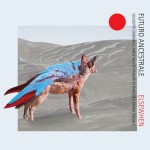
Artist: Futuro Ancestrale (@)
Title: Elsewhen
Format: CD
Label: Unsounds Records/Tora Records (@)
Rated:
Title: Elsewhen
Format: CD
Label: Unsounds Records/Tora Records (@)
Rated:
There is something wonderfully inconvenient about the title "Elsewhen". Not elsewhere, but else-when: an alternative time rather than an alternative place. It suggests that history might be less like a line than a badly organised cupboard, with different centuries and geographies rummaging around in the same drawer. Futuro Ancestrale’s second album takes precisely this temporal confusion as its playground, bringing together Giuseppe Doronzo’s baritone saxophone and an assortment of traditional instruments with the live electronics of Yannis Kyriakides, Andy Moor’s electric guitar and Frank Rosaly’s drums. The result is neither “world music” nor fusion in the conventional sense, but something considerably more slippery: a music in which old materials are allowed to become strange again.
Doronzo is particularly well equipped for this sort of mischief. Born in Barletta in 1987 and based in Amsterdam, he has developed a practice around the baritone saxophone that moves between contemporary composition, jazz improvisation, microtonality and non-Western traditions. His work with instruments such as the Iranian ney-anban, Chinese hulusi and Albanian longari has never amounted simply to collecting exotic timbres like musical fridge magnets. His interest lies in what happens when those sounds enter an improvisational environment and start behaving differently. Tora Records, the Amsterdam label he founded in 2018, has likewise become a home for music occupying the borderlands between improvisation, electro-acoustic composition and non-Western traditions.
On "Elsewhen", electronics are not pasted onto an ancestral vocabulary as some kind of futuristic wallpaper. They interfere with it. Kyriakides’ sampling and processing can make a flute seem briefly detached from its physical origin, while Moor and Rosaly provide a nervous, often surprisingly muscular framework in which these sounds can circulate. "Eye of the Hurricane" is a good example: the hulusi carries a breathy, almost folkloric identity, but the guitar and drums prevent it from settling comfortably into a picturesque pastoral scene. The electronic interventions further complicate the picture, turning recognisable acoustic gestures into fragments of another chronology. It is as if someone had placed an old photograph on a scanner and then decided that the scanner deserved a solo.
"Ghostline" works differently. The Albanian cyla dyjare, with its peculiar double-voice character, meets drums and electronics in a piece that seems to move rather than simply develop. There is something almost tactile about the way Doronzo’s instrumental colours are retained while being made unstable around the edges. The music does not imitate a shepherd wandering through some idealised Balkan landscape; it makes the very idea of musical memory slightly unreliable. What we hear feels inherited and newly manufactured at the same time.
That tension becomes particularly intriguing in "Scindone". The title refers to a peculiar belief from Lucanian folk medicine, where the scindone is a mysterious headache attributed to exposure to the sun after a day of working in the fields. According to the tradition, however, its real origin is considerably stranger: the condition can be contracted by urinating against a rainbow, after which it supposedly torments the victim throughout the night. The cure is no less ritualistic: before sunrise, the afflicted person must leave the house without speaking to anyone, pass beneath three masonry arches and repeat a protective formula. It is an extraordinary piece of popular imagination, somewhere between medical explanation, superstition and ceremonial magic, and it gives the track an altogether different historical resonance. In this context, Scindone becomes more than a reference to an old Apulian or Southern Italian custom. It evokes a world in which illness, landscape, weather, work and the supernatural are still entangled, where the boundaries between physical experience and symbolic belief have never been tidied up by modernity. Doronzo does not attempt to reconstruct that world literally. Instead, its strange logic seems to seep into the music, adding another layer to "Elsewhen"’s fascination with forms of knowledge that survive outside official histories. The past here is not noble, picturesque or conveniently ancient. It is superstitious, bodily, occasionally absurd and wonderfully difficult to explain, which may be precisely why it remains so evocative.
The same principle governs "Faló", inspired by the Chadian kakaki and by seasonal fire rituals. The piece has a ceremonial quality, but not the sort that demands incense and a respectful silence from the listener. Rosaly’s percussion gives it physical weight, while the electronic treatment and Doronzo’s instrumental interventions prevent the ritual atmosphere from becoming decorative. "Saturno", "Blind Needle" and "Underrun" move further into less obviously folkloric territory, where the album’s vocabulary begins to feel increasingly hybrid. The instruments cease to function as cultural labels and become active participants in an evolving sonic grammar.
This is also where the presence of Andy Moor becomes important. His guitar does not behave like the polite Western representative invited to the intercultural dinner to demonstrate that everyone can get along. His abrasive, electronically extended vocabulary has long belonged to the more unruly corners of European improvisation, from The Ex and Dog Faced Hermans to Lean Left and numerous collaborations. In Futuro Ancestrale he provides friction rather than validation. Frank Rosaly, meanwhile, is equally capable of resisting the obvious role of “the drummer”: his percussion can establish pulse, density or suspense, but it also leaves considerable negative space around the other musicians. Earlier criticism of the trio’s first album already noticed their unusual restraint, particularly in the way Rosaly and Moor avoided turning Doronzo’s unusual instrumental palette into an excuse for perpetual sonic assault.
The arrival of Kyriakides changes the equation substantially. His electronics make "Elsewhen" feel less like an expansion of the first Futuro Ancestrale album than a mutation of it. The earlier trio recording, "Futuro Ancestrale" (Clean Feed, 2024), was recorded live at Amsterdam’s Bimhuis and already explored the collision of baritone saxophone, guitar, percussion and non-Western instruments. Reviews of that album repeatedly identified its unusual balance between heaviness, space, ritual suggestion and improvisational freedom. "Elsewhen" takes that vocabulary and introduces a technological layer capable of altering the evidence while it is being presented.
That makes the album’s recurring fascination with duality more than a conceptual decoration. Acoustic/electronic, ancient/contemporary, composed/improvised, local/distant: these oppositions are constantly being proposed and then quietly sabotaged. "Elsewhen" is strongest when it refuses to decide which side belongs to which era. The hulusi can sound futuristic; the electronics can acquire something almost archaeological; the baritone saxophone can become less a jazz instrument than a large breathing machine whose ancestry is temporarily unavailable.
There is also a more delicate question underneath all this cultural cross-pollination. How do you use instruments associated with particular traditions without reducing them to exotic colour? Futuro Ancestrale does not solve that problem through reverence. It approaches it through interaction. The traditional instruments are not placed behind glass, but neither are they stripped of their identities and thrown into an anonymous experimental soup. Their distinct timbres remain audible while the surrounding musicians continuously challenge what those timbres are allowed to mean. That distinction matters.
The album’s nine pieces therefore feel less like compositions about the past than experiments in how the past behaves once it has been electrically disturbed. "Driftlight", the closing eight-minute piece, is especially effective in this respect, leaving enough space for the album’s various temporal layers to coexist without demanding a grand finale. There is no neat reconciliation, no ceremonial handshake between ancestors and synthesizers. Civilization survives another album without finding a solution to history, which is probably for the best.
Doronzo’s music has always seemed interested in the possibility that tradition can remain alive precisely by refusing to remain unchanged. "Elsewhen" pushes that idea further. Its “ancestral” material is not there to certify authenticity, while its futuristic electronics are not there to certify modernity. Both are simply materials, vulnerable to transformation, misunderstanding, collision and rediscovery. The album’s real subject is therefore not cultural fusion but temporal friction: the strange moment when something very old becomes unfamiliar again.
And perhaps that is why "Elsewhen" works. It does not ask the past to explain the present, nor does it ask the future to rescue it. It lets different times interfere with one another until their boundaries become audible rather than theoretical. Somewhere between Doronzo’s deep baritone, a double flute from Albania, a Chinese gourd flute, Moor’s guitar, Rosaly’s percussion and Kyriakides’ restless electronics, history stops behaving like history and starts behaving like sound.