
Sunday, November 22, 2026
Browse by Genre
Industrial Music / Industrial Metal / Aggro Industrial / Electro Metal
Industrial Noise / Power Noise / Harsh Noise
Synth Pop / Electro Pop / Synth-Electronica
Techno / Trance / Goa / Drum'n'Bass / Jungle / Tribal / Trip-Hop
Ambient / Electronica / Ethereal / Dub / Soundscapes / Abstract
Experimental / Avantgarde / Weird & Wired / Glitch / Noise / Field Recording
Dark / Gothic / Wave / New Wave / Dark Wave / Industrial Gothic
New Music / Downtown / Avantgarde Jazz / New Classical / World
Search Reviews
Music Reviews
Olivier Alary: Vestiges
Artist: Olivier Alary (@)
Title: Vestiges
Format: Download Only (MP3 + Lossless)
Label: Line (@)
Rated:

Title: Vestiges
Format: Download Only (MP3 + Lossless)
Label: Line (@)
Rated:
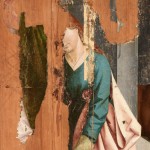
Memory is rarely as polite as we would like it to be. It does not preserve things intact; it scratches them, distorts them, misplaces them and occasionally returns them years later in a form we barely recognise. "Vestiges", the new album by French composer Olivier Alary for LINE, is built around precisely this unruly quality of remembrance. A continuous 43-minute composition divided into five movements, it brings together twelve amplified lap steel guitars and electronics, treating the ensemble almost as a single instrumental organism rather than twelve separate voices.
The concept may sound cerebral, but the music itself is remarkably physical. Alary's starting point is almost disarmingly simple: sustained slide movements across the strings generate resonance, interference and tiny fluctuations in pitch. From this limited vocabulary emerges an extraordinarily unstable sonic field. The guitars begin to lose their conventional identity, producing tones that hover somewhere between strings, voices, electrical hum and distant environmental noise. It is less a choir of guitars than a choir remembering that it was once something else.
Alary has been exploring the borderlands between composition, electronic music and sound art for decades, with previous work appearing on LINE including "Pieces for Sine Wave Oscillators" and "Apparitions (Vol. 1)". His approach has consistently favoured acoustic phenomena that seem to occupy the threshold between recognisable sound and abstraction. With "Vestiges", that threshold becomes the entire subject.
The opening movement establishes the principle without rushing to explain it. Sustained tones gradually interfere with one another, creating beating frequencies and harmonic shadows that seem to appear independently of the performers. Nothing dramatic happens, yet the ear becomes increasingly occupied. What initially resembles a static drone reveals itself as a landscape in constant microscopic motion.
The second and third movements deepen the illusion. Noise, saturation, friction and unstable intonation become structural components rather than imperfections to be corrected. The effect recalls the physical deterioration of analogue recordings: hiss, distortion, wear and the vague sensation that something has been copied too many times. Yet there is no nostalgia for obsolete technology here. These qualities have become part of the composition itself.
This is particularly effective because "Vestiges" never tries to imitate an old recording. Instead, it behaves like one.
Alary's fascination with Robert Smithson's "Partially Buried Woodshed" and Daniel Spoerri's "Le Déjeuner sous l'herbe" provides an illuminating parallel. Both works involve objects or events being buried, concealed and subsequently encountered through excavation. "Vestiges" applies a similar logic to sound. These tones feel less composed than unearthed, as if they had spent years underground accumulating pressure and geological dirt before somebody finally decided to listen to them.
That metaphor also explains why the album can feel strangely intimate despite its scale. Twelve lap steels should, theoretically, announce themselves as an ensemble. Here they dissolve into a collective body. Their proximity produces psychoacoustic effects that are almost vocal: pitches seem to breathe, tones swell and recede, and harmonic combinations appear where no individual instrument appears responsible for them.
The fourth movement is particularly striking in this respect. The music seems to hover between emergence and disappearance, with fragments of apparent melody forming briefly before being absorbed back into the surrounding mass. It creates the peculiar impression of hearing something through a wall, or perhaps remembering a sound rather than actually hearing it. The distinction becomes increasingly difficult to maintain.
By the fifth movement, the music has acquired a remarkable emotional weight without ever resorting to conventional expression. There are no melodies to hum afterwards, no dramatic climax waiting patiently for its cue, no obvious narrative resolution. Instead, Alary makes tiny alterations feel consequential. A change in density, a slight shift in pitch or a new layer of distortion can suddenly alter the entire perceived architecture.
That patience is the album's greatest virtue.
"Vestiges" demands attention, but it does not reward impatience. Its drama exists at the scale of minute changes, where listening becomes less about following events and more about noticing that the supposedly static object has been moving all along. Human beings usually require explosions, choruses or at least someone falling down the stairs before they agree that something has happened. Alary gets away with a tremor in the harmonic field.
The result is haunting without relying on the usual vocabulary of haunted music. There are no ghosts being theatrically summoned. Instead, the instruments become conduits for absence. The “voices” we seem to hear are produced by resonance and interference, but our perception insists on giving them a human quality. The séance is therefore partly performed by the musicians and partly by our own brains, which remain stubbornly committed to finding faces in clouds and voices in static.
"Vestiges" ultimately suggests that deterioration can be a form of creation. Its sounds become beautiful not despite their noise, instability and opacity, but because of them. Every imperfection seems to carry evidence of something having happened before.
And that may be the album's quietest achievement: it makes time audible without trying to illustrate it.
The music does not reconstruct the past.
It lets the past leave a stain.
Jungstötter: Sustained
Artist: Jungstötter (@)
Title: Sustained
Format: Download Only (MP3 + Lossless)
Label: Unguarded (@)
Rated:

Title: Sustained
Format: Download Only (MP3 + Lossless)
Label: Unguarded (@)
Rated:
There is something almost perversely physical about "Sustained". Fabian Altstötter, the Berlin-based musician behind Jungstötter, builds his third album around the human breath, but refuses to turn that idea into some tasteful wellness metaphor. Breathing here is effort, interruption, desire, exhaustion: the sound of a body trying to remain present while everything around it seems determined to become noise.
Compared with the denser architecture of "Love Is" and "One Star", "Sustained" is remarkably reduced. Piano, strings, harmonica, electronics and abrasive fragments occupy a narrow but intensely expressive space, while Altstötter's voice moves through it with an unusual mixture of distance and immediacy. Sometimes it sounds barely attached to the body producing it; elsewhere it suddenly becomes almost startlingly melodic. The contrast gives the songs their peculiar tension. Nothing is quite comfortable, including the beautiful parts.
The opening "Overturn" establishes the album's language through repetition and disruption, its rhythmic pattern constantly threatening to lose its balance. "Sunk" then sinks into something more intimate, where piano and harmonica seem to rub against one another like two memories that cannot quite agree. On "That Noise", disturbance becomes almost a character in itself, while "Tell This Lover" and "Loud Fingers" reveal how effectively Altstötter can let conventional songcraft emerge from the wreckage.
The remarkable thing is that "Sustained" never mistakes fragility for gentleness. Its quiet moments can be more unsettling than its eruptions. Noise scratches at melodies; melodies retreat rather than resolve; instruments seem to breathe, hesitate and occasionally lose patience. Even "Again", featuring Ronja's spectral vocals, feels less like a duet than two separate bodies briefly discovering that they occupy the same atmosphere.
Altstötter's lyrics are similarly resistant to tidy interpretation. They move through love, exhaustion, desire, alienation and bodily sensation using images that feel half-remembered rather than explained. "Seaweed", "Consume Me" and "Elastic (Avenue)" are particularly good examples of this strange poetic elasticity: concrete images become psychological states without ever settling into symbolism with an instruction manual attached.
There is also something quietly political beneath the romanticism. Altstötter describes the album through the idea of a communal body, sustained by many people breathing alongside one another. That notion gives the record an emotional dimension beyond private melancholy. The “I” is repeatedly invaded by other voices, other hands, other breaths. Even solitude becomes relational.
This may explain why the album feels intimate without becoming confessional. "Sustained" is not interested in handing the listener a diary and asking for sympathy. It creates a fragile acoustic organism and lets us hear it struggling to remain alive. The music contracts, expands, scratches, pauses and starts again.
Human beings have spent centuries trying to make suffering sound profound. Altstötter takes the more difficult route: he makes it sound ordinary, physical and occasionally beautiful.
Then he lets it breathe.
Meitei: AGATE / 瑪瑙
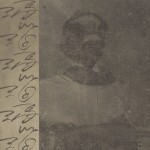
There is something fitting about naming an album "AGATE". An agate is not made in a hurry. It accumulates, layer after layer, until pressure and time turn geological patience into something unexpectedly beautiful. Meitei's latest work operates according to much the same principle. "AGATE", released by KITCHEN. LABEL, revisits the musical world of his "Kofu" trilogy, but it does not behave like an archive or a collection of deluxe revisions. These are pieces that have spent years being played, reconsidered, dismantled and rebuilt.
For Meitei, whose work has long revolved around what he calls “lost Japanese moods”, the past has never been a museum exhibit. His music has drawn on folklore, theatre, cinema, old recordings and cultural memory, filtering them through sampling and contemporary electronic production. "AGATE" pushes that approach further by treating his own previous compositions as material that can continue to change. Five years of performing "Kofu" around Japan, Europe and Asia have altered their pacing, density and internal balance, and those experiences are now embedded in the new versions.
“HAO”, the previously unreleased opening piece, establishes the album's atmosphere immediately: fragments appear as though they have travelled through several decades before reaching the listener, with percussion, voices and electronic textures occupying an uncertain space between ceremony and dream. It is not “traditional Japanese music”, nor does it pretend to reconstruct some authentic historical soundscape. Meitei's Japan is imagined, remembered and technologically distorted. The past arrives already covered in dust, static and fingerprints.
That distinction has always been central to his work. Earlier releases such as "Komachi" and "Kofu" found a strange equilibrium between ancient cultural references and contemporary beat-making, sometimes bringing together traditional instruments, field recordings, sampling and techniques associated with producers far removed from Japanese folk traditions. "AGATE" sounds less like a new discovery than the result of someone returning to a familiar landscape after several years and noticing that the landscape has changed.
“SHIN-OIRAN” and “SHIN-SADAYAKKO” are particularly revealing. Their source material belongs to "Kofu", yet the prefix “SHIN”, meaning new or renewed, is almost a manifesto: these are not simply old tracks wearing new clothes. Their rhythms have greater physical presence, while samples and voices seem more weathered, compressed and unstable. The melodies can emerge with surprising clarity before being swallowed again by texture. It is music that keeps one foot in ceremony and the other on a sampler pad.
“SHIN-WAROSOKU” deepens that sensation, allowing repetition to become almost ritualistic without ever becoming predictable. Meitei understands that a loop is not necessarily a closed circle. Tiny alterations in timbre, reverberation and density can make the same gesture feel different every time it returns. The listener begins to recognise the pattern while simultaneously losing confidence about where it is going.
“KYUGEKI” takes the cinematic dimension further, drawing on material connected with Japanese film imagery. There is something wonderfully ghostly about Meitei's approach to such references: he does not reproduce a soundtrack so much as suggest that one has been left playing somewhere in another room. His samples feel detached from their original context, but never entirely severed from it.
Then comes “SHIN-OIRAN II”, the album's longest piece at nearly eleven minutes, and perhaps its clearest demonstration of Meitei's patience. Rather than building towards an obvious climax, it allows layers to accumulate and recede. Percussion, fragments of voice and electronic haze occupy different depths, creating a sensation of movement without conventional narrative progression. The track seems to breathe rather than develop.
This is where the agate metaphor becomes more than clever packaging.
The album's layers do not merely decorate one another. They contain traces of previous states. You can hear the original "Kofu" material underneath the new treatment, just as mineral bands remain visible inside a stone. The pleasure comes from sensing both versions simultaneously: what the piece was and what years of performance have made it become.
“SHIN-EDOGAWARANPO” closes the album in appropriately elusive fashion. The music feels more fragmented here, with distortion and degraded textures becoming almost tactile. Rather than ending with resolution, it leaves behind the impression of a cultural memory that cannot quite be recovered intact. And perhaps that is the point.
Meitei's “lost Japanese moods” were never really about recovering a lost Japan. They are about imagining how cultural memory survives when the original context has disappeared. "AGATE" extends that idea inward: now even Meitei's own music has become something that can be remembered, altered and rediscovered. There is a quiet irony in this. The artist has spent years constructing music from fragments of the past, only to discover that his own compositions have themselves become fragments requiring excavation. Human beings apparently cannot leave anything alone, even their own music. Fortunately, in this case, the interference has produced something worthwhile.
The result is a record of unusual maturity. "AGATE" is less immediately concerned with conjuring a mysterious historical Japan than with examining how sounds acquire age, meaning and emotional residue. Its rhythms are stronger than on some of Meitei's more ambient work, but its real fascination remains textural: voices fade into static, percussion becomes almost visual, melodies emerge like half-remembered phrases, and electronic processing gives old references unfamiliar shadows.
What makes the album particularly fascinating is that it does not confuse nostalgia with truth. The past here is beautiful precisely because it is incomplete. Meitei does not polish away the cracks; he lets them become part of the image.
If "Kofu" looked through a window towards a vanished world, "AGATE" feels more like holding an old object in your hand and discovering that its surface contains several histories at once. The music has been played, altered, performed, remembered and played again until the original and the new can no longer be cleanly separated.
That is not restoration. It is sediment. And after enough pressure, sediment becomes stone.
Ed Cooper: Vestibule
Artist: Ed Cooper
Title: Vestibule
Format: Download Only (MP3 + Lossless)
Label: Thanatosis Produktion (@)
Rated:
Title: Vestibule
Format: Download Only (MP3 + Lossless)
Label: Thanatosis Produktion (@)
Rated:
The heart is a rather inconvenient metronome. It refuses to keep proper time, gets excited when it shouldn't, slows down for reasons nobody has been consulted about, and occasionally reminds us that the entire biological enterprise is operating on a schedule that can be interrupted without notice. Ed Cooper's "Vestibule" takes precisely this unreliable mechanism and places it at the centre of two long compositions, turning the performers' heartbeats into temporal reference points. It is an elegant idea, but "Vestibule" is not an elegant record in the conventional sense. It is too murky, too bodily, too interested in sounds that seem to hover just beyond recognition. Released by the Stockholm label Thanatosis in May 2026 as a limited edition of only fifty CD-Rs alongside the digital version, it gathers five pieces performed by cellist and pianist Ben Finlay, tubist Jack Adler-McKean and the Octandre Ensemble.
The album is structured rather neatly on paper: three short pieces surround two compositions of approximately twenty-five minutes each. In practice, however, the arrangement produces something much less orderly. The shorter works feel like brief glimpses of a musical world that the longer pieces then enter and refuse to leave. The first of these, “The Indentation”, lasts barely a minute and a half. Its brevity is almost mischievous. It introduces low registers and a strangely saturated atmosphere without giving the listener enough material to establish a comfortable interpretation. Then the door opens onto the enormous “... grown up, you are grown, and feeling stronger, feeling...”. Here Jack Adler-McKean's tuba becomes something quite different from the heroic brass instrument that usually occupies popular imagination. Cooper wrote the piece across 2020–22, using a specially constructed four-valved microtonal tuba and a collection of extended techniques including singing, growling and multiphonics. The instrument does not simply play low notes. It seems to manufacture them from somewhere underneath the floor. And then there is the heartbeat.
Rather than functioning as an obvious pulse, it appears intermittently, almost furtively, as though the body has wandered into the composition without realising it is being recorded. The music stutters around these moments. Tuba sounds emerge, deform, overlap and retreat. Sometimes the result resembles a melody that has forgotten how melody works; elsewhere it approaches noise without ever completely surrendering to it. This ambiguity is essential to Cooper's aesthetic.
His work as a composer and writer repeatedly circles around the limits between hearing and listening, inside and outside, sound and meaning. He has written extensively about contemporary music and is currently the co-editor of "Tempo", while his academic research has focused on precisely these unstable zones of perception. His compositional practice similarly moves between instrumental music, electroacoustics, installation and voice. In other words, the philosophical machinery behind "Vestibule" is not something retrofitted after the fact by a reviewer desperate to sound intelligent. It is already built into the way Cooper makes music. Fortunately, the music does not require a PhD to survive. This is important because "Vestibule" could easily have become one of those records whose conceptual description is considerably more exciting than the actual listening experience. Instead, its ideas are translated into physical sensations. You hear pressure, breath, friction, resonance and instability before you start thinking about what any of them might represent.
The middle miniature, “The Mobile”, brings the scale down again. Like “The Indentation”, it is one of the three pieces originally written for Ben Finlay in 2025. These works began as transcriptions of fragments from Jeff Buckley songs, although almost everything conventionally associated with Buckley's music has been drained away. What remains is not recognisable quotation but a residue: low, blurred, strangely romantic material with the melodic contours partly obscured. This is perhaps one of the album's most intriguing contradictions. Cooper starts with songs, then strips away their identity until what remains is atmosphere, interval and timbre. Romanticism survives, but in a rather unhealthy condition. The melodies seem to have spent too long underground. There is something almost geological about these miniatures. They are not interludes in the traditional sense. They feel more like fragments excavated from the longer works, small pieces of melodic evidence found after the larger structure has collapsed.
Then comes the album's other great mass, “... as far as... unloving still... down on your stomach...”. The unusual instrumentation is crucial: contrabass flute, two bass clarinets and two double basses. Five musicians, all apparently instructed to travel downward as far as physics, technique and human patience will permit. The result is extraordinary precisely because the ensemble does not simply sound “deep”. Depth here is an unstable quality. The contrabass flute can sound hollow and almost subterranean. The bass clarinets introduce tones that seem to emerge from behind a wall. The double basses give the whole thing a physical floor, although that floor is constantly shifting. Overlapping heartbeats provide another layer of uncertainty, while the players' extended techniques blur the boundary between deliberate musical gesture and involuntary bodily event.
The composition therefore becomes a strange negotiation between control and physiology. The musicians determine what they play, but their bodies remain present inside the mechanism. Breath, pulse, muscular effort and resonance become part of the formal structure. This is not music that pretends the performer is an invisible technician operating a machine. The machine is the performer. That distinction also explains why "Vestibule" can feel detached even when its subject matter is intensely corporeal. Cooper's music does not invite the listener to dissolve completely into its atmosphere. It keeps a certain distance. You are listening into something rather than being enveloped by it. This is an unusual strategy for such low-frequency music.
Much contemporary drone and ambient music wants to remove the boundary between listener and sound. "Vestibule" seems more interested in making the boundary noticeable. You remain outside the room, listening through the wall. Occasionally you can hear enough to understand what is happening; just as often, the sound remains partially concealed. The title is therefore particularly apt. A vestibule is neither quite outside nor properly inside. It is a transitional space, a place of waiting, passage and uncertainty about where one is supposed to go next. Cooper's music behaves in much the same way. It refuses to settle entirely into melody, noise, chamber music, drone or electronic abstraction. It occupies the threshold between them. Humans do love thresholds. We spend an absurd amount of time standing in doorways.
The final miniature, “The Suppression”, returns to the Finlay material and provides the album with its briefest farewell. Again, the musical language is recognisably melodic without becoming conventionally song-like. The fragments are intimate, but they also feel strangely remote. If the longer compositions resemble bodies whose internal processes have become audible, these shorter pieces are almost their memories. That is where the album's triptych structure becomes more than a neat piece of packaging.
The three short works do frame the two large compositions, but they also alter our perception of them. Their relatively clear melodic material gives us something recognisable to hold onto, while the longer pieces gradually loosen that grip. By the time “The Suppression” arrives, melody has become less a destination than a faint recollection. There is a particularly effective cruelty in this arrangement. Just when the listener begins to understand the vocabulary, the record takes it away.
Cooper's use of Jeff Buckley fragments makes this even more resonant. Buckley's songs are generally associated with expressive immediacy, exposed singing and emotional clarity. Cooper's transcriptions retain something of that emotional pressure while refusing its usual release. The melodic source is there, but it has been slowed, lowered and obscured until sentiment becomes texture. The effect is not nostalgic. It is closer to remembering a song heard through another apartment. This sense of distance runs through the entire record. The performers' heartbeats are intimate, almost unbearably so, yet they are not presented as confession. The body is treated as an acoustic fact. It supplies irregularity, but it also imposes discipline. A pulse can regulate music precisely because it is never perfectly regular. That paradox gives "Vestibule" its strongest structural idea. Order does not come from eliminating instability. It comes from building with it.
Adler-McKean's tuba piece makes this especially clear. Its microtonal instrument and vocalised brass techniques produce a sound world that is constantly threatening to fracture, but the heartbeat gives that fracture a point of reference. In the Octandre Ensemble piece, the same principle becomes collective. Five musicians listen through their own physical processes while simultaneously responding to the others. The resulting music feels less like a conventional ensemble performance than a temporary ecology. Nobody is exactly in control. Everyone is listening.
That makes the performances by Finlay, Adler-McKean and Octandre Ensemble particularly important. This material could easily become mannered in less attentive hands. Low frequencies, extended techniques and extremely slow development are a dangerous combination. One misplaced gesture and the listener is trapped inside an expensive demonstration of how slowly a bass clarinet can breathe. Here the performers maintain enough tension for the music to remain alive.
The production helps. Cooper himself recorded the Finlay pieces, while the Adler-McKean work was recorded by Aaron Holloway-Nahum at the Royal Northern College of Music, and the Octandre piece at Goldsmiths Music Studios by Sean Woodlock, with further mixing by Holloway-Nahum and Cooper. Miles Whittaker, known for his work with Demdike Stare and Pendle Coven, handled the mastering. The different recording histories nevertheless cohere into a remarkably tactile album.
The artwork extends the same logic. Cooper's photographs of a dying sunflower head, layered into grainy black-and-white images, depict something caught between persistence and disappearance. It is almost embarrassingly appropriate, except that the music earns the image rather than merely decorating itself with it.
A dying sunflower is still a sunflower. The shape remains while the living processes withdraw. "Vestibule" is interested in a similar state of suspension. Its sounds are neither fully alive nor dead, neither stable nor chaotic, neither melodic nor abstract. They persist in a transitional condition. This may explain why the record can be difficult without becoming hostile. It asks for attention, but it does not demand worship. You can listen closely and follow the tiny changes in pitch, pressure and rhythm. You can also let the music sit in the background and occasionally discover that what you thought was silence was actually a bass clarinet quietly changing shape for the last three minutes. The label Thanatosis describes its catalogue in terms of minimalist, slow-moving and often sombre music intended for both deep and shallow listening, and "Vestibule" fits that philosophy unusually well. But “minimalist” is not quite enough.
There is too much bodily information here. There are lungs, throats, fingers, strings, reeds, valves, bow pressure, embouchure, fatigue and pulse. The music may move slowly, but the body never does entirely. Something is always happening beneath the apparent stillness.
That is why the record's darkness never becomes decorative gloom. Cooper is not painting everything black and calling it profound. He is listening to the places where sound begins to lose its certainty. And perhaps that is the real achievement of "Vestibule". It makes instability audible without turning instability into spectacle. It finds drama in tiny physiological fluctuations, melody in damaged fragments, rhythm in the unreliable machinery of the body. Its two long compositions do not lead us somewhere so much as keep us hovering at the point where somewhere might begin.
The album ends after less than an hour, but it does not feel concluded. It feels like having stood in a doorway long enough to realise that the room on the other side was never the destination.
There was only the listening. And the pulse, continuing quietly, inconveniently, without asking whether the composition is finished.
Tim Ra & Jens Strüver: Kosmische Kuriere
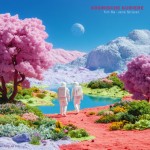
There are two possible ways of making a record about the end of civilisation. One is to stare into the abyss until it starts looking marketable. The other is to put on a spacesuit, leave the planet for a while and see whether humanity looks any better from a sufficient distance. "Kosmische Kuriere" chooses the second option, although it sensibly leaves the spacesuit at home.
Tim Ra and Jens Strüver have constructed an album that treats outer space less as an escape route than as a change of perspective. The premise is unapologetically utopian: in a world increasingly organised around borders, hostility, technological anxiety and political exhaustion, the cosmic becomes a metaphor for a humanity capable of exceeding its own habits. It is an ambitious idea, perhaps even an unfashionably sincere one. Fortunately, the music is considerably more subtle than the manifesto might suggest.
The Berlin connection matters. Strüver's long engagement with Krautrock, minimal electronics, experimental archives and cinematic sound gives the project a strong historical memory, while Tim Ra's work as a producer, rapper and multimedia artist brings together synthesizers, sequencers, science fiction and AI-assisted processes. Their meeting point is not retro-futurism for its own sake, but a kind of speculative musical archaeology: familiar twentieth-century sounds are taken out of their original habitats and allowed to float somewhere else.
"Venus Matinee" is an elegant place to begin. Its soft shimmer and carefully arranged melodic details carry an unmistakable cinematic flavour, with the kind of sophisticated orchestral pop atmosphere that makes you expect someone in a perfectly tailored suit to walk into the room carrying a martini. Except the room is apparently Venus, so the dress code is presumably complicated. The track establishes one of the album's most appealing qualities: its futurism is not metallic or dystopian. It is warm, sensual and surprisingly human.
Then "Pulsar" introduces a more explicit rhythmic presence. The track seems to orbit between lounge jazz, exotica and electronic pulse, gradually becoming more expansive without ever needing to resort to brute-force propulsion. It is music that understands that a groove can suggest movement without necessarily requiring a kick drum to shout instructions at everyone.
That relaxed quality is central to "Kosmische Kuriere". The album often allows rhythm to become implied rather than declared. Structures breathe. Instruments appear almost weightlessly. Melodic fragments drift into one another instead of behaving like obedient pop hooks. The effect is cinematic, but not in the usual sense of providing a soundtrack to something that already exists. These pieces seem to construct their own imaginary films while playing.
"Labyrinth der Sterne" is one of the album's most concise examples. Barely two minutes long, it behaves more like a passage between dimensions than a conventional composition. "Planet außer Kurs", meanwhile, introduces a gentle instability into the journey. Its playful sense of disorientation is important because the album's utopianism could otherwise become dangerously well-behaved. Fortunately, the Cosmic Couriers understand that paradise without a little eccentricity would probably be unbearably dull.
"Saturn Soiree" then settles into a graceful cosmic lounge. The title is almost too perfect, but the music earns it. There is elegance here without stiffness, nostalgia without a desperate attempt to recreate a supposedly better past. It feels like an imaginary 1960s vision of the future that has somehow survived long enough to discover synthesizers, minimal techno and the internet.
The second half becomes more contemplative. "Darkstar" and "Nebula" move into darker territory, where choral textures and orchestral associations create a much larger sense of scale. The influence of classical and cinematic science fiction traditions can be felt without turning the pieces into exercises in quotation. There is a faint memory of grand cosmic narratives, of humanity standing beneath an enormous sky and suddenly realising that its political arguments are rather small.
"Nebula", at nearly nine minutes, is the album's great expansion. Rather than rushing toward some spectacular interstellar climax, it allows atmosphere to accumulate. Layers appear gradually, producing a sense of suspended motion. The music seems to be travelling without having a destination. That paradox suits the album perfectly: outer space is not presented as somewhere to conquer, but somewhere in which our usual categories become less convincing.
This is also where the collaboration's political dimension becomes most interesting. The idea of a "world without borders" could easily become the sort of grand statement that looks impressive on a gallery wall and collapses when someone asks what it actually means. Here, however, the music does some of the thinking itself. The tracks refuse rigid boundaries between jazz, classical music, exotica, electronic composition and cinematic sound. Their hybridity is not decoration. It is the argument.
Different musical histories are allowed to coexist without one being required to dominate the others.
That makes Strüver's archival sensibility particularly useful. His work with experimental traditions and overlooked musical histories has given him an ear for connections that aren't necessarily obvious. Ra brings a different kind of synthesis, one in which hip-hop, electronic production, multimedia art and artificial intelligence become part of the same imaginative vocabulary. Neither approach is treated as a novelty. The past is not museum material, and the future is not merely a collection of shiny gadgets. Which brings us to the album's relationship with AI.
In lesser hands, artificial intelligence in a utopian cosmic project could produce something painfully obvious: a machine-made vision of a machine-shaped paradise. "Kosmische Kuriere" instead uses technology as one ingredient in a broader human process. The result is not about surrendering imagination to algorithms, but about finding ways to use contemporary tools while retaining curiosity, taste and emotional intention. That distinction matters.
"Wasser des Lebens", the closing track, makes the point quietly. Its weightless sweetness provides no triumphant finale, no orchestral declaration that humanity has finally learned its lesson. It simply settles into a gentler emotional space. After all the planets, stars, nebulae and cosmic machinery, the album ends with something remarkably terrestrial: tenderness. And perhaps that is the real destination.
Despite all its talk of the cosmos, "Kosmische Kuriere" is ultimately concerned with earthly behaviour. It looks outward in order to reconsider how we inhabit the place we already have. The music's greatest achievement is therefore not its ability to evoke space, but its refusal to use space as an excuse for abandoning humanity.
There is something almost quaint about believing that empathy and love might still constitute a meaningful political proposition. In 2026, such optimism can seem considerably more radical than another dystopian soundtrack. We have accumulated enough cultural products predicting our extinction to fill several galaxies. What is rarer is an artistic work willing to imagine what might come after the catastrophe without pretending that catastrophe is inevitable.
"Kosmische Kuriere" does exactly that. It is not naïve. There are shadows here, moments of melancholy and uncertainty, and a persistent awareness that the old structures are failing. But the album refuses to turn collapse into spectacle. Instead, it proposes transformation: loosen the borders, scramble the categories, listen differently, and perhaps discover that the strange planet we were looking for was the one underneath our feet all along.
The Cosmic Couriers don't bring back a message from another civilisation. They bring back a slightly altered perspective on ours. And, considering the state of the delivery service down here, that may already count as interstellar progress.