
Browse by Genre
Industrial Music / Industrial Metal / Aggro Industrial / Electro Metal
Industrial Noise / Power Noise / Harsh Noise
Synth Pop / Electro Pop / Synth-Electronica
Techno / Trance / Goa / Drum'n'Bass / Jungle / Tribal / Trip-Hop
Ambient / Electronica / Ethereal / Dub / Soundscapes / Abstract
Experimental / Avantgarde / Weird & Wired / Glitch / Noise / Field Recording
Dark / Gothic / Wave / New Wave / Dark Wave / Industrial Gothic
New Music / Downtown / Avantgarde Jazz / New Classical / World
Search Reviews
Music Reviews
Dwson: Nothing To Lose

Nothing To Lose feels like the moment a producer known for speaking in whispers decides he has something worth saying out loud.
For more than a decade, Dwson has occupied a fascinating corner of South African electronic music. Emerging from Cape Town's vibrant house scene, he built his reputation not through oversized drops or festival theatrics, but through patience, atmosphere, and an instinctive understanding of emotional space. His tracks often seemed less interested in making crowds explode than in making them feel something. A dangerous habit in dance music, where subtlety is frequently treated as a software malfunction.
With "Nothing To Lose", his sixth album, that emotional tendency remains intact, but the frame has widened considerably. Where previous records often allowed vocals to appear as occasional visitors, here they become permanent residents. Nearly every track is built around singers, collaborators, and songcraft, creating a record that draws as much from contemporary R&B as from deep house traditions. Rather than abandoning the club, Dwson simply invites more people into it.
The most striking achievement of the album is its sense of continuity. Despite its long guest list, featuring voices such as Ziyon, Liv East, Ammo Moses, Lusanda, Ason, Unwnd, and others, the record never feels like a compilation of disconnected collaborations. It unfolds more like a late-night drive through a city that gradually empties as the hours pass. Streetlights blur. Conversations become quieter. Thoughts become louder. The destination matters less than the movement itself.
Tracks such as "Selfish", "Sense" and "Riptide" demonstrate Dwson's gift for restraint. The arrangements rarely rush toward climaxes. Instead, they breathe. Layers appear and disappear with the confidence of someone who understands that groove is often more persuasive than spectacle. Many producers decorate their tracks until they resemble overfurnished apartments. Dwson, by contrast, leaves enough empty space for the listener's own memories to move in.
There is also a noticeable warmth throughout the album. Not nostalgia exactly, though echoes of early-2000s R&B occasionally drift through the mix like familiar scents from another room. Rather, it is the warmth of maturity. Dwson seems less concerned with proving his technical abilities than with communicating feeling. The result is music that frequently lands somewhere between the dancefloor and the diary.
The recurring presence of Unwnd is particularly important in shaping the album's identity. These collaborations provide some of the record's most intimate moments, introducing a youthful vulnerability that complements Dwson's polished production. Elsewhere, veterans such as Ziyon help connect different generations of South African soul and house music, creating a subtle dialogue between the genre's past and future.
One of the album's underlying themes appears to be reinvention. Not the dramatic kind celebrated in marketing campaigns, but the quieter version that occurs when an artist stops worrying about expectations and begins following curiosity instead. The title itself suggests risk, yet the music sounds remarkably comfortable in its own skin. Dwson is not leaping into the unknown; he is finally allowing listeners to see more of the landscape he has been exploring all along.
By the time the closing stretch arrives, particularly through tracks like "New Day" and "Shadows", the album achieves something increasingly rare: it feels complete. Not because every question has been answered, but because the journey has been allowed to unfold at its own pace. In an era dominated by playlists, algorithms, and attention spans measured in microscopic units, "Nothing To Lose" still believes in the album as a destination.
Ultimately, this is not a record about losing anything. It is about expansion. About a producer stepping beyond the elegant boundaries he once drew for himself and discovering that the horizon had been wider all along. Dwson's deep-house roots remain firmly planted, but new branches reach toward soul, R&B, and contemporary songwriting. The tree has grown taller. The roots, thankfully, are still visible.
For more than a decade, Dwson has occupied a fascinating corner of South African electronic music. Emerging from Cape Town's vibrant house scene, he built his reputation not through oversized drops or festival theatrics, but through patience, atmosphere, and an instinctive understanding of emotional space. His tracks often seemed less interested in making crowds explode than in making them feel something. A dangerous habit in dance music, where subtlety is frequently treated as a software malfunction.
With "Nothing To Lose", his sixth album, that emotional tendency remains intact, but the frame has widened considerably. Where previous records often allowed vocals to appear as occasional visitors, here they become permanent residents. Nearly every track is built around singers, collaborators, and songcraft, creating a record that draws as much from contemporary R&B as from deep house traditions. Rather than abandoning the club, Dwson simply invites more people into it.
The most striking achievement of the album is its sense of continuity. Despite its long guest list, featuring voices such as Ziyon, Liv East, Ammo Moses, Lusanda, Ason, Unwnd, and others, the record never feels like a compilation of disconnected collaborations. It unfolds more like a late-night drive through a city that gradually empties as the hours pass. Streetlights blur. Conversations become quieter. Thoughts become louder. The destination matters less than the movement itself.
Tracks such as "Selfish", "Sense" and "Riptide" demonstrate Dwson's gift for restraint. The arrangements rarely rush toward climaxes. Instead, they breathe. Layers appear and disappear with the confidence of someone who understands that groove is often more persuasive than spectacle. Many producers decorate their tracks until they resemble overfurnished apartments. Dwson, by contrast, leaves enough empty space for the listener's own memories to move in.
There is also a noticeable warmth throughout the album. Not nostalgia exactly, though echoes of early-2000s R&B occasionally drift through the mix like familiar scents from another room. Rather, it is the warmth of maturity. Dwson seems less concerned with proving his technical abilities than with communicating feeling. The result is music that frequently lands somewhere between the dancefloor and the diary.
The recurring presence of Unwnd is particularly important in shaping the album's identity. These collaborations provide some of the record's most intimate moments, introducing a youthful vulnerability that complements Dwson's polished production. Elsewhere, veterans such as Ziyon help connect different generations of South African soul and house music, creating a subtle dialogue between the genre's past and future.
One of the album's underlying themes appears to be reinvention. Not the dramatic kind celebrated in marketing campaigns, but the quieter version that occurs when an artist stops worrying about expectations and begins following curiosity instead. The title itself suggests risk, yet the music sounds remarkably comfortable in its own skin. Dwson is not leaping into the unknown; he is finally allowing listeners to see more of the landscape he has been exploring all along.
By the time the closing stretch arrives, particularly through tracks like "New Day" and "Shadows", the album achieves something increasingly rare: it feels complete. Not because every question has been answered, but because the journey has been allowed to unfold at its own pace. In an era dominated by playlists, algorithms, and attention spans measured in microscopic units, "Nothing To Lose" still believes in the album as a destination.
Ultimately, this is not a record about losing anything. It is about expansion. About a producer stepping beyond the elegant boundaries he once drew for himself and discovering that the horizon had been wider all along. Dwson's deep-house roots remain firmly planted, but new branches reach toward soul, R&B, and contemporary songwriting. The tree has grown taller. The roots, thankfully, are still visible.
Mokado: Where Does The Night Go?

Artist: Mokado (@)
Title: Where Does The Night Go?
Format: Download Only (MP3 + Lossless)
Label: Le Hameau Records (@)
Rated:

Title: Where Does The Night Go?
Format: Download Only (MP3 + Lossless)
Label: Le Hameau Records (@)
Rated:
There is something mildly suspicious about anyone trying to map the night. It never agreed to be mapped in the first place, it tends to rewrite the map, and it has a long history of ignoring human schedules out of pure spite.
Still, Mokado takes a disciplined stab at it with "Where Does The Night Go?", released via Le Hameau Records. Third album in, and the question is less philosophical gimmick than structural excuse: a spine to hang a sequence of club-leaning vignettes that behave like timestamps slowly losing their authority.
The shift in direction is not subtle. Compared to earlier work, this is more outward-facing, more rhythm-driven, and frankly less interested in sitting still and contemplating its own reflection. Electro-pop and melodic techno are still here, but they’ve been pushed into contact with UK club grammar: garage swing, breakbeat fractures, pitched vocal fragments that sound like memories being autotuned into plausibility.
The British imprint is not decorative. It’s foundational. You can hear the lineage of Jamie xx in the spacious restraint, and echoes of SBTRKT in the chopped vocal aesthetics and percussive nervous system. But Mokado doesn’t cosplay UK club culture; he filters it through a continental lens where cities blur into interchangeable nocturnal organisms - Paris, London, Berlin reduced to variations of the same glowing pulse.
What gives the album its identity is the strict temporal choreography: "0:00AM" to "6:42AM", each track a station on a route that starts with intention and ends with emotional residue. "The Block", "The Dream", "The Walk", "The Club" - it reads like a slightly unhinged metro map designed by someone who stayed out too late but still insists on labeling everything correctly.
And yet, the progression is not linear in any comforting sense. Early cuts feel kinetic, almost playful, like the night hasn’t yet decided whether it’s going to be generous or hostile. Mid-album, the energy starts to bend inward: "The Moon" and "The Nook" introduce a softer gravity, where rhythm becomes less about propulsion and more about keeping emotional balance. By "The Tube" and "The Park", the music feels like it’s waking up inside itself, slightly disoriented, politely pretending it remembers the way home.
The album’s real trick is that it doesn’t romanticize nightlife as chaos or freedom. It treats it as continuity: a series of small transformations that feel meaningful only because they happen in sequence, not because they resolve into anything. The final stretch doesn’t answer the opening question. It quietly implies the question was never the point.
If there’s a philosophical residue left behind, it’s the uncomfortable realization that night doesn’t “go” anywhere. It just thins out, like sound leaking through walls at dawn, leaving behind people who briefly believed they were part of something larger than their own tired bodies.
Still, Mokado takes a disciplined stab at it with "Where Does The Night Go?", released via Le Hameau Records. Third album in, and the question is less philosophical gimmick than structural excuse: a spine to hang a sequence of club-leaning vignettes that behave like timestamps slowly losing their authority.
The shift in direction is not subtle. Compared to earlier work, this is more outward-facing, more rhythm-driven, and frankly less interested in sitting still and contemplating its own reflection. Electro-pop and melodic techno are still here, but they’ve been pushed into contact with UK club grammar: garage swing, breakbeat fractures, pitched vocal fragments that sound like memories being autotuned into plausibility.
The British imprint is not decorative. It’s foundational. You can hear the lineage of Jamie xx in the spacious restraint, and echoes of SBTRKT in the chopped vocal aesthetics and percussive nervous system. But Mokado doesn’t cosplay UK club culture; he filters it through a continental lens where cities blur into interchangeable nocturnal organisms - Paris, London, Berlin reduced to variations of the same glowing pulse.
What gives the album its identity is the strict temporal choreography: "0:00AM" to "6:42AM", each track a station on a route that starts with intention and ends with emotional residue. "The Block", "The Dream", "The Walk", "The Club" - it reads like a slightly unhinged metro map designed by someone who stayed out too late but still insists on labeling everything correctly.
And yet, the progression is not linear in any comforting sense. Early cuts feel kinetic, almost playful, like the night hasn’t yet decided whether it’s going to be generous or hostile. Mid-album, the energy starts to bend inward: "The Moon" and "The Nook" introduce a softer gravity, where rhythm becomes less about propulsion and more about keeping emotional balance. By "The Tube" and "The Park", the music feels like it’s waking up inside itself, slightly disoriented, politely pretending it remembers the way home.
The album’s real trick is that it doesn’t romanticize nightlife as chaos or freedom. It treats it as continuity: a series of small transformations that feel meaningful only because they happen in sequence, not because they resolve into anything. The final stretch doesn’t answer the opening question. It quietly implies the question was never the point.
If there’s a philosophical residue left behind, it’s the uncomfortable realization that night doesn’t “go” anywhere. It just thins out, like sound leaking through walls at dawn, leaving behind people who briefly believed they were part of something larger than their own tired bodies.
oaoao: Layers

For many musicians, technology serves as a tool. For Toni V., it appears to function more like a landscape: a place to wander through, get lost inside, admire from a distance, and occasionally fear. Under the name OVERANDOVERANDOVER, or the more compact and algorithm-friendly oaoao, the Rome-based composer, known for his long-standing work with experimental art-rock outfit vonneumann, has spent years investigating the strange emotional residue left behind by modern systems. "Layers", his first full-length double album, emerges as both conceptual architecture and personal diary, a work where software theory, urban imagination, and electronic music collide in unexpectedly human ways.
The album takes inspiration from Benjamin Bratton's influential book "The Stack", which proposed a planetary computational structure composed of interconnected layers ranging from physical resources to interfaces and cloud infrastructures. Such a premise might sound like the perfect recipe for a dry academic exercise. Fortunately, Toni V. understands something that many theorists occasionally forget: human beings still insist on bringing their anxieties, dreams, obsessions, and contradictions into every system they build. Even the cloud eventually fills with weather.
Structured across two discs and four thematic sections, "Layers" mirrors Bratton's layered architecture while deliberately shifting the focus from geopolitics to subjectivity. The result feels less like a soundtrack for a technological future and more like an archaeological excavation of contemporary consciousness.
The first disc, subtitled "Interaction", explores spaces where humans encounter systems. In "Layer 3: Nullville", urban environments become abstract geometries animated by malfunctioning rhythms and fragmented architectures. Tracks such as "Xn huài chéngshì" and "Reversible Grid" evoke digital cities whose infrastructures seem permanently caught between construction and collapse. Beats arrive in angular formations, suggesting streets, corridors, and invisible networks. One can almost imagine traffic lights communicating existential doubts to abandoned office towers.
The following section, "INTERFACE", moves deeper into the psychology of interaction itself. Here, techno structures emerge only to dissolve into ambiguity. Thresholds become recurring metaphors, both sonically and conceptually. The music feels trapped inside user interfaces that no longer reveal whether they are serving the user or studying them. Toni V. proves particularly adept at creating tension through instability, allowing rhythms to remain functional enough for movement while undermining any expectation of comfort.
If the first disc concerns surfaces and interactions, the second descends beneath them. "A Doubtless Cloud" may be the album's most fascinating paradox. Conceived as an optimistic pre-AI technological utopia, these compositions radiate a peculiar warmth. Tracks such as "Building of Bigger Things" and the title piece carry an almost nostalgic vision of digital progress, recalling a brief historical moment when technology was still marketed as a universal solution rather than a source of endless subscription renewals and privacy agreements nobody reads.
Yet even within this apparent optimism, uncertainty lingers. Toni V.'s sound design refuses polished futurism. His synthesizers crackle, distort, breathe, and occasionally seem to malfunction in real time. The album's sonic vocabulary remains proudly rough-edged, preserving an organic quality that prevents the conceptual framework from becoming sterile.
The final suite, "Dig, Mine, Quake, Collapse", serves as the album's emotional and philosophical foundation. Here the abstraction of computational layers gives way to material reality. Extraction, depletion, and instability become audible forces. The tracks unfold with a slower, heavier gravity, reminding listeners that every digital miracle ultimately rests upon physical resources, geological processes, and finite landscapes. The transition from "Dig" to "Collapse" feels almost inevitable, not as catastrophe but as consequence.
Throughout "Layers", Toni V. demonstrates an impressive ability to traverse genres without reducing them to stylistic exercises. Elements of IDM, ambient techno, industrial electronics, electroacoustic experimentation, and even traces of pop structure coexist within a coherent aesthetic vision. Rather than treating genre as a destination, he uses it as a set of tools for exploring ideas. This flexibility likely stems from his diverse background as guitarist, cellist, soundtrack composer, and electronic experimenter. Few artists can make a conceptual album about computational sovereignty feel this tactile.
What ultimately distinguishes "Layers" is its refusal to take sides between utopia and dystopia. The album inhabits the unstable territory between them. Technology appears neither savior nor villain but as an extension of human complexity itself. Systems evolve, infrastructures expand, interfaces multiply, yet the underlying questions remain stubbornly familiar: How do we navigate the structures we create? Where does identity reside within networks? And why does every promise of frictionless efficiency somehow generate entirely new forms of confusion?
"Layers" offers no definitive answers. Instead, it constructs a beautifully intricate maze and invites listeners to wander through its corridors. Somewhere between cloud architecture, abandoned smart cities, digital dreams, and geological foundations, Toni V. finds something surprisingly rare: electronic music that engages the intellect without sacrificing atmosphere, and embraces concepts without forgetting emotion. In an age increasingly defined by layers of mediation, that may be the most human gesture of all.
The album takes inspiration from Benjamin Bratton's influential book "The Stack", which proposed a planetary computational structure composed of interconnected layers ranging from physical resources to interfaces and cloud infrastructures. Such a premise might sound like the perfect recipe for a dry academic exercise. Fortunately, Toni V. understands something that many theorists occasionally forget: human beings still insist on bringing their anxieties, dreams, obsessions, and contradictions into every system they build. Even the cloud eventually fills with weather.
Structured across two discs and four thematic sections, "Layers" mirrors Bratton's layered architecture while deliberately shifting the focus from geopolitics to subjectivity. The result feels less like a soundtrack for a technological future and more like an archaeological excavation of contemporary consciousness.
The first disc, subtitled "Interaction", explores spaces where humans encounter systems. In "Layer 3: Nullville", urban environments become abstract geometries animated by malfunctioning rhythms and fragmented architectures. Tracks such as "Xn huài chéngshì" and "Reversible Grid" evoke digital cities whose infrastructures seem permanently caught between construction and collapse. Beats arrive in angular formations, suggesting streets, corridors, and invisible networks. One can almost imagine traffic lights communicating existential doubts to abandoned office towers.
The following section, "INTERFACE", moves deeper into the psychology of interaction itself. Here, techno structures emerge only to dissolve into ambiguity. Thresholds become recurring metaphors, both sonically and conceptually. The music feels trapped inside user interfaces that no longer reveal whether they are serving the user or studying them. Toni V. proves particularly adept at creating tension through instability, allowing rhythms to remain functional enough for movement while undermining any expectation of comfort.
If the first disc concerns surfaces and interactions, the second descends beneath them. "A Doubtless Cloud" may be the album's most fascinating paradox. Conceived as an optimistic pre-AI technological utopia, these compositions radiate a peculiar warmth. Tracks such as "Building of Bigger Things" and the title piece carry an almost nostalgic vision of digital progress, recalling a brief historical moment when technology was still marketed as a universal solution rather than a source of endless subscription renewals and privacy agreements nobody reads.
Yet even within this apparent optimism, uncertainty lingers. Toni V.'s sound design refuses polished futurism. His synthesizers crackle, distort, breathe, and occasionally seem to malfunction in real time. The album's sonic vocabulary remains proudly rough-edged, preserving an organic quality that prevents the conceptual framework from becoming sterile.
The final suite, "Dig, Mine, Quake, Collapse", serves as the album's emotional and philosophical foundation. Here the abstraction of computational layers gives way to material reality. Extraction, depletion, and instability become audible forces. The tracks unfold with a slower, heavier gravity, reminding listeners that every digital miracle ultimately rests upon physical resources, geological processes, and finite landscapes. The transition from "Dig" to "Collapse" feels almost inevitable, not as catastrophe but as consequence.
Throughout "Layers", Toni V. demonstrates an impressive ability to traverse genres without reducing them to stylistic exercises. Elements of IDM, ambient techno, industrial electronics, electroacoustic experimentation, and even traces of pop structure coexist within a coherent aesthetic vision. Rather than treating genre as a destination, he uses it as a set of tools for exploring ideas. This flexibility likely stems from his diverse background as guitarist, cellist, soundtrack composer, and electronic experimenter. Few artists can make a conceptual album about computational sovereignty feel this tactile.
What ultimately distinguishes "Layers" is its refusal to take sides between utopia and dystopia. The album inhabits the unstable territory between them. Technology appears neither savior nor villain but as an extension of human complexity itself. Systems evolve, infrastructures expand, interfaces multiply, yet the underlying questions remain stubbornly familiar: How do we navigate the structures we create? Where does identity reside within networks? And why does every promise of frictionless efficiency somehow generate entirely new forms of confusion?
"Layers" offers no definitive answers. Instead, it constructs a beautifully intricate maze and invites listeners to wander through its corridors. Somewhere between cloud architecture, abandoned smart cities, digital dreams, and geological foundations, Toni V. finds something surprisingly rare: electronic music that engages the intellect without sacrificing atmosphere, and embraces concepts without forgetting emotion. In an age increasingly defined by layers of mediation, that may be the most human gesture of all.
Four Ears: Love Is Faster Than Light
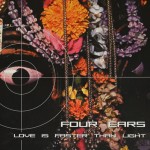
Artist: Four Ears
Title: Love Is Faster Than Light
Format: Download Only (MP3 + Lossless)
Label: Compost Records (@)
Rated:

Title: Love Is Faster Than Light
Format: Download Only (MP3 + Lossless)
Label: Compost Records (@)
Rated:
Twenty-six years is a long time in electronic music. Entire genres are born, commercialised, declared dead, resurrected, and eventually sold back to their original audience as "heritage culture". Yet listening to "Love Is Faster Than Light" today, one is struck less by its age than by how comfortably it sidesteps chronology. What Four Ears created in 2000 was not a snapshot of a particular scene but a restless exploration of possibilities, and the 2026 remaster serves less as an archaeological exercise than as a reminder that some musical futures simply arrive ahead of schedule.
The Berlin duo of Bym Stempka and Curt Nolte emerged from a cultural ecosystem where boundaries between club culture, experimental music, film, punk, jazz, and electronic innovation were unusually porous. Both musicians carried extensive histories into the project. Stempka's trajectory runs through Berlin's underground from the post-punk turbulence of the early 1980s to the city's formative techno and drum & bass years, while Nolte's background spans soundtrack composition, journalism, multimedia performance, and various experimental ensembles. Together they formed a partnership that approached genres not as destinations but as raw materials.
That philosophy defines "Love Is Faster Than Light". The album occupies a fascinating territory where jazz improvisation, cinematic ambience, drum & bass propulsion, downtempo electronica, and abstract sound design coexist without ever feeling forced. Unlike many turn-of-the-millennium fusion projects, Four Ears were not interested in proving that styles could be combined. They simply behaved as if the borders had never existed.
The title track immediately establishes this attitude. Stretching beyond ten minutes, it unfolds like a city viewed through multiple windows at once. Rhythms emerge, dissolve, and reconfigure themselves; melodic fragments appear like fleeting conversations overheard on public transport. The track feels less composed than navigated, as if the duo were discovering pathways through an evolving sonic landscape rather than imposing a predetermined structure.
Throughout the record, one hears echoes of late-1990s drum & bass experimentation, but never its clichés. Tracks such as "Point Blank" and "The Moo" carry rhythmic sophistication without surrendering to functional club mechanics. The beats are kinetic yet oddly philosophical. They move, certainly, but they seem equally interested in pondering why they are moving in the first place.
A recurring strength of the album lies in its cinematic sensibility. This should come as little surprise given Nolte's extensive work in film scoring. Movie dialogue snippets drift through the compositions not as nostalgic references but as narrative ghosts. They function like half-remembered dreams or fragments of radio transmissions intercepted during a long nocturnal drive. The result is an album that frequently feels visual without ever becoming illustrative.
The vocal contribution of Chi Chi on "When I Was Young" introduces one of the record's most striking moments. Amid an album largely devoted to instrumental storytelling, the human voice arrives almost as a plot twist. Rather than anchoring the music, however, it deepens its ambiguity, adding emotional texture without resolving any of the surrounding mysteries.
What remains particularly impressive is the album's refusal to settle into a single mood. "Blue Angel" drifts through smoky jazz-inflected atmospheres, while "(This Would Never Happen In) Bombay" stretches into a sprawling twelve-minute journey where global influences are absorbed into the duo's distinctive language rather than treated as exotic decoration. "From ∞ To ?" may possess one of the most appropriate titles on the record: a composition that seems perpetually suspended between expansion and uncertainty.
The remaster also highlights how sophisticated the production was for its time. Recorded and mixed entirely in the band's own studio, the album demonstrates a remarkable balance between precision and spontaneity. Every texture feels carefully considered, yet nothing sounds sterile. There is room for accidents, for friction, for unexpected encounters between machine logic and human instinct.
Perhaps that is what makes "Love Is Faster Than Light" feel so relevant today. Contemporary electronic music often oscillates between immaculate digital perfection and deliberate lo-fi imperfection. Four Ears seemed uninterested in either camp. Their music embraces complexity without fetishising it. The tracks remain exploratory but never academic, intelligent without becoming self-important.
The album's title suggests an impossible proposition. Physics, after all, remains stubbornly unconvinced. Yet as the record unfolds, the phrase begins to make a different kind of sense. These compositions travel through memory, genre, geography, and imagination with a freedom that linear logic struggles to explain. They leap between emotional states faster than analysis can comfortably follow.
Twenty-six years after its original release, "Love Is Faster Than Light" still feels like a message arriving from a parallel timeline where jazz musicians, drum & bass producers, film composers, and sonic adventurers all agreed to stop worrying about categories and simply see what happened. Fortunately, what happened was extraordinary.
The Berlin duo of Bym Stempka and Curt Nolte emerged from a cultural ecosystem where boundaries between club culture, experimental music, film, punk, jazz, and electronic innovation were unusually porous. Both musicians carried extensive histories into the project. Stempka's trajectory runs through Berlin's underground from the post-punk turbulence of the early 1980s to the city's formative techno and drum & bass years, while Nolte's background spans soundtrack composition, journalism, multimedia performance, and various experimental ensembles. Together they formed a partnership that approached genres not as destinations but as raw materials.
That philosophy defines "Love Is Faster Than Light". The album occupies a fascinating territory where jazz improvisation, cinematic ambience, drum & bass propulsion, downtempo electronica, and abstract sound design coexist without ever feeling forced. Unlike many turn-of-the-millennium fusion projects, Four Ears were not interested in proving that styles could be combined. They simply behaved as if the borders had never existed.
The title track immediately establishes this attitude. Stretching beyond ten minutes, it unfolds like a city viewed through multiple windows at once. Rhythms emerge, dissolve, and reconfigure themselves; melodic fragments appear like fleeting conversations overheard on public transport. The track feels less composed than navigated, as if the duo were discovering pathways through an evolving sonic landscape rather than imposing a predetermined structure.
Throughout the record, one hears echoes of late-1990s drum & bass experimentation, but never its clichés. Tracks such as "Point Blank" and "The Moo" carry rhythmic sophistication without surrendering to functional club mechanics. The beats are kinetic yet oddly philosophical. They move, certainly, but they seem equally interested in pondering why they are moving in the first place.
A recurring strength of the album lies in its cinematic sensibility. This should come as little surprise given Nolte's extensive work in film scoring. Movie dialogue snippets drift through the compositions not as nostalgic references but as narrative ghosts. They function like half-remembered dreams or fragments of radio transmissions intercepted during a long nocturnal drive. The result is an album that frequently feels visual without ever becoming illustrative.
The vocal contribution of Chi Chi on "When I Was Young" introduces one of the record's most striking moments. Amid an album largely devoted to instrumental storytelling, the human voice arrives almost as a plot twist. Rather than anchoring the music, however, it deepens its ambiguity, adding emotional texture without resolving any of the surrounding mysteries.
What remains particularly impressive is the album's refusal to settle into a single mood. "Blue Angel" drifts through smoky jazz-inflected atmospheres, while "(This Would Never Happen In) Bombay" stretches into a sprawling twelve-minute journey where global influences are absorbed into the duo's distinctive language rather than treated as exotic decoration. "From ∞ To ?" may possess one of the most appropriate titles on the record: a composition that seems perpetually suspended between expansion and uncertainty.
The remaster also highlights how sophisticated the production was for its time. Recorded and mixed entirely in the band's own studio, the album demonstrates a remarkable balance between precision and spontaneity. Every texture feels carefully considered, yet nothing sounds sterile. There is room for accidents, for friction, for unexpected encounters between machine logic and human instinct.
Perhaps that is what makes "Love Is Faster Than Light" feel so relevant today. Contemporary electronic music often oscillates between immaculate digital perfection and deliberate lo-fi imperfection. Four Ears seemed uninterested in either camp. Their music embraces complexity without fetishising it. The tracks remain exploratory but never academic, intelligent without becoming self-important.
The album's title suggests an impossible proposition. Physics, after all, remains stubbornly unconvinced. Yet as the record unfolds, the phrase begins to make a different kind of sense. These compositions travel through memory, genre, geography, and imagination with a freedom that linear logic struggles to explain. They leap between emotional states faster than analysis can comfortably follow.
Twenty-six years after its original release, "Love Is Faster Than Light" still feels like a message arriving from a parallel timeline where jazz musicians, drum & bass producers, film composers, and sonic adventurers all agreed to stop worrying about categories and simply see what happened. Fortunately, what happened was extraordinary.
Only Now / Jaijiu: Rebel Cry

Artist: Only Now / Jaijiu (@)
Title: Rebel Cry
Format: Download Only (MP3 + Lossless)
Label: Kush Arora Productions
Rated:
Title: Rebel Cry
Format: Download Only (MP3 + Lossless)
Label: Kush Arora Productions
Rated:
There are records that ask to be understood. "Rebel Cry" seems far more interested in short-circuiting the nervous system.
The collaboration between Indo-Californian producer Kush Arora, operating under his Only Now alias, and Buenos Aires-based experimentalist Jaijiu arrives like a small but concentrated act of sonic sabotage. Across four tracks and barely fourteen minutes, "Rebel Cry" dismantles the comforting geography of club music, then rebuilds it from fragments of global percussion, industrial abrasion, mutant bass pressure, and rhythmic structures that appear to have survived a collision between several continents. It is less a meeting point than a controlled pile-up. Remarkably, it works.
Arora has spent years constructing one of the most distinctive vocabularies in contemporary bass music. His work consistently folds elements of Punjabi and Hindustani traditions into environments contaminated by noise, doom, soundsystem culture, and industrial electronics. Yet what makes Only Now particularly compelling is that heritage never functions as decoration or branding. Instead, traditional rhythmic languages become unstable matter, subjected to pressure until they mutate into something simultaneously ancient and futuristic. Jaijiu approaches a similar process from a Latin American perspective, dismantling familiar club forms and reconstructing them into fractured post-club architectures that feel both physical and strangely hallucinatory.
The title track wastes no time establishing its intentions. Percussion arrives in dense clusters, darting between grime-like aggression, distorted hand drums, and rhythmic patterns that seem perpetually on the verge of outrunning themselves. The production possesses an almost architectural quality. Every sound occupies a sharply defined position while the overall structure threatens collapse at any moment. Listening becomes a peculiar balancing act between bodily surrender and analytical survival.
"Rebel Cry Pt. 2" pushes even further into instability. The track behaves like a machine experiencing ecstatic failure. Metallic impacts ricochet across the stereo field, fragments of baile funk emerge only to disintegrate seconds later, while vocal snippets from Arora's daughter function less as melodic anchors than as ghostly coordinates inside the chaos. The description of an "unhinged gamelan session" is surprisingly accurate. One imagines traditional instruments waking up one morning and discovering they have been uploaded into a malfunctioning cybernetic dream.
The remix section avoids the common trap of redundancy. Chrisman, whose work through the Nyege Nyege and Hakuna Kulala ecosystem has consistently explored radical approaches to rhythm, transforms the material into something darker and more predatory. His version feels designed for those moments in a club when collective euphoria begins developing teeth. Jaijiu's own remix, meanwhile, strips the track back into a hypnotic low-end ritual, proving that minimalism can sometimes feel more dangerous than maximalism.
What makes "Rebel Cry" particularly fascinating is its refusal to perform the kind of sanitized multiculturalism that often accompanies discussions of global electronic music. This is not a diplomatic summit between traditions. It is an argument, a celebration, a demolition site, and occasionally a rave. Indian percussion, kuduro energy, baile funk mutations, dancehall weight, industrial textures, and post-club abstraction do not politely coexist. They wrestle for space. The friction becomes the point.
There is also something quietly political in the record's construction. Not because it delivers slogans or manifestos, but because it proposes connection without flattening difference. Arora, Jaijiu, and Chrisman operate across vastly different cultural and geographical contexts, yet the music thrives precisely because none of those identities are diluted. The result feels genuinely international rather than merely globalized, which in 2026 is a rarer achievement than marketing departments would like us to believe.
"Rebel Cry" may frustrate listeners searching for clean genre labels or comfortable rhythmic stability. Its pleasures are more volatile. This is body music for uncertain times: ecstatic, fractured, relentless, and stubbornly alive. Four tracks that feel like they were assembled from sparks flying between distant electrical grids.
Some records ask you to enter their world. "Rebel Cry" kicks the door off its hinges and drags the world inside.
The collaboration between Indo-Californian producer Kush Arora, operating under his Only Now alias, and Buenos Aires-based experimentalist Jaijiu arrives like a small but concentrated act of sonic sabotage. Across four tracks and barely fourteen minutes, "Rebel Cry" dismantles the comforting geography of club music, then rebuilds it from fragments of global percussion, industrial abrasion, mutant bass pressure, and rhythmic structures that appear to have survived a collision between several continents. It is less a meeting point than a controlled pile-up. Remarkably, it works.
Arora has spent years constructing one of the most distinctive vocabularies in contemporary bass music. His work consistently folds elements of Punjabi and Hindustani traditions into environments contaminated by noise, doom, soundsystem culture, and industrial electronics. Yet what makes Only Now particularly compelling is that heritage never functions as decoration or branding. Instead, traditional rhythmic languages become unstable matter, subjected to pressure until they mutate into something simultaneously ancient and futuristic. Jaijiu approaches a similar process from a Latin American perspective, dismantling familiar club forms and reconstructing them into fractured post-club architectures that feel both physical and strangely hallucinatory.
The title track wastes no time establishing its intentions. Percussion arrives in dense clusters, darting between grime-like aggression, distorted hand drums, and rhythmic patterns that seem perpetually on the verge of outrunning themselves. The production possesses an almost architectural quality. Every sound occupies a sharply defined position while the overall structure threatens collapse at any moment. Listening becomes a peculiar balancing act between bodily surrender and analytical survival.
"Rebel Cry Pt. 2" pushes even further into instability. The track behaves like a machine experiencing ecstatic failure. Metallic impacts ricochet across the stereo field, fragments of baile funk emerge only to disintegrate seconds later, while vocal snippets from Arora's daughter function less as melodic anchors than as ghostly coordinates inside the chaos. The description of an "unhinged gamelan session" is surprisingly accurate. One imagines traditional instruments waking up one morning and discovering they have been uploaded into a malfunctioning cybernetic dream.
The remix section avoids the common trap of redundancy. Chrisman, whose work through the Nyege Nyege and Hakuna Kulala ecosystem has consistently explored radical approaches to rhythm, transforms the material into something darker and more predatory. His version feels designed for those moments in a club when collective euphoria begins developing teeth. Jaijiu's own remix, meanwhile, strips the track back into a hypnotic low-end ritual, proving that minimalism can sometimes feel more dangerous than maximalism.
What makes "Rebel Cry" particularly fascinating is its refusal to perform the kind of sanitized multiculturalism that often accompanies discussions of global electronic music. This is not a diplomatic summit between traditions. It is an argument, a celebration, a demolition site, and occasionally a rave. Indian percussion, kuduro energy, baile funk mutations, dancehall weight, industrial textures, and post-club abstraction do not politely coexist. They wrestle for space. The friction becomes the point.
There is also something quietly political in the record's construction. Not because it delivers slogans or manifestos, but because it proposes connection without flattening difference. Arora, Jaijiu, and Chrisman operate across vastly different cultural and geographical contexts, yet the music thrives precisely because none of those identities are diluted. The result feels genuinely international rather than merely globalized, which in 2026 is a rarer achievement than marketing departments would like us to believe.
"Rebel Cry" may frustrate listeners searching for clean genre labels or comfortable rhythmic stability. Its pleasures are more volatile. This is body music for uncertain times: ecstatic, fractured, relentless, and stubbornly alive. Four tracks that feel like they were assembled from sparks flying between distant electrical grids.
Some records ask you to enter their world. "Rebel Cry" kicks the door off its hinges and drags the world inside.