
Browse by Genre
Industrial Music / Industrial Metal / Aggro Industrial / Electro Metal
Industrial Noise / Power Noise / Harsh Noise
Synth Pop / Electro Pop / Synth-Electronica
Techno / Trance / Goa / Drum'n'Bass / Jungle / Tribal / Trip-Hop
Ambient / Electronica / Ethereal / Dub / Soundscapes / Abstract
Experimental / Avantgarde / Weird & Wired / Glitch / Noise / Field Recording
Dark / Gothic / Wave / New Wave / Dark Wave / Industrial Gothic
New Music / Downtown / Avantgarde Jazz / New Classical / World
Search Reviews
Music Reviews
Simon Berz: Tectonic
Artist: Simon Berz (@)
Title: Tectonic
Format: LP
Label: Karlrecords (http://www.karlrecords.net/) (@)
Rated:

Title: Tectonic
Format: LP
Label: Karlrecords (http://www.karlrecords.net/) (@)
Rated:
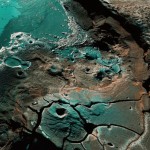
Simon Berz has spent much of his artistic life questioning a distinction that most musicians take for granted: where does an instrument end and where does the world begin? On "Tectonic", the Swiss drummer, sound artist, educator, and instrument builder offers perhaps his most comprehensive answer yet, assembling a body of work that treats geological matter not as inspiration but as an active participant in the creative process.
Over three decades, Berz has cultivated a uniquely nomadic practice, moving between improvised music, sound art, performance, and installation. His collaborations span an astonishing range of personalities, from avant-garde improvisers and electronic experimenters to figures rooted in dub, jazz, and rock. Yet despite these encounters, his artistic identity remains remarkably singular. Rather than centering virtuosity, Berz focuses on relationships: between materials and technologies, landscapes and memory, gesture and resonance.
"Tectonic" gathers traces of journeys undertaken across Iceland, Indonesia, Japan, and other locations, but it would be misleading to call it a travelogue. The album feels more like a study of physical processes. The track titles themselves suggest sedimentation, transformation, interruption, and emergence. Listening becomes an encounter with forms of time that operate far beyond human scales.
The record opens with "Deep Time", an apt introduction to an album concerned with durations measured not in minutes but in millennia. Layers of percussion, electronic treatment, and resonant stone textures establish an environment where rhythm behaves less like a grid and more like a natural force. The music advances through accumulation and pressure rather than conventional development.
One of the album's greatest strengths is its refusal to settle into a single identity. Moments of percussive insistence occasionally hint at club music, while elsewhere the material drifts toward electroacoustic abstraction. Certain passages evoke ritual performance; others suggest field recording, sound sculpture, or contemporary composition. Berz moves freely among these territories without appearing interested in belonging to any of them.
The basalt stones at the heart of the project are crucial, not because they provide unusual sounds, but because they alter the listener's perception of causality. It often becomes difficult to determine what originates from a struck surface, what emerges from electronic manipulation, and what belongs to the surrounding acoustic environment. The resulting ambiguity gives the album much of its fascination.
Tracks such as "Lithification" and "Emergent Terrain" reveal Berz's talent for balancing complexity with immediacy. Despite the conceptual framework underpinning the work, the music never feels academic. There is a direct physicality to these pieces, a sense that sound is being pushed, scraped, fractured, and reshaped in real time. One can almost imagine the materials resisting the performer, negotiating their own role in the composition.
The influence of Berz's international encounters also becomes apparent throughout the record. Rather than presenting cultural references as exotic decoration, he absorbs lessons from different sonic traditions into a broader investigation of resonance and rhythm. The result feels genuinely collaborative, even when no obvious collaborator is present.
Particularly impressive is the album's handling of space. Every sound seems carefully positioned, yet nothing feels static. Frequencies drift, textures overlap, and resonances linger like afterimages. The music constantly reminds us that listening is a spatial experience as much as a temporal one.
The closing sections leave an especially strong impression. Rather than building toward a climax, the album gradually reveals itself as an ecosystem of interconnected gestures. Sounds appear, transform, disappear, and leave traces behind, much like geological formations themselves.
What ultimately distinguishes "Tectonic" is its ability to transform an ambitious concept into a genuinely engaging listening experience. Many works inspired by natural processes end up illustrating ideas. Berz instead creates a world governed by those ideas. The album does not merely reference stone, landscape, or geological history; it adopts their logic.
In an era where experimental music often oscillates between technological fetishism and nostalgic organicism, "Tectonic" proposes a more interesting possibility: that matter, technology, and human imagination are not opposing forces at all, but different manifestations of the same ongoing process of transformation. The rocks, it turns out, were never silent. We simply needed someone patient enough to listen.
Over three decades, Berz has cultivated a uniquely nomadic practice, moving between improvised music, sound art, performance, and installation. His collaborations span an astonishing range of personalities, from avant-garde improvisers and electronic experimenters to figures rooted in dub, jazz, and rock. Yet despite these encounters, his artistic identity remains remarkably singular. Rather than centering virtuosity, Berz focuses on relationships: between materials and technologies, landscapes and memory, gesture and resonance.
"Tectonic" gathers traces of journeys undertaken across Iceland, Indonesia, Japan, and other locations, but it would be misleading to call it a travelogue. The album feels more like a study of physical processes. The track titles themselves suggest sedimentation, transformation, interruption, and emergence. Listening becomes an encounter with forms of time that operate far beyond human scales.
The record opens with "Deep Time", an apt introduction to an album concerned with durations measured not in minutes but in millennia. Layers of percussion, electronic treatment, and resonant stone textures establish an environment where rhythm behaves less like a grid and more like a natural force. The music advances through accumulation and pressure rather than conventional development.
One of the album's greatest strengths is its refusal to settle into a single identity. Moments of percussive insistence occasionally hint at club music, while elsewhere the material drifts toward electroacoustic abstraction. Certain passages evoke ritual performance; others suggest field recording, sound sculpture, or contemporary composition. Berz moves freely among these territories without appearing interested in belonging to any of them.
The basalt stones at the heart of the project are crucial, not because they provide unusual sounds, but because they alter the listener's perception of causality. It often becomes difficult to determine what originates from a struck surface, what emerges from electronic manipulation, and what belongs to the surrounding acoustic environment. The resulting ambiguity gives the album much of its fascination.
Tracks such as "Lithification" and "Emergent Terrain" reveal Berz's talent for balancing complexity with immediacy. Despite the conceptual framework underpinning the work, the music never feels academic. There is a direct physicality to these pieces, a sense that sound is being pushed, scraped, fractured, and reshaped in real time. One can almost imagine the materials resisting the performer, negotiating their own role in the composition.
The influence of Berz's international encounters also becomes apparent throughout the record. Rather than presenting cultural references as exotic decoration, he absorbs lessons from different sonic traditions into a broader investigation of resonance and rhythm. The result feels genuinely collaborative, even when no obvious collaborator is present.
Particularly impressive is the album's handling of space. Every sound seems carefully positioned, yet nothing feels static. Frequencies drift, textures overlap, and resonances linger like afterimages. The music constantly reminds us that listening is a spatial experience as much as a temporal one.
The closing sections leave an especially strong impression. Rather than building toward a climax, the album gradually reveals itself as an ecosystem of interconnected gestures. Sounds appear, transform, disappear, and leave traces behind, much like geological formations themselves.
What ultimately distinguishes "Tectonic" is its ability to transform an ambitious concept into a genuinely engaging listening experience. Many works inspired by natural processes end up illustrating ideas. Berz instead creates a world governed by those ideas. The album does not merely reference stone, landscape, or geological history; it adopts their logic.
In an era where experimental music often oscillates between technological fetishism and nostalgic organicism, "Tectonic" proposes a more interesting possibility: that matter, technology, and human imagination are not opposing forces at all, but different manifestations of the same ongoing process of transformation. The rocks, it turns out, were never silent. We simply needed someone patient enough to listen.
schntzl: Fata Morgana
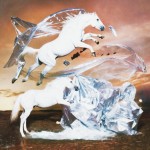
There is something deeply Belgian about "Fata Morgana". Not just because schntzl emerge from that fertile stretch of Europe where surrealism seems less an artistic movement than a weather condition, but because the album treats contradiction as a native language. It is playful and abrasive, euphoric and claustrophobic, emotionally sincere and faintly ridiculous in the same breath. Like finding enlightenment inside a malfunctioning arcade cabinet while someone in the next room is aggressively remixing a rave from 1997.
The duo of Hendrik Lasure and Casper Van De Velde have long occupied an unusual position within contemporary experimental music. Both are highly respected figures in Belgium’s jazz ecosystem, yet schntzl has never behaved like a “jazz project” in any conventional sense. Improvisation is certainly central, but it is weaponized less for virtuoso display than for destabilization. Their music continuously sabotages its own momentum, constructing shimmering emotional architectures only to kick holes through the walls moments later. On earlier releases, especially "Holiday", there was still a trace of chamber-like intimacy lingering beneath the electronics. "Fata Morgana" feels far less interested in comfort. Here, trance is not a genre reference but a psychological state: repetition stretched until it becomes delirium.
The title itself is perfect. A fata morgana is a mirage, an illusion hovering at the edge of perception, and the album constantly behaves like one. Sounds appear solid before dissolving into vapor. Rhythms suggest club propulsion before mutating into fractured abstraction. Hooks emerge like half-remembered dreams from a childhood spent too close to cheap CD-ROM games and overlit shopping centers. The duo understands that nostalgia is most effective when slightly poisoned.
“Magicland” opens the record like the entrance to an abandoned amusement park where the rides still function despite obvious electrical hazards. The synths glitter with synthetic optimism while the percussion twitches underneath like machinery overdue for maintenance. From there, “Fanta Merino” unfolds into one of the album’s strongest pieces, balancing trance-inflected arpeggios with an undercurrent of unease. schntzl seem fascinated by what happens when ecstatic forms are denied emotional resolution. Every build-up threatens catharsis, then sidesteps it with a smirk.
That balance between sincerity and sabotage becomes one of the record’s great strengths. “Tamagotchi Baby” could almost collapse under the weight of its own absurd title, yet beneath the irony lies something strangely tender. The duo clearly understands the emotional residue embedded inside obsolete digital culture. Their references are not lazy retro gestures aimed at people who miss flip phones and glow sticks. Instead, these sounds resemble archaeological fragments from a civilization that believed technology would make everyone happier before social media turned human consciousness into a shopping mall food court with anxiety disorders.
There are moments throughout "Fata Morgana" where the influence of artists like Oneohtrix Point Never or Giant Claw becomes perceptible in the hyper-digital processing and collapsing textures, but schntzl avoid imitation through sheer volatility. The drumming in particular gives the music an unstable physicality. Van De Velde never settles into predictable pulse mechanics; his rhythms constantly feel on the verge of outrunning the tracks themselves. Meanwhile Lasure’s synth work oscillates between luminous beauty and total sensory overload.
“Oasis” and “The Hill” briefly allow air into the system. These tracks reveal the duo’s remarkable understanding of pacing. Beneath all the fragmentation lies an intuitive compositional intelligence. Even the album’s most chaotic passages are carefully balanced. Nothing overstays its welcome. At just over thirty-five minutes, "Fata Morgana" understands a truth many experimental albums forget: disorientation is far more effective in concentrated doses. Nobody wants to wander endlessly through someone else’s conceptual maze. Human beings get tired. They start checking emails. Civilization collapses.
The emotional centerpiece may well be “My Singing Heart”, where sentimentality finally surfaces without disguise. Yet even here, schntzl resist straightforward beauty. The melody flickers through layers of distortion like a damaged transmission trying to remember itself. It is moving precisely because it feels unstable, never fully secured against collapse.
What ultimately makes "Fata Morgana" compelling is the sense that schntzl are less interested in genre than in perception itself. Their music continuously asks how much instability a listener can tolerate before confusion transforms into revelation. The album behaves like a hall of mirrors where every reflection carries a different emotional temperature. Some are euphoric, some vaguely menacing, some unexpectedly funny. A few feel strangely intimate, as though the machines themselves have become emotionally overextended.
And perhaps that is the album’s quiet achievement. Beneath the digital chaos, the kitsch loops, the trance ghosts and absurd detours, "Fata Morgana" is fundamentally about human interaction: two musicians listening, reacting, interrupting, destabilizing, rescuing each other in real time. Improvisation here becomes a social act, a negotiation between competing impulses. The mirage never fully disappears because neither artist allows the other to settle into certainty.
In a musical landscape increasingly obsessed with frictionless perfection, schntzl instead celebrate instability, awkwardness, overload and ecstatic imbalance. "Fata Morgana" does not offer escape from the modern condition. It simply throws brighter colors onto the collapse and hands you a pair of broken 3D glasses to watch it through.
The duo of Hendrik Lasure and Casper Van De Velde have long occupied an unusual position within contemporary experimental music. Both are highly respected figures in Belgium’s jazz ecosystem, yet schntzl has never behaved like a “jazz project” in any conventional sense. Improvisation is certainly central, but it is weaponized less for virtuoso display than for destabilization. Their music continuously sabotages its own momentum, constructing shimmering emotional architectures only to kick holes through the walls moments later. On earlier releases, especially "Holiday", there was still a trace of chamber-like intimacy lingering beneath the electronics. "Fata Morgana" feels far less interested in comfort. Here, trance is not a genre reference but a psychological state: repetition stretched until it becomes delirium.
The title itself is perfect. A fata morgana is a mirage, an illusion hovering at the edge of perception, and the album constantly behaves like one. Sounds appear solid before dissolving into vapor. Rhythms suggest club propulsion before mutating into fractured abstraction. Hooks emerge like half-remembered dreams from a childhood spent too close to cheap CD-ROM games and overlit shopping centers. The duo understands that nostalgia is most effective when slightly poisoned.
“Magicland” opens the record like the entrance to an abandoned amusement park where the rides still function despite obvious electrical hazards. The synths glitter with synthetic optimism while the percussion twitches underneath like machinery overdue for maintenance. From there, “Fanta Merino” unfolds into one of the album’s strongest pieces, balancing trance-inflected arpeggios with an undercurrent of unease. schntzl seem fascinated by what happens when ecstatic forms are denied emotional resolution. Every build-up threatens catharsis, then sidesteps it with a smirk.
That balance between sincerity and sabotage becomes one of the record’s great strengths. “Tamagotchi Baby” could almost collapse under the weight of its own absurd title, yet beneath the irony lies something strangely tender. The duo clearly understands the emotional residue embedded inside obsolete digital culture. Their references are not lazy retro gestures aimed at people who miss flip phones and glow sticks. Instead, these sounds resemble archaeological fragments from a civilization that believed technology would make everyone happier before social media turned human consciousness into a shopping mall food court with anxiety disorders.
There are moments throughout "Fata Morgana" where the influence of artists like Oneohtrix Point Never or Giant Claw becomes perceptible in the hyper-digital processing and collapsing textures, but schntzl avoid imitation through sheer volatility. The drumming in particular gives the music an unstable physicality. Van De Velde never settles into predictable pulse mechanics; his rhythms constantly feel on the verge of outrunning the tracks themselves. Meanwhile Lasure’s synth work oscillates between luminous beauty and total sensory overload.
“Oasis” and “The Hill” briefly allow air into the system. These tracks reveal the duo’s remarkable understanding of pacing. Beneath all the fragmentation lies an intuitive compositional intelligence. Even the album’s most chaotic passages are carefully balanced. Nothing overstays its welcome. At just over thirty-five minutes, "Fata Morgana" understands a truth many experimental albums forget: disorientation is far more effective in concentrated doses. Nobody wants to wander endlessly through someone else’s conceptual maze. Human beings get tired. They start checking emails. Civilization collapses.
The emotional centerpiece may well be “My Singing Heart”, where sentimentality finally surfaces without disguise. Yet even here, schntzl resist straightforward beauty. The melody flickers through layers of distortion like a damaged transmission trying to remember itself. It is moving precisely because it feels unstable, never fully secured against collapse.
What ultimately makes "Fata Morgana" compelling is the sense that schntzl are less interested in genre than in perception itself. Their music continuously asks how much instability a listener can tolerate before confusion transforms into revelation. The album behaves like a hall of mirrors where every reflection carries a different emotional temperature. Some are euphoric, some vaguely menacing, some unexpectedly funny. A few feel strangely intimate, as though the machines themselves have become emotionally overextended.
And perhaps that is the album’s quiet achievement. Beneath the digital chaos, the kitsch loops, the trance ghosts and absurd detours, "Fata Morgana" is fundamentally about human interaction: two musicians listening, reacting, interrupting, destabilizing, rescuing each other in real time. Improvisation here becomes a social act, a negotiation between competing impulses. The mirage never fully disappears because neither artist allows the other to settle into certainty.
In a musical landscape increasingly obsessed with frictionless perfection, schntzl instead celebrate instability, awkwardness, overload and ecstatic imbalance. "Fata Morgana" does not offer escape from the modern condition. It simply throws brighter colors onto the collapse and hands you a pair of broken 3D glasses to watch it through.
Lauer: K1m Fantasy EP
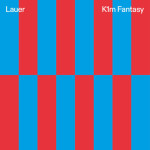

Somewhere, in a parallel universe where dance floors behave like philosophical devices instead of sticky social experiments, "K1m Fantasy" makes perfect sense. In this one, it still does, but you have to meet it halfway. Philipp Lauer, operating as Lauer, has been around long enough to know that confidence in electronic music isn’t about volume or speed. It’s about restraint, timing, and the quiet arrogance of someone who’s seen trends come and go like seasonal allergies.
Released via Melodize, the imprint helmed by Beartrax, this EP doesn’t try to reinvent the dance floor. It treats it more like a lucid dream, a place where familiar forms behave slightly differently, as if they’ve been given just enough freedom to misbehave without collapsing entirely.
“Boss Electro” opens with the kind of self-assurance that would be unbearable if it weren’t so precisely calibrated. The groove is crisp, almost architectural, but there’s a looseness in the synth work that keeps it from feeling like a museum piece. Lauer isn’t showing off. He’s demonstrating control, which is more unsettling. You get the sense he could push it further, harder, faster, but chooses not to. Discipline as a flex. Irritating, but effective.
“Rabbits” shifts tone without abandoning structure. The title suggests whimsy, and yes, there’s something playful in the bouncing synth lines, but it’s not naïve. It feels more like watching something small and alert navigating a space that might not be entirely safe. The track hops, but it also listens. There’s tension under the surface, which saves it from becoming decorative.
The title track, “K1m Fantasy”, is where things stretch out and breathe. The tempo relaxes, the textures widen, and suddenly the dance floor becomes less about movement and more about suspension. It’s introspective without collapsing into self-importance, a delicate balance that many producers attempt and few manage. Lauer lets the elements unfold at their own pace, trusting the listener to stay with him. Which is generous, or risky, depending on your attention span.
“Choirs” closes the EP with a curious blend of the ceremonial and the synthetic. Brassy stabs cut through layers of vocal-like textures that feel communal but slightly uncanny, like a congregation made of circuits. There’s an undercurrent of collectivity here, a reminder that even the most individualistic dance floor experiences are, at their core, shared illusions. Not exactly comforting, but at least honest.
Lauer’s two-decade trajectory through electronic music is audible in the details. You can trace faint echoes of electro, techno, even Italo-adjacent warmth, but nothing feels nostalgic. If anything, "K1m Fantasy" is suspicious of nostalgia. It prefers to hover in a kind of perpetual present, where past influences are acknowledged but not worshipped.
It’s also worth noting what the EP doesn’t do. It doesn’t chase immediacy, doesn’t rely on obvious peaks, doesn’t beg for attention. In a landscape where many tracks behave like over-caffeinated sales pitches, this one feels almost aloof. It assumes you’ll come to it. If you don’t, it will continue existing just fine without you.
Which, annoyingly, makes it more compelling.
Released via Melodize, the imprint helmed by Beartrax, this EP doesn’t try to reinvent the dance floor. It treats it more like a lucid dream, a place where familiar forms behave slightly differently, as if they’ve been given just enough freedom to misbehave without collapsing entirely.
“Boss Electro” opens with the kind of self-assurance that would be unbearable if it weren’t so precisely calibrated. The groove is crisp, almost architectural, but there’s a looseness in the synth work that keeps it from feeling like a museum piece. Lauer isn’t showing off. He’s demonstrating control, which is more unsettling. You get the sense he could push it further, harder, faster, but chooses not to. Discipline as a flex. Irritating, but effective.
“Rabbits” shifts tone without abandoning structure. The title suggests whimsy, and yes, there’s something playful in the bouncing synth lines, but it’s not naïve. It feels more like watching something small and alert navigating a space that might not be entirely safe. The track hops, but it also listens. There’s tension under the surface, which saves it from becoming decorative.
The title track, “K1m Fantasy”, is where things stretch out and breathe. The tempo relaxes, the textures widen, and suddenly the dance floor becomes less about movement and more about suspension. It’s introspective without collapsing into self-importance, a delicate balance that many producers attempt and few manage. Lauer lets the elements unfold at their own pace, trusting the listener to stay with him. Which is generous, or risky, depending on your attention span.
“Choirs” closes the EP with a curious blend of the ceremonial and the synthetic. Brassy stabs cut through layers of vocal-like textures that feel communal but slightly uncanny, like a congregation made of circuits. There’s an undercurrent of collectivity here, a reminder that even the most individualistic dance floor experiences are, at their core, shared illusions. Not exactly comforting, but at least honest.
Lauer’s two-decade trajectory through electronic music is audible in the details. You can trace faint echoes of electro, techno, even Italo-adjacent warmth, but nothing feels nostalgic. If anything, "K1m Fantasy" is suspicious of nostalgia. It prefers to hover in a kind of perpetual present, where past influences are acknowledged but not worshipped.
It’s also worth noting what the EP doesn’t do. It doesn’t chase immediacy, doesn’t rely on obvious peaks, doesn’t beg for attention. In a landscape where many tracks behave like over-caffeinated sales pitches, this one feels almost aloof. It assumes you’ll come to it. If you don’t, it will continue existing just fine without you.
Which, annoyingly, makes it more compelling.
Dante: New Places

There’s always a moment, in every artist’s life, when “finding yourself” starts to sound suspiciously like “running away with better branding”. On "New Places", Dante does both, but with enough honesty to make it work.
This is his third album, apparently the one where things are supposed to click into place. Instead, it deliberately unsettles everything. Written and produced during a self-imposed exile in London, the record absorbs the city the way wet concrete absorbs footprints: not cleanly, not selectively, but completely. Field recordings, urban residue, late-night rhythms, fragments of voices and passing lives. It’s less a portrait of London than a nervous system reacting to it.
“Initiate” opens with a kind of defensive posture. The lyrics push back against external expectations, while the production hovers between restraint and release, like it’s not entirely sure whether it wants to confront or withdraw. That tension becomes a recurring motif. Dante isn’t presenting a polished identity here. He’s documenting the process of not having one.
“Choices” and the title track move deeper into that uncertainty. There’s a quiet obsession with decision-making, with the idea that every path taken implies a version of yourself you’ll never meet. Musically, the tracks drift between introspective electronica and something closer to understated club structures. Not quite dancefloor, not quite headphone confession. A liminal zone, which feels appropriate for someone sleeping in hostels and trying to rebuild a sense of direction.
The album’s strength lies in its refusal to overstate its own drama. “Feel Me” and “Sudden Silence” deal with emotional erosion in a surprisingly restrained way. No grand catharsis, no theatrical collapse. Just a gradual wearing down, mirrored by arrangements that favor space over density. You get the sense that if the tracks were any fuller, they would lose their point.
Midway through, pieces like “Steps” and “Come Ashore” function almost as transitions rather than statements. They don’t demand attention; they redirect it. It’s the sound of someone moving, physically and mentally, without quite knowing where they’re going. Which, inconveniently, is most of life.
“Flashbacks” is where things get messier, both lyrically and structurally. Memory intrudes, fragmented and slightly incoherent, as it tends to be. The production follows suit, introducing a more disjointed flow that resists easy interpretation. It’s one of the few moments where the album risks losing its balance, but that instability also gives it weight.
By the time “Overcome” and “Blue Skies” arrive, there’s a subtle shift. Not resolution, exactly, but a loosening. The music feels less burdened by the need to explain itself. “Primrose Hill,” closing the album, lands somewhere between reflection and suspension. Not quite closure, more like a pause where you acknowledge where you are before inevitably moving again.
What makes "New Places" compelling is its relationship with expectation. Dante explicitly rejects metrics, success formulas, the endless demand to outdo oneself. Naturally, he turns that rejection into an album, which is its own small contradiction. But instead of collapsing under that paradox, the record uses it as fuel.
Stylistically, it draws from a familiar palette - post-club electronica, ambient textures, introspective songwriting - but the execution feels personal rather than derivative. The London influence is less about specific scenes and more about density: cultural, emotional, sonic. Everything overlaps, nothing fully resolves.
The limited vinyl run, the crowdfunding angle, the carefully framed narrative of artistic renewal. It’s all very contemporary, almost predictably so. But beneath that packaging, there’s something less calculated: a document of someone stepping away from certainty and not rushing to replace it.
Not every track lands with equal force. Some feel like sketches, others like fully realized statements. But that unevenness is part of the architecture. "New Places" isn’t about perfection. It’s about movement, hesitation, and the strange clarity that comes from not knowing what you’re doing until after you’ve done it.
Which, unfortunately, is still the most reliable creative method available.
This is his third album, apparently the one where things are supposed to click into place. Instead, it deliberately unsettles everything. Written and produced during a self-imposed exile in London, the record absorbs the city the way wet concrete absorbs footprints: not cleanly, not selectively, but completely. Field recordings, urban residue, late-night rhythms, fragments of voices and passing lives. It’s less a portrait of London than a nervous system reacting to it.
“Initiate” opens with a kind of defensive posture. The lyrics push back against external expectations, while the production hovers between restraint and release, like it’s not entirely sure whether it wants to confront or withdraw. That tension becomes a recurring motif. Dante isn’t presenting a polished identity here. He’s documenting the process of not having one.
“Choices” and the title track move deeper into that uncertainty. There’s a quiet obsession with decision-making, with the idea that every path taken implies a version of yourself you’ll never meet. Musically, the tracks drift between introspective electronica and something closer to understated club structures. Not quite dancefloor, not quite headphone confession. A liminal zone, which feels appropriate for someone sleeping in hostels and trying to rebuild a sense of direction.
The album’s strength lies in its refusal to overstate its own drama. “Feel Me” and “Sudden Silence” deal with emotional erosion in a surprisingly restrained way. No grand catharsis, no theatrical collapse. Just a gradual wearing down, mirrored by arrangements that favor space over density. You get the sense that if the tracks were any fuller, they would lose their point.
Midway through, pieces like “Steps” and “Come Ashore” function almost as transitions rather than statements. They don’t demand attention; they redirect it. It’s the sound of someone moving, physically and mentally, without quite knowing where they’re going. Which, inconveniently, is most of life.
“Flashbacks” is where things get messier, both lyrically and structurally. Memory intrudes, fragmented and slightly incoherent, as it tends to be. The production follows suit, introducing a more disjointed flow that resists easy interpretation. It’s one of the few moments where the album risks losing its balance, but that instability also gives it weight.
By the time “Overcome” and “Blue Skies” arrive, there’s a subtle shift. Not resolution, exactly, but a loosening. The music feels less burdened by the need to explain itself. “Primrose Hill,” closing the album, lands somewhere between reflection and suspension. Not quite closure, more like a pause where you acknowledge where you are before inevitably moving again.
What makes "New Places" compelling is its relationship with expectation. Dante explicitly rejects metrics, success formulas, the endless demand to outdo oneself. Naturally, he turns that rejection into an album, which is its own small contradiction. But instead of collapsing under that paradox, the record uses it as fuel.
Stylistically, it draws from a familiar palette - post-club electronica, ambient textures, introspective songwriting - but the execution feels personal rather than derivative. The London influence is less about specific scenes and more about density: cultural, emotional, sonic. Everything overlaps, nothing fully resolves.
The limited vinyl run, the crowdfunding angle, the carefully framed narrative of artistic renewal. It’s all very contemporary, almost predictably so. But beneath that packaging, there’s something less calculated: a document of someone stepping away from certainty and not rushing to replace it.
Not every track lands with equal force. Some feel like sketches, others like fully realized statements. But that unevenness is part of the architecture. "New Places" isn’t about perfection. It’s about movement, hesitation, and the strange clarity that comes from not knowing what you’re doing until after you’ve done it.
Which, unfortunately, is still the most reliable creative method available.
us & sparkles: Sir Kaboom and Trippy Tweet
Artist: us & sparkles (@)
Title: Sir Kaboom and Trippy Tweet
Format: 12" + Download
Label: self-released
Rated:
Title: Sir Kaboom and Trippy Tweet
Format: 12" + Download
Label: self-released
Rated:
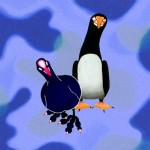
There’s always a moment, usually around track two or three, when a “long-form groove exploration” either reveals itself as patient craft or just very polite procrastination. "Sir Kaboom and Trippy Tweet" lands, somewhat annoyingly for cynics, on the former.
Behind "us & sparkles" is Roland Vollenweider, a figure who divides his time between electronic music and psychoanalytic psychotherapy. Which explains a lot, unfortunately. This is music that doesn’t just want you to dance, it wants to "understand why you’re dancing", possibly trace it back to childhood, and then let the rhythm do the talking instead. Surprisingly, it works.
The album extends into long-form structures without collapsing under their weight. “Songs of Navarone” opens with a kind of patient unfolding, grooves emerging not as declarations but as slow agreements between elements. Nothing rushes. You’re not pushed onto the dancefloor; you sort of drift there, like you made the decision yourself. Clever.
“Bongo Dreams” leans more explicitly into rhythm, but avoids turning into a percussive cliché. The track breathes, expanding and contracting, letting textures flicker in and out like half-remembered scenes from a night that never quite resolves into a story. There’s a warmth here that feels deliberate, not sentimental, more about presence than nostalgia.
“Contemplation” does what the title threatens, but with restraint. It doesn’t disappear into ambient vagueness. Instead, it holds a groove at a distance, like something you can approach but never fully inhabit. This tension between movement and suspension runs throughout the record, giving it a quiet internal logic.
Then “FlashyFresh” shifts the tone, not by becoming louder or faster, but by sharpening its edges. The groove tightens, details become more pronounced, and for a moment it feels like the album might tip into something more overtly club-oriented. It doesn’t. It just hints at it, then steps back again, as if aware that commitment is overrated.
“Stay Alert” introduces a subtle sense of unease beneath its rhythmic surface, a reminder that repetition can be both comforting and slightly destabilizing. Patterns loop, but small deviations keep them from settling into pure hypnosis. It’s a delicate balance, and the track walks it with surprising confidence.
“The Poem” and “It Was Already in Me” close the album by leaning into something more introspective, though not in a way that abandons the body. The grooves soften, stretch, and dissolve into something closer to atmosphere, but they never fully disappear. There’s always a pulse, faint but persistent, like a memory that refuses to fade.
What’s notable is how collaborative this record feels, despite being anchored in Vollenweider’s vision. The presence of multiple musicians, from horns to guitars to percussion, adds a tactile richness that prevents the music from becoming overly digital or sterile. Each element seems to arrive, contribute, and then quietly step aside.
There are echoes of psychedelic electronica, hints of downtempo, traces of something that could have wandered out of a late-night set in a small, overly sincere club. But "Sir Kaboom and Trippy Tweet" avoids becoming a genre exercise. It’s less about fitting into a scene and more about sustaining an endorphinic state.
Not immediate, not flashy in the way the title jokingly suggests, but persistent. The kind of album that doesn’t demand attention, yet gradually occupies it, like a thought you didn’t invite but don’t entirely mind keeping around.
Behind "us & sparkles" is Roland Vollenweider, a figure who divides his time between electronic music and psychoanalytic psychotherapy. Which explains a lot, unfortunately. This is music that doesn’t just want you to dance, it wants to "understand why you’re dancing", possibly trace it back to childhood, and then let the rhythm do the talking instead. Surprisingly, it works.
The album extends into long-form structures without collapsing under their weight. “Songs of Navarone” opens with a kind of patient unfolding, grooves emerging not as declarations but as slow agreements between elements. Nothing rushes. You’re not pushed onto the dancefloor; you sort of drift there, like you made the decision yourself. Clever.
“Bongo Dreams” leans more explicitly into rhythm, but avoids turning into a percussive cliché. The track breathes, expanding and contracting, letting textures flicker in and out like half-remembered scenes from a night that never quite resolves into a story. There’s a warmth here that feels deliberate, not sentimental, more about presence than nostalgia.
“Contemplation” does what the title threatens, but with restraint. It doesn’t disappear into ambient vagueness. Instead, it holds a groove at a distance, like something you can approach but never fully inhabit. This tension between movement and suspension runs throughout the record, giving it a quiet internal logic.
Then “FlashyFresh” shifts the tone, not by becoming louder or faster, but by sharpening its edges. The groove tightens, details become more pronounced, and for a moment it feels like the album might tip into something more overtly club-oriented. It doesn’t. It just hints at it, then steps back again, as if aware that commitment is overrated.
“Stay Alert” introduces a subtle sense of unease beneath its rhythmic surface, a reminder that repetition can be both comforting and slightly destabilizing. Patterns loop, but small deviations keep them from settling into pure hypnosis. It’s a delicate balance, and the track walks it with surprising confidence.
“The Poem” and “It Was Already in Me” close the album by leaning into something more introspective, though not in a way that abandons the body. The grooves soften, stretch, and dissolve into something closer to atmosphere, but they never fully disappear. There’s always a pulse, faint but persistent, like a memory that refuses to fade.
What’s notable is how collaborative this record feels, despite being anchored in Vollenweider’s vision. The presence of multiple musicians, from horns to guitars to percussion, adds a tactile richness that prevents the music from becoming overly digital or sterile. Each element seems to arrive, contribute, and then quietly step aside.
There are echoes of psychedelic electronica, hints of downtempo, traces of something that could have wandered out of a late-night set in a small, overly sincere club. But "Sir Kaboom and Trippy Tweet" avoids becoming a genre exercise. It’s less about fitting into a scene and more about sustaining an endorphinic state.
Not immediate, not flashy in the way the title jokingly suggests, but persistent. The kind of album that doesn’t demand attention, yet gradually occupies it, like a thought you didn’t invite but don’t entirely mind keeping around.