
Browse by Genre
Industrial Music / Industrial Metal / Aggro Industrial / Electro Metal
Industrial Noise / Power Noise / Harsh Noise
Synth Pop / Electro Pop / Synth-Electronica
Techno / Trance / Goa / Drum'n'Bass / Jungle / Tribal / Trip-Hop
Ambient / Electronica / Ethereal / Dub / Soundscapes / Abstract
Experimental / Avantgarde / Weird & Wired / Glitch / Noise / Field Recording
Dark / Gothic / Wave / New Wave / Dark Wave / Industrial Gothic
New Music / Downtown / Avantgarde Jazz / New Classical / World
Search Reviews
Music Reviews
Curse Mackey: Imaginary Enemies
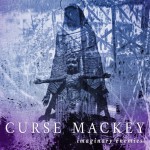
Artist: Curse Mackey (@)
Title: Imaginary Enemies
Format: CD + Download
Label: Negative Gain Productions (@)
Rated:


Title: Imaginary Enemies
Format: CD + Download
Label: Negative Gain Productions (@)
Rated:
Curse Mackey has always thrived in the margins, a shape-shifter between industrial abrasion and darkwave seduction, and "Imaginary Enemies" feels like the moment he finally names the demons that have been shadowing him since "Instant Exorcism". If that first solo album was the rite of cleansing and "Immoral Emporium" was the diagnosis of a decaying world, this new work is the autopsy of the self - performed with synths, noise, and a poet’s scalpel. The record is steeped in paranoia, but it’s not cartoon paranoia; it’s the kind you feel at 3 a.m. when the city is silent and your mind won’t be.
Songs like "Doomed for Monday" and "Vertigo Ego" carry the doomed swagger of Wax Trax! industrial anthems, but Mackey’s delivery is more intimate, like he’s whispering your downfall directly into your skull. "Discoccult" turns a prayer into a knife, twisting Catholic ritual into industrial liturgy, while "Blood Like Love" is the emotional epicenter, a grief-drenched elegy that could sit comfortably alongside The Soft Moon or Silent Servant yet carries Mackey’s singular dramatic weight. Even when the beats slam, there’s a vulnerability that undercuts the aggression - proof that the “imaginary enemies” are often just mirrors cracked into infinite shards. The lyrics are direct yet incantatory: serpents, martyrs, silhouettes, and monsters populate these ten tracks like archetypes in a private mythology. The title track in particular is a miniature psychodrama, where paranoia becomes both adversary and lover, an ouroboros of suspicion.
Musically, the album doesn’t just recycle the black leather tropes of darkwave; it mutates them, mixing modular synth grime with spectral drones, jackhammer rhythms, and a sense of theatrical tension that feels closer to a séance than a nightclub. It’s danceable in the way that drowning is rhythmic: relentless, suffocating, but strangely beautiful. What makes Mackey compelling here is his refusal to choose between performance and confession - the songs operate as both a darkwave exorcism and a late-night diary entry. "Imaginary Enemies" is the last chapter of a trilogy, but it also reads like a rebirth: a record that knows every shadow has a pulse, and every enemy wears a face we’ve already seen in the mirror.
Songs like "Doomed for Monday" and "Vertigo Ego" carry the doomed swagger of Wax Trax! industrial anthems, but Mackey’s delivery is more intimate, like he’s whispering your downfall directly into your skull. "Discoccult" turns a prayer into a knife, twisting Catholic ritual into industrial liturgy, while "Blood Like Love" is the emotional epicenter, a grief-drenched elegy that could sit comfortably alongside The Soft Moon or Silent Servant yet carries Mackey’s singular dramatic weight. Even when the beats slam, there’s a vulnerability that undercuts the aggression - proof that the “imaginary enemies” are often just mirrors cracked into infinite shards. The lyrics are direct yet incantatory: serpents, martyrs, silhouettes, and monsters populate these ten tracks like archetypes in a private mythology. The title track in particular is a miniature psychodrama, where paranoia becomes both adversary and lover, an ouroboros of suspicion.
Musically, the album doesn’t just recycle the black leather tropes of darkwave; it mutates them, mixing modular synth grime with spectral drones, jackhammer rhythms, and a sense of theatrical tension that feels closer to a séance than a nightclub. It’s danceable in the way that drowning is rhythmic: relentless, suffocating, but strangely beautiful. What makes Mackey compelling here is his refusal to choose between performance and confession - the songs operate as both a darkwave exorcism and a late-night diary entry. "Imaginary Enemies" is the last chapter of a trilogy, but it also reads like a rebirth: a record that knows every shadow has a pulse, and every enemy wears a face we’ve already seen in the mirror.
In A Darkened Room: Voix

In A Darkened Room’s "VOIX" is like diving into a midnight mirror: you expect to see your reflection, but what greets you are silhouettes, echoes, betrayals, and a heart that both bleeds and yearns. The San Antonio trio (CJ Duron on vocals/guitar, Svia Svenlava on bass, Kandi Keys on synth/piano) have crafted a sophomore record that doesn’t merely dwell in darkness but makes the darkness speak - with nuance, weight and occasional haunting beauty.
Musically, "VOIX" leans hard into gothic rock / dark wave tropes - brooding guitars, lush synths, hypnotic rhythms - but it’s in its lyrical confessions and emotional extremes that it lifts itself beyond mere genre fare. From the opener "When Shadows Come", there is a drama: secret pacts under black moons, love pledged over broken glass, sacrifice before time runs out. It’s not coy. You feel the desperation, the promise, the regret. There is passion here, but also the knowledge that promises made at dusk may unravel come morning.
Tracks like "Sounds of Warning" amplify that tension: voices in the head, echoes of the dead, longing just to feel alive again. The emotional stakes are high. "Winter Storm" freezes the heart in metaphor; cold isn’t just ambient atmosphere - it’s a psychic condition. "Hammer & Nail" shifts toward confrontation: if you want me to decay, just say it. Maybe you want something beautiful, maybe just something honest in its ugliness.
In "Self Affliction", the grappling with self, blame, loss, waiting: these lyrics walk a tightrope of vulnerability. They are wounded but not broken. The confession “I almost lost my mind” isn’t hyperbole - it stands as a threshold, the moment where empathy meets collapse. "Cemetery Trees" turns the personal into the landscape: parks, shows, eyes that once promised something, now emptied. There’s betrayal and longing, but also a sense of destiny misread. "Mission" burns with a mixture of lust, ferocity, and disillusion: to “feed until the end”, “call for me when you’re in need”, “your cruelty” all collide into an anthem of knowing too much, hoping for too much, feeling everything. And "Trial by Fire", long and epic, acts like the crucible: after betrayal, after passion, after all the emotional trial, what remains?
One of the album’s strongest qualities is how it balances grandeur with intimacy. CJ Duron’s vocal delivery often feels close, confessional, raw - so when the band swells behind him, the contrast hits harder. The production is rich without being overly polished; the synths and guitars are layered so that shadows lurk under melody rather than being masked by them.
If there is a weakness, it lies in moments where the emotional intensity risks becoming familiar: betrayal, desperation, broken love - these are well-trodden territories in gothic music. In a few tracks, "VOIX" treads close to clichés (“black hearts”, “sacrifice”, “lust and lies”) without always finding a radical new angle. But given the sincerity and the craft on display, those moments feel more like echoes of influence than lapses in originality.
In the end, "VOIX" is more than a collection of heartbreak songs: it is a kind of ritual. To listen is to stand under the black moon, pledge your promises, feel the ache of their breaking, but then watch for new light in the shards. In A Darkened Room don’t avoid the darkness - they enter it willingly, map its boundaries, and try to find what remains when the shadows come. For fans of goth with guts, of vulnerability not sugarcoated, "VOIX" is a powerful journey; for anyone seeking polish over passion, it might sting.
Musically, "VOIX" leans hard into gothic rock / dark wave tropes - brooding guitars, lush synths, hypnotic rhythms - but it’s in its lyrical confessions and emotional extremes that it lifts itself beyond mere genre fare. From the opener "When Shadows Come", there is a drama: secret pacts under black moons, love pledged over broken glass, sacrifice before time runs out. It’s not coy. You feel the desperation, the promise, the regret. There is passion here, but also the knowledge that promises made at dusk may unravel come morning.
Tracks like "Sounds of Warning" amplify that tension: voices in the head, echoes of the dead, longing just to feel alive again. The emotional stakes are high. "Winter Storm" freezes the heart in metaphor; cold isn’t just ambient atmosphere - it’s a psychic condition. "Hammer & Nail" shifts toward confrontation: if you want me to decay, just say it. Maybe you want something beautiful, maybe just something honest in its ugliness.
In "Self Affliction", the grappling with self, blame, loss, waiting: these lyrics walk a tightrope of vulnerability. They are wounded but not broken. The confession “I almost lost my mind” isn’t hyperbole - it stands as a threshold, the moment where empathy meets collapse. "Cemetery Trees" turns the personal into the landscape: parks, shows, eyes that once promised something, now emptied. There’s betrayal and longing, but also a sense of destiny misread. "Mission" burns with a mixture of lust, ferocity, and disillusion: to “feed until the end”, “call for me when you’re in need”, “your cruelty” all collide into an anthem of knowing too much, hoping for too much, feeling everything. And "Trial by Fire", long and epic, acts like the crucible: after betrayal, after passion, after all the emotional trial, what remains?
One of the album’s strongest qualities is how it balances grandeur with intimacy. CJ Duron’s vocal delivery often feels close, confessional, raw - so when the band swells behind him, the contrast hits harder. The production is rich without being overly polished; the synths and guitars are layered so that shadows lurk under melody rather than being masked by them.
If there is a weakness, it lies in moments where the emotional intensity risks becoming familiar: betrayal, desperation, broken love - these are well-trodden territories in gothic music. In a few tracks, "VOIX" treads close to clichés (“black hearts”, “sacrifice”, “lust and lies”) without always finding a radical new angle. But given the sincerity and the craft on display, those moments feel more like echoes of influence than lapses in originality.
In the end, "VOIX" is more than a collection of heartbreak songs: it is a kind of ritual. To listen is to stand under the black moon, pledge your promises, feel the ache of their breaking, but then watch for new light in the shards. In A Darkened Room don’t avoid the darkness - they enter it willingly, map its boundaries, and try to find what remains when the shadows come. For fans of goth with guts, of vulnerability not sugarcoated, "VOIX" is a powerful journey; for anyone seeking polish over passion, it might sting.
Relay For Death: Mutual Consuming

Artist: Relay For Death
Title: Mutual Consuming
Format: 12" + Download
Label: The Helen Scarsdale Agency (@)
Rated:
Title: Mutual Consuming
Format: 12" + Download
Label: The Helen Scarsdale Agency (@)
Rated:
Relay For Death have always sounded like they’re making music at the very end of the world - or perhaps just past it, when the ruins have cooled, and only the faint hum of electricity survives. With "Mutual Consuming", the Spikula twins refine that post-apocalyptic grammar into something both implacable and strangely serene: two side-long slabs of smoldering ambience, at once minimal and oppressive, delicate and devastating.
The title comes from traditional Chinese medicine, where yin and yang don’t fight so much as they devour one another, endlessly. Relay For Death take that idea and render it in sound: frequencies that seem to eat themselves, loops collapsing into static, drones feeding on their own reverberations. It’s not Ouroboros, exactly, but something more dyspeptic - an eternal feedback cycle where digestion never ends, only mutates.
Side A, "intone the morph orb", is a slow sink into an abyssal throb, like Thomas Köner’s polar drones except more toxic, thickened with radiation and decay. It feels like the inside of a glacier listening to itself dissolve. Side B, "terminal ice wind", blows colder: all brittle metallic resonance and cavernous breaths, an industrial cousin of MB’s desolate meditations. The piece unfurls like weather, impersonal yet all-consuming, leaving you with the unsettling impression that the storm doesn’t notice you, and never will.
Relay For Death have long worked in this hermetic register - grim, uncompromising, allergic to narrative - but here the sense of collapse feels almost sculptural. Noise, usually about eruption, here becomes about erosion: a slow wearing down of sound into absence. What’s remarkable is how immersive that void is. If destruction has a texture, the twins have managed to record it.
Originally part of the now-mythical "On Corrosion" boxset (the ten-cassette wooden reliquary that instantly vanished into collector lore), "Mutual Consuming" finally crawls back into circulation on its own. It still feels less like an album and more like an environment: a frozen, poisoned atmosphere in which the listener is allowed to drift, stripped of warmth but overwhelmed by detail.
Listening is like staring too long into black water: first frightening, then mesmerizing, then almost comforting. Relay For Death may claim there’s no through-line with their past work, but the bleak humor of that denial is telling. In the gorge fest of existence, the twins don’t offer catharsis or clarity. What they offer is endurance. A space where destruction, rather than resisted, is simply inhabited.
It’s nihilism with staying power. A music for when there’s nothing left to do but sit with the storm, and let it consume.
The title comes from traditional Chinese medicine, where yin and yang don’t fight so much as they devour one another, endlessly. Relay For Death take that idea and render it in sound: frequencies that seem to eat themselves, loops collapsing into static, drones feeding on their own reverberations. It’s not Ouroboros, exactly, but something more dyspeptic - an eternal feedback cycle where digestion never ends, only mutates.
Side A, "intone the morph orb", is a slow sink into an abyssal throb, like Thomas Köner’s polar drones except more toxic, thickened with radiation and decay. It feels like the inside of a glacier listening to itself dissolve. Side B, "terminal ice wind", blows colder: all brittle metallic resonance and cavernous breaths, an industrial cousin of MB’s desolate meditations. The piece unfurls like weather, impersonal yet all-consuming, leaving you with the unsettling impression that the storm doesn’t notice you, and never will.
Relay For Death have long worked in this hermetic register - grim, uncompromising, allergic to narrative - but here the sense of collapse feels almost sculptural. Noise, usually about eruption, here becomes about erosion: a slow wearing down of sound into absence. What’s remarkable is how immersive that void is. If destruction has a texture, the twins have managed to record it.
Originally part of the now-mythical "On Corrosion" boxset (the ten-cassette wooden reliquary that instantly vanished into collector lore), "Mutual Consuming" finally crawls back into circulation on its own. It still feels less like an album and more like an environment: a frozen, poisoned atmosphere in which the listener is allowed to drift, stripped of warmth but overwhelmed by detail.
Listening is like staring too long into black water: first frightening, then mesmerizing, then almost comforting. Relay For Death may claim there’s no through-line with their past work, but the bleak humor of that denial is telling. In the gorge fest of existence, the twins don’t offer catharsis or clarity. What they offer is endurance. A space where destruction, rather than resisted, is simply inhabited.
It’s nihilism with staying power. A music for when there’s nothing left to do but sit with the storm, and let it consume.
Josef van Wissem & Jim Jarmusch: The Day The Angels Cried

Artist: Josef van Wissem & Jim Jarmusch (@)
Title: The Day The Angels Cried
Format: CD & 12" + Download
Label: Incunabulum Records (@)
Rated:
Title: The Day The Angels Cried
Format: CD & 12" + Download
Label: Incunabulum Records (@)
Rated:
Acclaimed director and musician Jim Jarmusch and experimental lute player and composer Jozef van Wissem met nearly 20 years ago, forming a close bond after they ran into each other on the streets of New York City. In 2011, they began performing and producing records together. The follow up to 'American Landscapes ' entitled 'The Day The Angels Cried' releases June 6 and coincides with a world tour. The duo weaves an intricate lute and guitar string tapestry of droning, minimal free-folk compositions destined to captivate listeners with their dark hypnosis. This time vocals and electronics are added as well. Van Wissem’s work comes from a tradition of avant-garde minimalism and lends itself well to the director’s stark cinematic works. Jarmusch has played guitar in bands on and off since the late ‘70s. Van Wissem’s compositional style involves hypnotic circular musical phrases that allow for a lot of contemplative space between the note
Well, that's the promo text, but here's the review. 'The Day The Angels Cried' is a brief album of 7 tracks, barely 35 minutes. Beginning with "Concerning Celestial Hierarchy," a stylized atmospheric lute instrumental, it sets up a Gothy neo-folk ambience. Next, the title track has heavily chambered speak-sung vocals plucked strings, kind of a Current 93/Death in June vibe. If there was such a thing as doom-liute playing, "The First Language" would be a prime example. Lower string chords and scrappy electronics gives this track a folk-industrial bent. Sounds like there's some Tibetan horns in there too, but likely a combo of other similar sounds. Mournful, for sure. "She Burns in Devotion, Her Virtue Sweet Like Honey" is the most melodic track so far; lute and ambient bass riff on a chord progression. Not bad, but it repeats too many times and doesn't evolve. Something different with "There Is No Answer" - experimental light noise ambient drone, then, later on, a lengthy (film) dialogue sample. The longest track (8:17), "To Those Who Mourn" is very slow psychedelia that might sound like the Grateful Dead at 16 rpm. Final track "Concerning The Law Of Angels" has processed vocals over guitar and lute, acoustic and electric, atmosphere over compositional concessions, abstract and amorphous in content. I'm sure there will be many who love this album for its dark, murky ambience, but I was hoping for a bit more substance. I think Jarmusch's name may be its strongest selling point considering his following. Limited to 1,000 vinyl, 500 CD.
Well, that's the promo text, but here's the review. 'The Day The Angels Cried' is a brief album of 7 tracks, barely 35 minutes. Beginning with "Concerning Celestial Hierarchy," a stylized atmospheric lute instrumental, it sets up a Gothy neo-folk ambience. Next, the title track has heavily chambered speak-sung vocals plucked strings, kind of a Current 93/Death in June vibe. If there was such a thing as doom-liute playing, "The First Language" would be a prime example. Lower string chords and scrappy electronics gives this track a folk-industrial bent. Sounds like there's some Tibetan horns in there too, but likely a combo of other similar sounds. Mournful, for sure. "She Burns in Devotion, Her Virtue Sweet Like Honey" is the most melodic track so far; lute and ambient bass riff on a chord progression. Not bad, but it repeats too many times and doesn't evolve. Something different with "There Is No Answer" - experimental light noise ambient drone, then, later on, a lengthy (film) dialogue sample. The longest track (8:17), "To Those Who Mourn" is very slow psychedelia that might sound like the Grateful Dead at 16 rpm. Final track "Concerning The Law Of Angels" has processed vocals over guitar and lute, acoustic and electric, atmosphere over compositional concessions, abstract and amorphous in content. I'm sure there will be many who love this album for its dark, murky ambience, but I was hoping for a bit more substance. I think Jarmusch's name may be its strongest selling point considering his following. Limited to 1,000 vinyl, 500 CD.
Al Chem: Blackbox Of The Golden Age EP

Artist: Al Chem
Title: Blackbox Of The Golden Age EP
Format: Download Only (MP3 + Lossless)
Label: Compost Records (@)
Rated:
Title: Blackbox Of The Golden Age EP
Format: Download Only (MP3 + Lossless)
Label: Compost Records (@)
Rated:
Picture this: you’ve just stumbled upon a dusty reel-to-reel tape buried in a Berlin cellar, its label smudged with decades of nicotine and déjà vu. You press play - and out pours "Blackbox of the Golden Age", the latest cryptic transmission from Al Chem, a man who clearly treats post-punk like gospel and synthesizers like divining rods.
Alexander Christou, the mind behind the moniker, has never been interested in following trends. He doesn’t chase the zeitgeist - he whispers to its ghost. With a background that spans from Würzburg to the West Berlin underground, and a discography as erratic and mysterious as a decoder ring made of vinyl, Christou once again emerges from the shadows with four tracks soaked in synths, poetry, and a certain kind of retro-futurist melancholy.
This is Al Chem’s third release for Compost Records, and while he claims there’s “nothing new here”, what he really means is: there’s nothing fashionable here. "Blackbox of the Golden Age" is anti-zeitgeist in the best possible way. It’s a smoky, cinematic four-parter for people who like their music with sharp cheekbones, black turtlenecks, and philosophical baggage.
Opening track "Golden Age" immediately sets the tone: cold yet burning, minimal yet dramatic, like Ian Curtis doing spoken word in a Berlin club at 3am while Ray Manzarek noodles behind a curtain. The lyrics feel like fragments pulled from forgotten notebooks, scrawled in cigarette ash and espresso. “Your songs the blackbox of a bygone golden age” - a line that might as well be the EP’s mission statement. Nostalgia not as comfort, but as confession.
"More Of The Same" does exactly what it says on the tin - but not in a lazy way. It’s a repetition-as-incantation piece, a mechanical groove haunted by human doubt. It stares into the void and finds - surprise! - more void. But it dances anyway, in stiff-legged elegance.
"Shadow Age" dives deeper into noir territory. It's pure post-industrial torch song: stripped down, disenchanted, but pulsing with unresolved tension. There’s something beautifully disorienting about how the beat loops like a thought you can’t shake, while Al Chem's voice arrives like a telegram from 1981.
Then comes "Summer Rain", the closer - its name a lie, or at least an irony. There is nothing gentle here, no wistful breeze. This is rain that hits the concrete hard, soaked in grey, static, and the faint smell of rust. If summer is a memory, this is what it sounds like when it refuses to come back.
Throughout the EP, Al Chem doesn’t just wear his influences - he animates them. The Doors, Joy Division, Kraftwerk’s ghost, all cohabit these tracks, not as samples or pastiche, but as active participants in a séance of sound. But crucially, "Blackbox" never collapses under its references. It breathes through them, like a machine remembering it once had dreams.
In a world of over-produced maximalist fluff, "Blackbox of the Golden Age" is stubbornly lean, almost monk-like in its aesthetic discipline. It’s music for late nights and last cigarettes. For solitary walks through cities that no longer feel like home. For anyone who understands that the past isn’t gone - it’s just been repackaged as static.
So no, you won’t find anything “new” here. But you might find something true.
Alexander Christou, the mind behind the moniker, has never been interested in following trends. He doesn’t chase the zeitgeist - he whispers to its ghost. With a background that spans from Würzburg to the West Berlin underground, and a discography as erratic and mysterious as a decoder ring made of vinyl, Christou once again emerges from the shadows with four tracks soaked in synths, poetry, and a certain kind of retro-futurist melancholy.
This is Al Chem’s third release for Compost Records, and while he claims there’s “nothing new here”, what he really means is: there’s nothing fashionable here. "Blackbox of the Golden Age" is anti-zeitgeist in the best possible way. It’s a smoky, cinematic four-parter for people who like their music with sharp cheekbones, black turtlenecks, and philosophical baggage.
Opening track "Golden Age" immediately sets the tone: cold yet burning, minimal yet dramatic, like Ian Curtis doing spoken word in a Berlin club at 3am while Ray Manzarek noodles behind a curtain. The lyrics feel like fragments pulled from forgotten notebooks, scrawled in cigarette ash and espresso. “Your songs the blackbox of a bygone golden age” - a line that might as well be the EP’s mission statement. Nostalgia not as comfort, but as confession.
"More Of The Same" does exactly what it says on the tin - but not in a lazy way. It’s a repetition-as-incantation piece, a mechanical groove haunted by human doubt. It stares into the void and finds - surprise! - more void. But it dances anyway, in stiff-legged elegance.
"Shadow Age" dives deeper into noir territory. It's pure post-industrial torch song: stripped down, disenchanted, but pulsing with unresolved tension. There’s something beautifully disorienting about how the beat loops like a thought you can’t shake, while Al Chem's voice arrives like a telegram from 1981.
Then comes "Summer Rain", the closer - its name a lie, or at least an irony. There is nothing gentle here, no wistful breeze. This is rain that hits the concrete hard, soaked in grey, static, and the faint smell of rust. If summer is a memory, this is what it sounds like when it refuses to come back.
Throughout the EP, Al Chem doesn’t just wear his influences - he animates them. The Doors, Joy Division, Kraftwerk’s ghost, all cohabit these tracks, not as samples or pastiche, but as active participants in a séance of sound. But crucially, "Blackbox" never collapses under its references. It breathes through them, like a machine remembering it once had dreams.
In a world of over-produced maximalist fluff, "Blackbox of the Golden Age" is stubbornly lean, almost monk-like in its aesthetic discipline. It’s music for late nights and last cigarettes. For solitary walks through cities that no longer feel like home. For anyone who understands that the past isn’t gone - it’s just been repackaged as static.
So no, you won’t find anything “new” here. But you might find something true.