
Browse by Genre
Industrial Music / Industrial Metal / Aggro Industrial / Electro Metal
Industrial Noise / Power Noise / Harsh Noise
Synth Pop / Electro Pop / Synth-Electronica
Techno / Trance / Goa / Drum'n'Bass / Jungle / Tribal / Trip-Hop
Ambient / Electronica / Ethereal / Dub / Soundscapes / Abstract
Experimental / Avantgarde / Weird & Wired / Glitch / Noise / Field Recording
Dark / Gothic / Wave / New Wave / Dark Wave / Industrial Gothic
New Music / Downtown / Avantgarde Jazz / New Classical / World
Search Reviews
Music Reviews
The Holy Sun Opera House: s/t
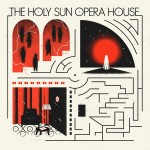
Artist: The Holy Sun Opera House (@)
Title: s/t
Format: CD & 12" + Download
Label: Hologram Opera (@)
Rated:

Title: s/t
Format: CD & 12" + Download
Label: Hologram Opera (@)
Rated:
It is rare that I do a review of an album without receiving a physical copy of the release, and lord knows I receive enough email promos from promoters, publicity agents, bands and other music hustlers. Most of them aren't even in the genres Chain D.L.K. covers, but this one qualifies. The Holy Sun Opera House is not an opera company or a cult religious organization, but rather a music project consisting of classically trained soprano and drummer Krissy Barker and composer dl Salo, out of Los Angeles. Together they weave symphonic synths and operatic vocals with heavy drums. What got me was the publicist/promotor's FFO: early Dead Can Dance, Fever Ray, Klaus Nomi. Forgive my ignorance but I have no idea who Fever Ray is, so I watched a few of their videos. Interesting experimental music both sonically and visually out of Sweden with a pretty good following, but this review is not about Fever Ray so check them out on your own time. Just looking for a frame of reference here and I got one.
The album consists of nine tracks and according to info on the duo's Bandcamp site, "The self-produced album was conceptualized as a way to describe an obsessive mind with music and inspired by the recurring dreams of singer Krissy Barker. In it is a realm of shifting rooms, dilapidated houses and passages. These unsettled rooms and spaces pose a striking confrontation of fear and anxiety from deep within." Fair enough. Opening track, "Voice of Gob" sounds heavily gothic from the get-go; heavy orchestrated synth strings with Krissy's angelic voice emerging. It's slow and stately with a simple but effective melody, and they use a real choir for backing vocals. Nice! "Passage II" is sort of an experimental drone piece of cake with operatic voice icing. The singing on "Latched On" is more pop than opera at first but once the orchestration comes in it turns operatic, quite dolorous over all. The title of the next track, "Decrepit Mansion" may seem on the nose (like something off a Halloween sound effects album) but the 3 lines of lyrics sung repeatedly in rounds has nothing to do with decrepit mansions or haunted houses, but about things one does not normally notice. Rather cool in its own way. Has anyone seen or heard the "Witch in the Attic" ? I knew there was someone there, breathing heavily at night while I'm trying to sleep, invading my dreams and turning them into nightmares. The track is a percussion-less dreamscape transitionally leading into "The Attic." The orchestration here is full-on and may remind you somewhat of early Dead Can Dance, Arcana, Gitane DeMone or even Diamanda Galas. Krissy's vibrato is intense and the music is gothic as fuck.
The penultimate song on the album is "Room That Wasn't There Before, " a cool cross between pop and opera with a very memorable melody. My only complaint about it is that the rhythm track is severely buried beneath the orchestration. A remix of this one is sorely needed. With only two tracks left, the tail of the previous slides smoothly into "Passage I" (odd that it comes after "Passage II"), another kind of orchestral ambient drone piece using cathedral-like chord progressions, which I suppose echoes the "Holy Sun" part of the group's name. Finally, there is "Room with the Rain," sung throughout in the operatic mode with a dirgy pace and symphonic orchestration. Not nearly as compelling as "Room That Wasn't There Before " but atmospherically poignant nevertheless. The Holy Sun Opera House is absolutely a project worth checking out. In spite of a few minor flaws (namely, more oomph in the percussion/rhythm department) this album holds up very well, especially for fans of the non-pop-rock gothic. (In days gone by labels such as 4AD, World Serpent or Cold Meat Industry would have signed this act in a heartbeat.) The Holy Sun Opera House is likely to appeal more to European audiences than U.S. listeners but don't let that dissuade you. There aren't many operatic rock outfits out there as a Google search will attest. (Try it; you'll get only mediocre results such as The Who's 'Tommy' and Queen's "Bohemian Rhapsody.") With the full complement of media options available (LP, CD, cassette, digital) you have no reason not to go for it.
The album consists of nine tracks and according to info on the duo's Bandcamp site, "The self-produced album was conceptualized as a way to describe an obsessive mind with music and inspired by the recurring dreams of singer Krissy Barker. In it is a realm of shifting rooms, dilapidated houses and passages. These unsettled rooms and spaces pose a striking confrontation of fear and anxiety from deep within." Fair enough. Opening track, "Voice of Gob" sounds heavily gothic from the get-go; heavy orchestrated synth strings with Krissy's angelic voice emerging. It's slow and stately with a simple but effective melody, and they use a real choir for backing vocals. Nice! "Passage II" is sort of an experimental drone piece of cake with operatic voice icing. The singing on "Latched On" is more pop than opera at first but once the orchestration comes in it turns operatic, quite dolorous over all. The title of the next track, "Decrepit Mansion" may seem on the nose (like something off a Halloween sound effects album) but the 3 lines of lyrics sung repeatedly in rounds has nothing to do with decrepit mansions or haunted houses, but about things one does not normally notice. Rather cool in its own way. Has anyone seen or heard the "Witch in the Attic" ? I knew there was someone there, breathing heavily at night while I'm trying to sleep, invading my dreams and turning them into nightmares. The track is a percussion-less dreamscape transitionally leading into "The Attic." The orchestration here is full-on and may remind you somewhat of early Dead Can Dance, Arcana, Gitane DeMone or even Diamanda Galas. Krissy's vibrato is intense and the music is gothic as fuck.
The penultimate song on the album is "Room That Wasn't There Before, " a cool cross between pop and opera with a very memorable melody. My only complaint about it is that the rhythm track is severely buried beneath the orchestration. A remix of this one is sorely needed. With only two tracks left, the tail of the previous slides smoothly into "Passage I" (odd that it comes after "Passage II"), another kind of orchestral ambient drone piece using cathedral-like chord progressions, which I suppose echoes the "Holy Sun" part of the group's name. Finally, there is "Room with the Rain," sung throughout in the operatic mode with a dirgy pace and symphonic orchestration. Not nearly as compelling as "Room That Wasn't There Before " but atmospherically poignant nevertheless. The Holy Sun Opera House is absolutely a project worth checking out. In spite of a few minor flaws (namely, more oomph in the percussion/rhythm department) this album holds up very well, especially for fans of the non-pop-rock gothic. (In days gone by labels such as 4AD, World Serpent or Cold Meat Industry would have signed this act in a heartbeat.) The Holy Sun Opera House is likely to appeal more to European audiences than U.S. listeners but don't let that dissuade you. There aren't many operatic rock outfits out there as a Google search will attest. (Try it; you'll get only mediocre results such as The Who's 'Tommy' and Queen's "Bohemian Rhapsody.") With the full complement of media options available (LP, CD, cassette, digital) you have no reason not to go for it.
France de Griessen: Dawn Breakers
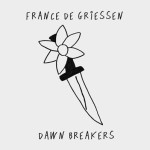
Artist: France de Griessen
Title: Dawn Breakers
Format: 12" + Download
Label: Prohibited Records (@)
Rated:

Title: Dawn Breakers
Format: 12" + Download
Label: Prohibited Records (@)
Rated:
There is a particular kind of album that does not merely ask to be listened to, but asks to be inhabited like an abandoned manor at dusk, where every room contains perfume, dust, old letters, and the suspicion that someone invisible just crossed the corridor. "Dawn Breakers" by France de Griessen belongs firmly to that category. It does not move in straight lines. It circles itself like incense smoke. It whispers, scratches, sighs, disappears behind velvet curtains, then suddenly stares directly into your face with unnerving emotional clarity.
France de Griessen has long existed in a peculiar artistic territory where folk music, cinema, performance art, romantic symbolism and gothic cabaret overlap without ever fully settling into stable form. Calling her merely a singer-songwriter feels insufficient in the same way calling Salvador Dalí “a painter” technically works while ignoring the melting elephants wandering through the background. Over the years, de Griessen has built an interdisciplinary practice touching photography, film, poetry and visual art, collaborating with figures such as Virginie Despentes and Bruce LaBruce while cultivating a singular aesthetic that merges vulnerability with ritualistic theatricality.
On "Dawn Breakers", that sensibility reaches perhaps its most distilled form. Recorded in Somerset, in the tiny English city of Wells, the album feels saturated with landscape. Not landscape in the pastoral folk sense of cheerful meadows and acoustic authenticity, but landscape as psychological architecture. The songs seem to emerge from damp stone walls, candlelit chapels, forgotten gardens and dreams interrupted just before dawn. The countryside here is not comforting. It is enchanted in the old sense of the word: beautiful, disorienting, faintly dangerous.
Musically, the record is deceptively sparse. Acoustic guitars, shruti box drones, discreet percussion, occasional piano and organ textures create a framework that often feels closer to incantation than arrangement. De Griessen’s voice remains the gravitational center throughout, shifting between fragile intimacy and something more spectral. She does not sing in a traditionally “perfect” manner, which is precisely why the performances work. Her phrasing often feels instinctive, almost trance-like, as though the songs are arriving through her rather than being carefully delivered by her. In an era where many vocal performances are polished until they resemble motivational software updates, this rawness feels strangely radical.
The influences mentioned around the album are revealing but never oppressive. Echoes of Nico appear in the funereal calm of certain refrains, while traces of Donovan emerge in the record’s strange balance of melancholy and luminous mysticism. Yet "Dawn Breakers" avoids collapsing into retro-folk cosplay because de Griessen approaches these traditions less as references than as spiritual tools. The songs do not imitate the past; they rummage through it like someone searching an attic during a thunderstorm.
“Punch Me” opens the album with unsettling directness, immediately establishing the record’s emotional duality: tenderness contaminated by bruising self-awareness. Then comes the almost absurd micro-fragment “Start All Over”, lasting four seconds, functioning less as a song than as a crack in the mirror. These abrupt interruptions recur throughout the album and become part of its grammar. De Griessen understands that fragmentation itself can create emotional continuity. Human consciousness rarely behaves like a polished narrative arc anyway. Mostly it resembles someone carrying twenty half-finished conversations through a fog.
“Cloud Cakes” may be one of the album’s most revealing titles because it encapsulates her artistic method perfectly: sweetness hovering beside instability, fantasy brushing against decay. The imagery throughout the record constantly bends physical reality into symbolic dream logic. Snow turns blue, voices become ghosts, memories mutate into living presences. At times the album feels almost synesthetic, as though colors, textures and emotional states are quietly exchanging identities behind the listener’s back.
The duet moments with Cannonball Statman add another dimension entirely. His presence introduces a faint anti-folk abrasion that prevents the record from floating entirely into ethereal abstraction. These interactions ground the songs, adding friction and occasional unpredictability. The album needs that tension. Without it, the dream might become too comfortable.
“Blue Snow” stands among the record’s emotional peaks, carrying the strongest connection to the cinematic influences surrounding de Griessen’s work. You can almost feel the ghosts of Federico Fellini and Pier Paolo Pasolini hovering somewhere nearby, not through direct imitation but through atmosphere: the sense that beauty and alienation are inseparable companions wandering through the same frame.
Then comes “July”, perhaps the album’s emotional core, where de Griessen confronts the internal multiplicity she describes in the accompanying notes. The song feels populated by invisible presences, ancient narratives surfacing and colliding inside the mind. There is something deeply human in the way she treats psychological fragmentation not as pathology but as mythology. We all carry entire choirs of contradictory voices within us. Most people simply bury them under productivity apps and supermarket loyalty cards.
What makes "Dawn Breakers" particularly compelling is its refusal to fully resolve its tensions. Is this album made of love songs, prayers, hallucinations, diary entries, occult rituals, or theatrical monologues? The answer shifts constantly. De Griessen thrives in ambiguity because ambiguity itself becomes a form of emotional truth. Life rarely provides clean symbolic categories. Most of existence is spent trying to understand whether the thing haunting you is grief, desire, memory, imagination, or merely exhaustion from living inside modern civilization’s fluorescent migraine.
And yet despite all its spectral qualities, "Dawn Breakers" never feels cold. Beneath the mysticism and surrealism lies genuine emotional urgency. De Griessen is not hiding behind aesthetics. She is using them as portals toward vulnerability. The album’s recurring concern with transformation, with bringing darkness into light without erasing the darkness itself, gives the record its quiet power.
In the end, "Dawn Breakers" resembles a strange devotional object washed ashore from another artistic era, one where symbolism still mattered, where art could be irrational without apologizing for it, where beauty and discomfort were allowed to coexist without corporate mediation. France de Griessen offers no easy catharsis here. Instead, she hands the listener a lantern and invites them deeper into the fog.
France de Griessen has long existed in a peculiar artistic territory where folk music, cinema, performance art, romantic symbolism and gothic cabaret overlap without ever fully settling into stable form. Calling her merely a singer-songwriter feels insufficient in the same way calling Salvador Dalí “a painter” technically works while ignoring the melting elephants wandering through the background. Over the years, de Griessen has built an interdisciplinary practice touching photography, film, poetry and visual art, collaborating with figures such as Virginie Despentes and Bruce LaBruce while cultivating a singular aesthetic that merges vulnerability with ritualistic theatricality.
On "Dawn Breakers", that sensibility reaches perhaps its most distilled form. Recorded in Somerset, in the tiny English city of Wells, the album feels saturated with landscape. Not landscape in the pastoral folk sense of cheerful meadows and acoustic authenticity, but landscape as psychological architecture. The songs seem to emerge from damp stone walls, candlelit chapels, forgotten gardens and dreams interrupted just before dawn. The countryside here is not comforting. It is enchanted in the old sense of the word: beautiful, disorienting, faintly dangerous.
Musically, the record is deceptively sparse. Acoustic guitars, shruti box drones, discreet percussion, occasional piano and organ textures create a framework that often feels closer to incantation than arrangement. De Griessen’s voice remains the gravitational center throughout, shifting between fragile intimacy and something more spectral. She does not sing in a traditionally “perfect” manner, which is precisely why the performances work. Her phrasing often feels instinctive, almost trance-like, as though the songs are arriving through her rather than being carefully delivered by her. In an era where many vocal performances are polished until they resemble motivational software updates, this rawness feels strangely radical.
The influences mentioned around the album are revealing but never oppressive. Echoes of Nico appear in the funereal calm of certain refrains, while traces of Donovan emerge in the record’s strange balance of melancholy and luminous mysticism. Yet "Dawn Breakers" avoids collapsing into retro-folk cosplay because de Griessen approaches these traditions less as references than as spiritual tools. The songs do not imitate the past; they rummage through it like someone searching an attic during a thunderstorm.
“Punch Me” opens the album with unsettling directness, immediately establishing the record’s emotional duality: tenderness contaminated by bruising self-awareness. Then comes the almost absurd micro-fragment “Start All Over”, lasting four seconds, functioning less as a song than as a crack in the mirror. These abrupt interruptions recur throughout the album and become part of its grammar. De Griessen understands that fragmentation itself can create emotional continuity. Human consciousness rarely behaves like a polished narrative arc anyway. Mostly it resembles someone carrying twenty half-finished conversations through a fog.
“Cloud Cakes” may be one of the album’s most revealing titles because it encapsulates her artistic method perfectly: sweetness hovering beside instability, fantasy brushing against decay. The imagery throughout the record constantly bends physical reality into symbolic dream logic. Snow turns blue, voices become ghosts, memories mutate into living presences. At times the album feels almost synesthetic, as though colors, textures and emotional states are quietly exchanging identities behind the listener’s back.
The duet moments with Cannonball Statman add another dimension entirely. His presence introduces a faint anti-folk abrasion that prevents the record from floating entirely into ethereal abstraction. These interactions ground the songs, adding friction and occasional unpredictability. The album needs that tension. Without it, the dream might become too comfortable.
“Blue Snow” stands among the record’s emotional peaks, carrying the strongest connection to the cinematic influences surrounding de Griessen’s work. You can almost feel the ghosts of Federico Fellini and Pier Paolo Pasolini hovering somewhere nearby, not through direct imitation but through atmosphere: the sense that beauty and alienation are inseparable companions wandering through the same frame.
Then comes “July”, perhaps the album’s emotional core, where de Griessen confronts the internal multiplicity she describes in the accompanying notes. The song feels populated by invisible presences, ancient narratives surfacing and colliding inside the mind. There is something deeply human in the way she treats psychological fragmentation not as pathology but as mythology. We all carry entire choirs of contradictory voices within us. Most people simply bury them under productivity apps and supermarket loyalty cards.
What makes "Dawn Breakers" particularly compelling is its refusal to fully resolve its tensions. Is this album made of love songs, prayers, hallucinations, diary entries, occult rituals, or theatrical monologues? The answer shifts constantly. De Griessen thrives in ambiguity because ambiguity itself becomes a form of emotional truth. Life rarely provides clean symbolic categories. Most of existence is spent trying to understand whether the thing haunting you is grief, desire, memory, imagination, or merely exhaustion from living inside modern civilization’s fluorescent migraine.
And yet despite all its spectral qualities, "Dawn Breakers" never feels cold. Beneath the mysticism and surrealism lies genuine emotional urgency. De Griessen is not hiding behind aesthetics. She is using them as portals toward vulnerability. The album’s recurring concern with transformation, with bringing darkness into light without erasing the darkness itself, gives the record its quiet power.
In the end, "Dawn Breakers" resembles a strange devotional object washed ashore from another artistic era, one where symbolism still mattered, where art could be irrational without apologizing for it, where beauty and discomfort were allowed to coexist without corporate mediation. France de Griessen offers no easy catharsis here. Instead, she hands the listener a lantern and invites them deeper into the fog.
False Figure: Incarnate
Artist: False Figure (@)
Title: Incarnate
Format: 12" + Download
Label: Cruel Subordination Records
Rated:
Title: Incarnate
Format: 12" + Download
Label: Cruel Subordination Records
Rated:
Post-punk has reached the age where it risks becoming its own taxidermy exhibit. Too many bands lovingly reconstruct the same grey corridors, the same skeletal basslines, the same emotionally unavailable men staring at rain through industrial windows as if they personally invented disappointment. Fortunately, Incarnate by False Figure avoids that particular museum-piece syndrome by remembering something essential: anger still has a pulse, melancholy still sweats, and politics become much more convincing when attached to actual human wounds rather than fashionable eyeliner geometry.
Released through their label Cruel Subordination Records, "Incarnate" arrives from Oakland carrying the familiar DNA of darkwave and post-punk, yet refusing to remain trapped inside genre nostalgia. The band clearly understands the tradition they inhabit, but they approach it less as retro reenactment and more as emotional infrastructure: a language for processing anxiety, manipulation, social violence, emotional exhaustion, and the slow corrosion of trust in both institutions and people.
The opening “Intro” functions like a gathering storm rather than a standalone composition, setting a tense emotional atmosphere before “Original Sin” erupts with one of the album’s strongest moments. The track balances rock wave rhythm work with a bleak lyrical perspective that feels simultaneously personal and societal. The imagery of seduction, decay, blame, and moral collapse evokes a world where destruction has become ambient background noise. Yet the song never collapses into theatrical nihilism. False Figure understand that genuine despair rarely arrives dramatically; more often it seeps slowly into daily life like damp through concrete.
Musically, the band sits somewhere between classic deathrock sharpness, darker strains of modern post-punk, and flashes of coldwave atmosphere, but without sounding overly curated by algorithmic goth playlists. There are traces of Asylum Party in the melodic sensibility, echoes of early industrial tension, and occasionally the emotional directness of darker punk traditions. Still, "Incarnate" feels less interested in aesthetic purity than emotional momentum.
“Favorite Game” shifts inward toward toxic relational dynamics, and it does so with a kind of bitter clarity that avoids melodrama. The lyrics dissect manipulation with unnerving simplicity, while the instrumentation maintains a restless propulsion underneath. The recurring sensation across the album is movement. Even when songs dwell on paralysis, betrayal, or grief, the band refuses stagnation. The emotional states remain unstable, unresolved, alive.
That sense of motion becomes one of "Incarnate"’s greatest strengths. Many contemporary post-punk albums flatten themselves into a single monochrome mood for forty-five minutes, mistaking consistency for depth. False Figure instead allow emotional contradictions to coexist. “Deseos” introduces vulnerability and exhaustion without sacrificing tension, while “Flowers in Bloom” briefly softens the sonic edges into something almost mournfully romantic.
Almost.
Because even at its gentlest, the album carries splinters under the skin.
“Flowers in Bloom” may be one of the record’s emotional high points. Its imagery of barren gardens, tenderness turning bitter, and love decomposing into memory taps into a deeply human exhaustion. The track understands that failed intimacy leaves behind strange archaeological layers. Relationships do not disappear cleanly; they linger as emotional debris scattered around ordinary life. Human beings spend years learning communication only to weaponize it creatively inside romantic relationships. Evolution remains a work in progress.
Then comes “Say Nothing”, where the album’s simmering political undercurrent fully ignites. The track channels rage toward systemic violence, social control, and institutional brutality without descending into slogan-heavy simplicity. Crucially, the anger feels earned. False Figure avoid the trap of performative radicalism because the emotional tension has already been building throughout the record. Personal trauma and political collapse are shown as interconnected systems rather than separate themes.
The urgency here recalls moments from politically conscious punk and industrial traditions, but filtered through contemporary exhaustion. The song sounds less like triumphant rebellion and more like people realizing they have been cornered for too long.
“Hand of Malice” and “Fields of Woe” deepen the album’s haunted atmosphere, leaning into dread and existential fatigue. There is an especially effective use of pacing throughout the record; shorter tracks prevent the emotional density from becoming oppressive while maintaining narrative continuity. The sequencing feels deliberate, almost cinematic in how moods bleed into one another.
The inclusion of “Julia”, originally by Asylum Party, is particularly revealing. Rather than functioning as nostalgic homage, the cover highlights False Figure’s understanding of emotional minimalism within coldwave traditions. They preserve the fragile melancholy of the original while integrating it naturally into the album’s broader emotional architecture.
Closing track “Trepidation” leaves the listener suspended between paranoia, ideological manipulation, and social fragmentation. Its repeated question, “What’s it like having your mind made up for you?”, lands with uncomfortable relevance in an era where outrage itself has become industrialized. The imagery of marching boots and fear-stricken crowds never feels historically distant. "Incarnate" recognizes how quickly societies normalize cruelty once exhaustion overtakes empathy.
What ultimately makes this album interesting is not innovation in the abstract sense. False Figure are not trying to reinvent post-punk from scratch. Instead, they revitalize it emotionally. They remember that this music originally emerged from fracture, alienation, political anxiety, and bodily tension, not merely from carefully curated vintage aesthetics and monochrome Instagram filters.
"Incarnate" breathes because its wounds still feel open. Beneath the chorus pedals, driving basslines, and nocturnal atmosphere lies something increasingly rare: sincerity sharp enough to cut through style itself.
A dark, bruised, and surprisingly human record, then. Music for sleepless cities, collapsing certainties, and all the people still trying to locate fragments of dignity while the world keeps asking them to become numb instead.
Released through their label Cruel Subordination Records, "Incarnate" arrives from Oakland carrying the familiar DNA of darkwave and post-punk, yet refusing to remain trapped inside genre nostalgia. The band clearly understands the tradition they inhabit, but they approach it less as retro reenactment and more as emotional infrastructure: a language for processing anxiety, manipulation, social violence, emotional exhaustion, and the slow corrosion of trust in both institutions and people.
The opening “Intro” functions like a gathering storm rather than a standalone composition, setting a tense emotional atmosphere before “Original Sin” erupts with one of the album’s strongest moments. The track balances rock wave rhythm work with a bleak lyrical perspective that feels simultaneously personal and societal. The imagery of seduction, decay, blame, and moral collapse evokes a world where destruction has become ambient background noise. Yet the song never collapses into theatrical nihilism. False Figure understand that genuine despair rarely arrives dramatically; more often it seeps slowly into daily life like damp through concrete.
Musically, the band sits somewhere between classic deathrock sharpness, darker strains of modern post-punk, and flashes of coldwave atmosphere, but without sounding overly curated by algorithmic goth playlists. There are traces of Asylum Party in the melodic sensibility, echoes of early industrial tension, and occasionally the emotional directness of darker punk traditions. Still, "Incarnate" feels less interested in aesthetic purity than emotional momentum.
“Favorite Game” shifts inward toward toxic relational dynamics, and it does so with a kind of bitter clarity that avoids melodrama. The lyrics dissect manipulation with unnerving simplicity, while the instrumentation maintains a restless propulsion underneath. The recurring sensation across the album is movement. Even when songs dwell on paralysis, betrayal, or grief, the band refuses stagnation. The emotional states remain unstable, unresolved, alive.
That sense of motion becomes one of "Incarnate"’s greatest strengths. Many contemporary post-punk albums flatten themselves into a single monochrome mood for forty-five minutes, mistaking consistency for depth. False Figure instead allow emotional contradictions to coexist. “Deseos” introduces vulnerability and exhaustion without sacrificing tension, while “Flowers in Bloom” briefly softens the sonic edges into something almost mournfully romantic.
Almost.
Because even at its gentlest, the album carries splinters under the skin.
“Flowers in Bloom” may be one of the record’s emotional high points. Its imagery of barren gardens, tenderness turning bitter, and love decomposing into memory taps into a deeply human exhaustion. The track understands that failed intimacy leaves behind strange archaeological layers. Relationships do not disappear cleanly; they linger as emotional debris scattered around ordinary life. Human beings spend years learning communication only to weaponize it creatively inside romantic relationships. Evolution remains a work in progress.
Then comes “Say Nothing”, where the album’s simmering political undercurrent fully ignites. The track channels rage toward systemic violence, social control, and institutional brutality without descending into slogan-heavy simplicity. Crucially, the anger feels earned. False Figure avoid the trap of performative radicalism because the emotional tension has already been building throughout the record. Personal trauma and political collapse are shown as interconnected systems rather than separate themes.
The urgency here recalls moments from politically conscious punk and industrial traditions, but filtered through contemporary exhaustion. The song sounds less like triumphant rebellion and more like people realizing they have been cornered for too long.
“Hand of Malice” and “Fields of Woe” deepen the album’s haunted atmosphere, leaning into dread and existential fatigue. There is an especially effective use of pacing throughout the record; shorter tracks prevent the emotional density from becoming oppressive while maintaining narrative continuity. The sequencing feels deliberate, almost cinematic in how moods bleed into one another.
The inclusion of “Julia”, originally by Asylum Party, is particularly revealing. Rather than functioning as nostalgic homage, the cover highlights False Figure’s understanding of emotional minimalism within coldwave traditions. They preserve the fragile melancholy of the original while integrating it naturally into the album’s broader emotional architecture.
Closing track “Trepidation” leaves the listener suspended between paranoia, ideological manipulation, and social fragmentation. Its repeated question, “What’s it like having your mind made up for you?”, lands with uncomfortable relevance in an era where outrage itself has become industrialized. The imagery of marching boots and fear-stricken crowds never feels historically distant. "Incarnate" recognizes how quickly societies normalize cruelty once exhaustion overtakes empathy.
What ultimately makes this album interesting is not innovation in the abstract sense. False Figure are not trying to reinvent post-punk from scratch. Instead, they revitalize it emotionally. They remember that this music originally emerged from fracture, alienation, political anxiety, and bodily tension, not merely from carefully curated vintage aesthetics and monochrome Instagram filters.
"Incarnate" breathes because its wounds still feel open. Beneath the chorus pedals, driving basslines, and nocturnal atmosphere lies something increasingly rare: sincerity sharp enough to cut through style itself.
A dark, bruised, and surprisingly human record, then. Music for sleepless cities, collapsing certainties, and all the people still trying to locate fragments of dignity while the world keeps asking them to become numb instead.
Death By Love: 444
Some bands are born from artistic vision. Others are born because reality detonates the previous arrangement and leaves musicians standing in the smoke holding damaged synthesizers and unresolved feelings. Death By Love clearly belongs to the second category. And honestly, that tends to produce better music. Stability is wonderful for cardiovascular health, less effective for goth-industrial records.
After the collapse of Dichro, producer and multi-instrumentalist Peter Guellard could have easily disappeared into the familiar post-band limbo of vague announcements and unfinished Dropbox folders. Instead, an unexpected creative collision with Polish vocalist Inga Habiba gave rise to something darker, sleeker, and emotionally more expansive. Their debut album 444, released through Distortion Productions, feels less like a debut and more like the documentation of two artists rapidly discovering a shared nocturnal language.
The album inhabits familiar territories: darkwave, industrial, gothic electronics, trip-hop atmospherics. Yet what makes "444" compelling is not genre allegiance but emotional architecture. Guellard and Habiba understand that darkness without tension quickly becomes costume drama. Plenty of modern darkwave records sound like attractive people sadly staring at candles while expensive reverb plugins do all the emotional labor. "444" instead carries genuine instability beneath its polished surfaces. There is longing here, exhaustion, seduction, spiritual confusion, resilience. Human wreckage, essentially. The eternal fuel source of art and late-night online conversations.
“Sellenno” opens the album like the slow unveiling of a ritual space. Habiba’s voice arrives with remarkable control, never overreaching into theatricality. She understands restraint, which in this style is invaluable. Rather than dominating the arrangements, her vocals move through them like smoke through ruined architecture. Guellard’s production meanwhile balances cinematic density with enough breathing room to avoid collapsing into gothic wallpaper.
“Cosmic Power” and “In Unity” deepen the album’s central mood: a strange mixture of vulnerability and propulsion. Rhythms pulse steadily beneath layers of shimmering synth textures, while guitars emerge not as rock gestures but as emotional weather systems. There is a subtle dialogue throughout the record between European coldwave melancholy, Eastern Asian nuances and American industrial precision, perhaps unsurprising considering the project’s transatlantic construction. The internet occasionally produces something more meaningful than targeted advertisements and collective neurological erosion.
One of the album’s greatest strengths lies in how naturally it integrates its influences. Trip-hop elements surface in the pacing and atmosphere, but never feel nostalgically borrowed from the 1990s. The gothic aesthetics avoid parody. Industrial textures appear as emotional pressure rather than brute aggression. Even the more dramatic moments maintain a sense of intimacy. “I Don’t” captures this especially well, allowing tension to simmer rather than explode.
“Strong Inside” deserves mention for how effectively it balances heaviness and momentum. The additional guitar work from Tomasz “Mechu” Wojciechowski injects a muscular undercurrent without pushing the track into metal territory. It remains elegant in its darkness, which is harder to achieve than people assume. Many artists mistake volume for intensity. "444" generally understands that true emotional heaviness often whispers.
Then there is “God”, perhaps the album’s emotional pivot point. Guellard’s vocal contributions add an almost confrontational fragility, creating one of the record’s most human moments. Not human in the triumphant self-help sense modern culture demands, but human in the older sense: uncertain creatures standing beneath incomprehensible skies while trying not to emotionally disintegrate before breakfast.
“Forest” and “Ziro” drift toward more atmospheric terrain, the latter enriched by Wojciech Lubertowicz’s duduk performance, which introduces a mournful organic texture that cuts beautifully through the electronic framework. It is one of several moments where "444" reveals its interest in spatial atmosphere rather than merely song construction. The album frequently feels architectural, as though each track were building another chamber inside an abandoned cathedral lit by malfunctioning LEDs.
The closing “Sellenno (Reprise)” stretches nearly eight minutes and wisely refuses the temptation of a grand explosive finale. Instead, it dissolves slowly into reflection, spoken word fragments, lingering textures, and emotional afterimages. The effect is less “ending” than “remaining haunted for a while”.
What ultimately elevates "444" beyond competent darkwave revivalism is its sincerity. There is no detectable cynicism in its construction. Guellard and Habiba seem genuinely invested in building emotional worlds rather than simply reproducing scene aesthetics. That matters. Dark music without emotional sincerity becomes fashion photography with drum machines.
The backstory inevitably shadows the album: a dissolved project, international collaboration, rapid creative reinvention, musicians rebuilding after rupture. Yet "444" never feels burdened by narrative baggage. Instead, it transforms instability into momentum. There is a difference between music that romanticizes darkness and music that has actually spent time wandering through it with open eyes.
In that sense, "444" succeeds beautifully. It dances with ghosts without turning them into mascots. And somewhere between Pittsburgh and ód, between collapsing pasts and uncertain futures, Death By Love managed to create a debut that feels strangely alive inside its shadows.
After the collapse of Dichro, producer and multi-instrumentalist Peter Guellard could have easily disappeared into the familiar post-band limbo of vague announcements and unfinished Dropbox folders. Instead, an unexpected creative collision with Polish vocalist Inga Habiba gave rise to something darker, sleeker, and emotionally more expansive. Their debut album 444, released through Distortion Productions, feels less like a debut and more like the documentation of two artists rapidly discovering a shared nocturnal language.
The album inhabits familiar territories: darkwave, industrial, gothic electronics, trip-hop atmospherics. Yet what makes "444" compelling is not genre allegiance but emotional architecture. Guellard and Habiba understand that darkness without tension quickly becomes costume drama. Plenty of modern darkwave records sound like attractive people sadly staring at candles while expensive reverb plugins do all the emotional labor. "444" instead carries genuine instability beneath its polished surfaces. There is longing here, exhaustion, seduction, spiritual confusion, resilience. Human wreckage, essentially. The eternal fuel source of art and late-night online conversations.
“Sellenno” opens the album like the slow unveiling of a ritual space. Habiba’s voice arrives with remarkable control, never overreaching into theatricality. She understands restraint, which in this style is invaluable. Rather than dominating the arrangements, her vocals move through them like smoke through ruined architecture. Guellard’s production meanwhile balances cinematic density with enough breathing room to avoid collapsing into gothic wallpaper.
“Cosmic Power” and “In Unity” deepen the album’s central mood: a strange mixture of vulnerability and propulsion. Rhythms pulse steadily beneath layers of shimmering synth textures, while guitars emerge not as rock gestures but as emotional weather systems. There is a subtle dialogue throughout the record between European coldwave melancholy, Eastern Asian nuances and American industrial precision, perhaps unsurprising considering the project’s transatlantic construction. The internet occasionally produces something more meaningful than targeted advertisements and collective neurological erosion.
One of the album’s greatest strengths lies in how naturally it integrates its influences. Trip-hop elements surface in the pacing and atmosphere, but never feel nostalgically borrowed from the 1990s. The gothic aesthetics avoid parody. Industrial textures appear as emotional pressure rather than brute aggression. Even the more dramatic moments maintain a sense of intimacy. “I Don’t” captures this especially well, allowing tension to simmer rather than explode.
“Strong Inside” deserves mention for how effectively it balances heaviness and momentum. The additional guitar work from Tomasz “Mechu” Wojciechowski injects a muscular undercurrent without pushing the track into metal territory. It remains elegant in its darkness, which is harder to achieve than people assume. Many artists mistake volume for intensity. "444" generally understands that true emotional heaviness often whispers.
Then there is “God”, perhaps the album’s emotional pivot point. Guellard’s vocal contributions add an almost confrontational fragility, creating one of the record’s most human moments. Not human in the triumphant self-help sense modern culture demands, but human in the older sense: uncertain creatures standing beneath incomprehensible skies while trying not to emotionally disintegrate before breakfast.
“Forest” and “Ziro” drift toward more atmospheric terrain, the latter enriched by Wojciech Lubertowicz’s duduk performance, which introduces a mournful organic texture that cuts beautifully through the electronic framework. It is one of several moments where "444" reveals its interest in spatial atmosphere rather than merely song construction. The album frequently feels architectural, as though each track were building another chamber inside an abandoned cathedral lit by malfunctioning LEDs.
The closing “Sellenno (Reprise)” stretches nearly eight minutes and wisely refuses the temptation of a grand explosive finale. Instead, it dissolves slowly into reflection, spoken word fragments, lingering textures, and emotional afterimages. The effect is less “ending” than “remaining haunted for a while”.
What ultimately elevates "444" beyond competent darkwave revivalism is its sincerity. There is no detectable cynicism in its construction. Guellard and Habiba seem genuinely invested in building emotional worlds rather than simply reproducing scene aesthetics. That matters. Dark music without emotional sincerity becomes fashion photography with drum machines.
The backstory inevitably shadows the album: a dissolved project, international collaboration, rapid creative reinvention, musicians rebuilding after rupture. Yet "444" never feels burdened by narrative baggage. Instead, it transforms instability into momentum. There is a difference between music that romanticizes darkness and music that has actually spent time wandering through it with open eyes.
In that sense, "444" succeeds beautifully. It dances with ghosts without turning them into mascots. And somewhere between Pittsburgh and ód, between collapsing pasts and uncertain futures, Death By Love managed to create a debut that feels strangely alive inside its shadows.
The Fair Attempts: Null Guide
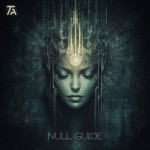
Artist: The Fair Attempts
Title: Null Guide
Format: Download Only (MP3 + Lossless)
Label: Starwing Digital
Rated:
Title: Null Guide
Format: Download Only (MP3 + Lossless)
Label: Starwing Digital
Rated:
If you’re looking for comfort, "Null Guide" is not your album. It doesn’t soothe, it doesn’t reassure, and it certainly doesn’t pretend things are fine. It stands there, arms crossed, pointing at the cracks in the walls and asking why you’re still calling it a house.
The Fair Attempts, the project of Timo Haakana and Starwing, has always operated with a strong conceptual backbone, but here that framework hardens into something closer to a manifesto. Their dystopian universe, already mapped out in fragments across earlier works and Starwing’s writing, becomes less speculative and more diagnostic. This is no longer “a possible future.” It feels like a report written from inside the present, just with the politeness stripped away.
Musically, the record plants itself firmly in the intersection of industrial rock, EBM, and darkwave, but it’s not interested in nostalgia. The machinery is familiar, sure: pounding rhythms, serrated synth lines, vocals that oscillate between command and collapse. But there’s a certain exhaustion baked into the production, as if the system keeps running not because it works, but because no one knows how to shut it down.
The opening tracks waste no time setting the tone. "Nothing’s Gonna Be Alright" is about as subtle as a siren in a concrete tunnel. It leans into repetition not just as a hook, but as a psychological tactic, hammering the same phrase until it stops feeling like a statement and starts sounding like a condition. There’s a strange clarity in that bluntness. No metaphors to hide behind, just a flat refusal of optimism.
"Freedom’s Just a Word You Say" sharpens the critique, dissecting language itself as a tool of control. The lyrics flirt with Orwellian territory, but without the academic distance. This isn’t theory, it’s lived disorientation. Words lose their anchor, meanings slip, and what’s left is a kind of semantic fatigue. The music mirrors that instability, shifting between tight, almost danceable structures and moments that feel deliberately off-balance.
By the time "Ghost Within" arrives, the focus turns inward. The external dystopia folds into something more psychological, more intimate. The “enemy” is no longer just systemic; it’s internalized, parasitic. The track plays like a quiet admission that the line between oppression and self-sabotage is thinner than anyone would like to admit.
Mid-album, "Never Again" and "It’s All Fraud" push the nihilistic thread to its logical extreme. Here, the record risks collapsing under its own weight, flirting with total negation. But instead of becoming monotonous, it gains a strange momentum. The refusal of meaning becomes its own kind of meaning, a negative space that the listener is forced to navigate. It’s not pleasant, but it is effective.
There’s also a certain dark humor lurking beneath the surface, though you have to be paying attention to catch it. Lines that verge on the absurd, exaggerated hostility, the almost theatrical intensity. It’s as if the album is aware of how far it’s pushing things and occasionally smirks at its own severity. Not enough to break the mood, just enough to keep it from becoming self-parody.
"Shadowplay" and "Anniversary of Our Destruction" expand the album’s scope again, reconnecting the personal and the societal. Time loops, cycles repeat, nothing resolves. The sense of déjà vu isn’t accidental. It’s structural. You’re not moving forward; you’re circling a drain that looks suspiciously like history.
The title track, "Null Guide", functions as a kind of thesis. Guidance, in this world, is either absent or corrupted. The idea of an external compass is dismantled, replaced by something more ambiguous: an inward turn that may or may not lead anywhere useful. It’s one of the few moments where the album allows a hint of ambiguity that isn’t immediately crushed.
By the closing stretch, particularly "The Curse" and "Inward", the record has stripped itself down to something raw and exposed. The aggression hasn’t disappeared, but it’s been internalized. What began as confrontation ends as introspection, though not the comforting kind. More like staring into a mirror that refuses to flatter you.
What makes "Null Guide" compelling isn’t just its sonic force, but its refusal to offer easy exits. Many records in this space gesture toward darkness as an aesthetic. Here, it feels structural, almost philosophical. The band isn’t asking you to agree, exactly. They’re asking you to sit with the discomfort long enough to recognize parts of it.
It’s not a fun listen, unless your idea of fun involves existential dread set to a very steady beat. But it is a coherent one. And in a landscape where meaning is often diluted into background noise, there’s something almost refreshing about an album that insists, repeatedly, that the signal is still there. You just might not like what it’s saying.
The Fair Attempts, the project of Timo Haakana and Starwing, has always operated with a strong conceptual backbone, but here that framework hardens into something closer to a manifesto. Their dystopian universe, already mapped out in fragments across earlier works and Starwing’s writing, becomes less speculative and more diagnostic. This is no longer “a possible future.” It feels like a report written from inside the present, just with the politeness stripped away.
Musically, the record plants itself firmly in the intersection of industrial rock, EBM, and darkwave, but it’s not interested in nostalgia. The machinery is familiar, sure: pounding rhythms, serrated synth lines, vocals that oscillate between command and collapse. But there’s a certain exhaustion baked into the production, as if the system keeps running not because it works, but because no one knows how to shut it down.
The opening tracks waste no time setting the tone. "Nothing’s Gonna Be Alright" is about as subtle as a siren in a concrete tunnel. It leans into repetition not just as a hook, but as a psychological tactic, hammering the same phrase until it stops feeling like a statement and starts sounding like a condition. There’s a strange clarity in that bluntness. No metaphors to hide behind, just a flat refusal of optimism.
"Freedom’s Just a Word You Say" sharpens the critique, dissecting language itself as a tool of control. The lyrics flirt with Orwellian territory, but without the academic distance. This isn’t theory, it’s lived disorientation. Words lose their anchor, meanings slip, and what’s left is a kind of semantic fatigue. The music mirrors that instability, shifting between tight, almost danceable structures and moments that feel deliberately off-balance.
By the time "Ghost Within" arrives, the focus turns inward. The external dystopia folds into something more psychological, more intimate. The “enemy” is no longer just systemic; it’s internalized, parasitic. The track plays like a quiet admission that the line between oppression and self-sabotage is thinner than anyone would like to admit.
Mid-album, "Never Again" and "It’s All Fraud" push the nihilistic thread to its logical extreme. Here, the record risks collapsing under its own weight, flirting with total negation. But instead of becoming monotonous, it gains a strange momentum. The refusal of meaning becomes its own kind of meaning, a negative space that the listener is forced to navigate. It’s not pleasant, but it is effective.
There’s also a certain dark humor lurking beneath the surface, though you have to be paying attention to catch it. Lines that verge on the absurd, exaggerated hostility, the almost theatrical intensity. It’s as if the album is aware of how far it’s pushing things and occasionally smirks at its own severity. Not enough to break the mood, just enough to keep it from becoming self-parody.
"Shadowplay" and "Anniversary of Our Destruction" expand the album’s scope again, reconnecting the personal and the societal. Time loops, cycles repeat, nothing resolves. The sense of déjà vu isn’t accidental. It’s structural. You’re not moving forward; you’re circling a drain that looks suspiciously like history.
The title track, "Null Guide", functions as a kind of thesis. Guidance, in this world, is either absent or corrupted. The idea of an external compass is dismantled, replaced by something more ambiguous: an inward turn that may or may not lead anywhere useful. It’s one of the few moments where the album allows a hint of ambiguity that isn’t immediately crushed.
By the closing stretch, particularly "The Curse" and "Inward", the record has stripped itself down to something raw and exposed. The aggression hasn’t disappeared, but it’s been internalized. What began as confrontation ends as introspection, though not the comforting kind. More like staring into a mirror that refuses to flatter you.
What makes "Null Guide" compelling isn’t just its sonic force, but its refusal to offer easy exits. Many records in this space gesture toward darkness as an aesthetic. Here, it feels structural, almost philosophical. The band isn’t asking you to agree, exactly. They’re asking you to sit with the discomfort long enough to recognize parts of it.
It’s not a fun listen, unless your idea of fun involves existential dread set to a very steady beat. But it is a coherent one. And in a landscape where meaning is often diluted into background noise, there’s something almost refreshing about an album that insists, repeatedly, that the signal is still there. You just might not like what it’s saying.