
Browse by Genre
Industrial Music / Industrial Metal / Aggro Industrial / Electro Metal
Industrial Noise / Power Noise / Harsh Noise
Synth Pop / Electro Pop / Synth-Electronica
Techno / Trance / Goa / Drum'n'Bass / Jungle / Tribal / Trip-Hop
Ambient / Electronica / Ethereal / Dub / Soundscapes / Abstract
Experimental / Avantgarde / Weird & Wired / Glitch / Noise / Field Recording
Dark / Gothic / Wave / New Wave / Dark Wave / Industrial Gothic
New Music / Downtown / Avantgarde Jazz / New Classical / World
Search Reviews
Music Reviews
JL Siegel: Fog
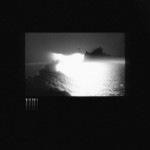
There’s a certain type of record that doesn’t really begin so much as it condenses around you, like weather you failed to notice forming. "Fog" by JL Segel belongs to that category. It doesn’t announce itself. It accumulates.
Behind the alias is Rotem Haguel, a London-based composer who seems to have taken the long route into sound: academic research, modular systems, a slow drift away from anything resembling immediacy. You can hear that patience everywhere. This is not music that wants to impress you. It wants to outlast your attention span and then quietly reshape it.
The four tracks behave less like discrete pieces and more like phases of a single condition. "Grey Into Grey" opens with that familiar ambient trick of pretending nothing is happening while, in fact, everything is already in motion. A fragile ostinato circles like a thought you can’t quite finish, while reverb stretches time into something slightly unreliable. It’s not dramatic, but it is quietly disorienting, like walking into a room and forgetting why you’re there.
"Salt Sting" deepens the atmosphere, thickening the air with a low-end presence that feels less like a drone and more like pressure. The sound design becomes denser, more granular, as if the fog has acquired texture. There’s a faint sense of menace, though not the cinematic kind. More like the suspicion that something is shifting just outside your perceptual range.
Then comes "Icy Shards", which finally breaks the surface tension. Rapid arpeggios cut through the previous murk, not as release but as escalation. It’s the most overtly active moment on the record, but even here, Segel avoids anything resembling catharsis. The movement feels compelled rather than liberated, as if the system itself has accelerated beyond comfort. It’s bright, but it’s a cold brightness, the kind that makes you squint.
By the time "Guiding Still" arrives, you might expect resolution. What you get instead is something softer, more tentative. The piece unfolds with a kind of cautious warmth, as if testing whether stability is even possible. The transitions are subtle, almost polite, and the closing gestures feel deliberately understated. No grand finale, no emotional payoff neatly tied with a bow. Just a suggestion that the fog has thinned enough for orientation to become conceivable.
What makes "Fog" quietly compelling is its restraint. Segel works within a limited palette, but he extracts surprising nuance from it. The modular synthesis isn’t used to show off complexity, but to explore gradations of presence and absence. Sounds emerge, blur, recede. Structures form, then dissolve before they can fully assert themselves. It’s less about composition in the traditional sense and more about managing thresholds: when something becomes audible, when it becomes meaningful, when it slips away again.
There’s also a faint cinematic residue running through the EP, especially in "Guiding Still", but it never fully commits to narrative. If anything, it feels like the soundtrack to a film that refuses to reveal its plot. You’re left with atmosphere, implication, and the uneasy feeling that you’ve missed something important.
Humor, if it exists here, is of the driest possible kind. The record promises guidance but delivers ambiguity. It gestures toward resolution while carefully avoiding it. It’s almost as if Segel is politely reminding you that clarity is overrated, and that maybe the point is to sit inside the blur a little longer than you’d like.
In a landscape crowded with ambient releases that either dissolve into background noise or overcompensate with conceptual weight, "Fog" occupies an awkward, interesting middle ground. It asks for attention but doesn’t beg for it. It offers structure but keeps it just out of reach. It doesn’t try to be profound, which is probably why it occasionally is.
You won’t come out of it with answers. You might not even remember specific moments. But something in your sense of time will feel slightly altered, as if the edges have softened. Which, given the title, is either very intentional or a neat coincidence. Either way, it works.
Behind the alias is Rotem Haguel, a London-based composer who seems to have taken the long route into sound: academic research, modular systems, a slow drift away from anything resembling immediacy. You can hear that patience everywhere. This is not music that wants to impress you. It wants to outlast your attention span and then quietly reshape it.
The four tracks behave less like discrete pieces and more like phases of a single condition. "Grey Into Grey" opens with that familiar ambient trick of pretending nothing is happening while, in fact, everything is already in motion. A fragile ostinato circles like a thought you can’t quite finish, while reverb stretches time into something slightly unreliable. It’s not dramatic, but it is quietly disorienting, like walking into a room and forgetting why you’re there.
"Salt Sting" deepens the atmosphere, thickening the air with a low-end presence that feels less like a drone and more like pressure. The sound design becomes denser, more granular, as if the fog has acquired texture. There’s a faint sense of menace, though not the cinematic kind. More like the suspicion that something is shifting just outside your perceptual range.
Then comes "Icy Shards", which finally breaks the surface tension. Rapid arpeggios cut through the previous murk, not as release but as escalation. It’s the most overtly active moment on the record, but even here, Segel avoids anything resembling catharsis. The movement feels compelled rather than liberated, as if the system itself has accelerated beyond comfort. It’s bright, but it’s a cold brightness, the kind that makes you squint.
By the time "Guiding Still" arrives, you might expect resolution. What you get instead is something softer, more tentative. The piece unfolds with a kind of cautious warmth, as if testing whether stability is even possible. The transitions are subtle, almost polite, and the closing gestures feel deliberately understated. No grand finale, no emotional payoff neatly tied with a bow. Just a suggestion that the fog has thinned enough for orientation to become conceivable.
What makes "Fog" quietly compelling is its restraint. Segel works within a limited palette, but he extracts surprising nuance from it. The modular synthesis isn’t used to show off complexity, but to explore gradations of presence and absence. Sounds emerge, blur, recede. Structures form, then dissolve before they can fully assert themselves. It’s less about composition in the traditional sense and more about managing thresholds: when something becomes audible, when it becomes meaningful, when it slips away again.
There’s also a faint cinematic residue running through the EP, especially in "Guiding Still", but it never fully commits to narrative. If anything, it feels like the soundtrack to a film that refuses to reveal its plot. You’re left with atmosphere, implication, and the uneasy feeling that you’ve missed something important.
Humor, if it exists here, is of the driest possible kind. The record promises guidance but delivers ambiguity. It gestures toward resolution while carefully avoiding it. It’s almost as if Segel is politely reminding you that clarity is overrated, and that maybe the point is to sit inside the blur a little longer than you’d like.
In a landscape crowded with ambient releases that either dissolve into background noise or overcompensate with conceptual weight, "Fog" occupies an awkward, interesting middle ground. It asks for attention but doesn’t beg for it. It offers structure but keeps it just out of reach. It doesn’t try to be profound, which is probably why it occasionally is.
You won’t come out of it with answers. You might not even remember specific moments. But something in your sense of time will feel slightly altered, as if the edges have softened. Which, given the title, is either very intentional or a neat coincidence. Either way, it works.
CYLiX: Beta Life

Titles matter. They’re the first small lie or truth a record tells you. Calling an album "Beta Life" suggests transition, instability, a version not quite finished. Which is either refreshingly honest or a clever way to excuse your flaws in advance. Fortunately, CYLiX don’t hide behind the concept. They lean into it.
Based in Athens, the trio - Harry G on vocals, plasmaG on keyboards, Elias C. on drums - arrive here after a debut that already positioned them within the darker corners of synthpop and EBM. Their trajectory isn’t accidental. Collaborations, remixes, festival appearances, the slow accumulation of credibility within a scene that tends to remember everything and forgive very little. "Beta Life" feels like the moment where that groundwork either crystallizes or collapses. Thankfully, it chooses the former.
“Devotion” opens with a familiar grammar: pulsing electronics, melodic restraint, a voice that balances between detachment and longing. It doesn’t try to reinvent the genre, which is probably wise. Instead, it sharpens it. There’s a clarity in the production that suggests lessons learned from the lineage of bands orbiting Front 242, particularly in how rhythm and atmosphere negotiate space.
“End Of Decay” and “As if I Had Your Wings” deepen that approach, layering emotional directness over structured electronic frameworks. CYLiX understand something crucial: in this territory, excess kills tension. So they hold back just enough. Melodies are present but not overindulgent, hooks emerge but don’t insist on being remembered forever. It’s a controlled burn.
“In this Prison” and “A Dying Love” lean more heavily into the thematic core. There’s a persistent sense of confinement, emotional and psychological, that runs through the album. Not in a theatrical, gothic way, but in something closer to quiet endurance. The kind of sadness that doesn’t perform, it just stays.
“Distorted Memories” and “Broken” play with texture and structure, introducing subtle variations that prevent the album from flattening into uniformity. These are not radical departures, but small shifts in tone and pacing that suggest a band aware of its own boundaries and willing to test them without breaking the frame entirely.
By the time “Endless Skies” arrives, there’s a hint of expansion, a slight opening in what has been a fairly enclosed emotional landscape. It doesn’t resolve anything, but it offers perspective, which is sometimes the closest thing to relief this kind of music allows.
The closing stretch - “Always never”, “Spent”, “Down the Drain” - returns to a more introspective space, though by now the album’s logic is clear. This is not about transformation in a dramatic sense. It’s about persistence, about continuing within a state rather than escaping it.
What "Beta Life" does well is avoid the trap of nostalgia as mere imitation. Yes, the DNA of classic synthpop and EBM is present, unavoidable even. But CYLiX treat it as a framework, not a script. There are echoes of the past, but they’re filtered through a contemporary sensibility that favors precision over excess.
Is it groundbreaking? Not particularly. But it doesn’t need to be. It’s coherent, focused, and emotionally consistent, which in a genre often caught between homage and stagnation is already a small achievement.
“Beta” implies something unfinished. Here, it feels more like a state of becoming. Not quite resolved, not entirely stable, but moving forward anyway. Which, if we’re being honest, is about as accurate a description of life as you’re going to get from a synthpop record.
Based in Athens, the trio - Harry G on vocals, plasmaG on keyboards, Elias C. on drums - arrive here after a debut that already positioned them within the darker corners of synthpop and EBM. Their trajectory isn’t accidental. Collaborations, remixes, festival appearances, the slow accumulation of credibility within a scene that tends to remember everything and forgive very little. "Beta Life" feels like the moment where that groundwork either crystallizes or collapses. Thankfully, it chooses the former.
“Devotion” opens with a familiar grammar: pulsing electronics, melodic restraint, a voice that balances between detachment and longing. It doesn’t try to reinvent the genre, which is probably wise. Instead, it sharpens it. There’s a clarity in the production that suggests lessons learned from the lineage of bands orbiting Front 242, particularly in how rhythm and atmosphere negotiate space.
“End Of Decay” and “As if I Had Your Wings” deepen that approach, layering emotional directness over structured electronic frameworks. CYLiX understand something crucial: in this territory, excess kills tension. So they hold back just enough. Melodies are present but not overindulgent, hooks emerge but don’t insist on being remembered forever. It’s a controlled burn.
“In this Prison” and “A Dying Love” lean more heavily into the thematic core. There’s a persistent sense of confinement, emotional and psychological, that runs through the album. Not in a theatrical, gothic way, but in something closer to quiet endurance. The kind of sadness that doesn’t perform, it just stays.
“Distorted Memories” and “Broken” play with texture and structure, introducing subtle variations that prevent the album from flattening into uniformity. These are not radical departures, but small shifts in tone and pacing that suggest a band aware of its own boundaries and willing to test them without breaking the frame entirely.
By the time “Endless Skies” arrives, there’s a hint of expansion, a slight opening in what has been a fairly enclosed emotional landscape. It doesn’t resolve anything, but it offers perspective, which is sometimes the closest thing to relief this kind of music allows.
The closing stretch - “Always never”, “Spent”, “Down the Drain” - returns to a more introspective space, though by now the album’s logic is clear. This is not about transformation in a dramatic sense. It’s about persistence, about continuing within a state rather than escaping it.
What "Beta Life" does well is avoid the trap of nostalgia as mere imitation. Yes, the DNA of classic synthpop and EBM is present, unavoidable even. But CYLiX treat it as a framework, not a script. There are echoes of the past, but they’re filtered through a contemporary sensibility that favors precision over excess.
Is it groundbreaking? Not particularly. But it doesn’t need to be. It’s coherent, focused, and emotionally consistent, which in a genre often caught between homage and stagnation is already a small achievement.
“Beta” implies something unfinished. Here, it feels more like a state of becoming. Not quite resolved, not entirely stable, but moving forward anyway. Which, if we’re being honest, is about as accurate a description of life as you’re going to get from a synthpop record.
Night Ritualz: Time Is A Thief
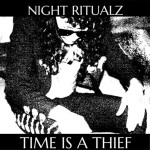
Artist: Night Ritualz
Title: Time Is A Thief
Format: CD & 12" + Download
Label: Metropolis (@)
Rated:

Title: Time Is A Thief
Format: CD & 12" + Download
Label: Metropolis (@)
Rated:
Time, allegedly, steals. Music, on a good day, steals it back for three minutes at a time and then spends it recklessly. "Time Is A Thief" by Night Ritualz operates exactly in that tension: urgency as both subject and method, as if standing still might count as a kind of disappearance.
Behind the project is Vincent Guerrero IV, based in San Antonio, who has been steadily building Night Ritualz from the ground up with a clarity of intent that borders on stubbornness. After a self-titled debut that already mapped his territory, this second album tightens the screws. Less introspection as atmosphere, more introspection under pressure. You can feel the live dimension baked into the structure, tracks shaped not just to be heard but to push bodies forward whether they like it or not.
The opening title track wastes no time pretending otherwise. It hits with a pulse that feels both mechanical and slightly anxious, like a clock that has developed opinions. Synths cut clean lines through the mix, while Guerrero’s voice sits somewhere between confession and command. There’s a lineage here, sure, with echoes of Depeche Mode in the melodic sensibility, but also something rougher, closer to the abrasion of At The Drive-In filtered through electronics.
“Living In This Bed” and “Watching TV” compress that tension into shorter forms, almost impatient in their brevity. These aren’t songs that linger; they arrive, state their case, and leave before you’ve had time to fully process them. It works, mostly because the album understands momentum as a narrative device. Slowing down would mean breaking the spell.
Then “Ya No Está” shifts the emotional register without softening the impact. The bilingual approach isn’t decorative, it’s structural. Spanish and English don’t alternate politely; they coexist, overlap, reshape the emotional weight of each line. It’s a subtle but important refusal to flatten identity into something easily consumable.
“Brown Skin” is the album’s most direct statement, and also its most exposed. There’s no attempt to disguise its intent behind abstraction. It speaks plainly about identity, survival, and visibility, which in a genre often obsessed with mood over meaning feels almost confrontational. Not comfortable, not meant to be.
“Un Tiro” pulls in the opposite direction sonically, leaning into a kind of early-’80s indie-pop lightness that almost feels suspicious in this context. But the contrast works. It’s not relief, exactly, more like a different shade of tension. Meanwhile, “Whoreish” dives headfirst into harsher territory, industrial textures grinding against EBM rhythms with a kind of controlled aggression that suggests the dancefloor as both release and battleground.
The shorter “Cluster” acts as a brief rupture, a fragment that resets the ear before the album’s final stretch. By the time “Cupid Is A Cuck” and “My Baby, My Love” arrive, there’s a noticeable shift toward something more vulnerable, though “vulnerable” here still wears a leather jacket and keeps its guard up. Emotion is present, but negotiated, filtered through rhythm and distortion.
What holds "Time Is A Thief" together is its sense of purpose. Guerrero’s self-described “fuck wave” tag might sound like a joke you’d regret explaining, but it captures something real: a refusal to behave, to settle neatly into darkwave, EBM, or post-punk categories. The album thrives in that friction, where genre becomes less a container and more a set of pressures acting on the music.
There are traces of Deftones in the way atmosphere and intensity blur into each other, but Night Ritualz is less interested in immersion than in propulsion. This is music that moves, insists, sometimes shoves.
Not subtle, not particularly interested in being timeless either. Ironically, that’s what might give it some staying power.
Behind the project is Vincent Guerrero IV, based in San Antonio, who has been steadily building Night Ritualz from the ground up with a clarity of intent that borders on stubbornness. After a self-titled debut that already mapped his territory, this second album tightens the screws. Less introspection as atmosphere, more introspection under pressure. You can feel the live dimension baked into the structure, tracks shaped not just to be heard but to push bodies forward whether they like it or not.
The opening title track wastes no time pretending otherwise. It hits with a pulse that feels both mechanical and slightly anxious, like a clock that has developed opinions. Synths cut clean lines through the mix, while Guerrero’s voice sits somewhere between confession and command. There’s a lineage here, sure, with echoes of Depeche Mode in the melodic sensibility, but also something rougher, closer to the abrasion of At The Drive-In filtered through electronics.
“Living In This Bed” and “Watching TV” compress that tension into shorter forms, almost impatient in their brevity. These aren’t songs that linger; they arrive, state their case, and leave before you’ve had time to fully process them. It works, mostly because the album understands momentum as a narrative device. Slowing down would mean breaking the spell.
Then “Ya No Está” shifts the emotional register without softening the impact. The bilingual approach isn’t decorative, it’s structural. Spanish and English don’t alternate politely; they coexist, overlap, reshape the emotional weight of each line. It’s a subtle but important refusal to flatten identity into something easily consumable.
“Brown Skin” is the album’s most direct statement, and also its most exposed. There’s no attempt to disguise its intent behind abstraction. It speaks plainly about identity, survival, and visibility, which in a genre often obsessed with mood over meaning feels almost confrontational. Not comfortable, not meant to be.
“Un Tiro” pulls in the opposite direction sonically, leaning into a kind of early-’80s indie-pop lightness that almost feels suspicious in this context. But the contrast works. It’s not relief, exactly, more like a different shade of tension. Meanwhile, “Whoreish” dives headfirst into harsher territory, industrial textures grinding against EBM rhythms with a kind of controlled aggression that suggests the dancefloor as both release and battleground.
The shorter “Cluster” acts as a brief rupture, a fragment that resets the ear before the album’s final stretch. By the time “Cupid Is A Cuck” and “My Baby, My Love” arrive, there’s a noticeable shift toward something more vulnerable, though “vulnerable” here still wears a leather jacket and keeps its guard up. Emotion is present, but negotiated, filtered through rhythm and distortion.
What holds "Time Is A Thief" together is its sense of purpose. Guerrero’s self-described “fuck wave” tag might sound like a joke you’d regret explaining, but it captures something real: a refusal to behave, to settle neatly into darkwave, EBM, or post-punk categories. The album thrives in that friction, where genre becomes less a container and more a set of pressures acting on the music.
There are traces of Deftones in the way atmosphere and intensity blur into each other, but Night Ritualz is less interested in immersion than in propulsion. This is music that moves, insists, sometimes shoves.
Not subtle, not particularly interested in being timeless either. Ironically, that’s what might give it some staying power.
Siren Section: Separation Team
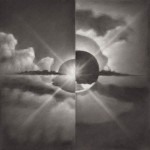
Artist: Siren Section (@)
Title: Separation Team
Format: Download Only (MP3 + Lossless)
Label: self-released
Rated:

Title: Separation Team
Format: Download Only (MP3 + Lossless)
Label: self-released
Rated:
There’s something faintly suspicious about albums that arrive after a long silence claiming urgency. Most of the time, it’s just backlog dressed up as revelation. "Separation Team" by Siren Section almost falls into that trap - until it doesn’t, and instead pulls you into something far less tidy: a record that sounds like it had no choice but to exist.
The backstory matters, unfortunately. A decade of unfinished material, a band on pause, and then a near-death experience forcing things into alignment. You’d expect catharsis. What you get instead is something colder, more ambiguous. Recovery here is not redemption; it’s just continuation, slightly warped.
Musically, Siren Section operate in that crowded intersection where post-punk gloom meets industrial abrasion and shoegaze residue. The difference is that they don’t seem particularly interested in curating their influences into something fashionable. The album feels stitched together from impulses rather than references, which gives it a strange internal logic. Tracks like “Bullet Train” and “Medicine” move with mechanical insistence, while others fracture into quieter, almost dissociative passages that feel less like transitions and more like gaps in memory.
There’s a recurring sense that the songs are circling something they can’t quite articulate without collapsing it. The titular “Separation Team” is a perfect example: it suggests unity, but only through erosion. A partnership that stabilizes by dissolving its own boundaries. Romantic, if your idea of romance includes mutual disappearance.
Lyrically, the album leans into mythic imagery - phoenixes, labyrinths, cycles devouring themselves - but it never fully commits to symbolism as explanation. These are not metaphors to decode; they’re recurring symptoms. The ouroboros isn’t there to be clever, it’s there because the record genuinely doesn’t know how to stop eating its own tail.
At times, the theatricality threatens to tip into excess. You can almost hear the band daring themselves to go further into the abyss. But just as things risk becoming overwrought, a track will pull back, reduce itself to a skeletal rhythm or a half-erased vocal line, and remind you that restraint is still part of the vocabulary. Not a common trait in records this emotionally invested in their own collapse.
The length - eighty minutes, because subtlety is apparently illegal - is both a strength and a test of patience. There are moments where the album could have benefited from less devotion to its own internal mythology. Then again, trimming it might have broken the spell. This is not a collection of songs; it’s a closed system. You either enter it or you don’t.
What lingers is not any single track, but a kind of emotional afterimage: the sense of having witnessed a process rather than a statement. "Separation Team" doesn’t resolve its tensions, it sustains them. Survival is framed not as triumph, but as an ongoing negotiation with whatever nearly erased you in the first place.
In a landscape full of carefully engineered vulnerability, Siren Section offer something less flattering: vulnerability that doesn’t clean up after itself. It sprawls, contradicts, repeats, insists. Like someone trying to explain what happened and realizing, halfway through, that the explanation is just another version of the problem.
The backstory matters, unfortunately. A decade of unfinished material, a band on pause, and then a near-death experience forcing things into alignment. You’d expect catharsis. What you get instead is something colder, more ambiguous. Recovery here is not redemption; it’s just continuation, slightly warped.
Musically, Siren Section operate in that crowded intersection where post-punk gloom meets industrial abrasion and shoegaze residue. The difference is that they don’t seem particularly interested in curating their influences into something fashionable. The album feels stitched together from impulses rather than references, which gives it a strange internal logic. Tracks like “Bullet Train” and “Medicine” move with mechanical insistence, while others fracture into quieter, almost dissociative passages that feel less like transitions and more like gaps in memory.
There’s a recurring sense that the songs are circling something they can’t quite articulate without collapsing it. The titular “Separation Team” is a perfect example: it suggests unity, but only through erosion. A partnership that stabilizes by dissolving its own boundaries. Romantic, if your idea of romance includes mutual disappearance.
Lyrically, the album leans into mythic imagery - phoenixes, labyrinths, cycles devouring themselves - but it never fully commits to symbolism as explanation. These are not metaphors to decode; they’re recurring symptoms. The ouroboros isn’t there to be clever, it’s there because the record genuinely doesn’t know how to stop eating its own tail.
At times, the theatricality threatens to tip into excess. You can almost hear the band daring themselves to go further into the abyss. But just as things risk becoming overwrought, a track will pull back, reduce itself to a skeletal rhythm or a half-erased vocal line, and remind you that restraint is still part of the vocabulary. Not a common trait in records this emotionally invested in their own collapse.
The length - eighty minutes, because subtlety is apparently illegal - is both a strength and a test of patience. There are moments where the album could have benefited from less devotion to its own internal mythology. Then again, trimming it might have broken the spell. This is not a collection of songs; it’s a closed system. You either enter it or you don’t.
What lingers is not any single track, but a kind of emotional afterimage: the sense of having witnessed a process rather than a statement. "Separation Team" doesn’t resolve its tensions, it sustains them. Survival is framed not as triumph, but as an ongoing negotiation with whatever nearly erased you in the first place.
In a landscape full of carefully engineered vulnerability, Siren Section offer something less flattering: vulnerability that doesn’t clean up after itself. It sprawls, contradicts, repeats, insists. Like someone trying to explain what happened and realizing, halfway through, that the explanation is just another version of the problem.
Erik Klinga: Hundred Tongues
Some records try to speak loudly, to convince you of their importance through sheer sonic mass. Others whisper until you lean in, forcing your ears to adjust, your pulse to slow, your sense of time to stretch a little. "Hundred Tongues" by Erik Klinga firmly belongs to the second category.
Released by Thanatosis Produktion as the second chapter in Klinga’s ongoing trilogy, following "Elusive Shimmer" (2025), the album deepens the composer’s exploration of fragile sonic ecosystems where electronics, acoustic instruments, and environmental recordings coexist like uneasy neighbors sharing the same weather.
Klinga is not your stereotypical academic electroacoustic hermit. Born in Sandviken in 1991, he has wandered through Sweden’s indie and experimental scenes as drummer, band member, and composer, performing with groups such as Simian Ghost while also cultivating a parallel practice in modular synthesis and sound art. That background shows. His music carries both the patience of contemporary composition and the instinctive pacing of someone who has spent years inside bands, listening for when a sound should enter and when it should simply stay quiet.
"Hundred Tongues" unfolds like a long meditation disguised as a sequence of pieces. The materials themselves are deceptively simple: the 16th-century Genarps organ housed at Malmö Art Museum, a Buchla modular synthesizer, and field recordings gathered from the landscapes of Skåne and Öland. Old pipes, electronic circuits, birds, wind, the faint mechanical noises of human presence. A modest cast of characters. Yet in Klinga’s hands they behave like a small society negotiating how to speak together.
The opening track, “Spring to Mind”, begins almost reluctantly. Static murmurs in the background, as if the piece is trying to remember how sound works. Gradually a low tone emerges, something between a foghorn and a distant generator. When the organ finally appears it does not announce itself with ecclesiastical grandeur. Instead it breathes carefully, tentative chords hovering between warmth and unease.
Already the album’s central tension is visible. Klinga constantly blurs boundaries between natural and artificial sound. Pipes resemble circuitry. Electronics mimic weather. At times you genuinely can’t tell whether a tone comes from centuries-old wood and metal or from a patch cable plugged into a modular system. This ambiguity becomes one of the record’s most compelling features.
“Opaque Stars” rises into a brighter register, where delicate harmonic threads stretch upward like thin beams of light. The organ’s upper frequencies shimmer alongside electronic overtones until both dissolve into something resembling birdsong. This is no coincidence. Klinga’s work often circles around the idea that human music grew from listening to animals, especially birds, and the album gently reconstructs that ancient dialogue.
That idea reaches its most poetic form in “Conspiracy of Silence”, where recordings of a collared flycatcher weave through trembling organ pipes. The bird sings with casual virtuosity while the human instrument answers with slow, slightly weary chords. The exchange feels oddly philosophical. One voice ephemeral, the other monumental. Yet the bird easily outmaneuvers the organ in melodic agility, which is a mildly humbling reminder that nature has been composing longer than we have.
The centrepiece, the eighteen-minute “Hundred Tongues”, gathers the album’s ideas into a single extended landscape. Crackling noises, distant murmurs, and faint mechanical sounds blur into a shifting acoustic fog. Organ clusters swell from beneath while Buchla tones hover above like cold satellites. At certain moments the whole mass locks onto a single sustained pitch that glows with almost painful intensity. Then it dissolves again into rustling leaves, footsteps, and the faint noises of an audience shifting in their seats.
These traces of human presence are important. Klinga includes recordings from several live performances, and the occasional cough or chair creak remains in the mix like a ghostly watermark. It reminds you that this music exists not in some abstract electronic void but in real rooms, with people breathing quietly while the sound unfolds around them.
As the piece fades, the sonic environment gradually returns to ordinary life: bicycle wheels, construction noise, distant traffic. After nearly an hour spent inside Klinga’s attentive listening, those everyday sounds suddenly feel strangely musical. Irritating, perhaps, but musical nonetheless.
That might be the album’s quiet trick. "Hundred Tongues" doesn’t overwhelm the listener with spectacle. Instead it recalibrates perception. The record slows you down, forces your ears to track microscopic changes in timbre and space, until even the smallest sonic event becomes significant.
It is tempting to describe the music as dark ambient or electroacoustic minimalism, and technically that would not be wrong. But those labels miss the point slightly. Klinga is less interested in genre than in relationships between sounds: organ pipes conversing with circuits, birds answering instruments, field recordings slipping into musical structure.
The result is music that feels ancient and futuristic at the same time. A 16th-century organ and a Buchla synthesizer speaking through the same breath. Birds singing alongside modular oscillators. A quiet reminder that the world has always been full of voices, most of which we simply forget to hear.
Human culture has spent centuries building louder instruments, bigger orchestras, stronger amplifiers. Klinga instead does the opposite. He lowers the volume of the world until listening itself becomes the main event. Which, considering how badly humans usually listen to anything, might be the most radical gesture of all.
Released by Thanatosis Produktion as the second chapter in Klinga’s ongoing trilogy, following "Elusive Shimmer" (2025), the album deepens the composer’s exploration of fragile sonic ecosystems where electronics, acoustic instruments, and environmental recordings coexist like uneasy neighbors sharing the same weather.
Klinga is not your stereotypical academic electroacoustic hermit. Born in Sandviken in 1991, he has wandered through Sweden’s indie and experimental scenes as drummer, band member, and composer, performing with groups such as Simian Ghost while also cultivating a parallel practice in modular synthesis and sound art. That background shows. His music carries both the patience of contemporary composition and the instinctive pacing of someone who has spent years inside bands, listening for when a sound should enter and when it should simply stay quiet.
"Hundred Tongues" unfolds like a long meditation disguised as a sequence of pieces. The materials themselves are deceptively simple: the 16th-century Genarps organ housed at Malmö Art Museum, a Buchla modular synthesizer, and field recordings gathered from the landscapes of Skåne and Öland. Old pipes, electronic circuits, birds, wind, the faint mechanical noises of human presence. A modest cast of characters. Yet in Klinga’s hands they behave like a small society negotiating how to speak together.
The opening track, “Spring to Mind”, begins almost reluctantly. Static murmurs in the background, as if the piece is trying to remember how sound works. Gradually a low tone emerges, something between a foghorn and a distant generator. When the organ finally appears it does not announce itself with ecclesiastical grandeur. Instead it breathes carefully, tentative chords hovering between warmth and unease.
Already the album’s central tension is visible. Klinga constantly blurs boundaries between natural and artificial sound. Pipes resemble circuitry. Electronics mimic weather. At times you genuinely can’t tell whether a tone comes from centuries-old wood and metal or from a patch cable plugged into a modular system. This ambiguity becomes one of the record’s most compelling features.
“Opaque Stars” rises into a brighter register, where delicate harmonic threads stretch upward like thin beams of light. The organ’s upper frequencies shimmer alongside electronic overtones until both dissolve into something resembling birdsong. This is no coincidence. Klinga’s work often circles around the idea that human music grew from listening to animals, especially birds, and the album gently reconstructs that ancient dialogue.
That idea reaches its most poetic form in “Conspiracy of Silence”, where recordings of a collared flycatcher weave through trembling organ pipes. The bird sings with casual virtuosity while the human instrument answers with slow, slightly weary chords. The exchange feels oddly philosophical. One voice ephemeral, the other monumental. Yet the bird easily outmaneuvers the organ in melodic agility, which is a mildly humbling reminder that nature has been composing longer than we have.
The centrepiece, the eighteen-minute “Hundred Tongues”, gathers the album’s ideas into a single extended landscape. Crackling noises, distant murmurs, and faint mechanical sounds blur into a shifting acoustic fog. Organ clusters swell from beneath while Buchla tones hover above like cold satellites. At certain moments the whole mass locks onto a single sustained pitch that glows with almost painful intensity. Then it dissolves again into rustling leaves, footsteps, and the faint noises of an audience shifting in their seats.
These traces of human presence are important. Klinga includes recordings from several live performances, and the occasional cough or chair creak remains in the mix like a ghostly watermark. It reminds you that this music exists not in some abstract electronic void but in real rooms, with people breathing quietly while the sound unfolds around them.
As the piece fades, the sonic environment gradually returns to ordinary life: bicycle wheels, construction noise, distant traffic. After nearly an hour spent inside Klinga’s attentive listening, those everyday sounds suddenly feel strangely musical. Irritating, perhaps, but musical nonetheless.
That might be the album’s quiet trick. "Hundred Tongues" doesn’t overwhelm the listener with spectacle. Instead it recalibrates perception. The record slows you down, forces your ears to track microscopic changes in timbre and space, until even the smallest sonic event becomes significant.
It is tempting to describe the music as dark ambient or electroacoustic minimalism, and technically that would not be wrong. But those labels miss the point slightly. Klinga is less interested in genre than in relationships between sounds: organ pipes conversing with circuits, birds answering instruments, field recordings slipping into musical structure.
The result is music that feels ancient and futuristic at the same time. A 16th-century organ and a Buchla synthesizer speaking through the same breath. Birds singing alongside modular oscillators. A quiet reminder that the world has always been full of voices, most of which we simply forget to hear.
Human culture has spent centuries building louder instruments, bigger orchestras, stronger amplifiers. Klinga instead does the opposite. He lowers the volume of the world until listening itself becomes the main event. Which, considering how badly humans usually listen to anything, might be the most radical gesture of all.