
Browse by Genre
Industrial Music / Industrial Metal / Aggro Industrial / Electro Metal
Industrial Noise / Power Noise / Harsh Noise
Synth Pop / Electro Pop / Synth-Electronica
Techno / Trance / Goa / Drum'n'Bass / Jungle / Tribal / Trip-Hop
Ambient / Electronica / Ethereal / Dub / Soundscapes / Abstract
Experimental / Avantgarde / Weird & Wired / Glitch / Noise / Field Recording
Dark / Gothic / Wave / New Wave / Dark Wave / Industrial Gothic
New Music / Downtown / Avantgarde Jazz / New Classical / World
Search Reviews
Music Reviews
Dééfait: s/t
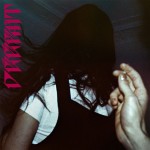
This EP does not introduce itself. It grabs you by the collar, mutters something in three languages, and drags you into a poorly lit room where repetition is law and volume is a physical condition. "Dééfait" is not interested in charm, balance, or your long-term wellbeing. It is interested in trance. Everything else is optional.
Formed in 2023 and already steeped in sweat and basement acoustics, Dééfait operates somewhere between krautrock’s obsessive forward motion, noise rock’s abrasion, and a kind of decaying psychedelia that smells faintly of ritual smoke and damp concrete. The lineup matters here. Two guitars that don’t negotiate, a bass that thickens the air rather than outlining it, drums that push relentlessly without ever quite settling, and Ric Lara’s voice, which doesn’t sing so much as inhabit multiple states of urgency at once.
The EP unfolds as six extended incantations. These are not songs in the traditional sense. There are no hooks waiting to rescue you, no choruses waving from a safe distance. Instead, each track behaves like a loop under pressure, stretching and deforming until something gives. What breaks is usually avoiding discomfort.
"We Love Each Other So Much That We Won’t Belong To Any Species Anymore" opens the record with a title that already sounds like a manifesto scribbled during a sleepless night. The track itself moves like a collective vow, desire and violence braided together. Love here is not sentimental. It’s corrosive, ecstatic, and oddly tender in its refusal to stay within recognizable forms.
"Molokh" sinks deeper, chewing on sacrifice and chemical imagery with a slow, punishing patience. The guitars feel less like riffs and more like surfaces being scraped. "BONDBONDBOND" tightens the focus, voices tangling and untangling in a sensual spiral that keeps slipping into compulsion. It’s uncomfortable in a deliberate way, like watching something you’re not sure you’re supposed to witness.
On the B-side, "Comatose Big Sun" drags heat and lethargy into the same space, while "Al’Ether" detonates whatever restraint was left. This is where Dééfait sounds closest to a live animal. Rhythms convulse, guitars surge, and the whole thing threatens to collapse under its own momentum, but never quite does. It’s exhausting. It’s effective.
The closer, "Wow! Ferreri Cooked For Us", ends the EP with a dark grin. Words are chewed, spat out, reprocessed. It feels like satire performed with clenched teeth. If this is humor, it’s the kind that laughs while the room is still on fire.
Recorded in a deliberately raw, DIY context and mixed without attempting to civilize it, the sound captures the band’s physical impact rather than polishing it into something respectable. References float around easily, from proto-punk savagery to krautrock repetition and noise extremism, but the EP never feels derivative. It feels inhabited.
Dééfait makes music like a ceremony without doctrine. Masks are inverted, roles dissolve, and repetition becomes both weapon and refuge. This debut doesn’t explain itself, doesn’t justify its intensity, and doesn’t care if you’re ready. It simply insists. And once it’s done, you’re left slightly disoriented, a bit drained, and strangely alert. Which, in this case, counts as success.
Formed in 2023 and already steeped in sweat and basement acoustics, Dééfait operates somewhere between krautrock’s obsessive forward motion, noise rock’s abrasion, and a kind of decaying psychedelia that smells faintly of ritual smoke and damp concrete. The lineup matters here. Two guitars that don’t negotiate, a bass that thickens the air rather than outlining it, drums that push relentlessly without ever quite settling, and Ric Lara’s voice, which doesn’t sing so much as inhabit multiple states of urgency at once.
The EP unfolds as six extended incantations. These are not songs in the traditional sense. There are no hooks waiting to rescue you, no choruses waving from a safe distance. Instead, each track behaves like a loop under pressure, stretching and deforming until something gives. What breaks is usually avoiding discomfort.
"We Love Each Other So Much That We Won’t Belong To Any Species Anymore" opens the record with a title that already sounds like a manifesto scribbled during a sleepless night. The track itself moves like a collective vow, desire and violence braided together. Love here is not sentimental. It’s corrosive, ecstatic, and oddly tender in its refusal to stay within recognizable forms.
"Molokh" sinks deeper, chewing on sacrifice and chemical imagery with a slow, punishing patience. The guitars feel less like riffs and more like surfaces being scraped. "BONDBONDBOND" tightens the focus, voices tangling and untangling in a sensual spiral that keeps slipping into compulsion. It’s uncomfortable in a deliberate way, like watching something you’re not sure you’re supposed to witness.
On the B-side, "Comatose Big Sun" drags heat and lethargy into the same space, while "Al’Ether" detonates whatever restraint was left. This is where Dééfait sounds closest to a live animal. Rhythms convulse, guitars surge, and the whole thing threatens to collapse under its own momentum, but never quite does. It’s exhausting. It’s effective.
The closer, "Wow! Ferreri Cooked For Us", ends the EP with a dark grin. Words are chewed, spat out, reprocessed. It feels like satire performed with clenched teeth. If this is humor, it’s the kind that laughs while the room is still on fire.
Recorded in a deliberately raw, DIY context and mixed without attempting to civilize it, the sound captures the band’s physical impact rather than polishing it into something respectable. References float around easily, from proto-punk savagery to krautrock repetition and noise extremism, but the EP never feels derivative. It feels inhabited.
Dééfait makes music like a ceremony without doctrine. Masks are inverted, roles dissolve, and repetition becomes both weapon and refuge. This debut doesn’t explain itself, doesn’t justify its intensity, and doesn’t care if you’re ready. It simply insists. And once it’s done, you’re left slightly disoriented, a bit drained, and strangely alert. Which, in this case, counts as success.
Durán Vázquez + Kloob: Vinum Sabbati, In the Dawn of Science Fiction
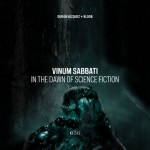
Artist: Durán Vázquez + Kloob (@)
Title: Vinum Sabbati, In the Dawn of Science Fiction
Format: CD + Download
Label: Crónica (@)
Rated:

Title: Vinum Sabbati, In the Dawn of Science Fiction
Format: CD + Download
Label: Crónica (@)
Rated:
There are albums that flirt with darkness, and then there are albums that brew it slowly, like a dubious tincture simmering in a back room where the light never quite arrives. "Vinum Sabbati, In the Dawn of Science Fiction" belongs to the latter. Durán Vázquez and Kloob don’t just reference Arthur Machen’s unsettling "Novel of the White Powder" - they distill it, inhale the fumes, and then calmly invite the listener to do the same, warning label already peeled off.
Both artists come with long electronic pedigrees, but this is not a nostalgic handshake between veterans. Vázquez, long associated with Crónica’s austere and conceptually sharp catalog, brings a rigorously hands-on approach to sound: no generative tricks, no algorithmic safety nets, just legacy software pushed until it starts behaving like a nervous system. Kloob, whose path runs from subterranean dance music to a more rarefied ambient practice, supplies an instinct for atmosphere that knows when to envelop and when to withdraw. Together, they operate less like collaborators and more like accomplices.
The Machen reference is crucial, not as literary garnish but as structural DNA. In the original text, "Vinum Sabbati" is a substance that alters its subjects from the inside out, turning latent corruption into something grotesquely visible. The music mirrors this process with unnerving patience. Sounds rarely arrive fully formed; they seep in, coagulate, and mutate. Drones curdle. Textures itch. Rhythms appear briefly, only to be swallowed by something thicker and less cooperative.
The opening “Prelude to Dreadful Confessions by a Doctor” establishes the album’s clinical tone: a cold, observational distance that paradoxically heightens the horror. By the time tracks like “Devil’s Pharmacy” and “The Rotten Limb” unfold, the sound design has become almost corporeal - less electronic music than a study in sonic pathology. There’s a dry humor lurking here too, in the refusal to dramatize. The titles scream Grand Guignol; the music responds with a raised eyebrow and a scalpel.
What makes the record particularly effective is its sense of restraint. Even at its most oppressive, it avoids the temptation to overwhelm. Dynamic range is treated as a moral issue: silences feel complicit, low frequencies feel invasive, and sudden shifts in density land like unwanted diagnoses. “Ominous Remedy - Transcending Human Condition” stretches this tension beautifully, balancing slow-burning dread with a strange, almost ritualistic calm, as if transcendence were just another side effect listed in small print.
By the closing “Scientific Horror”, the album has completed its transformation. Fear here is not theatrical but procedural - administered carefully, observed closely, and left unresolved. The dedication, “In memory of those who did not survive the medicine”, stops being metaphorical and starts feeling uncomfortably precise.
"Vinum Sabbati, In the Dawn of Science Fiction" is not an easy listen, nor does it pretend to be. It’s an album that understands horror as a process rather than an event, and science fiction as an emotional condition before it ever became a genre. Durán Vázquez and Kloob don’t offer catharsis; they offer exposure. Drink at your own risk.
Both artists come with long electronic pedigrees, but this is not a nostalgic handshake between veterans. Vázquez, long associated with Crónica’s austere and conceptually sharp catalog, brings a rigorously hands-on approach to sound: no generative tricks, no algorithmic safety nets, just legacy software pushed until it starts behaving like a nervous system. Kloob, whose path runs from subterranean dance music to a more rarefied ambient practice, supplies an instinct for atmosphere that knows when to envelop and when to withdraw. Together, they operate less like collaborators and more like accomplices.
The Machen reference is crucial, not as literary garnish but as structural DNA. In the original text, "Vinum Sabbati" is a substance that alters its subjects from the inside out, turning latent corruption into something grotesquely visible. The music mirrors this process with unnerving patience. Sounds rarely arrive fully formed; they seep in, coagulate, and mutate. Drones curdle. Textures itch. Rhythms appear briefly, only to be swallowed by something thicker and less cooperative.
The opening “Prelude to Dreadful Confessions by a Doctor” establishes the album’s clinical tone: a cold, observational distance that paradoxically heightens the horror. By the time tracks like “Devil’s Pharmacy” and “The Rotten Limb” unfold, the sound design has become almost corporeal - less electronic music than a study in sonic pathology. There’s a dry humor lurking here too, in the refusal to dramatize. The titles scream Grand Guignol; the music responds with a raised eyebrow and a scalpel.
What makes the record particularly effective is its sense of restraint. Even at its most oppressive, it avoids the temptation to overwhelm. Dynamic range is treated as a moral issue: silences feel complicit, low frequencies feel invasive, and sudden shifts in density land like unwanted diagnoses. “Ominous Remedy - Transcending Human Condition” stretches this tension beautifully, balancing slow-burning dread with a strange, almost ritualistic calm, as if transcendence were just another side effect listed in small print.
By the closing “Scientific Horror”, the album has completed its transformation. Fear here is not theatrical but procedural - administered carefully, observed closely, and left unresolved. The dedication, “In memory of those who did not survive the medicine”, stops being metaphorical and starts feeling uncomfortably precise.
"Vinum Sabbati, In the Dawn of Science Fiction" is not an easy listen, nor does it pretend to be. It’s an album that understands horror as a process rather than an event, and science fiction as an emotional condition before it ever became a genre. Durán Vázquez and Kloob don’t offer catharsis; they offer exposure. Drink at your own risk.
Moljebka Pvlse: An Expression Of A Poetry That Was Lost
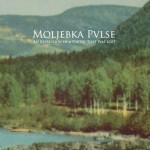
Artist: Moljebka Pvlse (@)
Title: An Expression Of A Poetry That Was Lost
Format: CD & 12" + Download
Label: Zoharum (http://zoharum.com/) (@)
Rated:

Title: An Expression Of A Poetry That Was Lost
Format: CD & 12" + Download
Label: Zoharum (http://zoharum.com/) (@)
Rated:
Some records don’t arrive shouting their relevance. They drift in quietly, take off their shoes, and sit with you until the room changes temperature. "An Expression Of A Poetry That Was Lost" is very much that kind of presence: unassuming, patient, and stubbornly uninterested in spectacle. It doesn’t chase your attention. It waits for it to ripen.
Moljebka Pvlse - the long-running Swedish-German project - has always worked in this slow, deliberate register. Their music has never been about narrative in the conventional sense, but about states: suspended moods, half-lit emotional rooms, the sensation of memory being gently rearranged while you’re not looking. Here, with a four-piece lineup once again in play, they refine that approach rather than reinvent it, and the confidence shows.
The album consists of two extended compositions, "Memories" and "Dreams", which is already a small manifesto. No fragmentation, no playlist logic, no rush. Each piece unfolds like a long breath held underwater - electronics and live instruments entwined until their borders blur. Drones hum with a warmth that feels almost physical, while melodic fragments appear, dissolve, and reappear altered, as if they’ve aged a few years in the meantime.
What’s striking is the balance between light and shadow. There are darker undercurrents here - moments where the sound thickens, where harmonies cloud over - but they never curdle into despair. Instead, they act as contrast, making the more exotic tones and reflective passages glow brighter. The “exotic” element, often abused as a lazy descriptor, is handled with restraint: not postcard imagery, but fleeting scents, distant textures, suggestions rather than statements. Think less airport souvenir, more half-remembered place you’re no longer sure you’ve actually visited.
There’s also a peculiar clarity to the record. Despite the density of the drones, nothing feels overloaded. Each sound seems to know exactly why it’s there - no spiritual wallpaper, no ambient filler politely pretending to be profound. The title speaks of a poetry that was lost, but the music doesn’t mourn it. It reconstructs it from fragments, accepting gaps, silences, and ambiguity as part of the sonic language.
If there’s humor here, it’s of the driest kind: the quiet audacity of releasing a 45-minute album in 2025 that asks you to stop multitasking and simply listen. No hooks, no climaxes, no algorithm-friendly moments. Just time, stretched and treated with care.
"An Expression Of A Poetry That Was Lost" doesn’t try to dazzle or convert. It offers continuity - proof that Moljebka Pvlse still has something precise and personal to articulate, and that subtlety, when practiced with conviction, remains a radical gesture. This is music that doesn’t insist on meaning, but leaves space for it to emerge on its own terms. And once it does, it tends to linger, like a sentence you didn’t fully understand at first, but keep returning to anyway.
Moljebka Pvlse - the long-running Swedish-German project - has always worked in this slow, deliberate register. Their music has never been about narrative in the conventional sense, but about states: suspended moods, half-lit emotional rooms, the sensation of memory being gently rearranged while you’re not looking. Here, with a four-piece lineup once again in play, they refine that approach rather than reinvent it, and the confidence shows.
The album consists of two extended compositions, "Memories" and "Dreams", which is already a small manifesto. No fragmentation, no playlist logic, no rush. Each piece unfolds like a long breath held underwater - electronics and live instruments entwined until their borders blur. Drones hum with a warmth that feels almost physical, while melodic fragments appear, dissolve, and reappear altered, as if they’ve aged a few years in the meantime.
What’s striking is the balance between light and shadow. There are darker undercurrents here - moments where the sound thickens, where harmonies cloud over - but they never curdle into despair. Instead, they act as contrast, making the more exotic tones and reflective passages glow brighter. The “exotic” element, often abused as a lazy descriptor, is handled with restraint: not postcard imagery, but fleeting scents, distant textures, suggestions rather than statements. Think less airport souvenir, more half-remembered place you’re no longer sure you’ve actually visited.
There’s also a peculiar clarity to the record. Despite the density of the drones, nothing feels overloaded. Each sound seems to know exactly why it’s there - no spiritual wallpaper, no ambient filler politely pretending to be profound. The title speaks of a poetry that was lost, but the music doesn’t mourn it. It reconstructs it from fragments, accepting gaps, silences, and ambiguity as part of the sonic language.
If there’s humor here, it’s of the driest kind: the quiet audacity of releasing a 45-minute album in 2025 that asks you to stop multitasking and simply listen. No hooks, no climaxes, no algorithm-friendly moments. Just time, stretched and treated with care.
"An Expression Of A Poetry That Was Lost" doesn’t try to dazzle or convert. It offers continuity - proof that Moljebka Pvlse still has something precise and personal to articulate, and that subtlety, when practiced with conviction, remains a radical gesture. This is music that doesn’t insist on meaning, but leaves space for it to emerge on its own terms. And once it does, it tends to linger, like a sentence you didn’t fully understand at first, but keep returning to anyway.
The Arms of Someone New: Susan Sleepwalking
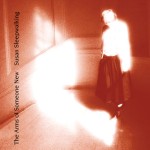
Artist: The Arms of Someone New (@)
Title: Susan Sleepwalking
Format: CD + Download
Label: Projekt (@)
Rated:
Title: Susan Sleepwalking
Format: CD + Download
Label: Projekt (@)
Rated:
There’s something quietly defiant about "Susan Sleepwalking" resurfacing forty years later, freshly remastered and unapologetically nocturnal. Not a comeback engineered for algorithms, but a slow reappearance - like a familiar figure you spot at dusk and aren’t sure is real until they pass close enough to breathe. The Arms of Someone New never chased the spotlight in 1985, and the album still doesn’t beg for attention now. It simply waits, confident that the right ears will wander by.
Formed by Steve Jones and Mel Eberle in the college-town half-light of Champaign-Urbana, The Arms of Someone New occupied a peculiar space even back then: adjacent to post-punk, flirting with college rock, but fundamentally invested in mood rather than momentum. "Susan Sleepwalking" was their opening statement, and it sounds like one - tentative, intimate, and stubbornly interior. The songs don’t rush. They drift, circle, hesitate. If this were cinema, it would be all lingering shots and meaningful silences.
The 2025 remaster doesn’t try to modernize the record, and that’s its greatest strength. Instead, it sharpens what was already there: the glassy synths, the soft mechanical pulse of early drum machines, guitars that feel less strummed than exhaled. Tracks like “St. Catherine” and “The Fisherman” retain their fragile gravity, suspended between romantic longing and emotional reserve. Vocals arrive veiled, never quite center stage, as if privacy itself were part of the arrangement.
What becomes clearer with time - and with better resolution - is how deliberate the restraint always was. These songs aren’t unfinished; they’re underlit. “With Louise” and “Susan Slept Here” don’t tell stories so much as suggest the existence of one just outside the frame. The effect is quietly addictive. You lean in, not because the band demands it, but because they refuse to spell things out.
The second disc, packed with demos, alternates, and rarities, acts like a sketchbook left open on a desk. You hear ideas branching, looping back, sometimes collapsing. It’s less about uncovering “lost classics” than about understanding the band’s internal logic - how repetition, minimalism, and atmosphere were not limitations, but chosen tools. Even at their roughest, these pieces carry the same inward pull.
Then there’s "Susan Dreaming", the third disc, which could have easily felt like an unnecessary appendix. Instead, it reframes the album through a new lens. Jones and Eberle reprocess the original material into an ambient-leaning electronic landscape that feels less like revisionism and more like afterimage. The melodies dissolve, rhythms evaporate, and what remains is pure residue - emotional dust, gently rearranged. It’s not nostalgic; it’s reflective, like revisiting a place you once lived in but now only recognize by smell and light.
What’s striking, listening now, is how little "Susan Sleepwalking" has aged - or perhaps how unconcerned it is with time altogether. It doesn’t sound retro so much as sidestepped by history. In an era obsessed with maximalism and confession-as-content, its quiet opacity feels almost radical. This is music that trusts ambiguity, that believes understatement can carry weight, that understands melancholy doesn’t need to announce itself loudly to linger.
"Susan Sleepwalking" remains what it always was: a record for insomniacs, wanderers, and people who prefer the long way home. The remaster doesn’t rewrite its story; it simply lets it speak a little more clearly in the dark. And if you miss its meaning on first listen, don’t worry - it was never meant to be fully awake anyway.
Formed by Steve Jones and Mel Eberle in the college-town half-light of Champaign-Urbana, The Arms of Someone New occupied a peculiar space even back then: adjacent to post-punk, flirting with college rock, but fundamentally invested in mood rather than momentum. "Susan Sleepwalking" was their opening statement, and it sounds like one - tentative, intimate, and stubbornly interior. The songs don’t rush. They drift, circle, hesitate. If this were cinema, it would be all lingering shots and meaningful silences.
The 2025 remaster doesn’t try to modernize the record, and that’s its greatest strength. Instead, it sharpens what was already there: the glassy synths, the soft mechanical pulse of early drum machines, guitars that feel less strummed than exhaled. Tracks like “St. Catherine” and “The Fisherman” retain their fragile gravity, suspended between romantic longing and emotional reserve. Vocals arrive veiled, never quite center stage, as if privacy itself were part of the arrangement.
What becomes clearer with time - and with better resolution - is how deliberate the restraint always was. These songs aren’t unfinished; they’re underlit. “With Louise” and “Susan Slept Here” don’t tell stories so much as suggest the existence of one just outside the frame. The effect is quietly addictive. You lean in, not because the band demands it, but because they refuse to spell things out.
The second disc, packed with demos, alternates, and rarities, acts like a sketchbook left open on a desk. You hear ideas branching, looping back, sometimes collapsing. It’s less about uncovering “lost classics” than about understanding the band’s internal logic - how repetition, minimalism, and atmosphere were not limitations, but chosen tools. Even at their roughest, these pieces carry the same inward pull.
Then there’s "Susan Dreaming", the third disc, which could have easily felt like an unnecessary appendix. Instead, it reframes the album through a new lens. Jones and Eberle reprocess the original material into an ambient-leaning electronic landscape that feels less like revisionism and more like afterimage. The melodies dissolve, rhythms evaporate, and what remains is pure residue - emotional dust, gently rearranged. It’s not nostalgic; it’s reflective, like revisiting a place you once lived in but now only recognize by smell and light.
What’s striking, listening now, is how little "Susan Sleepwalking" has aged - or perhaps how unconcerned it is with time altogether. It doesn’t sound retro so much as sidestepped by history. In an era obsessed with maximalism and confession-as-content, its quiet opacity feels almost radical. This is music that trusts ambiguity, that believes understatement can carry weight, that understands melancholy doesn’t need to announce itself loudly to linger.
"Susan Sleepwalking" remains what it always was: a record for insomniacs, wanderers, and people who prefer the long way home. The remaster doesn’t rewrite its story; it simply lets it speak a little more clearly in the dark. And if you miss its meaning on first listen, don’t worry - it was never meant to be fully awake anyway.
Lovelorn Dolls: True Crimes EP

Artist: Lovelorn Dolls (@)
Title: True Crimes EP
Format: Download Only (MP3 + Lossless)
Label: Alfa Matrix (@)
Rated:
Title: True Crimes EP
Format: Download Only (MP3 + Lossless)
Label: Alfa Matrix (@)
Rated:
There’s a particular kind of chill that "True Crimes" traffics in: not the cheap jump-scare kind, but the slow, adhesive unease that sticks to your clothes and follows you home. With this four-track EP, Lovelorn Dolls take a sharp left turn into the alleyways of true crime lore, and somehow manage not to slip on the ethical banana peel that usually waits there, grinning.
Active for over a decade now, the Belgian duo - fronted by the unmistakable presence of Kristell - have always thrived on contrasts: sweetness laced with poison, pop hooks framed by gothic gloom, innocence flirting shamelessly with the abyss. Here, that duality becomes the concept itself. "True Crimes" is obsessed with voices that were silenced too early, stories mangled by time, media, and myth. The EP doesn’t reenact these tragedies so much as listen to them, ears pressed against the wall, trying to catch what still murmurs.
Musically, the formula is familiar but sharpened. Guitars arrive muscular and slightly theatrical, synths glow with a cold neon patience, and industrial touches rumble like distant machinery in an abandoned warehouse. Kristell’s vocals remain the emotional pivot: capable of sounding like a wounded child, a vengeful narrator, or an unreliable witness - sometimes all within the same song. She doesn’t so much sing "about" these crimes as inhabit their afterimages.
“Dahlia Bleeds” opens the file folder with cinematic confidence, balancing melodrama and restraint - never quite tipping into camp, though it flirts dangerously close, like it knows the line is there and enjoys the tension. “The Boy in the Box” is more restrained, almost devotional, its sadness carried not by bombast but by repetition and space. “Call Me Your Ghost” leans into menace with a smirk, letting menace seep rather than shout. And “Velvet Little Voice” closes things with a discomforting tenderness, the kind that makes you wonder whether lullabies were always a little terrifying.
What keeps "True Crimes" from feeling exploitative is its self-awareness. The EP knows it is dealing with stories already over-documented, over-consumed, turned into content. Lovelorn Dolls don’t claim revelation; instead, they stage a séance where pop, goth, and industrial tropes are used as candles - flickering, imperfect, human. The recent addition of guitarist and sound engineer Eric Renwart subtly deepens the sound, adding weight and polish without sanding down the rough emotional edges.
Is it catchy? Yes. Is it tasteful? Mostly. Is it slightly unsettling that you find yourself humming along to songs about unresolved murders? Absolutely - and that’s kind of the point. "True Crimes" mirrors our own morbid curiosity back at us, mascara smudged, smiling politely.
Four tracks, four ghosts, no closure. Lovelorn Dolls don’t solve the crimes - they leave the tape running, and let the silence do the accusing.
Active for over a decade now, the Belgian duo - fronted by the unmistakable presence of Kristell - have always thrived on contrasts: sweetness laced with poison, pop hooks framed by gothic gloom, innocence flirting shamelessly with the abyss. Here, that duality becomes the concept itself. "True Crimes" is obsessed with voices that were silenced too early, stories mangled by time, media, and myth. The EP doesn’t reenact these tragedies so much as listen to them, ears pressed against the wall, trying to catch what still murmurs.
Musically, the formula is familiar but sharpened. Guitars arrive muscular and slightly theatrical, synths glow with a cold neon patience, and industrial touches rumble like distant machinery in an abandoned warehouse. Kristell’s vocals remain the emotional pivot: capable of sounding like a wounded child, a vengeful narrator, or an unreliable witness - sometimes all within the same song. She doesn’t so much sing "about" these crimes as inhabit their afterimages.
“Dahlia Bleeds” opens the file folder with cinematic confidence, balancing melodrama and restraint - never quite tipping into camp, though it flirts dangerously close, like it knows the line is there and enjoys the tension. “The Boy in the Box” is more restrained, almost devotional, its sadness carried not by bombast but by repetition and space. “Call Me Your Ghost” leans into menace with a smirk, letting menace seep rather than shout. And “Velvet Little Voice” closes things with a discomforting tenderness, the kind that makes you wonder whether lullabies were always a little terrifying.
What keeps "True Crimes" from feeling exploitative is its self-awareness. The EP knows it is dealing with stories already over-documented, over-consumed, turned into content. Lovelorn Dolls don’t claim revelation; instead, they stage a séance where pop, goth, and industrial tropes are used as candles - flickering, imperfect, human. The recent addition of guitarist and sound engineer Eric Renwart subtly deepens the sound, adding weight and polish without sanding down the rough emotional edges.
Is it catchy? Yes. Is it tasteful? Mostly. Is it slightly unsettling that you find yourself humming along to songs about unresolved murders? Absolutely - and that’s kind of the point. "True Crimes" mirrors our own morbid curiosity back at us, mascara smudged, smiling politely.
Four tracks, four ghosts, no closure. Lovelorn Dolls don’t solve the crimes - they leave the tape running, and let the silence do the accusing.