
Browse by Genre
Industrial Music / Industrial Metal / Aggro Industrial / Electro Metal
Industrial Noise / Power Noise / Harsh Noise
Synth Pop / Electro Pop / Synth-Electronica
Techno / Trance / Goa / Drum'n'Bass / Jungle / Tribal / Trip-Hop
Ambient / Electronica / Ethereal / Dub / Soundscapes / Abstract
Experimental / Avantgarde / Weird & Wired / Glitch / Noise / Field Recording
Dark / Gothic / Wave / New Wave / Dark Wave / Industrial Gothic
New Music / Downtown / Avantgarde Jazz / New Classical / World
Search Reviews
Music Reviews
Raoul Sinier: Army of Ghosts

Raoul Sinier has always inhabited that strange borderland between the human and the machine - a digital shaman with paint under his fingernails. "Army of Ghosts" doesn’t just extend that mythology; it detonates it, scattering bits of its DNA across ten tracks that sound like the apocalypse dancing in 5/4 time. It’s an album that smells faintly of oil, regret, and fluorescent dreams.
As usual, Sinier does everything himself: production, mixing, visuals, vocals - the full mad laboratory. And the result is a soundscape where hip-hop’s golden-age sampling collides with warped prog, overdriven guitars, fractured funk, and a synthetic pulse that seems to remember IDM’s former glory but refuses to mourn it. His voice - half-murmur, half-incantation - floats above it all like a ghost giving advice to the living.
The opener, “Phony Tales”, sets the tone with bitter humor: Sinier sneers at false prophets and armchair revolutionaries, declaring himself a reluctant witness to humanity’s collapse. “Brace Yourself” is the rallying cry - or perhaps the obituary - for whatever’s left. The beats churn like gears grinding hope into vapor, and Sinier’s delivery feels like someone trying to warn the listener through a radio signal from the end of time.
Lyrically, this might be his most narrative work. Each song seems to be told by a different ghost - a translucent chorus of ex-humans reflecting on the ruins. “Translucent Skin” and “Walking Through Walls” in particular embody Sinier’s peculiar genius: songs that are conceptually bleak but musically exhilarating. He doesn’t wallow in despair - he stages it, lights it in neon, and makes it dance.
There’s also tenderness here, though buried deep under distortion. “Spectral Ocean” and “Distant Wildlife” offer glimpses of peace amid the chaos, where the ghost army pauses to watch what remains of life. These are the album’s quiet epiphanies - moments when Sinier’s machines sigh instead of scream. And then “Neon Sign” closes the album like an exhausted beacon, blinking its final message into a void that no one’s listening to.
"Army of Ghosts" feels like the natural evolution of Sinier’s long-standing fascination with digital melancholy - from "Brain Kitchen" to "Welcome to My Orphanage", he’s always been cataloguing the absurd coexistence of brutality and beauty. Here, he finds a strange equilibrium: a world beyond flesh and fear, where everything collapses gracefully.
It’s easy to hear this as a metaphor for our era - our algorithmic addictions, our virtual hauntings - but Sinier, ever the sly surrealist, refuses to give us a moral. He just invites us to join the spectral parade, to become another flicker in his haunted circuitry.
As usual, Sinier does everything himself: production, mixing, visuals, vocals - the full mad laboratory. And the result is a soundscape where hip-hop’s golden-age sampling collides with warped prog, overdriven guitars, fractured funk, and a synthetic pulse that seems to remember IDM’s former glory but refuses to mourn it. His voice - half-murmur, half-incantation - floats above it all like a ghost giving advice to the living.
The opener, “Phony Tales”, sets the tone with bitter humor: Sinier sneers at false prophets and armchair revolutionaries, declaring himself a reluctant witness to humanity’s collapse. “Brace Yourself” is the rallying cry - or perhaps the obituary - for whatever’s left. The beats churn like gears grinding hope into vapor, and Sinier’s delivery feels like someone trying to warn the listener through a radio signal from the end of time.
Lyrically, this might be his most narrative work. Each song seems to be told by a different ghost - a translucent chorus of ex-humans reflecting on the ruins. “Translucent Skin” and “Walking Through Walls” in particular embody Sinier’s peculiar genius: songs that are conceptually bleak but musically exhilarating. He doesn’t wallow in despair - he stages it, lights it in neon, and makes it dance.
There’s also tenderness here, though buried deep under distortion. “Spectral Ocean” and “Distant Wildlife” offer glimpses of peace amid the chaos, where the ghost army pauses to watch what remains of life. These are the album’s quiet epiphanies - moments when Sinier’s machines sigh instead of scream. And then “Neon Sign” closes the album like an exhausted beacon, blinking its final message into a void that no one’s listening to.
"Army of Ghosts" feels like the natural evolution of Sinier’s long-standing fascination with digital melancholy - from "Brain Kitchen" to "Welcome to My Orphanage", he’s always been cataloguing the absurd coexistence of brutality and beauty. Here, he finds a strange equilibrium: a world beyond flesh and fear, where everything collapses gracefully.
It’s easy to hear this as a metaphor for our era - our algorithmic addictions, our virtual hauntings - but Sinier, ever the sly surrealist, refuses to give us a moral. He just invites us to join the spectral parade, to become another flicker in his haunted circuitry.
Hvast: Chwasty Polskie
Artist: Hvast
Title: Chwasty Polskie
Format: CD + Download
Label: Zoharum (http://zoharum.com/) (@)
Rated:

Title: Chwasty Polskie
Format: CD + Download
Label: Zoharum (http://zoharum.com/) (@)
Rated:
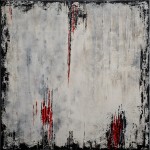
There’s something poetic, almost mischievous, about naming an album after weeds. Chwasty Polskie - “Polish Weeds” - doesn’t romanticize the pastoral; it digs its nails into the soil, unearthing the stubborn, tangled roots of something raw and unrefined. Hvast, a trio forged from the ashes and amplifiers of Polish underground bands like So Slow, Czern, and Rigor Mortiss, sound like they’ve found a strange, electric spirituality in the compost heap of post-rock and dark ambient.
This isn’t the sterile beauty of modular synths or cinematic melancholy. It’s closer to a damp rehearsal room with moss creeping up the walls, the air thick with the smell of solder and decay. The five long pieces bloom and wilt like invasive flora - slow, deliberate, often hypnotic. The electronics of Michal Glowacki hum and pulse like photosynthesis caught on tape, while Arkadiusz Lerch’s drums drag time through the mud, letting it breathe and mutate. Grzegorz Chudzik’s bass isn’t just rhythm; it’s the hum of underground roots - constant, ominous, alive.
Guest musicians add splinters of light and air: Aleksandra Buda’s flute pierces through the low-end fog on “Wrotycz i Nawloc”, like a breeze disturbing stagnant water, while Bartek Lesniewski and Marcin Loks lend guitars that feel less like melodies and more like weather systems moving across the soundscape. Recorded in Buczkowice’s appropriately named Mustache Ministry Studio, the album has that peculiar Zoharum fingerprint - polished but organic, as if the mix itself were composted.
The real trick of Chwasty Polskie lies in its tone. It’s not trying to impress, or comfort, or even surprise. It grows. Slowly, stubbornly, beautifully - and occasionally, with a hint of menace. “Bielun” opens like a ritual drone, half meditative, half toxic bloom. “Lopian” feels heavier, its rhythm section a rusted pendulum, dragging fragments of krautrock into the mire. And “Oset”, the closing piece, is a kind of electric pilgrimage - patient, grinding, ecstatic in its restraint.
There’s an ecological undercurrent too - not in a didactic way, but in the album’s refusal to separate noise from nature. Everything here breathes and corrodes at the same time. If weeds are the planet’s quiet rebellion against human order, then Chwasty Polskie is that rebellion translated into sound: messy, resilient, oddly sacred.
If you were expecting the smooth sophistication of post-rock à la Sigur Rós, forget it. This is Poland, not Iceland - less glacier, more industrial wasteland blooming with wildflowers. Hvast remind us that the line between ugliness and beauty is just another human invention. The weeds don’t care, and neither do they.
This isn’t the sterile beauty of modular synths or cinematic melancholy. It’s closer to a damp rehearsal room with moss creeping up the walls, the air thick with the smell of solder and decay. The five long pieces bloom and wilt like invasive flora - slow, deliberate, often hypnotic. The electronics of Michal Glowacki hum and pulse like photosynthesis caught on tape, while Arkadiusz Lerch’s drums drag time through the mud, letting it breathe and mutate. Grzegorz Chudzik’s bass isn’t just rhythm; it’s the hum of underground roots - constant, ominous, alive.
Guest musicians add splinters of light and air: Aleksandra Buda’s flute pierces through the low-end fog on “Wrotycz i Nawloc”, like a breeze disturbing stagnant water, while Bartek Lesniewski and Marcin Loks lend guitars that feel less like melodies and more like weather systems moving across the soundscape. Recorded in Buczkowice’s appropriately named Mustache Ministry Studio, the album has that peculiar Zoharum fingerprint - polished but organic, as if the mix itself were composted.
The real trick of Chwasty Polskie lies in its tone. It’s not trying to impress, or comfort, or even surprise. It grows. Slowly, stubbornly, beautifully - and occasionally, with a hint of menace. “Bielun” opens like a ritual drone, half meditative, half toxic bloom. “Lopian” feels heavier, its rhythm section a rusted pendulum, dragging fragments of krautrock into the mire. And “Oset”, the closing piece, is a kind of electric pilgrimage - patient, grinding, ecstatic in its restraint.
There’s an ecological undercurrent too - not in a didactic way, but in the album’s refusal to separate noise from nature. Everything here breathes and corrodes at the same time. If weeds are the planet’s quiet rebellion against human order, then Chwasty Polskie is that rebellion translated into sound: messy, resilient, oddly sacred.
If you were expecting the smooth sophistication of post-rock à la Sigur Rós, forget it. This is Poland, not Iceland - less glacier, more industrial wasteland blooming with wildflowers. Hvast remind us that the line between ugliness and beauty is just another human invention. The weeds don’t care, and neither do they.
Jesus on Extasy: Between Despair and Disbelief
Artist: Jesus on Extasy (@)
Title: Between Despair and Disbelief
Format: LP
Label: Metropolis (@)
Rated:

Title: Between Despair and Disbelief
Format: LP
Label: Metropolis (@)
Rated:
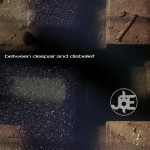
After more than a decade in the shadows, Jesus on Extasy return not as resurrected saints of industrial rock, but as something colder, meaner, and far less forgiving. Between Despair and Disbelief sounds like a demolition crew sent to raze the ruins of early-2000s darkwave glamour, leaving behind a jagged skyline of distortion, bitterness, and synthetic adrenaline.
Dorian Deveraux - founder, vocalist, producer, and still a man who sings like he’s peeling his skin off for emphasis - has rebuilt the JoE machine for a world that has forgotten how to feel outrage without irony. This isn’t the slick cyber-industrial of their Holy Beauty or Beloved Enemy days; this is a surge of steel, sweat, and disdain. It’s as if all the heartbreak, stagnation, and social decay of the last decade have been crushed into a single dense, high-voltage core.
“Ghosts” opens the album with an anthem that feels like waking up mid-apocalypse - melodic, massive, but laced with grief. “Days Gone By” and “Soul Crusher” both punch with surgical precision, their riffs fused to sequencers like mechanical sinew. The production is taut, cinematic, and deliberately claustrophobic: you can almost hear the screws tightening as synths grind against guitars. Deveraux’s voice, still balancing venom and vulnerability, delivers lines that sound like last rites whispered through a vocoder.
“Somewhat Happy” is the black joke of the record - part breakup song, part end-times gospel. It’s emotional detritus packaged as empowerment, the soundtrack for realizing your lover might’ve been just another apocalypse. “Where Did We Go Wrong” and “Will It Ever Stop” double down on this tone: romantic despair refracted through neon nihilism, each chorus an implosion disguised as catharsis.
The title track, barely over a minute long, serves as a kind of sonic interstice - a hum of disillusionment before “The End of Everything” turns it into a final explosion. By then, JoE have said everything that needs to be said: that the club is on fire, the system’s broken, and somehow, perversely, the beat still goes on.
It’s tempting to treat Between Despair and Disbelief as nostalgia for a lost subculture, but that would be missing the point. This record doesn’t pine for the past - it repurposes its machinery as weaponry. Deveraux has built something contemporary and cruel, standing shoulder to shoulder with newer industrial acts like 3TEETH or Author & Punisher while still carrying the theatrical DNA of goth-metal’s decadent heyday.
There’s also a kind of humor embedded in the whole affair - the grim, knowing smile of someone who’s seen the digital dystopia arrive and decided to dance anyway. Jesus on Extasy, after all, were always too self-aware to play pure tragedy. They offer apocalypse as entertainment, heartbreak as design, faith as feedback loop.
If despair and disbelief are the coordinates, this album maps the space in between: a wasteland lit by LED strobes and sustained by noise. It’s not a comeback - it’s a reminder that some ghosts don’t fade. They just buy better amps.
Dorian Deveraux - founder, vocalist, producer, and still a man who sings like he’s peeling his skin off for emphasis - has rebuilt the JoE machine for a world that has forgotten how to feel outrage without irony. This isn’t the slick cyber-industrial of their Holy Beauty or Beloved Enemy days; this is a surge of steel, sweat, and disdain. It’s as if all the heartbreak, stagnation, and social decay of the last decade have been crushed into a single dense, high-voltage core.
“Ghosts” opens the album with an anthem that feels like waking up mid-apocalypse - melodic, massive, but laced with grief. “Days Gone By” and “Soul Crusher” both punch with surgical precision, their riffs fused to sequencers like mechanical sinew. The production is taut, cinematic, and deliberately claustrophobic: you can almost hear the screws tightening as synths grind against guitars. Deveraux’s voice, still balancing venom and vulnerability, delivers lines that sound like last rites whispered through a vocoder.
“Somewhat Happy” is the black joke of the record - part breakup song, part end-times gospel. It’s emotional detritus packaged as empowerment, the soundtrack for realizing your lover might’ve been just another apocalypse. “Where Did We Go Wrong” and “Will It Ever Stop” double down on this tone: romantic despair refracted through neon nihilism, each chorus an implosion disguised as catharsis.
The title track, barely over a minute long, serves as a kind of sonic interstice - a hum of disillusionment before “The End of Everything” turns it into a final explosion. By then, JoE have said everything that needs to be said: that the club is on fire, the system’s broken, and somehow, perversely, the beat still goes on.
It’s tempting to treat Between Despair and Disbelief as nostalgia for a lost subculture, but that would be missing the point. This record doesn’t pine for the past - it repurposes its machinery as weaponry. Deveraux has built something contemporary and cruel, standing shoulder to shoulder with newer industrial acts like 3TEETH or Author & Punisher while still carrying the theatrical DNA of goth-metal’s decadent heyday.
There’s also a kind of humor embedded in the whole affair - the grim, knowing smile of someone who’s seen the digital dystopia arrive and decided to dance anyway. Jesus on Extasy, after all, were always too self-aware to play pure tragedy. They offer apocalypse as entertainment, heartbreak as design, faith as feedback loop.
If despair and disbelief are the coordinates, this album maps the space in between: a wasteland lit by LED strobes and sustained by noise. It’s not a comeback - it’s a reminder that some ghosts don’t fade. They just buy better amps.
Skold: Caught In The Throes
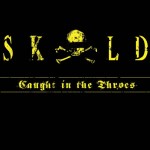
Tim Skold has always been the immaculate undertaker of industrial rock - the guy who shows up at the apocalypse in a tailored leather coat, cigarette unlit, ready to turn collapse into choreography. With "Caught In The Throes", his eighth solo album, he doesn’t so much reinvent himself as reassert his dominion over a kingdom of rusted machines and broken desires. It’s a record that knows the genre is a corpse and still finds new ways to make it dance.
Over fourteen tracks, Skold builds a panorama of synthetic ruin: "All Humans Must Be Destroyed" hammers the listener with sardonic nihilism, as if Ministry had developed a sense of humor and a better haircut. "All The $ In The World" takes aim at late capitalism with bitter swagger - a cynical hymn for the influencer era, where enlightenment is bought on subscription. "Cold As Ice" and "The Great Theatricality" sound like fragments of a cyberpunk opera, oscillating between sleaze and sincerity, menace and melancholy.
There’s something theatrical here, yes - but not camp. Skold’s sense of drama is rooted in discipline, not excess. His voice, half sneer and half confession, cuts through the digital grit like a scalpel. The production, as always, is pristine - distorted just enough to let the blood through. You can hear his years with KMFDM and Marilyn Manson in the precision of the programming and the deliberate density of the mix, yet "Caught In The Throes" feels more self-contained, almost monastic in its focus. It’s as if Skold locked himself in a mirrored studio and decided to hold a séance with all his past selves - the glam-rock miscreant, the industrial tactician, the cynical philosopher - and recorded the argument.
Tracks like "That Kind of Magic (Confessions of a Supermodel)" and "Do You Really?" flirt with the pop end of depravity, melodies dressed in latex, hooks disguised as barbed wire. "In A Grave (Specter)" and "The Inconsolable", by contrast, reveal a more introspective Skold, less the provocateur than the weary chronicler of decay. The closing "Digging My Own Grave" makes no attempt at metaphor: it’s resignation delivered with perfect sound design.
What keeps "Caught In The Throes" from collapsing under its own cynicism is Skold’s uncanny sense of proportion - his refusal to overplay the apocalypse. He knows that the end of the world has become cliché, so he stages it as a sardonic performance piece. You don’t listen to this album to be shocked; you listen to hear someone sculpt despair into architecture, beat by beat.
In 2025, when artificial intelligence writes most of the rebellion, Skold’s human touch feels paradoxically radical. Every hiss, every clipped vocal, every perfectly human imperfection sounds like a small act of defiance. "Caught In The Throes" isn’t just industrial - it’s artisanal nihilism, hand-forged, cold to the touch, and weirdly comforting.
You might not leave the record feeling enlightened, but you’ll know who’s still steering the wreckage - and doing it with unnerving grace.
Over fourteen tracks, Skold builds a panorama of synthetic ruin: "All Humans Must Be Destroyed" hammers the listener with sardonic nihilism, as if Ministry had developed a sense of humor and a better haircut. "All The $ In The World" takes aim at late capitalism with bitter swagger - a cynical hymn for the influencer era, where enlightenment is bought on subscription. "Cold As Ice" and "The Great Theatricality" sound like fragments of a cyberpunk opera, oscillating between sleaze and sincerity, menace and melancholy.
There’s something theatrical here, yes - but not camp. Skold’s sense of drama is rooted in discipline, not excess. His voice, half sneer and half confession, cuts through the digital grit like a scalpel. The production, as always, is pristine - distorted just enough to let the blood through. You can hear his years with KMFDM and Marilyn Manson in the precision of the programming and the deliberate density of the mix, yet "Caught In The Throes" feels more self-contained, almost monastic in its focus. It’s as if Skold locked himself in a mirrored studio and decided to hold a séance with all his past selves - the glam-rock miscreant, the industrial tactician, the cynical philosopher - and recorded the argument.
Tracks like "That Kind of Magic (Confessions of a Supermodel)" and "Do You Really?" flirt with the pop end of depravity, melodies dressed in latex, hooks disguised as barbed wire. "In A Grave (Specter)" and "The Inconsolable", by contrast, reveal a more introspective Skold, less the provocateur than the weary chronicler of decay. The closing "Digging My Own Grave" makes no attempt at metaphor: it’s resignation delivered with perfect sound design.
What keeps "Caught In The Throes" from collapsing under its own cynicism is Skold’s uncanny sense of proportion - his refusal to overplay the apocalypse. He knows that the end of the world has become cliché, so he stages it as a sardonic performance piece. You don’t listen to this album to be shocked; you listen to hear someone sculpt despair into architecture, beat by beat.
In 2025, when artificial intelligence writes most of the rebellion, Skold’s human touch feels paradoxically radical. Every hiss, every clipped vocal, every perfectly human imperfection sounds like a small act of defiance. "Caught In The Throes" isn’t just industrial - it’s artisanal nihilism, hand-forged, cold to the touch, and weirdly comforting.
You might not leave the record feeling enlightened, but you’ll know who’s still steering the wreckage - and doing it with unnerving grace.
Slomo: The Creep
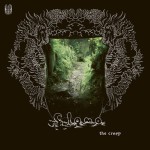
If drone music is often described as geological in scale, then "The Creep" is practically tectonic. First released in 2005 on Julian Cope’s Fuck Off & Di label, this sixty-one minute monolith by Slomo (Howard Marsden on synthesizer, Holy McGrail on guitar) seemed to arrive from somewhere between the subsoil and the stars. Now, two decades later, Ideologic Organ reissues it with the dignity of a fully cut LP, mastered by Rashad Becker - giving a piece once destined for cult obscurity the archival weight it always deserved.
What makes "The Creep" still so singular is its refusal of narrative motion. It doesn’t build, it doesn’t climax, it doesn’t resolve. Instead, it inhabits. It settles into a frequency band like moss on stone, growing richer and denser the longer you stay with it. This kind of music isn’t about what happens but about how long you’re willing to stay attuned. The initial impression may be of oppressive stasis, but gradually one hears detail blooming - overtones that shimmer like light catching on wet rock, subterranean pulses that feel more bodily than musical, a sense of air pressure bending around you.
Placed alongside its early-aughts peers - Sleep’s "Dopesmoker", Boris’ "Flood", Coil’s "Queens of the Circulating Library" - "The Creep" is the most resistant, the least concerned with seduction. Its heaviness is not riff-based but environmental, like the sound a cathedral might make if you left the microphones running overnight. And while doom metal aficionados may hear kinship with Sunn O))) or Khanate, the piece is arguably closer to Brian Eno’s "On Land", if Eno had decided that the “land” in question was the damp interior of a fogou in Cornwall.
Slomo themselves have since explored denser, more elaborate terrain ("The Bog", "Transits", "Zen and Zennor"), but there’s something irreducibly pure about this debut: two musicians discovering, almost by accident, that if you slow sound down far enough, it stops being music and starts being geology.
That "The Creep" is now being handled by Stephen O’Malley’s Ideologic Organ feels fitting: a convergence of dronelords preserving an artifact that was never trendy, never hurried, and yet somehow grew in stature precisely because of its indifference to the passing of time. This reissue doesn’t just celebrate an anniversary - it reminds us that some music doesn’t age. It erodes, it lingers, it becomes landscape.
In the end, "The Creep" is less an album than a zone: a place to enter, dwell in, and maybe never quite leave.
What makes "The Creep" still so singular is its refusal of narrative motion. It doesn’t build, it doesn’t climax, it doesn’t resolve. Instead, it inhabits. It settles into a frequency band like moss on stone, growing richer and denser the longer you stay with it. This kind of music isn’t about what happens but about how long you’re willing to stay attuned. The initial impression may be of oppressive stasis, but gradually one hears detail blooming - overtones that shimmer like light catching on wet rock, subterranean pulses that feel more bodily than musical, a sense of air pressure bending around you.
Placed alongside its early-aughts peers - Sleep’s "Dopesmoker", Boris’ "Flood", Coil’s "Queens of the Circulating Library" - "The Creep" is the most resistant, the least concerned with seduction. Its heaviness is not riff-based but environmental, like the sound a cathedral might make if you left the microphones running overnight. And while doom metal aficionados may hear kinship with Sunn O))) or Khanate, the piece is arguably closer to Brian Eno’s "On Land", if Eno had decided that the “land” in question was the damp interior of a fogou in Cornwall.
Slomo themselves have since explored denser, more elaborate terrain ("The Bog", "Transits", "Zen and Zennor"), but there’s something irreducibly pure about this debut: two musicians discovering, almost by accident, that if you slow sound down far enough, it stops being music and starts being geology.
That "The Creep" is now being handled by Stephen O’Malley’s Ideologic Organ feels fitting: a convergence of dronelords preserving an artifact that was never trendy, never hurried, and yet somehow grew in stature precisely because of its indifference to the passing of time. This reissue doesn’t just celebrate an anniversary - it reminds us that some music doesn’t age. It erodes, it lingers, it becomes landscape.
In the end, "The Creep" is less an album than a zone: a place to enter, dwell in, and maybe never quite leave.