
Browse by Genre
Industrial Music / Industrial Metal / Aggro Industrial / Electro Metal
Industrial Noise / Power Noise / Harsh Noise
Synth Pop / Electro Pop / Synth-Electronica
Techno / Trance / Goa / Drum'n'Bass / Jungle / Tribal / Trip-Hop
Ambient / Electronica / Ethereal / Dub / Soundscapes / Abstract
Experimental / Avantgarde / Weird & Wired / Glitch / Noise / Field Recording
Dark / Gothic / Wave / New Wave / Dark Wave / Industrial Gothic
New Music / Downtown / Avantgarde Jazz / New Classical / World
Search Reviews
Music Reviews
Nadja: cut
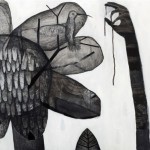
With "cut", Nadja return not so much with an album as with a pressure chamber. After the monolithic, instrumental sprawl of "Nalepa", Aidan Baker and Leah Buckareff reopen the mouth of the band and allow voices back in - but not in any conventional, song-oriented sense. These are not vocals that explain. They hover, fracture, bleed into the grain of the sound. Words are present, but meaning arrives mostly through weight, duration, and abrasion.
Released as a four-track double LP - each piece occupying an entire vinyl side - "cut" unfolds at Nadja’s preferred geological pace. Time stretches, nerves adjust, expectations erode. The band’s signature doomgaze mass is intact: guitars and bass form vast, fog-thick planes, drones grind slowly against themselves, distortion becomes a climate rather than an effect. Yet something is different here. The walls are still immense, but they breathe. Sometimes they even step back, revealing quieter, unsettling clearings.
Vocals, both from Baker and Buckareff and from an extended cast of guests, function less as narrative agents and more as structural material. They are layered, submerged, blurred into the soundwalls like half-remembered thoughts or intrusive memories that refuse to stay buried. This approach aligns closely with the album’s thematic core: trauma, psychological stress, and the fragile mechanisms we build to survive them. The voices don’t comfort. They testify - often indistinctly, sometimes painfully.
One of "cut"’s most striking developments is its expanded instrumentation. Harp, French horn, and saxophone drift in and out of the mix, not as decorative gestures but as destabilizing forces. The harp glints like a nervous system exposed to cold air; the horn adds a funereal gravity; the saxophone - played by Baker himself - emerges as a wounded, human breath amid the machinery. These elements don’t soften Nadja’s sound. They complicate it, adding emotional grain to an already abrasive surface.
The album’s structure rewards physical listening. The vinyl-only extended versions allow the pieces to fully exhaust themselves, to linger past comfort and into revelation. Digital editions, trimmed for practicality, feel almost polite by comparison. On vinyl, "cut" insists on presence: you sit with it, or it sits on you.
Despite its bleak emotional terrain, "cut" never indulges in melodrama. Nadja’s restraint remains crucial. The band understands that real heaviness isn’t about volume alone - it’s about accumulation, about the slow realization that something has been pressing on you for a long time. There is even, in a grim way, a hint of dark humor in the album’s excesses: titles that read like emotional autopsies, stretches of sound so prolonged they dare you to blink first.
Ultimately, "cut" feels like an album about endurance rather than resolution. It doesn’t offer healing so much as acknowledgement. The music doesn’t close wounds; it traces their edges, again and again, until the act of listening itself becomes a form of sonic sublimation - an imperfect tool, but sometimes the only one available.
Nadja have never been a band for quick relief. With "cut", they remind us that some experiences cannot be shortened, summarized, or safely processed. They must be entered slowly, lived through, and carried - like a scar you don’t hide, because hiding would take more energy than you have left.
Released as a four-track double LP - each piece occupying an entire vinyl side - "cut" unfolds at Nadja’s preferred geological pace. Time stretches, nerves adjust, expectations erode. The band’s signature doomgaze mass is intact: guitars and bass form vast, fog-thick planes, drones grind slowly against themselves, distortion becomes a climate rather than an effect. Yet something is different here. The walls are still immense, but they breathe. Sometimes they even step back, revealing quieter, unsettling clearings.
Vocals, both from Baker and Buckareff and from an extended cast of guests, function less as narrative agents and more as structural material. They are layered, submerged, blurred into the soundwalls like half-remembered thoughts or intrusive memories that refuse to stay buried. This approach aligns closely with the album’s thematic core: trauma, psychological stress, and the fragile mechanisms we build to survive them. The voices don’t comfort. They testify - often indistinctly, sometimes painfully.
One of "cut"’s most striking developments is its expanded instrumentation. Harp, French horn, and saxophone drift in and out of the mix, not as decorative gestures but as destabilizing forces. The harp glints like a nervous system exposed to cold air; the horn adds a funereal gravity; the saxophone - played by Baker himself - emerges as a wounded, human breath amid the machinery. These elements don’t soften Nadja’s sound. They complicate it, adding emotional grain to an already abrasive surface.
The album’s structure rewards physical listening. The vinyl-only extended versions allow the pieces to fully exhaust themselves, to linger past comfort and into revelation. Digital editions, trimmed for practicality, feel almost polite by comparison. On vinyl, "cut" insists on presence: you sit with it, or it sits on you.
Despite its bleak emotional terrain, "cut" never indulges in melodrama. Nadja’s restraint remains crucial. The band understands that real heaviness isn’t about volume alone - it’s about accumulation, about the slow realization that something has been pressing on you for a long time. There is even, in a grim way, a hint of dark humor in the album’s excesses: titles that read like emotional autopsies, stretches of sound so prolonged they dare you to blink first.
Ultimately, "cut" feels like an album about endurance rather than resolution. It doesn’t offer healing so much as acknowledgement. The music doesn’t close wounds; it traces their edges, again and again, until the act of listening itself becomes a form of sonic sublimation - an imperfect tool, but sometimes the only one available.
Nadja have never been a band for quick relief. With "cut", they remind us that some experiences cannot be shortened, summarized, or safely processed. They must be entered slowly, lived through, and carried - like a scar you don’t hide, because hiding would take more energy than you have left.
Magic Wands: Cascades

Magic Wands have always trafficked in shadowy romance and dream-pop nostalgia - a pairing of goth-tinged post-punk and wistful reverie that seems, on paper, almost too pretty to last. But with "Cascades", the duo (vocalists/guitarists Dexy Valentine and Chris Valentine) deliver something both familiar and quietly bold: a record that doesn’t just invite you to dance under the neon moon, but urges you to drift, to remember, to wander.
Right from the opening track “Across the Water”, you sense the mood: a shimmering suspension of sound - reverb-laced guitars, synths like distant stars, vocals that hover half-remembered. It's stylishly bleak, but not self-serious. Already Magic Wands show they know their game: evoke longing, evoke nostalgia, but don’t sulk. They offer moody charm, not melodrama.
What "Cascades" does best is walk that razor-thin line between dream-pop and gothic atmosphere. Songs like “Hide” or “Time To Dream” lean into cinematic melodrama - echoing old-world romance, water’s movement, the weight of unseen currents. The duo have explained that much of the record’s inspiration came from a fascination with water - from fountains at the 1893 Chicago World’s Fair to imagined mythic flow - and you can feel it: melodies ripple, synth washes cascade, guitars drip like wet stone under torchlight.
Yet there’s an edge. Not in the aggressive sense, but a kind of luminous melancholy bristling beneath the gloss. “Albatross”. with its heavy reverb and layered guitars, feels like being pulled under a lagoon by a memory - beautiful, suffocating, inevitable. The dreamy pop aesthetic remains, but Magic Wands refuse to let it soften all the corners. The sadness lingers: not dramatic, but intimate. A whisper behind the smile.
At times, the album flirts with grandiosity - and that works for and against it. On the one hand, there’s a certain theatrical elegance, a sense of walking into a velvet-draped salon somewhere between the decades. On the other, a few tracks begin to blur together, the mood too uniform, the shadows too consistent. The risk with albums like this is comfort: the same sigh, the same cadence, track after track. Some listeners and reviewers have pointed out that "Cascades" occasionally drifts into that safe territory.
But those are small debts to pay. Because when "Cascades" works - and it often does - it catches you in that sweet spot where desire, nostalgia, and melancholy converge. It asks nothing more than your willingness to lean back against a wall, close your eyes, and let the music carry you somewhere between moonlit ruins and half-forgotten dreams.
What’s interesting about Magic Wands in 2025 is that they carry the ghosts of their early origins - Nashville beginnings, shoegaze and post-punk leanings, that early spark of mythic romance - but they’re not nostalgic in a lazy way. They’re crafting their own lagoon now, painting their own constellations, and inviting you to cross that threshold if you dare.
"Cascades" is not a revolution. It’s a slow, smoky invocation. A way of saying: sometimes darkness isn’t the end of the world - it’s just the frame you need to see the stars.
Right from the opening track “Across the Water”, you sense the mood: a shimmering suspension of sound - reverb-laced guitars, synths like distant stars, vocals that hover half-remembered. It's stylishly bleak, but not self-serious. Already Magic Wands show they know their game: evoke longing, evoke nostalgia, but don’t sulk. They offer moody charm, not melodrama.
What "Cascades" does best is walk that razor-thin line between dream-pop and gothic atmosphere. Songs like “Hide” or “Time To Dream” lean into cinematic melodrama - echoing old-world romance, water’s movement, the weight of unseen currents. The duo have explained that much of the record’s inspiration came from a fascination with water - from fountains at the 1893 Chicago World’s Fair to imagined mythic flow - and you can feel it: melodies ripple, synth washes cascade, guitars drip like wet stone under torchlight.
Yet there’s an edge. Not in the aggressive sense, but a kind of luminous melancholy bristling beneath the gloss. “Albatross”. with its heavy reverb and layered guitars, feels like being pulled under a lagoon by a memory - beautiful, suffocating, inevitable. The dreamy pop aesthetic remains, but Magic Wands refuse to let it soften all the corners. The sadness lingers: not dramatic, but intimate. A whisper behind the smile.
At times, the album flirts with grandiosity - and that works for and against it. On the one hand, there’s a certain theatrical elegance, a sense of walking into a velvet-draped salon somewhere between the decades. On the other, a few tracks begin to blur together, the mood too uniform, the shadows too consistent. The risk with albums like this is comfort: the same sigh, the same cadence, track after track. Some listeners and reviewers have pointed out that "Cascades" occasionally drifts into that safe territory.
But those are small debts to pay. Because when "Cascades" works - and it often does - it catches you in that sweet spot where desire, nostalgia, and melancholy converge. It asks nothing more than your willingness to lean back against a wall, close your eyes, and let the music carry you somewhere between moonlit ruins and half-forgotten dreams.
What’s interesting about Magic Wands in 2025 is that they carry the ghosts of their early origins - Nashville beginnings, shoegaze and post-punk leanings, that early spark of mythic romance - but they’re not nostalgic in a lazy way. They’re crafting their own lagoon now, painting their own constellations, and inviting you to cross that threshold if you dare.
"Cascades" is not a revolution. It’s a slow, smoky invocation. A way of saying: sometimes darkness isn’t the end of the world - it’s just the frame you need to see the stars.
Blood Handsome: Nostalgia Hold
Artist: Blood Handsome (@)
Title: Nostalgia Hold
Format: Download Only (MP3 + Lossless)
Label: Strict Tempo (@)
Rated:


Title: Nostalgia Hold
Format: Download Only (MP3 + Lossless)
Label: Strict Tempo (@)
Rated:
If nostalgia had a shadow, and that shadow decided to dance in a club at 3 a.m., it might very well look and sound like Nostalgia Hold, the new album by Blood Handsome. Gerren Reach (Blood Handsome) takes the dark, post-punk corners of his earlier work and pushes them into a neon-lit disco inferno, all while keeping that sweet, slightly deadpan intensity that first made him compelling.
From the first track “Abandon”, you feel the tension right away: the synths are warm but slightly brittle, like they might crack if you lean on them too hard, while Reach’s voice intones with an emotional distance that makes you lean in just to catch what he means. It’s not just pop; it’s a memory made material - a heartbeat made of circuitry.
One of the great successes of Nostalgia Hold is how it balances gothic longing with something almost playful. On “Alone (Dancing)”, there’s a gap between the song’s upbeat rhythm and the loneliness in the lyrics. Reach sings about holding someone’s heart, but the “dancing all alone” refrain feels like both confession and joke. It’s the kind of song where you want to wave a lighter, but you’re not sure whether it’s sorrow or defiance you’re holding aloft.
Elsewhere, “Dreaming in Silver” glistens with romantic obsession, its synth arpeggios shimmering like moonlight on water. It’s intimate but not fragile - Reach’s words feel less like vows and more like experiments, as though he’s testing how much permanence a feeling can hold. “Inside” is quieter, more reflective, and asks straightforward, unnerving questions: where do you belong when what you lost was part of who you are?
With “Awaken”, the mood shifts: Reach sounds freed, but not without scars. The song’s energy pulses with a kind of fierce vulnerability. It’s a rise, but not a triumphant one - instead, it’s a cautious reorientation, as though reaching for a truth that might still slip through his fingers.
“Fear (Itself)” gets to the heart of the album’s tension: the darkness inside, the doorways we leave open and close. It’s not melodramatic; Reach doesn’t scream in fear. Instead, he questions. He teases the boundary between courage and surrender. By the end, you feel both challenged and strangely comforted.
“Dark Matter” and “Pout Balcony” round out the journey. In Dark Matter, Reach wonders about identity, about how much of ourselves gets buried in a crowd. The synths here feel like urban winds, carrying fragments of face and memory. “Pout Balcony” closes the album with a restless longing - you hear that ache in his voice, the sense that even when you’ve built something, “more” is always the ghost dancing in the wings.
Beyond the music itself, what makes *Nostalgia Hold* powerful is how it represents a turning point for Blood Handsome. After years of carving out a darkwave niche with earlier albums and live shows, Reach now brings collaboration and broader production into his work without softening his voice. The energy of his live performances - entrancing, sometimes feral - is translated here into something that’s designed to live on its own, to haunt headphones and dancefloors alike.
In a scene full of shadowy synths and gothic echoes, Nostalgia Hold stands out because it doesn’t just evoke nostalgia - it interrogates it. Reach isn’t asking you to remember the past; he’s asking you to feel what it cost. And that makes this feel like more than an album. It’s a gentle but unrelenting confrontation with memory and desire.
If you step into this album expecting a darkwave safe space, be warned: Nostalgia Hold demands your presence. It doesn’t just hold your emotions - it holds parts of you, too.
From the first track “Abandon”, you feel the tension right away: the synths are warm but slightly brittle, like they might crack if you lean on them too hard, while Reach’s voice intones with an emotional distance that makes you lean in just to catch what he means. It’s not just pop; it’s a memory made material - a heartbeat made of circuitry.
One of the great successes of Nostalgia Hold is how it balances gothic longing with something almost playful. On “Alone (Dancing)”, there’s a gap between the song’s upbeat rhythm and the loneliness in the lyrics. Reach sings about holding someone’s heart, but the “dancing all alone” refrain feels like both confession and joke. It’s the kind of song where you want to wave a lighter, but you’re not sure whether it’s sorrow or defiance you’re holding aloft.
Elsewhere, “Dreaming in Silver” glistens with romantic obsession, its synth arpeggios shimmering like moonlight on water. It’s intimate but not fragile - Reach’s words feel less like vows and more like experiments, as though he’s testing how much permanence a feeling can hold. “Inside” is quieter, more reflective, and asks straightforward, unnerving questions: where do you belong when what you lost was part of who you are?
With “Awaken”, the mood shifts: Reach sounds freed, but not without scars. The song’s energy pulses with a kind of fierce vulnerability. It’s a rise, but not a triumphant one - instead, it’s a cautious reorientation, as though reaching for a truth that might still slip through his fingers.
“Fear (Itself)” gets to the heart of the album’s tension: the darkness inside, the doorways we leave open and close. It’s not melodramatic; Reach doesn’t scream in fear. Instead, he questions. He teases the boundary between courage and surrender. By the end, you feel both challenged and strangely comforted.
“Dark Matter” and “Pout Balcony” round out the journey. In Dark Matter, Reach wonders about identity, about how much of ourselves gets buried in a crowd. The synths here feel like urban winds, carrying fragments of face and memory. “Pout Balcony” closes the album with a restless longing - you hear that ache in his voice, the sense that even when you’ve built something, “more” is always the ghost dancing in the wings.
Beyond the music itself, what makes *Nostalgia Hold* powerful is how it represents a turning point for Blood Handsome. After years of carving out a darkwave niche with earlier albums and live shows, Reach now brings collaboration and broader production into his work without softening his voice. The energy of his live performances - entrancing, sometimes feral - is translated here into something that’s designed to live on its own, to haunt headphones and dancefloors alike.
In a scene full of shadowy synths and gothic echoes, Nostalgia Hold stands out because it doesn’t just evoke nostalgia - it interrogates it. Reach isn’t asking you to remember the past; he’s asking you to feel what it cost. And that makes this feel like more than an album. It’s a gentle but unrelenting confrontation with memory and desire.
If you step into this album expecting a darkwave safe space, be warned: Nostalgia Hold demands your presence. It doesn’t just hold your emotions - it holds parts of you, too.
DarkSonicTales: UnKnown

Artist: DarkSonicTales
Title: UnKnown
Format: Download Only (MP3 + Lossless)
Label: Hallow Ground (@)
Rated:
Title: UnKnown
Format: Download Only (MP3 + Lossless)
Label: Hallow Ground (@)
Rated:
Rolf Gisler has always sounded like the sort of person who stares at ordinary objects until they confess their secret life. A shower door? A portal. A manhole? A resonant cathedral. A train station? A temporary cosmos made of suitcase wheels and the sighs of commuters. UnKnown, his second album as DarkSonicTales, feels like the diary of someone who discovered that nothing is truly mundane unless you refuse to listen.
If his debut hinted at this tendency, the new record doubles down, salts the ground, and then plants something stranger. The five pieces don’t form a suite so much as a drifting archipelago: islands of drone, eruptions of post-rock, mechanical murmurs, sudden idylls. It’s the kind of record where an alphorn can coexist peacefully with a kalimba without anyone needing to call the cultural police. And somehow it works - not in a smug look-how-eclectic-I-am way, but with the natural ease of someone who trusts curiosity more than genre boundaries.
“Ellipsis (Origin)” opens like a ceremony held on a mountaintop at dawn, while “UnKnown” - the album’s lung and heart - stretches for nearly fifteen minutes, built from the percussive patter of shower water on glass. It shouldn’t make sense. It does. The piece expands slowly, like a thought that refuses to resolve, unfurling drones that glow with a strange warmth, as though the plumbing of the universe were humming to itself.
Elsewhere, “SomeCallItRunning” introduces the piano of Iwan Gasser, which cuts clean through the texture like a solitary runner passing a row of shuttered houses. “TrainStation” is exactly what it promises: a collage of rails, footsteps, and the particular loneliness of public spaces where nobody is meant to linger. It’s post-rock for people who prefer trains to guitars. And then there’s “Drain”, the manhole elegy - an ode to subterranean resonance, to what cities murmur when they think no one is listening.
What keeps the album compelling isn’t its novelty for novelty’s sake, but its sense of play. Gisler treats sound like clay, squeezing and stretching it until an unexpected face emerges. He’s not chasing transcendence; he’s chasing possibility. The album becomes an argument - gentle but firm - that getting lost is not a failure but an art form, the sort of thing children are naturally good at and adults must relearn before they calcify into routine.
There’s something quietly funny, too, in this devotion to the “beauty of not knowing”. In an era so obsessed with certainty it practically dreams in bullet points, Gisler proposes a different kind of intelligence: stumbling around in wonder instead of running toward conclusions with a stopwatch.
Listening to UnKnown feels like putting on a coat you haven’t worn in years and finding a note in the pocket - written by you, but from a time you barely remember. Not a revelation, not a prophecy. Just a reminder: there is still room for mystery, even in the squeak of wet asphalt.
By the needle’s last rotation, the unknown hasn’t been solved - of course not. But it has been inhabited, breathed in, rearranged into something oddly welcoming. A map drawn in smudges, annotated by rainfall. A sonic reminder that if you surrender to the detour, the destination might finally stop mattering.
If his debut hinted at this tendency, the new record doubles down, salts the ground, and then plants something stranger. The five pieces don’t form a suite so much as a drifting archipelago: islands of drone, eruptions of post-rock, mechanical murmurs, sudden idylls. It’s the kind of record where an alphorn can coexist peacefully with a kalimba without anyone needing to call the cultural police. And somehow it works - not in a smug look-how-eclectic-I-am way, but with the natural ease of someone who trusts curiosity more than genre boundaries.
“Ellipsis (Origin)” opens like a ceremony held on a mountaintop at dawn, while “UnKnown” - the album’s lung and heart - stretches for nearly fifteen minutes, built from the percussive patter of shower water on glass. It shouldn’t make sense. It does. The piece expands slowly, like a thought that refuses to resolve, unfurling drones that glow with a strange warmth, as though the plumbing of the universe were humming to itself.
Elsewhere, “SomeCallItRunning” introduces the piano of Iwan Gasser, which cuts clean through the texture like a solitary runner passing a row of shuttered houses. “TrainStation” is exactly what it promises: a collage of rails, footsteps, and the particular loneliness of public spaces where nobody is meant to linger. It’s post-rock for people who prefer trains to guitars. And then there’s “Drain”, the manhole elegy - an ode to subterranean resonance, to what cities murmur when they think no one is listening.
What keeps the album compelling isn’t its novelty for novelty’s sake, but its sense of play. Gisler treats sound like clay, squeezing and stretching it until an unexpected face emerges. He’s not chasing transcendence; he’s chasing possibility. The album becomes an argument - gentle but firm - that getting lost is not a failure but an art form, the sort of thing children are naturally good at and adults must relearn before they calcify into routine.
There’s something quietly funny, too, in this devotion to the “beauty of not knowing”. In an era so obsessed with certainty it practically dreams in bullet points, Gisler proposes a different kind of intelligence: stumbling around in wonder instead of running toward conclusions with a stopwatch.
Listening to UnKnown feels like putting on a coat you haven’t worn in years and finding a note in the pocket - written by you, but from a time you barely remember. Not a revelation, not a prophecy. Just a reminder: there is still room for mystery, even in the squeak of wet asphalt.
By the needle’s last rotation, the unknown hasn’t been solved - of course not. But it has been inhabited, breathed in, rearranged into something oddly welcoming. A map drawn in smudges, annotated by rainfall. A sonic reminder that if you surrender to the detour, the destination might finally stop mattering.
Jennifer Touch: Aging at Airports

There’s a particular kind of melancholy that only an airport can deliver: fluorescent eternity, overcaffeinated passengers, the half-life of dreams announced through failing PA systems. Jennifer Touch takes that limbo and turns it into her studio. Aging at Airports sounds like someone composing hymns to impermanence on a moving walkway that never quite reaches its destination.
Touch has always balanced shadow and shimmer, but here she digs into something more existential. Not the grand, cinematic kind of existentialism - no Sartre at gate C23 - but the quieter dread of recognizing your reflection in a polished departure-hall window and thinking: Is that really me? Or just the version of me that’s always running to catch up? For an artist who has spent years touring across continents, the theme is brutally honest. Airports promise velocity, but deliver waiting. They promise youth and glamour, but leave you counting the fluorescent wrinkles. Touch doesn’t hide from this tension; she wraps her synths around it like a thermal blanket that’s half comfort, half survival mechanism.
Musically, the album flickers between modes like a glitchy departure board. “Behaviour” and “Ceiling” nod toward EBM but with a softness that refuses macho posturing - EBM with a heart murmur rather than a chest puff. “Walls of Patience” drifts into drone-pop territory, the kind that feels like walking through fog at 4 a.m. with your carry-on as your only confidant. “Dripping” and “Wars & Blood Red Roses” embrace minimal pulses, stripped down to the bone, like she’s chiseling rhythm out of the airport’s architecture itself.mAnd then there’s “Rumble (Defiance)” - a short, sharp shock aimed squarely at the dancefloor’s dark corners. It’s as if Touch, after spending the whole album reflecting on decay, suddenly remembers that she can still bend a club to her will whenever she feels like it.
Lyrically, she navigates vulnerability without veering into melodrama. Her voice carries both the weight of lived experience and the slyness of someone who knows that taking yourself too seriously is simply another trap. The contrast between her soulful delivery and the sleek electronic surfaces is the album’s emotional engine: raw humanity pressing against polished machinery.
For those familiar with her earlier work - or her collaborations with Curses, Paranoid London, and the rest of the neo-darkwave constellation - this record feels like both a continuation and a shedding of skin. Touch leans into clarity rather than mystique, into the discomfort of honesty rather than the safety of posture.
Aging at Airports is not a lament; it’s a portrait of becoming. It’s the sound of an artist accepting that time moves, even when the flight doesn’t. And somewhere between the boarding zones and the synthetic glow of the terminal, she manages to find a pulse that is unmistakably her own.
A record about fading that somehow leaves you feeling more alive.
Touch has always balanced shadow and shimmer, but here she digs into something more existential. Not the grand, cinematic kind of existentialism - no Sartre at gate C23 - but the quieter dread of recognizing your reflection in a polished departure-hall window and thinking: Is that really me? Or just the version of me that’s always running to catch up? For an artist who has spent years touring across continents, the theme is brutally honest. Airports promise velocity, but deliver waiting. They promise youth and glamour, but leave you counting the fluorescent wrinkles. Touch doesn’t hide from this tension; she wraps her synths around it like a thermal blanket that’s half comfort, half survival mechanism.
Musically, the album flickers between modes like a glitchy departure board. “Behaviour” and “Ceiling” nod toward EBM but with a softness that refuses macho posturing - EBM with a heart murmur rather than a chest puff. “Walls of Patience” drifts into drone-pop territory, the kind that feels like walking through fog at 4 a.m. with your carry-on as your only confidant. “Dripping” and “Wars & Blood Red Roses” embrace minimal pulses, stripped down to the bone, like she’s chiseling rhythm out of the airport’s architecture itself.mAnd then there’s “Rumble (Defiance)” - a short, sharp shock aimed squarely at the dancefloor’s dark corners. It’s as if Touch, after spending the whole album reflecting on decay, suddenly remembers that she can still bend a club to her will whenever she feels like it.
Lyrically, she navigates vulnerability without veering into melodrama. Her voice carries both the weight of lived experience and the slyness of someone who knows that taking yourself too seriously is simply another trap. The contrast between her soulful delivery and the sleek electronic surfaces is the album’s emotional engine: raw humanity pressing against polished machinery.
For those familiar with her earlier work - or her collaborations with Curses, Paranoid London, and the rest of the neo-darkwave constellation - this record feels like both a continuation and a shedding of skin. Touch leans into clarity rather than mystique, into the discomfort of honesty rather than the safety of posture.
Aging at Airports is not a lament; it’s a portrait of becoming. It’s the sound of an artist accepting that time moves, even when the flight doesn’t. And somewhere between the boarding zones and the synthetic glow of the terminal, she manages to find a pulse that is unmistakably her own.
A record about fading that somehow leaves you feeling more alive.