
Browse by Genre
Industrial Music / Industrial Metal / Aggro Industrial / Electro Metal
Industrial Noise / Power Noise / Harsh Noise
Synth Pop / Electro Pop / Synth-Electronica
Techno / Trance / Goa / Drum'n'Bass / Jungle / Tribal / Trip-Hop
Ambient / Electronica / Ethereal / Dub / Soundscapes / Abstract
Experimental / Avantgarde / Weird & Wired / Glitch / Noise / Field Recording
Dark / Gothic / Wave / New Wave / Dark Wave / Industrial Gothic
New Music / Downtown / Avantgarde Jazz / New Classical / World
Search Reviews
Music Reviews
Laurent Pernice: Presque Nature
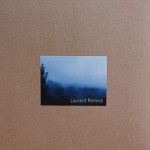
"Presque Nature" is one of those records that doesn’t knock on the door. It’s already inside, shoes off, sitting quietly by the window, listening. Laurent Pernice has been practicing this art of near-invisibility for decades, and here he refines it into something that feels less like an album and more like a patient act of attention.
Pernice is not new to stepping aside. His long-standing concept of "Musiques Immobiles" - a deliberately paradoxical term - has always been about relinquishing authorship without pretending to disappear entirely. He nudges, sets conditions, creates situations where sound can happen without being bossed around. Think John Cage with a field recorder and Brian Eno after a long walk, but with a distinctly French relationship to doubt, precision, and gentle self-irony.
On "Presque Nature", the title already tells the truth: this is not nature unfiltered, nor is it composition in any classical sense. It’s “almost” nature - nature overheard, nature interrupted politely, nature given just enough space to speak for itself. Birds, frogs, wind, underwater friction, dawns that take their time: these are the real protagonists. Pernice’s instruments - double bass, bells, piano, odd percussive objects - behave like respectful guests. They enter softly, comment briefly, then retreat before becoming a nuisance.
The five long sections unfold on a timescale that feels almost provocative in 2025. Nothing here is in a hurry, and nothing is trying to “develop”. "Six jours" opens with forest recordings from Vanuatu, where time seems to stretch horizontally rather than forward. Px Hal’s fujara appears like a distant memory rather than a soloist, while Pernice’s interventions feel less like decisions and more like reflexes. You don’t follow the music so much as settle into its climate.
"Aussi loin", recorded in the Camargue, carries a quiet weight. Knowing that the Eurasian bittern - whose hollow, bottle-like call punctuates the piece - is endangered adds gravity, but the track never turns that fact into drama. There’s no moralizing here, no ecological high ground. Just presence. The politics, if any, lie in refusing speed, refusing spectacle, refusing to make extinction “interesting”.
The two "Lever du jour" pieces frame the album like slow blinks. One nods - almost mischievously - to Gesualdo, whose tortured harmonies are here stretched and thinned until they feel less like Renaissance tragedy and more like a harmonic fossil embedded in birdsong. The other, recorded in Hardelot, is dawn as process rather than event: light arriving incrementally, sound reorganizing itself without asking permission.
"Un rêve subaquatique" may be the album’s most disorienting moment. Underwater recordings from La Ciotat erase the usual hierarchy between foreground and background. What is rhythm when everything floats? What is melody when friction becomes texture? Pernice wisely avoids answering. He lets the sea mumble, scrape, breathe - proof that “immobility” is really just movement slowed to a scale where patience becomes a listening skill.
There’s a quiet humor running through all of this. Pernice openly admits his troubled relationship with counting, categorization, and even naming his own works correctly. That self-deprecation matters. "Presque Nature" never claims authority. It doesn’t pretend to be definitive, immersive, or transformative. It simply exists, gently resisting the idea that music must justify itself through complexity, density, or urgency.
In the end, this is music that doesn’t ask for interpretation so much as availability. It won’t reward multitasking. It won’t compete with your phone. But if you give it time - real time, not background time - it offers something increasingly rare: the sensation that nothing is happening, and that this might be enough.
Almost nature, yes. Almost music too. And precisely because of that, deeply human.
Pernice is not new to stepping aside. His long-standing concept of "Musiques Immobiles" - a deliberately paradoxical term - has always been about relinquishing authorship without pretending to disappear entirely. He nudges, sets conditions, creates situations where sound can happen without being bossed around. Think John Cage with a field recorder and Brian Eno after a long walk, but with a distinctly French relationship to doubt, precision, and gentle self-irony.
On "Presque Nature", the title already tells the truth: this is not nature unfiltered, nor is it composition in any classical sense. It’s “almost” nature - nature overheard, nature interrupted politely, nature given just enough space to speak for itself. Birds, frogs, wind, underwater friction, dawns that take their time: these are the real protagonists. Pernice’s instruments - double bass, bells, piano, odd percussive objects - behave like respectful guests. They enter softly, comment briefly, then retreat before becoming a nuisance.
The five long sections unfold on a timescale that feels almost provocative in 2025. Nothing here is in a hurry, and nothing is trying to “develop”. "Six jours" opens with forest recordings from Vanuatu, where time seems to stretch horizontally rather than forward. Px Hal’s fujara appears like a distant memory rather than a soloist, while Pernice’s interventions feel less like decisions and more like reflexes. You don’t follow the music so much as settle into its climate.
"Aussi loin", recorded in the Camargue, carries a quiet weight. Knowing that the Eurasian bittern - whose hollow, bottle-like call punctuates the piece - is endangered adds gravity, but the track never turns that fact into drama. There’s no moralizing here, no ecological high ground. Just presence. The politics, if any, lie in refusing speed, refusing spectacle, refusing to make extinction “interesting”.
The two "Lever du jour" pieces frame the album like slow blinks. One nods - almost mischievously - to Gesualdo, whose tortured harmonies are here stretched and thinned until they feel less like Renaissance tragedy and more like a harmonic fossil embedded in birdsong. The other, recorded in Hardelot, is dawn as process rather than event: light arriving incrementally, sound reorganizing itself without asking permission.
"Un rêve subaquatique" may be the album’s most disorienting moment. Underwater recordings from La Ciotat erase the usual hierarchy between foreground and background. What is rhythm when everything floats? What is melody when friction becomes texture? Pernice wisely avoids answering. He lets the sea mumble, scrape, breathe - proof that “immobility” is really just movement slowed to a scale where patience becomes a listening skill.
There’s a quiet humor running through all of this. Pernice openly admits his troubled relationship with counting, categorization, and even naming his own works correctly. That self-deprecation matters. "Presque Nature" never claims authority. It doesn’t pretend to be definitive, immersive, or transformative. It simply exists, gently resisting the idea that music must justify itself through complexity, density, or urgency.
In the end, this is music that doesn’t ask for interpretation so much as availability. It won’t reward multitasking. It won’t compete with your phone. But if you give it time - real time, not background time - it offers something increasingly rare: the sensation that nothing is happening, and that this might be enough.
Almost nature, yes. Almost music too. And precisely because of that, deeply human.
Copenhagen Clarinet Choir & Anders Lauge Meldgaard: Jeux d’eau
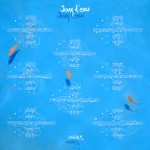
Artist: Copenhagen Clarinet Choir & Anders Lauge Meldgaard (http://anderslaugemeldgaard.dk/) (@)
Title: Jeux d’eau
Format: LP
Label: Conatala Records/Ã…r & Dag (@)
Rated:


Title: Jeux d’eau
Format: LP
Label: Conatala Records/Ã…r & Dag (@)
Rated:
There is something quietly mischievous about an album called "Jeux d’eau" that refuses to splash. Instead of grand, impressionistic cascades, Copenhagen Clarinet Choir and Anders Lauge Meldgaard offer water as process: seepage, condensation, circulation. This is music that prefers currents to climaxes, ripples to rhetoric.
At the center is Meldgaard’s New Ondomo, an instrument that already feels like a historical echo with a passport stamp from the future. Modeled on the ondes Martenot but less interested in nostalgia than elasticity, it doesn’t dominate the ensemble so much as destabilize it gently, like introducing a new chemical into a familiar ecosystem. The Ondomo slides, hums, and flickers, often blurring the boundary between pitch and texture, while the Eurorack electronics behave less like machines and more like weather conditions.
Around it, the Copenhagen Clarinet Choir does what it does best: turning homogeneity into richness. Six clarinets - some dipping into bass register, others hovering in reedy brightness - merge into a single organism that breathes, pulses, and occasionally grins. This is not a choir in the choral sense; it’s closer to a murmuration. Individual voices surface briefly, then dissolve back into the collective, leaving behind a faint afterimage.
Meldgaard’s compositional approach - open frameworks rather than rigid architectures - proves crucial here. The pieces feel guided rather than governed. You can hear the influence of minimalism in the looping figures and incremental shifts, but this is minimalism that has read poetry and learned how to hesitate. Repetition doesn’t hypnotize so much as invite attention to micro-variation: a clarinet phrase slightly revoiced, a rhythmic cell nudged off-axis, a harmony that blooms and then thinks better of it.
Tracks unfold like short chapters in a hydrological novel. "Joyfully, we leave the tended garden" sets the tone with a sense of departure that is more curious than dramatic, while "Entering the fray" introduces friction - overlapping lines rubbing against each other with quiet insistence. "Uncharted streams" and "Diffuser dream" lean into flow, their interlocking patterns creating the illusion of forward motion even when the harmony stays put, like water convincing you it’s going somewhere new while recycling itself.
There’s humor here, but it’s dry - almost bureaucratic. Titles like "Xerophyte" and "Unabashed waveforms" wink at both botany and synthesis, as if the music knows it’s operating in a space where academic language and childlike wonder coexist uneasily. And then there’s "’Til seas do us part", which clocks in under a minute and manages to feel both like a joke and a thesis statement.
What makes "Jeux d’eau" particularly absorbing is its sense of collective listening. You can hear the musicians paying attention to one another in real time, adjusting density, tone, and articulation as if negotiating shared responsibility for the sound. This is where Meldgaard’s long-standing interest in aleatoric processes and performer agency becomes audible - not as chaos, but as trust.
The recording captures this beautifully. There’s air between the instruments, enough room for resonance to matter. The clarinets retain their woody warmth even when stacked thickly, and the electronics never flatten the acoustic space. Instead, they shimmer at the edges, like reflections you only notice once you stop staring directly at the surface.
As a meditation on water - and, by extension, fragility - "Jeux d’eau" avoids sermonizing. It doesn’t try to sound “environmental” in any literal sense. Rather, it mirrors natural systems through form: adaptability, interdependence, responsiveness. The music changes because it has to, not because it’s told to.
In the end, this is an album that rewards patience without demanding reverence. It flows, pauses, eddies, and occasionally surprises itself. Like water, it doesn’t ask to be understood all at once - only to be followed, attentively, wherever it decides to go next.
At the center is Meldgaard’s New Ondomo, an instrument that already feels like a historical echo with a passport stamp from the future. Modeled on the ondes Martenot but less interested in nostalgia than elasticity, it doesn’t dominate the ensemble so much as destabilize it gently, like introducing a new chemical into a familiar ecosystem. The Ondomo slides, hums, and flickers, often blurring the boundary between pitch and texture, while the Eurorack electronics behave less like machines and more like weather conditions.
Around it, the Copenhagen Clarinet Choir does what it does best: turning homogeneity into richness. Six clarinets - some dipping into bass register, others hovering in reedy brightness - merge into a single organism that breathes, pulses, and occasionally grins. This is not a choir in the choral sense; it’s closer to a murmuration. Individual voices surface briefly, then dissolve back into the collective, leaving behind a faint afterimage.
Meldgaard’s compositional approach - open frameworks rather than rigid architectures - proves crucial here. The pieces feel guided rather than governed. You can hear the influence of minimalism in the looping figures and incremental shifts, but this is minimalism that has read poetry and learned how to hesitate. Repetition doesn’t hypnotize so much as invite attention to micro-variation: a clarinet phrase slightly revoiced, a rhythmic cell nudged off-axis, a harmony that blooms and then thinks better of it.
Tracks unfold like short chapters in a hydrological novel. "Joyfully, we leave the tended garden" sets the tone with a sense of departure that is more curious than dramatic, while "Entering the fray" introduces friction - overlapping lines rubbing against each other with quiet insistence. "Uncharted streams" and "Diffuser dream" lean into flow, their interlocking patterns creating the illusion of forward motion even when the harmony stays put, like water convincing you it’s going somewhere new while recycling itself.
There’s humor here, but it’s dry - almost bureaucratic. Titles like "Xerophyte" and "Unabashed waveforms" wink at both botany and synthesis, as if the music knows it’s operating in a space where academic language and childlike wonder coexist uneasily. And then there’s "’Til seas do us part", which clocks in under a minute and manages to feel both like a joke and a thesis statement.
What makes "Jeux d’eau" particularly absorbing is its sense of collective listening. You can hear the musicians paying attention to one another in real time, adjusting density, tone, and articulation as if negotiating shared responsibility for the sound. This is where Meldgaard’s long-standing interest in aleatoric processes and performer agency becomes audible - not as chaos, but as trust.
The recording captures this beautifully. There’s air between the instruments, enough room for resonance to matter. The clarinets retain their woody warmth even when stacked thickly, and the electronics never flatten the acoustic space. Instead, they shimmer at the edges, like reflections you only notice once you stop staring directly at the surface.
As a meditation on water - and, by extension, fragility - "Jeux d’eau" avoids sermonizing. It doesn’t try to sound “environmental” in any literal sense. Rather, it mirrors natural systems through form: adaptability, interdependence, responsiveness. The music changes because it has to, not because it’s told to.
In the end, this is an album that rewards patience without demanding reverence. It flows, pauses, eddies, and occasionally surprises itself. Like water, it doesn’t ask to be understood all at once - only to be followed, attentively, wherever it decides to go next.
Leykam | Mark | Meyer: Pioneering Spirit
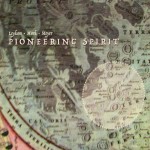
"Pioneering Spirit" is, first and last, a record about sound design as composition. Leykam | Mark | Meyer work in that fertile middle ground where electronics don’t illustrate ideas but behave musically - breathing, stalling, repeating, occasionally misfiring in interesting ways. This is not a record of big gestures; it’s about calibration, balance, and the slow accumulation of detail.
The trio’s division of labor is clear but porous. Roman Leykam’s guitars - especially the fretless and the e-oud - introduce microtonal inflections and grainy attacks that constantly destabilize the electronic grid. Notes slide rather than land, suggesting melody without ever settling into it. Frank Mark’s beats and samples operate less as rhythmic anchors and more as textural engines: patterns loop, fray at the edges, then quietly reassemble, often changing function mid-track. Frank Meyer’s bass and synth work provide weight and depth, but rarely in a traditional low-end role; instead, they act as connective tissue, shaping space rather than asserting dominance.
Tracks like "Invisible Cage" and "Narrow Ridge" stretch time through repetition, but never lapse into stasis. Small shifts - an added harmonic, a recontextualized beat, a filtered tone creeping in from the margins - do most of the narrative work. "Things That Do Not Exist" plays with absence as a musical parameter, letting sounds decay fully before replacing them, creating tension through restraint rather than density.
There’s a consistent attention to timbre over melody. Even when motifs emerge, they feel provisional, almost sketched. "Machine Language" is a good example: rhythmic elements suggest structure, but the real interest lies in how synthetic textures and bass tones rub against each other, producing a kind of low-level friction that keeps the piece alive. "Adorable" and "Interworld" show a lighter touch, with more open harmonies and a slightly warmer palette, yet still avoid anything resembling a chorus or payoff.
What makes "Pioneering Spirit" compelling is its sense of internal coherence. Despite the varied instrumentation, the album maintains a unified sonic grammar: dry beats, carefully processed guitars, restrained use of effects, and a mix that favors clarity over spectacle. Nothing is overplayed; nothing is there to prove a point.
This is music that trusts process - recorded over multiple years, refined without being polished into sterility. It rewards attentive listening rather than emotional shorthand. Not a record that demands your attention, but one that quietly earns it, track by track, texture by texture, decision by decision.
The trio’s division of labor is clear but porous. Roman Leykam’s guitars - especially the fretless and the e-oud - introduce microtonal inflections and grainy attacks that constantly destabilize the electronic grid. Notes slide rather than land, suggesting melody without ever settling into it. Frank Mark’s beats and samples operate less as rhythmic anchors and more as textural engines: patterns loop, fray at the edges, then quietly reassemble, often changing function mid-track. Frank Meyer’s bass and synth work provide weight and depth, but rarely in a traditional low-end role; instead, they act as connective tissue, shaping space rather than asserting dominance.
Tracks like "Invisible Cage" and "Narrow Ridge" stretch time through repetition, but never lapse into stasis. Small shifts - an added harmonic, a recontextualized beat, a filtered tone creeping in from the margins - do most of the narrative work. "Things That Do Not Exist" plays with absence as a musical parameter, letting sounds decay fully before replacing them, creating tension through restraint rather than density.
There’s a consistent attention to timbre over melody. Even when motifs emerge, they feel provisional, almost sketched. "Machine Language" is a good example: rhythmic elements suggest structure, but the real interest lies in how synthetic textures and bass tones rub against each other, producing a kind of low-level friction that keeps the piece alive. "Adorable" and "Interworld" show a lighter touch, with more open harmonies and a slightly warmer palette, yet still avoid anything resembling a chorus or payoff.
What makes "Pioneering Spirit" compelling is its sense of internal coherence. Despite the varied instrumentation, the album maintains a unified sonic grammar: dry beats, carefully processed guitars, restrained use of effects, and a mix that favors clarity over spectacle. Nothing is overplayed; nothing is there to prove a point.
This is music that trusts process - recorded over multiple years, refined without being polished into sterility. It rewards attentive listening rather than emotional shorthand. Not a record that demands your attention, but one that quietly earns it, track by track, texture by texture, decision by decision.
Ov Pain: Free Time
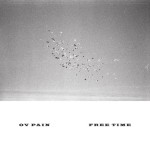
There’s a quiet provocation baked into "Free Time", and it’s not hidden in the track titles or the circuitry. It’s right there in the premise: two people, a handful of synthesizers, a salvaged computer, and the radical act of taking time that isn’t immediately monetised, optimised, or justified. Ov Pain - a project that has always preferred friction over polish - turn “free time” into both method and critique. Not leisure as lifestyle branding, but time briefly wrestled away from the machinery.
Tim (and collaborator) frame the record as improvised songwriting, which is a deceptively modest phrase. What’s actually happening is closer to political economy by other means. These tracks weren’t laboured over, weren’t reverse-engineered for relevance, weren’t subjected to the endless anxious revisions that contemporary productivity culture treats as virtue. They happened. Quickly. Cheaply. Intentionally. In an era where everything must prove its worth before it exists, "Free Time" insists on the opposite order.
Sonically, the album feels lived-in rather than constructed. Synthesizers breathe, stall, circle themselves. Patterns emerge not because they were designed to, but because hands kept moving. There’s a pleasant refusal of spectacle here: no big drops, no virtuosic posturing, no cinematic overstatement. Instead, long-form pieces like “Fascia” or “Slouching Toward Erehwon” unfold with a stubborn, almost domestic logic - the sound of attention sustained without urgency. If this is ambient-adjacent music, it’s the kind that notices the room it’s in.
The political charge isn’t shouted; it’s embedded. Titles like “Comparative Advantage” and “Pusillanimous” quietly smuggle economic and moral language into what otherwise sounds like patient electronic drift. It’s hard not to read this as a sideways glance at systems that reward speed, clarity, and dominance. Ov Pain seem more interested in what happens when you let things remain partially unresolved - musically and ethically. The music doesn’t rush to persuade you; it waits to see if you’re still listening.
There’s also a philosophical modesty at work. Improvisation here isn’t framed as transcendence or risk-taking heroism, but as a practical response to limited means. Low-rent studios, recycled tech, short windows of availability - these aren’t obstacles to overcome, they’re the conditions of possibility. The immediacy and economy Tim mentions don’t just describe how the album was made; they are the album. Form follows circumstance, and circumstance refuses to apologise.
Humour creeps in through understatement. “Well Defined Utter Oblivion” is a title that feels like a shrug directed at managerial language, while the music beneath it quietly unravels any notion of definition at all. Nothing here sounds sarcastic, but there’s a dry awareness that naming things doesn’t necessarily tame them - a useful reminder in times obsessed with labels, metrics, and outcomes.
The land acknowledgment at the end of the attached notes (explaining that "Ov Pain acknowledges the Wurundjeri Woi-wurrung & Bunurong Boon Wurrung peoples of the Kulin Eastern Nation as the owners and traditional custodians of the land on which this album was conceived and recorded") isn’t decorative, either. It reframes the idea of “free time” against histories where time, land, and sovereignty were anything but freely given. That tension lingers uncomfortably, as it should. "Free Time" isn’t escapist; it’s reflective. It recognises that even moments of creative freedom are situated, contingent, and politically charged.
In the end, Ov Pain offer a record that doesn’t argue so much as demonstrate. This is what happens, they seem to say, when you stop asking what something is for and start asking whether it needs to be. "Free Time" doesn’t promise liberation. It sketches a small, stubborn pause - and suggests that, under the right conditions, that might already be enough.
Tim (and collaborator) frame the record as improvised songwriting, which is a deceptively modest phrase. What’s actually happening is closer to political economy by other means. These tracks weren’t laboured over, weren’t reverse-engineered for relevance, weren’t subjected to the endless anxious revisions that contemporary productivity culture treats as virtue. They happened. Quickly. Cheaply. Intentionally. In an era where everything must prove its worth before it exists, "Free Time" insists on the opposite order.
Sonically, the album feels lived-in rather than constructed. Synthesizers breathe, stall, circle themselves. Patterns emerge not because they were designed to, but because hands kept moving. There’s a pleasant refusal of spectacle here: no big drops, no virtuosic posturing, no cinematic overstatement. Instead, long-form pieces like “Fascia” or “Slouching Toward Erehwon” unfold with a stubborn, almost domestic logic - the sound of attention sustained without urgency. If this is ambient-adjacent music, it’s the kind that notices the room it’s in.
The political charge isn’t shouted; it’s embedded. Titles like “Comparative Advantage” and “Pusillanimous” quietly smuggle economic and moral language into what otherwise sounds like patient electronic drift. It’s hard not to read this as a sideways glance at systems that reward speed, clarity, and dominance. Ov Pain seem more interested in what happens when you let things remain partially unresolved - musically and ethically. The music doesn’t rush to persuade you; it waits to see if you’re still listening.
There’s also a philosophical modesty at work. Improvisation here isn’t framed as transcendence or risk-taking heroism, but as a practical response to limited means. Low-rent studios, recycled tech, short windows of availability - these aren’t obstacles to overcome, they’re the conditions of possibility. The immediacy and economy Tim mentions don’t just describe how the album was made; they are the album. Form follows circumstance, and circumstance refuses to apologise.
Humour creeps in through understatement. “Well Defined Utter Oblivion” is a title that feels like a shrug directed at managerial language, while the music beneath it quietly unravels any notion of definition at all. Nothing here sounds sarcastic, but there’s a dry awareness that naming things doesn’t necessarily tame them - a useful reminder in times obsessed with labels, metrics, and outcomes.
The land acknowledgment at the end of the attached notes (explaining that "Ov Pain acknowledges the Wurundjeri Woi-wurrung & Bunurong Boon Wurrung peoples of the Kulin Eastern Nation as the owners and traditional custodians of the land on which this album was conceived and recorded") isn’t decorative, either. It reframes the idea of “free time” against histories where time, land, and sovereignty were anything but freely given. That tension lingers uncomfortably, as it should. "Free Time" isn’t escapist; it’s reflective. It recognises that even moments of creative freedom are situated, contingent, and politically charged.
In the end, Ov Pain offer a record that doesn’t argue so much as demonstrate. This is what happens, they seem to say, when you stop asking what something is for and start asking whether it needs to be. "Free Time" doesn’t promise liberation. It sketches a small, stubborn pause - and suggests that, under the right conditions, that might already be enough.
Joachim Badenhorst: Youran

Some records arrive fully formed; others feel like they’ve been excavated. "Youran" belongs firmly to the second category. It doesn’t present itself so much as it emerges, carrying with it the acoustics of factories, churches, and long collective breaths. Joachim Badenhorst - long established as one of the most curious and shape-shifting figures in European improvised music - uses this project not to show range (that’s a given), but to test how fragile materials behave when placed in very large rooms.
Badenhorst’s background in free jazz and composition is only the starting point here. "Youran" feels less like an ensemble album and more like a controlled experiment in resonance and trust. Musicians from radically different traditions are brought together not to blend into a smooth hybrid, but to coexist slightly uncomfortably: Japanese taiko and koto sit beside church organ, brass, electronics, electric bass, and reeds that alternately murmur, ache, or refuse to behave. The result isn’t fusion; it’s proximity.
The origin story matters, because you can hear it. These pieces were born inside spaces that don’t forgive excess. A former margarine factory soaked in grease and ghosts, a medieval church with reverb measured in geological units - both demand restraint, patience, and a willingness to let sound decay on its own terms. Badenhorst wisely doesn’t try to bottle the three-hour performances wholesale. Instead, he compresses their emotional logic into shorter forms, then hands the material to Rutger Zuydervelt for further erosion. What comes out isn’t polished; it’s worn smooth by handling.
Tracks unfold like hesitant gestures rather than statements. Horns often appear as breath before pitch, percussion as texture before rhythm. The church organ looms not as a king of instruments, but as a slow-moving weather system. Electronics don’t dominate; they corrode gently, blurring edges, softening attacks, making sure nothing feels too stable. Even when a melody briefly surfaces, it behaves like a thought you don’t quite trust yet.
There’s something quietly physical about "Youran". Despite its celestial leanings, it’s anchored in weight - of air, of architecture, of bodies moving through space. Titles like “Pulverized Light” or “Live Up To The Weight” feel less poetic than diagnostic. This is music about carrying things: memory, doubt, attention. And yes, sometimes it creaks under the load, which is part of the point.
Badenhorst has always been interested in the porous boundary between composition and erosion, but here that interest turns inward. The album doesn’t aim for transcendence; it aims for holding - holding sounds together just long enough before they fall apart. It’s serious music, but not solemn. There are moments where it feels like the ensemble is collectively shrugging and saying, “Well, this is what happens if we stand here and listen”.
"Youran" - Japanese word for “cradle” - is an apt title. Not because the music comforts, but because it rocks gently between states: live and studio, sacred and industrial, structure and collapse. It doesn’t resolve uncertainty; it suspends it, carefully, and asks you to sit with the vibration. Not a dramatic invitation, not a manifesto - more like an open space where something fragile might grow, or quietly fail, and either outcome feels honest.
Badenhorst’s background in free jazz and composition is only the starting point here. "Youran" feels less like an ensemble album and more like a controlled experiment in resonance and trust. Musicians from radically different traditions are brought together not to blend into a smooth hybrid, but to coexist slightly uncomfortably: Japanese taiko and koto sit beside church organ, brass, electronics, electric bass, and reeds that alternately murmur, ache, or refuse to behave. The result isn’t fusion; it’s proximity.
The origin story matters, because you can hear it. These pieces were born inside spaces that don’t forgive excess. A former margarine factory soaked in grease and ghosts, a medieval church with reverb measured in geological units - both demand restraint, patience, and a willingness to let sound decay on its own terms. Badenhorst wisely doesn’t try to bottle the three-hour performances wholesale. Instead, he compresses their emotional logic into shorter forms, then hands the material to Rutger Zuydervelt for further erosion. What comes out isn’t polished; it’s worn smooth by handling.
Tracks unfold like hesitant gestures rather than statements. Horns often appear as breath before pitch, percussion as texture before rhythm. The church organ looms not as a king of instruments, but as a slow-moving weather system. Electronics don’t dominate; they corrode gently, blurring edges, softening attacks, making sure nothing feels too stable. Even when a melody briefly surfaces, it behaves like a thought you don’t quite trust yet.
There’s something quietly physical about "Youran". Despite its celestial leanings, it’s anchored in weight - of air, of architecture, of bodies moving through space. Titles like “Pulverized Light” or “Live Up To The Weight” feel less poetic than diagnostic. This is music about carrying things: memory, doubt, attention. And yes, sometimes it creaks under the load, which is part of the point.
Badenhorst has always been interested in the porous boundary between composition and erosion, but here that interest turns inward. The album doesn’t aim for transcendence; it aims for holding - holding sounds together just long enough before they fall apart. It’s serious music, but not solemn. There are moments where it feels like the ensemble is collectively shrugging and saying, “Well, this is what happens if we stand here and listen”.
"Youran" - Japanese word for “cradle” - is an apt title. Not because the music comforts, but because it rocks gently between states: live and studio, sacred and industrial, structure and collapse. It doesn’t resolve uncertainty; it suspends it, carefully, and asks you to sit with the vibration. Not a dramatic invitation, not a manifesto - more like an open space where something fragile might grow, or quietly fail, and either outcome feels honest.