
Browse by Genre
Industrial Music / Industrial Metal / Aggro Industrial / Electro Metal
Industrial Noise / Power Noise / Harsh Noise
Synth Pop / Electro Pop / Synth-Electronica
Techno / Trance / Goa / Drum'n'Bass / Jungle / Tribal / Trip-Hop
Ambient / Electronica / Ethereal / Dub / Soundscapes / Abstract
Experimental / Avantgarde / Weird & Wired / Glitch / Noise / Field Recording
Dark / Gothic / Wave / New Wave / Dark Wave / Industrial Gothic
New Music / Downtown / Avantgarde Jazz / New Classical / World
Search Reviews
Music Reviews
Lettuce: Cook

If funk were a kitchen, Lettuce would be the crew that sharpens the knives before you even sit down. "Cook" doesn’t arrive with revolutionary intent, nor does it pretend to reinvent the stove. Instead, it does something rarer and arguably harder in 2025: it sounds confident. Not loud-about-it confident, but the quiet assurance of musicians who know exactly when to add salt and when to let the groove simmer.
Lettuce have been together long enough for telepathy to replace rehearsal-room debate, and that longevity is all over "Cook". The sextet - born, famously, at Berklee - have always treated funk as a living organism rather than a museum piece. Here, the lineage is explicit but never stiff. James Brown’s ghost nods approvingly, Tower of Power’s horn discipline looms large, and yet the band never sinks into tribute-band inertia. This is funk as practice, not reenactment.
Tracks like "Clav It Your Way" and "7 Tribes" lean hard into rhythmic elasticity: Deitch’s drumming snaps and breathes, Coomes’ bass moves with the calm authority of someone who knows the floor won’t give way, and the horn section cuts with precision rather than brute force. The sound is thick but not crowded - three-dimensional, as the band themselves suggest - where every element knows its role and enjoys it.
The album’s pacing is clever without being showy. The brief "Sesshins" interludes function less as skits and more as palate cleansers, resetting the ear before the next full-bodied course. When Lettuce slow things down, as on "Breathe" or "Ghosts of Yest", they resist sentimentality. These tracks don’t melt; they hover. Nigel Hall’s vocals glide rather than plead, and the keys shimmer with restraint, proving that funk doesn’t need to sweat constantly to remain physical.
Covering Keni Burke’s "Rising to the Top" is a risky move - sacred territory for groove aficionados - but Lettuce approach it with respect and just enough swagger to justify the attempt. Elsewhere, "Keep On", co-written with Emilio Castillo, wears its message plainly, almost stubbornly so. In an era obsessed with irony, there’s something faintly rebellious about a song that just tells you to persist and means it.
What "Cook" ultimately reveals is a band thinking beyond records as isolated objects. The wine, the recipe book, the scholarship initiative - these could feel gimmicky in other hands. Here, they read as extensions of a philosophy: music as something shared, embodied, and passed on. You don’t just listen to Lettuce; you gather around them.
Is "Cook" radical? No. Is it necessary? Probably more than we admit. It’s an album that trusts groove as a form of knowledge, repetition as refinement, and pleasure as something worth taking seriously. Lettuce aren’t chasing the future or embalming the past. They’re doing what seasoned cooks do best: feeding people well, night after night, and making it look easy.
Lettuce have been together long enough for telepathy to replace rehearsal-room debate, and that longevity is all over "Cook". The sextet - born, famously, at Berklee - have always treated funk as a living organism rather than a museum piece. Here, the lineage is explicit but never stiff. James Brown’s ghost nods approvingly, Tower of Power’s horn discipline looms large, and yet the band never sinks into tribute-band inertia. This is funk as practice, not reenactment.
Tracks like "Clav It Your Way" and "7 Tribes" lean hard into rhythmic elasticity: Deitch’s drumming snaps and breathes, Coomes’ bass moves with the calm authority of someone who knows the floor won’t give way, and the horn section cuts with precision rather than brute force. The sound is thick but not crowded - three-dimensional, as the band themselves suggest - where every element knows its role and enjoys it.
The album’s pacing is clever without being showy. The brief "Sesshins" interludes function less as skits and more as palate cleansers, resetting the ear before the next full-bodied course. When Lettuce slow things down, as on "Breathe" or "Ghosts of Yest", they resist sentimentality. These tracks don’t melt; they hover. Nigel Hall’s vocals glide rather than plead, and the keys shimmer with restraint, proving that funk doesn’t need to sweat constantly to remain physical.
Covering Keni Burke’s "Rising to the Top" is a risky move - sacred territory for groove aficionados - but Lettuce approach it with respect and just enough swagger to justify the attempt. Elsewhere, "Keep On", co-written with Emilio Castillo, wears its message plainly, almost stubbornly so. In an era obsessed with irony, there’s something faintly rebellious about a song that just tells you to persist and means it.
What "Cook" ultimately reveals is a band thinking beyond records as isolated objects. The wine, the recipe book, the scholarship initiative - these could feel gimmicky in other hands. Here, they read as extensions of a philosophy: music as something shared, embodied, and passed on. You don’t just listen to Lettuce; you gather around them.
Is "Cook" radical? No. Is it necessary? Probably more than we admit. It’s an album that trusts groove as a form of knowledge, repetition as refinement, and pleasure as something worth taking seriously. Lettuce aren’t chasing the future or embalming the past. They’re doing what seasoned cooks do best: feeding people well, night after night, and making it look easy.
Steve Roach & SoRIAH: Curandero
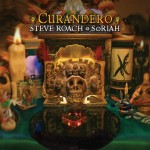
There are albums that politely ask for your attention, and others that grab you by the collar and whisper, "don’t resist". "Curandero" belongs firmly to the second category. This first collaboration between Steve Roach and SoRIAH doesn’t merely play - it performs a function. What that function is depends on the listener: meditation, confrontation, trance, or a gentle sonic shove into unfamiliar inner territory.
Steve Roach, a foundational figure in ambient and tribal electronic music, has spent decades refining a language that moves slowly but speaks in deep tones. His long relationship with the desert landscapes of the American Southwest isn’t a romantic footnote; it’s structural. On "Curandero", his synthesisers, sequencers and ritual percussion don’t decorate the space - they prepare it, laying down a terrain that feels ancient without cosplay, expansive without drifting into vagueness.
Enter SoRIAH, whose throat singing is less vocal performance and more presence. His overtone work, rooted in Khöömei traditions yet clearly shaped by a life of travel and hybrid practice, doesn’t float above Roach’s electronics - it wrestles with them, merges, splits, reappears elsewhere. The result is not a fusion in the polite world-music sense, but a genuine interdependence: remove one voice and the structure collapses.
Tracks like "Analog Cave" and "Shadow Current" unfold with ritual patience. Rhythms pulse rather than push, suggesting movement without destination. There’s a physicality here - low frequencies press against the chest, while higher overtones shimmer like heat mirages. Online commentary often frames the album as healing, but that word can be misleading. This isn’t spa music. It’s closer to controlled exposure: the sound equivalent of standing very still while something large circles you.
"Stars of Darkness" and "Shard Tribe" introduce denser layers, where Roach’s sequenced patterns begin to feel almost architectural, and SoRIAH’s voice fractures into multiple spectral roles - chant, breath, warning signal. At moments, it’s unsettling; at others, strangely grounding. The humour, if any, lies in the album’s absolute lack of irony. In 2025, committing this hard to ritual seriousness is practically subversive.
What makes "Curandero" compelling is its refusal to explain itself. The references to indigenous knowledge, shamanic practice and altered states aren’t presented as concepts to be consumed, but as conditions to be entered - carefully, respectfully, and at your own risk. Roach and SoRIAH don’t promise enlightenment. They offer a doorway, hold it open, and let the sound do the rest.
This is music that doesn’t ask whether you believe in its power. It proceeds on the assumption that sound, given enough space and intention, will do what it has always done: unsettle, connect, and remind us that listening can still be an act of transformation. Whether you call that healing or simply attention sharpened to a blade is entirely up to you.
Steve Roach, a foundational figure in ambient and tribal electronic music, has spent decades refining a language that moves slowly but speaks in deep tones. His long relationship with the desert landscapes of the American Southwest isn’t a romantic footnote; it’s structural. On "Curandero", his synthesisers, sequencers and ritual percussion don’t decorate the space - they prepare it, laying down a terrain that feels ancient without cosplay, expansive without drifting into vagueness.
Enter SoRIAH, whose throat singing is less vocal performance and more presence. His overtone work, rooted in Khöömei traditions yet clearly shaped by a life of travel and hybrid practice, doesn’t float above Roach’s electronics - it wrestles with them, merges, splits, reappears elsewhere. The result is not a fusion in the polite world-music sense, but a genuine interdependence: remove one voice and the structure collapses.
Tracks like "Analog Cave" and "Shadow Current" unfold with ritual patience. Rhythms pulse rather than push, suggesting movement without destination. There’s a physicality here - low frequencies press against the chest, while higher overtones shimmer like heat mirages. Online commentary often frames the album as healing, but that word can be misleading. This isn’t spa music. It’s closer to controlled exposure: the sound equivalent of standing very still while something large circles you.
"Stars of Darkness" and "Shard Tribe" introduce denser layers, where Roach’s sequenced patterns begin to feel almost architectural, and SoRIAH’s voice fractures into multiple spectral roles - chant, breath, warning signal. At moments, it’s unsettling; at others, strangely grounding. The humour, if any, lies in the album’s absolute lack of irony. In 2025, committing this hard to ritual seriousness is practically subversive.
What makes "Curandero" compelling is its refusal to explain itself. The references to indigenous knowledge, shamanic practice and altered states aren’t presented as concepts to be consumed, but as conditions to be entered - carefully, respectfully, and at your own risk. Roach and SoRIAH don’t promise enlightenment. They offer a doorway, hold it open, and let the sound do the rest.
This is music that doesn’t ask whether you believe in its power. It proceeds on the assumption that sound, given enough space and intention, will do what it has always done: unsettle, connect, and remind us that listening can still be an act of transformation. Whether you call that healing or simply attention sharpened to a blade is entirely up to you.
Afterlife: Standing at the foot of a mountain
Artist: Afterlife (@)
Title: Standing at the foot of a mountain
Format: Download Only (MP3 + Lossless)
Label: Subatomic UK
Rated:

Title: Standing at the foot of a mountain
Format: Download Only (MP3 + Lossless)
Label: Subatomic UK
Rated:
Standing at the foot of a mountain is a dangerous position for ambient music. You can either stare upwards, paralysed by symbolism, or you can start walking and let your legs - and your ears - do the thinking. Afterlife, the long-running alias of British musician Steve Miller, chooses the second option. No grand manifesto, no mystical fog machine on full blast: just a steady ascent made of sound, patience, and a quietly stubborn belief that music can still mean something without shouting about it.
Miller has been orbiting the ambient constellation for decades now, often favouring melody over abstraction, emotion over theory. On "Standing At The Foot Of The Mountain", released via Subatomic UK, that tendency crystallises into a set of fifteen pieces that feel less like tracks and more like weather patterns you slowly learn to recognise. Reviews online tend to underline the album’s warmth and accessibility - rightly so - but what’s more interesting is how this warmth is earned, not assumed.
The opening title track doesn’t announce itself; it clears its throat. Gentle synth layers suggest space without pretending to be cosmic, while the pacing already hints at the album’s central idea: movement without urgency. From there, "Playing Place" and "Seasons" sketch a landscape where repetition isn’t stagnation but reassurance - a looping path you walk because it feels good under your feet.
One of the album’s emotional hinges is "Mono No Aware", where piano and double bass meet with a tenderness that borders on vulnerability. The reference to impermanence isn’t decorative; it’s embedded in the way notes appear, linger, and quietly step aside. This is ambient music that understands loss not as drama, but as texture.
Miller wisely avoids staying in one emotional register. "No Fight No Blame" introduces a darker grain, with pulses that feel less meditative and more interrogative - a reminder that calm isn’t always innocent. "Wu Wei" and "Tripping In My Garden" then loosen the grip again, filtering light through melody, as if balance were something you continuously adjust rather than achieve.
Elsewhere, titles like "The Future Is Not Cancelled" risk sounding sloganistic, but the music itself refuses easy optimism. It glides, hesitates, recalibrates. Even "Tranquility Suite" carries an undertow of unease, its chimes less about peace than about unresolved stillness - tranquillity with a question mark.
By the time "Emptiness" closes the album, the word feels almost ironic. The piece is full, tactile, intimate, suggesting that emptiness here isn’t absence but space - room for reflection, dialogue, maybe even doubt.
If there’s humour in this record, it’s understated: the quiet audacity of making sincere, melodic ambient music in an era that often rewards either maximalism or irony. "Standing At The Foot Of The Mountain" doesn’t pretend to reinvent the genre. Instead, it reminds us why we started climbing in the first place. Slow steps, open ears, no shortcuts. And somehow, that still feels like a radical act.
Miller has been orbiting the ambient constellation for decades now, often favouring melody over abstraction, emotion over theory. On "Standing At The Foot Of The Mountain", released via Subatomic UK, that tendency crystallises into a set of fifteen pieces that feel less like tracks and more like weather patterns you slowly learn to recognise. Reviews online tend to underline the album’s warmth and accessibility - rightly so - but what’s more interesting is how this warmth is earned, not assumed.
The opening title track doesn’t announce itself; it clears its throat. Gentle synth layers suggest space without pretending to be cosmic, while the pacing already hints at the album’s central idea: movement without urgency. From there, "Playing Place" and "Seasons" sketch a landscape where repetition isn’t stagnation but reassurance - a looping path you walk because it feels good under your feet.
One of the album’s emotional hinges is "Mono No Aware", where piano and double bass meet with a tenderness that borders on vulnerability. The reference to impermanence isn’t decorative; it’s embedded in the way notes appear, linger, and quietly step aside. This is ambient music that understands loss not as drama, but as texture.
Miller wisely avoids staying in one emotional register. "No Fight No Blame" introduces a darker grain, with pulses that feel less meditative and more interrogative - a reminder that calm isn’t always innocent. "Wu Wei" and "Tripping In My Garden" then loosen the grip again, filtering light through melody, as if balance were something you continuously adjust rather than achieve.
Elsewhere, titles like "The Future Is Not Cancelled" risk sounding sloganistic, but the music itself refuses easy optimism. It glides, hesitates, recalibrates. Even "Tranquility Suite" carries an undertow of unease, its chimes less about peace than about unresolved stillness - tranquillity with a question mark.
By the time "Emptiness" closes the album, the word feels almost ironic. The piece is full, tactile, intimate, suggesting that emptiness here isn’t absence but space - room for reflection, dialogue, maybe even doubt.
If there’s humour in this record, it’s understated: the quiet audacity of making sincere, melodic ambient music in an era that often rewards either maximalism or irony. "Standing At The Foot Of The Mountain" doesn’t pretend to reinvent the genre. Instead, it reminds us why we started climbing in the first place. Slow steps, open ears, no shortcuts. And somehow, that still feels like a radical act.
Taylor Deupree & Zimoun: Wind Dynamic Organ, Deviations
Artist: Taylor Deupree & Zimoun (@)
Title: Wind Dynamic Organ, Deviations
Format: LP
Label: 12k (@)
Rated:

Title: Wind Dynamic Organ, Deviations
Format: LP
Label: 12k (@)
Rated:
If "Wind Dynamic Organ, One & Two" was Zimoun standing quietly inside a breathing building, "Wind Dynamic Organ, Deviations" is what happens when someone switches on the lab lights and starts asking inconvenient questions. This is the same instrument, the same air, the same Bern Minster - yet the atmosphere shifts. Where the solo album trusted duration and physical presence, this collaboration with Taylor Deupree leans into curiosity, detours, and the gentle art of tampering.
Zimoun, whose practice habitually lives at the intersection of installation art and sound, brings with him an intimate knowledge of the organ’s behavior: how wind pressure wavers, how tones hover at the edge of stability, how air can sound like thought before it becomes language. Deupree, founder of 12k and a long-time explorer of digital restraint, approaches this material less as something sacred than as something malleable. The result is not desecration - far from it - but a series of careful incisions, each one revealing new layers under the skin of the sound.
The six "Deviations" are concise by comparison, almost aphoristic. Each piece takes a fragment of the organ’s voice and nudges it sideways: stretched, filtered, folded, refracted. Harmonics are teased apart like threads from an old fabric; low frequencies are massaged into soft, ominous pillows; high-end air noise becomes a grainy halo, hovering somewhere between mist and circuitry. Nothing here feels arbitrarily processed. Even at its most abstract, the music retains the memory of wind moving through pipes - breath remains the DNA.
There’s a subtle playfulness at work, too. Titles as austere as "Deviation I–VI" might suggest academic severity, but the music itself often smirks quietly. Sounds wobble, falter, reassemble. Moments of near-silence sit cheek by jowl with dense, softly buzzing clusters, as if the organ were briefly daydreaming about becoming something else entirely. This is experimentation without bravado: no grand gestures, no dramatic “look what we did to the organ” theatrics. Just patient listening, followed by thoughtful interference.
What makes "Deviations" compelling is the way it refuses to choose sides. It’s neither purely acoustic nor fully electronic, neither documentation nor composition in the traditional sense. Instead, it operates in a liminal zone where the instrument’s physical reality is continuously reinterpreted. You can hear the church space collapse into something more intimate, almost headphone-sized; you can also hear digital processes stretch the sound beyond anything the pipes could physically sustain. It’s less a remix than a conversation conducted in slow motion.
In the context of both artists’ careers, the album feels quietly inevitable. Zimoun has long been interested in systems that generate complexity through minimal intervention; Deupree has built a catalogue around subtraction, texture, and attention to micro-detail. Here, their sensibilities overlap without cancelling each other out. The organ remains stubbornly itself, but it’s allowed - encouraged, even - to wander.
"Wind Dynamic Organ, Deviations" doesn’t try to replace the solo recordings; it shadows them, questions them, pokes at their assumptions. It suggests that even the most carefully observed sound can be turned slightly, productively, off-axis. And in that small act of deviation, it reminds us that exploration doesn’t always mean going further - sometimes it just means listening again, from a different angle, while the air keeps moving.
Zimoun, whose practice habitually lives at the intersection of installation art and sound, brings with him an intimate knowledge of the organ’s behavior: how wind pressure wavers, how tones hover at the edge of stability, how air can sound like thought before it becomes language. Deupree, founder of 12k and a long-time explorer of digital restraint, approaches this material less as something sacred than as something malleable. The result is not desecration - far from it - but a series of careful incisions, each one revealing new layers under the skin of the sound.
The six "Deviations" are concise by comparison, almost aphoristic. Each piece takes a fragment of the organ’s voice and nudges it sideways: stretched, filtered, folded, refracted. Harmonics are teased apart like threads from an old fabric; low frequencies are massaged into soft, ominous pillows; high-end air noise becomes a grainy halo, hovering somewhere between mist and circuitry. Nothing here feels arbitrarily processed. Even at its most abstract, the music retains the memory of wind moving through pipes - breath remains the DNA.
There’s a subtle playfulness at work, too. Titles as austere as "Deviation I–VI" might suggest academic severity, but the music itself often smirks quietly. Sounds wobble, falter, reassemble. Moments of near-silence sit cheek by jowl with dense, softly buzzing clusters, as if the organ were briefly daydreaming about becoming something else entirely. This is experimentation without bravado: no grand gestures, no dramatic “look what we did to the organ” theatrics. Just patient listening, followed by thoughtful interference.
What makes "Deviations" compelling is the way it refuses to choose sides. It’s neither purely acoustic nor fully electronic, neither documentation nor composition in the traditional sense. Instead, it operates in a liminal zone where the instrument’s physical reality is continuously reinterpreted. You can hear the church space collapse into something more intimate, almost headphone-sized; you can also hear digital processes stretch the sound beyond anything the pipes could physically sustain. It’s less a remix than a conversation conducted in slow motion.
In the context of both artists’ careers, the album feels quietly inevitable. Zimoun has long been interested in systems that generate complexity through minimal intervention; Deupree has built a catalogue around subtraction, texture, and attention to micro-detail. Here, their sensibilities overlap without cancelling each other out. The organ remains stubbornly itself, but it’s allowed - encouraged, even - to wander.
"Wind Dynamic Organ, Deviations" doesn’t try to replace the solo recordings; it shadows them, questions them, pokes at their assumptions. It suggests that even the most carefully observed sound can be turned slightly, productively, off-axis. And in that small act of deviation, it reminds us that exploration doesn’t always mean going further - sometimes it just means listening again, from a different angle, while the air keeps moving.
Zimoun: Wind Dynamic Organ, One & Two
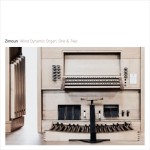
There are organs, and then there are weather systems disguised as instruments. "Wind Dynamic Organ, One & Two" belongs firmly to the second category. Zimoun - artist, sculptor of sound, and long-time engineer of situations where matter learns to vibrate - returns to 12k with two long pieces that feel less played than inhabited. This is not organ music in the liturgical sense, nor in the “press a key, receive a tone” tradition. This is air thinking out loud.
Zimoun’s work has always orbited around simple means and complex consequences: motors, wires, cardboard boxes, springs - systems set in motion and left to negotiate their own behavior. Here the material is nobler, heavier, centuries old, yet radically re-imagined. The Wind Dynamic Organ in the Bern Minster is a research instrument rather than a monument: wind pressure and airflow are continuously malleable, tone is no longer binary, and sound lives in a permanent state of becoming. Notes don’t arrive; they emerge, hesitate, fray at the edges, sometimes dissolve back into breath.
The two pieces - "One" and "Two" - unfold slowly, almost obstinately so, each occupying its own gravity field. Time stretches, but not in the ambient wallpaper sense. This is duration with muscles. Zimoun works the instrument like a sculptor works clay, except the clay keeps inhaling. Swells rise, overlap, and lean into one another; harmonics shimmer like mirages; low frequencies loom with a bodily presence that feels architectural rather than musical. You don’t so much listen as find yourself standing inside the sound, checking whether the walls are still where you left them.
What’s striking is how the organ never settles into grandeur. Despite its scale and ecclesiastical setting, the music resists triumph and avoids spectacle. Instead, it hovers in that ambiguous zone between tone and noise, intention and accident. Air becomes a collaborator with its own agenda. At times you hear something close to a chord; moments later it’s just turbulence, a soft hiss, a trembling threshold where pitch hasn’t decided what it wants to be yet. It’s oddly intimate for something so large - like being close enough to hear a building breathe.
There’s also a quiet humor in the premise. An organ that refuses to behave like an organ is a gentle provocation, a reminder that even the most tradition-heavy instruments can be persuaded to misbehave if you treat them less like relics and more like living systems. Zimoun doesn’t impose drama; he allows instability. The result is music that feels calm and slightly unnerving at the same time, serene yet alert, as if silence itself were being slowly kneaded.
Released by 12k - a label long invested in subtle shifts, minimal gestures, and patient listening - "Wind Dynamic Organ, One & Two" fits naturally into a lineage of works that privilege texture over statement. But it also stands apart, anchored in a very specific place, technology, and acoustic reality. The Bern Minster isn’t just a recording venue; it’s an active participant, shaping reverberation into something almost sentient.
In the end, this is not an album that explains itself. It doesn’t narrate, it doesn’t climax, it doesn’t resolve. It simply holds. Air moves. Sound wavers. Time loosens its grip. And somewhere between the pipe and the listener, music remembers that before it was melody, it was breath.
Zimoun’s work has always orbited around simple means and complex consequences: motors, wires, cardboard boxes, springs - systems set in motion and left to negotiate their own behavior. Here the material is nobler, heavier, centuries old, yet radically re-imagined. The Wind Dynamic Organ in the Bern Minster is a research instrument rather than a monument: wind pressure and airflow are continuously malleable, tone is no longer binary, and sound lives in a permanent state of becoming. Notes don’t arrive; they emerge, hesitate, fray at the edges, sometimes dissolve back into breath.
The two pieces - "One" and "Two" - unfold slowly, almost obstinately so, each occupying its own gravity field. Time stretches, but not in the ambient wallpaper sense. This is duration with muscles. Zimoun works the instrument like a sculptor works clay, except the clay keeps inhaling. Swells rise, overlap, and lean into one another; harmonics shimmer like mirages; low frequencies loom with a bodily presence that feels architectural rather than musical. You don’t so much listen as find yourself standing inside the sound, checking whether the walls are still where you left them.
What’s striking is how the organ never settles into grandeur. Despite its scale and ecclesiastical setting, the music resists triumph and avoids spectacle. Instead, it hovers in that ambiguous zone between tone and noise, intention and accident. Air becomes a collaborator with its own agenda. At times you hear something close to a chord; moments later it’s just turbulence, a soft hiss, a trembling threshold where pitch hasn’t decided what it wants to be yet. It’s oddly intimate for something so large - like being close enough to hear a building breathe.
There’s also a quiet humor in the premise. An organ that refuses to behave like an organ is a gentle provocation, a reminder that even the most tradition-heavy instruments can be persuaded to misbehave if you treat them less like relics and more like living systems. Zimoun doesn’t impose drama; he allows instability. The result is music that feels calm and slightly unnerving at the same time, serene yet alert, as if silence itself were being slowly kneaded.
Released by 12k - a label long invested in subtle shifts, minimal gestures, and patient listening - "Wind Dynamic Organ, One & Two" fits naturally into a lineage of works that privilege texture over statement. But it also stands apart, anchored in a very specific place, technology, and acoustic reality. The Bern Minster isn’t just a recording venue; it’s an active participant, shaping reverberation into something almost sentient.
In the end, this is not an album that explains itself. It doesn’t narrate, it doesn’t climax, it doesn’t resolve. It simply holds. Air moves. Sound wavers. Time loosens its grip. And somewhere between the pipe and the listener, music remembers that before it was melody, it was breath.