
Browse by Genre
Industrial Music / Industrial Metal / Aggro Industrial / Electro Metal
Industrial Noise / Power Noise / Harsh Noise
Synth Pop / Electro Pop / Synth-Electronica
Techno / Trance / Goa / Drum'n'Bass / Jungle / Tribal / Trip-Hop
Ambient / Electronica / Ethereal / Dub / Soundscapes / Abstract
Experimental / Avantgarde / Weird & Wired / Glitch / Noise / Field Recording
Dark / Gothic / Wave / New Wave / Dark Wave / Industrial Gothic
New Music / Downtown / Avantgarde Jazz / New Classical / World
Search Reviews
Music Reviews
Michaël|le Grébil Liberg (performing Guillaume de Machault) ft.Clara Levy: L'Ymage

Artist: Michaël|le Grébil Liberg (performing Guillaume de Machault) ft.Clara Levy (@)
Title: L'Ymage
Format: 12" x 2 + Download
Label: Sub Rosa (@)
Rated:

Title: L'Ymage
Format: 12" x 2 + Download
Label: Sub Rosa (@)
Rated:
There are records that want to be played, and others that want to be entered. "L’Ymage" clearly belongs to the second category. It doesn’t start so much as it opens - like a manuscript left ajar on a lectern, quietly confident that you’ll slow down on your own. If you don’t, it won’t chase you. This music has waited six centuries; it can wait five more minutes for you to sit properly.
Michaël|le Grébil Liberg approaches Guillaume de Machaut not as a museum piece, but as a living organism with an unusually long memory. The temptation, with medieval repertoire, is either to embalm it in reverence or to aggressively modernize it into relevance. "L’Ymage" does neither. Instead, it practices a rarer art: re-listening. The result feels less like a reinterpretation and more like a careful reactivation, as if Machaut’s music were being asked, very politely, what it still wants to say.
The opening "Ma Fin est mon Commencement" sets the tone with a sly conceptual wink - yes, the end is the beginning, and also the middle, and also probably happening right now. The instrumental reworking, with cetera oscura, violin, and piccolo cello, turns Machaut’s famous circular logic into something tactile and bodily. Lines fold back on themselves with calm inevitability, like a thought you keep returning to because it hasn’t finished working on you yet. It’s rigorous, but never dry; serious, but not stiff. Scholarly, without smelling of dust.
At the core lies "Le Lay de l’Ymage", sprawling and unapologetic in its duration. Forty-five minutes in which time is not filled but stretched, thinned out, made breathable again. Grébil Liberg’s voice avoids theatrical excess; it inhabits the text rather than performing it. The modal language unfolds patiently, allowing doubt, tenderness, and that beautifully untranslatable notion of dulcitude to do the heavy lifting. In an era obsessed with speed and compression, this feels almost radical: music that insists on duration as meaning, not as indulgence.
And just when you think you’ve grasped the shape of the object, "Oyseaulx d’Avryl" quietly destabilizes everything. This Hörbild - part sound-poem, part aural cinema - lets field recordings, distant voices, and acoustic fragments blur the line between past and present. Birds appear less as symbols than as witnesses. Time stops behaving like a straight line and becomes a layered terrain you can walk across in several directions at once. It’s gently uncanny, never theatrical, and surprisingly intimate for something so conceptually vast.
What makes "L’Ymage" compelling is not only its deep historical grounding, but the way Grébil Liberg’s broader artistic practice - spanning early music, experimental composition, theatre, and film - filters into every decision. You can hear Feldman’s patience, Scelsi’s devotion to inner vibration, Cage’s trust in attention, even Eno’s sense of sound as environment rather than statement. Yet none of this feels referential or name-droppy; it’s fully metabolized.
If there’s humor here, it’s quiet and philosophical: the irony of releasing a lavish, slow, fragile object in a world optimized for distraction; the gentle absurdity of asking a 14th-century composer to help us think about contemporary collapse and hope. And yet - against all odds - it works.
"L’Ymage" is not a record you consume. It’s one you consent to. A mirror held up across centuries, not to flatter our age, but to remind it that beauty, doubt, and attentiveness have always been forms of resistance. In that sense, this is not early music at all. It’s late music - for late afternoons, late civilizations, and listeners willing to begin again, slowly.
Michaël|le Grébil Liberg approaches Guillaume de Machaut not as a museum piece, but as a living organism with an unusually long memory. The temptation, with medieval repertoire, is either to embalm it in reverence or to aggressively modernize it into relevance. "L’Ymage" does neither. Instead, it practices a rarer art: re-listening. The result feels less like a reinterpretation and more like a careful reactivation, as if Machaut’s music were being asked, very politely, what it still wants to say.
The opening "Ma Fin est mon Commencement" sets the tone with a sly conceptual wink - yes, the end is the beginning, and also the middle, and also probably happening right now. The instrumental reworking, with cetera oscura, violin, and piccolo cello, turns Machaut’s famous circular logic into something tactile and bodily. Lines fold back on themselves with calm inevitability, like a thought you keep returning to because it hasn’t finished working on you yet. It’s rigorous, but never dry; serious, but not stiff. Scholarly, without smelling of dust.
At the core lies "Le Lay de l’Ymage", sprawling and unapologetic in its duration. Forty-five minutes in which time is not filled but stretched, thinned out, made breathable again. Grébil Liberg’s voice avoids theatrical excess; it inhabits the text rather than performing it. The modal language unfolds patiently, allowing doubt, tenderness, and that beautifully untranslatable notion of dulcitude to do the heavy lifting. In an era obsessed with speed and compression, this feels almost radical: music that insists on duration as meaning, not as indulgence.
And just when you think you’ve grasped the shape of the object, "Oyseaulx d’Avryl" quietly destabilizes everything. This Hörbild - part sound-poem, part aural cinema - lets field recordings, distant voices, and acoustic fragments blur the line between past and present. Birds appear less as symbols than as witnesses. Time stops behaving like a straight line and becomes a layered terrain you can walk across in several directions at once. It’s gently uncanny, never theatrical, and surprisingly intimate for something so conceptually vast.
What makes "L’Ymage" compelling is not only its deep historical grounding, but the way Grébil Liberg’s broader artistic practice - spanning early music, experimental composition, theatre, and film - filters into every decision. You can hear Feldman’s patience, Scelsi’s devotion to inner vibration, Cage’s trust in attention, even Eno’s sense of sound as environment rather than statement. Yet none of this feels referential or name-droppy; it’s fully metabolized.
If there’s humor here, it’s quiet and philosophical: the irony of releasing a lavish, slow, fragile object in a world optimized for distraction; the gentle absurdity of asking a 14th-century composer to help us think about contemporary collapse and hope. And yet - against all odds - it works.
"L’Ymage" is not a record you consume. It’s one you consent to. A mirror held up across centuries, not to flatter our age, but to remind it that beauty, doubt, and attentiveness have always been forms of resistance. In that sense, this is not early music at all. It’s late music - for late afternoons, late civilizations, and listeners willing to begin again, slowly.
Adrian Lane: Their Ghosts and Ours
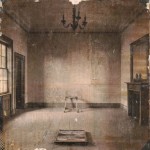
"Their Ghosts and Ours" moves like someone walking slowly through a place they shouldn’t really be in anymore - not out of fear, but out of respect. Adrian Lane doesn’t kick doors down or dramatize decay; he listens to it. And then, very carefully, he sets it to music.
Lane has long worked in that fertile borderland where acoustic timbres are treated with the mindset of an electronic composer, and here that approach feels especially apt. Piano lines arrive half-lit, strings hover like dust caught in afternoon sun, clarinet breathes rather than speaks. Around them, field recordings and degraded textures don’t function as atmosphere in the lazy ambient sense; they behave more like evidence. You can almost hear the grain of walls, the reluctance of old floors, the way silence settles differently in places that have been left behind.
The collaboration-by-proxy with poet Neil McRoberts is crucial, even when the poem itself isn’t directly sung or recited. The album feels guided by a literary gravity: each track reads like a paragraph rather than a cue, unfolding with patience and an unshowy emotional intelligence. Melodies are melancholic, yes, but never syrupy. Lane understands that nostalgia works best when it’s allowed to fray at the edges. Too much polish and memory turns into fiction; here, it stays human.
What makes the record quietly compelling is its constant negotiation between erosion and clarity. Gritty, almost corroded sounds rub up against moments of disarming beauty, as if the music itself were unsure whether it’s remembering or discovering. Pieces like the title track or "To This Place Awakened" feel suspended between acceptance and ache, while shorter interludes function like glances sideways - brief, necessary pauses that stop the album from turning into a single, uninterrupted sigh.
There’s also an understated sense of narrative pacing. Lane resists the temptation to stretch everything into slow-motion reverie. Some tracks end just as they become comfortable, others linger long enough to make you uneasy. It’s a smart refusal of ambient autopilot, and it keeps the listening experience alert rather than anesthetized.
If there’s humor here, it’s the dry kind: the irony of using modern tools to reconstruct places defined by absence, or of turning forgotten homesteads into something that now travels digitally, everywhere at once. Lane never spells this out, thankfully. He trusts the listener to notice.
"Their Ghosts and Ours" isn’t an album that demands attention; it earns it by being quietly precise. It treats memory not as something to be indulged, but as something to be handled with care - like stepping over broken glass in an abandoned room, aware that every sound you make says something about why you came back in the first place.
Lane has long worked in that fertile borderland where acoustic timbres are treated with the mindset of an electronic composer, and here that approach feels especially apt. Piano lines arrive half-lit, strings hover like dust caught in afternoon sun, clarinet breathes rather than speaks. Around them, field recordings and degraded textures don’t function as atmosphere in the lazy ambient sense; they behave more like evidence. You can almost hear the grain of walls, the reluctance of old floors, the way silence settles differently in places that have been left behind.
The collaboration-by-proxy with poet Neil McRoberts is crucial, even when the poem itself isn’t directly sung or recited. The album feels guided by a literary gravity: each track reads like a paragraph rather than a cue, unfolding with patience and an unshowy emotional intelligence. Melodies are melancholic, yes, but never syrupy. Lane understands that nostalgia works best when it’s allowed to fray at the edges. Too much polish and memory turns into fiction; here, it stays human.
What makes the record quietly compelling is its constant negotiation between erosion and clarity. Gritty, almost corroded sounds rub up against moments of disarming beauty, as if the music itself were unsure whether it’s remembering or discovering. Pieces like the title track or "To This Place Awakened" feel suspended between acceptance and ache, while shorter interludes function like glances sideways - brief, necessary pauses that stop the album from turning into a single, uninterrupted sigh.
There’s also an understated sense of narrative pacing. Lane resists the temptation to stretch everything into slow-motion reverie. Some tracks end just as they become comfortable, others linger long enough to make you uneasy. It’s a smart refusal of ambient autopilot, and it keeps the listening experience alert rather than anesthetized.
If there’s humor here, it’s the dry kind: the irony of using modern tools to reconstruct places defined by absence, or of turning forgotten homesteads into something that now travels digitally, everywhere at once. Lane never spells this out, thankfully. He trusts the listener to notice.
"Their Ghosts and Ours" isn’t an album that demands attention; it earns it by being quietly precise. It treats memory not as something to be indulged, but as something to be handled with care - like stepping over broken glass in an abandoned room, aware that every sound you make says something about why you came back in the first place.
Noura Mint Seymali: Yenbett

"Yenbett" arrives like a hot wind that doesn’t ask permission. It lifts sand, memory, voltage, and suddenly you’re dancing in a place that feels ancient and uncomfortably current at the same time. Noura Mint Seymali has always worked in this unstable zone - where tradition isn’t preserved in formaldehyde but wired, amplified, and thrown into the night - and with this third album she sounds less like a curator of heritage and more like a force of nature that happens to know exactly where it comes from.
What strikes first is the voice: elastic, commanding, almost architectural. Seymali sings as if her throat were a resonant chamber rather than a body part, stretching phrases into ululations that feel ritualistic without ever slipping into museum-piece reverence. There’s authority here, but also urgency - this is not the sound of history being politely remembered, it’s history insisting on being heard over the noise of now.
The album’s structure already tells you a lot. Short, almost ceremonial interludes open doors for longer, more kinetic pieces, giving "Yenbett" the feel of a sequence rather than a playlist. The opening invocation with the ardine is sparse, meditative, and deceptively calm; when the electrified version crashes in shortly after, it’s less a remix than a revelation. Tradition and electricity aren’t in dialogue - they’re the same sentence, spoken louder.
Musically, the band operates with a kind of disciplined ferocity. Jeich Ould Chighaly’s guitar doesn’t solo in the rock sense; it coils, flickers, and worries at motifs like a thought that won’t let you sleep. The rhythm section keeps things grounded but never polite, alternating between hypnotic pulse and moments of near-collapse, as if daring the songs to fall apart (they never do). There are flashes of funk, hints of psych-rock abrasion, and stretches where repetition becomes a trance technology rather than a compositional shortcut.
Seymali’s role as a griot matters here, but not in the way liner notes often flatten it into “cultural context”. Her singing carries social weight without sounding didactic. Praise, narrative, exhortation, dance - these functions blur into each other, stitched together with a logic closer to jazz improvisation than to fixed-song formats. The lyrics may draw from Moorish poetic traditions, but the delivery is pointed, physical, and meant to move bodies as much as ideas.
What’s quietly radical about "Yenbett" is how unbothered it is by genre borders. It doesn’t ask whether it belongs to “desert blues”, “world music” or “psych rock”. It simply exists, loud and unapologetic, reminding you that categorization is mostly a concern for listeners, not for music that knows what it’s doing. If there’s humor here, it’s in that confidence: the album dances while critics scramble for labels.
By the time "Yenbett" winds down, you’re left with the sense that this isn’t just a strong return after a long gap - it’s a tightening of vision. Seymali sounds fully in command of her lineage and fearless about bending it to her will. This is music with deep roots and sharp edges, ritual that sweats, tradition that moves forward without looking over its shoulder. Desert music for dense cities, yes - but also proof that the future doesn’t have to forget where it learned how to sing.
What strikes first is the voice: elastic, commanding, almost architectural. Seymali sings as if her throat were a resonant chamber rather than a body part, stretching phrases into ululations that feel ritualistic without ever slipping into museum-piece reverence. There’s authority here, but also urgency - this is not the sound of history being politely remembered, it’s history insisting on being heard over the noise of now.
The album’s structure already tells you a lot. Short, almost ceremonial interludes open doors for longer, more kinetic pieces, giving "Yenbett" the feel of a sequence rather than a playlist. The opening invocation with the ardine is sparse, meditative, and deceptively calm; when the electrified version crashes in shortly after, it’s less a remix than a revelation. Tradition and electricity aren’t in dialogue - they’re the same sentence, spoken louder.
Musically, the band operates with a kind of disciplined ferocity. Jeich Ould Chighaly’s guitar doesn’t solo in the rock sense; it coils, flickers, and worries at motifs like a thought that won’t let you sleep. The rhythm section keeps things grounded but never polite, alternating between hypnotic pulse and moments of near-collapse, as if daring the songs to fall apart (they never do). There are flashes of funk, hints of psych-rock abrasion, and stretches where repetition becomes a trance technology rather than a compositional shortcut.
Seymali’s role as a griot matters here, but not in the way liner notes often flatten it into “cultural context”. Her singing carries social weight without sounding didactic. Praise, narrative, exhortation, dance - these functions blur into each other, stitched together with a logic closer to jazz improvisation than to fixed-song formats. The lyrics may draw from Moorish poetic traditions, but the delivery is pointed, physical, and meant to move bodies as much as ideas.
What’s quietly radical about "Yenbett" is how unbothered it is by genre borders. It doesn’t ask whether it belongs to “desert blues”, “world music” or “psych rock”. It simply exists, loud and unapologetic, reminding you that categorization is mostly a concern for listeners, not for music that knows what it’s doing. If there’s humor here, it’s in that confidence: the album dances while critics scramble for labels.
By the time "Yenbett" winds down, you’re left with the sense that this isn’t just a strong return after a long gap - it’s a tightening of vision. Seymali sounds fully in command of her lineage and fearless about bending it to her will. This is music with deep roots and sharp edges, ritual that sweats, tradition that moves forward without looking over its shoulder. Desert music for dense cities, yes - but also proof that the future doesn’t have to forget where it learned how to sing.
Leslie Keffer: Fulcrum
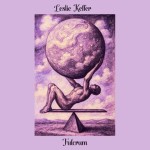
Artist: Leslie Keffer (@)
Title: Fulcrum
Format: Download Only (MP3 + Lossless)
Label: No Part Of It (@)
Rated:

Title: Fulcrum
Format: Download Only (MP3 + Lossless)
Label: No Part Of It (@)
Rated:
There are records that present themselves, and others that quietly arrive because they had to exist. "Fulcrum" belongs to the second category. Leslie Keffer doesn’t dramatize grief, doesn’t aestheticize pain for effect, and - mercifully - doesn’t explain it away. Instead, she lets sound do what language consistently fails to do: sit with the unsayable without trying to fix it.
Written in the immediate aftermath of a devastating loss, "Fulcrum" unfolds as a chronological diary of becoming unbalanced and slowly, uncertainly, finding a new axis. The title is precise: a fulcrum is not stability itself, but the point around which weight shifts. This album lives exactly there, in that fragile zone where emotional mass redistributes itself and nothing feels reliable - not even silence.
Musically, Keffer works with restraint and intuition rather than overt drama. The palette leans toward ambient forms, but not the polished, antiseptic kind. These tracks breathe, hesitate, and sometimes seem unsure whether they want to continue. "Journey" and "Passage" open with a sense of motion that feels inward rather than forward, as if walking through a corridor you’ve memorized but suddenly can’t recognize. Textures glow softly, then dim, as though testing how much light the moment can tolerate.
What’s striking is how "Fulcrum" avoids the expected emotional arc. There’s no neat progression from darkness to redemption. Pieces like "Flicker" and "Liminal" hover in states of partial presence - neither collapse nor recovery, but something in between, where grief sharpens perception instead of dulling it. Keffer understands that mourning is not linear; it loops, doubles back, occasionally cracks a joke at the wrong moment, then apologizes to itself.
The emotional center of the record lies in its sense of connection beyond absence. "Kindred" and "Fulcrum" itself feel less like laments and more like conversations conducted at frequencies just below language. Whether one believes in telepathy, spiritual continuity, or simply the brain’s stubborn refusal to let go, the music doesn’t argue. It listens. And listening, here, is an act of devotion.
The closing track, "Mirror", stretches out over nearly fifteen minutes, and it earns every second. Rather than resolving anything, it gently refracts what came before - memories, tones, emotional residues - into something quieter but heavier. This is where the album stops processing and starts coexisting. Not peace, exactly. More like acceptance’s awkward cousin who doesn’t know where to put their hands.
Leslie Keffer, whose work often explores healing, spirituality, and sound as a relational force, doesn’t position herself as a guide or a guru here. She’s present as a human being, unshielded, letting the music carry weight it wasn’t designed to carry - and somehow managing not to break it. There’s no catharsis on demand, no inspirational slogan hiding in the reverb. Just honesty, held carefully.
"Fulcrum" is not an easy listen, but it’s a necessary one. It doesn’t ask for sympathy or reverence. It asks for attention. And if you give it that - patiently, without multitasking - it gives something back. Not answers. But a place to stand, briefly, while the world recalibrates around loss.
Written in the immediate aftermath of a devastating loss, "Fulcrum" unfolds as a chronological diary of becoming unbalanced and slowly, uncertainly, finding a new axis. The title is precise: a fulcrum is not stability itself, but the point around which weight shifts. This album lives exactly there, in that fragile zone where emotional mass redistributes itself and nothing feels reliable - not even silence.
Musically, Keffer works with restraint and intuition rather than overt drama. The palette leans toward ambient forms, but not the polished, antiseptic kind. These tracks breathe, hesitate, and sometimes seem unsure whether they want to continue. "Journey" and "Passage" open with a sense of motion that feels inward rather than forward, as if walking through a corridor you’ve memorized but suddenly can’t recognize. Textures glow softly, then dim, as though testing how much light the moment can tolerate.
What’s striking is how "Fulcrum" avoids the expected emotional arc. There’s no neat progression from darkness to redemption. Pieces like "Flicker" and "Liminal" hover in states of partial presence - neither collapse nor recovery, but something in between, where grief sharpens perception instead of dulling it. Keffer understands that mourning is not linear; it loops, doubles back, occasionally cracks a joke at the wrong moment, then apologizes to itself.
The emotional center of the record lies in its sense of connection beyond absence. "Kindred" and "Fulcrum" itself feel less like laments and more like conversations conducted at frequencies just below language. Whether one believes in telepathy, spiritual continuity, or simply the brain’s stubborn refusal to let go, the music doesn’t argue. It listens. And listening, here, is an act of devotion.
The closing track, "Mirror", stretches out over nearly fifteen minutes, and it earns every second. Rather than resolving anything, it gently refracts what came before - memories, tones, emotional residues - into something quieter but heavier. This is where the album stops processing and starts coexisting. Not peace, exactly. More like acceptance’s awkward cousin who doesn’t know where to put their hands.
Leslie Keffer, whose work often explores healing, spirituality, and sound as a relational force, doesn’t position herself as a guide or a guru here. She’s present as a human being, unshielded, letting the music carry weight it wasn’t designed to carry - and somehow managing not to break it. There’s no catharsis on demand, no inspirational slogan hiding in the reverb. Just honesty, held carefully.
"Fulcrum" is not an easy listen, but it’s a necessary one. It doesn’t ask for sympathy or reverence. It asks for attention. And if you give it that - patiently, without multitasking - it gives something back. Not answers. But a place to stand, briefly, while the world recalibrates around loss.
Lorenzo's Oil: Paperopolis
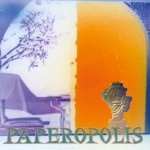
Artist: Lorenzo's Oil
Title: Paperopolis
Format: 12" + Download
Label: Pacific City Discs (@)
Rated:
Title: Paperopolis
Format: 12" + Download
Label: Pacific City Discs (@)
Rated:
"Paperopolis" doesn’t ask to be understood. It asks to be entered, preferably without a map, maybe slightly jet-lagged, with your internal compass gently malfunctioning. Lorenzo’s Oil - the meeting point between Spencer Clark (that indefatigable cartographer of hypnagogic pop zones) and Lorenzo Camera of Mondo Riviera - don’t build an album so much as a soft, unstable city made of sounds, flickering images, and half-remembered nights.
Musically, this record lives in the cracks between genres, and seems very comfortable there. Synths don’t behave like synths so much as weather systems: pads drift, sequences wobble, rhythms arrive as if broadcast from a late-night TV station nobody remembers tuning into. There’s a deliberate lo-fi tactility at play, but it’s not nostalgia for its own sake. These textures feel used, handled, smudged - like flyers peeled off a wall and reattached somewhere else.
The long opener, "Neo-Paperopolis Jump Suite", sets the coordinates immediately. It unfolds in chapters rather than movements, sliding from naïve keyboard figures into a gently propulsive groove, then dissolving into warped reflections of club music that feels filtered through fogged glass. Nothing here rushes; momentum is achieved through accumulation, not force. Clark’s instinct for psychedelic drift meets Camera’s sense of melodic suggestion, and the result is oddly physical for such a slippery record.
Throughout the album, rhythm functions less as a grid and more as a suggestion. "Upworld Groove (TV Version)" pulses with the logic of something overheard rather than performed, while "You Wouldn’t Understand It’s Swamp Thing" leans into a narcotic bounce that feels part dub, part dream-jazz, part imaginary soundtrack to a cartoon that never existed. There’s humor here too - not punchline humor, but that sideways grin you get when something is clearly enjoying its own strangeness.
Shorter tracks like "The Neverending Skylines of Taipei" work almost like postcards: quick, impressionistic flashes that hint at places without describing them. Meanwhile, "Central Jungle, Paperopolis" pulls everything inward, layering synth lines and rhythmic debris into a slow, humid sprawl that feels less composed than grown. The music doesn’t climax; it thickens, like air before rain.
What makes "Paperopolis" compelling is its refusal to resolve. There’s no grand statement, no conceptual hammer brought down at the end. Instead, Clark and Camera operate like urban explorers of the subconscious, documenting zones where past and future, kitsch and ritual, dance music and private hallucination coexist without argument. It’s psychedelic music that doesn’t insist on transcendence - it just opens a door behind your head and leaves it ajar.
In a time when so much electronic music is obsessed with clarity, "Paperopolis" opts for blur. And in doing so, it feels oddly honest. This is not a city of monuments, but of alleyways, side rooms, and places you swear you’ve been before - maybe in a dream, maybe on a cheap TV channel at 3 a.m. Either way, you’re already there.
Musically, this record lives in the cracks between genres, and seems very comfortable there. Synths don’t behave like synths so much as weather systems: pads drift, sequences wobble, rhythms arrive as if broadcast from a late-night TV station nobody remembers tuning into. There’s a deliberate lo-fi tactility at play, but it’s not nostalgia for its own sake. These textures feel used, handled, smudged - like flyers peeled off a wall and reattached somewhere else.
The long opener, "Neo-Paperopolis Jump Suite", sets the coordinates immediately. It unfolds in chapters rather than movements, sliding from naïve keyboard figures into a gently propulsive groove, then dissolving into warped reflections of club music that feels filtered through fogged glass. Nothing here rushes; momentum is achieved through accumulation, not force. Clark’s instinct for psychedelic drift meets Camera’s sense of melodic suggestion, and the result is oddly physical for such a slippery record.
Throughout the album, rhythm functions less as a grid and more as a suggestion. "Upworld Groove (TV Version)" pulses with the logic of something overheard rather than performed, while "You Wouldn’t Understand It’s Swamp Thing" leans into a narcotic bounce that feels part dub, part dream-jazz, part imaginary soundtrack to a cartoon that never existed. There’s humor here too - not punchline humor, but that sideways grin you get when something is clearly enjoying its own strangeness.
Shorter tracks like "The Neverending Skylines of Taipei" work almost like postcards: quick, impressionistic flashes that hint at places without describing them. Meanwhile, "Central Jungle, Paperopolis" pulls everything inward, layering synth lines and rhythmic debris into a slow, humid sprawl that feels less composed than grown. The music doesn’t climax; it thickens, like air before rain.
What makes "Paperopolis" compelling is its refusal to resolve. There’s no grand statement, no conceptual hammer brought down at the end. Instead, Clark and Camera operate like urban explorers of the subconscious, documenting zones where past and future, kitsch and ritual, dance music and private hallucination coexist without argument. It’s psychedelic music that doesn’t insist on transcendence - it just opens a door behind your head and leaves it ajar.
In a time when so much electronic music is obsessed with clarity, "Paperopolis" opts for blur. And in doing so, it feels oddly honest. This is not a city of monuments, but of alleyways, side rooms, and places you swear you’ve been before - maybe in a dream, maybe on a cheap TV channel at 3 a.m. Either way, you’re already there.