
Browse by Genre
Industrial Music / Industrial Metal / Aggro Industrial / Electro Metal
Industrial Noise / Power Noise / Harsh Noise
Synth Pop / Electro Pop / Synth-Electronica
Techno / Trance / Goa / Drum'n'Bass / Jungle / Tribal / Trip-Hop
Ambient / Electronica / Ethereal / Dub / Soundscapes / Abstract
Experimental / Avantgarde / Weird & Wired / Glitch / Noise / Field Recording
Dark / Gothic / Wave / New Wave / Dark Wave / Industrial Gothic
New Music / Downtown / Avantgarde Jazz / New Classical / World
Search Reviews
Music Reviews
Malo Moray: Embrace
Artist: Malo Moray (@)
Title: Embrace
Format: CD & 12" + Download
Label: Possibly Sam Records (http://www.possiblysam.com/) (@)
Rated:

Title: Embrace
Format: CD & 12" + Download
Label: Possibly Sam Records (http://www.possiblysam.com/) (@)
Rated:
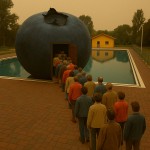
Malo Moray (aka Malo Moray & His Inflatable Knee) is a bassist, composer and performer from Leipzig, Germany and his latest release, 'Embrace,' was recorded live in front of a small audience of about two dozen people and recorded directly to vinyl completely in real-time, no overdubs. Using double bass, tapes, electronics and live processing, Malo explores a fragile and immersive sound world, somewhere between ambient, krautrock and jazz, inspired by Brian Eno. Laurie Anderson, David Sylvian, Swans and Soundwalk Collective. Malo says 'Embrace' is about presence- celebrating slowness and trust.
Malo's inspiration influences are certainly commendable, but don't expect the album to sound like any of them in particular. The album is only four tracks of varying lengths in about 41 minutes. First track, "Over The Mountain Range" begins with a background ambient drone (sustained synth chord) and incidental electronic crackle/static and then bass improvisation, later with bowed and processed bass background (possibly on tape), and after the bowed bass becomes the soloing instrument. With solo bowed stringed instruments there is often a degree of melancholy and that is not absent here. About 10:40 into the piece Malo begins his vocal recitation, a sort of speak-singing- not dissimilar to Laurie Anderson's style; a sort of anecdotal dream sequence that is visceral in an unexpected way. The story-like dialogue draws you in compelling your attention. It blends into track 2, "Himiko" with ethereal wordless vocals borne on an ambient cloud. More bowed bass follows. Track 3, "I Am Here Now" sounds like spring with ambient natural sounds (a stream, birds) and orchestral synth strings. A couple minutes into the piece Malo beings another vocal recitation There is applause at the end of this one, just to let you know that it's live and Malo addresses the audience in his native Deutsche, while all of his recitations have been in English. Final track, "Vanishing Act" conjures Leonard Cohen vocally, and the combination of bass and the ambient background is just gorgeous. I am truly impressed. More applause and a final brief address in German follows.
All things considered, this is a remarkable recording, a magical experience that transcends many of the live albums I've ever heard. While the deluxe limited editions are sold out, the Blueberry Translucent vinyl with 12-page booklet, OBI, poster and postcard (limited edition of 70) and Lemon Popsicle Translucent vinyl with 12-page booklet and OBI (limited edition of 200) and Blueberry Cake CD (limited edition of 100) are still available. You really need to hear this. Highly recommended!
Malo's inspiration influences are certainly commendable, but don't expect the album to sound like any of them in particular. The album is only four tracks of varying lengths in about 41 minutes. First track, "Over The Mountain Range" begins with a background ambient drone (sustained synth chord) and incidental electronic crackle/static and then bass improvisation, later with bowed and processed bass background (possibly on tape), and after the bowed bass becomes the soloing instrument. With solo bowed stringed instruments there is often a degree of melancholy and that is not absent here. About 10:40 into the piece Malo begins his vocal recitation, a sort of speak-singing- not dissimilar to Laurie Anderson's style; a sort of anecdotal dream sequence that is visceral in an unexpected way. The story-like dialogue draws you in compelling your attention. It blends into track 2, "Himiko" with ethereal wordless vocals borne on an ambient cloud. More bowed bass follows. Track 3, "I Am Here Now" sounds like spring with ambient natural sounds (a stream, birds) and orchestral synth strings. A couple minutes into the piece Malo beings another vocal recitation There is applause at the end of this one, just to let you know that it's live and Malo addresses the audience in his native Deutsche, while all of his recitations have been in English. Final track, "Vanishing Act" conjures Leonard Cohen vocally, and the combination of bass and the ambient background is just gorgeous. I am truly impressed. More applause and a final brief address in German follows.
All things considered, this is a remarkable recording, a magical experience that transcends many of the live albums I've ever heard. While the deluxe limited editions are sold out, the Blueberry Translucent vinyl with 12-page booklet, OBI, poster and postcard (limited edition of 70) and Lemon Popsicle Translucent vinyl with 12-page booklet and OBI (limited edition of 200) and Blueberry Cake CD (limited edition of 100) are still available. You really need to hear this. Highly recommended!
Peter Knight: For a Moment the Sky Knew My Name
Artist: Peter Knight (@)
Title: For a Moment the Sky Knew My Name
Format: CD + Download
Label: Room40 (@)
Rated:
Title: For a Moment the Sky Knew My Name
Format: CD + Download
Label: Room40 (@)
Rated:
Peter Knight’s "For a Moment the Sky Knew My Name" feels less like an album and more like a long, attentive walk where sound keeps stopping you by the sleeve, pointing at things you might otherwise miss. Released on Room40, it sits comfortably in that lineage of records that don’t hurry, don’t explain themselves too much, and quietly insist that listening is a bodily act, not just a cerebral one.
Knight is best known to many as a trumpeter with a fierce improvisational streak - from free jazz contexts to large ensemble work and electroacoustic explorations - but here the trumpet is only one limb of a larger organism. Breath, electronics, voice, environmental resonance: everything is woven into a porous fabric where music and place blur into one another. The presence of Lawrence English, both as producer and sonic co-conspirator, is crucial - not as a stylistic overlay, but as a kind of weather system in which Knight’s sounds are allowed to circulate, condense, and occasionally evaporate.
What strikes first is the album’s patience. "The Coiling of the Tide and Leaf and Shadow" unfolds like field notes written in slow ink: small gestures, restrained tones, silences that are doing real work rather than posing as concept. Trumpet lines emerge tentatively, sometimes fragile enough to feel like they might snap if stared at too hard. Electronics hum, smear, and breathe, never dominating, more like a second nervous system running quietly beneath the skin.
The title track is the album’s gravitational center. At nearly twenty minutes, it resists any obvious arc, preferring accumulation over drama. Sounds hover, recur, erode. There’s a strong sense of memory at play - not nostalgia, but the way places imprint themselves on the body. You don’t listen to this piece so much as inside it, as if the music were a temporary architecture built out of wind, heat, and half-remembered gestures. If it has a melody, it’s the kind you recognize only after it’s gone.
There’s also something quietly funny about the album, though it never cracks a smile outright. The humor lies in its refusal to perform urgency, in its calm confidence that slowness is not a flaw. In a world addicted to instant payoff, Knight is content to let a single tone wobble, decay, and fail beautifully. It’s the sonic equivalent of watching insects collide with the air and call it choreography.
The closing "The Night Tremors, So It Begs the Dawn" deepens this nocturnal intimacy, with subtle rhythmic pulses and distant echoes suggesting both unease and renewal. It doesn’t resolve anything - thankfully - but leaves the listener suspended in that ambiguous zone between rest and alertness, where thought softens and perception sharpens.
"For a Moment the Sky Knew My Name" is not a record for multitasking. It asks for time, attention, and a willingness to let sound ask questions without answering them. In return, it offers something increasingly rare: a sense of being gently reoriented in the world, reminded that listening - real listening - is a way of belonging, even if only for a moment.
Knight is best known to many as a trumpeter with a fierce improvisational streak - from free jazz contexts to large ensemble work and electroacoustic explorations - but here the trumpet is only one limb of a larger organism. Breath, electronics, voice, environmental resonance: everything is woven into a porous fabric where music and place blur into one another. The presence of Lawrence English, both as producer and sonic co-conspirator, is crucial - not as a stylistic overlay, but as a kind of weather system in which Knight’s sounds are allowed to circulate, condense, and occasionally evaporate.
What strikes first is the album’s patience. "The Coiling of the Tide and Leaf and Shadow" unfolds like field notes written in slow ink: small gestures, restrained tones, silences that are doing real work rather than posing as concept. Trumpet lines emerge tentatively, sometimes fragile enough to feel like they might snap if stared at too hard. Electronics hum, smear, and breathe, never dominating, more like a second nervous system running quietly beneath the skin.
The title track is the album’s gravitational center. At nearly twenty minutes, it resists any obvious arc, preferring accumulation over drama. Sounds hover, recur, erode. There’s a strong sense of memory at play - not nostalgia, but the way places imprint themselves on the body. You don’t listen to this piece so much as inside it, as if the music were a temporary architecture built out of wind, heat, and half-remembered gestures. If it has a melody, it’s the kind you recognize only after it’s gone.
There’s also something quietly funny about the album, though it never cracks a smile outright. The humor lies in its refusal to perform urgency, in its calm confidence that slowness is not a flaw. In a world addicted to instant payoff, Knight is content to let a single tone wobble, decay, and fail beautifully. It’s the sonic equivalent of watching insects collide with the air and call it choreography.
The closing "The Night Tremors, So It Begs the Dawn" deepens this nocturnal intimacy, with subtle rhythmic pulses and distant echoes suggesting both unease and renewal. It doesn’t resolve anything - thankfully - but leaves the listener suspended in that ambiguous zone between rest and alertness, where thought softens and perception sharpens.
"For a Moment the Sky Knew My Name" is not a record for multitasking. It asks for time, attention, and a willingness to let sound ask questions without answering them. In return, it offers something increasingly rare: a sense of being gently reoriented in the world, reminded that listening - real listening - is a way of belonging, even if only for a moment.
Mark Harwood: Two Actors

Mark Harwood has always had a talent for making the room feel slightly unstable, as if the furniture might start talking back. On "Two Actors", released via Akti Records, he doesn’t just lean into that quality - he sets it up as the central dramaturgy. This is not an album in the traditional sense so much as a muttering play performed by unreliable narrators, some human, some digital, all vaguely suspicious.
Harwood, best known as the quiet mastermind behind Penultimate Press, has long occupied a peculiar corner of experimental music where collage, musique concrète, spoken fragments and emotional ambushes coexist. Here, he splits himself in two - or perhaps admits that the split has always been there. The title is literal and metaphorical: voices argue, overlap, contradict, derail. One actor speaks, the other interrupts. Sometimes the machine takes a line; sometimes it forgets it entirely.
Musically, "Two Actors" thrives on productive clumsiness. Beats limp rather than march, melodies appear briefly and then seem embarrassed by their own presence. There’s a sense of form beneath the chaos - Harwood is far too composed to be merely messy - but it’s a form that enjoys tripping over its shoelaces. Think of a waltz that’s had one drink too many, or a radio play broadcast from a half-flooded basement.
What makes the album compelling is its emotional ambiguity. It’s funny, but not in a punchline way; funny like realizing too late that you’ve been talking to yourself in public. Tracks flicker between irony and sincerity, often within the same minute. A warped vocal line might sound mocking until it suddenly feels exposed, almost tender. Harwood has a knack for letting vulnerability leak through the cracks of digital processing, like warmth escaping from a poorly insulated room.
There’s also a strange theatrical intimacy at play. Listening to "Two Actors" can feel like eavesdropping on a rehearsal that was never meant to be heard, where the script is constantly rewritten by interference, feedback, and second thoughts. The references - to classical structure, to absurdism, to the ghost of radio art - are there, but they’re worn lightly, with a grin rather than a manifesto.
In the end, "Two Actors" doesn’t resolve its internal dialogue, and that’s precisely the point. It leaves you suspended between laughter and unease, wondering whether the album is poking fun at you, comforting you, or quietly stealing your lines. Harwood remains a master of this unstable theatre: mischievous, oddly humane, and fully aware that sometimes the most honest conversation is the one that never quite makes sense.
Harwood, best known as the quiet mastermind behind Penultimate Press, has long occupied a peculiar corner of experimental music where collage, musique concrète, spoken fragments and emotional ambushes coexist. Here, he splits himself in two - or perhaps admits that the split has always been there. The title is literal and metaphorical: voices argue, overlap, contradict, derail. One actor speaks, the other interrupts. Sometimes the machine takes a line; sometimes it forgets it entirely.
Musically, "Two Actors" thrives on productive clumsiness. Beats limp rather than march, melodies appear briefly and then seem embarrassed by their own presence. There’s a sense of form beneath the chaos - Harwood is far too composed to be merely messy - but it’s a form that enjoys tripping over its shoelaces. Think of a waltz that’s had one drink too many, or a radio play broadcast from a half-flooded basement.
What makes the album compelling is its emotional ambiguity. It’s funny, but not in a punchline way; funny like realizing too late that you’ve been talking to yourself in public. Tracks flicker between irony and sincerity, often within the same minute. A warped vocal line might sound mocking until it suddenly feels exposed, almost tender. Harwood has a knack for letting vulnerability leak through the cracks of digital processing, like warmth escaping from a poorly insulated room.
There’s also a strange theatrical intimacy at play. Listening to "Two Actors" can feel like eavesdropping on a rehearsal that was never meant to be heard, where the script is constantly rewritten by interference, feedback, and second thoughts. The references - to classical structure, to absurdism, to the ghost of radio art - are there, but they’re worn lightly, with a grin rather than a manifesto.
In the end, "Two Actors" doesn’t resolve its internal dialogue, and that’s precisely the point. It leaves you suspended between laughter and unease, wondering whether the album is poking fun at you, comforting you, or quietly stealing your lines. Harwood remains a master of this unstable theatre: mischievous, oddly humane, and fully aware that sometimes the most honest conversation is the one that never quite makes sense.
Cecile Seraud: Psykhé
There are albums that knock politely, and others that arrive already sitting next to you on the couch, sharing your silence. "Psykhé" belongs to the second category. It doesn’t ask permission; it exhales, slowly, like someone who has already cried and is now trying to remember how to breathe.
Cécile Seraud has always worked in that fragile zone where music is less about performance and more about presence. Here, the stakes are brutally clear: "Psykhé" is born from grief that isn’t abstract, symbolic, or safely distant. It is grief with names, places, children in the next room, memories still warm. That alone makes this album risky. Sentimentality is always lurking nearby, sharpening its knives. Remarkably, Seraud never lets it take over.
The record unfolds like a private ritual carried out in semi-darkness. Piano lines move cautiously, strings hover rather than soar, electronics whisper instead of asserting themselves. Everything feels measured, as if each sound has been weighed against the question: "does this help, or does this intrude?" Often, the most powerful moments are the ones that barely announce themselves - phrases that seem to stop mid-thought, harmonies that dissolve before they resolve. This is music that understands loss as interruption.
What’s striking is how "Psykhé" avoids turning mourning into monument. There’s no grand arc from despair to redemption, no cinematic swell reassuring us that everything will be fine. Instead, Seraud traces grief as a geography: New Zealand appears not as a postcard, but as a memory with emotional altitude; Barcelona flickers like a half-remembered dream; “Back Home” sounds less like arrival than like standing still and realizing the room has changed.
The few vocal moments feel especially delicate. They don’t function as songs in the traditional sense but as soft correspondence - letters sent across a distance that cannot be crossed. Words matter here, but not more than breath. Silence remains the most eloquent collaborator on the album.
There’s something quietly courageous in how "Psykhé" balances darkness and light without trying to reconcile them. The darkness is allowed to remain opaque; the light doesn’t pretend to explain anything. Seraud seems less interested in healing than in honesty - acknowledging that love, once lost, doesn’t disappear but changes state, becoming memory, sound, vibration.
If there’s humor here, it’s of the microscopic kind: the irony that the most personal grief becomes, somehow, something others can inhabit. You listen expecting catharsis and instead find companionship. No solutions, no closure - just the strange relief of not being alone with difficult feelings.
"Psykhé" doesn’t aim to comfort in the usual sense. It sits with you, quietly, long after the music stops, like a hand resting on your shoulder - not to fix anything, but to remind you that remembering is itself a form of love.
Cécile Seraud has always worked in that fragile zone where music is less about performance and more about presence. Here, the stakes are brutally clear: "Psykhé" is born from grief that isn’t abstract, symbolic, or safely distant. It is grief with names, places, children in the next room, memories still warm. That alone makes this album risky. Sentimentality is always lurking nearby, sharpening its knives. Remarkably, Seraud never lets it take over.
The record unfolds like a private ritual carried out in semi-darkness. Piano lines move cautiously, strings hover rather than soar, electronics whisper instead of asserting themselves. Everything feels measured, as if each sound has been weighed against the question: "does this help, or does this intrude?" Often, the most powerful moments are the ones that barely announce themselves - phrases that seem to stop mid-thought, harmonies that dissolve before they resolve. This is music that understands loss as interruption.
What’s striking is how "Psykhé" avoids turning mourning into monument. There’s no grand arc from despair to redemption, no cinematic swell reassuring us that everything will be fine. Instead, Seraud traces grief as a geography: New Zealand appears not as a postcard, but as a memory with emotional altitude; Barcelona flickers like a half-remembered dream; “Back Home” sounds less like arrival than like standing still and realizing the room has changed.
The few vocal moments feel especially delicate. They don’t function as songs in the traditional sense but as soft correspondence - letters sent across a distance that cannot be crossed. Words matter here, but not more than breath. Silence remains the most eloquent collaborator on the album.
There’s something quietly courageous in how "Psykhé" balances darkness and light without trying to reconcile them. The darkness is allowed to remain opaque; the light doesn’t pretend to explain anything. Seraud seems less interested in healing than in honesty - acknowledging that love, once lost, doesn’t disappear but changes state, becoming memory, sound, vibration.
If there’s humor here, it’s of the microscopic kind: the irony that the most personal grief becomes, somehow, something others can inhabit. You listen expecting catharsis and instead find companionship. No solutions, no closure - just the strange relief of not being alone with difficult feelings.
"Psykhé" doesn’t aim to comfort in the usual sense. It sits with you, quietly, long after the music stops, like a hand resting on your shoulder - not to fix anything, but to remind you that remembering is itself a form of love.
Malo Moray: Embrace
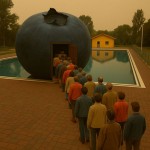
There are albums that are carefully assembled, polished like heirlooms, and then there are albums like "Embrace", which feel less like objects and more like events that accidentally stayed alive. Malo Moray didn’t so much make this record as step into it barefoot, lights on, witnesses present, nerves exposed. The result is not perfection; it’s something better and more dangerous: presence.
Recorded live in Leipzig in front of a small audience fully aware they were mid-birth, "Embrace" is built on a simple but radical constraint: no safety net. No overdubs, no revisions, no “let’s fix it later”. Moray arrives with upright bass, voice, electronics, tapes, objects - and leaves with four long-form pieces that feel like they’ve been wrestled into existence rather than composed. You can hear the risk in the grain of every sound, like breath caught between courage and panic.
Moray has always worked slowly, patiently, shaping albums over years. Here he does the opposite, and you can tell it scared him. That fear is the album’s quiet engine. These pieces don’t rush; they hover. Bass lines stretch like tense ligaments, electronics murmur and scrape, and Moray’s voice moves between spoken confession, half-sung mantra, and something closer to self-interrogation. This is not theatrical vulnerability - it’s the kind that happens when you’re not entirely sure you should be doing what you’re doing, but you do it anyway.
“Over the Mountain Ranges” opens the record like a long climb with no clear summit. Its 16 minutes unfold patiently, circling motifs rather than developing them, as if Moray is testing the ground with each step. “Himiko” is more inward, ritualistic, its textures sparse but charged, while “I Am Here Now” feels like the emotional core: a statement repeated until it stops being a statement and becomes a fact, or maybe a plea. The closing “Vanishing Act” (Lou Reed’s song, reinhabited rather than covered) lands with a strange tenderness, less homage than quiet communion.
What makes "Embrace" compelling isn’t just the concept of live creation - it’s how clearly Moray lets discomfort remain audible. Doubt isn’t edited out; it’s folded into the music’s DNA. Silence is allowed to breathe. Mistakes are not corrected; they’re accepted, sometimes even leaned into. The album seems to suggest that uncertainty isn’t an obstacle to meaning but one of its primary materials.
There’s something almost anti-heroic about this record. No grand statements, no virtuoso posturing, no dramatic climax engineered for applause. Instead, "Embrace" offers the slow reward of listening to someone stay with their own unease long enough for it to transform. It’s an album about letting go of control without pretending that letting go feels good.
In a musical landscape obsessed with optimization - better takes, cleaner sound, sharper concepts - "Embrace" is quietly defiant. It reminds us that art can still be a place where things wobble, where fear coexists with joy, and where the act of showing up matters more than sticking the landing.
Moray invites the listener not to admire, but to join him. No guarantees. No map. Just the cold water, and the decision to step in.
Recorded live in Leipzig in front of a small audience fully aware they were mid-birth, "Embrace" is built on a simple but radical constraint: no safety net. No overdubs, no revisions, no “let’s fix it later”. Moray arrives with upright bass, voice, electronics, tapes, objects - and leaves with four long-form pieces that feel like they’ve been wrestled into existence rather than composed. You can hear the risk in the grain of every sound, like breath caught between courage and panic.
Moray has always worked slowly, patiently, shaping albums over years. Here he does the opposite, and you can tell it scared him. That fear is the album’s quiet engine. These pieces don’t rush; they hover. Bass lines stretch like tense ligaments, electronics murmur and scrape, and Moray’s voice moves between spoken confession, half-sung mantra, and something closer to self-interrogation. This is not theatrical vulnerability - it’s the kind that happens when you’re not entirely sure you should be doing what you’re doing, but you do it anyway.
“Over the Mountain Ranges” opens the record like a long climb with no clear summit. Its 16 minutes unfold patiently, circling motifs rather than developing them, as if Moray is testing the ground with each step. “Himiko” is more inward, ritualistic, its textures sparse but charged, while “I Am Here Now” feels like the emotional core: a statement repeated until it stops being a statement and becomes a fact, or maybe a plea. The closing “Vanishing Act” (Lou Reed’s song, reinhabited rather than covered) lands with a strange tenderness, less homage than quiet communion.
What makes "Embrace" compelling isn’t just the concept of live creation - it’s how clearly Moray lets discomfort remain audible. Doubt isn’t edited out; it’s folded into the music’s DNA. Silence is allowed to breathe. Mistakes are not corrected; they’re accepted, sometimes even leaned into. The album seems to suggest that uncertainty isn’t an obstacle to meaning but one of its primary materials.
There’s something almost anti-heroic about this record. No grand statements, no virtuoso posturing, no dramatic climax engineered for applause. Instead, "Embrace" offers the slow reward of listening to someone stay with their own unease long enough for it to transform. It’s an album about letting go of control without pretending that letting go feels good.
In a musical landscape obsessed with optimization - better takes, cleaner sound, sharper concepts - "Embrace" is quietly defiant. It reminds us that art can still be a place where things wobble, where fear coexists with joy, and where the act of showing up matters more than sticking the landing.
Moray invites the listener not to admire, but to join him. No guarantees. No map. Just the cold water, and the decision to step in.