
Browse by Genre
Industrial Music / Industrial Metal / Aggro Industrial / Electro Metal
Industrial Noise / Power Noise / Harsh Noise
Synth Pop / Electro Pop / Synth-Electronica
Techno / Trance / Goa / Drum'n'Bass / Jungle / Tribal / Trip-Hop
Ambient / Electronica / Ethereal / Dub / Soundscapes / Abstract
Experimental / Avantgarde / Weird & Wired / Glitch / Noise / Field Recording
Dark / Gothic / Wave / New Wave / Dark Wave / Industrial Gothic
New Music / Downtown / Avantgarde Jazz / New Classical / World
Search Reviews
Music Reviews
feeo: Goodness

There are debut albums that knock politely. And then there’s "Goodness", which slides under the door like a gust of London fog infused with incense, overheard thoughts, and the occasional existential side-eye. feeo - already whispered about in left-field circles for her shape-shifting vocals and collaborations with the likes of Loraine James - steps into full-length territory with the confidence of someone who knows that ambiguity can be a superpower.
The record moves like a living organism: tender, irritable, radiant, disorienting. Imagine a creature made of breath, broken electronics, and soft-footed percussion, wandering between the Thames and an imaginary forest that apparently grew overnight in Hackney. Each track feels like a different limb twitching, trying to interpret its surroundings.
The opening “Days pt.1” is a fractured dispatch - spoken word rattled by electro-acoustic static. It’s as if a diary decided it was tired of being quiet and started muttering out loud. Then comes “The Mountain”, all intimate and close-mic’d, like an elemental lullaby whispered straight into your eardrum. No grand gestures, no alpine heroics - just presence. feeo has a knack for locating drama in the smallest ripple.
“Requiem” smolders with devotional restraint before it gives way to the blink-and-you-miss-it vignette “The Last Great Storm”, a storm so ‘great’ it barely lasts 40 seconds. That’s the humour tucked inside the solemnity: feeo knows that intensity isn’t always measured in length.
The album’s emotional geometry keeps shifting. “Win!” sways with a loose, off-grid soulfulness; “Sandpit” feels like a memory trying to remember itself; “Here” stretches time into a low-lit corridor; “Days pt.2” flickers like a shy twin of the opener. And then there’s “The Hammer Strikes the Bell”, which glows with a ritualistic force - cyclical, luminous, patient. When the bell finally strikes, it’s not bombast but revelation.
The closing “There Is No I” dissolves the self with lap steel sighs and drifting harmonics. It’s the sort of track that makes you stare at the wall for a moment afterward, just to confirm you haven’t evaporated slightly.
Throughout, feeo’s voice is an instrument of contradiction - vulnerable but unafraid, crystalline one minute and grainy the next. She sings as though she’s walking along a narrow emotional ridge, balancing solitude on one side and communion on the other. And that balancing act is the album’s heart: "Goodness" is an atlas of parallel states, where clarity and haze coexist, where the internal monologue sometimes leaks into the room.
AD93 releases often feel like invitations to step sideways into another acoustic dimension, and "Goodness" fits that lineage while still carrying its own lantern. It’s an album that doesn’t beg to be understood; it prefers to be encountered - like a message written in steam on a window, one you catch before it vanishes.
feeo calls these tracks “partial sketches”, and maybe that’s the secret charm. Nothing here feels finished in the traditional sense. Instead, the pieces breathe into each other, forming something continuous, porous, and quietly daring.
A record about opposites that somehow feels whole.
A record about solitude that never leaves you alone.
A record named "Goodness" that isn’t afraid to look into the difficult corners.
And yes - it’s beautiful. But not the postcard kind.
More like beauty that shows up late at night and asks difficult questions in a soft voice.
The record moves like a living organism: tender, irritable, radiant, disorienting. Imagine a creature made of breath, broken electronics, and soft-footed percussion, wandering between the Thames and an imaginary forest that apparently grew overnight in Hackney. Each track feels like a different limb twitching, trying to interpret its surroundings.
The opening “Days pt.1” is a fractured dispatch - spoken word rattled by electro-acoustic static. It’s as if a diary decided it was tired of being quiet and started muttering out loud. Then comes “The Mountain”, all intimate and close-mic’d, like an elemental lullaby whispered straight into your eardrum. No grand gestures, no alpine heroics - just presence. feeo has a knack for locating drama in the smallest ripple.
“Requiem” smolders with devotional restraint before it gives way to the blink-and-you-miss-it vignette “The Last Great Storm”, a storm so ‘great’ it barely lasts 40 seconds. That’s the humour tucked inside the solemnity: feeo knows that intensity isn’t always measured in length.
The album’s emotional geometry keeps shifting. “Win!” sways with a loose, off-grid soulfulness; “Sandpit” feels like a memory trying to remember itself; “Here” stretches time into a low-lit corridor; “Days pt.2” flickers like a shy twin of the opener. And then there’s “The Hammer Strikes the Bell”, which glows with a ritualistic force - cyclical, luminous, patient. When the bell finally strikes, it’s not bombast but revelation.
The closing “There Is No I” dissolves the self with lap steel sighs and drifting harmonics. It’s the sort of track that makes you stare at the wall for a moment afterward, just to confirm you haven’t evaporated slightly.
Throughout, feeo’s voice is an instrument of contradiction - vulnerable but unafraid, crystalline one minute and grainy the next. She sings as though she’s walking along a narrow emotional ridge, balancing solitude on one side and communion on the other. And that balancing act is the album’s heart: "Goodness" is an atlas of parallel states, where clarity and haze coexist, where the internal monologue sometimes leaks into the room.
AD93 releases often feel like invitations to step sideways into another acoustic dimension, and "Goodness" fits that lineage while still carrying its own lantern. It’s an album that doesn’t beg to be understood; it prefers to be encountered - like a message written in steam on a window, one you catch before it vanishes.
feeo calls these tracks “partial sketches”, and maybe that’s the secret charm. Nothing here feels finished in the traditional sense. Instead, the pieces breathe into each other, forming something continuous, porous, and quietly daring.
A record about opposites that somehow feels whole.
A record about solitude that never leaves you alone.
A record named "Goodness" that isn’t afraid to look into the difficult corners.
And yes - it’s beautiful. But not the postcard kind.
More like beauty that shows up late at night and asks difficult questions in a soft voice.
Jon Jenkins: Flow (Remastered)
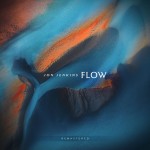
Artist: Jon Jenkins
Title: Flow (Remastered)
Format: CD + Download
Label: Spotted Peccary (@)
Rated:
Title: Flow (Remastered)
Format: CD + Download
Label: Spotted Peccary (@)
Rated:
Originally released in 1998, Jon Jenkins' 'Flow' was considered a landmark album and a masterpiece at the time by many. It is a soundscape that straddles the genres of the ambient and cinematic with not only an abundance of atmosphere but also some rich melodic content. The remastering by Howard Givens gives 'Flow' new life, increasing its depth, dimension and intensity. If you had not heard it 25 years ago you could swear it had been released just yesterday. 'Flow' is an album of finely layered synth pads, melodic piano that ranges from powerful themes to sublime interludes and synthesizer tinklings and twinklings in all the right places. Primarily composed and played by Jenkins, also aboard are David Helpling, Jeff Pearce and Howard Givens providing ambient electric guitar on some tracks. The album plays out 11 tracks in 74 minutes seamlessly from start to finish.
The lush synth pads Jenkins employs are varied in both tone and temperament, sometimes drifting cloud-like, and others swelling dramatically to peak perfection. The sequencer is utilized sparingly but effectively, not dominating but enhancing passages that call for busy motion. Percussion (drums) ranges from distant tribal to powerfully punctuated passages. While the minimal title ('Flow') gives away little as to the album's theme, it does fit the description and it certainly does flow, an obvious aquatic metaphor. As many times as I have listened to it over the past couple of weeks (more than I usually do with albums I review here) it is still tough to pin down. Moods on the album are light, dark and gray in-between. There is no way you can lump 'Flow' into the New Age category, as it paints vistas much vaster than that. Perhaps the best electronic soundscape artist to compare this to would be Steve Roach, so if you're a Roach fan, you will undoubtedly enjoy this. A masterpiece then and a masterpiece now, 'Flow' remains at the top of the list in cinematic ambient soundscapes.
The lush synth pads Jenkins employs are varied in both tone and temperament, sometimes drifting cloud-like, and others swelling dramatically to peak perfection. The sequencer is utilized sparingly but effectively, not dominating but enhancing passages that call for busy motion. Percussion (drums) ranges from distant tribal to powerfully punctuated passages. While the minimal title ('Flow') gives away little as to the album's theme, it does fit the description and it certainly does flow, an obvious aquatic metaphor. As many times as I have listened to it over the past couple of weeks (more than I usually do with albums I review here) it is still tough to pin down. Moods on the album are light, dark and gray in-between. There is no way you can lump 'Flow' into the New Age category, as it paints vistas much vaster than that. Perhaps the best electronic soundscape artist to compare this to would be Steve Roach, so if you're a Roach fan, you will undoubtedly enjoy this. A masterpiece then and a masterpiece now, 'Flow' remains at the top of the list in cinematic ambient soundscapes.
Kevin Drumm: Sheer Hellish Miasma

Kevin Drumm’s "Sheer Hellish Miasma" doesn’t so much “play” as it erupts - a volcanic exhalation of Chicago’s harshest ghosts, funnelled through a man who has spent decades treating feedback as both sparring partner and spiritual adviser. When it first appeared in 2002, the album felt like a dare: "how much unfiltered sonic intensity can a human withstand before they either ascend or combust?". More than twenty years later, the world has become infinitely noisier, but Drumm’s monolith still stands there, arms crossed, unimpressed. And with this new 2LP reissue, it returns not as nostalgia but as a reminder that extremity, when shaped with intelligence and stubborn intention, ages better than most polite “future music”.
Drumm is often caricatured as the hermit-surgeon of the noise community: the guy who can turn a guitar into a plague wind, a contact mic into a moral dilemma, a pedal chain into a devotional rite. But what this album reveals - and what many who skim the surface never catch - is how deliberate his chaos is. "Sheer Hellish Miasma" is less an explosion than a controlled demolition, a building imploding in slow motion while someone inside calmly rearranges the furniture.
“Hitting the Pavement”, nearly twenty minutes long, feels like an attempt to sandblast the edges off reality. It’s dense, yes, but not thoughtless - textures coil and uncoil like industrial serpents, sometimes thrashing, sometimes simply shivering at high voltage. Survive that, and “Inferno” sprawls over two sides of wax, its inner turbulence punctured by Greg Kelley’s trumpet, which slices through the smog like a beacon or a distress signal - you decide which. Drumm has always treated collaboration as a foreign, almost suspicious pleasure, and the intrusion of brass here feels like a hallucination induced by sensory overload.
By the time “Cloudy” arrives, its deceptive title reads almost like a joke Drumm plays on the listener: a moment that seems softer only because your eardrums have been seasoned like cast iron. “Impotent Hummer”, meanwhile, grinds with a kind of apocalyptic humour - one imagines machinery trying to imitate Bach and dying nobly in the attempt. The closing “Turning Point”, surprisingly brief, feels like a cracked afterimage, a last whispered reminder that nothing this intense can end cleanly.
Part of the album’s mythology comes from its creation: those sessions in early-2000s Chicago, a period now romanticised as a golden age of American harshness, before everything was instantly archived, streamed, optimised, softened. Drumm worked with tools that were stubborn, temperamental, and gloriously imperfect - tape, pedals, raw electricity - and yet he sculpted something with an uncanny sense of form. The new cut by Rashad Becker in Berlin brings the details into sharper relief without diminishing the album’s essential hostility. It’s still a beast, only now its teeth gleam a little brighter.
Listening to "Sheer Hellish Miasma" today is a peculiar experience. It’s not “timeless” in the way critics usually mean - elegant, pristine, gently transcendent. No. It’s timeless in the sense that standing inside a hurricane is timeless. This is music that suspends linear thinking, that insists you surrender your expectations at the door. It’s a work that refuses polish, refuses comprehension, refuses mercy, yet paradoxically feels deeply crafted, even - dare one say it - "expressive".
In a world drowning in algorithmic smoothness, Drumm’s masterpiece returns like a ritual cleansing: abrasive, confrontational, unreasonably alive. It reminds us that extremes matter. That artistic conviction, when taken to its limits, can still shake the dust off our spirits. And perhaps most importantly, that sometimes the only way out is straight through the noise.
Drumm is often caricatured as the hermit-surgeon of the noise community: the guy who can turn a guitar into a plague wind, a contact mic into a moral dilemma, a pedal chain into a devotional rite. But what this album reveals - and what many who skim the surface never catch - is how deliberate his chaos is. "Sheer Hellish Miasma" is less an explosion than a controlled demolition, a building imploding in slow motion while someone inside calmly rearranges the furniture.
“Hitting the Pavement”, nearly twenty minutes long, feels like an attempt to sandblast the edges off reality. It’s dense, yes, but not thoughtless - textures coil and uncoil like industrial serpents, sometimes thrashing, sometimes simply shivering at high voltage. Survive that, and “Inferno” sprawls over two sides of wax, its inner turbulence punctured by Greg Kelley’s trumpet, which slices through the smog like a beacon or a distress signal - you decide which. Drumm has always treated collaboration as a foreign, almost suspicious pleasure, and the intrusion of brass here feels like a hallucination induced by sensory overload.
By the time “Cloudy” arrives, its deceptive title reads almost like a joke Drumm plays on the listener: a moment that seems softer only because your eardrums have been seasoned like cast iron. “Impotent Hummer”, meanwhile, grinds with a kind of apocalyptic humour - one imagines machinery trying to imitate Bach and dying nobly in the attempt. The closing “Turning Point”, surprisingly brief, feels like a cracked afterimage, a last whispered reminder that nothing this intense can end cleanly.
Part of the album’s mythology comes from its creation: those sessions in early-2000s Chicago, a period now romanticised as a golden age of American harshness, before everything was instantly archived, streamed, optimised, softened. Drumm worked with tools that were stubborn, temperamental, and gloriously imperfect - tape, pedals, raw electricity - and yet he sculpted something with an uncanny sense of form. The new cut by Rashad Becker in Berlin brings the details into sharper relief without diminishing the album’s essential hostility. It’s still a beast, only now its teeth gleam a little brighter.
Listening to "Sheer Hellish Miasma" today is a peculiar experience. It’s not “timeless” in the way critics usually mean - elegant, pristine, gently transcendent. No. It’s timeless in the sense that standing inside a hurricane is timeless. This is music that suspends linear thinking, that insists you surrender your expectations at the door. It’s a work that refuses polish, refuses comprehension, refuses mercy, yet paradoxically feels deeply crafted, even - dare one say it - "expressive".
In a world drowning in algorithmic smoothness, Drumm’s masterpiece returns like a ritual cleansing: abrasive, confrontational, unreasonably alive. It reminds us that extremes matter. That artistic conviction, when taken to its limits, can still shake the dust off our spirits. And perhaps most importantly, that sometimes the only way out is straight through the noise.
Steve Roden: six sound installations
Artist: Steve Roden (@)
Title: six sound installations
Format: Download Only (MP3 + Lossless)
Label: Line (@)
Rated:

Title: six sound installations
Format: Download Only (MP3 + Lossless)
Label: Line (@)
Rated:
There are artists who build monuments, and there are artists who carve doors. Steve Roden spent his life cutting quiet openings into the fabric of perception, inviting listeners to step sideways into a universe where the faintest rustle carries the weight of a revelation. His passing in 2023 gave his work an unintentional frame, but "six sound installations" - assembled with care, love, and a sense of responsibility by those closest to him - does something better than framing: it reanimates the rooms he once taught to hum.
Across more than three and a half hours, the collection gathers six installation pieces (plus two excerpts), each born in a different space, each listening to the architecture as much as producing any sound of its own. Roden’s hallmark “lowercase” sensibility is here, yes, but it’s not the academic lowercase of manifesto. It’s the lowercase of someone who believed the tiny things around us are already singing if only we’d turn our heads slightly.
This collection is a catalogue of transformations: voices dissolving into grain, leaves becoming spectral choirs, constellations mutating into chordal sketches, an acorn turning into a time-traveling collaborator. Roden’s practice was built on these odd, luminous leaps - the kind a child might attempt with absolute seriousness. And in this case, the child grew into a composer, painter, archivist, accidental mystic, and amateur linguist who translated spaces the way others translate poems.
reading/without / reading/within (1999)
A Joycean fever dream in miniature. Roden takes James Joyce’s voice - already a labyrinth - and gently unthreads it until the words melt into textural vapour. The piece feels like listening through fog: you can sense the presence of meaning, but it refuses to sit still. It’s a quiet rebellion against the tyranny of “making sense”, and a nod to Roden’s early fascination with using texts as scores, puzzles, and provocations.
first bird form (2001)
Forty small speakers, dried leaves, and manipulated antique bird recordings: Roden turns a museum courtyard into an aviary haunted by its own memories. There’s a grace to the way these sounds perch and scatter, like shy visitors who never quite land. Impossibly delicate for a piece with such scale, it tracks the invisible threads between the organic and the synthetic without privileging either.
music for clouds (2002)
Perhaps Roden’s most straightforwardly beautiful work here. A platform beneath a skylight, two whispering speakers, and a score derived from the contours of drifting clouds. The result is a piece that seems to exhale: slow, aerial, contemplative. It’s hard not to imagine Roden smiling while translating cloud shapes into guitar tones, as though the sky itself had handed him a set of half-finished melodies.
usonian poem (2004)
Frank Lloyd Wright, an acorn dropped in Japan, and the peculiar logic that only Roden could follow. This is a work stitched together from architectural intuition, linguistic play, and the serendipity of an object falling exactly where it shouldn’t. The soundscape feels like a correspondence between distant places - a kind of sonic pen-pal relationship - and it carries that warm, slightly amused tone of someone who knows that not all connections should be rational.
night ring (2006)
An installation for a Turrell Skyspace, blooming between dusk and dawn. Here Roden plays with planetary tuning forks, violin, and field recordings, building a subtle gravitational system of tones that gently pull you into orbit. It’s a piece that seems to hover at the boundary between music and ritual. One imagines insomniacs sitting beneath the Skyspace, convinced the stars have begun to whisper.
when stars become words (2007)
A cosmic translation engine: star names become vowels, vowels become sculptures, constellations become scores, scores become plucked strings and drifting drones. Roden treats astronomy as if it were a form of handwriting, tracing the sky’s calligraphy with patient delight. It’s the album’s most luminous moment, full of quiet wonder and the kind of intuition that refuses to announce itself.
What "six sound installations" ultimately reveals is not just Roden’s craft, but his worldview. He moved through life as though the world were full of half-hidden messages waiting to be coaxed into audibility. His installations were never demonstrations; they were invitations to recalibrate your senses. To lean closer. To notice the small tremors that usually vanish beneath the day’s noise.
Listening to this collection feels like reopening the notebooks of an artist who believed that anything - a word, a twig, a street name, a planetary orbit - could be the seed of a composition if approached with curiosity rather than mastery. The remastering allows these works to breathe again, not as museum artifacts, but as living thought-forms.
There’s a touch of melancholy, of course. How could there not be? But Roden’s work has always tended toward the luminous. Even in its quietest corners, it insists that attention is a form of love.
And across these hours of sound, that love radiates gently, insistently, like a small lamp refusing to go out.
Across more than three and a half hours, the collection gathers six installation pieces (plus two excerpts), each born in a different space, each listening to the architecture as much as producing any sound of its own. Roden’s hallmark “lowercase” sensibility is here, yes, but it’s not the academic lowercase of manifesto. It’s the lowercase of someone who believed the tiny things around us are already singing if only we’d turn our heads slightly.
This collection is a catalogue of transformations: voices dissolving into grain, leaves becoming spectral choirs, constellations mutating into chordal sketches, an acorn turning into a time-traveling collaborator. Roden’s practice was built on these odd, luminous leaps - the kind a child might attempt with absolute seriousness. And in this case, the child grew into a composer, painter, archivist, accidental mystic, and amateur linguist who translated spaces the way others translate poems.
reading/without / reading/within (1999)
A Joycean fever dream in miniature. Roden takes James Joyce’s voice - already a labyrinth - and gently unthreads it until the words melt into textural vapour. The piece feels like listening through fog: you can sense the presence of meaning, but it refuses to sit still. It’s a quiet rebellion against the tyranny of “making sense”, and a nod to Roden’s early fascination with using texts as scores, puzzles, and provocations.
first bird form (2001)
Forty small speakers, dried leaves, and manipulated antique bird recordings: Roden turns a museum courtyard into an aviary haunted by its own memories. There’s a grace to the way these sounds perch and scatter, like shy visitors who never quite land. Impossibly delicate for a piece with such scale, it tracks the invisible threads between the organic and the synthetic without privileging either.
music for clouds (2002)
Perhaps Roden’s most straightforwardly beautiful work here. A platform beneath a skylight, two whispering speakers, and a score derived from the contours of drifting clouds. The result is a piece that seems to exhale: slow, aerial, contemplative. It’s hard not to imagine Roden smiling while translating cloud shapes into guitar tones, as though the sky itself had handed him a set of half-finished melodies.
usonian poem (2004)
Frank Lloyd Wright, an acorn dropped in Japan, and the peculiar logic that only Roden could follow. This is a work stitched together from architectural intuition, linguistic play, and the serendipity of an object falling exactly where it shouldn’t. The soundscape feels like a correspondence between distant places - a kind of sonic pen-pal relationship - and it carries that warm, slightly amused tone of someone who knows that not all connections should be rational.
night ring (2006)
An installation for a Turrell Skyspace, blooming between dusk and dawn. Here Roden plays with planetary tuning forks, violin, and field recordings, building a subtle gravitational system of tones that gently pull you into orbit. It’s a piece that seems to hover at the boundary between music and ritual. One imagines insomniacs sitting beneath the Skyspace, convinced the stars have begun to whisper.
when stars become words (2007)
A cosmic translation engine: star names become vowels, vowels become sculptures, constellations become scores, scores become plucked strings and drifting drones. Roden treats astronomy as if it were a form of handwriting, tracing the sky’s calligraphy with patient delight. It’s the album’s most luminous moment, full of quiet wonder and the kind of intuition that refuses to announce itself.
What "six sound installations" ultimately reveals is not just Roden’s craft, but his worldview. He moved through life as though the world were full of half-hidden messages waiting to be coaxed into audibility. His installations were never demonstrations; they were invitations to recalibrate your senses. To lean closer. To notice the small tremors that usually vanish beneath the day’s noise.
Listening to this collection feels like reopening the notebooks of an artist who believed that anything - a word, a twig, a street name, a planetary orbit - could be the seed of a composition if approached with curiosity rather than mastery. The remastering allows these works to breathe again, not as museum artifacts, but as living thought-forms.
There’s a touch of melancholy, of course. How could there not be? But Roden’s work has always tended toward the luminous. Even in its quietest corners, it insists that attention is a form of love.
And across these hours of sound, that love radiates gently, insistently, like a small lamp refusing to go out.
DarkSonicTales: UnKnown

Artist: DarkSonicTales
Title: UnKnown
Format: Download Only (MP3 + Lossless)
Label: Hallow Ground (@)
Rated:
Title: UnKnown
Format: Download Only (MP3 + Lossless)
Label: Hallow Ground (@)
Rated:
Rolf Gisler has always sounded like the sort of person who stares at ordinary objects until they confess their secret life. A shower door? A portal. A manhole? A resonant cathedral. A train station? A temporary cosmos made of suitcase wheels and the sighs of commuters. UnKnown, his second album as DarkSonicTales, feels like the diary of someone who discovered that nothing is truly mundane unless you refuse to listen.
If his debut hinted at this tendency, the new record doubles down, salts the ground, and then plants something stranger. The five pieces don’t form a suite so much as a drifting archipelago: islands of drone, eruptions of post-rock, mechanical murmurs, sudden idylls. It’s the kind of record where an alphorn can coexist peacefully with a kalimba without anyone needing to call the cultural police. And somehow it works - not in a smug look-how-eclectic-I-am way, but with the natural ease of someone who trusts curiosity more than genre boundaries.
“Ellipsis (Origin)” opens like a ceremony held on a mountaintop at dawn, while “UnKnown” - the album’s lung and heart - stretches for nearly fifteen minutes, built from the percussive patter of shower water on glass. It shouldn’t make sense. It does. The piece expands slowly, like a thought that refuses to resolve, unfurling drones that glow with a strange warmth, as though the plumbing of the universe were humming to itself.
Elsewhere, “SomeCallItRunning” introduces the piano of Iwan Gasser, which cuts clean through the texture like a solitary runner passing a row of shuttered houses. “TrainStation” is exactly what it promises: a collage of rails, footsteps, and the particular loneliness of public spaces where nobody is meant to linger. It’s post-rock for people who prefer trains to guitars. And then there’s “Drain”, the manhole elegy - an ode to subterranean resonance, to what cities murmur when they think no one is listening.
What keeps the album compelling isn’t its novelty for novelty’s sake, but its sense of play. Gisler treats sound like clay, squeezing and stretching it until an unexpected face emerges. He’s not chasing transcendence; he’s chasing possibility. The album becomes an argument - gentle but firm - that getting lost is not a failure but an art form, the sort of thing children are naturally good at and adults must relearn before they calcify into routine.
There’s something quietly funny, too, in this devotion to the “beauty of not knowing”. In an era so obsessed with certainty it practically dreams in bullet points, Gisler proposes a different kind of intelligence: stumbling around in wonder instead of running toward conclusions with a stopwatch.
Listening to UnKnown feels like putting on a coat you haven’t worn in years and finding a note in the pocket - written by you, but from a time you barely remember. Not a revelation, not a prophecy. Just a reminder: there is still room for mystery, even in the squeak of wet asphalt.
By the needle’s last rotation, the unknown hasn’t been solved - of course not. But it has been inhabited, breathed in, rearranged into something oddly welcoming. A map drawn in smudges, annotated by rainfall. A sonic reminder that if you surrender to the detour, the destination might finally stop mattering.
If his debut hinted at this tendency, the new record doubles down, salts the ground, and then plants something stranger. The five pieces don’t form a suite so much as a drifting archipelago: islands of drone, eruptions of post-rock, mechanical murmurs, sudden idylls. It’s the kind of record where an alphorn can coexist peacefully with a kalimba without anyone needing to call the cultural police. And somehow it works - not in a smug look-how-eclectic-I-am way, but with the natural ease of someone who trusts curiosity more than genre boundaries.
“Ellipsis (Origin)” opens like a ceremony held on a mountaintop at dawn, while “UnKnown” - the album’s lung and heart - stretches for nearly fifteen minutes, built from the percussive patter of shower water on glass. It shouldn’t make sense. It does. The piece expands slowly, like a thought that refuses to resolve, unfurling drones that glow with a strange warmth, as though the plumbing of the universe were humming to itself.
Elsewhere, “SomeCallItRunning” introduces the piano of Iwan Gasser, which cuts clean through the texture like a solitary runner passing a row of shuttered houses. “TrainStation” is exactly what it promises: a collage of rails, footsteps, and the particular loneliness of public spaces where nobody is meant to linger. It’s post-rock for people who prefer trains to guitars. And then there’s “Drain”, the manhole elegy - an ode to subterranean resonance, to what cities murmur when they think no one is listening.
What keeps the album compelling isn’t its novelty for novelty’s sake, but its sense of play. Gisler treats sound like clay, squeezing and stretching it until an unexpected face emerges. He’s not chasing transcendence; he’s chasing possibility. The album becomes an argument - gentle but firm - that getting lost is not a failure but an art form, the sort of thing children are naturally good at and adults must relearn before they calcify into routine.
There’s something quietly funny, too, in this devotion to the “beauty of not knowing”. In an era so obsessed with certainty it practically dreams in bullet points, Gisler proposes a different kind of intelligence: stumbling around in wonder instead of running toward conclusions with a stopwatch.
Listening to UnKnown feels like putting on a coat you haven’t worn in years and finding a note in the pocket - written by you, but from a time you barely remember. Not a revelation, not a prophecy. Just a reminder: there is still room for mystery, even in the squeak of wet asphalt.
By the needle’s last rotation, the unknown hasn’t been solved - of course not. But it has been inhabited, breathed in, rearranged into something oddly welcoming. A map drawn in smudges, annotated by rainfall. A sonic reminder that if you surrender to the detour, the destination might finally stop mattering.