
Browse by Genre
Industrial Music / Industrial Metal / Aggro Industrial / Electro Metal
Industrial Noise / Power Noise / Harsh Noise
Synth Pop / Electro Pop / Synth-Electronica
Techno / Trance / Goa / Drum'n'Bass / Jungle / Tribal / Trip-Hop
Ambient / Electronica / Ethereal / Dub / Soundscapes / Abstract
Experimental / Avantgarde / Weird & Wired / Glitch / Noise / Field Recording
Dark / Gothic / Wave / New Wave / Dark Wave / Industrial Gothic
New Music / Downtown / Avantgarde Jazz / New Classical / World
Search Reviews
Music Reviews
M.Sage: Tender / Wading


M.Sage has always written like someone talking to a river. His albums flow, bend, pool, and evaporate - sometimes reflecting the sky, sometimes the mud. With "Tender / Wading", the Colorado-born composer finally returns home, not in the romantic sense of triumph, but in the slow, splintered, and deeply human sense of coming back to a place that’s changed while realizing you have too. The album, released by RVNG Intl., feels like a personal ecology lesson, a manual for tending to the weeds inside and outside one’s life.
If "Paradise Crick" was the dream of a pastoral world rendered through digital shimmer, "Tender / Wading" is that same dream waking up with dirt under its fingernails. The music breathes through clarinet sighs, piano dust, and the brittle pulse of modular electronics. You can hear the mice living in the 1910 upright piano left behind by the house’s previous owners - small ghosts collaborating on the melody. The field recordings - birds, water, creaking wood - aren’t just atmospheric dressing; they are co-authors, grounding the record in the actual, the tactile, the slightly damp.
Sage’s sound here could be called folk kosmische, but labels collapse under the album’s gentle weight. The clarinet dances through “Witch Grass” like wind through fence slats, and the piano on “Telegraph Weed Waltz” feels played by someone trying to remember how joy sounds after a long winter. “Fracking Starlite” could be an environmental protest disguised as a lullaby, its percussive heartbeat collapsing into an elegiac hum. Every piece has a sense of humble wonder, like someone whispering apologies to the land they’ve built on.
There’s humor too - a quiet, philosophical kind. Sage mentions Wittgenstein’s rabbit-duck illusion, and the metaphor holds: this is an album that’s both one thing and its opposite. It’s homespun yet celestial, rural yet cosmic, tender yet unflinchingly aware of decay. It’s the sound of a man trying to garden his own psyche, cutting through the invasive thoughts and finding beauty even in the weeds.
Sage’s move from Chicago back to Colorado mirrors a broader thematic shift - from the urban abstraction of his earlier works to a kind of handmade transcendence. You can sense the presence of his other projects (Fuubutsushi’s ambient-jazz improvisation, his Orange Milk-era collage sensibility), but "Tender / Wading" is more linear in its emotional clarity. It’s not a mosaic; it’s a diary carved into woodgrain.
The album’s closing track, “Tender of Land”, might be his most nakedly beautiful moment yet. The clarinet breathes like an old tree exhaling; the piano feels tired but grateful. By the time it fades, you’re left with a sense that “tender” is not just an adjective but a job title - a way of living, caring, cultivating.
If "Tender / Wading" has a message, it’s one that resists the big statement. It’s about the small gestures: a hand in soil, a chord held too long, the breath between raindrops. M.Sage has made a record for those who still believe that music can be a form of stewardship - a way to listen back to the earth and hear it sigh, amused, “Welcome home”.
If "Paradise Crick" was the dream of a pastoral world rendered through digital shimmer, "Tender / Wading" is that same dream waking up with dirt under its fingernails. The music breathes through clarinet sighs, piano dust, and the brittle pulse of modular electronics. You can hear the mice living in the 1910 upright piano left behind by the house’s previous owners - small ghosts collaborating on the melody. The field recordings - birds, water, creaking wood - aren’t just atmospheric dressing; they are co-authors, grounding the record in the actual, the tactile, the slightly damp.
Sage’s sound here could be called folk kosmische, but labels collapse under the album’s gentle weight. The clarinet dances through “Witch Grass” like wind through fence slats, and the piano on “Telegraph Weed Waltz” feels played by someone trying to remember how joy sounds after a long winter. “Fracking Starlite” could be an environmental protest disguised as a lullaby, its percussive heartbeat collapsing into an elegiac hum. Every piece has a sense of humble wonder, like someone whispering apologies to the land they’ve built on.
There’s humor too - a quiet, philosophical kind. Sage mentions Wittgenstein’s rabbit-duck illusion, and the metaphor holds: this is an album that’s both one thing and its opposite. It’s homespun yet celestial, rural yet cosmic, tender yet unflinchingly aware of decay. It’s the sound of a man trying to garden his own psyche, cutting through the invasive thoughts and finding beauty even in the weeds.
Sage’s move from Chicago back to Colorado mirrors a broader thematic shift - from the urban abstraction of his earlier works to a kind of handmade transcendence. You can sense the presence of his other projects (Fuubutsushi’s ambient-jazz improvisation, his Orange Milk-era collage sensibility), but "Tender / Wading" is more linear in its emotional clarity. It’s not a mosaic; it’s a diary carved into woodgrain.
The album’s closing track, “Tender of Land”, might be his most nakedly beautiful moment yet. The clarinet breathes like an old tree exhaling; the piano feels tired but grateful. By the time it fades, you’re left with a sense that “tender” is not just an adjective but a job title - a way of living, caring, cultivating.
If "Tender / Wading" has a message, it’s one that resists the big statement. It’s about the small gestures: a hand in soil, a chord held too long, the breath between raindrops. M.Sage has made a record for those who still believe that music can be a form of stewardship - a way to listen back to the earth and hear it sigh, amused, “Welcome home”.
Revolutionary Snake Ensemble: Serpentine
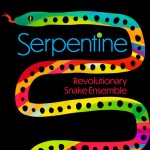
Artist: Revolutionary Snake Ensemble (@)
Title: Serpentine
Format: CD + Download
Label: Cuneiform (http://www.cuneiformrecords.com/) (@)
Rated:

Title: Serpentine
Format: CD + Download
Label: Cuneiform (http://www.cuneiformrecords.com/) (@)
Rated:
Imagine a brass band that doesn’t just walk the parade route, but slips behind the veils of time, drags funk through sun-blasted alleys of memory, and lets the horns bleed into Balkan detours and political anthems. That’s what the Revolutionary Snake Ensemble achieve with "Serpentine", their fifth album, recorded live in 2024 to mark their 35th anniversary.
Led by alto saxophonist, flutist, and composer Ken Field, this Boston-based unit has always flirted with the mythology of New Orleans brass bands, Mardi-Gras pageantry, and free-improvisation. But here, they stretch the tradition outward: no piano or guitar cords tie them down - the horn section’s freedom is a feature, not a flaw.
The album kicks off with “The Skunk Is D’Funk’d”, which sounds like a high-speed recon in the New Orleans underground - tight horns, buzzing tuba, drums clenched like a fist ready to dance. Then we sidestep into the Balkan-inflected “Buck”, pleasantly jolting the listener out of the familiar groove into something slanted and joyous. The folk sigh of “The Water Is Wide” offers a moment of calm introspection, showing the group doesn’t just throw horns - they hear. “Strange Cults” taps into a darker zone; the melodies descend, twist, as though the band is chasing something ominous and vital. “Nezalezhnist”, named in Ukrainian for ‘independence’, pulses with resistance - not just musical, but moral. A cover of Frank Zappa’s “Son of Mr. Green Genes” flips into fearless fun, proving that RSE can salve a protest march and crash a heady cosmic jam in the same hour.
What’s refreshing here is the dual nature: yes, you can stomp your feet - because the grooves land hard - but you should think too, because the arrangements and improvisations carry weight. Field’s decision not to include a chordal instrument (no piano, no guitar) gives the horns autonomy; harmony becomes a communal act of negotiation, not a backdrop.
Listening to "Serpentine" is like watching a snake coil around time - old traditions, new politics, dance-floor abandon, street-corner grit - until everything slides into one seamless coil. If you’re expecting restful jazz, this isn’t it. If you welcome brass bands that can rumble like storms and whisper like ghosts, this is delightful.
Led by alto saxophonist, flutist, and composer Ken Field, this Boston-based unit has always flirted with the mythology of New Orleans brass bands, Mardi-Gras pageantry, and free-improvisation. But here, they stretch the tradition outward: no piano or guitar cords tie them down - the horn section’s freedom is a feature, not a flaw.
The album kicks off with “The Skunk Is D’Funk’d”, which sounds like a high-speed recon in the New Orleans underground - tight horns, buzzing tuba, drums clenched like a fist ready to dance. Then we sidestep into the Balkan-inflected “Buck”, pleasantly jolting the listener out of the familiar groove into something slanted and joyous. The folk sigh of “The Water Is Wide” offers a moment of calm introspection, showing the group doesn’t just throw horns - they hear. “Strange Cults” taps into a darker zone; the melodies descend, twist, as though the band is chasing something ominous and vital. “Nezalezhnist”, named in Ukrainian for ‘independence’, pulses with resistance - not just musical, but moral. A cover of Frank Zappa’s “Son of Mr. Green Genes” flips into fearless fun, proving that RSE can salve a protest march and crash a heady cosmic jam in the same hour.
What’s refreshing here is the dual nature: yes, you can stomp your feet - because the grooves land hard - but you should think too, because the arrangements and improvisations carry weight. Field’s decision not to include a chordal instrument (no piano, no guitar) gives the horns autonomy; harmony becomes a communal act of negotiation, not a backdrop.
Listening to "Serpentine" is like watching a snake coil around time - old traditions, new politics, dance-floor abandon, street-corner grit - until everything slides into one seamless coil. If you’re expecting restful jazz, this isn’t it. If you welcome brass bands that can rumble like storms and whisper like ghosts, this is delightful.
Bitsy Knox & Roger 3000: The Ears of Animals
Artist: Bitsy Knox & Roger 3000 (@)
Title: The Ears of Animals
Format: LP
Label: moli del tro
Rated:
Title: The Ears of Animals
Format: LP
Label: moli del tro
Rated:
If there were such a thing as "acoustic clairvoyance", it might sound like this. "The Ears of Animals" is not a record you merely "hear" - it listens back. It crouches in the undergrowth between voice and vibration, observing the listener as if testing the limits of empathy, of how far sound can go before it turns into thought.
Bitsy Knox and Roger 3000 (a.k.a. Brussels-based painter and producer Julien Meert) have made a quietly disorienting album - an intimate séance conducted through tape hiss, minimal electronics, and spoken fragments that feel half dream, half field note. Knox’s delivery hovers between confession and invocation, between philosophy and nervous diary. You don’t listen to her voice so much as inhabit it. It’s the voice of someone describing the landscape of her own mind from the inside - a sort of cartographer of sensation.
Recorded in Forest, Belgium, "The Ears of Animals" feels like it could’ve been transmitted from a remote island or an abandoned greenhouse. Every track breathes with room tone, with the slow metabolism of place. The opening piece, “Chimères”, is a brief and uncanny monologue about monsters - a question without an answer. Then “Another Vista Inferno”, the centerpiece, stretches out like a fevered travelogue: a spoken word performance so lucid it almost hallucinates itself into being. Knox muses about fear, time, and the erotics of danger, while Roger’s electronics hover like mist - soft drones, distant chimes, and low frequencies that feel like tectonic murmurs.
Later, “You Are Its Floating Zenith” turns the album inside out: a poem about separation and perception, about the distance between rainbow and rain. There’s something holy in its restraint - a refusal to climax, to conclude. By the time “Of Spirit of Queen Of” closes the record, what remains is a lingering sensation that someone has been whispering just behind you for the past forty minutes - not haunting you, but trying to teach you how to listen "as animals do": without interpretation, without metaphor, only presence.
Roger 3000’s production is patient, tactile, and suspiciously human for its electronic skeleton. He treats each sound like a breath caught in amber, allowing silences to do the heavy lifting. His minimalist palette perfectly frames Knox’s words - never ornamental, never didactic, always just enough to suggest a pulse beneath the prose.
Together, they achieve something rare: a record that feels like a conversation between body and landscape, between perception and the impossibility of being understood. It’s not music for multitasking - it’s music that turns the act of listening into a kind of devotion, a form of humility.
"The Ears of Animals" is, in its way, an album about being slightly wrong in one’s own skin - about the quiet terror and fragile wonder of noticing too much. And yet, it’s also strangely comforting. Because sometimes, the best thing sound can do is remind you that you’re still here - soft, flawed, and listening.
Bitsy Knox and Roger 3000 (a.k.a. Brussels-based painter and producer Julien Meert) have made a quietly disorienting album - an intimate séance conducted through tape hiss, minimal electronics, and spoken fragments that feel half dream, half field note. Knox’s delivery hovers between confession and invocation, between philosophy and nervous diary. You don’t listen to her voice so much as inhabit it. It’s the voice of someone describing the landscape of her own mind from the inside - a sort of cartographer of sensation.
Recorded in Forest, Belgium, "The Ears of Animals" feels like it could’ve been transmitted from a remote island or an abandoned greenhouse. Every track breathes with room tone, with the slow metabolism of place. The opening piece, “Chimères”, is a brief and uncanny monologue about monsters - a question without an answer. Then “Another Vista Inferno”, the centerpiece, stretches out like a fevered travelogue: a spoken word performance so lucid it almost hallucinates itself into being. Knox muses about fear, time, and the erotics of danger, while Roger’s electronics hover like mist - soft drones, distant chimes, and low frequencies that feel like tectonic murmurs.
Later, “You Are Its Floating Zenith” turns the album inside out: a poem about separation and perception, about the distance between rainbow and rain. There’s something holy in its restraint - a refusal to climax, to conclude. By the time “Of Spirit of Queen Of” closes the record, what remains is a lingering sensation that someone has been whispering just behind you for the past forty minutes - not haunting you, but trying to teach you how to listen "as animals do": without interpretation, without metaphor, only presence.
Roger 3000’s production is patient, tactile, and suspiciously human for its electronic skeleton. He treats each sound like a breath caught in amber, allowing silences to do the heavy lifting. His minimalist palette perfectly frames Knox’s words - never ornamental, never didactic, always just enough to suggest a pulse beneath the prose.
Together, they achieve something rare: a record that feels like a conversation between body and landscape, between perception and the impossibility of being understood. It’s not music for multitasking - it’s music that turns the act of listening into a kind of devotion, a form of humility.
"The Ears of Animals" is, in its way, an album about being slightly wrong in one’s own skin - about the quiet terror and fragile wonder of noticing too much. And yet, it’s also strangely comforting. Because sometimes, the best thing sound can do is remind you that you’re still here - soft, flawed, and listening.
Mateusz Kowal: T-Bop. Prologue

Artist: Mateusz Kowal (@)
Title: T-Bop. Prologue
Format: Download Only (MP3 + Lossless)
Label: Lamour Records (@)
Rated:
Title: T-Bop. Prologue
Format: Download Only (MP3 + Lossless)
Label: Lamour Records (@)
Rated:
There’s a point where the pulse of the machine meets the breath of the horn - where the metronomic certainty of techno blinks in surprise at the wild, nervous flutter of bebop. "T-Bop. Prologue", the new EP from Polish trumpeter and engineer Mateusz Kowal, lives precisely in that electric borderland. It’s not a fusion in the tired 1990s sense - no “jazzy” loops over a four-on-the-floor kick - but rather a controlled cultural collision, a kind of Dizzy Gillespie meets Jeff Mills at the reactor core experiment.
Kowal is, after all, an unusual architect for this sonic experiment. A jazz-trained trumpeter with a parallel life in energy research, he approaches sound the way a physicist studies turbulence: watching how ordered systems begin to shimmer and deform under pressure. His ensemble - Bartomiej Libera on drums, Mikoaj Gówczyski on double bass, Dimitrios Hartwich-Vrazas on saxophone, and Kowal himself on trumpet and piano - plays like a bebop combo teleported into a warehouse rave at 3 a.m., still clutching their sheet music but breathing heavy with discovery.
“Broadway Flair” opens with the confident swagger of a Blue Note classic, until the rhythm section’s 4/4 insistence starts to gnaw at the edges - Coltrane caught in a time loop. “Foken” introduces acid synth lines (a Roland 303 emulation, if you please) that trade solos with live trumpet, the groove steady but the harmony restless, never content to stay in one emotional lane. “Rainy Sand” is the emotional core of the record - noirish, humid, evoking a late-night downpour over cracked concrete. You can almost see the reflections of streetlights sliding across a bassline that refuses to settle. And then comes “Jolly Caravan”, the most mischievous track of all - a playful dialogue between slap-happy drums and digitally eroded piano chords, the sound of Thelonious Monk hitchhiking to Detroit.
What’s remarkable here isn’t just the genre grafting - that’s been done before, usually poorly - but how "musical logic" is preserved even as two incompatible traditions try to dance. Kowal doesn’t smooth over the cracks; he highlights them. The swing rubs against the sequencer grid, the trumpet bends over the kick like a living organism over circuitry. It’s the sonic equivalent of watching oil and water learn to waltz.
The “Prologue” subtitle is apt - you can feel Kowal sketching out principles for a future, more complete theory of "T-Bop", the way early scientists once scribbled dreams of perpetual motion. It’s imperfect, gloriously so: sometimes the synths dominate too much, sometimes the brass feels trapped in the loop. But in that tension lies the soul of the project - the attempt itself becomes art.
If bebop was rebellion against commercial swing, and techno was rebellion against human restraint, "T-Bop" might just be rebellion against "genre itself". And Kowal, smiling somewhere behind his trumpet, seems to whisper: “Why choose between sweat and circuitry when you can have both?”
Kowal is, after all, an unusual architect for this sonic experiment. A jazz-trained trumpeter with a parallel life in energy research, he approaches sound the way a physicist studies turbulence: watching how ordered systems begin to shimmer and deform under pressure. His ensemble - Bartomiej Libera on drums, Mikoaj Gówczyski on double bass, Dimitrios Hartwich-Vrazas on saxophone, and Kowal himself on trumpet and piano - plays like a bebop combo teleported into a warehouse rave at 3 a.m., still clutching their sheet music but breathing heavy with discovery.
“Broadway Flair” opens with the confident swagger of a Blue Note classic, until the rhythm section’s 4/4 insistence starts to gnaw at the edges - Coltrane caught in a time loop. “Foken” introduces acid synth lines (a Roland 303 emulation, if you please) that trade solos with live trumpet, the groove steady but the harmony restless, never content to stay in one emotional lane. “Rainy Sand” is the emotional core of the record - noirish, humid, evoking a late-night downpour over cracked concrete. You can almost see the reflections of streetlights sliding across a bassline that refuses to settle. And then comes “Jolly Caravan”, the most mischievous track of all - a playful dialogue between slap-happy drums and digitally eroded piano chords, the sound of Thelonious Monk hitchhiking to Detroit.
What’s remarkable here isn’t just the genre grafting - that’s been done before, usually poorly - but how "musical logic" is preserved even as two incompatible traditions try to dance. Kowal doesn’t smooth over the cracks; he highlights them. The swing rubs against the sequencer grid, the trumpet bends over the kick like a living organism over circuitry. It’s the sonic equivalent of watching oil and water learn to waltz.
The “Prologue” subtitle is apt - you can feel Kowal sketching out principles for a future, more complete theory of "T-Bop", the way early scientists once scribbled dreams of perpetual motion. It’s imperfect, gloriously so: sometimes the synths dominate too much, sometimes the brass feels trapped in the loop. But in that tension lies the soul of the project - the attempt itself becomes art.
If bebop was rebellion against commercial swing, and techno was rebellion against human restraint, "T-Bop" might just be rebellion against "genre itself". And Kowal, smiling somewhere behind his trumpet, seems to whisper: “Why choose between sweat and circuitry when you can have both?”
Raoul Sinier: Army of Ghosts

Raoul Sinier has always inhabited that strange borderland between the human and the machine - a digital shaman with paint under his fingernails. "Army of Ghosts" doesn’t just extend that mythology; it detonates it, scattering bits of its DNA across ten tracks that sound like the apocalypse dancing in 5/4 time. It’s an album that smells faintly of oil, regret, and fluorescent dreams.
As usual, Sinier does everything himself: production, mixing, visuals, vocals - the full mad laboratory. And the result is a soundscape where hip-hop’s golden-age sampling collides with warped prog, overdriven guitars, fractured funk, and a synthetic pulse that seems to remember IDM’s former glory but refuses to mourn it. His voice - half-murmur, half-incantation - floats above it all like a ghost giving advice to the living.
The opener, “Phony Tales”, sets the tone with bitter humor: Sinier sneers at false prophets and armchair revolutionaries, declaring himself a reluctant witness to humanity’s collapse. “Brace Yourself” is the rallying cry - or perhaps the obituary - for whatever’s left. The beats churn like gears grinding hope into vapor, and Sinier’s delivery feels like someone trying to warn the listener through a radio signal from the end of time.
Lyrically, this might be his most narrative work. Each song seems to be told by a different ghost - a translucent chorus of ex-humans reflecting on the ruins. “Translucent Skin” and “Walking Through Walls” in particular embody Sinier’s peculiar genius: songs that are conceptually bleak but musically exhilarating. He doesn’t wallow in despair - he stages it, lights it in neon, and makes it dance.
There’s also tenderness here, though buried deep under distortion. “Spectral Ocean” and “Distant Wildlife” offer glimpses of peace amid the chaos, where the ghost army pauses to watch what remains of life. These are the album’s quiet epiphanies - moments when Sinier’s machines sigh instead of scream. And then “Neon Sign” closes the album like an exhausted beacon, blinking its final message into a void that no one’s listening to.
"Army of Ghosts" feels like the natural evolution of Sinier’s long-standing fascination with digital melancholy - from "Brain Kitchen" to "Welcome to My Orphanage", he’s always been cataloguing the absurd coexistence of brutality and beauty. Here, he finds a strange equilibrium: a world beyond flesh and fear, where everything collapses gracefully.
It’s easy to hear this as a metaphor for our era - our algorithmic addictions, our virtual hauntings - but Sinier, ever the sly surrealist, refuses to give us a moral. He just invites us to join the spectral parade, to become another flicker in his haunted circuitry.
As usual, Sinier does everything himself: production, mixing, visuals, vocals - the full mad laboratory. And the result is a soundscape where hip-hop’s golden-age sampling collides with warped prog, overdriven guitars, fractured funk, and a synthetic pulse that seems to remember IDM’s former glory but refuses to mourn it. His voice - half-murmur, half-incantation - floats above it all like a ghost giving advice to the living.
The opener, “Phony Tales”, sets the tone with bitter humor: Sinier sneers at false prophets and armchair revolutionaries, declaring himself a reluctant witness to humanity’s collapse. “Brace Yourself” is the rallying cry - or perhaps the obituary - for whatever’s left. The beats churn like gears grinding hope into vapor, and Sinier’s delivery feels like someone trying to warn the listener through a radio signal from the end of time.
Lyrically, this might be his most narrative work. Each song seems to be told by a different ghost - a translucent chorus of ex-humans reflecting on the ruins. “Translucent Skin” and “Walking Through Walls” in particular embody Sinier’s peculiar genius: songs that are conceptually bleak but musically exhilarating. He doesn’t wallow in despair - he stages it, lights it in neon, and makes it dance.
There’s also tenderness here, though buried deep under distortion. “Spectral Ocean” and “Distant Wildlife” offer glimpses of peace amid the chaos, where the ghost army pauses to watch what remains of life. These are the album’s quiet epiphanies - moments when Sinier’s machines sigh instead of scream. And then “Neon Sign” closes the album like an exhausted beacon, blinking its final message into a void that no one’s listening to.
"Army of Ghosts" feels like the natural evolution of Sinier’s long-standing fascination with digital melancholy - from "Brain Kitchen" to "Welcome to My Orphanage", he’s always been cataloguing the absurd coexistence of brutality and beauty. Here, he finds a strange equilibrium: a world beyond flesh and fear, where everything collapses gracefully.
It’s easy to hear this as a metaphor for our era - our algorithmic addictions, our virtual hauntings - but Sinier, ever the sly surrealist, refuses to give us a moral. He just invites us to join the spectral parade, to become another flicker in his haunted circuitry.