
Thursday, September 24, 2026
AMAS & Frithjof-Martin Grabner: SRDGN X LPZG
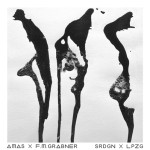
Artist: AMAS & Frithjof-Martin Grabner (@)
Title: SRDGN X LPZG
Format: LP
Label: AMAS_STUDIO (@)
Rated:

Title: SRDGN X LPZG
Format: LP
Label: AMAS_STUDIO (@)
Rated:
Johann Sebastian Bach has been remixed, sampled, orchestrated, jazzified, electronicized and otherwise recruited into more musical causes than he could probably have imagined. At this point, announcing yet another "reinterpretation" of the Leipzig master risks sounding like the cultural equivalent of repainting the Mona Lisa with glow-in-the-dark nail polish. Fortunately, "SRDGN X LPZG" takes a far more interesting route. Rather than dressing Bach in contemporary clothes, AMAS strip his music down to its architectural skeleton, searching for the repetitive logic and mathematical elegance that have quietly linked Baroque composition to minimalism for decades.
The duo's concept is deceptively simple yet remarkably ambitious. During an extended creative process divided between the rugged landscapes of southern Sardinia and the disciplined atmosphere of Leipzig, AMAS extracted rhythmic and harmonic DNA from fourteen Bach compositions, reducing them into minimalist electronic frameworks enriched by field recordings. Instead of preserving familiar melodies, they preserve relationships: patterns, tensions, proportions. The result feels less like arranging Bach than reverse-engineering his thought process.
The second half of the equation arrives through Frithjof-Martin Grabner, one of Germany's most respected double bass players, whose career spans classical performance, chamber music and countless contemporary collaborations. His improvisations never function as decorative soloing. Instead, they become another environmental element, sometimes earthy and tactile, sometimes so heavily processed that the bass dissolves into ambiguous textures hovering between acoustic resonance and synthetic illusion. There are moments where identifying the instrument becomes almost impossible, and that uncertainty is precisely where much of the album's fascination resides.
From the opening pulse of "ANKUNFT", the record establishes an atmosphere of patient movement. Tracks such as "WEITE" and "NACHT" expand with understated confidence, allowing tiny shifts in harmony and timbre to accumulate emotional weight rather than announcing themselves dramatically. Elsewhere, "RAUSCH" and "CHAOS" introduce denser rhythmic currents without abandoning the contemplative core, while "KLARHEIT" and the closing "ABSCHIED" suggest a fragile reconciliation between precision and intuition.
Listeners familiar with dub techno will immediately recognize the spacious production aesthetic: deep reverberations, restrained low-end movement, and an almost geological sense of time. Yet unlike many productions built around hypnotic repetition, "SRDGN X LPZG" never feels mechanically loop-based. Every cycle breathes. Every recurrence carries microscopic alterations, recalling both Steve Reich's phase experiments and the organic patience of contemporary electroacoustic composition.
The Sardinian field recordings deserve particular mention. Rather than functioning as picturesque postcards from the Mediterranean, they integrate seamlessly into the musical language, blurring distinctions between environment and composition. Wind, distant ambience and subtle environmental textures become structural voices rather than ornamental background. Geography itself participates in the music, quietly reminding us that places have rhythms just as people do.
One of the album's most rewarding qualities is its refusal to indulge in obvious virtuosity. Despite Grabner's formidable technique and AMAS' sophisticated production methods, the project consistently privileges atmosphere over demonstration. The reference to Miles Davis' "Ascenseur pour l'échafaud" sessions is not accidental: intuition repeatedly wins over calculation, even though immense calculation clearly underpins the entire construction. Like a beautifully engineered bridge, the album works best when listeners stop admiring the engineering and simply cross it.
There is also something quietly humorous about the whole enterprise. Bach, often imprisoned behind marble busts and academic reverence, finds himself wandering through dub echoes, environmental recordings and hypnotic loops without losing an ounce of dignity. If anything, "SRDGN X LPZG" suggests that the old Kantor may have always contained these possibilities. After all, counterpoint is already a form of controlled repetition; minimalism merely stretches the thread until its hidden geometry becomes visible.
AMAS demonstrate remarkable restraint throughout the seventy-plus minutes, resisting the temptation to overwhelm listeners with conceptual explanations. The music trusts repetition to reveal meaning gradually, much as landscapes disclose themselves differently depending on how long one remains within them. Sardinia's expansive horizons and Leipzig's intellectual heritage become less opposing poles than complementary states of listening.
Ultimately, "SRDGN X LPZG" succeeds because it approaches history neither as sacred relic nor disposable raw material. It treats Bach as a living system whose internal mechanics continue generating unexpected futures. In an era where many cross-genre experiments seem content to place unlikely ingredients into the same bowl and call it innovation, AMAS instead search for common roots buried beneath centuries of musical evolution. The result is neither homage nor deconstruction, but an elegant conversation across time, where Baroque order, ambient drift and dub-techno repetition quietly discover they have been speaking related dialects all along.
The duo's concept is deceptively simple yet remarkably ambitious. During an extended creative process divided between the rugged landscapes of southern Sardinia and the disciplined atmosphere of Leipzig, AMAS extracted rhythmic and harmonic DNA from fourteen Bach compositions, reducing them into minimalist electronic frameworks enriched by field recordings. Instead of preserving familiar melodies, they preserve relationships: patterns, tensions, proportions. The result feels less like arranging Bach than reverse-engineering his thought process.
The second half of the equation arrives through Frithjof-Martin Grabner, one of Germany's most respected double bass players, whose career spans classical performance, chamber music and countless contemporary collaborations. His improvisations never function as decorative soloing. Instead, they become another environmental element, sometimes earthy and tactile, sometimes so heavily processed that the bass dissolves into ambiguous textures hovering between acoustic resonance and synthetic illusion. There are moments where identifying the instrument becomes almost impossible, and that uncertainty is precisely where much of the album's fascination resides.
From the opening pulse of "ANKUNFT", the record establishes an atmosphere of patient movement. Tracks such as "WEITE" and "NACHT" expand with understated confidence, allowing tiny shifts in harmony and timbre to accumulate emotional weight rather than announcing themselves dramatically. Elsewhere, "RAUSCH" and "CHAOS" introduce denser rhythmic currents without abandoning the contemplative core, while "KLARHEIT" and the closing "ABSCHIED" suggest a fragile reconciliation between precision and intuition.
Listeners familiar with dub techno will immediately recognize the spacious production aesthetic: deep reverberations, restrained low-end movement, and an almost geological sense of time. Yet unlike many productions built around hypnotic repetition, "SRDGN X LPZG" never feels mechanically loop-based. Every cycle breathes. Every recurrence carries microscopic alterations, recalling both Steve Reich's phase experiments and the organic patience of contemporary electroacoustic composition.
The Sardinian field recordings deserve particular mention. Rather than functioning as picturesque postcards from the Mediterranean, they integrate seamlessly into the musical language, blurring distinctions between environment and composition. Wind, distant ambience and subtle environmental textures become structural voices rather than ornamental background. Geography itself participates in the music, quietly reminding us that places have rhythms just as people do.
One of the album's most rewarding qualities is its refusal to indulge in obvious virtuosity. Despite Grabner's formidable technique and AMAS' sophisticated production methods, the project consistently privileges atmosphere over demonstration. The reference to Miles Davis' "Ascenseur pour l'échafaud" sessions is not accidental: intuition repeatedly wins over calculation, even though immense calculation clearly underpins the entire construction. Like a beautifully engineered bridge, the album works best when listeners stop admiring the engineering and simply cross it.
There is also something quietly humorous about the whole enterprise. Bach, often imprisoned behind marble busts and academic reverence, finds himself wandering through dub echoes, environmental recordings and hypnotic loops without losing an ounce of dignity. If anything, "SRDGN X LPZG" suggests that the old Kantor may have always contained these possibilities. After all, counterpoint is already a form of controlled repetition; minimalism merely stretches the thread until its hidden geometry becomes visible.
AMAS demonstrate remarkable restraint throughout the seventy-plus minutes, resisting the temptation to overwhelm listeners with conceptual explanations. The music trusts repetition to reveal meaning gradually, much as landscapes disclose themselves differently depending on how long one remains within them. Sardinia's expansive horizons and Leipzig's intellectual heritage become less opposing poles than complementary states of listening.
Ultimately, "SRDGN X LPZG" succeeds because it approaches history neither as sacred relic nor disposable raw material. It treats Bach as a living system whose internal mechanics continue generating unexpected futures. In an era where many cross-genre experiments seem content to place unlikely ingredients into the same bowl and call it innovation, AMAS instead search for common roots buried beneath centuries of musical evolution. The result is neither homage nor deconstruction, but an elegant conversation across time, where Baroque order, ambient drift and dub-techno repetition quietly discover they have been speaking related dialects all along.
Comments
Stream
Browse by Genre
Industrial Music / Industrial Metal / Aggro Industrial / Electro Metal
Industrial Noise / Power Noise / Harsh Noise
Synth Pop / Electro Pop / Synth-Electronica
Techno / Trance / Goa / Drum'n'Bass / Jungle / Tribal / Trip-Hop
Ambient / Electronica / Ethereal / Dub / Soundscapes / Abstract
Experimental / Avantgarde / Weird & Wired / Glitch / Noise / Field Recording
Dark / Gothic / Wave / New Wave / Dark Wave / Industrial Gothic
New Music / Downtown / Avantgarde Jazz / New Classical / World