
Song Circus: Anatomy of Sound
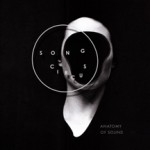

Song Circus is a five-piece female vocal chamber ensemble from Stravanger, Norway led by Liv Runesdatter. 'Anatomy of Sound' is comprised of two works - "Landscape with Figures," composed by Reuben Sverre Gjertsen, who also supplies the electronics for the piece, and
the second work - "Persefone" by Ole Henrik Moe. I should mention that the latter work is an acoustic piece written for five female voice and wine glasses. Already from the little that I've mentioned you must be getting the impression that this is serious avant-garde modern classical music, and you'd be absolutely correct in that assumption, but what you will actually hear here subtly takes sound beyond the confines and preconceived notions of what you've ever experienced before. For your listening pleasure, you have two options - (it is a two disc set) Blue-ray surround sound (your choice of three different modes), or SACD. I found the Blu-ray to be the most rewarding experience, putting the sublime into perspective and best emulating a live performance scenario, although even the SACD will give you a wonderful sonic experience.
The collaborative "Landscape with Figures" took four years for Song Circus to work out with Reuben Sverre Gjertsen, and it's an epic 45 minute excursion into what voices and electronics can accomplish together. As the liner notes state: "The composition stretches the limits of tonal flexability and microtonal precision." Gjertsen studied Wishart and Ferneyhoug (New Complexity) for their systems of notation and composition to achieve this (yes, all the music was actually scored, not merely improvised) so you know this is pretty heady stuff.
Although not required, a familiarity with works by such composers as Morton Feldman, John Cage, George Crumb, Edgard Varese, Anton Webern, Harry Partch, Karlheinz Stockhausen, Luciano Berio and others in this field would be helpful, but not essential in appreciating these works. While not musique concrète in the strictest sense, "Landscape with Figures" does seem to have sonic similarities - episodic and sporadic events in both vocals and electronics, radical sound characteristic variations, and impressions of extensive electronic manipulation of both voice and synthesizer. The voices however have not been electronically altered (to my knowledge) but some of the vocal techniques employed may give one that impression. The best way of describing "Landscape" is an aural dreamworld that sometimes mixes natural ambient (although no field recordings were employed) with snippets of other-worldly elements, and also whispers. Vocally, the composition ranges from onomatpoetic utterings to seductive, siren-like glissandoes. Electronically, well, much of it is what you'd expect in an avant-garde composition of this nature, and some of it is not. There is almost no concession to anything musically traditional, and the multitude of electronic variation used ranges from passages of subtle drone to bit of random sample and hold, tinkling belliish tones, something that sounds like a sink drain being unclogged, gong-like sonorities, and random orchestral elements that aren't actually orchestral. There is no rhythm; just a multitude of events that float along occasionally combining and intertwining leaving the listeners to form their own impression. The majority of this work is low-key and jarring events are in the minority. It never seems chaotic, cacophonous or claustrophobic, but rather playful and open, even though it can be a little alien at times. A portion of this piece uses combined fragments of anagrams from a passage of Joyce's "Finnegan's Wake" vocally, but don't expect that to be prominent in the listening experience. The piece is also divided into 12 tracks (sections) but you'd be hard-pressed to separate one from the next. In fact, it slips so seamlessly into "Persefone" that you'd hardly know you were on to another composition.
Ole Henrik Moe's "Persefone,' the piece for five voice and wine glasses, is radically different from the preceding work, being a textural study of vocal sound, dynamics and microtonality inspired by Morton Feldman. The description in the liner notes say "...in the first part he stretches silence and slowness so far that any sense of a horizontal timeline dissolves into a music of state." That's pretty much on off mark. It will be difficult to discern the sustained voices from the wine glasses here. Voice and glass harmonize in a mostly smooth 12 minute moan that has little in the way of hiccups until
near the end. After listening it is easy to hear why this composition was included in the recording.
I readily admit that most of my interest in avant-garde modern music stemmed from an earlier time when I was ever so curious about music that did not conform to convention and transcended traditional form. 'Anatomy of Sound' however has rekindled a spark for this kind of thing, being some of the best "new music" I've heard in a long, long while. While the performers and composers are to be lauded for these works, the whole is greater than the sum of the parts, and discerning listeners are sure to be rewarded, especially with the proper playback equipment.
the second work - "Persefone" by Ole Henrik Moe. I should mention that the latter work is an acoustic piece written for five female voice and wine glasses. Already from the little that I've mentioned you must be getting the impression that this is serious avant-garde modern classical music, and you'd be absolutely correct in that assumption, but what you will actually hear here subtly takes sound beyond the confines and preconceived notions of what you've ever experienced before. For your listening pleasure, you have two options - (it is a two disc set) Blue-ray surround sound (your choice of three different modes), or SACD. I found the Blu-ray to be the most rewarding experience, putting the sublime into perspective and best emulating a live performance scenario, although even the SACD will give you a wonderful sonic experience.
The collaborative "Landscape with Figures" took four years for Song Circus to work out with Reuben Sverre Gjertsen, and it's an epic 45 minute excursion into what voices and electronics can accomplish together. As the liner notes state: "The composition stretches the limits of tonal flexability and microtonal precision." Gjertsen studied Wishart and Ferneyhoug (New Complexity) for their systems of notation and composition to achieve this (yes, all the music was actually scored, not merely improvised) so you know this is pretty heady stuff.
Although not required, a familiarity with works by such composers as Morton Feldman, John Cage, George Crumb, Edgard Varese, Anton Webern, Harry Partch, Karlheinz Stockhausen, Luciano Berio and others in this field would be helpful, but not essential in appreciating these works. While not musique concrète in the strictest sense, "Landscape with Figures" does seem to have sonic similarities - episodic and sporadic events in both vocals and electronics, radical sound characteristic variations, and impressions of extensive electronic manipulation of both voice and synthesizer. The voices however have not been electronically altered (to my knowledge) but some of the vocal techniques employed may give one that impression. The best way of describing "Landscape" is an aural dreamworld that sometimes mixes natural ambient (although no field recordings were employed) with snippets of other-worldly elements, and also whispers. Vocally, the composition ranges from onomatpoetic utterings to seductive, siren-like glissandoes. Electronically, well, much of it is what you'd expect in an avant-garde composition of this nature, and some of it is not. There is almost no concession to anything musically traditional, and the multitude of electronic variation used ranges from passages of subtle drone to bit of random sample and hold, tinkling belliish tones, something that sounds like a sink drain being unclogged, gong-like sonorities, and random orchestral elements that aren't actually orchestral. There is no rhythm; just a multitude of events that float along occasionally combining and intertwining leaving the listeners to form their own impression. The majority of this work is low-key and jarring events are in the minority. It never seems chaotic, cacophonous or claustrophobic, but rather playful and open, even though it can be a little alien at times. A portion of this piece uses combined fragments of anagrams from a passage of Joyce's "Finnegan's Wake" vocally, but don't expect that to be prominent in the listening experience. The piece is also divided into 12 tracks (sections) but you'd be hard-pressed to separate one from the next. In fact, it slips so seamlessly into "Persefone" that you'd hardly know you were on to another composition.
Ole Henrik Moe's "Persefone,' the piece for five voice and wine glasses, is radically different from the preceding work, being a textural study of vocal sound, dynamics and microtonality inspired by Morton Feldman. The description in the liner notes say "...in the first part he stretches silence and slowness so far that any sense of a horizontal timeline dissolves into a music of state." That's pretty much on off mark. It will be difficult to discern the sustained voices from the wine glasses here. Voice and glass harmonize in a mostly smooth 12 minute moan that has little in the way of hiccups until
near the end. After listening it is easy to hear why this composition was included in the recording.
I readily admit that most of my interest in avant-garde modern music stemmed from an earlier time when I was ever so curious about music that did not conform to convention and transcended traditional form. 'Anatomy of Sound' however has rekindled a spark for this kind of thing, being some of the best "new music" I've heard in a long, long while. While the performers and composers are to be lauded for these works, the whole is greater than the sum of the parts, and discerning listeners are sure to be rewarded, especially with the proper playback equipment.
Comments
Browse by Genre
Industrial Music / Industrial Metal / Aggro Industrial / Electro Metal
Industrial Noise / Power Noise / Harsh Noise
Synth Pop / Electro Pop / Synth-Electronica
Techno / Trance / Goa / Drum'n'Bass / Jungle / Tribal / Trip-Hop
Ambient / Electronica / Ethereal / Dub / Soundscapes / Abstract
Experimental / Avantgarde / Weird & Wired / Glitch / Noise / Field Recording
Dark / Gothic / Wave / New Wave / Dark Wave / Industrial Gothic
New Music / Downtown / Avantgarde Jazz / New Classical / World