
Browse by Genre
Industrial Music / Industrial Metal / Aggro Industrial / Electro Metal
Industrial Noise / Power Noise / Harsh Noise
Synth Pop / Electro Pop / Synth-Electronica
Techno / Trance / Goa / Drum'n'Bass / Jungle / Tribal / Trip-Hop
Ambient / Electronica / Ethereal / Dub / Soundscapes / Abstract
Experimental / Avantgarde / Weird & Wired / Glitch / Noise / Field Recording
Dark / Gothic / Wave / New Wave / Dark Wave / Industrial Gothic
New Music / Downtown / Avantgarde Jazz / New Classical / World
Search Reviews
Music Reviews
Luis Fernando Amaya: nacen en silencio
Artist: Luis Fernando Amaya
Title: nacen en silencio
Format: Download Only (MP3 only)
Label: Aurora Records (@)
Rated:

Title: nacen en silencio
Format: Download Only (MP3 only)
Label: Aurora Records (@)
Rated:
Luis Fernando Amaya’s "nacen en silencio" arrives quietly, which is not a marketing trick but a compositional stance. This is music that distrusts grand entrances and prefers to unfold like a biological process you only notice once it is already happening. Released by Aurora Records as his second monographic album, it confirms Amaya as a composer less interested in spectacle than in attention: sustained, patient, almost ecological listening.
Amaya, born in Aguascalientes in 1992 and now based in Oslo, has built a practice around a deceptively simple question: how do other forms of life perceive the world, and what happens if music tries to listen back? This record extends that inquiry with unusual coherence. Across works for percussion, strings, voices, and electronics, "nacen en silencio" maps a territory where sound behaves less like expression and more like interaction. Things touch, resonate, trigger one another. Agency feels distributed.
The album’s conceptual backbone is borrowed from Marosa Di Giorgio’s image of mushrooms emerging silently, sometimes accompanied by a faint thunder. It’s a perfect metaphor for Amaya’s approach. The title piece for solo percussion opens with restraint, assembling itself from metallic glints and low, woody impacts. Modeled on mycelial networks, the music spreads horizontally rather than pushing forward. The fact that it is scored for accessible, often homemade instruments is not an ethical footnote but part of the sound itself. Nothing here feels precious; everything feels grounded.
The two entries from the "Dialecto de Árbol" series form the album’s nervous system. In No. 6, eight voices interact with multichannel electronics, producing vibrations through glass that blur the line between breath, resonance, and noise. The result is neither choral nor electronic in any conventional sense. It feels closer to an environmental phenomenon, something oscillating between presence and absence. No. 4, written for string quartet and performed with remarkable sensitivity by the Varo Quartet, strips the voice away but keeps the idea of polyphony as movement. Lines sway, collide gently, settle, then stir again, like branches negotiating a shared space.
If the "Dialecto" pieces explore vegetal time, "Bestiario: cinco" introduces a more unstable creature. Written for viola and electronics, it imagines an unseen animal defined by multiplicity. The electronics do not accompany so much as haunt the instrument, producing a sense of layered identity. The viola seems to hesitate between gestures, as if unsure which limb or wing to use next. It’s a playful piece in concept, but never whimsical. There’s an undercurrent of unease, as if the creature is constantly on the verge of slipping out of focus.
The longest and perhaps most physically striking work is "un leve trueno", for percussion and feedback. Two large drums face each other, wired so that actions on one provoke unpredictable responses on the other. The composer describes this as fungal behavior, and the analogy holds. Cause and effect are present but obscured. The music breathes, swells, recoils. What’s compelling here is not volume or drama, but proximity. Thunder that is both near and soft turns out to be deeply unsettling, a reminder that intensity does not require force.
What unites these five works is a refusal to treat non-human inspiration as metaphor alone. Amaya does not imitate nature; he borrows its operating principles. Feedback, resonance, variation, and contingency are not decorative ideas but structural ones. This is helped by the album’s production, which keeps textures tactile and close, and by a roster of performers who clearly understand that precision here means sensitivity, not control.
There is something gently radical about "nacen en silencio". It does not posture as environmental commentary, yet it quietly reshapes how listening itself might function. Time slows, hierarchies flatten, sound becomes less about telling and more about coexisting. In a musical landscape often obsessed with urgency and statement, Amaya offers something rarer: music that trusts silence, and knows that some of the most consequential things happen before anyone notices they’ve begun.
Amaya, born in Aguascalientes in 1992 and now based in Oslo, has built a practice around a deceptively simple question: how do other forms of life perceive the world, and what happens if music tries to listen back? This record extends that inquiry with unusual coherence. Across works for percussion, strings, voices, and electronics, "nacen en silencio" maps a territory where sound behaves less like expression and more like interaction. Things touch, resonate, trigger one another. Agency feels distributed.
The album’s conceptual backbone is borrowed from Marosa Di Giorgio’s image of mushrooms emerging silently, sometimes accompanied by a faint thunder. It’s a perfect metaphor for Amaya’s approach. The title piece for solo percussion opens with restraint, assembling itself from metallic glints and low, woody impacts. Modeled on mycelial networks, the music spreads horizontally rather than pushing forward. The fact that it is scored for accessible, often homemade instruments is not an ethical footnote but part of the sound itself. Nothing here feels precious; everything feels grounded.
The two entries from the "Dialecto de Árbol" series form the album’s nervous system. In No. 6, eight voices interact with multichannel electronics, producing vibrations through glass that blur the line between breath, resonance, and noise. The result is neither choral nor electronic in any conventional sense. It feels closer to an environmental phenomenon, something oscillating between presence and absence. No. 4, written for string quartet and performed with remarkable sensitivity by the Varo Quartet, strips the voice away but keeps the idea of polyphony as movement. Lines sway, collide gently, settle, then stir again, like branches negotiating a shared space.
If the "Dialecto" pieces explore vegetal time, "Bestiario: cinco" introduces a more unstable creature. Written for viola and electronics, it imagines an unseen animal defined by multiplicity. The electronics do not accompany so much as haunt the instrument, producing a sense of layered identity. The viola seems to hesitate between gestures, as if unsure which limb or wing to use next. It’s a playful piece in concept, but never whimsical. There’s an undercurrent of unease, as if the creature is constantly on the verge of slipping out of focus.
The longest and perhaps most physically striking work is "un leve trueno", for percussion and feedback. Two large drums face each other, wired so that actions on one provoke unpredictable responses on the other. The composer describes this as fungal behavior, and the analogy holds. Cause and effect are present but obscured. The music breathes, swells, recoils. What’s compelling here is not volume or drama, but proximity. Thunder that is both near and soft turns out to be deeply unsettling, a reminder that intensity does not require force.
What unites these five works is a refusal to treat non-human inspiration as metaphor alone. Amaya does not imitate nature; he borrows its operating principles. Feedback, resonance, variation, and contingency are not decorative ideas but structural ones. This is helped by the album’s production, which keeps textures tactile and close, and by a roster of performers who clearly understand that precision here means sensitivity, not control.
There is something gently radical about "nacen en silencio". It does not posture as environmental commentary, yet it quietly reshapes how listening itself might function. Time slows, hierarchies flatten, sound becomes less about telling and more about coexisting. In a musical landscape often obsessed with urgency and statement, Amaya offers something rarer: music that trusts silence, and knows that some of the most consequential things happen before anyone notices they’ve begun.
Uruboro: Close Position

"Close Position" is the kind of debut that politely refuses to behave like one. No manifesto, no stylistic shopping list, no anxious need to demonstrate versatility. Pierluigi Foschi, under the deliberately circular moniker Uruboro, starts instead from a single object, a single gesture, and a single room, and then worries that gesture until it begins to misbehave perceptually. The result is a 38-minute study in proximity, friction, and the strange things our ears do when they are denied clear boundaries.
Foschi is a percussionist, improviser, and composer, and all three roles are present here, though never announced. The core material of "Close Position" comes from bowing a gong with a double bass bow, a technique that already suggests duration over attack, pressure over impact. These sounds were recorded repeatedly throughout 2024 in Santa Colomba, always with the same setup, as if variation itself were something to be constrained, observed under laboratory conditions. The piece is a re-composition rather than a document: a careful stacking and balancing of nearly identical events, where difference is a matter of microns.
Enter Cosimo Fiaschi, whose soprano saxophone and reed trumpet are not asked to contrast the gong, but to impersonate it. This is where the record becomes quietly mischievous. Instead of dialogue, we get mimicry. Instead of call and response, a kind of sonic ventriloquism. The instruments lean so close to one another in pitch and color that the ear begins to lose track of who is doing what, or whether “who” is even the right question anymore.
What emerges is a long, slowly shifting texture dominated by beating phenomena, those phantom pulsations that arise when neighboring frequencies rub against each other. These beats are not played; they happen to you. The music exploits a basic limitation of human hearing, our inability to process extremely close frequencies simultaneously, and turns it into compositional material. You do not listen to "Close Position" so much as host it. The sound sets up residence in your perceptual system and starts rearranging the furniture.
This makes the listening experience oddly tense. The sounds are sustained, seemingly static, yet full of internal agitation. Change is always imminent and almost never arrives in a conventional sense. The drama lies in anticipation, in the suspicion that something has shifted when, technically, very little has. It’s minimal music without the clean lines, drone music without the comfort blanket, reduced music that refuses to be ascetic.
The live version of the piece, which relies on samples to maintain multiple layers at once, underlines an important point: "Close Position" is not about purity or instrumental heroics. It is about balance, accumulation, and the subjective nature of listening itself. Your position in the room matters. Your focus matters. Your tolerance for ambiguity definitely matters. Two people hearing the same performance are, in a very real sense, hearing different pieces.
Contextually, the album sits comfortably within the kind of contemporary electroacoustic and improvised practices that value timbre as structure and perception as form. But Foschi avoids academic stiffness. There is a dry sense of humor in committing so fully to such narrow parameters, in trusting that a gong, a bow, and a near-perfect impersonation can sustain half an hour without blinking.
Released by Disasters By Choice on CD, "Close Position" feels less like a statement than a condition. It asks for patience, proximity, and a willingness to let your ears do some of the composing. For a first release, it’s remarkably unafraid of standing still and watching the listener squirm just a little.
Foschi is a percussionist, improviser, and composer, and all three roles are present here, though never announced. The core material of "Close Position" comes from bowing a gong with a double bass bow, a technique that already suggests duration over attack, pressure over impact. These sounds were recorded repeatedly throughout 2024 in Santa Colomba, always with the same setup, as if variation itself were something to be constrained, observed under laboratory conditions. The piece is a re-composition rather than a document: a careful stacking and balancing of nearly identical events, where difference is a matter of microns.
Enter Cosimo Fiaschi, whose soprano saxophone and reed trumpet are not asked to contrast the gong, but to impersonate it. This is where the record becomes quietly mischievous. Instead of dialogue, we get mimicry. Instead of call and response, a kind of sonic ventriloquism. The instruments lean so close to one another in pitch and color that the ear begins to lose track of who is doing what, or whether “who” is even the right question anymore.
What emerges is a long, slowly shifting texture dominated by beating phenomena, those phantom pulsations that arise when neighboring frequencies rub against each other. These beats are not played; they happen to you. The music exploits a basic limitation of human hearing, our inability to process extremely close frequencies simultaneously, and turns it into compositional material. You do not listen to "Close Position" so much as host it. The sound sets up residence in your perceptual system and starts rearranging the furniture.
This makes the listening experience oddly tense. The sounds are sustained, seemingly static, yet full of internal agitation. Change is always imminent and almost never arrives in a conventional sense. The drama lies in anticipation, in the suspicion that something has shifted when, technically, very little has. It’s minimal music without the clean lines, drone music without the comfort blanket, reduced music that refuses to be ascetic.
The live version of the piece, which relies on samples to maintain multiple layers at once, underlines an important point: "Close Position" is not about purity or instrumental heroics. It is about balance, accumulation, and the subjective nature of listening itself. Your position in the room matters. Your focus matters. Your tolerance for ambiguity definitely matters. Two people hearing the same performance are, in a very real sense, hearing different pieces.
Contextually, the album sits comfortably within the kind of contemporary electroacoustic and improvised practices that value timbre as structure and perception as form. But Foschi avoids academic stiffness. There is a dry sense of humor in committing so fully to such narrow parameters, in trusting that a gong, a bow, and a near-perfect impersonation can sustain half an hour without blinking.
Released by Disasters By Choice on CD, "Close Position" feels less like a statement than a condition. It asks for patience, proximity, and a willingness to let your ears do some of the composing. For a first release, it’s remarkably unafraid of standing still and watching the listener squirm just a little.
Tomat: Afasi
Artist: Tomat (@)
Title: Afasi
Format: Download Only (MP3 + Lossless)
Label: The State51 Conspiracy (@)
Rated:

Title: Afasi
Format: Download Only (MP3 + Lossless)
Label: The State51 Conspiracy (@)
Rated:
Tomat calls "Afasi" a collection of fragments, which is a polite way of saying it refuses to sit still or behave like an album in the traditional sense. Songs appear, evaporate, come back shorter, warped, half-remembered. If you’re looking for neat arcs or declarative statements, this is the wrong door. If you’re curious about what happens when memory, sound, and attention all start shedding parts of themselves, then this one quietly gets under the skin.
The title is doing real work here. The collision between aphasia and "a fasi" isn’t a clever word game, it’s a structural principle. These tracks don’t develop so much as accumulate and decay. Ideas surface briefly, loop just long enough to feel familiar, then dissolve. The frequent micro-interludes feel less like transitions than symptoms: gaps in speech, missing words, mental buffering. The three “Carousel” pieces frame the record like flickering markers of time passing, reminding you that motion doesn’t necessarily mean progress.
Sonically, "Afasi" lives in a limbo between ambient, IDM residue, and soundtrack logic stripped of images. Tomat’s background in installation work and film music is obvious, but never in a cinematic, overdetermined way. These pieces feel like cues for scenes that were cut, or memories that no longer remember what they were attached to. Rhythms appear crooked and tentative, often collapsing into texture. Melodies behave like shy witnesses: present, unreliable, unwilling to testify for long.
What keeps the record from drifting into abstract wallpaper is its emotional weight. Tracks like "Fatigue", "Maze", or "Opaque" don’t announce their moods, they leak them. There’s a persistent sense of weariness here, not dramatic despair but the softer exhaustion of living inside too much information for too long. Tomat’s idea of “communicative entropy” isn’t delivered as a manifesto, it’s embedded in the music’s behavior. Loops degrade, signals blur, structure keeps slipping just out of reach. The listener is not guided, only accompanied.
The shorter cuts are crucial. Those seconds-long pieces aren’t sketches waiting to be expanded, they are the point. They function like corrupted files or incomplete thoughts that refuse to be resolved. In that sense, "Afasi" is honest to the contemporary condition it’s responding to. Nothing here pretends to offer clarity or synthesis. Even the more extended moments, like "Aisle" or "Palafitta", feel provisional, as if they could stop at any moment without apology.
Tomat’s long trajectory through experimental electronics, collaborative projects, and sound design gives him the restraint to let things remain unresolved. There’s no urge to decorate the emptiness or explain it away. The mixing and mastering keep everything close and intimate, reinforcing the feeling of a private archive being quietly opened rather than a statement being broadcast.
"Afasi" doesn’t dramatize fragmentation, and that’s its strength. It treats disorientation as a lived condition rather than a theme to perform. The result is a record that feels unstable but deliberate, fragile but controlled. It doesn’t ask for immersion so much as patience. In return, it offers something rare: music that sounds like it knows language is failing, and keeps speaking anyway, in pieces, in phases, without pretending that the gaps don’t matter.
The title is doing real work here. The collision between aphasia and "a fasi" isn’t a clever word game, it’s a structural principle. These tracks don’t develop so much as accumulate and decay. Ideas surface briefly, loop just long enough to feel familiar, then dissolve. The frequent micro-interludes feel less like transitions than symptoms: gaps in speech, missing words, mental buffering. The three “Carousel” pieces frame the record like flickering markers of time passing, reminding you that motion doesn’t necessarily mean progress.
Sonically, "Afasi" lives in a limbo between ambient, IDM residue, and soundtrack logic stripped of images. Tomat’s background in installation work and film music is obvious, but never in a cinematic, overdetermined way. These pieces feel like cues for scenes that were cut, or memories that no longer remember what they were attached to. Rhythms appear crooked and tentative, often collapsing into texture. Melodies behave like shy witnesses: present, unreliable, unwilling to testify for long.
What keeps the record from drifting into abstract wallpaper is its emotional weight. Tracks like "Fatigue", "Maze", or "Opaque" don’t announce their moods, they leak them. There’s a persistent sense of weariness here, not dramatic despair but the softer exhaustion of living inside too much information for too long. Tomat’s idea of “communicative entropy” isn’t delivered as a manifesto, it’s embedded in the music’s behavior. Loops degrade, signals blur, structure keeps slipping just out of reach. The listener is not guided, only accompanied.
The shorter cuts are crucial. Those seconds-long pieces aren’t sketches waiting to be expanded, they are the point. They function like corrupted files or incomplete thoughts that refuse to be resolved. In that sense, "Afasi" is honest to the contemporary condition it’s responding to. Nothing here pretends to offer clarity or synthesis. Even the more extended moments, like "Aisle" or "Palafitta", feel provisional, as if they could stop at any moment without apology.
Tomat’s long trajectory through experimental electronics, collaborative projects, and sound design gives him the restraint to let things remain unresolved. There’s no urge to decorate the emptiness or explain it away. The mixing and mastering keep everything close and intimate, reinforcing the feeling of a private archive being quietly opened rather than a statement being broadcast.
"Afasi" doesn’t dramatize fragmentation, and that’s its strength. It treats disorientation as a lived condition rather than a theme to perform. The result is a record that feels unstable but deliberate, fragile but controlled. It doesn’t ask for immersion so much as patience. In return, it offers something rare: music that sounds like it knows language is failing, and keeps speaking anyway, in pieces, in phases, without pretending that the gaps don’t matter.
Plaster: Mainframe re_coded
Plaster’s "Mainframe re_coded" arrives less like a nostalgic reissue and more like a controlled system reboot. The original "Mainframe", released in 2015 on Kvitnu, already carried the weight of a transition: it was the first Plaster album fully authored by Gianclaudio Hashem Moniri after Giuseppe Carlini’s departure, and it sounded like a project suddenly stripped of negotiation. What remained was pressure, focus, and a distinctly architectural approach to sound. Ten years later, "re_coded" does not soften that stance. If anything, it sharpens the edges and reorganizes the circuitry.
Moniri has always treated industrial and experimental electronics less as genres and more as working conditions. On "Mainframe", rhythm functioned like infrastructure: repetitive, oppressive, and necessary. In this remastered and expanded version, that logic becomes clearer. Tracks like “Unicore” and “Blade” hinge on obsessive loops that feel engineered rather than performed, while distortions are deployed with a kind of cold intentionality. Noise here is not chaos; it is calibration. The remaster emphasizes low-end density and spatial separation, making the album feel heavier without inflating it.
What stands out, especially in hindsight, is the album’s restraint. For music that lives in abrasive territories, "Mainframe" is remarkably disciplined. Gloomy atmospheres and corroded textures never spill into excess. Pieces like “Lucubra” and “Redshift” breathe in narrow corridors, maintaining tension through subtraction rather than overload. Valeria Svizzeri’s choral and lead vocal contributions add a human grain to the machinery, but they are treated as material rather than narrative. The voice is absorbed into the system, not elevated above it.
"Mainframe re_coded" expands this world without diluting it. The remixes by Franck Vigroux, Kaeba, and Agan are not decorative add-ons but structural reinterpretations. Vigroux’s version of “Terminal” in particular reframes the track’s severity, stretching it into something more volatile and unstable, while Kaeba’s take on “Blade” pushes the rhythmic logic toward a harsher, almost confrontational minimalism. The inclusion of live recordings and alternative mixes exposes the album’s physical dimension, reminding the listener that this music is built to test bodies as much as speakers.
There is also an unspoken narrative running beneath this release. The long delay, the collapse of earlier reissue plans, the stalled momentum of the pandemic era, and finally the successful crowdfunding campaign all feed into the album’s meaning. "Mainframe re_coded" is not just a revisiting of past material but a reclaiming of authorship and continuity. It insists on the relevance of a sound that never aimed to be timely in the first place.
Design and production details reinforce this sense of coherence. Richard Grant’s cover artwork mirrors the album’s logic: stark, functional, and suggestive of systems rather than stories. The CD edition, shorter out of necessity, feels more like a concentrated core, while the digital version allows the project to sprawl, loop back on itself, and expose its internal variations.
In the end, "Mainframe re_coded" does not ask to be rediscovered. It stands its ground, unapologetically dense and methodical, offering no comfort beyond the strange satisfaction of immersion. For longtime followers of Plaster, it clarifies a pivotal moment in the project’s evolution. For new listeners, it is a reminder that industrial music, when handled with precision and intent, can still feel dangerously alive.
Moniri has always treated industrial and experimental electronics less as genres and more as working conditions. On "Mainframe", rhythm functioned like infrastructure: repetitive, oppressive, and necessary. In this remastered and expanded version, that logic becomes clearer. Tracks like “Unicore” and “Blade” hinge on obsessive loops that feel engineered rather than performed, while distortions are deployed with a kind of cold intentionality. Noise here is not chaos; it is calibration. The remaster emphasizes low-end density and spatial separation, making the album feel heavier without inflating it.
What stands out, especially in hindsight, is the album’s restraint. For music that lives in abrasive territories, "Mainframe" is remarkably disciplined. Gloomy atmospheres and corroded textures never spill into excess. Pieces like “Lucubra” and “Redshift” breathe in narrow corridors, maintaining tension through subtraction rather than overload. Valeria Svizzeri’s choral and lead vocal contributions add a human grain to the machinery, but they are treated as material rather than narrative. The voice is absorbed into the system, not elevated above it.
"Mainframe re_coded" expands this world without diluting it. The remixes by Franck Vigroux, Kaeba, and Agan are not decorative add-ons but structural reinterpretations. Vigroux’s version of “Terminal” in particular reframes the track’s severity, stretching it into something more volatile and unstable, while Kaeba’s take on “Blade” pushes the rhythmic logic toward a harsher, almost confrontational minimalism. The inclusion of live recordings and alternative mixes exposes the album’s physical dimension, reminding the listener that this music is built to test bodies as much as speakers.
There is also an unspoken narrative running beneath this release. The long delay, the collapse of earlier reissue plans, the stalled momentum of the pandemic era, and finally the successful crowdfunding campaign all feed into the album’s meaning. "Mainframe re_coded" is not just a revisiting of past material but a reclaiming of authorship and continuity. It insists on the relevance of a sound that never aimed to be timely in the first place.
Design and production details reinforce this sense of coherence. Richard Grant’s cover artwork mirrors the album’s logic: stark, functional, and suggestive of systems rather than stories. The CD edition, shorter out of necessity, feels more like a concentrated core, while the digital version allows the project to sprawl, loop back on itself, and expose its internal variations.
In the end, "Mainframe re_coded" does not ask to be rediscovered. It stands its ground, unapologetically dense and methodical, offering no comfort beyond the strange satisfaction of immersion. For longtime followers of Plaster, it clarifies a pivotal moment in the project’s evolution. For new listeners, it is a reminder that industrial music, when handled with precision and intent, can still feel dangerously alive.
Trinary System: The Hard Machine
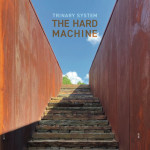
Artist: Trinary System (@)
Title: The Hard Machine
Format: CD + Download
Label: Cuneiform (http://www.cuneiformrecords.com/) (@)
Rated:
Title: The Hard Machine
Format: CD + Download
Label: Cuneiform (http://www.cuneiformrecords.com/) (@)
Rated:
There’s a certain age when rock musicians either start polishing their legacy or quietly disappear into tasteful irrelevance. Roger C. Miller does neither. "The Hard Machine" sounds like the work of someone who still enjoys friction - between ideas, between players, between intention and accident. It doesn’t try to convince you it matters. It just keeps moving, grinding forward, daring you to keep up.
Trinary System is Miller’s current - and by his own admission, final - rock band. Coming after Sproton Layer and Mission of Burma, that’s a dangerous sentence to write down. Expectations are a trap. The good news is that "The Hard Machine" doesn’t behave like a sequel, nor does it posture as a grand summation. It’s a band record in the old, honorable sense: three people locked into a shared logic, alert, slightly antagonistic, and visibly enjoying the tension.
Miller’s long arc matters here, but not as nostalgia. His background - psychedelia, post-punk abrasion, modern composition, film scoring - has trained him to think in structures rather than riffs, even when the guitars are loud and the drums are punching holes in the floor. The songs on "The Hard Machine" feel built, not stacked. They pivot, lurch, and reset themselves with a composer’s sense of proportion, even when they’re pretending to be blunt objects.
Larry Dersch’s drumming is crucial. He doesn’t drive the music so much as keep it unstable, always threatening to tilt the whole thing sideways. There’s a physical intelligence to his playing - no flashy declarations, just pressure applied in exactly the wrong place. Andrew Willis, meanwhile, plays bass and electronics like someone rearranging furniture mid-conversation. His lines don’t decorate; they interrupt, reroute, and occasionally short-circuit the song’s momentum.
Tracks like “Monkeys (on Your Back)” and “Pop!” announce the album’s temperament early: compressed, wiry, slightly sardonic. “The Golem” and “The Green Wall” dig into darker terrain, where repetition becomes insistence and melody feels more like a hypothesis than a destination. Miller’s guitar work is lean and angular, rarely indulgent, often unsettling in its restraint. He knows exactly when "not" to play, which is a skill that only reveals itself after decades of learning how to play too much.
Lyrically and structurally, "The Hard Machine" resists closure. “Upending Time” lives up to its title, refusing linear development, while “On the Ground (Complete the Circle)” stretches out, testing endurance without lapsing into indulgence. Even the final track, “Sometimes the Rain Fall in Your Favor”, avoids resolution. It doesn’t end the record so much as loosen its grip, as if to say: this continues whether you’re listening or not.
"The Hard Machine" is not a victory lap, nor a statement of defiance. It’s something rarer: a record made by musicians who trust process over myth, curiosity over comfort. Rock music as an ongoing problem to be solved, not a style to be preserved. And if this really is Miller’s last great rock band, it’s a satisfying way to leave the room - not slamming the door, just leaving it ajar, humming quietly, still powered on.
Trinary System is Miller’s current - and by his own admission, final - rock band. Coming after Sproton Layer and Mission of Burma, that’s a dangerous sentence to write down. Expectations are a trap. The good news is that "The Hard Machine" doesn’t behave like a sequel, nor does it posture as a grand summation. It’s a band record in the old, honorable sense: three people locked into a shared logic, alert, slightly antagonistic, and visibly enjoying the tension.
Miller’s long arc matters here, but not as nostalgia. His background - psychedelia, post-punk abrasion, modern composition, film scoring - has trained him to think in structures rather than riffs, even when the guitars are loud and the drums are punching holes in the floor. The songs on "The Hard Machine" feel built, not stacked. They pivot, lurch, and reset themselves with a composer’s sense of proportion, even when they’re pretending to be blunt objects.
Larry Dersch’s drumming is crucial. He doesn’t drive the music so much as keep it unstable, always threatening to tilt the whole thing sideways. There’s a physical intelligence to his playing - no flashy declarations, just pressure applied in exactly the wrong place. Andrew Willis, meanwhile, plays bass and electronics like someone rearranging furniture mid-conversation. His lines don’t decorate; they interrupt, reroute, and occasionally short-circuit the song’s momentum.
Tracks like “Monkeys (on Your Back)” and “Pop!” announce the album’s temperament early: compressed, wiry, slightly sardonic. “The Golem” and “The Green Wall” dig into darker terrain, where repetition becomes insistence and melody feels more like a hypothesis than a destination. Miller’s guitar work is lean and angular, rarely indulgent, often unsettling in its restraint. He knows exactly when "not" to play, which is a skill that only reveals itself after decades of learning how to play too much.
Lyrically and structurally, "The Hard Machine" resists closure. “Upending Time” lives up to its title, refusing linear development, while “On the Ground (Complete the Circle)” stretches out, testing endurance without lapsing into indulgence. Even the final track, “Sometimes the Rain Fall in Your Favor”, avoids resolution. It doesn’t end the record so much as loosen its grip, as if to say: this continues whether you’re listening or not.
"The Hard Machine" is not a victory lap, nor a statement of defiance. It’s something rarer: a record made by musicians who trust process over myth, curiosity over comfort. Rock music as an ongoing problem to be solved, not a style to be preserved. And if this really is Miller’s last great rock band, it’s a satisfying way to leave the room - not slamming the door, just leaving it ajar, humming quietly, still powered on.