
Friday, September 18, 2026
Browse by Genre
Industrial Music / Industrial Metal / Aggro Industrial / Electro Metal
Industrial Noise / Power Noise / Harsh Noise
Synth Pop / Electro Pop / Synth-Electronica
Techno / Trance / Goa / Drum'n'Bass / Jungle / Tribal / Trip-Hop
Ambient / Electronica / Ethereal / Dub / Soundscapes / Abstract
Experimental / Avantgarde / Weird & Wired / Glitch / Noise / Field Recording
Dark / Gothic / Wave / New Wave / Dark Wave / Industrial Gothic
New Music / Downtown / Avantgarde Jazz / New Classical / World
Search Reviews
Music Reviews
Federico Perotti: Quadro
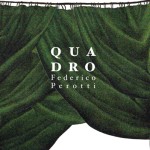
There are albums about places, and then there are albums that seem to have been made because a place refused to shut up. "Quadro" belongs to the second category. Federico Perotti’s recording is ostensibly an album for organ, but that description is about as adequate as calling a cathedral “a building with a roof”. The real subject is absence: specifically, the absence of Raphael’s "Sistine Madonna" from the Basilica of San Sisto in Piacenza, where it remained from the sixteenth century until the Benedictines sold it in 1754 to Augustus III of Saxony. The original now hangs in Dresden, while the Piacenza church has a copy above its altar.
Perotti’s ingenious response is not to recreate the missing painting in sound. Instead, he asks what has remained in the building since it left. The answer is an organ. More precisely, the Facchetti-Lanzi organ, whose oldest material dates to Giovanni Battista Facchetti’s construction of 1544-45 and which was subsequently expanded by Carlo and Giuseppe Lanzi. Its history is therefore inseparable from the building and from the historical period Perotti is investigating. The instrument becomes a kind of unwilling witness, an object that could not leave when the painting did. Paintings travel rather well, as history has repeatedly demonstrated. Organs have the slightly less glamorous problem of being buildings with pipes.
That distinction gives "Quadro" its peculiar emotional force. The album does not attempt to make us imagine what the "Sistine Madonna" looked like. It makes us listen to what it means for something no longer to be there.
Perotti, born in Piacenza in 1993, is a composer, organist and conductor whose work repeatedly examines the relationship between music, material history and the traces left by time. He studied organ and composition in Como and Milan, subsequently working with composers including Salvatore Sciarrino and Francesco Filidei, and his practice moves comfortably between historical performance, contemporary composition and experimentation with the physical possibilities of the organ. His own website describes an interest in damaged objects, missing things and imaginary parallel histories, which makes "Quadro" feel less like an isolated project than a particularly concentrated expression of his wider artistic concerns.
The album begins with Claudio Maria Veggio’s "La Fugitiva", a brief opening that immediately places us inside a musical history older than the loss itself. Veggio, a Piacentine composer of the sixteenth century, also returns at the end with "Donna, per Dio vi giuro". Between those two pieces, Perotti constructs a historical corridor involving Michelangelo Rossi, Girolamo Frescobaldi and Claudio Monteverdi, interspersed with his five "Toccate Sistine", composed between 2017 and 2025. The track sequence therefore does not behave like a conventional recital programme. It resembles an architectural excavation in which different layers are exposed without pretending that the building has ever had only one age.
The first three "Toccate Sistine" are concerned with the basilica itself: its light, form and scent. This might sound dangerously close to the territory of tasteful heritage tourism, but Perotti's conception is considerably stranger. The pieces attempt to imagine a place outside ordinary chronological progression, where repetition has replaced development and where the building seems to exist in a permanent present. The organ's sustained sonorities make this idea tangible. Rather than using historical timbre simply as an authenticity certificate, Perotti treats the instrument as an acoustic environment with its own memory.
His relationship with the organ is particularly revealing. The Facchetti-Lanzi is not merely old. Its construction, later alterations and restoration have left it materially layered, and its meantone temperament contributes to a sound that is markedly different from the homogenised pitch environment familiar from much modern keyboard music. The surviving instrument includes a 1545 core and later interventions, with the current specification reflecting centuries of alteration and preservation. On "Quadro", that history is audible without having to be explained first.
Then comes "Toccata Sistina IV", the album's rupture. Here Perotti deliberately deprives the organ of its normal wind pressure. The consequence is not simply that the sound becomes quieter. The pipes begin to destabilise: harmonics sag, collide and produce a strangely dusty, exhausted sonority. This is an unusually effective compositional metaphor because it operates physically rather than illustratively. The historical rupture is not represented by a dramatic musical quotation or some cinematic minor chord. The instrument itself is made to behave differently. It is one of the album's best ideas. The organ, which has spent centuries being asked to produce controlled pitches, suddenly begins revealing all the unstable frequencies that ordinary performance suppresses. The “wrong” pressure releases another personality hidden inside the pipes. Perotti's missing painting consequently finds an unexpected sonic equivalent: not an image, but a disturbance in the mechanism that has remained behind.
The effect is especially striking because the surrounding repertoire establishes such a strong historical continuity. Frescobaldi's "Toccata seconda" and "Partite sopra Passacagli", Rossi's "Toccata VII" and "Toccata XII", and Veggio's music belong to different points along the development of Italian keyboard writing, yet they are all made to inhabit this one physical instrument. Perotti's compositions do not attempt to disguise their modernity. Instead, they enter into conversation with the older works through the very thing they share: the organ's body.
That is where "Quadro" becomes more interesting than a historical reconstruction. Reconstruction wants to restore an imagined past. Perotti seems more interested in exposing the impossibility of restoration.
The fourth "Toccata Sistina" therefore functions almost like a crack in the album's architecture. Before it, the basilica exists in a state of repetition and continuity. After it, history has acquired a wound. The fifth toccata deals with what followed: the centuries after the painting's departure and the continuing attempt to make sense of what is missing. The music does not “heal” the absence so much as repeatedly touch its edges.
Monteverdi's "Lamento della ninfa", arranged here for organ, is an especially apt intervention. A vocal lament transferred to an instrument that cannot literally sing turns loss into a problem of translation. The organ can sustain, imitate and colour, but it cannot reproduce the human voice's physical vulnerability. The absence has therefore multiplied: the painting is gone, the voice has become organ, and the listener is left with the residue of both.
Yet "Quadro" avoids becoming relentlessly mournful. There is too much curiosity in Perotti's treatment of sound. He seems genuinely fascinated by what the organ does when pushed slightly outside its expected behaviour. The album's emotional vocabulary consequently includes wonder, irritation, melancholy, historical awareness and even a faint mischievousness. The instrument is an ancient machine, but Perotti does not treat it as a sacred relic that must be approached with cotton gloves.
That attitude is central to his musicianship. His practice combines the historical consciousness expected of an organist with the exploratory instincts of a contemporary composer. He has written for ensembles and orchestras including MusikFabrik, Jack Quartet and the SWR Symphonieorchester, and his work has appeared in contemporary-music contexts well beyond the traditional organ circuit. He was also the organist accompanying Giorgio Armani's 2025 funeral, an oddly fitting footnote to an artist whose work so often concerns the relationship between elegance, mortality and ritual.
The album's title, "Quadro", consequently becomes increasingly ambiguous. It means painting, but also frame, object, bounded image. Yet the music repeatedly escapes the frame. The absent painting creates the conceptual perimeter, but the organ fills the space beyond it with centuries of vibrations. What is missing becomes the thing that structures everything else.
There is an even subtler paradox in Perotti's decision never to have visited the original painting in Dresden. One might expect such a project to culminate in pilgrimage: go to the museum, stand before Raphael, compare the original with its absence in Piacenza, complete the circle. He has chosen not to do so. It is an almost perversely elegant decision. The album is about the experience of not possessing something, and therefore direct possession might actually destroy part of the question.
The copy in San Sisto is not treated as a consolation prize either. It is evidence of the gap. The original painting's departure transformed the meaning of the church, while the surviving organ continued producing sound in the same place. The resulting asymmetry is precisely what gives the project its power: one object became internationally celebrated because it left; another became historically precious because it stayed.
This makes the wooden analogy in Perotti's notes particularly apt. Wood ages, is cut, seasoned, incorporated into an object and eventually altered again. Its material history does not disappear when its original form disappears. The same is true here of music. A score becomes sound, sound becomes memory, memory becomes interpretation, and centuries later another musician can make the old material speak differently without pretending to become its original author.
The final return to Veggio closes the circle without actually closing the wound. "Donna, per Dio vi giuro" takes us back to the beginning, but the listener now hears the same historical material after passing through the album's central rupture. Time has behaved exactly as Perotti suggests it does: it has moved forward while repeatedly pretending to be circular.
"Quadro" is therefore not really an album about Raphael, nor even principally an album about an organ. It is about what objects leave behind when they disappear. The missing painting becomes a negative space; the organ becomes the positive remainder; the repertoire becomes a chain of witnesses; and Perotti's own music becomes the attempt to make the gap audible.
There is something deeply Italian about such an obsession with a building, a painting, an organ and several centuries of accumulated cultural sediment. But "Quadro" never collapses into nostalgia. Its most compelling proposition is almost the opposite: absence can be productive. The fact that the "Sistine Madonna" left San Sisto may have diminished the physical completeness of the church, but it also created a historical fracture large enough for new music to enter.
The painting is still in Dresden. The organ is still in Piacenza. The copy still hangs where the original once did. Nothing has been restored, despite the best efforts of civilisation's favourite hobby, restoration.
What "Quadro" restores instead is attention. Not to the missing masterpiece itself, but to the room that remembers it, and to the instrument that has been quietly breathing inside that room for centuries. In the end, Perotti's most convincing time machine is not nostalgia at all. It is the organ: wood, metal, air and human hands, making the past happen again without ever quite making it the same.
Perotti’s ingenious response is not to recreate the missing painting in sound. Instead, he asks what has remained in the building since it left. The answer is an organ. More precisely, the Facchetti-Lanzi organ, whose oldest material dates to Giovanni Battista Facchetti’s construction of 1544-45 and which was subsequently expanded by Carlo and Giuseppe Lanzi. Its history is therefore inseparable from the building and from the historical period Perotti is investigating. The instrument becomes a kind of unwilling witness, an object that could not leave when the painting did. Paintings travel rather well, as history has repeatedly demonstrated. Organs have the slightly less glamorous problem of being buildings with pipes.
That distinction gives "Quadro" its peculiar emotional force. The album does not attempt to make us imagine what the "Sistine Madonna" looked like. It makes us listen to what it means for something no longer to be there.
Perotti, born in Piacenza in 1993, is a composer, organist and conductor whose work repeatedly examines the relationship between music, material history and the traces left by time. He studied organ and composition in Como and Milan, subsequently working with composers including Salvatore Sciarrino and Francesco Filidei, and his practice moves comfortably between historical performance, contemporary composition and experimentation with the physical possibilities of the organ. His own website describes an interest in damaged objects, missing things and imaginary parallel histories, which makes "Quadro" feel less like an isolated project than a particularly concentrated expression of his wider artistic concerns.
The album begins with Claudio Maria Veggio’s "La Fugitiva", a brief opening that immediately places us inside a musical history older than the loss itself. Veggio, a Piacentine composer of the sixteenth century, also returns at the end with "Donna, per Dio vi giuro". Between those two pieces, Perotti constructs a historical corridor involving Michelangelo Rossi, Girolamo Frescobaldi and Claudio Monteverdi, interspersed with his five "Toccate Sistine", composed between 2017 and 2025. The track sequence therefore does not behave like a conventional recital programme. It resembles an architectural excavation in which different layers are exposed without pretending that the building has ever had only one age.
The first three "Toccate Sistine" are concerned with the basilica itself: its light, form and scent. This might sound dangerously close to the territory of tasteful heritage tourism, but Perotti's conception is considerably stranger. The pieces attempt to imagine a place outside ordinary chronological progression, where repetition has replaced development and where the building seems to exist in a permanent present. The organ's sustained sonorities make this idea tangible. Rather than using historical timbre simply as an authenticity certificate, Perotti treats the instrument as an acoustic environment with its own memory.
His relationship with the organ is particularly revealing. The Facchetti-Lanzi is not merely old. Its construction, later alterations and restoration have left it materially layered, and its meantone temperament contributes to a sound that is markedly different from the homogenised pitch environment familiar from much modern keyboard music. The surviving instrument includes a 1545 core and later interventions, with the current specification reflecting centuries of alteration and preservation. On "Quadro", that history is audible without having to be explained first.
Then comes "Toccata Sistina IV", the album's rupture. Here Perotti deliberately deprives the organ of its normal wind pressure. The consequence is not simply that the sound becomes quieter. The pipes begin to destabilise: harmonics sag, collide and produce a strangely dusty, exhausted sonority. This is an unusually effective compositional metaphor because it operates physically rather than illustratively. The historical rupture is not represented by a dramatic musical quotation or some cinematic minor chord. The instrument itself is made to behave differently. It is one of the album's best ideas. The organ, which has spent centuries being asked to produce controlled pitches, suddenly begins revealing all the unstable frequencies that ordinary performance suppresses. The “wrong” pressure releases another personality hidden inside the pipes. Perotti's missing painting consequently finds an unexpected sonic equivalent: not an image, but a disturbance in the mechanism that has remained behind.
The effect is especially striking because the surrounding repertoire establishes such a strong historical continuity. Frescobaldi's "Toccata seconda" and "Partite sopra Passacagli", Rossi's "Toccata VII" and "Toccata XII", and Veggio's music belong to different points along the development of Italian keyboard writing, yet they are all made to inhabit this one physical instrument. Perotti's compositions do not attempt to disguise their modernity. Instead, they enter into conversation with the older works through the very thing they share: the organ's body.
That is where "Quadro" becomes more interesting than a historical reconstruction. Reconstruction wants to restore an imagined past. Perotti seems more interested in exposing the impossibility of restoration.
The fourth "Toccata Sistina" therefore functions almost like a crack in the album's architecture. Before it, the basilica exists in a state of repetition and continuity. After it, history has acquired a wound. The fifth toccata deals with what followed: the centuries after the painting's departure and the continuing attempt to make sense of what is missing. The music does not “heal” the absence so much as repeatedly touch its edges.
Monteverdi's "Lamento della ninfa", arranged here for organ, is an especially apt intervention. A vocal lament transferred to an instrument that cannot literally sing turns loss into a problem of translation. The organ can sustain, imitate and colour, but it cannot reproduce the human voice's physical vulnerability. The absence has therefore multiplied: the painting is gone, the voice has become organ, and the listener is left with the residue of both.
Yet "Quadro" avoids becoming relentlessly mournful. There is too much curiosity in Perotti's treatment of sound. He seems genuinely fascinated by what the organ does when pushed slightly outside its expected behaviour. The album's emotional vocabulary consequently includes wonder, irritation, melancholy, historical awareness and even a faint mischievousness. The instrument is an ancient machine, but Perotti does not treat it as a sacred relic that must be approached with cotton gloves.
That attitude is central to his musicianship. His practice combines the historical consciousness expected of an organist with the exploratory instincts of a contemporary composer. He has written for ensembles and orchestras including MusikFabrik, Jack Quartet and the SWR Symphonieorchester, and his work has appeared in contemporary-music contexts well beyond the traditional organ circuit. He was also the organist accompanying Giorgio Armani's 2025 funeral, an oddly fitting footnote to an artist whose work so often concerns the relationship between elegance, mortality and ritual.
The album's title, "Quadro", consequently becomes increasingly ambiguous. It means painting, but also frame, object, bounded image. Yet the music repeatedly escapes the frame. The absent painting creates the conceptual perimeter, but the organ fills the space beyond it with centuries of vibrations. What is missing becomes the thing that structures everything else.
There is an even subtler paradox in Perotti's decision never to have visited the original painting in Dresden. One might expect such a project to culminate in pilgrimage: go to the museum, stand before Raphael, compare the original with its absence in Piacenza, complete the circle. He has chosen not to do so. It is an almost perversely elegant decision. The album is about the experience of not possessing something, and therefore direct possession might actually destroy part of the question.
The copy in San Sisto is not treated as a consolation prize either. It is evidence of the gap. The original painting's departure transformed the meaning of the church, while the surviving organ continued producing sound in the same place. The resulting asymmetry is precisely what gives the project its power: one object became internationally celebrated because it left; another became historically precious because it stayed.
This makes the wooden analogy in Perotti's notes particularly apt. Wood ages, is cut, seasoned, incorporated into an object and eventually altered again. Its material history does not disappear when its original form disappears. The same is true here of music. A score becomes sound, sound becomes memory, memory becomes interpretation, and centuries later another musician can make the old material speak differently without pretending to become its original author.
The final return to Veggio closes the circle without actually closing the wound. "Donna, per Dio vi giuro" takes us back to the beginning, but the listener now hears the same historical material after passing through the album's central rupture. Time has behaved exactly as Perotti suggests it does: it has moved forward while repeatedly pretending to be circular.
"Quadro" is therefore not really an album about Raphael, nor even principally an album about an organ. It is about what objects leave behind when they disappear. The missing painting becomes a negative space; the organ becomes the positive remainder; the repertoire becomes a chain of witnesses; and Perotti's own music becomes the attempt to make the gap audible.
There is something deeply Italian about such an obsession with a building, a painting, an organ and several centuries of accumulated cultural sediment. But "Quadro" never collapses into nostalgia. Its most compelling proposition is almost the opposite: absence can be productive. The fact that the "Sistine Madonna" left San Sisto may have diminished the physical completeness of the church, but it also created a historical fracture large enough for new music to enter.
The painting is still in Dresden. The organ is still in Piacenza. The copy still hangs where the original once did. Nothing has been restored, despite the best efforts of civilisation's favourite hobby, restoration.
What "Quadro" restores instead is attention. Not to the missing masterpiece itself, but to the room that remembers it, and to the instrument that has been quietly breathing inside that room for centuries. In the end, Perotti's most convincing time machine is not nostalgia at all. It is the organ: wood, metal, air and human hands, making the past happen again without ever quite making it the same.
Astari Nite: Medications In Bloom
Artist: Astari Nite (@)
Title: Medications In Bloom
Format: CD + Download
Label: Kale Shelter Studios
Rated:


Title: Medications In Bloom
Format: CD + Download
Label: Kale Shelter Studios
Rated:
There is something almost suspiciously cheerful about "Medications In Bloom". The title sounds like a pharmaceutical company has finally discovered the benefits of flower arranging, while the songs themselves move through romance, vanity, loneliness, sexual confusion, disappointment and decay with the elegant disobedience of people who have decided that misery does not get to dictate the dress code. For Astari Nite, darkness has never been merely an aesthetic colour, but this six-track EP suggests that even the darkest wardrobe occasionally needs something violently pink.
Formed in Miami around vocalist Mychael Ghost and drummer Illia Tulloch, with Howard Melnick on guitar and Danny Ae on synthesizer and bass, Astari Nite have spent more than a decade negotiating the territory between alternative rock, post-punk, new wave and dark glam. Their history includes appearances alongside figures ranging from Peter Murphy and The Damned to Clan of Xymox, Peter Hook and the Psychedelic Furs, while their recent records have gradually loosened the band's relationship with conventional goth gloom. "Resolution Of Happiness" already pushed toward a brighter, more 1990s-inflected vocabulary, retaining the nocturnal atmosphere while allowing more colour and melodic eccentricity into the room. Contemporary reviews have noticed precisely that expansion, describing a band increasingly comfortable with glam, alternative rock, shoegaze and synth-driven textures rather than simply reproducing darkwave orthodoxy.
"Medications In Bloom" takes that development somewhere stranger and, importantly, more personal. Its title comes from Ghost's experience of accompanying his seriously ill mother through years of medical appointments and prescription refills, where flowers, medication alerts, childhood memories and the repetitive bureaucracy of care become tangled together. That background changes the way the EP's apparent frivolity reads. Glamour is not necessarily denial here. It can also be an act of maintenance: putting on the lipstick, making the joke, buying the flowers, continuing to participate in the world when circumstances would make retreat considerably easier.
The opening “Why Are You So Lame” establishes this attitude beautifully by refusing to choose between vulnerability and mockery. Its lyrics keep slipping between romantic disappointment, self-conscious posing and absurd little objects of desire, turning the language of seduction into something almost deliberately unstable. The song's central complaint is less “you hurt me” than “your performance is embarrassing,” which is a wonderfully petty distinction and therefore a very human one. Beneath the sarcasm, though, there is loneliness: the singer wants to be seen while simultaneously distrusting the theatrical machinery through which people attempt to see one another. Astari Nite understand that glamour is often just insecurity with better lighting.
Then comes “Dry Shampoo X”, perhaps the EP's most immediate demonstration of its preference for motion over solemnity. The song seems to take fragments of alternative-rock romance, disco imagery and slightly deranged pop language and shake them together until they become something brightly bruised. The emotional narrative repeatedly collapses into consumer spaces, bedrooms and strange little observations, as if heartbreak has been forced to shop for groceries. The contrast is important: rather than making romantic failure monumental, Astari Nite make it ridiculous, which can sometimes be a more accurate form of grief. A recent review similarly identified the track's more explosive rock character as a continuation of the band's move away from their earlier death-rock beginnings.
“Lennon Yellow Tangerine” shifts the temperature. Its title alone sounds like an object assembled from pop-cultural residue, colour, memory and a mildly unreliable dream. The song's repeated telephone imagery creates an intimate but unstable relationship between wanting contact and wanting escape. The request to call becomes almost immediately followed by the desire to be left alone, while the mysterious queen, nameless waitress and submarine tambourine inhabit a private mythology that makes very little effort to explain itself. This is one of the EP's strengths: Astari Nite can write lyrics that sound frivolous on first encounter but become increasingly suggestive when their images are allowed to remain unresolved. The darkness is there, but it has learned how to accessorise.
The two revamped pieces, “Unisex Games” and “Miss Rain On My Parade”, reveal another characteristic of the record: Astari Nite are not interested in treating their own back catalogue as sacred furniture. Both songs are revisited with the knowledge of a band that has changed since their earlier incarnations. “Unisex Games” is particularly unruly, turning desire, jealousy, friendship and sexual games into a collage of damaged memories and flamboyant self-incrimination. Its repeated accusation that guilt is petty sounds almost like a moral philosophy reduced to a nightclub chant. “Miss Rain On My Parade,” meanwhile, places the EP's central idea almost nakedly on the table: validation is wanted, rejected, demanded and mocked simultaneously. The song's imagery of makeup, pills, rain and ashtray residue makes self-presentation feel less like vanity than a survival technique.
That tension reaches its most tender form in “I Lack Nutrition”. Beneath its deliberately awkward title is a breakup song that gradually reveals a much more serious fear: what happens to affection when the relationship has already become part of your body's routine? The repeated desire to remain friends is surrounded by uncertainty, contradictory impulses and the fear of waking up to an absence that cannot be repaired. Even the familiar romantic sunshine metaphor becomes uncomfortable because the song keeps questioning whether the beloved is actually a source of nourishment or merely another dependency. The title therefore turns emotional hunger into physical comedy, and then quietly removes the joke.
Musically, the EP sits in the space Astari Nite have been cultivating over recent years: alternative rock with post-punk bones, new-wave colour, dark-glam theatricality and a conspicuous affection for the 1990s. Previous coverage of "Resolution Of Happiness" noted the band's tendency toward unusually dense guitars, forceful drums and a bass approach less rigid than traditional post-punk marching patterns, while other writing around the band has highlighted the combination of Bowie-like theatricality with darker alternative textures. On "Medications In Bloom", those ingredients feel less like a collection of influences and more like a wardrobe the band has finally stopped apologising for wearing.
What makes the EP interesting, however, is not simply that Astari Nite sound brighter. Plenty of dark bands eventually discover colour, usually somewhere around the point where someone in the studio says “perhaps we should try a major chord”. Here the brightness is psychologically connected to the subject matter. The record understands that positivity can be defensive, theatrical, even slightly ridiculous, and still be genuine. A person can be grieving and glamorous. Someone can be exhausted and flirtatious. You can spend years inside hospitals and still notice the flowers. You can be frightened and tell somebody to wear better lipstick.
That is where "Medications In Bloom" earns its title. Medication does not magically transform suffering into happiness, and flowers do not make illness disappear. The phrase instead joins two things that are usually kept apart: clinical repetition and sensual beauty, maintenance and decoration, vulnerability and performance. Astari Nite turn that collision into pop music without ironing out its contradictions.
There is something oddly reassuring in that. Not because the EP pretends everything will be fine, but because it refuses the rather exhausting cultural assumption that seriousness must always look miserable. Sometimes survival arrives wearing eyeliner. Sometimes it laughs at the wrong moment. Sometimes it writes a six-song record about desire, decay and pharmaceutical notifications and decides that the appropriate response to all of it is, somehow, to bloom.
Formed in Miami around vocalist Mychael Ghost and drummer Illia Tulloch, with Howard Melnick on guitar and Danny Ae on synthesizer and bass, Astari Nite have spent more than a decade negotiating the territory between alternative rock, post-punk, new wave and dark glam. Their history includes appearances alongside figures ranging from Peter Murphy and The Damned to Clan of Xymox, Peter Hook and the Psychedelic Furs, while their recent records have gradually loosened the band's relationship with conventional goth gloom. "Resolution Of Happiness" already pushed toward a brighter, more 1990s-inflected vocabulary, retaining the nocturnal atmosphere while allowing more colour and melodic eccentricity into the room. Contemporary reviews have noticed precisely that expansion, describing a band increasingly comfortable with glam, alternative rock, shoegaze and synth-driven textures rather than simply reproducing darkwave orthodoxy.
"Medications In Bloom" takes that development somewhere stranger and, importantly, more personal. Its title comes from Ghost's experience of accompanying his seriously ill mother through years of medical appointments and prescription refills, where flowers, medication alerts, childhood memories and the repetitive bureaucracy of care become tangled together. That background changes the way the EP's apparent frivolity reads. Glamour is not necessarily denial here. It can also be an act of maintenance: putting on the lipstick, making the joke, buying the flowers, continuing to participate in the world when circumstances would make retreat considerably easier.
The opening “Why Are You So Lame” establishes this attitude beautifully by refusing to choose between vulnerability and mockery. Its lyrics keep slipping between romantic disappointment, self-conscious posing and absurd little objects of desire, turning the language of seduction into something almost deliberately unstable. The song's central complaint is less “you hurt me” than “your performance is embarrassing,” which is a wonderfully petty distinction and therefore a very human one. Beneath the sarcasm, though, there is loneliness: the singer wants to be seen while simultaneously distrusting the theatrical machinery through which people attempt to see one another. Astari Nite understand that glamour is often just insecurity with better lighting.
Then comes “Dry Shampoo X”, perhaps the EP's most immediate demonstration of its preference for motion over solemnity. The song seems to take fragments of alternative-rock romance, disco imagery and slightly deranged pop language and shake them together until they become something brightly bruised. The emotional narrative repeatedly collapses into consumer spaces, bedrooms and strange little observations, as if heartbreak has been forced to shop for groceries. The contrast is important: rather than making romantic failure monumental, Astari Nite make it ridiculous, which can sometimes be a more accurate form of grief. A recent review similarly identified the track's more explosive rock character as a continuation of the band's move away from their earlier death-rock beginnings.
“Lennon Yellow Tangerine” shifts the temperature. Its title alone sounds like an object assembled from pop-cultural residue, colour, memory and a mildly unreliable dream. The song's repeated telephone imagery creates an intimate but unstable relationship between wanting contact and wanting escape. The request to call becomes almost immediately followed by the desire to be left alone, while the mysterious queen, nameless waitress and submarine tambourine inhabit a private mythology that makes very little effort to explain itself. This is one of the EP's strengths: Astari Nite can write lyrics that sound frivolous on first encounter but become increasingly suggestive when their images are allowed to remain unresolved. The darkness is there, but it has learned how to accessorise.
The two revamped pieces, “Unisex Games” and “Miss Rain On My Parade”, reveal another characteristic of the record: Astari Nite are not interested in treating their own back catalogue as sacred furniture. Both songs are revisited with the knowledge of a band that has changed since their earlier incarnations. “Unisex Games” is particularly unruly, turning desire, jealousy, friendship and sexual games into a collage of damaged memories and flamboyant self-incrimination. Its repeated accusation that guilt is petty sounds almost like a moral philosophy reduced to a nightclub chant. “Miss Rain On My Parade,” meanwhile, places the EP's central idea almost nakedly on the table: validation is wanted, rejected, demanded and mocked simultaneously. The song's imagery of makeup, pills, rain and ashtray residue makes self-presentation feel less like vanity than a survival technique.
That tension reaches its most tender form in “I Lack Nutrition”. Beneath its deliberately awkward title is a breakup song that gradually reveals a much more serious fear: what happens to affection when the relationship has already become part of your body's routine? The repeated desire to remain friends is surrounded by uncertainty, contradictory impulses and the fear of waking up to an absence that cannot be repaired. Even the familiar romantic sunshine metaphor becomes uncomfortable because the song keeps questioning whether the beloved is actually a source of nourishment or merely another dependency. The title therefore turns emotional hunger into physical comedy, and then quietly removes the joke.
Musically, the EP sits in the space Astari Nite have been cultivating over recent years: alternative rock with post-punk bones, new-wave colour, dark-glam theatricality and a conspicuous affection for the 1990s. Previous coverage of "Resolution Of Happiness" noted the band's tendency toward unusually dense guitars, forceful drums and a bass approach less rigid than traditional post-punk marching patterns, while other writing around the band has highlighted the combination of Bowie-like theatricality with darker alternative textures. On "Medications In Bloom", those ingredients feel less like a collection of influences and more like a wardrobe the band has finally stopped apologising for wearing.
What makes the EP interesting, however, is not simply that Astari Nite sound brighter. Plenty of dark bands eventually discover colour, usually somewhere around the point where someone in the studio says “perhaps we should try a major chord”. Here the brightness is psychologically connected to the subject matter. The record understands that positivity can be defensive, theatrical, even slightly ridiculous, and still be genuine. A person can be grieving and glamorous. Someone can be exhausted and flirtatious. You can spend years inside hospitals and still notice the flowers. You can be frightened and tell somebody to wear better lipstick.
That is where "Medications In Bloom" earns its title. Medication does not magically transform suffering into happiness, and flowers do not make illness disappear. The phrase instead joins two things that are usually kept apart: clinical repetition and sensual beauty, maintenance and decoration, vulnerability and performance. Astari Nite turn that collision into pop music without ironing out its contradictions.
There is something oddly reassuring in that. Not because the EP pretends everything will be fine, but because it refuses the rather exhausting cultural assumption that seriousness must always look miserable. Sometimes survival arrives wearing eyeliner. Sometimes it laughs at the wrong moment. Sometimes it writes a six-song record about desire, decay and pharmaceutical notifications and decides that the appropriate response to all of it is, somehow, to bloom.
Darkswoon: Antivenom
There are albums that use darkness as an aesthetic, and then there are albums that have clearly spent some time finding out what darkness actually costs. "Antivenom", the fourth full-length by Portland trio Darkswoon, belongs to the second category. Its title suggests a cure, but the music is more interested in what happens when the poison has already entered the bloodstream: grief, fear, alienation, anxiety, political exhaustion, damaged relationships, the uneasy business of remaining a person while the surrounding world keeps providing reasons not to bother. Fortunately, Darkswoon have enough musical intelligence not to turn any of this into a sermon. They make beautiful songs about difficult things, which is considerably harder than making miserable music about difficult things.
Darkswoon began as Jana Cushman’s solo project before evolving into the trio heard here, with Cushman on vocals and guitar, Rachel Ellis handling synths, keys, drum machines and rhythm programming, and Norah Lynn supplying bass. That history remains audible in the band's unusual balance between electronic construction and intimate songwriting. The rhythmic machinery can feel precise and almost impersonal, while the bass and guitar continually pull the songs back toward something physical. Cushman's voice occupies the unstable middle ground between the two: airy without becoming fragile, dramatic without resorting to the theatrical excess that gothic music occasionally mistakes for emotional depth. Recent writing on the album has similarly highlighted the way the trio has tightened its identity around darkwave, post-punk, shoegaze and electronic music without allowing those categories to dictate the songs.
The album announces its intentions with "Connective Tissue", a brief instrumental fragment that is less an introduction than a piece of connective material in the literal sense. It is noise, atmosphere and transition compressed into forty seconds. The idea is significant because Darkswoon repeatedly treat the spaces between things as musically meaningful. The band have explained that this kind of passage also reflects what happens during their live performances, when the noise created by Lynn's effects and the preparation of Ellis's electronic setup becomes part of the performance rather than dead time between songs. The record consequently begins not with a declaration but with something half-formed, as if we have walked into a room before everyone has finished setting up.
Then comes "Antivenom", and the album's emotional stakes become clearer. The song was written in response to the death of Nex Benedict and expands from personal grief toward the broader vulnerability experienced by trans people in a hostile political climate. Cushman conceived the title around the idea of music as a counter-agent to the poisons circulating through contemporary life. It is an unusually direct piece of political songwriting for a band whose music otherwise tends toward ambiguity, yet Darkswoon avoid turning the track into a slogan. The electronic pulse gives it a controlled urgency, while the guitars widen the emotional field around Cushman's voice. The result is not optimism, exactly. It is closer to protective instinct converted into sound.
"Pacific City" changes the temperature. Written during a solitary retreat on the Oregon coast, it carries the peculiar quality of music produced away from one's ordinary surroundings, when isolation can be restorative for about twenty minutes before the brain remembers that it came along for the trip. Its atmosphere is more open, but Darkswoon never confuse openness with weightlessness. The bass remains crucial, providing a melodic undertow beneath Ellis' programmed rhythms and Cushman's layers of guitar. That combination gives the music an interesting physical contradiction: the upper frequencies seem to float while the lower ones keep insisting that gravity still exists.
"Thread" is perhaps the clearest demonstration of how effectively Darkswoon can combine songcraft with accumulation. Its central image of a relationship held together by something increasingly difficult to distinguish from a wound is perfectly suited to the band's arrangement. The rhythm keeps moving, the bass pushes forward, guitars spread outward, while Cushman's vocal remains suspended between attachment and exhaustion. Rather than building toward a conventional cathartic release, the track keeps tightening its emotional knot. It is post-punk not because it sounds like an archaeological reconstruction of 1981, but because tension is allowed to remain tension. The track's move toward shoegaze scale has been noted by several contemporary reviewers, but what matters is that the expansion never swallows the underlying song.
That distinction is important across "Antivenom". Darkswoon understand that atmosphere only becomes interesting when there is something underneath it. There are plenty of records in the darkwave and shoegaze neighbourhood where the guitars become enormous and the vocals dissolve into reverb until everyone involved seems to have forgotten what the song was about. Here the opposite happens. The production gives the emotional content more room to operate. Norah Lynn's bass is especially effective because it does not merely mark the bottom of the mix: it behaves melodically, often providing the movement that prevents the songs from becoming static tableaux. Ellis' electronic percussion supplies a harder skeleton, while Cushman's guitars create the surrounding pressure.
"Monochrome" exploits this contrast particularly well. Its title implies reduction, yet the music is anything but flat. The track's emotional world is built from gradations rather than dramatic colour changes, allowing small shifts in texture and intensity to become significant. "Small Death" is more intimate and unsettling, while "Devour My Eyes" pushes further into the band's ability to make density feel simultaneously attractive and vaguely dangerous. The title itself suggests consumption, and the music seems to understand that attraction and threat are not necessarily opposites. Sometimes the beautiful thing is precisely what you should probably stop staring at.
"Blood Let" is one of the album's most complicated pieces because its musical history mirrors its subject. Cushman originally conceived it as a slower ballad before the band dismantled and reconstructed the material. The final version deals with abandonment, disillusionment, the uneasy relationship between mind and body, and the physical experience that inspired part of its imagery. What could have become an overly literal confessional instead acquires a strangely fragmented momentum. The song sounds as though it is trying to put itself back together while simultaneously questioning whether the original shape deserves to survive.
Then comes "x3", the album's most overtly political and arguably most abrasive moment. Its perspective broadens from private damage toward ecological collapse, inequality, concentrated wealth and the fear of what kind of future is being prepared by people who appear remarkably confident that consequences are a problem for somebody else. The band's response is not subtle, and it does not need to be. The track has the feeling of an alarm that has been ringing for so long that silence would now be more disturbing than noise. Yet even here Darkswoon retain their sense of structure. The anger is channelled rather than sprayed across the walls.
The closing "Going Dark" is consequently more interesting than a simple descent into despair. It considers withdrawal, the desire to disappear from systems that seem increasingly hostile, and the possibility of finding value outside the logic of scarcity and acquisition. But the song remains ambivalent about disappearance. There is a pull toward retreat and another toward staying. That unresolved tension is one of the album's defining qualities. Darkswoon do not manufacture closure because the subjects they address do not conveniently come with an eleventh track called "Everything Is Fine Now". The album ends with uncertainty still breathing.
There is a slight danger in a record this committed to a consistent emotional climate: several songs inhabit similar tempos, densities and tonal colours, and one contemporary review has pointed out that individual tracks can occasionally blur into the larger sequence. Yet in "Antivenom" that continuity also serves a purpose. These songs feel less like ten separate episodes than different rooms in the same troubled house. You can move from one to another, but the atmosphere follows you.
What ultimately makes the album work is that Darkswoon never confuse vulnerability with weakness. Cushman's lyrics can be painfully exposed, but the arrangements refuse to sentimentalise them. The cold electronics, muscular bass, programmed rhythms and increasingly expansive guitars provide resistance around the voice. The songs therefore become places where fragility has to coexist with structure. Even the record's most beautiful passages have something slightly clenched inside them.
"Antivenom" does not really offer an antidote to anything. That would be too easy, and probably rather insulting to anyone who has actually had to live through the things these songs describe. What it offers instead is a form of chemical counterpressure: sound meeting poison without pretending to neutralise it completely. The wounds remain visible. So does fear. So does anger. But so does connection, stubbornly refusing to die.
For a band working in music traditionally associated with beautifully arranged misery, that may be Darkswoon's most useful trick. They do not make darkness comfortable. They make it articulate.
Darkswoon began as Jana Cushman’s solo project before evolving into the trio heard here, with Cushman on vocals and guitar, Rachel Ellis handling synths, keys, drum machines and rhythm programming, and Norah Lynn supplying bass. That history remains audible in the band's unusual balance between electronic construction and intimate songwriting. The rhythmic machinery can feel precise and almost impersonal, while the bass and guitar continually pull the songs back toward something physical. Cushman's voice occupies the unstable middle ground between the two: airy without becoming fragile, dramatic without resorting to the theatrical excess that gothic music occasionally mistakes for emotional depth. Recent writing on the album has similarly highlighted the way the trio has tightened its identity around darkwave, post-punk, shoegaze and electronic music without allowing those categories to dictate the songs.
The album announces its intentions with "Connective Tissue", a brief instrumental fragment that is less an introduction than a piece of connective material in the literal sense. It is noise, atmosphere and transition compressed into forty seconds. The idea is significant because Darkswoon repeatedly treat the spaces between things as musically meaningful. The band have explained that this kind of passage also reflects what happens during their live performances, when the noise created by Lynn's effects and the preparation of Ellis's electronic setup becomes part of the performance rather than dead time between songs. The record consequently begins not with a declaration but with something half-formed, as if we have walked into a room before everyone has finished setting up.
Then comes "Antivenom", and the album's emotional stakes become clearer. The song was written in response to the death of Nex Benedict and expands from personal grief toward the broader vulnerability experienced by trans people in a hostile political climate. Cushman conceived the title around the idea of music as a counter-agent to the poisons circulating through contemporary life. It is an unusually direct piece of political songwriting for a band whose music otherwise tends toward ambiguity, yet Darkswoon avoid turning the track into a slogan. The electronic pulse gives it a controlled urgency, while the guitars widen the emotional field around Cushman's voice. The result is not optimism, exactly. It is closer to protective instinct converted into sound.
"Pacific City" changes the temperature. Written during a solitary retreat on the Oregon coast, it carries the peculiar quality of music produced away from one's ordinary surroundings, when isolation can be restorative for about twenty minutes before the brain remembers that it came along for the trip. Its atmosphere is more open, but Darkswoon never confuse openness with weightlessness. The bass remains crucial, providing a melodic undertow beneath Ellis' programmed rhythms and Cushman's layers of guitar. That combination gives the music an interesting physical contradiction: the upper frequencies seem to float while the lower ones keep insisting that gravity still exists.
"Thread" is perhaps the clearest demonstration of how effectively Darkswoon can combine songcraft with accumulation. Its central image of a relationship held together by something increasingly difficult to distinguish from a wound is perfectly suited to the band's arrangement. The rhythm keeps moving, the bass pushes forward, guitars spread outward, while Cushman's vocal remains suspended between attachment and exhaustion. Rather than building toward a conventional cathartic release, the track keeps tightening its emotional knot. It is post-punk not because it sounds like an archaeological reconstruction of 1981, but because tension is allowed to remain tension. The track's move toward shoegaze scale has been noted by several contemporary reviewers, but what matters is that the expansion never swallows the underlying song.
That distinction is important across "Antivenom". Darkswoon understand that atmosphere only becomes interesting when there is something underneath it. There are plenty of records in the darkwave and shoegaze neighbourhood where the guitars become enormous and the vocals dissolve into reverb until everyone involved seems to have forgotten what the song was about. Here the opposite happens. The production gives the emotional content more room to operate. Norah Lynn's bass is especially effective because it does not merely mark the bottom of the mix: it behaves melodically, often providing the movement that prevents the songs from becoming static tableaux. Ellis' electronic percussion supplies a harder skeleton, while Cushman's guitars create the surrounding pressure.
"Monochrome" exploits this contrast particularly well. Its title implies reduction, yet the music is anything but flat. The track's emotional world is built from gradations rather than dramatic colour changes, allowing small shifts in texture and intensity to become significant. "Small Death" is more intimate and unsettling, while "Devour My Eyes" pushes further into the band's ability to make density feel simultaneously attractive and vaguely dangerous. The title itself suggests consumption, and the music seems to understand that attraction and threat are not necessarily opposites. Sometimes the beautiful thing is precisely what you should probably stop staring at.
"Blood Let" is one of the album's most complicated pieces because its musical history mirrors its subject. Cushman originally conceived it as a slower ballad before the band dismantled and reconstructed the material. The final version deals with abandonment, disillusionment, the uneasy relationship between mind and body, and the physical experience that inspired part of its imagery. What could have become an overly literal confessional instead acquires a strangely fragmented momentum. The song sounds as though it is trying to put itself back together while simultaneously questioning whether the original shape deserves to survive.
Then comes "x3", the album's most overtly political and arguably most abrasive moment. Its perspective broadens from private damage toward ecological collapse, inequality, concentrated wealth and the fear of what kind of future is being prepared by people who appear remarkably confident that consequences are a problem for somebody else. The band's response is not subtle, and it does not need to be. The track has the feeling of an alarm that has been ringing for so long that silence would now be more disturbing than noise. Yet even here Darkswoon retain their sense of structure. The anger is channelled rather than sprayed across the walls.
The closing "Going Dark" is consequently more interesting than a simple descent into despair. It considers withdrawal, the desire to disappear from systems that seem increasingly hostile, and the possibility of finding value outside the logic of scarcity and acquisition. But the song remains ambivalent about disappearance. There is a pull toward retreat and another toward staying. That unresolved tension is one of the album's defining qualities. Darkswoon do not manufacture closure because the subjects they address do not conveniently come with an eleventh track called "Everything Is Fine Now". The album ends with uncertainty still breathing.
There is a slight danger in a record this committed to a consistent emotional climate: several songs inhabit similar tempos, densities and tonal colours, and one contemporary review has pointed out that individual tracks can occasionally blur into the larger sequence. Yet in "Antivenom" that continuity also serves a purpose. These songs feel less like ten separate episodes than different rooms in the same troubled house. You can move from one to another, but the atmosphere follows you.
What ultimately makes the album work is that Darkswoon never confuse vulnerability with weakness. Cushman's lyrics can be painfully exposed, but the arrangements refuse to sentimentalise them. The cold electronics, muscular bass, programmed rhythms and increasingly expansive guitars provide resistance around the voice. The songs therefore become places where fragility has to coexist with structure. Even the record's most beautiful passages have something slightly clenched inside them.
"Antivenom" does not really offer an antidote to anything. That would be too easy, and probably rather insulting to anyone who has actually had to live through the things these songs describe. What it offers instead is a form of chemical counterpressure: sound meeting poison without pretending to neutralise it completely. The wounds remain visible. So does fear. So does anger. But so does connection, stubbornly refusing to die.
For a band working in music traditionally associated with beautifully arranged misery, that may be Darkswoon's most useful trick. They do not make darkness comfortable. They make it articulate.
Atonauer: Ocean in A
There are many ways of making an album about the ocean. One can record waves, imitate waves, invoke the sublime, stare meaningfully at the horizon and, if absolutely necessary, put a whale somewhere on the cover. Lauri Wuolio chooses a stranger route. For "Ocean in A", his debut as Atonauer, the ocean is not so much represented as approached through a chain of transformations: blue becomes sound, sound becomes vibration, vibration becomes time, and time becomes something that refuses to stay still even when the music barely seems to move.
Atonauer is a new artistic persona for Wuolio, the Finnish composer and sound artist already known internationally through Kumea Sound, whose work has explored handpan-based music, electronics, resonance and spatial experience. The character appeared to him in a dream in 2023 and subsequently developed through writing, drawings and music. Wuolio's background makes the project less surprising than it initially sounds: he studied time- and space-related arts at the Finnish Academy of Fine Arts, has worked extensively across film, theatre, dance and installation, and has spent years considering sound as something that occupies physical space rather than merely travelling through it. His official biography describes Atonauer as a move toward post-ambient, drone and experimental music, and "Ocean in A" as a deliberately simplified exploration of sustained tones and spatial textures.
The strangest and most beautiful part of the album's origin story is the jar. Wuolio had been making abstract blue paintings in Europe until the colour itself began to acquire too much historical baggage. Rather than continuing to paint blue, he scraped the pigment from the canvases, sealed it in a glass jar and carried it with him to America, along with a Sony Walkman and very little else. In New York, a broken Roland Space Echo supplied by his friend Taka, together with Joachim Sala's experimental filtering devices, transformed urban recordings into harmonic abstraction. At some point, blue stopped being something to look at. It became something to hear.
This is more than an eccentric anecdote. It explains why "Ocean in A" feels less like music attempting to describe the sea than an investigation into how one sensory experience can migrate into another. The album is not particularly interested in making us hear “the ocean” in the literal sense. Instead, it asks what qualities associated with blue, depth, water and distance might survive after the image has been removed. What remains is resonance.
The answer begins with "A1", whose low drone is accompanied by a mechanical breathing sound and a series of pulses that refuse to settle into a common tempo. The effect is remarkably physical. The track seems to breathe without possessing a single body, as though several organisms had accidentally synchronised for a moment and then remembered they had better things to do. The entire album revolves around the note A, which functions less as a conventional key than as a fixed point from which the surrounding frequencies can wander.
That choice is crucial. Atonauer's minimalism is not primarily about reducing the number of sounds; it is about increasing the amount of attention available to each one. A single sustained tone can acquire internal movement through overtones, modulation, feedback and tiny changes in density. The note remains apparently static while its surroundings keep revealing new behaviour. Music Map likewise identifies the A as a gravitational centre rather than a conventional constraint, with drones and harmonics generating movement through minute variations rather than conventional harmonic progression.
"A2" moves further into that upper register of perception, where the fundamental tone becomes less important than the frequencies hovering around it. It is the sonic equivalent of looking at one colour until the colour stops being a single thing. The apparent simplicity begins to contain several layers of activity. This is one of the record's most convincing achievements: Wuolio makes stillness feel populated.
Then "A3" reveals the importance of the New York experience. The broken Space Echo and filtering experiments do not merely provide vintage equipment fetishism, although there is certainly enough malfunctioning analogue hardware here to satisfy the traditional experimental-music requirement that at least one machine must appear to have been rescued from a basement. Their real function is transformational. City noise becomes harmonic fog; mechanical imperfection becomes compositional material. The external world is not recorded and presented as documentary evidence. It is reduced, reorganised and allowed to lose its original identity.
That process continues through "A4", perhaps the album's most delicate piece. A minimal whistle passing through the Space Echo acquires the distant character of a foghorn, and suddenly the music seems to inhabit the strange hour before morning properly begins. It is not quite melancholy, not quite peaceful. There is a suspended emotional state here, the peculiar emptiness in which nothing has happened yet but something inevitably will. The attached notes describe it as a moment before emotional impact, and that seems exactly right.
At the centre sits "A5", the eight-minute heart of the record. Here Wuolio's earlier experiments with the Tascam Portastudio and a salvaged 1950s Buescher saxophone become part of the album's transformation of painting into sound. The saxophone is not deployed as a conventional melodic instrument. Its materiality becomes another source of resonance, another surface to be rubbed, stretched and listened to. The ocean finally appears not as scenery but as pressure: something physically overwhelming whose emotional force is even harder to contain.
This distinction matters because "Ocean in A" is ultimately less interested in beauty than in proximity. Wuolio's own framing repeatedly returns to the impossibility of completely comprehending or containing the ocean, blue or time. The album therefore avoids the temptation to provide a musical equivalent of a postcard. It stays close to the phenomenon without pretending to possess it.
"A6" makes that philosophy considerably more concrete. When the old Space Echo begins malfunctioning again, its mechanical noises are fed back into the tape until they produce ghostly, almost choral harmonies. Control becomes an accidental participant. The machine effectively starts composing, or at least starts refusing to obey. This is where the album's technological and philosophical sides meet most successfully: the equipment is not simply a tool used to realise an idea. Its failures become part of the idea.
There is a pleasing circularity in the final "A7". Rhythm returns, but not as a conventional beat. Space itself becomes rhythmic, while the sustained materials accumulated throughout the album begin to suggest the possibility of song. The ending therefore does not resolve the oceanic metaphor. It expands it. What began as breath and a single note has become a much larger question about duration, movement and the limits of representation.
Some external responses have understandably concentrated on the album's minimalism and its submerged, darkly expansive atmosphere. One review also points to the transatlantic journey between Finland and New York as an important dimension of the work. That geographical reading is useful, but "Ocean in A" ultimately makes geography feel secondary to transformation. Finland becomes New York, painting becomes sound, a broken effects unit becomes an instrument, and a particular pitch becomes a place from which an entire album can be imagined.
Wuolio's wider practice helps explain this unusual elasticity. Through Kumea Sound he has worked extensively with handpans and resonant acoustic instruments, while his film, theatre, dance and installation work has accustomed him to thinking about sound in relation to image, movement and physical environment. His long-running interest in spatial experience is especially relevant here: "Ocean in A" does not merely produce a sequence of sounds, it constructs a space in which those sounds can continue happening after the listener has stopped looking for conventional musical events.
The danger with music this restrained is obvious. Minimalism can become minimal effort. A drone can be profound, but it can also be a very expensive way of discovering that nothing happens for eight minutes. "Ocean in A" mostly avoids that trap because Wuolio understands that repetition only becomes interesting when the listener's perception is changing inside it. The sound may remain nearly still, but we do not. That difference is the real engine of the album.
And perhaps that is what the jar of blue ultimately represents. It was never possible to carry the ocean in it. Nor was it possible to carry blue intact from one medium into another. The pigment had to be abandoned as pigment, just as the ocean has to be abandoned as scenery. What survives is the impulse to keep translating one experience into another, knowing perfectly well that something will be lost.
"Ocean in A" is therefore not an album that captures the sea. It is an album about the futility, and strange necessity, of trying. Its seven movements stay anchored to one note while imagining an almost immeasurable space around it. Its machines break, its sounds dissolve, its rhythms wander, and its central colour disappears into vibration. The result is music that understands a useful truth: sometimes the only honest way to hold something vast is to stop trying to hold it at all.
Atonauer is a new artistic persona for Wuolio, the Finnish composer and sound artist already known internationally through Kumea Sound, whose work has explored handpan-based music, electronics, resonance and spatial experience. The character appeared to him in a dream in 2023 and subsequently developed through writing, drawings and music. Wuolio's background makes the project less surprising than it initially sounds: he studied time- and space-related arts at the Finnish Academy of Fine Arts, has worked extensively across film, theatre, dance and installation, and has spent years considering sound as something that occupies physical space rather than merely travelling through it. His official biography describes Atonauer as a move toward post-ambient, drone and experimental music, and "Ocean in A" as a deliberately simplified exploration of sustained tones and spatial textures.
The strangest and most beautiful part of the album's origin story is the jar. Wuolio had been making abstract blue paintings in Europe until the colour itself began to acquire too much historical baggage. Rather than continuing to paint blue, he scraped the pigment from the canvases, sealed it in a glass jar and carried it with him to America, along with a Sony Walkman and very little else. In New York, a broken Roland Space Echo supplied by his friend Taka, together with Joachim Sala's experimental filtering devices, transformed urban recordings into harmonic abstraction. At some point, blue stopped being something to look at. It became something to hear.
This is more than an eccentric anecdote. It explains why "Ocean in A" feels less like music attempting to describe the sea than an investigation into how one sensory experience can migrate into another. The album is not particularly interested in making us hear “the ocean” in the literal sense. Instead, it asks what qualities associated with blue, depth, water and distance might survive after the image has been removed. What remains is resonance.
The answer begins with "A1", whose low drone is accompanied by a mechanical breathing sound and a series of pulses that refuse to settle into a common tempo. The effect is remarkably physical. The track seems to breathe without possessing a single body, as though several organisms had accidentally synchronised for a moment and then remembered they had better things to do. The entire album revolves around the note A, which functions less as a conventional key than as a fixed point from which the surrounding frequencies can wander.
That choice is crucial. Atonauer's minimalism is not primarily about reducing the number of sounds; it is about increasing the amount of attention available to each one. A single sustained tone can acquire internal movement through overtones, modulation, feedback and tiny changes in density. The note remains apparently static while its surroundings keep revealing new behaviour. Music Map likewise identifies the A as a gravitational centre rather than a conventional constraint, with drones and harmonics generating movement through minute variations rather than conventional harmonic progression.
"A2" moves further into that upper register of perception, where the fundamental tone becomes less important than the frequencies hovering around it. It is the sonic equivalent of looking at one colour until the colour stops being a single thing. The apparent simplicity begins to contain several layers of activity. This is one of the record's most convincing achievements: Wuolio makes stillness feel populated.
Then "A3" reveals the importance of the New York experience. The broken Space Echo and filtering experiments do not merely provide vintage equipment fetishism, although there is certainly enough malfunctioning analogue hardware here to satisfy the traditional experimental-music requirement that at least one machine must appear to have been rescued from a basement. Their real function is transformational. City noise becomes harmonic fog; mechanical imperfection becomes compositional material. The external world is not recorded and presented as documentary evidence. It is reduced, reorganised and allowed to lose its original identity.
That process continues through "A4", perhaps the album's most delicate piece. A minimal whistle passing through the Space Echo acquires the distant character of a foghorn, and suddenly the music seems to inhabit the strange hour before morning properly begins. It is not quite melancholy, not quite peaceful. There is a suspended emotional state here, the peculiar emptiness in which nothing has happened yet but something inevitably will. The attached notes describe it as a moment before emotional impact, and that seems exactly right.
At the centre sits "A5", the eight-minute heart of the record. Here Wuolio's earlier experiments with the Tascam Portastudio and a salvaged 1950s Buescher saxophone become part of the album's transformation of painting into sound. The saxophone is not deployed as a conventional melodic instrument. Its materiality becomes another source of resonance, another surface to be rubbed, stretched and listened to. The ocean finally appears not as scenery but as pressure: something physically overwhelming whose emotional force is even harder to contain.
This distinction matters because "Ocean in A" is ultimately less interested in beauty than in proximity. Wuolio's own framing repeatedly returns to the impossibility of completely comprehending or containing the ocean, blue or time. The album therefore avoids the temptation to provide a musical equivalent of a postcard. It stays close to the phenomenon without pretending to possess it.
"A6" makes that philosophy considerably more concrete. When the old Space Echo begins malfunctioning again, its mechanical noises are fed back into the tape until they produce ghostly, almost choral harmonies. Control becomes an accidental participant. The machine effectively starts composing, or at least starts refusing to obey. This is where the album's technological and philosophical sides meet most successfully: the equipment is not simply a tool used to realise an idea. Its failures become part of the idea.
There is a pleasing circularity in the final "A7". Rhythm returns, but not as a conventional beat. Space itself becomes rhythmic, while the sustained materials accumulated throughout the album begin to suggest the possibility of song. The ending therefore does not resolve the oceanic metaphor. It expands it. What began as breath and a single note has become a much larger question about duration, movement and the limits of representation.
Some external responses have understandably concentrated on the album's minimalism and its submerged, darkly expansive atmosphere. One review also points to the transatlantic journey between Finland and New York as an important dimension of the work. That geographical reading is useful, but "Ocean in A" ultimately makes geography feel secondary to transformation. Finland becomes New York, painting becomes sound, a broken effects unit becomes an instrument, and a particular pitch becomes a place from which an entire album can be imagined.
Wuolio's wider practice helps explain this unusual elasticity. Through Kumea Sound he has worked extensively with handpans and resonant acoustic instruments, while his film, theatre, dance and installation work has accustomed him to thinking about sound in relation to image, movement and physical environment. His long-running interest in spatial experience is especially relevant here: "Ocean in A" does not merely produce a sequence of sounds, it constructs a space in which those sounds can continue happening after the listener has stopped looking for conventional musical events.
The danger with music this restrained is obvious. Minimalism can become minimal effort. A drone can be profound, but it can also be a very expensive way of discovering that nothing happens for eight minutes. "Ocean in A" mostly avoids that trap because Wuolio understands that repetition only becomes interesting when the listener's perception is changing inside it. The sound may remain nearly still, but we do not. That difference is the real engine of the album.
And perhaps that is what the jar of blue ultimately represents. It was never possible to carry the ocean in it. Nor was it possible to carry blue intact from one medium into another. The pigment had to be abandoned as pigment, just as the ocean has to be abandoned as scenery. What survives is the impulse to keep translating one experience into another, knowing perfectly well that something will be lost.
"Ocean in A" is therefore not an album that captures the sea. It is an album about the futility, and strange necessity, of trying. Its seven movements stay anchored to one note while imagining an almost immeasurable space around it. Its machines break, its sounds dissolve, its rhythms wander, and its central colour disappears into vibration. The result is music that understands a useful truth: sometimes the only honest way to hold something vast is to stop trying to hold it at all.
Andrea Taeggi: I Alone

Artist: Andrea Taeggi (@)
Title: I Alone
Format: Download Only (MP3 + Lossless)
Label: Adventurous Music (@)
Rated:
Title: I Alone
Format: Download Only (MP3 + Lossless)
Label: Adventurous Music (@)
Rated:
There is a small joke hidden inside "I Alone", and it is not really hidden at all. Andrea Taeggi gives all six pieces titles beginning with “I alone”, then proceeds to make an album fundamentally concerned with relationships: between frequencies, harmonics, instruments, consciousness and the listener. Solitude, in other words, turns out to be rather sociable. It is perhaps the oldest contradiction in the book of contemplative music: one retreats from the world in order to hear how thoroughly one remains connected to it.
"I Alone" is Taeggi’s latest exploration of Just Intonation, a tuning system based on simple frequency ratios rather than the compromises of equal temperament. The technical choice is important, but what makes the album more interesting is the way he refuses to leave it in the laboratory. For Taeggi, “just” becomes both an acoustic principle and an ethical metaphor, a way of imagining relationships without the distortions produced by hierarchy and domination. That could easily have resulted in music wearing a very serious philosophical beard. Instead, "I Alone" remains surprisingly light on its feet. Its ideas are present, but they vibrate rather than lecture.
Taeggi has been investigating the relationship between technology, acoustic phenomena and musical convention for years. An Amsterdam Conservatoire graduate in piano and electronic music, he has worked under his own name as well as 5HT2 and Gondwana, moving through electro-acoustic composition, musique concrète, experimental electronics and bass music. His catalogue includes releases on Mille Plateaux, Type, Opal Tapes and Hands in the Dark, while his work has taken him from CTM and MUTEK to Moers and numerous venues across Europe, North America, South America and Asia. Earlier projects have frequently involved obsolete measuring equipment, analogue synthesisers and unconventional approaches to rhythm and timbre. "I Alone" represents a noticeable change of emphasis: less concerned with rhythmic machinery, more interested in harmony, resonance and sustained attention.
The prepared-piano samples are particularly important here. Recorded at EMS in Stockholm and Luxus Platte in Berlin, they do not simply provide an acoustic counterweight to the electronics. They bring physical imperfections into a system that could otherwise become almost mathematically pristine. The piano becomes a collection of resonances, attacks, overtones and little disturbances, while the synthesised material supplies slowly changing harmonic fields around it. The distinction between “instrument” and “electronic sound” consequently starts to lose its usefulness. You hear objects, but you also hear the relationships between them.
"I alone drift about" establishes this peculiar equilibrium immediately. The title suggests someone who has misplaced the map, but the music does not sound lost. Its movement is patient, almost gravitational, with sounds appearing to lean toward one another without quite arriving. The melody is understated, yet there is a strong sense of direction in the harmonic changes. This is not ambient music in the conventional sense of asking you to stop paying attention. It asks for the opposite: notice the tiny alteration, the interval that has shifted, the tone whose colour seems to change because another tone has entered the room.
That sensitivity to interval becomes even more revealing in "I alone possess nothing". The phrase could be interpreted as spiritual humility, existential complaint or merely an unusually elegant way of announcing that the rent is due. Taeggi wisely allows all three possibilities to coexist. The music is sparse enough for individual tones to acquire weight, but never so austere that the piece becomes a demonstration of how little sound a person can tolerate before checking their phone.
The six titles draw on Taoist thought, particularly ideas surrounding emptiness, stillness, darkness and not-knowing. Yet the album does not attempt to illustrate those concepts literally. Instead, the titles function almost like small philosophical traps. "I alone am dull", for example, is anything but dull. Its harmonic language keeps the ear slightly unsettled, because the tuning prevents the familiar equal-tempered grid from functioning as an invisible safety net. "I alone am dark" moves toward greater density and shadow, but darkness here is not simply low frequency or melancholy. It is a condition of perception, a reminder that not everything needs to be immediately clarified.
This is where Taeggi's use of Just Intonation becomes musically convincing. He has previously explored the system in works such as "Tableaux Vivant", where a re-tuned piano and closely related frequencies generated beating, friction and unusually vivid overtones. His own writings on tuning show that he is interested not merely in alternative pitches but in the physical consequences of their relationships. On "I Alone", that research becomes less overtly experimental and more compositional. The ear is invited to inhabit the consequences rather than inspect the machinery.
"I alone don't know" may be the album's most telling title because uncertainty is precisely what Taeggi preserves. Electronic music often gives the impression that everything has been controlled down to the last parameter. Here, control and ambiguity coexist. Arpeggiated figures emerge without becoming conventional sequences; prepared-piano sounds suggest recognisable gestures before dissolving into texture; harmonic changes seem both deliberate and strangely organic. Recent criticism has similarly noted the record's movement away from the rhythmic density of "Nattdett" and "Biomimetics toward a more melodic, minimal and harmonically focused language.
The closing "I alone am aimless" brings the paradox full circle. Aimlessness does not mean inactivity. It means movement without the obligation to justify a destination. The piece stretches toward seven minutes, allowing the album's tuning system to reveal itself gradually rather than announcing its credentials at the door. This is perhaps the most persuasive aspect of "I Alone": the music does not demand that its ethical premise be accepted before the listening can begin. It simply creates conditions in which attentiveness becomes possible.
There is something quietly radical about that approach. Taeggi's starting point is the inadequacy of music to repair war, injustice and systemic violence, and he makes no grand promise that six electronic compositions will somehow reorganise society. Sensibly, he aims at something smaller: presence, connection, a change in the way we listen. Whether such changes can migrate from perception into collective life is another question, and the album wisely leaves it unanswered. Political history has never been particularly good at taking instructions from synthesizers anyway.
What remains is a record about tuning in the fullest sense of the expression. Its frequencies are adjusted, but so is the listener's attention. Its apparent solitude is populated by resonances. Its spiritual references are balanced by a dry sense of humour. And its idea of justice begins not with a manifesto but with the simple observation that sounds behave differently when they are allowed to relate to one another without being forced into an artificial uniformity.
"I Alone" therefore feels less like an escape from a damaged world than a modest experiment in hearing it differently. Taeggi does not offer harmony as an answer to disorder. He offers harmony as a question: what might things sound like if their relationships were allowed to become more exact, more patient, and less coercive? It is a rather ambitious question for a digital album. Fortunately, the music has the good manners not to shout it.
"I Alone" is Taeggi’s latest exploration of Just Intonation, a tuning system based on simple frequency ratios rather than the compromises of equal temperament. The technical choice is important, but what makes the album more interesting is the way he refuses to leave it in the laboratory. For Taeggi, “just” becomes both an acoustic principle and an ethical metaphor, a way of imagining relationships without the distortions produced by hierarchy and domination. That could easily have resulted in music wearing a very serious philosophical beard. Instead, "I Alone" remains surprisingly light on its feet. Its ideas are present, but they vibrate rather than lecture.
Taeggi has been investigating the relationship between technology, acoustic phenomena and musical convention for years. An Amsterdam Conservatoire graduate in piano and electronic music, he has worked under his own name as well as 5HT2 and Gondwana, moving through electro-acoustic composition, musique concrète, experimental electronics and bass music. His catalogue includes releases on Mille Plateaux, Type, Opal Tapes and Hands in the Dark, while his work has taken him from CTM and MUTEK to Moers and numerous venues across Europe, North America, South America and Asia. Earlier projects have frequently involved obsolete measuring equipment, analogue synthesisers and unconventional approaches to rhythm and timbre. "I Alone" represents a noticeable change of emphasis: less concerned with rhythmic machinery, more interested in harmony, resonance and sustained attention.
The prepared-piano samples are particularly important here. Recorded at EMS in Stockholm and Luxus Platte in Berlin, they do not simply provide an acoustic counterweight to the electronics. They bring physical imperfections into a system that could otherwise become almost mathematically pristine. The piano becomes a collection of resonances, attacks, overtones and little disturbances, while the synthesised material supplies slowly changing harmonic fields around it. The distinction between “instrument” and “electronic sound” consequently starts to lose its usefulness. You hear objects, but you also hear the relationships between them.
"I alone drift about" establishes this peculiar equilibrium immediately. The title suggests someone who has misplaced the map, but the music does not sound lost. Its movement is patient, almost gravitational, with sounds appearing to lean toward one another without quite arriving. The melody is understated, yet there is a strong sense of direction in the harmonic changes. This is not ambient music in the conventional sense of asking you to stop paying attention. It asks for the opposite: notice the tiny alteration, the interval that has shifted, the tone whose colour seems to change because another tone has entered the room.
That sensitivity to interval becomes even more revealing in "I alone possess nothing". The phrase could be interpreted as spiritual humility, existential complaint or merely an unusually elegant way of announcing that the rent is due. Taeggi wisely allows all three possibilities to coexist. The music is sparse enough for individual tones to acquire weight, but never so austere that the piece becomes a demonstration of how little sound a person can tolerate before checking their phone.
The six titles draw on Taoist thought, particularly ideas surrounding emptiness, stillness, darkness and not-knowing. Yet the album does not attempt to illustrate those concepts literally. Instead, the titles function almost like small philosophical traps. "I alone am dull", for example, is anything but dull. Its harmonic language keeps the ear slightly unsettled, because the tuning prevents the familiar equal-tempered grid from functioning as an invisible safety net. "I alone am dark" moves toward greater density and shadow, but darkness here is not simply low frequency or melancholy. It is a condition of perception, a reminder that not everything needs to be immediately clarified.
This is where Taeggi's use of Just Intonation becomes musically convincing. He has previously explored the system in works such as "Tableaux Vivant", where a re-tuned piano and closely related frequencies generated beating, friction and unusually vivid overtones. His own writings on tuning show that he is interested not merely in alternative pitches but in the physical consequences of their relationships. On "I Alone", that research becomes less overtly experimental and more compositional. The ear is invited to inhabit the consequences rather than inspect the machinery.
"I alone don't know" may be the album's most telling title because uncertainty is precisely what Taeggi preserves. Electronic music often gives the impression that everything has been controlled down to the last parameter. Here, control and ambiguity coexist. Arpeggiated figures emerge without becoming conventional sequences; prepared-piano sounds suggest recognisable gestures before dissolving into texture; harmonic changes seem both deliberate and strangely organic. Recent criticism has similarly noted the record's movement away from the rhythmic density of "Nattdett" and "Biomimetics toward a more melodic, minimal and harmonically focused language.
The closing "I alone am aimless" brings the paradox full circle. Aimlessness does not mean inactivity. It means movement without the obligation to justify a destination. The piece stretches toward seven minutes, allowing the album's tuning system to reveal itself gradually rather than announcing its credentials at the door. This is perhaps the most persuasive aspect of "I Alone": the music does not demand that its ethical premise be accepted before the listening can begin. It simply creates conditions in which attentiveness becomes possible.
There is something quietly radical about that approach. Taeggi's starting point is the inadequacy of music to repair war, injustice and systemic violence, and he makes no grand promise that six electronic compositions will somehow reorganise society. Sensibly, he aims at something smaller: presence, connection, a change in the way we listen. Whether such changes can migrate from perception into collective life is another question, and the album wisely leaves it unanswered. Political history has never been particularly good at taking instructions from synthesizers anyway.
What remains is a record about tuning in the fullest sense of the expression. Its frequencies are adjusted, but so is the listener's attention. Its apparent solitude is populated by resonances. Its spiritual references are balanced by a dry sense of humour. And its idea of justice begins not with a manifesto but with the simple observation that sounds behave differently when they are allowed to relate to one another without being forced into an artificial uniformity.
"I Alone" therefore feels less like an escape from a damaged world than a modest experiment in hearing it differently. Taeggi does not offer harmony as an answer to disorder. He offers harmony as a question: what might things sound like if their relationships were allowed to become more exact, more patient, and less coercive? It is a rather ambitious question for a digital album. Fortunately, the music has the good manners not to shout it.