
Thursday, August 27, 2026
Browse by Genre
Industrial Music / Industrial Metal / Aggro Industrial / Electro Metal
Industrial Noise / Power Noise / Harsh Noise
Synth Pop / Electro Pop / Synth-Electronica
Techno / Trance / Goa / Drum'n'Bass / Jungle / Tribal / Trip-Hop
Ambient / Electronica / Ethereal / Dub / Soundscapes / Abstract
Experimental / Avantgarde / Weird & Wired / Glitch / Noise / Field Recording
Dark / Gothic / Wave / New Wave / Dark Wave / Industrial Gothic
New Music / Downtown / Avantgarde Jazz / New Classical / World
Search Reviews
Music Reviews
Extra Large Unit: Steam Waterfall


There is something wonderfully unreasonable about calling a 25-piece ensemble an “Extra Large Unit”. At that scale, the adjective starts to lose its meaning and the noun becomes almost comic: this is less a band than a temporary ecosystem, complete with percussion, winds, strings, accordion, harp, voice, four dancers and, eventually, a small invasion of ping-pong balls. Civilization has always had a peculiar talent for organizing enormous quantities of people in order to make something happen, and Paal Nilssen-Love's "Steam Waterfall" turns that impulse into a remarkably coherent musical experiment.
Recorded live at the Oslo Jazz Festival in August 2022, the 75-minute piece expands the Large Unit into its most populous incarnation yet. But numbers are ultimately the least interesting thing about it. What matters is the way Nilssen-Love uses such an unwieldy organism without trying to tame it. Written passages, graphic scores, conceptual instructions, individual solos and collective improvisations coexist without producing the dreadful sensation of a committee meeting disguised as contemporary music.
The opening is particularly revealing. Before the music properly announces itself, we hear the audience entering the space. It is a small gesture, but it immediately unsettles the conventional boundary between performance and preparation. The concert is already happening because people are arriving to hear it. The musicians are not yet performing, but the social machinery surrounding performance has begun. From there, "Steam Waterfall" proceeds less like a conventional composition than like a series of doors opening onto one another.
Nilssen-Love's central concern is precisely this instability: where does a concert begin, and where does it finish? What constitutes a piece when the composer establishes some conditions but leaves considerable responsibility to the performers? These questions could easily produce the kind of solemn theoretical exercise that makes audiences suddenly develop an urgent interest in the emergency exit. Instead, "Steam Waterfall" keeps translating its ideas into physical sound.
The sheer variety of the instrumentation helps. Four tubas alone can alter the gravitational field of an ensemble; several saxophones and clarinets create shifting masses of breath and pressure; harp, accordion, guitar, cello and viola introduce entirely different densities. Then there are multiple percussionists, including Korean traditional drums and gongs, alongside the enormous rhythmic apparatus of Nilssen-Love himself. Rather than presenting these elements as a catalogue of timbres, the piece lets them collide, separate, overlap and disappear. The result is frequently chaotic, but rarely arbitrary. That distinction is crucial. Chaos here is not the absence of structure. It is what structure looks like after being handed over to twenty-five musicians and four dancers and told to behave itself.
Nilssen-Love has long demonstrated an unusual ability to make improvisation feel collective rather than merely simultaneous. His Large Unit project, begun in 2013, has become a particularly fertile laboratory for this approach, bringing together musicians from different generations and musical backgrounds. "Steam Waterfall" pushes that principle further by incorporating younger players he encountered through workshops and teaching. The ensemble therefore becomes partly an orchestra, partly an improvisational network, and partly an experiment in musical transmission.
There is also a refreshing physicality to the recording. One can almost imagine the stage as an unstable map, with sounds appearing in different zones and musical groups forming temporary alliances before dissolving again. The four dancers are not ornamental additions but part of the larger investigation into movement, coordination and collective action. By the end, when 100 ping-pong balls are thrown across the stage, the distinction between musical score and event becomes deliciously ridiculous. The balls bounce on instruments and floor, glasses are apparently sacrificed to the occasion, and suddenly the supposedly abstract question of what a concert is has acquired a very concrete answer: sometimes it involves trying not to get hit by a small white sphere.
Yet the humour does not trivialize the music. Quite the opposite. It exposes the artificiality of the solemn concert ritual. A performance can contain carefully organized material, improvisation, physical movement, accidents, audience behaviour and sheer nonsense, and all of those things can belong to the same artistic space.
The recording itself benefits from being approached as an event rather than a conventional studio album. There is a sense of architecture continually being assembled and dismantled. Large blocks of ensemble sound can give way to smaller configurations, rhythmic density can evaporate into sparse gestures, and individual voices briefly emerge from the mass before being swallowed back into it. The piece breathes according to its own strange metabolism. This is where the title becomes apt. A waterfall suggests continuity and force, while steam suggests transformation, diffusion and instability. "Steam Waterfall" combines both conditions: a large body of sound constantly changing state. Nothing stays fixed for long, but neither does everything simply dissolve.
The most impressive achievement is perhaps that Nilssen-Love never seems particularly interested in demonstrating how clever the concept is. The concept serves the music rather than the reverse. The questions about authorship, duration and audience are embedded in the performance instead of being placed above it like an instruction manual. And that makes the final absurdity of those ping-pong balls strangely appropriate. After 75 minutes of negotiating composition, improvisation, collective responsibility and the boundaries of the concert, the ensemble arrives at something wonderfully primitive: objects bouncing around a room while 25 musicians and four dancers participate in the commotion. The grand philosophical question ends with physics.
Human beings, after all, remain remarkably complicated creatures for organisms that can be entertained by balls bouncing on a floor.
"Steam Waterfall" is therefore not simply an enormous improvisational performance. It is a study in collective attention, a composition that keeps asking how much control music actually needs before it becomes alive. Its answer is neither total freedom nor rigid authorship, but a precarious middle ground where instructions, intuition, accident and personality continually negotiate with one another.
The music survives that negotiation because the musicians listen. That may sound like a modest conclusion, but in a world increasingly obsessed with control, automation and predetermined outcomes, it has considerable weight. Here, structure creates the conditions for uncertainty, and uncertainty becomes the source of vitality.
The Unit is large. The music is larger still. And somewhere underneath it all, probably, a ping-pong ball is still bouncing.
Recorded live at the Oslo Jazz Festival in August 2022, the 75-minute piece expands the Large Unit into its most populous incarnation yet. But numbers are ultimately the least interesting thing about it. What matters is the way Nilssen-Love uses such an unwieldy organism without trying to tame it. Written passages, graphic scores, conceptual instructions, individual solos and collective improvisations coexist without producing the dreadful sensation of a committee meeting disguised as contemporary music.
The opening is particularly revealing. Before the music properly announces itself, we hear the audience entering the space. It is a small gesture, but it immediately unsettles the conventional boundary between performance and preparation. The concert is already happening because people are arriving to hear it. The musicians are not yet performing, but the social machinery surrounding performance has begun. From there, "Steam Waterfall" proceeds less like a conventional composition than like a series of doors opening onto one another.
Nilssen-Love's central concern is precisely this instability: where does a concert begin, and where does it finish? What constitutes a piece when the composer establishes some conditions but leaves considerable responsibility to the performers? These questions could easily produce the kind of solemn theoretical exercise that makes audiences suddenly develop an urgent interest in the emergency exit. Instead, "Steam Waterfall" keeps translating its ideas into physical sound.
The sheer variety of the instrumentation helps. Four tubas alone can alter the gravitational field of an ensemble; several saxophones and clarinets create shifting masses of breath and pressure; harp, accordion, guitar, cello and viola introduce entirely different densities. Then there are multiple percussionists, including Korean traditional drums and gongs, alongside the enormous rhythmic apparatus of Nilssen-Love himself. Rather than presenting these elements as a catalogue of timbres, the piece lets them collide, separate, overlap and disappear. The result is frequently chaotic, but rarely arbitrary. That distinction is crucial. Chaos here is not the absence of structure. It is what structure looks like after being handed over to twenty-five musicians and four dancers and told to behave itself.
Nilssen-Love has long demonstrated an unusual ability to make improvisation feel collective rather than merely simultaneous. His Large Unit project, begun in 2013, has become a particularly fertile laboratory for this approach, bringing together musicians from different generations and musical backgrounds. "Steam Waterfall" pushes that principle further by incorporating younger players he encountered through workshops and teaching. The ensemble therefore becomes partly an orchestra, partly an improvisational network, and partly an experiment in musical transmission.
There is also a refreshing physicality to the recording. One can almost imagine the stage as an unstable map, with sounds appearing in different zones and musical groups forming temporary alliances before dissolving again. The four dancers are not ornamental additions but part of the larger investigation into movement, coordination and collective action. By the end, when 100 ping-pong balls are thrown across the stage, the distinction between musical score and event becomes deliciously ridiculous. The balls bounce on instruments and floor, glasses are apparently sacrificed to the occasion, and suddenly the supposedly abstract question of what a concert is has acquired a very concrete answer: sometimes it involves trying not to get hit by a small white sphere.
Yet the humour does not trivialize the music. Quite the opposite. It exposes the artificiality of the solemn concert ritual. A performance can contain carefully organized material, improvisation, physical movement, accidents, audience behaviour and sheer nonsense, and all of those things can belong to the same artistic space.
The recording itself benefits from being approached as an event rather than a conventional studio album. There is a sense of architecture continually being assembled and dismantled. Large blocks of ensemble sound can give way to smaller configurations, rhythmic density can evaporate into sparse gestures, and individual voices briefly emerge from the mass before being swallowed back into it. The piece breathes according to its own strange metabolism. This is where the title becomes apt. A waterfall suggests continuity and force, while steam suggests transformation, diffusion and instability. "Steam Waterfall" combines both conditions: a large body of sound constantly changing state. Nothing stays fixed for long, but neither does everything simply dissolve.
The most impressive achievement is perhaps that Nilssen-Love never seems particularly interested in demonstrating how clever the concept is. The concept serves the music rather than the reverse. The questions about authorship, duration and audience are embedded in the performance instead of being placed above it like an instruction manual. And that makes the final absurdity of those ping-pong balls strangely appropriate. After 75 minutes of negotiating composition, improvisation, collective responsibility and the boundaries of the concert, the ensemble arrives at something wonderfully primitive: objects bouncing around a room while 25 musicians and four dancers participate in the commotion. The grand philosophical question ends with physics.
Human beings, after all, remain remarkably complicated creatures for organisms that can be entertained by balls bouncing on a floor.
"Steam Waterfall" is therefore not simply an enormous improvisational performance. It is a study in collective attention, a composition that keeps asking how much control music actually needs before it becomes alive. Its answer is neither total freedom nor rigid authorship, but a precarious middle ground where instructions, intuition, accident and personality continually negotiate with one another.
The music survives that negotiation because the musicians listen. That may sound like a modest conclusion, but in a world increasingly obsessed with control, automation and predetermined outcomes, it has considerable weight. Here, structure creates the conditions for uncertainty, and uncertainty becomes the source of vitality.
The Unit is large. The music is larger still. And somewhere underneath it all, probably, a ping-pong ball is still bouncing.
Hozuki + Cornwave: Oblivion

Artist: Hozuki + Cornwave (@)
Title: Oblivion
Format: 10"
Label: self-released
Distributor: downtown
Rated:

Title: Oblivion
Format: 10"
Label: self-released
Distributor: downtown
Rated:
Across its brief nine-minute span, Oblivion functions as a miniature atlas of disappearance. Its three titles evoke territories, yet the release seems more interested in private territories within than in geography without. The title track opens a blissful expanse where the self can drift, relieved of the obligation to explain itself. Glorious electronic washes breathe through chordal imaginations, exchanging oxygen with elusive hints of melody. Every sound appears softened by immeasurable distance, carrying the strange intimacy of something remembered before it has occurred, a reverse déjà vu of the mind. Hozuki and Cornwave suspend the listener inside a radiant parenthesis, a place where existence becomes sufficient unto itself.
“Tamriel” introduces a more arpeggiated current, turning the ear into a filmic mechanism powered by nostalgia’s combustible residue. Notes flicker forward while shedding the certainty of survival. The piece moves, yet its destination remains concealed behind the very momentum that promises to reveal it. Human progress becomes lightning immobilized within an invisible archive, its violence preserved as a mere hint of illumination. This tension gives the track its quiet metaphysical charge. Every pulse suggests that movement may be another form of stasis, merely viewed from within the machine of which we are all a part.
“Winterhold” concludes the release with a depth of stillness so encompassing that it seems to cradle the listener from the inside out. The music sinks beneath ordinary duration, entering mineral-rich sediment where seconds accumulate without passing. Yet darkness gathers beneath the beauty. Trauma unfolds petal by scarred petal, awakening gradually to the terrible delicacy of its own construction. Solace here does not require brightness or public proof.
That may be Oblivion’s most profound gesture. Forgetting emerges as a temporary calibration of mercy, a room built inside the wound where consciousness can enjoy its deformities and sit unrecognized.
“Tamriel” introduces a more arpeggiated current, turning the ear into a filmic mechanism powered by nostalgia’s combustible residue. Notes flicker forward while shedding the certainty of survival. The piece moves, yet its destination remains concealed behind the very momentum that promises to reveal it. Human progress becomes lightning immobilized within an invisible archive, its violence preserved as a mere hint of illumination. This tension gives the track its quiet metaphysical charge. Every pulse suggests that movement may be another form of stasis, merely viewed from within the machine of which we are all a part.
“Winterhold” concludes the release with a depth of stillness so encompassing that it seems to cradle the listener from the inside out. The music sinks beneath ordinary duration, entering mineral-rich sediment where seconds accumulate without passing. Yet darkness gathers beneath the beauty. Trauma unfolds petal by scarred petal, awakening gradually to the terrible delicacy of its own construction. Solace here does not require brightness or public proof.
That may be Oblivion’s most profound gesture. Forgetting emerges as a temporary calibration of mercy, a room built inside the wound where consciousness can enjoy its deformities and sit unrecognized.
Loraine James: Detached From The Rest Of You

There is a peculiar cruelty in making an album about self-doubt while simultaneously having to become more visible inside it. Loraine James solves the problem in the least convenient way possible: she puts her own voice further forward, pares the production down, and allows the little electronic splinters around it to remain exposed. No giant wall of sound to hide behind. No particularly elaborate smoke machine. Just voice, rhythm, glitches, awkward silences and the uncomfortable business of being oneself in public.
"Detached From The Rest Of You" is therefore both a retreat and an act of exposure. It emerged from a period in which James was questioning her confidence and her direction, but the resulting record is not a collapse. It is more like someone taking apart the machinery of their own hesitation and discovering that some of the components still work.
James has spent much of her career occupying the unstable border between experimental electronics, club music, ambient textures, R&B and fractured pop. Here, the emphasis shifts noticeably towards the latter. Her collaboration with Anysia Kym on the "Clandestine" EP seems to have opened another door: the songs on "Detached From The Rest Of You" are more compact, more deliberately shaped, and more willing to behave like songs. Yet James does not suddenly become a conventional pop producer. Humanity has apparently survived without needing that particular tragedy.
Instead, she takes the aesthetic of early-2000s clicks-and-cuts and puts a pulse inside it.
The opening "A Long Distance Call" establishes the method beautifully. Tiny digital disturbances, clipped rhythms and isolated electronic details create an environment that feels technologically precise but emotionally unstable. The production seems to be constantly checking whether the connection is still alive. This tension between mechanical fragmentation and human vulnerability becomes one of the album's central ideas.
On "The Book Of Self Doubt", James turns inward more explicitly. The music is skeletal, leaving enormous amounts of space around her voice. That space matters. Earlier versions of electronic introspection could make alienation sound glamorous, like being alone in a futuristic apartment with excellent speakers. James is interested in something less cinematic: the banal, repetitive, mildly embarrassing experience of doubting yourself while still having to get through the day.
The title "Detached From The Rest Of You" consequently works on several levels. There is social distance, emotional distance, creative uncertainty and the peculiar detachment produced by contemporary technology. Screens promise connection while repeatedly reminding us that a mediated relationship is still mediated. James's electronics embody that contradiction rather elegantly: everything is connected, but nothing quite touches.
Then the guests begin arriving.
Sydney Spann brings "In a Rut" closer to R&B without dissolving James's fractured rhythmic language. Anysia Kym's presence on "Score" provides another glimpse of James allowing the song form to breathe rather than treating it as something that needs to be escaped. Tirzah's appearance on "Habits and Patterns" is particularly effective, with sparse piano and understated electronic detail creating a strangely domestic atmosphere. It feels intimate without becoming sentimental, which is a much harder trick than it looks.
Miho Hatori's "Flatline" is perhaps the most conceptually amusing of these collaborations. A song about emotional uncertainty in relation to artificial intelligence is almost painfully appropriate for 2026, when humanity has managed to make the question "is this love?" applicable to both machines and several dating apps. Hatori's processed vocals drift through the track while James's production keeps everything in a state of unstable suspension. The technology is seductive, but also faintly ridiculous. The machine can imitate intimacy; the human being remains stuck trying to work out whether imitation is enough.
"Peak Again", featuring Alan Sparhawk, introduces another texture. Sparhawk's weathered voice contrasts with James's more fragile vocal presence, while live drums disturb the electronic grid. The result is less a guest appearance than a meeting between two different kinds of emotional wear. The track's melancholy is never allowed to settle into comfortable indie-rock territory because James keeps pulling the rhythm sideways.
That sideways movement is important throughout the album.
Even when James approaches recognisable forms, something keeps slipping. "Seems Like I" and "Wish I Was Like U" are miniature pieces, almost fragments of thought caught before they have had time to become songs. Their brevity makes them feel less like interludes than intrusive thoughts. They arrive, occupy the room for a moment, and disappear before anyone can politely ask them to explain themselves.
Then "Ending Us All", with Le3 bLACK and Fyn Dobson, injects a sharper physicality. The percussion becomes more animated, the electronic layers more forceful, and the track's jazz-inflected movement gives the album one of its most kinetic moments. It is a useful reminder that James has not abandoned her relationship with rhythm. She has simply stopped treating the dancefloor as the only place where rhythm can have consequences.
The most revealing track may be "Forever Still (Steel)". It begins with a restless, almost percussive nervous system before gradually changing shape. James raps, reflects on anger and then allows the track to break apart into warped harmonies and strange loops. The title's play between "still" and "steel" captures much of the album's psychology: vulnerability is not necessarily softness. Sometimes remaining intact requires becoming harder. And this is where the record's apparent contradiction becomes its strength.
An album about confidence might be expected to sound triumphant. "Detached From The Rest Of You" does not. It sounds hesitant, intimate, occasionally irritated, sometimes almost exhausted. Yet the very decision to put those feelings into the foreground becomes an act of control. James does not overcome self-doubt by pretending it has disappeared. She gives it a microphone and then edits the resulting mess into twelve precise tracks.
The production is crucial to that process. There is remarkably little excess. Glitches click at the edges, synthesizers provide small patches of colour, rhythms appear and vanish, and silence becomes an active compositional element. James draws attention not only to sounds but to the gaps between them. Her fascination with the precise, almost clinical surfaces associated with Aoki Takamasa and Ryoji Ikeda is transformed into something much warmer. The digital debris is no longer evidence of machines malfunctioning. It becomes the nervous system of a person thinking too much.
That makes the album's apparent "pop" turn rather more interesting than the label suggests. These are songs, certainly, but they are songs that retain the awkwardness of James's experimental instincts. She has not domesticated the glitches. She has invited them into the house and given them something to do.
The final "See Through" provides the appropriate resolution. Rhodes-like shimmer, guitar, distortion and electronic residue gather around James's voice, but the atmosphere is lighter than at the beginning. There is no grand victory parade. No motivational speech appears from the ceiling. The achievement is smaller and therefore more convincing: she sounds capable of looking at herself without immediately looking away.
"Detached From The Rest Of You" is ultimately about reducing the distance between the person making the music and the person listening to it. James strips away some of the protective abstraction that characterised parts of her earlier work and discovers that directness does not necessarily mean simplicity. A clipped beat can still contain anxiety. A pop structure can still behave strangely. A voice can be exposed without becoming nakedly sentimental.
The most impressive thing here is not that Loraine James has made her most accessible record. It is that she has made accessibility itself feel experimental.
She takes the vocabulary of digital fragmentation, self-consciousness, fractured club music and intimate songwriting and asks them to coexist without settling their differences. They never completely do. That unresolved friction is precisely what keeps the album alive.
For someone who began from a position of uncertainty, "Detached From The Rest Of You" ends up sounding less like a declaration of confidence than something subtler: "confidence as the willingness to remain unfinished in public".
Human beings, against all available evidence, occasionally manage it.
"Detached From The Rest Of You" is therefore both a retreat and an act of exposure. It emerged from a period in which James was questioning her confidence and her direction, but the resulting record is not a collapse. It is more like someone taking apart the machinery of their own hesitation and discovering that some of the components still work.
James has spent much of her career occupying the unstable border between experimental electronics, club music, ambient textures, R&B and fractured pop. Here, the emphasis shifts noticeably towards the latter. Her collaboration with Anysia Kym on the "Clandestine" EP seems to have opened another door: the songs on "Detached From The Rest Of You" are more compact, more deliberately shaped, and more willing to behave like songs. Yet James does not suddenly become a conventional pop producer. Humanity has apparently survived without needing that particular tragedy.
Instead, she takes the aesthetic of early-2000s clicks-and-cuts and puts a pulse inside it.
The opening "A Long Distance Call" establishes the method beautifully. Tiny digital disturbances, clipped rhythms and isolated electronic details create an environment that feels technologically precise but emotionally unstable. The production seems to be constantly checking whether the connection is still alive. This tension between mechanical fragmentation and human vulnerability becomes one of the album's central ideas.
On "The Book Of Self Doubt", James turns inward more explicitly. The music is skeletal, leaving enormous amounts of space around her voice. That space matters. Earlier versions of electronic introspection could make alienation sound glamorous, like being alone in a futuristic apartment with excellent speakers. James is interested in something less cinematic: the banal, repetitive, mildly embarrassing experience of doubting yourself while still having to get through the day.
The title "Detached From The Rest Of You" consequently works on several levels. There is social distance, emotional distance, creative uncertainty and the peculiar detachment produced by contemporary technology. Screens promise connection while repeatedly reminding us that a mediated relationship is still mediated. James's electronics embody that contradiction rather elegantly: everything is connected, but nothing quite touches.
Then the guests begin arriving.
Sydney Spann brings "In a Rut" closer to R&B without dissolving James's fractured rhythmic language. Anysia Kym's presence on "Score" provides another glimpse of James allowing the song form to breathe rather than treating it as something that needs to be escaped. Tirzah's appearance on "Habits and Patterns" is particularly effective, with sparse piano and understated electronic detail creating a strangely domestic atmosphere. It feels intimate without becoming sentimental, which is a much harder trick than it looks.
Miho Hatori's "Flatline" is perhaps the most conceptually amusing of these collaborations. A song about emotional uncertainty in relation to artificial intelligence is almost painfully appropriate for 2026, when humanity has managed to make the question "is this love?" applicable to both machines and several dating apps. Hatori's processed vocals drift through the track while James's production keeps everything in a state of unstable suspension. The technology is seductive, but also faintly ridiculous. The machine can imitate intimacy; the human being remains stuck trying to work out whether imitation is enough.
"Peak Again", featuring Alan Sparhawk, introduces another texture. Sparhawk's weathered voice contrasts with James's more fragile vocal presence, while live drums disturb the electronic grid. The result is less a guest appearance than a meeting between two different kinds of emotional wear. The track's melancholy is never allowed to settle into comfortable indie-rock territory because James keeps pulling the rhythm sideways.
That sideways movement is important throughout the album.
Even when James approaches recognisable forms, something keeps slipping. "Seems Like I" and "Wish I Was Like U" are miniature pieces, almost fragments of thought caught before they have had time to become songs. Their brevity makes them feel less like interludes than intrusive thoughts. They arrive, occupy the room for a moment, and disappear before anyone can politely ask them to explain themselves.
Then "Ending Us All", with Le3 bLACK and Fyn Dobson, injects a sharper physicality. The percussion becomes more animated, the electronic layers more forceful, and the track's jazz-inflected movement gives the album one of its most kinetic moments. It is a useful reminder that James has not abandoned her relationship with rhythm. She has simply stopped treating the dancefloor as the only place where rhythm can have consequences.
The most revealing track may be "Forever Still (Steel)". It begins with a restless, almost percussive nervous system before gradually changing shape. James raps, reflects on anger and then allows the track to break apart into warped harmonies and strange loops. The title's play between "still" and "steel" captures much of the album's psychology: vulnerability is not necessarily softness. Sometimes remaining intact requires becoming harder. And this is where the record's apparent contradiction becomes its strength.
An album about confidence might be expected to sound triumphant. "Detached From The Rest Of You" does not. It sounds hesitant, intimate, occasionally irritated, sometimes almost exhausted. Yet the very decision to put those feelings into the foreground becomes an act of control. James does not overcome self-doubt by pretending it has disappeared. She gives it a microphone and then edits the resulting mess into twelve precise tracks.
The production is crucial to that process. There is remarkably little excess. Glitches click at the edges, synthesizers provide small patches of colour, rhythms appear and vanish, and silence becomes an active compositional element. James draws attention not only to sounds but to the gaps between them. Her fascination with the precise, almost clinical surfaces associated with Aoki Takamasa and Ryoji Ikeda is transformed into something much warmer. The digital debris is no longer evidence of machines malfunctioning. It becomes the nervous system of a person thinking too much.
That makes the album's apparent "pop" turn rather more interesting than the label suggests. These are songs, certainly, but they are songs that retain the awkwardness of James's experimental instincts. She has not domesticated the glitches. She has invited them into the house and given them something to do.
The final "See Through" provides the appropriate resolution. Rhodes-like shimmer, guitar, distortion and electronic residue gather around James's voice, but the atmosphere is lighter than at the beginning. There is no grand victory parade. No motivational speech appears from the ceiling. The achievement is smaller and therefore more convincing: she sounds capable of looking at herself without immediately looking away.
"Detached From The Rest Of You" is ultimately about reducing the distance between the person making the music and the person listening to it. James strips away some of the protective abstraction that characterised parts of her earlier work and discovers that directness does not necessarily mean simplicity. A clipped beat can still contain anxiety. A pop structure can still behave strangely. A voice can be exposed without becoming nakedly sentimental.
The most impressive thing here is not that Loraine James has made her most accessible record. It is that she has made accessibility itself feel experimental.
She takes the vocabulary of digital fragmentation, self-consciousness, fractured club music and intimate songwriting and asks them to coexist without settling their differences. They never completely do. That unresolved friction is precisely what keeps the album alive.
For someone who began from a position of uncertainty, "Detached From The Rest Of You" ends up sounding less like a declaration of confidence than something subtler: "confidence as the willingness to remain unfinished in public".
Human beings, against all available evidence, occasionally manage it.
أحمد [Ahmed]: Play Monk
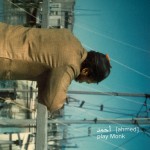
There is something almost impudent about choosing Thelonious Monk as the next subject of a project that has spent years excavating the music of Ahmed Abdul-Malik. Monk's compositions have already been played, dissected, modernised, deconstructed, reconstructed, academicised, sanctified and probably discussed at length by people wearing particularly serious-looking glasses. The repertoire is so thoroughly canonised that approaching it without either reverence or irony would seem almost impossible. Ahmed wisely chooses neither.
The connection is nevertheless far from arbitrary. Ahmed Abdul-Malik was a member of Monk's late-1950s quartets, and the two musicians shared an interest in treating musical time as something considerably less obedient than the straight line Western notation tends to suggest. For Ahmed, this becomes more than a historical footnote. It is a passageway. After six albums devoted to Abdul-Malik's compositions, the quartet of Pat Thomas, Joel Grip, Antonin Gerbal and Seymour Wright turns toward Monk not to preserve his music, but to see how much further its peculiar logic can travel. The answer, over roughly two hours, is: quite a long way.
The opening "Bye-Ya / Epistrophy" initially gives the listener something resembling a handrail. There is rhythm, there is melody, there is the unmistakable crooked architecture of Monk. Then the quartet begins pulling individual elements apart. Thomas's piano becomes increasingly physical, Grip's bass both anchors and destabilises the proceedings, Gerbal turns rhythm into an almost muscular continuum, while Wright's alto saxophone repeatedly approaches the melodic material only to fracture it, stretch it or abandon it altogether. The tune is not forgotten. It is subjected to pressure.
That distinction is crucial. "Play Monk" is not really an album of covers. It is closer to an archaeological experiment in which the quartet takes Monk's compositions apart to discover what kind of machinery is hidden inside them. A melody becomes a fragment; a fragment becomes a rhythm; the rhythm becomes an obsession; the obsession becomes texture. Then, occasionally, some recognisable feature reappears like an old acquaintance who has spent the intervening years behaving strangely.
"Friday Thirteenth" is a particularly revealing example. Its characteristic melodic contour remains somewhere underneath the surface, but repetition gradually changes its psychological function. What begins as a theme becomes a kind of gravitational field. Thomas keeps returning to the material while Wright approaches it from increasingly oblique angles, and Grip and Gerbal generate a restless physicality underneath. The effect is hypnotic without becoming comfortable. This is music that can repeat without remaining still, which is rather more difficult than it sounds.
Then comes "Round Midnight", and here the quartet performs perhaps its most audacious act of transformation. One of the most familiar compositions in the jazz repertoire is stretched across more than twenty-five minutes, but duration is only part of the story. The famous nocturnal atmosphere is not simply amplified. It is dissolved. What remains is a darker investigation of space, touch and collective timing, with the quartet gradually reducing the composition to unstable particles. Monk's shadow remains visible, but the portrait has been left out in the rain.
The second disc pushes the process even further. "Epistrophy" acts almost like a compressed laboratory experiment before "Evidence" expands the same principle into nearly half an hour. Here the quartet's collective method becomes especially apparent. There is remarkably little sense of four musicians waiting for their turn. Instead, the music behaves as a single organism with four nervous systems, constantly adjusting its balance.
That collective quality is one of Ahmed's most interesting characteristics. These musicians are not simply impressive improvisers placed in the same room. Their playing often seems to operate according to a shared physical intuition. Repetition, density and minute alterations become structural tools. A gesture may be repeated enough times to lose its original identity, only to acquire another one through persistence. The music consequently feels less like a sequence of solos than like an argument conducted by four people who have forgotten that arguments are supposed to end.
And yet there is humour here, too. Monk's music has always possessed an impish relationship with seriousness, and Ahmed retain something of that crooked grin. The quartet can become ferocious, but never entirely solemn. Even at its densest, the music contains an awareness that absurdity is one of the most useful weapons available to experimental art. You can dismantle a canon without pretending that you have transcended it.
This is particularly evident in the relationship between Pat Thomas and Seymour Wright. Thomas has a wonderfully percussive approach to the piano, turning individual notes and clusters into physical objects rather than merely harmonic information. Wright, meanwhile, seems perfectly happy to treat the alto saxophone as both melodic instrument and malfunctioning machine. Their exchanges are not conventional conversations. They resemble two people repeatedly interrupting one another until, somehow, a third language emerges.
Joel Grip and Antonin Gerbal provide the necessary instability beneath them. Grip's bass is rarely content simply to mark harmonic territory, while Gerbal's drumming supplies propulsion without behaving like conventional accompaniment. Their rhythm can tighten, accelerate, fragment or become almost ritualistic. The result is music that often seems to be moving extremely quickly while remaining trapped inside a very small temporal space.
"Evidence", appropriately, becomes one of the album's most extreme propositions. The original composition is treated not as something that needs to be faithfully represented but as material capable of surviving radical surgery. The quartet finds a small number of gestures and keeps worrying them until they become something else. There is aggression here, but also discipline. Chaos is permitted to enter the room, provided it fills in the paperwork first.
The closing "Oska T" continues this temporal distortion, leaving the album suspended between recognition and abstraction. By this stage, the listener has learned the peculiar grammar of "Play Monk": don't expect development in the conventional sense; expect mutation. Don't wait for the theme to return unchanged; notice what has happened to it while you weren't looking.
There is a larger idea behind all this. Ahmed have spent years looking backward in order to move forward. Their project with Abdul-Malik was already an attempt to recover a neglected modernist possibility from the past and activate it in the present. Turning toward Monk might initially seem like a move in the opposite direction, toward a composer whose place in jazz history is already beyond dispute. But the quartet's real interest is not historical correction. It is historical friction.
Monk becomes a set of tools rather than a monument. That is why "Play Monk" works. The album doesn't ask whether Monk's compositions can still sound radical in 2026. It asks a more interesting question: what happens when musicians who have spent years developing a language of repetition, rupture and collective improvisation put that language inside Monk's already unstable structures?
The answer is neither tribute nor desecration. It is continuation. The past is taken apart, shaken vigorously, and returned with several important pieces apparently missing. Human civilisation has survived worse.
The connection is nevertheless far from arbitrary. Ahmed Abdul-Malik was a member of Monk's late-1950s quartets, and the two musicians shared an interest in treating musical time as something considerably less obedient than the straight line Western notation tends to suggest. For Ahmed, this becomes more than a historical footnote. It is a passageway. After six albums devoted to Abdul-Malik's compositions, the quartet of Pat Thomas, Joel Grip, Antonin Gerbal and Seymour Wright turns toward Monk not to preserve his music, but to see how much further its peculiar logic can travel. The answer, over roughly two hours, is: quite a long way.
The opening "Bye-Ya / Epistrophy" initially gives the listener something resembling a handrail. There is rhythm, there is melody, there is the unmistakable crooked architecture of Monk. Then the quartet begins pulling individual elements apart. Thomas's piano becomes increasingly physical, Grip's bass both anchors and destabilises the proceedings, Gerbal turns rhythm into an almost muscular continuum, while Wright's alto saxophone repeatedly approaches the melodic material only to fracture it, stretch it or abandon it altogether. The tune is not forgotten. It is subjected to pressure.
That distinction is crucial. "Play Monk" is not really an album of covers. It is closer to an archaeological experiment in which the quartet takes Monk's compositions apart to discover what kind of machinery is hidden inside them. A melody becomes a fragment; a fragment becomes a rhythm; the rhythm becomes an obsession; the obsession becomes texture. Then, occasionally, some recognisable feature reappears like an old acquaintance who has spent the intervening years behaving strangely.
"Friday Thirteenth" is a particularly revealing example. Its characteristic melodic contour remains somewhere underneath the surface, but repetition gradually changes its psychological function. What begins as a theme becomes a kind of gravitational field. Thomas keeps returning to the material while Wright approaches it from increasingly oblique angles, and Grip and Gerbal generate a restless physicality underneath. The effect is hypnotic without becoming comfortable. This is music that can repeat without remaining still, which is rather more difficult than it sounds.
Then comes "Round Midnight", and here the quartet performs perhaps its most audacious act of transformation. One of the most familiar compositions in the jazz repertoire is stretched across more than twenty-five minutes, but duration is only part of the story. The famous nocturnal atmosphere is not simply amplified. It is dissolved. What remains is a darker investigation of space, touch and collective timing, with the quartet gradually reducing the composition to unstable particles. Monk's shadow remains visible, but the portrait has been left out in the rain.
The second disc pushes the process even further. "Epistrophy" acts almost like a compressed laboratory experiment before "Evidence" expands the same principle into nearly half an hour. Here the quartet's collective method becomes especially apparent. There is remarkably little sense of four musicians waiting for their turn. Instead, the music behaves as a single organism with four nervous systems, constantly adjusting its balance.
That collective quality is one of Ahmed's most interesting characteristics. These musicians are not simply impressive improvisers placed in the same room. Their playing often seems to operate according to a shared physical intuition. Repetition, density and minute alterations become structural tools. A gesture may be repeated enough times to lose its original identity, only to acquire another one through persistence. The music consequently feels less like a sequence of solos than like an argument conducted by four people who have forgotten that arguments are supposed to end.
And yet there is humour here, too. Monk's music has always possessed an impish relationship with seriousness, and Ahmed retain something of that crooked grin. The quartet can become ferocious, but never entirely solemn. Even at its densest, the music contains an awareness that absurdity is one of the most useful weapons available to experimental art. You can dismantle a canon without pretending that you have transcended it.
This is particularly evident in the relationship between Pat Thomas and Seymour Wright. Thomas has a wonderfully percussive approach to the piano, turning individual notes and clusters into physical objects rather than merely harmonic information. Wright, meanwhile, seems perfectly happy to treat the alto saxophone as both melodic instrument and malfunctioning machine. Their exchanges are not conventional conversations. They resemble two people repeatedly interrupting one another until, somehow, a third language emerges.
Joel Grip and Antonin Gerbal provide the necessary instability beneath them. Grip's bass is rarely content simply to mark harmonic territory, while Gerbal's drumming supplies propulsion without behaving like conventional accompaniment. Their rhythm can tighten, accelerate, fragment or become almost ritualistic. The result is music that often seems to be moving extremely quickly while remaining trapped inside a very small temporal space.
"Evidence", appropriately, becomes one of the album's most extreme propositions. The original composition is treated not as something that needs to be faithfully represented but as material capable of surviving radical surgery. The quartet finds a small number of gestures and keeps worrying them until they become something else. There is aggression here, but also discipline. Chaos is permitted to enter the room, provided it fills in the paperwork first.
The closing "Oska T" continues this temporal distortion, leaving the album suspended between recognition and abstraction. By this stage, the listener has learned the peculiar grammar of "Play Monk": don't expect development in the conventional sense; expect mutation. Don't wait for the theme to return unchanged; notice what has happened to it while you weren't looking.
There is a larger idea behind all this. Ahmed have spent years looking backward in order to move forward. Their project with Abdul-Malik was already an attempt to recover a neglected modernist possibility from the past and activate it in the present. Turning toward Monk might initially seem like a move in the opposite direction, toward a composer whose place in jazz history is already beyond dispute. But the quartet's real interest is not historical correction. It is historical friction.
Monk becomes a set of tools rather than a monument. That is why "Play Monk" works. The album doesn't ask whether Monk's compositions can still sound radical in 2026. It asks a more interesting question: what happens when musicians who have spent years developing a language of repetition, rupture and collective improvisation put that language inside Monk's already unstable structures?
The answer is neither tribute nor desecration. It is continuation. The past is taken apart, shaken vigorously, and returned with several important pieces apparently missing. Human civilisation has survived worse.
Russell Haswell: LET IT GO

There is something almost indecently appropriate about calling a Russell Haswell album "LET IT GO". After twenty-five years of making computers, machinery, synthesisers and recording technology behave badly in public, one suspects the title is less an instruction than a diagnosis. Let the signal go. Let the feedback go. Let the carefully organised civilisation go. Let the software have its little nervous breakdown in peace.
Haswell has been one of the more persistent troublemakers in British experimental electronics since the late 1990s, emerging from Coventry with an approach to sound that has always treated technology less as a neutral tool than as an unruly collaborator. His early work on the Mego label established an interest in computer-generated sound, electroacoustic abrasion and the productive possibilities of things refusing to behave. A quarter of a century later, "LET IT GO" arrives in a world that has become considerably better at malfunctioning without any assistance from him.
The album's premise is consequently darker than its title suggests. Haswell's long fascination with the dystopian imagination of 1970s and 1980s cinema has become awkwardly literal: surveillance, algorithmic control, political violence, media distortion and technological acceleration no longer require a science-fiction soundtrack because reality has apparently decided to provide one. Yet "LET IT GO" does not become a miserable exercise in sonic doom. That would be far too easy. Instead, Haswell responds with something more mischievous: a record that keeps changing its mind about what kind of monster it wants to be.
"Exit Downwards" establishes the basic conditions. Rhythmic impulses appear through layers of electronic grime, metallic resonance and unstable processing, suggesting techno after several consecutive nights without sleep. There is movement, but it is never entirely trustworthy. The groove seems to have been assembled by someone who understands dance music perfectly and then deliberately removed the instruction manual.
The two "Fall" pieces move deeper into abstraction. Their rapidly fluctuating pitches have a distinctly physical quality, as though sound were being stretched until its molecular structure became audible. Haswell's use of contemporary GRM processing during his residency at Bergen's Centre for Electronic Arts connects these pieces to the more volatile end of electronic composition, particularly the unstable pitch worlds associated with late Xenakis. But the result isn't academic reverence. These are sounds with their shoelaces deliberately tied together. And this is where "LET IT GO" becomes more interesting than a straightforward noise record.
Haswell understands that violence in sound is most effective when it is placed against something comparatively delicate. "The anxieties of our time" is built around jagged rhythmic movement, but melodic suggestions keep surfacing inside it, almost indecently pretty. The contradiction matters. Anxiety is rarely a continuous scream. More often it is the strange ability to notice that the coffee tastes good while civilisation is visibly on fire.
"Curated narrative" then seems to question the very mechanisms through which we are encouraged to understand what is happening around us. The title carries a quiet suspicion of the stories we are fed, while the music refuses to provide a reassuring alternative explanation. Haswell doesn't replace one narrative with another. He leaves the machinery exposed.
That refusal is central to the album. It is tempting to describe "LET IT GO" as a dystopian soundtrack, but that would make it sound more orderly than it actually is. Haswell is interested in systems that generate unexpected consequences. His music behaves like a machine whose internal logic can be understood only after it has already produced the result.
"Stress Testing" is perhaps the clearest example. The rhythmic energy becomes more insistent, recalling the physical drive of rave music without ever settling comfortably into it. There are traces of Detroit techno's repetition and the harder, more metallic electronic traditions associated with Birmingham, but they are treated as raw material rather than genre signposts. The pulse is there to be dismantled.
Then comes "Thu 25 Dec 2025", one of the album's strangest pieces. The title is wonderfully mundane: Christmas Day, after lunch, walking home alone through Glasgow. There is something almost comically British about producing a six-minute electronic drone out of the emotional residue of that particular afternoon. Yet the method behind it is anything but trivial. The piece follows a random-walk process, allowing each sonic movement to wander unpredictably from the previous one.
It sounds, appropriately enough, like being trapped inside a thought that has forgotten where it was going.
The track's importance lies in its patience. After the rhythmic abrasions surrounding it, the drone creates an ambiguous zone in which nothing seems to happen while everything continues to shift. Haswell has always understood that repetition need not mean stasis. Here, repetition becomes uncertainty.
"To be so for real" brings back the physical pressure, while "Always check their instagram [2026 wavecycle rmx]" takes the album's hostility toward contemporary media culture to an almost beautifully petty extreme. The title is already enough to make anyone who has spent five minutes scrolling through social media feel spiritually exhausted. Musically, the track turns that exhaustion into an extended assault of electronic density. The joke is that the supposedly frictionless world of infinite scrolling has produced a piece of music that makes you want to throw the phone into the sea.
Possibly the most useful social-media detox available in under nine minutes.
But Haswell's sense of humour prevents the record from becoming sanctimonious. There is anger here, certainly, but also absurdity. He understands that technological dystopia is not merely frightening. It is often ridiculous. Machines have become increasingly sophisticated, humans increasingly dependent upon them, and somewhere along the way we decided that asking an algorithm to generate a picture of a medieval knight eating spaghetti was a sensible use of civilisation's accumulated knowledge.
"LET IT GO" is not nostalgic for a cleaner technological past, either. The equipment list alone reads like a small electronic-musical ecosystem, combining modular systems, software, processing tools and various pieces of analogue and obsolete technology. Haswell's practice has always involved negotiating between these worlds rather than choosing one. The computer isn't the enemy. Neither is the synthesizer. The problem is what happens when systems become so pervasive that we forget they are systems at all. And then, after all this machinery, Haswell gives us "There's always a bit of light somewhere".
At thirteen minutes, the closing track is almost an act of mercy. High tones hover and circulate in a slowly changing field, creating a curious sensation of suspension. It is not exactly peaceful. Haswell has not suddenly discovered wellness podcasts. The tension remains, but it has been stripped of its immediate aggression. The sound seems to exist in a space where catastrophe has temporarily stopped shouting. The title could easily have become sentimental. It doesn't. The light isn't presented as salvation. It is simply there. That distinction makes the ending surprisingly affecting.
"LET IT GO" therefore works because its political dimension never overwhelms its musical intelligence. The album certainly reflects an era of instability, but Haswell does not need to attach a slogan to every oscillator. The politics are embedded in the behaviour of the sound itself: instability, overload, repetition, disruption, surveillance-like persistence, sudden rupture, moments of escape.
There is also something admirable in the fact that, after decades of experimental electronic music, Haswell still seems genuinely interested in what technology can do when pushed beyond polite functionality. He isn't using machinery to imitate conventional instruments. He is asking machinery to reveal its own peculiar personality, including the bits manufacturers would probably prefer nobody noticed.
The result is an album that refuses to be comfortably categorised. It can be rhythmic without being dance music, noisy without becoming a mere wall of aggression, abstract without losing physical presence, and ambient without turning into wallpaper for expensive Scandinavian furniture.
Most importantly, "LET IT GO" doesn't pretend that resistance has to sound heroic.
Sometimes resistance sounds like a broken machine.
Sometimes it sounds like a rave remembered incorrectly.
Sometimes it is a random walk through Glasgow on Christmas Day.
Sometimes it is nine minutes of electronic abuse directed at Instagram. And sometimes, after all the circuitry has overheated, it is simply a high tone hanging in the dark, quietly refusing to disappear.
Haswell has spent twenty-five years listening to the future arrive. It turns out the future was considerably less futuristic than advertised, and much messier. "LET IT GO" doesn't offer a way out. It does something more useful: it turns the mess into material, shakes it until unexpected shapes emerge, and reminds us that even inside a malfunctioning system, there are still sounds nobody has programmed yet.
Haswell has been one of the more persistent troublemakers in British experimental electronics since the late 1990s, emerging from Coventry with an approach to sound that has always treated technology less as a neutral tool than as an unruly collaborator. His early work on the Mego label established an interest in computer-generated sound, electroacoustic abrasion and the productive possibilities of things refusing to behave. A quarter of a century later, "LET IT GO" arrives in a world that has become considerably better at malfunctioning without any assistance from him.
The album's premise is consequently darker than its title suggests. Haswell's long fascination with the dystopian imagination of 1970s and 1980s cinema has become awkwardly literal: surveillance, algorithmic control, political violence, media distortion and technological acceleration no longer require a science-fiction soundtrack because reality has apparently decided to provide one. Yet "LET IT GO" does not become a miserable exercise in sonic doom. That would be far too easy. Instead, Haswell responds with something more mischievous: a record that keeps changing its mind about what kind of monster it wants to be.
"Exit Downwards" establishes the basic conditions. Rhythmic impulses appear through layers of electronic grime, metallic resonance and unstable processing, suggesting techno after several consecutive nights without sleep. There is movement, but it is never entirely trustworthy. The groove seems to have been assembled by someone who understands dance music perfectly and then deliberately removed the instruction manual.
The two "Fall" pieces move deeper into abstraction. Their rapidly fluctuating pitches have a distinctly physical quality, as though sound were being stretched until its molecular structure became audible. Haswell's use of contemporary GRM processing during his residency at Bergen's Centre for Electronic Arts connects these pieces to the more volatile end of electronic composition, particularly the unstable pitch worlds associated with late Xenakis. But the result isn't academic reverence. These are sounds with their shoelaces deliberately tied together. And this is where "LET IT GO" becomes more interesting than a straightforward noise record.
Haswell understands that violence in sound is most effective when it is placed against something comparatively delicate. "The anxieties of our time" is built around jagged rhythmic movement, but melodic suggestions keep surfacing inside it, almost indecently pretty. The contradiction matters. Anxiety is rarely a continuous scream. More often it is the strange ability to notice that the coffee tastes good while civilisation is visibly on fire.
"Curated narrative" then seems to question the very mechanisms through which we are encouraged to understand what is happening around us. The title carries a quiet suspicion of the stories we are fed, while the music refuses to provide a reassuring alternative explanation. Haswell doesn't replace one narrative with another. He leaves the machinery exposed.
That refusal is central to the album. It is tempting to describe "LET IT GO" as a dystopian soundtrack, but that would make it sound more orderly than it actually is. Haswell is interested in systems that generate unexpected consequences. His music behaves like a machine whose internal logic can be understood only after it has already produced the result.
"Stress Testing" is perhaps the clearest example. The rhythmic energy becomes more insistent, recalling the physical drive of rave music without ever settling comfortably into it. There are traces of Detroit techno's repetition and the harder, more metallic electronic traditions associated with Birmingham, but they are treated as raw material rather than genre signposts. The pulse is there to be dismantled.
Then comes "Thu 25 Dec 2025", one of the album's strangest pieces. The title is wonderfully mundane: Christmas Day, after lunch, walking home alone through Glasgow. There is something almost comically British about producing a six-minute electronic drone out of the emotional residue of that particular afternoon. Yet the method behind it is anything but trivial. The piece follows a random-walk process, allowing each sonic movement to wander unpredictably from the previous one.
It sounds, appropriately enough, like being trapped inside a thought that has forgotten where it was going.
The track's importance lies in its patience. After the rhythmic abrasions surrounding it, the drone creates an ambiguous zone in which nothing seems to happen while everything continues to shift. Haswell has always understood that repetition need not mean stasis. Here, repetition becomes uncertainty.
"To be so for real" brings back the physical pressure, while "Always check their instagram [2026 wavecycle rmx]" takes the album's hostility toward contemporary media culture to an almost beautifully petty extreme. The title is already enough to make anyone who has spent five minutes scrolling through social media feel spiritually exhausted. Musically, the track turns that exhaustion into an extended assault of electronic density. The joke is that the supposedly frictionless world of infinite scrolling has produced a piece of music that makes you want to throw the phone into the sea.
Possibly the most useful social-media detox available in under nine minutes.
But Haswell's sense of humour prevents the record from becoming sanctimonious. There is anger here, certainly, but also absurdity. He understands that technological dystopia is not merely frightening. It is often ridiculous. Machines have become increasingly sophisticated, humans increasingly dependent upon them, and somewhere along the way we decided that asking an algorithm to generate a picture of a medieval knight eating spaghetti was a sensible use of civilisation's accumulated knowledge.
"LET IT GO" is not nostalgic for a cleaner technological past, either. The equipment list alone reads like a small electronic-musical ecosystem, combining modular systems, software, processing tools and various pieces of analogue and obsolete technology. Haswell's practice has always involved negotiating between these worlds rather than choosing one. The computer isn't the enemy. Neither is the synthesizer. The problem is what happens when systems become so pervasive that we forget they are systems at all. And then, after all this machinery, Haswell gives us "There's always a bit of light somewhere".
At thirteen minutes, the closing track is almost an act of mercy. High tones hover and circulate in a slowly changing field, creating a curious sensation of suspension. It is not exactly peaceful. Haswell has not suddenly discovered wellness podcasts. The tension remains, but it has been stripped of its immediate aggression. The sound seems to exist in a space where catastrophe has temporarily stopped shouting. The title could easily have become sentimental. It doesn't. The light isn't presented as salvation. It is simply there. That distinction makes the ending surprisingly affecting.
"LET IT GO" therefore works because its political dimension never overwhelms its musical intelligence. The album certainly reflects an era of instability, but Haswell does not need to attach a slogan to every oscillator. The politics are embedded in the behaviour of the sound itself: instability, overload, repetition, disruption, surveillance-like persistence, sudden rupture, moments of escape.
There is also something admirable in the fact that, after decades of experimental electronic music, Haswell still seems genuinely interested in what technology can do when pushed beyond polite functionality. He isn't using machinery to imitate conventional instruments. He is asking machinery to reveal its own peculiar personality, including the bits manufacturers would probably prefer nobody noticed.
The result is an album that refuses to be comfortably categorised. It can be rhythmic without being dance music, noisy without becoming a mere wall of aggression, abstract without losing physical presence, and ambient without turning into wallpaper for expensive Scandinavian furniture.
Most importantly, "LET IT GO" doesn't pretend that resistance has to sound heroic.
Sometimes resistance sounds like a broken machine.
Sometimes it sounds like a rave remembered incorrectly.
Sometimes it is a random walk through Glasgow on Christmas Day.
Sometimes it is nine minutes of electronic abuse directed at Instagram. And sometimes, after all the circuitry has overheated, it is simply a high tone hanging in the dark, quietly refusing to disappear.
Haswell has spent twenty-five years listening to the future arrive. It turns out the future was considerably less futuristic than advertised, and much messier. "LET IT GO" doesn't offer a way out. It does something more useful: it turns the mess into material, shakes it until unexpected shapes emerge, and reminds us that even inside a malfunctioning system, there are still sounds nobody has programmed yet.