
Browse by Genre
Industrial Music / Industrial Metal / Aggro Industrial / Electro Metal
Industrial Noise / Power Noise / Harsh Noise
Synth Pop / Electro Pop / Synth-Electronica
Techno / Trance / Goa / Drum'n'Bass / Jungle / Tribal / Trip-Hop
Ambient / Electronica / Ethereal / Dub / Soundscapes / Abstract
Experimental / Avantgarde / Weird & Wired / Glitch / Noise / Field Recording
Dark / Gothic / Wave / New Wave / Dark Wave / Industrial Gothic
New Music / Downtown / Avantgarde Jazz / New Classical / World
Search Reviews
Music Reviews
Only Now / Jaijiu: Rebel Cry

Artist: Only Now / Jaijiu (@)
Title: Rebel Cry
Format: Download Only (MP3 + Lossless)
Label: Kush Arora Productions
Rated:

Title: Rebel Cry
Format: Download Only (MP3 + Lossless)
Label: Kush Arora Productions
Rated:
There are records that ask to be understood. "Rebel Cry" seems far more interested in short-circuiting the nervous system.
The collaboration between Indo-Californian producer Kush Arora, operating under his Only Now alias, and Buenos Aires-based experimentalist Jaijiu arrives like a small but concentrated act of sonic sabotage. Across four tracks and barely fourteen minutes, "Rebel Cry" dismantles the comforting geography of club music, then rebuilds it from fragments of global percussion, industrial abrasion, mutant bass pressure, and rhythmic structures that appear to have survived a collision between several continents. It is less a meeting point than a controlled pile-up. Remarkably, it works.
Arora has spent years constructing one of the most distinctive vocabularies in contemporary bass music. His work consistently folds elements of Punjabi and Hindustani traditions into environments contaminated by noise, doom, soundsystem culture, and industrial electronics. Yet what makes Only Now particularly compelling is that heritage never functions as decoration or branding. Instead, traditional rhythmic languages become unstable matter, subjected to pressure until they mutate into something simultaneously ancient and futuristic. Jaijiu approaches a similar process from a Latin American perspective, dismantling familiar club forms and reconstructing them into fractured post-club architectures that feel both physical and strangely hallucinatory.
The title track wastes no time establishing its intentions. Percussion arrives in dense clusters, darting between grime-like aggression, distorted hand drums, and rhythmic patterns that seem perpetually on the verge of outrunning themselves. The production possesses an almost architectural quality. Every sound occupies a sharply defined position while the overall structure threatens collapse at any moment. Listening becomes a peculiar balancing act between bodily surrender and analytical survival.
"Rebel Cry Pt. 2" pushes even further into instability. The track behaves like a machine experiencing ecstatic failure. Metallic impacts ricochet across the stereo field, fragments of baile funk emerge only to disintegrate seconds later, while vocal snippets from Arora's daughter function less as melodic anchors than as ghostly coordinates inside the chaos. The description of an "unhinged gamelan session" is surprisingly accurate. One imagines traditional instruments waking up one morning and discovering they have been uploaded into a malfunctioning cybernetic dream.
The remix section avoids the common trap of redundancy. Chrisman, whose work through the Nyege Nyege and Hakuna Kulala ecosystem has consistently explored radical approaches to rhythm, transforms the material into something darker and more predatory. His version feels designed for those moments in a club when collective euphoria begins developing teeth. Jaijiu's own remix, meanwhile, strips the track back into a hypnotic low-end ritual, proving that minimalism can sometimes feel more dangerous than maximalism.
What makes "Rebel Cry" particularly fascinating is its refusal to perform the kind of sanitized multiculturalism that often accompanies discussions of global electronic music. This is not a diplomatic summit between traditions. It is an argument, a celebration, a demolition site, and occasionally a rave. Indian percussion, kuduro energy, baile funk mutations, dancehall weight, industrial textures, and post-club abstraction do not politely coexist. They wrestle for space. The friction becomes the point.
There is also something quietly political in the record's construction. Not because it delivers slogans or manifestos, but because it proposes connection without flattening difference. Arora, Jaijiu, and Chrisman operate across vastly different cultural and geographical contexts, yet the music thrives precisely because none of those identities are diluted. The result feels genuinely international rather than merely globalized, which in 2026 is a rarer achievement than marketing departments would like us to believe.
"Rebel Cry" may frustrate listeners searching for clean genre labels or comfortable rhythmic stability. Its pleasures are more volatile. This is body music for uncertain times: ecstatic, fractured, relentless, and stubbornly alive. Four tracks that feel like they were assembled from sparks flying between distant electrical grids.
Some records ask you to enter their world. "Rebel Cry" kicks the door off its hinges and drags the world inside.
The collaboration between Indo-Californian producer Kush Arora, operating under his Only Now alias, and Buenos Aires-based experimentalist Jaijiu arrives like a small but concentrated act of sonic sabotage. Across four tracks and barely fourteen minutes, "Rebel Cry" dismantles the comforting geography of club music, then rebuilds it from fragments of global percussion, industrial abrasion, mutant bass pressure, and rhythmic structures that appear to have survived a collision between several continents. It is less a meeting point than a controlled pile-up. Remarkably, it works.
Arora has spent years constructing one of the most distinctive vocabularies in contemporary bass music. His work consistently folds elements of Punjabi and Hindustani traditions into environments contaminated by noise, doom, soundsystem culture, and industrial electronics. Yet what makes Only Now particularly compelling is that heritage never functions as decoration or branding. Instead, traditional rhythmic languages become unstable matter, subjected to pressure until they mutate into something simultaneously ancient and futuristic. Jaijiu approaches a similar process from a Latin American perspective, dismantling familiar club forms and reconstructing them into fractured post-club architectures that feel both physical and strangely hallucinatory.
The title track wastes no time establishing its intentions. Percussion arrives in dense clusters, darting between grime-like aggression, distorted hand drums, and rhythmic patterns that seem perpetually on the verge of outrunning themselves. The production possesses an almost architectural quality. Every sound occupies a sharply defined position while the overall structure threatens collapse at any moment. Listening becomes a peculiar balancing act between bodily surrender and analytical survival.
"Rebel Cry Pt. 2" pushes even further into instability. The track behaves like a machine experiencing ecstatic failure. Metallic impacts ricochet across the stereo field, fragments of baile funk emerge only to disintegrate seconds later, while vocal snippets from Arora's daughter function less as melodic anchors than as ghostly coordinates inside the chaos. The description of an "unhinged gamelan session" is surprisingly accurate. One imagines traditional instruments waking up one morning and discovering they have been uploaded into a malfunctioning cybernetic dream.
The remix section avoids the common trap of redundancy. Chrisman, whose work through the Nyege Nyege and Hakuna Kulala ecosystem has consistently explored radical approaches to rhythm, transforms the material into something darker and more predatory. His version feels designed for those moments in a club when collective euphoria begins developing teeth. Jaijiu's own remix, meanwhile, strips the track back into a hypnotic low-end ritual, proving that minimalism can sometimes feel more dangerous than maximalism.
What makes "Rebel Cry" particularly fascinating is its refusal to perform the kind of sanitized multiculturalism that often accompanies discussions of global electronic music. This is not a diplomatic summit between traditions. It is an argument, a celebration, a demolition site, and occasionally a rave. Indian percussion, kuduro energy, baile funk mutations, dancehall weight, industrial textures, and post-club abstraction do not politely coexist. They wrestle for space. The friction becomes the point.
There is also something quietly political in the record's construction. Not because it delivers slogans or manifestos, but because it proposes connection without flattening difference. Arora, Jaijiu, and Chrisman operate across vastly different cultural and geographical contexts, yet the music thrives precisely because none of those identities are diluted. The result feels genuinely international rather than merely globalized, which in 2026 is a rarer achievement than marketing departments would like us to believe.
"Rebel Cry" may frustrate listeners searching for clean genre labels or comfortable rhythmic stability. Its pleasures are more volatile. This is body music for uncertain times: ecstatic, fractured, relentless, and stubbornly alive. Four tracks that feel like they were assembled from sparks flying between distant electrical grids.
Some records ask you to enter their world. "Rebel Cry" kicks the door off its hinges and drags the world inside.
Simon Berz: Tectonic

Artist: Simon Berz (@)
Title: Tectonic
Format: LP
Label: Karlrecords (http://www.karlrecords.net/) (@)
Rated:
Title: Tectonic
Format: LP
Label: Karlrecords (http://www.karlrecords.net/) (@)
Rated:
Simon Berz has spent much of his artistic life questioning a distinction that most musicians take for granted: where does an instrument end and where does the world begin? On "Tectonic", the Swiss drummer, sound artist, educator, and instrument builder offers perhaps his most comprehensive answer yet, assembling a body of work that treats geological matter not as inspiration but as an active participant in the creative process.
Over three decades, Berz has cultivated a uniquely nomadic practice, moving between improvised music, sound art, performance, and installation. His collaborations span an astonishing range of personalities, from avant-garde improvisers and electronic experimenters to figures rooted in dub, jazz, and rock. Yet despite these encounters, his artistic identity remains remarkably singular. Rather than centering virtuosity, Berz focuses on relationships: between materials and technologies, landscapes and memory, gesture and resonance.
"Tectonic" gathers traces of journeys undertaken across Iceland, Indonesia, Japan, and other locations, but it would be misleading to call it a travelogue. The album feels more like a study of physical processes. The track titles themselves suggest sedimentation, transformation, interruption, and emergence. Listening becomes an encounter with forms of time that operate far beyond human scales.
The record opens with "Deep Time", an apt introduction to an album concerned with durations measured not in minutes but in millennia. Layers of percussion, electronic treatment, and resonant stone textures establish an environment where rhythm behaves less like a grid and more like a natural force. The music advances through accumulation and pressure rather than conventional development.
One of the album's greatest strengths is its refusal to settle into a single identity. Moments of percussive insistence occasionally hint at club music, while elsewhere the material drifts toward electroacoustic abstraction. Certain passages evoke ritual performance; others suggest field recording, sound sculpture, or contemporary composition. Berz moves freely among these territories without appearing interested in belonging to any of them.
The basalt stones at the heart of the project are crucial, not because they provide unusual sounds, but because they alter the listener's perception of causality. It often becomes difficult to determine what originates from a struck surface, what emerges from electronic manipulation, and what belongs to the surrounding acoustic environment. The resulting ambiguity gives the album much of its fascination.
Tracks such as "Lithification" and "Emergent Terrain" reveal Berz's talent for balancing complexity with immediacy. Despite the conceptual framework underpinning the work, the music never feels academic. There is a direct physicality to these pieces, a sense that sound is being pushed, scraped, fractured, and reshaped in real time. One can almost imagine the materials resisting the performer, negotiating their own role in the composition.
The influence of Berz's international encounters also becomes apparent throughout the record. Rather than presenting cultural references as exotic decoration, he absorbs lessons from different sonic traditions into a broader investigation of resonance and rhythm. The result feels genuinely collaborative, even when no obvious collaborator is present.
Particularly impressive is the album's handling of space. Every sound seems carefully positioned, yet nothing feels static. Frequencies drift, textures overlap, and resonances linger like afterimages. The music constantly reminds us that listening is a spatial experience as much as a temporal one.
The closing sections leave an especially strong impression. Rather than building toward a climax, the album gradually reveals itself as an ecosystem of interconnected gestures. Sounds appear, transform, disappear, and leave traces behind, much like geological formations themselves.
What ultimately distinguishes "Tectonic" is its ability to transform an ambitious concept into a genuinely engaging listening experience. Many works inspired by natural processes end up illustrating ideas. Berz instead creates a world governed by those ideas. The album does not merely reference stone, landscape, or geological history; it adopts their logic.
In an era where experimental music often oscillates between technological fetishism and nostalgic organicism, "Tectonic" proposes a more interesting possibility: that matter, technology, and human imagination are not opposing forces at all, but different manifestations of the same ongoing process of transformation. The rocks, it turns out, were never silent. We simply needed someone patient enough to listen.
Over three decades, Berz has cultivated a uniquely nomadic practice, moving between improvised music, sound art, performance, and installation. His collaborations span an astonishing range of personalities, from avant-garde improvisers and electronic experimenters to figures rooted in dub, jazz, and rock. Yet despite these encounters, his artistic identity remains remarkably singular. Rather than centering virtuosity, Berz focuses on relationships: between materials and technologies, landscapes and memory, gesture and resonance.
"Tectonic" gathers traces of journeys undertaken across Iceland, Indonesia, Japan, and other locations, but it would be misleading to call it a travelogue. The album feels more like a study of physical processes. The track titles themselves suggest sedimentation, transformation, interruption, and emergence. Listening becomes an encounter with forms of time that operate far beyond human scales.
The record opens with "Deep Time", an apt introduction to an album concerned with durations measured not in minutes but in millennia. Layers of percussion, electronic treatment, and resonant stone textures establish an environment where rhythm behaves less like a grid and more like a natural force. The music advances through accumulation and pressure rather than conventional development.
One of the album's greatest strengths is its refusal to settle into a single identity. Moments of percussive insistence occasionally hint at club music, while elsewhere the material drifts toward electroacoustic abstraction. Certain passages evoke ritual performance; others suggest field recording, sound sculpture, or contemporary composition. Berz moves freely among these territories without appearing interested in belonging to any of them.
The basalt stones at the heart of the project are crucial, not because they provide unusual sounds, but because they alter the listener's perception of causality. It often becomes difficult to determine what originates from a struck surface, what emerges from electronic manipulation, and what belongs to the surrounding acoustic environment. The resulting ambiguity gives the album much of its fascination.
Tracks such as "Lithification" and "Emergent Terrain" reveal Berz's talent for balancing complexity with immediacy. Despite the conceptual framework underpinning the work, the music never feels academic. There is a direct physicality to these pieces, a sense that sound is being pushed, scraped, fractured, and reshaped in real time. One can almost imagine the materials resisting the performer, negotiating their own role in the composition.
The influence of Berz's international encounters also becomes apparent throughout the record. Rather than presenting cultural references as exotic decoration, he absorbs lessons from different sonic traditions into a broader investigation of resonance and rhythm. The result feels genuinely collaborative, even when no obvious collaborator is present.
Particularly impressive is the album's handling of space. Every sound seems carefully positioned, yet nothing feels static. Frequencies drift, textures overlap, and resonances linger like afterimages. The music constantly reminds us that listening is a spatial experience as much as a temporal one.
The closing sections leave an especially strong impression. Rather than building toward a climax, the album gradually reveals itself as an ecosystem of interconnected gestures. Sounds appear, transform, disappear, and leave traces behind, much like geological formations themselves.
What ultimately distinguishes "Tectonic" is its ability to transform an ambitious concept into a genuinely engaging listening experience. Many works inspired by natural processes end up illustrating ideas. Berz instead creates a world governed by those ideas. The album does not merely reference stone, landscape, or geological history; it adopts their logic.
In an era where experimental music often oscillates between technological fetishism and nostalgic organicism, "Tectonic" proposes a more interesting possibility: that matter, technology, and human imagination are not opposing forces at all, but different manifestations of the same ongoing process of transformation. The rocks, it turns out, were never silent. We simply needed someone patient enough to listen.
Kit Grill: And?ya
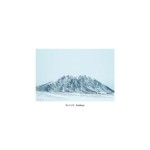
There is a peculiar category of ambient records that do not really describe a landscape. They attempt to become one. Most fail and end up sounding like expensive screensavers for people who own three different brands of herbal tea and use the word “curated” as a lifestyle philosophy. "Andøya" avoids that trap almost entirely.
On his latest release, Kit Grill retreats to the Norwegian Arctic island that gives the album its title and returns with something that feels less like a collection of compositions than a weather system documented from the inside. The London-based composer has spent years moving between ambient music, minimal electronics, post-punk textures and modern classical restraint, gradually refining a language obsessed with atmosphere and spatial perception. Here, that fascination reaches an almost geological scale.
The twelve pieces unfold like fragments of a diary written by someone whose main conversation partner for three weeks was wind. Not metaphorical wind. Actual wind. The kind that reminds humans they are basically anxious mammals wrapped in technical fabrics.
“Cottongrass” opens with luminous arpeggiations that seem suspended between dawn and memory. It carries a fragile glow, as if light itself were cautiously testing whether it should return. “Tundra” follows with distant resonances and submerged drones that suggest vast frozen surfaces stretching beyond the limits of perception. Grill demonstrates remarkable patience throughout the record. Nothing is rushed. Nothing seeks immediate gratification. The music understands something social media forgot years ago: attention can deepen instead of merely accelerating.
What makes "Andøya" particularly catchy is its refusal to romanticise isolation. Many contemporary ambient records treat solitude as a wellness product. Grill instead presents it as something stranger and more ambiguous. Tracks such as “Cold Blow” and “Desolation” carry genuine unease beneath their beauty. The drones feel immense rather than comforting, and the silence surrounding the sounds often seems more important than the sounds themselves. You are not being invited into nature. Nature is politely reminding you that it existed long before your passwords and subscription plans.
The shorter piano miniatures, “Ascending” and “First Light”, provide crucial moments of intimacy. Their simplicity recalls the delicate emotional economy of artists such as Ryuichi Sakamoto or the late Harold Budd, yet Grill never lapses into imitation. These pieces function like brief human footprints in an otherwise overwhelming terrain.
Elsewhere, “Voices” and “Metamorphosis” introduce spectral choral textures that hover between sacred architecture and environmental resonance. They evoke abandoned churches, distant radio signals, and the peculiar psychological state produced by extended exposure to snow-covered horizons. The Arctic becomes not merely a setting but an acoustic condition.
Part of the album’s success stems from Grill’s multidisciplinary sensibility. As both musician and visual artist, he has long demonstrated an ability to think spatially, treating sound almost as a physical material. His work on Primary Colours Records and his long-running presence on NTS Radio have consistently revealed an artist more interested in constructing environments than delivering songs.
The closing sequence of “Adrift”, “White Fields”, and “Last Light” is especially strong. Here the record achieves a rare balance between documentation and transformation. The music clearly originates from a specific place and experience, yet it gradually becomes something more universal: an exploration of scale, perception, memory, and the unsettling realization that true silence is never actually silent.
If there is a criticism to make, it is that "Andøya" occasionally risks becoming almost too successful at depicting emptiness. Certain passages drift so deeply into stasis that listeners seeking stronger narrative development may find themselves floating without coordinates. Then again, that may be exactly the point. The Arctic is not obligated to provide entertainment.
Ultimately, "Andøya" stands among Kit Grill’s most focused and affecting works. It captures the paradox of isolation with unusual precision: the further one moves away from people, the more sharply one encounters oneself. Across these glacial drones, distant echoes, and fragile melodic traces, Grill transforms a personal residency into a meditation on presence, scale, and vulnerability. The result is not simply ambient music. It is a record that listens back.
A cold, beautiful, occasionally intimidating companion for long nights, empty roads, and moments when the world feels both impossibly vast and strangely close. Much like the Arctic itself.
On his latest release, Kit Grill retreats to the Norwegian Arctic island that gives the album its title and returns with something that feels less like a collection of compositions than a weather system documented from the inside. The London-based composer has spent years moving between ambient music, minimal electronics, post-punk textures and modern classical restraint, gradually refining a language obsessed with atmosphere and spatial perception. Here, that fascination reaches an almost geological scale.
The twelve pieces unfold like fragments of a diary written by someone whose main conversation partner for three weeks was wind. Not metaphorical wind. Actual wind. The kind that reminds humans they are basically anxious mammals wrapped in technical fabrics.
“Cottongrass” opens with luminous arpeggiations that seem suspended between dawn and memory. It carries a fragile glow, as if light itself were cautiously testing whether it should return. “Tundra” follows with distant resonances and submerged drones that suggest vast frozen surfaces stretching beyond the limits of perception. Grill demonstrates remarkable patience throughout the record. Nothing is rushed. Nothing seeks immediate gratification. The music understands something social media forgot years ago: attention can deepen instead of merely accelerating.
What makes "Andøya" particularly catchy is its refusal to romanticise isolation. Many contemporary ambient records treat solitude as a wellness product. Grill instead presents it as something stranger and more ambiguous. Tracks such as “Cold Blow” and “Desolation” carry genuine unease beneath their beauty. The drones feel immense rather than comforting, and the silence surrounding the sounds often seems more important than the sounds themselves. You are not being invited into nature. Nature is politely reminding you that it existed long before your passwords and subscription plans.
The shorter piano miniatures, “Ascending” and “First Light”, provide crucial moments of intimacy. Their simplicity recalls the delicate emotional economy of artists such as Ryuichi Sakamoto or the late Harold Budd, yet Grill never lapses into imitation. These pieces function like brief human footprints in an otherwise overwhelming terrain.
Elsewhere, “Voices” and “Metamorphosis” introduce spectral choral textures that hover between sacred architecture and environmental resonance. They evoke abandoned churches, distant radio signals, and the peculiar psychological state produced by extended exposure to snow-covered horizons. The Arctic becomes not merely a setting but an acoustic condition.
Part of the album’s success stems from Grill’s multidisciplinary sensibility. As both musician and visual artist, he has long demonstrated an ability to think spatially, treating sound almost as a physical material. His work on Primary Colours Records and his long-running presence on NTS Radio have consistently revealed an artist more interested in constructing environments than delivering songs.
The closing sequence of “Adrift”, “White Fields”, and “Last Light” is especially strong. Here the record achieves a rare balance between documentation and transformation. The music clearly originates from a specific place and experience, yet it gradually becomes something more universal: an exploration of scale, perception, memory, and the unsettling realization that true silence is never actually silent.
If there is a criticism to make, it is that "Andøya" occasionally risks becoming almost too successful at depicting emptiness. Certain passages drift so deeply into stasis that listeners seeking stronger narrative development may find themselves floating without coordinates. Then again, that may be exactly the point. The Arctic is not obligated to provide entertainment.
Ultimately, "Andøya" stands among Kit Grill’s most focused and affecting works. It captures the paradox of isolation with unusual precision: the further one moves away from people, the more sharply one encounters oneself. Across these glacial drones, distant echoes, and fragile melodic traces, Grill transforms a personal residency into a meditation on presence, scale, and vulnerability. The result is not simply ambient music. It is a record that listens back.
A cold, beautiful, occasionally intimidating companion for long nights, empty roads, and moments when the world feels both impossibly vast and strangely close. Much like the Arctic itself.
The Holy Sun Opera House: s/t
Artist: The Holy Sun Opera House (@)
Title: s/t
Format: CD & 12" + Download
Label: Hologram Opera (@)
Rated:

Title: s/t
Format: CD & 12" + Download
Label: Hologram Opera (@)
Rated:
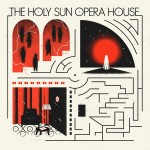
It is rare that I do a review of an album without receiving a physical copy of the release, and lord knows I receive enough email promos from promoters, publicity agents, bands and other music hustlers. Most of them aren't even in the genres Chain D.L.K. covers, but this one qualifies. The Holy Sun Opera House is not an opera company or a cult religious organization, but rather a music project consisting of classically trained soprano and drummer Krissy Barker and composer dl Salo, out of Los Angeles. Together they weave symphonic synths and operatic vocals with heavy drums. What got me was the publicist/promotor's FFO: early Dead Can Dance, Fever Ray, Klaus Nomi. Forgive my ignorance but I have no idea who Fever Ray is, so I watched a few of their videos. Interesting experimental music both sonically and visually out of Sweden with a pretty good following, but this review is not about Fever Ray so check them out on your own time. Just looking for a frame of reference here and I got one.
The album consists of nine tracks and according to info on the duo's Bandcamp site, "The self-produced album was conceptualized as a way to describe an obsessive mind with music and inspired by the recurring dreams of singer Krissy Barker. In it is a realm of shifting rooms, dilapidated houses and passages. These unsettled rooms and spaces pose a striking confrontation of fear and anxiety from deep within." Fair enough. Opening track, "Voice of Gob" sounds heavily gothic from the get-go; heavy orchestrated synth strings with Krissy's angelic voice emerging. It's slow and stately with a simple but effective melody, and they use a real choir for backing vocals. Nice! "Passage II" is sort of an experimental drone piece of cake with operatic voice icing. The singing on "Latched On" is more pop than opera at first but once the orchestration comes in it turns operatic, quite dolorous over all. The title of the next track, "Decrepit Mansion" may seem on the nose (like something off a Halloween sound effects album) but the 3 lines of lyrics sung repeatedly in rounds has nothing to do with decrepit mansions or haunted houses, but about things one does not normally notice. Rather cool in its own way. Has anyone seen or heard the "Witch in the Attic" ? I knew there was someone there, breathing heavily at night while I'm trying to sleep, invading my dreams and turning them into nightmares. The track is a percussion-less dreamscape transitionally leading into "The Attic." The orchestration here is full-on and may remind you somewhat of early Dead Can Dance, Arcana, Gitane DeMone or even Diamanda Galas. Krissy's vibrato is intense and the music is gothic as fuck.
The penultimate song on the album is "Room That Wasn't There Before, " a cool cross between pop and opera with a very memorable melody. My only complaint about it is that the rhythm track is severely buried beneath the orchestration. A remix of this one is sorely needed. With only two tracks left, the tail of the previous slides smoothly into "Passage I" (odd that it comes after "Passage II"), another kind of orchestral ambient drone piece using cathedral-like chord progressions, which I suppose echoes the "Holy Sun" part of the group's name. Finally, there is "Room with the Rain," sung throughout in the operatic mode with a dirgy pace and symphonic orchestration. Not nearly as compelling as "Room That Wasn't There Before " but atmospherically poignant nevertheless. The Holy Sun Opera House is absolutely a project worth checking out. In spite of a few minor flaws (namely, more oomph in the percussion/rhythm department) this album holds up very well, especially for fans of the non-pop-rock gothic. (In days gone by labels such as 4AD, World Serpent or Cold Meat Industry would have signed this act in a heartbeat.) The Holy Sun Opera House is likely to appeal more to European audiences than U.S. listeners but don't let that dissuade you. There aren't many operatic rock outfits out there as a Google search will attest. (Try it; you'll get only mediocre results such as The Who's 'Tommy' and Queen's "Bohemian Rhapsody.") With the full complement of media options available (LP, CD, cassette, digital) you have no reason not to go for it.
The album consists of nine tracks and according to info on the duo's Bandcamp site, "The self-produced album was conceptualized as a way to describe an obsessive mind with music and inspired by the recurring dreams of singer Krissy Barker. In it is a realm of shifting rooms, dilapidated houses and passages. These unsettled rooms and spaces pose a striking confrontation of fear and anxiety from deep within." Fair enough. Opening track, "Voice of Gob" sounds heavily gothic from the get-go; heavy orchestrated synth strings with Krissy's angelic voice emerging. It's slow and stately with a simple but effective melody, and they use a real choir for backing vocals. Nice! "Passage II" is sort of an experimental drone piece of cake with operatic voice icing. The singing on "Latched On" is more pop than opera at first but once the orchestration comes in it turns operatic, quite dolorous over all. The title of the next track, "Decrepit Mansion" may seem on the nose (like something off a Halloween sound effects album) but the 3 lines of lyrics sung repeatedly in rounds has nothing to do with decrepit mansions or haunted houses, but about things one does not normally notice. Rather cool in its own way. Has anyone seen or heard the "Witch in the Attic" ? I knew there was someone there, breathing heavily at night while I'm trying to sleep, invading my dreams and turning them into nightmares. The track is a percussion-less dreamscape transitionally leading into "The Attic." The orchestration here is full-on and may remind you somewhat of early Dead Can Dance, Arcana, Gitane DeMone or even Diamanda Galas. Krissy's vibrato is intense and the music is gothic as fuck.
The penultimate song on the album is "Room That Wasn't There Before, " a cool cross between pop and opera with a very memorable melody. My only complaint about it is that the rhythm track is severely buried beneath the orchestration. A remix of this one is sorely needed. With only two tracks left, the tail of the previous slides smoothly into "Passage I" (odd that it comes after "Passage II"), another kind of orchestral ambient drone piece using cathedral-like chord progressions, which I suppose echoes the "Holy Sun" part of the group's name. Finally, there is "Room with the Rain," sung throughout in the operatic mode with a dirgy pace and symphonic orchestration. Not nearly as compelling as "Room That Wasn't There Before " but atmospherically poignant nevertheless. The Holy Sun Opera House is absolutely a project worth checking out. In spite of a few minor flaws (namely, more oomph in the percussion/rhythm department) this album holds up very well, especially for fans of the non-pop-rock gothic. (In days gone by labels such as 4AD, World Serpent or Cold Meat Industry would have signed this act in a heartbeat.) The Holy Sun Opera House is likely to appeal more to European audiences than U.S. listeners but don't let that dissuade you. There aren't many operatic rock outfits out there as a Google search will attest. (Try it; you'll get only mediocre results such as The Who's 'Tommy' and Queen's "Bohemian Rhapsody.") With the full complement of media options available (LP, CD, cassette, digital) you have no reason not to go for it.
schntzl: Fata Morgana
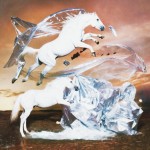
There is something deeply Belgian about "Fata Morgana". Not just because schntzl emerge from that fertile stretch of Europe where surrealism seems less an artistic movement than a weather condition, but because the album treats contradiction as a native language. It is playful and abrasive, euphoric and claustrophobic, emotionally sincere and faintly ridiculous in the same breath. Like finding enlightenment inside a malfunctioning arcade cabinet while someone in the next room is aggressively remixing a rave from 1997.
The duo of Hendrik Lasure and Casper Van De Velde have long occupied an unusual position within contemporary experimental music. Both are highly respected figures in Belgium’s jazz ecosystem, yet schntzl has never behaved like a “jazz project” in any conventional sense. Improvisation is certainly central, but it is weaponized less for virtuoso display than for destabilization. Their music continuously sabotages its own momentum, constructing shimmering emotional architectures only to kick holes through the walls moments later. On earlier releases, especially "Holiday", there was still a trace of chamber-like intimacy lingering beneath the electronics. "Fata Morgana" feels far less interested in comfort. Here, trance is not a genre reference but a psychological state: repetition stretched until it becomes delirium.
The title itself is perfect. A fata morgana is a mirage, an illusion hovering at the edge of perception, and the album constantly behaves like one. Sounds appear solid before dissolving into vapor. Rhythms suggest club propulsion before mutating into fractured abstraction. Hooks emerge like half-remembered dreams from a childhood spent too close to cheap CD-ROM games and overlit shopping centers. The duo understands that nostalgia is most effective when slightly poisoned.
“Magicland” opens the record like the entrance to an abandoned amusement park where the rides still function despite obvious electrical hazards. The synths glitter with synthetic optimism while the percussion twitches underneath like machinery overdue for maintenance. From there, “Fanta Merino” unfolds into one of the album’s strongest pieces, balancing trance-inflected arpeggios with an undercurrent of unease. schntzl seem fascinated by what happens when ecstatic forms are denied emotional resolution. Every build-up threatens catharsis, then sidesteps it with a smirk.
That balance between sincerity and sabotage becomes one of the record’s great strengths. “Tamagotchi Baby” could almost collapse under the weight of its own absurd title, yet beneath the irony lies something strangely tender. The duo clearly understands the emotional residue embedded inside obsolete digital culture. Their references are not lazy retro gestures aimed at people who miss flip phones and glow sticks. Instead, these sounds resemble archaeological fragments from a civilization that believed technology would make everyone happier before social media turned human consciousness into a shopping mall food court with anxiety disorders.
There are moments throughout "Fata Morgana" where the influence of artists like Oneohtrix Point Never or Giant Claw becomes perceptible in the hyper-digital processing and collapsing textures, but schntzl avoid imitation through sheer volatility. The drumming in particular gives the music an unstable physicality. Van De Velde never settles into predictable pulse mechanics; his rhythms constantly feel on the verge of outrunning the tracks themselves. Meanwhile Lasure’s synth work oscillates between luminous beauty and total sensory overload.
“Oasis” and “The Hill” briefly allow air into the system. These tracks reveal the duo’s remarkable understanding of pacing. Beneath all the fragmentation lies an intuitive compositional intelligence. Even the album’s most chaotic passages are carefully balanced. Nothing overstays its welcome. At just over thirty-five minutes, "Fata Morgana" understands a truth many experimental albums forget: disorientation is far more effective in concentrated doses. Nobody wants to wander endlessly through someone else’s conceptual maze. Human beings get tired. They start checking emails. Civilization collapses.
The emotional centerpiece may well be “My Singing Heart”, where sentimentality finally surfaces without disguise. Yet even here, schntzl resist straightforward beauty. The melody flickers through layers of distortion like a damaged transmission trying to remember itself. It is moving precisely because it feels unstable, never fully secured against collapse.
What ultimately makes "Fata Morgana" compelling is the sense that schntzl are less interested in genre than in perception itself. Their music continuously asks how much instability a listener can tolerate before confusion transforms into revelation. The album behaves like a hall of mirrors where every reflection carries a different emotional temperature. Some are euphoric, some vaguely menacing, some unexpectedly funny. A few feel strangely intimate, as though the machines themselves have become emotionally overextended.
And perhaps that is the album’s quiet achievement. Beneath the digital chaos, the kitsch loops, the trance ghosts and absurd detours, "Fata Morgana" is fundamentally about human interaction: two musicians listening, reacting, interrupting, destabilizing, rescuing each other in real time. Improvisation here becomes a social act, a negotiation between competing impulses. The mirage never fully disappears because neither artist allows the other to settle into certainty.
In a musical landscape increasingly obsessed with frictionless perfection, schntzl instead celebrate instability, awkwardness, overload and ecstatic imbalance. "Fata Morgana" does not offer escape from the modern condition. It simply throws brighter colors onto the collapse and hands you a pair of broken 3D glasses to watch it through.
The duo of Hendrik Lasure and Casper Van De Velde have long occupied an unusual position within contemporary experimental music. Both are highly respected figures in Belgium’s jazz ecosystem, yet schntzl has never behaved like a “jazz project” in any conventional sense. Improvisation is certainly central, but it is weaponized less for virtuoso display than for destabilization. Their music continuously sabotages its own momentum, constructing shimmering emotional architectures only to kick holes through the walls moments later. On earlier releases, especially "Holiday", there was still a trace of chamber-like intimacy lingering beneath the electronics. "Fata Morgana" feels far less interested in comfort. Here, trance is not a genre reference but a psychological state: repetition stretched until it becomes delirium.
The title itself is perfect. A fata morgana is a mirage, an illusion hovering at the edge of perception, and the album constantly behaves like one. Sounds appear solid before dissolving into vapor. Rhythms suggest club propulsion before mutating into fractured abstraction. Hooks emerge like half-remembered dreams from a childhood spent too close to cheap CD-ROM games and overlit shopping centers. The duo understands that nostalgia is most effective when slightly poisoned.
“Magicland” opens the record like the entrance to an abandoned amusement park where the rides still function despite obvious electrical hazards. The synths glitter with synthetic optimism while the percussion twitches underneath like machinery overdue for maintenance. From there, “Fanta Merino” unfolds into one of the album’s strongest pieces, balancing trance-inflected arpeggios with an undercurrent of unease. schntzl seem fascinated by what happens when ecstatic forms are denied emotional resolution. Every build-up threatens catharsis, then sidesteps it with a smirk.
That balance between sincerity and sabotage becomes one of the record’s great strengths. “Tamagotchi Baby” could almost collapse under the weight of its own absurd title, yet beneath the irony lies something strangely tender. The duo clearly understands the emotional residue embedded inside obsolete digital culture. Their references are not lazy retro gestures aimed at people who miss flip phones and glow sticks. Instead, these sounds resemble archaeological fragments from a civilization that believed technology would make everyone happier before social media turned human consciousness into a shopping mall food court with anxiety disorders.
There are moments throughout "Fata Morgana" where the influence of artists like Oneohtrix Point Never or Giant Claw becomes perceptible in the hyper-digital processing and collapsing textures, but schntzl avoid imitation through sheer volatility. The drumming in particular gives the music an unstable physicality. Van De Velde never settles into predictable pulse mechanics; his rhythms constantly feel on the verge of outrunning the tracks themselves. Meanwhile Lasure’s synth work oscillates between luminous beauty and total sensory overload.
“Oasis” and “The Hill” briefly allow air into the system. These tracks reveal the duo’s remarkable understanding of pacing. Beneath all the fragmentation lies an intuitive compositional intelligence. Even the album’s most chaotic passages are carefully balanced. Nothing overstays its welcome. At just over thirty-five minutes, "Fata Morgana" understands a truth many experimental albums forget: disorientation is far more effective in concentrated doses. Nobody wants to wander endlessly through someone else’s conceptual maze. Human beings get tired. They start checking emails. Civilization collapses.
The emotional centerpiece may well be “My Singing Heart”, where sentimentality finally surfaces without disguise. Yet even here, schntzl resist straightforward beauty. The melody flickers through layers of distortion like a damaged transmission trying to remember itself. It is moving precisely because it feels unstable, never fully secured against collapse.
What ultimately makes "Fata Morgana" compelling is the sense that schntzl are less interested in genre than in perception itself. Their music continuously asks how much instability a listener can tolerate before confusion transforms into revelation. The album behaves like a hall of mirrors where every reflection carries a different emotional temperature. Some are euphoric, some vaguely menacing, some unexpectedly funny. A few feel strangely intimate, as though the machines themselves have become emotionally overextended.
And perhaps that is the album’s quiet achievement. Beneath the digital chaos, the kitsch loops, the trance ghosts and absurd detours, "Fata Morgana" is fundamentally about human interaction: two musicians listening, reacting, interrupting, destabilizing, rescuing each other in real time. Improvisation here becomes a social act, a negotiation between competing impulses. The mirage never fully disappears because neither artist allows the other to settle into certainty.
In a musical landscape increasingly obsessed with frictionless perfection, schntzl instead celebrate instability, awkwardness, overload and ecstatic imbalance. "Fata Morgana" does not offer escape from the modern condition. It simply throws brighter colors onto the collapse and hands you a pair of broken 3D glasses to watch it through.