
Browse by Genre
Industrial Music / Industrial Metal / Aggro Industrial / Electro Metal
Industrial Noise / Power Noise / Harsh Noise
Synth Pop / Electro Pop / Synth-Electronica
Techno / Trance / Goa / Drum'n'Bass / Jungle / Tribal / Trip-Hop
Ambient / Electronica / Ethereal / Dub / Soundscapes / Abstract
Experimental / Avantgarde / Weird & Wired / Glitch / Noise / Field Recording
Dark / Gothic / Wave / New Wave / Dark Wave / Industrial Gothic
New Music / Downtown / Avantgarde Jazz / New Classical / World
Search Reviews
Music Reviews
Mark Harwood: Two Actors
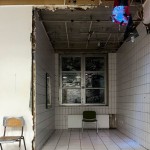
Mark Harwood has always had a talent for making the room feel slightly unstable, as if the furniture might start talking back. On "Two Actors", released via Akti Records, he doesn’t just lean into that quality - he sets it up as the central dramaturgy. This is not an album in the traditional sense so much as a muttering play performed by unreliable narrators, some human, some digital, all vaguely suspicious.
Harwood, best known as the quiet mastermind behind Penultimate Press, has long occupied a peculiar corner of experimental music where collage, musique concrète, spoken fragments and emotional ambushes coexist. Here, he splits himself in two - or perhaps admits that the split has always been there. The title is literal and metaphorical: voices argue, overlap, contradict, derail. One actor speaks, the other interrupts. Sometimes the machine takes a line; sometimes it forgets it entirely.
Musically, "Two Actors" thrives on productive clumsiness. Beats limp rather than march, melodies appear briefly and then seem embarrassed by their own presence. There’s a sense of form beneath the chaos - Harwood is far too composed to be merely messy - but it’s a form that enjoys tripping over its shoelaces. Think of a waltz that’s had one drink too many, or a radio play broadcast from a half-flooded basement.
What makes the album compelling is its emotional ambiguity. It’s funny, but not in a punchline way; funny like realizing too late that you’ve been talking to yourself in public. Tracks flicker between irony and sincerity, often within the same minute. A warped vocal line might sound mocking until it suddenly feels exposed, almost tender. Harwood has a knack for letting vulnerability leak through the cracks of digital processing, like warmth escaping from a poorly insulated room.
There’s also a strange theatrical intimacy at play. Listening to "Two Actors" can feel like eavesdropping on a rehearsal that was never meant to be heard, where the script is constantly rewritten by interference, feedback, and second thoughts. The references - to classical structure, to absurdism, to the ghost of radio art - are there, but they’re worn lightly, with a grin rather than a manifesto.
In the end, "Two Actors" doesn’t resolve its internal dialogue, and that’s precisely the point. It leaves you suspended between laughter and unease, wondering whether the album is poking fun at you, comforting you, or quietly stealing your lines. Harwood remains a master of this unstable theatre: mischievous, oddly humane, and fully aware that sometimes the most honest conversation is the one that never quite makes sense.
Harwood, best known as the quiet mastermind behind Penultimate Press, has long occupied a peculiar corner of experimental music where collage, musique concrète, spoken fragments and emotional ambushes coexist. Here, he splits himself in two - or perhaps admits that the split has always been there. The title is literal and metaphorical: voices argue, overlap, contradict, derail. One actor speaks, the other interrupts. Sometimes the machine takes a line; sometimes it forgets it entirely.
Musically, "Two Actors" thrives on productive clumsiness. Beats limp rather than march, melodies appear briefly and then seem embarrassed by their own presence. There’s a sense of form beneath the chaos - Harwood is far too composed to be merely messy - but it’s a form that enjoys tripping over its shoelaces. Think of a waltz that’s had one drink too many, or a radio play broadcast from a half-flooded basement.
What makes the album compelling is its emotional ambiguity. It’s funny, but not in a punchline way; funny like realizing too late that you’ve been talking to yourself in public. Tracks flicker between irony and sincerity, often within the same minute. A warped vocal line might sound mocking until it suddenly feels exposed, almost tender. Harwood has a knack for letting vulnerability leak through the cracks of digital processing, like warmth escaping from a poorly insulated room.
There’s also a strange theatrical intimacy at play. Listening to "Two Actors" can feel like eavesdropping on a rehearsal that was never meant to be heard, where the script is constantly rewritten by interference, feedback, and second thoughts. The references - to classical structure, to absurdism, to the ghost of radio art - are there, but they’re worn lightly, with a grin rather than a manifesto.
In the end, "Two Actors" doesn’t resolve its internal dialogue, and that’s precisely the point. It leaves you suspended between laughter and unease, wondering whether the album is poking fun at you, comforting you, or quietly stealing your lines. Harwood remains a master of this unstable theatre: mischievous, oddly humane, and fully aware that sometimes the most honest conversation is the one that never quite makes sense.
Cecile Seraud: Psykhé
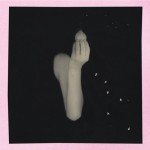
There are albums that knock politely, and others that arrive already sitting next to you on the couch, sharing your silence. "Psykhé" belongs to the second category. It doesn’t ask permission; it exhales, slowly, like someone who has already cried and is now trying to remember how to breathe.
Cécile Seraud has always worked in that fragile zone where music is less about performance and more about presence. Here, the stakes are brutally clear: "Psykhé" is born from grief that isn’t abstract, symbolic, or safely distant. It is grief with names, places, children in the next room, memories still warm. That alone makes this album risky. Sentimentality is always lurking nearby, sharpening its knives. Remarkably, Seraud never lets it take over.
The record unfolds like a private ritual carried out in semi-darkness. Piano lines move cautiously, strings hover rather than soar, electronics whisper instead of asserting themselves. Everything feels measured, as if each sound has been weighed against the question: "does this help, or does this intrude?" Often, the most powerful moments are the ones that barely announce themselves - phrases that seem to stop mid-thought, harmonies that dissolve before they resolve. This is music that understands loss as interruption.
What’s striking is how "Psykhé" avoids turning mourning into monument. There’s no grand arc from despair to redemption, no cinematic swell reassuring us that everything will be fine. Instead, Seraud traces grief as a geography: New Zealand appears not as a postcard, but as a memory with emotional altitude; Barcelona flickers like a half-remembered dream; “Back Home” sounds less like arrival than like standing still and realizing the room has changed.
The few vocal moments feel especially delicate. They don’t function as songs in the traditional sense but as soft correspondence - letters sent across a distance that cannot be crossed. Words matter here, but not more than breath. Silence remains the most eloquent collaborator on the album.
There’s something quietly courageous in how "Psykhé" balances darkness and light without trying to reconcile them. The darkness is allowed to remain opaque; the light doesn’t pretend to explain anything. Seraud seems less interested in healing than in honesty - acknowledging that love, once lost, doesn’t disappear but changes state, becoming memory, sound, vibration.
If there’s humor here, it’s of the microscopic kind: the irony that the most personal grief becomes, somehow, something others can inhabit. You listen expecting catharsis and instead find companionship. No solutions, no closure - just the strange relief of not being alone with difficult feelings.
"Psykhé" doesn’t aim to comfort in the usual sense. It sits with you, quietly, long after the music stops, like a hand resting on your shoulder - not to fix anything, but to remind you that remembering is itself a form of love.
Cécile Seraud has always worked in that fragile zone where music is less about performance and more about presence. Here, the stakes are brutally clear: "Psykhé" is born from grief that isn’t abstract, symbolic, or safely distant. It is grief with names, places, children in the next room, memories still warm. That alone makes this album risky. Sentimentality is always lurking nearby, sharpening its knives. Remarkably, Seraud never lets it take over.
The record unfolds like a private ritual carried out in semi-darkness. Piano lines move cautiously, strings hover rather than soar, electronics whisper instead of asserting themselves. Everything feels measured, as if each sound has been weighed against the question: "does this help, or does this intrude?" Often, the most powerful moments are the ones that barely announce themselves - phrases that seem to stop mid-thought, harmonies that dissolve before they resolve. This is music that understands loss as interruption.
What’s striking is how "Psykhé" avoids turning mourning into monument. There’s no grand arc from despair to redemption, no cinematic swell reassuring us that everything will be fine. Instead, Seraud traces grief as a geography: New Zealand appears not as a postcard, but as a memory with emotional altitude; Barcelona flickers like a half-remembered dream; “Back Home” sounds less like arrival than like standing still and realizing the room has changed.
The few vocal moments feel especially delicate. They don’t function as songs in the traditional sense but as soft correspondence - letters sent across a distance that cannot be crossed. Words matter here, but not more than breath. Silence remains the most eloquent collaborator on the album.
There’s something quietly courageous in how "Psykhé" balances darkness and light without trying to reconcile them. The darkness is allowed to remain opaque; the light doesn’t pretend to explain anything. Seraud seems less interested in healing than in honesty - acknowledging that love, once lost, doesn’t disappear but changes state, becoming memory, sound, vibration.
If there’s humor here, it’s of the microscopic kind: the irony that the most personal grief becomes, somehow, something others can inhabit. You listen expecting catharsis and instead find companionship. No solutions, no closure - just the strange relief of not being alone with difficult feelings.
"Psykhé" doesn’t aim to comfort in the usual sense. It sits with you, quietly, long after the music stops, like a hand resting on your shoulder - not to fix anything, but to remind you that remembering is itself a form of love.
Malo Moray: Embrace
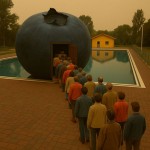
There are albums that are carefully assembled, polished like heirlooms, and then there are albums like "Embrace", which feel less like objects and more like events that accidentally stayed alive. Malo Moray didn’t so much make this record as step into it barefoot, lights on, witnesses present, nerves exposed. The result is not perfection; it’s something better and more dangerous: presence.
Recorded live in Leipzig in front of a small audience fully aware they were mid-birth, "Embrace" is built on a simple but radical constraint: no safety net. No overdubs, no revisions, no “let’s fix it later”. Moray arrives with upright bass, voice, electronics, tapes, objects - and leaves with four long-form pieces that feel like they’ve been wrestled into existence rather than composed. You can hear the risk in the grain of every sound, like breath caught between courage and panic.
Moray has always worked slowly, patiently, shaping albums over years. Here he does the opposite, and you can tell it scared him. That fear is the album’s quiet engine. These pieces don’t rush; they hover. Bass lines stretch like tense ligaments, electronics murmur and scrape, and Moray’s voice moves between spoken confession, half-sung mantra, and something closer to self-interrogation. This is not theatrical vulnerability - it’s the kind that happens when you’re not entirely sure you should be doing what you’re doing, but you do it anyway.
“Over the Mountain Ranges” opens the record like a long climb with no clear summit. Its 16 minutes unfold patiently, circling motifs rather than developing them, as if Moray is testing the ground with each step. “Himiko” is more inward, ritualistic, its textures sparse but charged, while “I Am Here Now” feels like the emotional core: a statement repeated until it stops being a statement and becomes a fact, or maybe a plea. The closing “Vanishing Act” (Lou Reed’s song, reinhabited rather than covered) lands with a strange tenderness, less homage than quiet communion.
What makes "Embrace" compelling isn’t just the concept of live creation - it’s how clearly Moray lets discomfort remain audible. Doubt isn’t edited out; it’s folded into the music’s DNA. Silence is allowed to breathe. Mistakes are not corrected; they’re accepted, sometimes even leaned into. The album seems to suggest that uncertainty isn’t an obstacle to meaning but one of its primary materials.
There’s something almost anti-heroic about this record. No grand statements, no virtuoso posturing, no dramatic climax engineered for applause. Instead, "Embrace" offers the slow reward of listening to someone stay with their own unease long enough for it to transform. It’s an album about letting go of control without pretending that letting go feels good.
In a musical landscape obsessed with optimization - better takes, cleaner sound, sharper concepts - "Embrace" is quietly defiant. It reminds us that art can still be a place where things wobble, where fear coexists with joy, and where the act of showing up matters more than sticking the landing.
Moray invites the listener not to admire, but to join him. No guarantees. No map. Just the cold water, and the decision to step in.
Recorded live in Leipzig in front of a small audience fully aware they were mid-birth, "Embrace" is built on a simple but radical constraint: no safety net. No overdubs, no revisions, no “let’s fix it later”. Moray arrives with upright bass, voice, electronics, tapes, objects - and leaves with four long-form pieces that feel like they’ve been wrestled into existence rather than composed. You can hear the risk in the grain of every sound, like breath caught between courage and panic.
Moray has always worked slowly, patiently, shaping albums over years. Here he does the opposite, and you can tell it scared him. That fear is the album’s quiet engine. These pieces don’t rush; they hover. Bass lines stretch like tense ligaments, electronics murmur and scrape, and Moray’s voice moves between spoken confession, half-sung mantra, and something closer to self-interrogation. This is not theatrical vulnerability - it’s the kind that happens when you’re not entirely sure you should be doing what you’re doing, but you do it anyway.
“Over the Mountain Ranges” opens the record like a long climb with no clear summit. Its 16 minutes unfold patiently, circling motifs rather than developing them, as if Moray is testing the ground with each step. “Himiko” is more inward, ritualistic, its textures sparse but charged, while “I Am Here Now” feels like the emotional core: a statement repeated until it stops being a statement and becomes a fact, or maybe a plea. The closing “Vanishing Act” (Lou Reed’s song, reinhabited rather than covered) lands with a strange tenderness, less homage than quiet communion.
What makes "Embrace" compelling isn’t just the concept of live creation - it’s how clearly Moray lets discomfort remain audible. Doubt isn’t edited out; it’s folded into the music’s DNA. Silence is allowed to breathe. Mistakes are not corrected; they’re accepted, sometimes even leaned into. The album seems to suggest that uncertainty isn’t an obstacle to meaning but one of its primary materials.
There’s something almost anti-heroic about this record. No grand statements, no virtuoso posturing, no dramatic climax engineered for applause. Instead, "Embrace" offers the slow reward of listening to someone stay with their own unease long enough for it to transform. It’s an album about letting go of control without pretending that letting go feels good.
In a musical landscape obsessed with optimization - better takes, cleaner sound, sharper concepts - "Embrace" is quietly defiant. It reminds us that art can still be a place where things wobble, where fear coexists with joy, and where the act of showing up matters more than sticking the landing.
Moray invites the listener not to admire, but to join him. No guarantees. No map. Just the cold water, and the decision to step in.
Christian Marien Quartet: Beyond the Fingertips
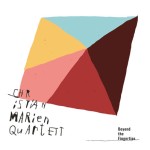
Artist: Christian Marien Quartet (http://www.christianmarien.de/) (@)
Title: Beyond the Fingertips
Format: LP
Label: MarMade
Title: Beyond the Fingertips
Format: LP
Label: MarMade
There is something beautifully cruel about the direct-to-disc process: the red light turns on, time tightens its grip, and whatever happens will happen. No edits, no safety net, no polite undo button. "Beyond the Fingertips" lives exactly there, on that thin wire stretched between intention and accident, where jazz either learns to fly or falls with style.
Christian Marien has always been a drummer with a quiet appetite for risk, and here he curates a quartet that treats danger not as an aesthetic choice but as a working condition. Tobias Delius (tenor saxophone, clarinet), Jasper Stadhouders (guitar), and Antonio Borghini (double bass) are not guests so much as co-conspirators: musicians seasoned enough to know when to push and, more importantly, when not to flinch. Years of shared concerts have fused them into a single organism - four nervous systems, one bloodstream.
The format dictates the music’s behavior. Each LP side is a continuous suite, unfolding like a long exhale you’re not entirely sure you can sustain. Themes surface, dissolve, reappear wearing different clothes. Melodies flirt, retreat, trip over a rhythmic corner, then recover with a grin. Mistakes - if we want to call them that - aren’t patched over; they’re acknowledged, metabolized, turned into momentum. This is jazz that doesn’t polish its fingerprints off the glass.
Marien’s drumming is the album’s gravitational field: alert, elastic, quietly insistent. He doesn’t dominate the conversation; he makes sure it keeps happening. Delius moves between lyricism and abstraction with the ease of someone who knows that clarity and confusion are siblings. Stadhouders’ guitar darts and fractures, sometimes slicing the air, sometimes whispering from the margins. Borghini anchors everything with a bass sound that feels less like a foundation and more like a living terrain - solid, uneven, human.
The title is not poetic decoration. "Beyond the Fingertips" suggests a place where control ends and trust begins. You can hear the moment when the musicians stop "playing" the music and start "following" it, as if the sound itself has taken over navigation. It’s exhilarating, slightly terrifying, and deeply intimate - like standing too close to a truth you didn’t plan to reveal.
This is not a record for passive listening or background comfort. It asks for attention, patience, and a tolerance for imperfection - qualities increasingly rare, and therefore precious. In return, it offers something honest: music as an irreversible act, carved into lacquer and time, reminding us that the most alive moments are often the ones we can’t quite hold onto.
Miss it once, and it’s gone. Which, of course, is the point.
Christian Marien has always been a drummer with a quiet appetite for risk, and here he curates a quartet that treats danger not as an aesthetic choice but as a working condition. Tobias Delius (tenor saxophone, clarinet), Jasper Stadhouders (guitar), and Antonio Borghini (double bass) are not guests so much as co-conspirators: musicians seasoned enough to know when to push and, more importantly, when not to flinch. Years of shared concerts have fused them into a single organism - four nervous systems, one bloodstream.
The format dictates the music’s behavior. Each LP side is a continuous suite, unfolding like a long exhale you’re not entirely sure you can sustain. Themes surface, dissolve, reappear wearing different clothes. Melodies flirt, retreat, trip over a rhythmic corner, then recover with a grin. Mistakes - if we want to call them that - aren’t patched over; they’re acknowledged, metabolized, turned into momentum. This is jazz that doesn’t polish its fingerprints off the glass.
Marien’s drumming is the album’s gravitational field: alert, elastic, quietly insistent. He doesn’t dominate the conversation; he makes sure it keeps happening. Delius moves between lyricism and abstraction with the ease of someone who knows that clarity and confusion are siblings. Stadhouders’ guitar darts and fractures, sometimes slicing the air, sometimes whispering from the margins. Borghini anchors everything with a bass sound that feels less like a foundation and more like a living terrain - solid, uneven, human.
The title is not poetic decoration. "Beyond the Fingertips" suggests a place where control ends and trust begins. You can hear the moment when the musicians stop "playing" the music and start "following" it, as if the sound itself has taken over navigation. It’s exhilarating, slightly terrifying, and deeply intimate - like standing too close to a truth you didn’t plan to reveal.
This is not a record for passive listening or background comfort. It asks for attention, patience, and a tolerance for imperfection - qualities increasingly rare, and therefore precious. In return, it offers something honest: music as an irreversible act, carved into lacquer and time, reminding us that the most alive moments are often the ones we can’t quite hold onto.
Miss it once, and it’s gone. Which, of course, is the point.
Modern Silent Cinema: Flesh Mother (Redux)

Artist: Modern Silent Cinema (@)
Title: Flesh Mother (Redux)
Format: CD & 12" + Download
Label: Bad Channel Records (@)
Rated:


Title: Flesh Mother (Redux)
Format: CD & 12" + Download
Label: Bad Channel Records (@)
Rated:
I just recently received this release from Cullen Gallagher (a transplant from Maine to Brooklyn, New York) who operates under the name of Modern Silent Cinema. MSC's releases go all the way back to 2004 with a varied approach to left field music, ranging from oddball soundtracks to primitive lo-fo avant garde piano and weird indie guitar/electronics albums. 'Flesh Mother' was originally recorded back in 2009 but now comes to light in commercial formats, remixed with a bonus track and remastered by Caleb Mulkerin (of Big Blood). The release date is scheduled for December 29, 2025, and this is one of the few times I've actually gotten a review finished before the release date. 'Flesh Mother (Redux)' is primarily a noise/black metal album with lots of distorted guitar grind and electronic grief. The opening track, "Velvet-Clawed Misfortune Approaches" begins with a wall of loud, heavy distortion with a vague notion of chord/note change. This lasts incessantly up to 3/4 of the way through the nearly 4 minute piece, the last quarter being a wind-down of sorts. Only true noisophiles may be brave enough to continue. The title track is next, a good deal more nuanced in its approach to noise with its distorted sonics and metallic rumblings as a strange rhythm emerges from the shadows. It sounds like what I would imagine to be a dreaming but restless malevolent dragon. "Twisted Passion (Made Her a Mistress of Sin)" has a vaguely shoegaze quality about it with some melodic concession but still primarily noise. "Acrohypothermy" fires guitar through all distortion pedals at once with some sort of swirling echo just to keep things moving. It's a phantasmagoria of noise indulgence until the end. Cullen break out the piano for '"Whittington's Wishes" as psychotic and distorted notes careen in a surreal echo chamber. Back to more heavy guitar-created noise on "Emlorin" but this time there is a melody woven into it like a demonic fanfare. More guitar harshness is the mainstay of "What You Have Left" that I'm sure is ear-splitting and teeth-jarring at a loud volume. "Assuage" takes a sustained, overdriven guitar note into a buzzy, seemingly endless drone with overtones that lasts for 6:25. (Talk about endurance tests...whew!) Finally we get the last track, "Fires That Destroy" which is unlike anything else on the album. Here you actually hear Cullen play his guitar without the heavy distortion (but still with some effects) in something that might resemble a song, or at least the makings of one. It is an odd chord progression with a fair amount of improvisation that might have been the result of on-the-spot creation. For me, what makes Modern Silent Cinema interesting is Cullen's output beyond this album. 'Flesh Mother's' appeal will largely be limited to black metal noise enthusiasts but those interested in a wider variety of avant garde sounds should check out MSC's other releases, and there are quite a few of them. You can purchase the CD of this album from MSC's Bandcamp site, but you'll have to go to the Bad Channel Records label site for the vinyl. By the way, that's the image of Polish silent film femme fatale Pola Negri on the cover.