
Browse by Genre
Industrial Music / Industrial Metal / Aggro Industrial / Electro Metal
Industrial Noise / Power Noise / Harsh Noise
Synth Pop / Electro Pop / Synth-Electronica
Techno / Trance / Goa / Drum'n'Bass / Jungle / Tribal / Trip-Hop
Ambient / Electronica / Ethereal / Dub / Soundscapes / Abstract
Experimental / Avantgarde / Weird & Wired / Glitch / Noise / Field Recording
Dark / Gothic / Wave / New Wave / Dark Wave / Industrial Gothic
New Music / Downtown / Avantgarde Jazz / New Classical / World
Search Reviews
Music Reviews
Craig Padilla & Marvin Allen: Unfolding Skies

Artist: Craig Padilla & Marvin Allen (@)
Title: Unfolding Skies
Format: CD + Download
Label: Spotted Peccary Music (@)
Rated:

Title: Unfolding Skies
Format: CD + Download
Label: Spotted Peccary Music (@)
Rated:
'Unfolding Skies' is the fourth collaboration between Craig Padilla (keyboard, synths, electronic, programming) and Marvin Allen (guitars) with a much more intense electronic post-rock sound than their previous efforts. Could this even be categorized as "ambient"? Well, sort of, but not fully. Most might agree that Ambient music is a genre of music that emphasizes tone and atmosphere over traditional musical structure or rhythm. That's the big question on 'Unfolding Skies.' There is a good deal of somewhat traditional musical structure and rhythm on it that has absolutely nothing to do with the Eno-esque wallpaper sound, minimal, repetitive structures that form the basis of ambient music. This is much more like conceptual progressive semi-electronic albums put out by Mike Oldfield, Enigma, and Steve Wilson. In fact, if you married latter-day Tangerine Dream with Pink Floyd (or at least borrowed Dave Gilmour) you might get something close to this. (Marvin Allen has the guitar chops Edgar Froese always dreamed of having.)
Comparisons to prog-rock are inevitable but it's more the Floydian style of bluesy, flowing cosmic grooves rather than the Yes/Genesis/Gentle Giant/King Crimson adventurous time changes that often show up in their songs. Although there are 7 individual pieces on 'Unfolding Skies,' in no way could they be categorized as "songs". There are no lyrics, no verse/chorus/verse structures, and sometimes, no discernible melodic theme. Does that make it ambient, or do we just call it cosmic space music? In a sense, it really doesn't matter. What really matters is how it sounds. Yeah, 'Unfolding Skies' is an album you can kick back with, light up a joint, turn on the color organ (or whatever ambient lighting you prefer) and space out to. A good deal of the music was improvised, especially on Mr. Allen's part, but that's what makes it interesting, eschewing static constructs and floating up into the stratosphere. In point of fact, that's what will probably draw listeners back again and again to the album. It is not structureless though, as numerous parts are definitely, but subtly structured. If there is one complaint to be leveled about 'Unfolding Skies,' it is a lack of memorable musical themes. One or two might have been nice. (Even Tangerine Dream's most rock-like album, 'Force Majeure' had some.) This is an album that is meant to be experienced as a whole, not selected tracks. People will be talking about this one for a long, long time.
Comparisons to prog-rock are inevitable but it's more the Floydian style of bluesy, flowing cosmic grooves rather than the Yes/Genesis/Gentle Giant/King Crimson adventurous time changes that often show up in their songs. Although there are 7 individual pieces on 'Unfolding Skies,' in no way could they be categorized as "songs". There are no lyrics, no verse/chorus/verse structures, and sometimes, no discernible melodic theme. Does that make it ambient, or do we just call it cosmic space music? In a sense, it really doesn't matter. What really matters is how it sounds. Yeah, 'Unfolding Skies' is an album you can kick back with, light up a joint, turn on the color organ (or whatever ambient lighting you prefer) and space out to. A good deal of the music was improvised, especially on Mr. Allen's part, but that's what makes it interesting, eschewing static constructs and floating up into the stratosphere. In point of fact, that's what will probably draw listeners back again and again to the album. It is not structureless though, as numerous parts are definitely, but subtly structured. If there is one complaint to be leveled about 'Unfolding Skies,' it is a lack of memorable musical themes. One or two might have been nice. (Even Tangerine Dream's most rock-like album, 'Force Majeure' had some.) This is an album that is meant to be experienced as a whole, not selected tracks. People will be talking about this one for a long, long time.
Machinefabriek: Spelonk
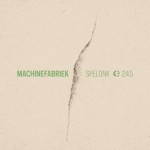
There is a particular kind of honesty in artists who admit they occasionally need to escape their own commissions. Not dramatically, not with some tortured manifesto, just quietly stepping aside to make something that answers to no one. With "Spelonk", Rutger Zuydervelt, better known as Machinefabriek, does exactly that. No brief, no external narrative, no polite obligation to synchronize with images or choreography. Just sound, left alone to see what it becomes.
Released on Crónica, the album consists of three long pieces, austerely titled "I, II, III". Which is either refreshingly minimal or mildly passive-aggressive, depending on your tolerance for conceptual restraint. Either way, it sets the tone: this is not a record interested in guiding you. It barely acknowledges your presence.
Zuydervelt’s process here is deceptively simple. “Hardware jams”, he calls them. Oscillators, pedals, small electronic devices, hands moving, decisions made in real time. But the real work happens afterward, in layering and recombination, where fragments of improvisation are folded into each other until something coherent, or at least compellingly unstable, emerges. The emphasis on listening as a phase of composition is crucial. These are not performances captured; they are environments discovered.
The title "Spelonk" translates roughly to “cave”, and the metaphor holds. Not in the cliché sense of darkness and echo, but as a space that reshapes perception. Inside a cave, distance behaves strangely, sound reflects unpredictably, and your sense of orientation quietly dissolves. That is more or less what these pieces do.
“Spelonk I” opens the record with a relatively contained exploration. Textures flicker in and out, like light filtering through an unseen opening. There is movement, but it feels cautious, exploratory. The piece seems to be testing the acoustics of its own world, sending out signals and waiting for their return.
Then comes “Spelonk II”, which expands everything. Duration stretches, layers accumulate, and the sound field thickens into something closer to a living organism than a composition. Low frequencies pulse beneath granular surfaces, while higher elements drift like debris in slow motion. It’s immersive without being overtly dramatic, which is harder to achieve than it sounds. Many artists equate length with significance. Zuydervelt simply lets time pass and trusts that something will reveal itself within it.
By “Spelonk III”, the album reaches a kind of equilibrium. Not resolution, exactly, but a steady state where the elements coexist without needing to assert dominance. The piece breathes. It contracts and expands subtly, maintaining a tension that never quite resolves into narrative. If the previous track was exploration, this feels like habitation.
Zuydervelt has been refining this kind of practice for years, moving fluidly between commissioned work and more personal releases. His discography under the Machinefabriek name is vast, often orbiting themes of memory, texture, and spatial perception. What distinguishes "Spelonk" within that body of work is its immediacy. There is less mediation here, less conceptual framing. The sounds feel closer to their source, even when they become abstract.
That said, “immediacy” does not mean simplicity. The album’s strength lies in its balance between control and unpredictability. Each layer is carefully placed, yet the overall effect retains a sense of discovery. You can hear the process thinking, adjusting, reacting.
There is also a quiet refusal embedded in the record. In an era where music is often optimized for context - film, playlists, background consumption - "Spelonk" resists utility. It does not accompany anything. It does not explain itself. It exists, patiently, asking only for attention.
Which is, admittedly, a demanding request.
But if you grant it, the reward is a set of spaces that feel strangely alive: alien, as Zuydervelt suggests, but not hostile. Just unfamiliar enough to remind you that listening, when taken seriously, is still a form of exploration.
Released on Crónica, the album consists of three long pieces, austerely titled "I, II, III". Which is either refreshingly minimal or mildly passive-aggressive, depending on your tolerance for conceptual restraint. Either way, it sets the tone: this is not a record interested in guiding you. It barely acknowledges your presence.
Zuydervelt’s process here is deceptively simple. “Hardware jams”, he calls them. Oscillators, pedals, small electronic devices, hands moving, decisions made in real time. But the real work happens afterward, in layering and recombination, where fragments of improvisation are folded into each other until something coherent, or at least compellingly unstable, emerges. The emphasis on listening as a phase of composition is crucial. These are not performances captured; they are environments discovered.
The title "Spelonk" translates roughly to “cave”, and the metaphor holds. Not in the cliché sense of darkness and echo, but as a space that reshapes perception. Inside a cave, distance behaves strangely, sound reflects unpredictably, and your sense of orientation quietly dissolves. That is more or less what these pieces do.
“Spelonk I” opens the record with a relatively contained exploration. Textures flicker in and out, like light filtering through an unseen opening. There is movement, but it feels cautious, exploratory. The piece seems to be testing the acoustics of its own world, sending out signals and waiting for their return.
Then comes “Spelonk II”, which expands everything. Duration stretches, layers accumulate, and the sound field thickens into something closer to a living organism than a composition. Low frequencies pulse beneath granular surfaces, while higher elements drift like debris in slow motion. It’s immersive without being overtly dramatic, which is harder to achieve than it sounds. Many artists equate length with significance. Zuydervelt simply lets time pass and trusts that something will reveal itself within it.
By “Spelonk III”, the album reaches a kind of equilibrium. Not resolution, exactly, but a steady state where the elements coexist without needing to assert dominance. The piece breathes. It contracts and expands subtly, maintaining a tension that never quite resolves into narrative. If the previous track was exploration, this feels like habitation.
Zuydervelt has been refining this kind of practice for years, moving fluidly between commissioned work and more personal releases. His discography under the Machinefabriek name is vast, often orbiting themes of memory, texture, and spatial perception. What distinguishes "Spelonk" within that body of work is its immediacy. There is less mediation here, less conceptual framing. The sounds feel closer to their source, even when they become abstract.
That said, “immediacy” does not mean simplicity. The album’s strength lies in its balance between control and unpredictability. Each layer is carefully placed, yet the overall effect retains a sense of discovery. You can hear the process thinking, adjusting, reacting.
There is also a quiet refusal embedded in the record. In an era where music is often optimized for context - film, playlists, background consumption - "Spelonk" resists utility. It does not accompany anything. It does not explain itself. It exists, patiently, asking only for attention.
Which is, admittedly, a demanding request.
But if you grant it, the reward is a set of spaces that feel strangely alive: alien, as Zuydervelt suggests, but not hostile. Just unfamiliar enough to remind you that listening, when taken seriously, is still a form of exploration.
Greg Stasiw: Guesswork
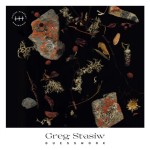
Artist: Greg Stasiw (@)
Title: Guesswork
Format: 12" + Download
Label: Hidden Harmony Recordings (@)
Rated:

Title: Guesswork
Format: 12" + Download
Label: Hidden Harmony Recordings (@)
Rated:
Some artists spend years refining a signature style. Others wander, collect fragments, hesitate, double back, and eventually assemble something that feels less like a statement and more like a map of indecision. Predictably, that second approach tends to be far more interesting.
With "Guesswork", Greg Stasiw turns uncertainty into method. The title is not ironic, nor self-deprecating in the usual performative way. It’s a working principle. The album, released on Hidden Harmony Recordings, gathers around four years of sonic experiments into a sequence that feels at once carefully arranged and quietly provisional, as if each track were still considering whether it wants to exist.
Stasiw’s background reads like a polite refusal to specialize: anthropology, animation, illustration, a life spent moving between cities from New York to Tokyo to Bratislava. His musical formation is equally scattered, beginning with ambient tapes and Windows 98 experiments before drifting through piano lessons, choirs, taiko, metal, and eventually software-based composition. The result is not eclecticism for its own sake, but a kind of porous sensibility. Sounds are not fixed objects here; they are events, spatial suggestions, small provocations.
"Guesswork" originated from an unrealized collaboration with visual artist Philippe Shewchenko, whose imagery nonetheless left a residue strong enough to shape the album’s direction. You can hear that visual impulse throughout: these tracks behave less like songs and more like environments waiting to be entered.
The opening piece, “Signature”, sets the tone with low, patient drones that feel like coordinates rather than declarations. From there, the album drifts into “Field”, where light, buoyant textures suggest a kind of pastoral scene relocated to an unfamiliar planet. It’s calm, but not entirely safe. Something in the timbre keeps the listener slightly off-balance, as if the air itself had been subtly altered.
Throughout the record, Stasiw demonstrates a precise control over sonic space. Notes are placed with restraint, often suspended in near-silence, allowing the listener’s perception to do part of the compositional work. This is not minimalism in the austere, doctrinal sense, but a more intuitive form of reduction. The music removes what it doesn’t urgently need, then waits to see what remains.
“Plant” introduces a fragile piano figure that feels almost too delicate to touch, while “Humidity” expands into a denser ecosystem of percussive echoes and field-like recordings, hinting at unseen lifeforms. There is a recurring sense that each track is a microclimate, governed by its own internal logic.
The shorter interludes - “Distance”, “Arizona”, “Audience” - function like transitional corridors between these environments. Brief, slightly enigmatic, they prevent the album from settling into predictability. Just when you think you’ve understood the terrain, the ground shifts again.
What’s striking is the album’s balance between clarity and ambiguity. The sound design is immaculate: tones are clean, textures finely etched, spatial depth carefully calibrated. And yet the emotional content remains elusive. There is calm here, certainly, but also a faint melancholy, a sense of searching without the promise of resolution.
Stasiw cites influences that might raise an eyebrow if handled less carefully: the environmental serenity of Hiroshi Yoshimura, the weightless lyricism of Harold Budd, the experimental visual sensibility of Norman McLaren, the cosmic drift of Pauline Anna Strom. Fortunately, "Guesswork" avoids the trap of imitation. These references are absorbed rather than displayed, contributing to a soundworld that feels coherent without being easily classifiable.
The longer pieces, such as “Prow” and “Adobe”, allow this approach to fully unfold. Layers accumulate slowly, not in dramatic crescendos but in subtle shifts of density and color. Time stretches. Attention narrows. You begin to notice small details you would normally ignore, which is probably the point.
If there is a quiet irony at the heart of "Guesswork", it lies in how deliberate it all sounds. This is not the work of someone stumbling blindly through possibilities. It is the work of someone who understands that uncertainty, when handled with care, can become a compositional tool. Trial and error, yes. But curated, shaped, and ultimately trusted.
In a musical landscape that often demands clear identities and immediate impact, Stasiw offers something less definitive and more patient: a series of sonic spaces where confusion and clarity coexist without needing to resolve their differences.
Not a bad outcome for guesswork.
With "Guesswork", Greg Stasiw turns uncertainty into method. The title is not ironic, nor self-deprecating in the usual performative way. It’s a working principle. The album, released on Hidden Harmony Recordings, gathers around four years of sonic experiments into a sequence that feels at once carefully arranged and quietly provisional, as if each track were still considering whether it wants to exist.
Stasiw’s background reads like a polite refusal to specialize: anthropology, animation, illustration, a life spent moving between cities from New York to Tokyo to Bratislava. His musical formation is equally scattered, beginning with ambient tapes and Windows 98 experiments before drifting through piano lessons, choirs, taiko, metal, and eventually software-based composition. The result is not eclecticism for its own sake, but a kind of porous sensibility. Sounds are not fixed objects here; they are events, spatial suggestions, small provocations.
"Guesswork" originated from an unrealized collaboration with visual artist Philippe Shewchenko, whose imagery nonetheless left a residue strong enough to shape the album’s direction. You can hear that visual impulse throughout: these tracks behave less like songs and more like environments waiting to be entered.
The opening piece, “Signature”, sets the tone with low, patient drones that feel like coordinates rather than declarations. From there, the album drifts into “Field”, where light, buoyant textures suggest a kind of pastoral scene relocated to an unfamiliar planet. It’s calm, but not entirely safe. Something in the timbre keeps the listener slightly off-balance, as if the air itself had been subtly altered.
Throughout the record, Stasiw demonstrates a precise control over sonic space. Notes are placed with restraint, often suspended in near-silence, allowing the listener’s perception to do part of the compositional work. This is not minimalism in the austere, doctrinal sense, but a more intuitive form of reduction. The music removes what it doesn’t urgently need, then waits to see what remains.
“Plant” introduces a fragile piano figure that feels almost too delicate to touch, while “Humidity” expands into a denser ecosystem of percussive echoes and field-like recordings, hinting at unseen lifeforms. There is a recurring sense that each track is a microclimate, governed by its own internal logic.
The shorter interludes - “Distance”, “Arizona”, “Audience” - function like transitional corridors between these environments. Brief, slightly enigmatic, they prevent the album from settling into predictability. Just when you think you’ve understood the terrain, the ground shifts again.
What’s striking is the album’s balance between clarity and ambiguity. The sound design is immaculate: tones are clean, textures finely etched, spatial depth carefully calibrated. And yet the emotional content remains elusive. There is calm here, certainly, but also a faint melancholy, a sense of searching without the promise of resolution.
Stasiw cites influences that might raise an eyebrow if handled less carefully: the environmental serenity of Hiroshi Yoshimura, the weightless lyricism of Harold Budd, the experimental visual sensibility of Norman McLaren, the cosmic drift of Pauline Anna Strom. Fortunately, "Guesswork" avoids the trap of imitation. These references are absorbed rather than displayed, contributing to a soundworld that feels coherent without being easily classifiable.
The longer pieces, such as “Prow” and “Adobe”, allow this approach to fully unfold. Layers accumulate slowly, not in dramatic crescendos but in subtle shifts of density and color. Time stretches. Attention narrows. You begin to notice small details you would normally ignore, which is probably the point.
If there is a quiet irony at the heart of "Guesswork", it lies in how deliberate it all sounds. This is not the work of someone stumbling blindly through possibilities. It is the work of someone who understands that uncertainty, when handled with care, can become a compositional tool. Trial and error, yes. But curated, shaped, and ultimately trusted.
In a musical landscape that often demands clear identities and immediate impact, Stasiw offers something less definitive and more patient: a series of sonic spaces where confusion and clarity coexist without needing to resolve their differences.
Not a bad outcome for guesswork.
Stepmother: Bring Me Flowers and Tell Me You Love Me

Artist: Stepmother (@)
Title: Bring Me Flowers and Tell Me You Love Me
Format: CD & 12" + Download
Label: Megaphone/Knock'em Dead Records (@)
Rated:
Title: Bring Me Flowers and Tell Me You Love Me
Format: CD & 12" + Download
Label: Megaphone/Knock'em Dead Records (@)
Rated:
Some bands reunite because nostalgia pays the bills. Others reappear because an unfinished conversation refuses to stay quiet. Stepmother clearly belongs to the second category, which is both admirable and slightly dangerous. Conversations left open for ten years tend to accumulate strange ideas in the meantime.
"Bring Me Flowers and Tell Me You Love Me", released via Megaphone Records and Knock’em Dead Records, feels exactly like that: a backlog of half-formed thoughts, theatrical impulses, and stylistic detours finally allowed to collide in one place. The original trio - Lukas Simonis, Jeroen Visser, and Bill Gilonis - already carried decades of post-punk and experimental baggage from projects orbiting bands like The Work and the broader European underground. But the real catalyst here is the arrival of Tisa World, whose voice doesn’t simply complete the picture. It redraws it entirely.
Stepmother has always operated in that slightly suspicious zone where genres are treated as optional accessories. On their debut, the band flirted with post-punk, prog, and absurdist pop. This time, the palette expands further: jagged guitars, off-kilter electronics, ghostly horns, and rhythms that seem to change direction out of mild impatience. Somewhere in the background, the mischievous spirit of Bonzo Dog Doo-Dah Band still lingers, reminding everyone not to take coherence too seriously.
The album opens with “Drunk”, which wastes no time establishing a tone of controlled instability. The structure feels intentionally precarious, as if it might collapse but never quite does. “Great Trading Days II” follows with a sharper edge, its rhythmic backbone pushing forward while the arrangement keeps slipping sideways.
Then comes “Goblin Market”, a brief, almost theatrical vignette that hints at the band’s fondness for surreal storytelling. It’s one of several moments where the record behaves less like an album and more like a sequence of small stage scenes. Characters appear, gestures are made, and before you can fully understand them, the curtain moves again.
At the center of all this, Tisa World’s voice acts as both guide and disruptor. She doesn’t simply sing over the music; she inhabits it, bending phrasing and tone in ways that feel simultaneously precise and unpredictable. On “Insomnia”, her delivery stretches the track into a tense, nocturnal space, while “Well to Die In” - featuring cello by Nina Hitz - introduces a darker, almost fragile atmosphere.
The band’s collective nature remains intact. This is not a singer-fronted project in the traditional sense. Instead, voices, instruments, and textures circulate roles freely. “I Am a Gambler” exemplifies this dynamic: a restless piece where narrative fragments, rhythmic shifts, and instrumental interplay refuse to settle into a single hierarchy.
Shorter tracks like “Bevredig Mij”, “Shadow”, and “Gaslighting” function as strange interjections, almost like marginal notes scribbled in the album’s margins. They interrupt the flow just enough to prevent any sense of linear progression. If you were hoping for a tidy arc, this record politely declines.
There is, however, a coherence beneath the apparent chaos. It lies in the band’s shared sensibility: a taste for the slightly absurd, the theatrically skewed, the emotionally ambiguous. Even when the music veers into playful territory, there’s an undercurrent of tension, a sense that something slightly off is being revealed.
The production reinforces this. Nothing feels overly polished. Edges remain rough, textures collide rather than blend seamlessly, and the overall sound retains a kind of live-wire immediacy. It’s less about perfection and more about presence.
What makes "Bring Me Flowers and Tell Me You Love Me" work is precisely its refusal to behave like a conventional “comeback” album. It doesn’t summarize the band’s past, nor does it attempt to modernize it for contemporary expectations. Instead, it continues the conversation as if no time had passed, while quietly acknowledging that everything has changed.
Which is, admittedly, a complicated way of making music.
But Stepmother seems comfortable with complications. And in a landscape increasingly optimized for clarity and efficiency, their tangled, theatrical, slightly unhinged approach feels oddly refreshing.
"Bring Me Flowers and Tell Me You Love Me", released via Megaphone Records and Knock’em Dead Records, feels exactly like that: a backlog of half-formed thoughts, theatrical impulses, and stylistic detours finally allowed to collide in one place. The original trio - Lukas Simonis, Jeroen Visser, and Bill Gilonis - already carried decades of post-punk and experimental baggage from projects orbiting bands like The Work and the broader European underground. But the real catalyst here is the arrival of Tisa World, whose voice doesn’t simply complete the picture. It redraws it entirely.
Stepmother has always operated in that slightly suspicious zone where genres are treated as optional accessories. On their debut, the band flirted with post-punk, prog, and absurdist pop. This time, the palette expands further: jagged guitars, off-kilter electronics, ghostly horns, and rhythms that seem to change direction out of mild impatience. Somewhere in the background, the mischievous spirit of Bonzo Dog Doo-Dah Band still lingers, reminding everyone not to take coherence too seriously.
The album opens with “Drunk”, which wastes no time establishing a tone of controlled instability. The structure feels intentionally precarious, as if it might collapse but never quite does. “Great Trading Days II” follows with a sharper edge, its rhythmic backbone pushing forward while the arrangement keeps slipping sideways.
Then comes “Goblin Market”, a brief, almost theatrical vignette that hints at the band’s fondness for surreal storytelling. It’s one of several moments where the record behaves less like an album and more like a sequence of small stage scenes. Characters appear, gestures are made, and before you can fully understand them, the curtain moves again.
At the center of all this, Tisa World’s voice acts as both guide and disruptor. She doesn’t simply sing over the music; she inhabits it, bending phrasing and tone in ways that feel simultaneously precise and unpredictable. On “Insomnia”, her delivery stretches the track into a tense, nocturnal space, while “Well to Die In” - featuring cello by Nina Hitz - introduces a darker, almost fragile atmosphere.
The band’s collective nature remains intact. This is not a singer-fronted project in the traditional sense. Instead, voices, instruments, and textures circulate roles freely. “I Am a Gambler” exemplifies this dynamic: a restless piece where narrative fragments, rhythmic shifts, and instrumental interplay refuse to settle into a single hierarchy.
Shorter tracks like “Bevredig Mij”, “Shadow”, and “Gaslighting” function as strange interjections, almost like marginal notes scribbled in the album’s margins. They interrupt the flow just enough to prevent any sense of linear progression. If you were hoping for a tidy arc, this record politely declines.
There is, however, a coherence beneath the apparent chaos. It lies in the band’s shared sensibility: a taste for the slightly absurd, the theatrically skewed, the emotionally ambiguous. Even when the music veers into playful territory, there’s an undercurrent of tension, a sense that something slightly off is being revealed.
The production reinforces this. Nothing feels overly polished. Edges remain rough, textures collide rather than blend seamlessly, and the overall sound retains a kind of live-wire immediacy. It’s less about perfection and more about presence.
What makes "Bring Me Flowers and Tell Me You Love Me" work is precisely its refusal to behave like a conventional “comeback” album. It doesn’t summarize the band’s past, nor does it attempt to modernize it for contemporary expectations. Instead, it continues the conversation as if no time had passed, while quietly acknowledging that everything has changed.
Which is, admittedly, a complicated way of making music.
But Stepmother seems comfortable with complications. And in a landscape increasingly optimized for clarity and efficiency, their tangled, theatrical, slightly unhinged approach feels oddly refreshing.
XII Sound: Tube V

Artist: XII Sound
Title: Tube V
Format: Download Only (MP3 + Lossless)
Label: Driftworks/Audiobulb (@)
Rated:
Title: Tube V
Format: Download Only (MP3 + Lossless)
Label: Driftworks/Audiobulb (@)
Rated:
Public transport is rarely described as a site of intimacy. More often it’s a shared inconvenience, a moving container of mild irritation and suppressed eye contact. Yet for Alice DeVille, working under the name XII Sound, the London Underground becomes something stranger: a nervous system, a memory archive, and, inconveniently, a source of anxiety.
"Tube V", released as part of the SITE series by Driftworks and Audiobulb, is built from that contradiction. Fear and familiarity occupy the same acoustic space, and instead of resolving the tension, DeVille leans into it. The result is not quite a document, not quite a composition. More like a set of controlled exposures, where the artist repeatedly enters the environment that unsettles her and listens until it begins to change shape.
DeVille’s background as an opera singer and flautist is not incidental here. You can hear it in the way she treats sound as something physical, embodied, almost architectural. But instead of projecting into grand halls, her voice folds itself into tunnels, compressing, echoing, blending with mechanical noise. At times, she quite literally duets with the infrastructure. Which sounds poetic until you realize the infrastructure is a train braking at high frequency.
The opening sequence - “Tube I” through “Tube IV” - functions like a gradual descent. Snippets of announcements, metallic rhythms, fragments of conversation, and processed environmental sounds begin to overlap. DeVille introduces natural elements—birdsong, water, subtle field textures—not as contrast but as camouflage. The boundaries blur. Is that a train or a breath? A rail screech or a manipulated voice? The uncertainty is deliberate, and slightly disorienting.
By the time we reach “Tube V”, the album’s conceptual core becomes clearer. The space is no longer purely external. The tube has been internalized, transformed into a kind of resonant chamber where memory, panic, and nostalgia circulate. The childhood recollection of falling asleep to train sounds coexists with the adult experience of claustrophobia. Comfort and dread share the same frequency band.
The closing piece, “Tube I–V”, gathers these fragments into a longer form, less a summary than a reconfiguration. Motifs reappear, textures overlap more densely, and the listening experience becomes almost spatial. You don’t just hear the work; you seem to move through it, as if the tunnels had been reassembled inside your head.
Technically, the album sits somewhere between microsound, ambient composition, and electroacoustic collage. But labels feel slightly inadequate here. What matters more is the method: recording, sampling, reshaping, and recontextualizing everyday sounds until they reveal hidden emotional contours. DeVille’s use of tools like Ableton’s Simpler is not about virtuosity but about transformation. The mundane becomes unstable, then strangely expressive.
There’s also an undercurrent of ecological thinking running through the work. By blending natural and industrial sounds so thoroughly, DeVille resists the easy binary between “organic” and “artificial”. The city is not separate from nature; it is another ecosystem, just louder and less forgiving. "Tube V" suggests that reconnection might not come from escaping these environments, but from listening to them more carefully. Which is a slightly uncomfortable proposition, given how most people experience rush hour.
What prevents the album from becoming a purely conceptual exercise is its emotional honesty. The fear is not aestheticized into something neat. It lingers, unresolved. But alongside it, there is curiosity, even tenderness. The tube is not only a site of panic; it is also a place of memory, of rhythm, of accidental music.
In the end, "Tube V" feels like a negotiation. Between body and architecture, between control and overwhelm, between the human voice and the mechanical systems that surround it.
Not the most relaxing commute you’ll ever take. But certainly one of the more revealing.
"Tube V", released as part of the SITE series by Driftworks and Audiobulb, is built from that contradiction. Fear and familiarity occupy the same acoustic space, and instead of resolving the tension, DeVille leans into it. The result is not quite a document, not quite a composition. More like a set of controlled exposures, where the artist repeatedly enters the environment that unsettles her and listens until it begins to change shape.
DeVille’s background as an opera singer and flautist is not incidental here. You can hear it in the way she treats sound as something physical, embodied, almost architectural. But instead of projecting into grand halls, her voice folds itself into tunnels, compressing, echoing, blending with mechanical noise. At times, she quite literally duets with the infrastructure. Which sounds poetic until you realize the infrastructure is a train braking at high frequency.
The opening sequence - “Tube I” through “Tube IV” - functions like a gradual descent. Snippets of announcements, metallic rhythms, fragments of conversation, and processed environmental sounds begin to overlap. DeVille introduces natural elements—birdsong, water, subtle field textures—not as contrast but as camouflage. The boundaries blur. Is that a train or a breath? A rail screech or a manipulated voice? The uncertainty is deliberate, and slightly disorienting.
By the time we reach “Tube V”, the album’s conceptual core becomes clearer. The space is no longer purely external. The tube has been internalized, transformed into a kind of resonant chamber where memory, panic, and nostalgia circulate. The childhood recollection of falling asleep to train sounds coexists with the adult experience of claustrophobia. Comfort and dread share the same frequency band.
The closing piece, “Tube I–V”, gathers these fragments into a longer form, less a summary than a reconfiguration. Motifs reappear, textures overlap more densely, and the listening experience becomes almost spatial. You don’t just hear the work; you seem to move through it, as if the tunnels had been reassembled inside your head.
Technically, the album sits somewhere between microsound, ambient composition, and electroacoustic collage. But labels feel slightly inadequate here. What matters more is the method: recording, sampling, reshaping, and recontextualizing everyday sounds until they reveal hidden emotional contours. DeVille’s use of tools like Ableton’s Simpler is not about virtuosity but about transformation. The mundane becomes unstable, then strangely expressive.
There’s also an undercurrent of ecological thinking running through the work. By blending natural and industrial sounds so thoroughly, DeVille resists the easy binary between “organic” and “artificial”. The city is not separate from nature; it is another ecosystem, just louder and less forgiving. "Tube V" suggests that reconnection might not come from escaping these environments, but from listening to them more carefully. Which is a slightly uncomfortable proposition, given how most people experience rush hour.
What prevents the album from becoming a purely conceptual exercise is its emotional honesty. The fear is not aestheticized into something neat. It lingers, unresolved. But alongside it, there is curiosity, even tenderness. The tube is not only a site of panic; it is also a place of memory, of rhythm, of accidental music.
In the end, "Tube V" feels like a negotiation. Between body and architecture, between control and overwhelm, between the human voice and the mechanical systems that surround it.
Not the most relaxing commute you’ll ever take. But certainly one of the more revealing.