
Browse by Genre
Industrial Music / Industrial Metal / Aggro Industrial / Electro Metal
Industrial Noise / Power Noise / Harsh Noise
Synth Pop / Electro Pop / Synth-Electronica
Techno / Trance / Goa / Drum'n'Bass / Jungle / Tribal / Trip-Hop
Ambient / Electronica / Ethereal / Dub / Soundscapes / Abstract
Experimental / Avantgarde / Weird & Wired / Glitch / Noise / Field Recording
Dark / Gothic / Wave / New Wave / Dark Wave / Industrial Gothic
New Music / Downtown / Avantgarde Jazz / New Classical / World
Search Reviews
Music Reviews
Elizabeth Davis: Flowers

There are songs that refuse to die. They get covered, translated, simplified, turned into background nostalgia for documentaries about a past everyone claims to understand. And then someone comes along, takes the original apart like a broken watch, and suddenly the mechanism starts ticking again, louder and slightly unsettling.
With "Flowers", Elizabeth Davis does exactly that to Pete Seeger’s “Where Have All the Flowers Gone”. Not a cover, not a tribute. More like a forensic investigation conducted with scissors, tape loops, and a mild distrust of linear history.
Released by South of North, the EP emerges from a residency at Sternhagen Gut, a rural retreat run by Gudrun Gut and Thomas Fehlmann. You might imagine quiet fields, long walks, maybe some polite reflection. Instead, Davis uses that isolation to dismantle a protest song loaded with decades of political and emotional residue. Apparently, the countryside is excellent for controlled sonic disassembly.
Davis’ background helps explain the method. Before operating under her own name and the alias Wilted Woman, she moved through free jazz, punk, and experimental electronics, developing a practice that balances algorithmic processes with tactile, almost fragile sound design. Her now-concluded radio show "Deep Puddle" already hinted at this tendency: narration, collage, fragmentation. "Flowers" feels like a natural extension, only more focused, more precise in its quiet disruptions.
Each of the six tracks starts from Seeger’s melody and lyrical structure, then proceeds to gently sabotage it.
“All in Uniform” opens with a sense of recognition that quickly dissolves. Familiar melodic contours flicker beneath layers of vocal loops and digital residue, like a memory trying to stabilize but failing. The original song’s anti-war sentiment is still there, but it no longer speaks in clear slogans. Instead, it murmurs, hesitates, fragments.
“Wo sind sie geblieben” shifts into a linguistic and cultural echo chamber. German phrases intersect with processed vocal textures, reminding you that translation is never neutral. Meaning slips. Words migrate. History refuses to sit still.
Across the EP, Davis employs cut-up techniques reminiscent of William S. Burroughs and Brion Gysin, slicing and reassembling lyrics into new constellations. But where those methods often lean toward chaos, Davis maintains a curious balance. There is structure here, even melody. Just enough to lure you in before the ground shifts slightly under your feet.
“Ever Learn” and “Young Ones” flirt with something almost like songcraft. Hooks appear, rhythms stabilize, and for a moment you think you’ve found a center. Then the textures begin to glitch, voices multiply, and the composition gently reminds you that repetition is not the same as understanding. History repeats, yes. But it also mutates.
On “Long Time Passes”, time itself becomes elastic. The pacing stretches, the sonic elements drift apart, and the familiar refrain dissolves into a kind of temporal fog. It’s less a reinterpretation than a meditation on duration: how long does it take for meaning to erode? Apparently not that long.
By the closing track, “Gone”, the source material feels both distant and eerily present. The melody has been thinned out, almost ghost-like, while the surrounding textures hum with quiet tension. It’s as if the song has been reduced to its emotional residue, stripped of narrative clarity but not of impact.
What makes "Flowers" compelling is not just its conceptual premise but its restraint. Davis resists the temptation to overwhelm. The sound design is detailed yet spacious, the compositions carefully paced. Even in its more abstract moments, the EP retains a sense of intimacy, as if these transformations were happening in a small room rather than an academic laboratory.
The influence of her conversations with Gudrun Gut is subtly audible here: a dialogue between experimentation and accessibility, between avant-garde instincts and the gravitational pull of melody. The result is a work that never fully settles into either territory, which is precisely why it remains engaging.
At its core, "Flowers" asks an uncomfortable question: what happens when a protest song becomes historical artifact? Do we preserve it, repeat it, or dismantle it to see if it still breathes?
Davis chooses dismantling. Carefully, almost tenderly.
And in the process, she reveals that beneath the familiar refrain lies something less stable, more fragile, and perhaps more honest than we remembered.
With "Flowers", Elizabeth Davis does exactly that to Pete Seeger’s “Where Have All the Flowers Gone”. Not a cover, not a tribute. More like a forensic investigation conducted with scissors, tape loops, and a mild distrust of linear history.
Released by South of North, the EP emerges from a residency at Sternhagen Gut, a rural retreat run by Gudrun Gut and Thomas Fehlmann. You might imagine quiet fields, long walks, maybe some polite reflection. Instead, Davis uses that isolation to dismantle a protest song loaded with decades of political and emotional residue. Apparently, the countryside is excellent for controlled sonic disassembly.
Davis’ background helps explain the method. Before operating under her own name and the alias Wilted Woman, she moved through free jazz, punk, and experimental electronics, developing a practice that balances algorithmic processes with tactile, almost fragile sound design. Her now-concluded radio show "Deep Puddle" already hinted at this tendency: narration, collage, fragmentation. "Flowers" feels like a natural extension, only more focused, more precise in its quiet disruptions.
Each of the six tracks starts from Seeger’s melody and lyrical structure, then proceeds to gently sabotage it.
“All in Uniform” opens with a sense of recognition that quickly dissolves. Familiar melodic contours flicker beneath layers of vocal loops and digital residue, like a memory trying to stabilize but failing. The original song’s anti-war sentiment is still there, but it no longer speaks in clear slogans. Instead, it murmurs, hesitates, fragments.
“Wo sind sie geblieben” shifts into a linguistic and cultural echo chamber. German phrases intersect with processed vocal textures, reminding you that translation is never neutral. Meaning slips. Words migrate. History refuses to sit still.
Across the EP, Davis employs cut-up techniques reminiscent of William S. Burroughs and Brion Gysin, slicing and reassembling lyrics into new constellations. But where those methods often lean toward chaos, Davis maintains a curious balance. There is structure here, even melody. Just enough to lure you in before the ground shifts slightly under your feet.
“Ever Learn” and “Young Ones” flirt with something almost like songcraft. Hooks appear, rhythms stabilize, and for a moment you think you’ve found a center. Then the textures begin to glitch, voices multiply, and the composition gently reminds you that repetition is not the same as understanding. History repeats, yes. But it also mutates.
On “Long Time Passes”, time itself becomes elastic. The pacing stretches, the sonic elements drift apart, and the familiar refrain dissolves into a kind of temporal fog. It’s less a reinterpretation than a meditation on duration: how long does it take for meaning to erode? Apparently not that long.
By the closing track, “Gone”, the source material feels both distant and eerily present. The melody has been thinned out, almost ghost-like, while the surrounding textures hum with quiet tension. It’s as if the song has been reduced to its emotional residue, stripped of narrative clarity but not of impact.
What makes "Flowers" compelling is not just its conceptual premise but its restraint. Davis resists the temptation to overwhelm. The sound design is detailed yet spacious, the compositions carefully paced. Even in its more abstract moments, the EP retains a sense of intimacy, as if these transformations were happening in a small room rather than an academic laboratory.
The influence of her conversations with Gudrun Gut is subtly audible here: a dialogue between experimentation and accessibility, between avant-garde instincts and the gravitational pull of melody. The result is a work that never fully settles into either territory, which is precisely why it remains engaging.
At its core, "Flowers" asks an uncomfortable question: what happens when a protest song becomes historical artifact? Do we preserve it, repeat it, or dismantle it to see if it still breathes?
Davis chooses dismantling. Carefully, almost tenderly.
And in the process, she reveals that beneath the familiar refrain lies something less stable, more fragile, and perhaps more honest than we remembered.
Bellbird: The Call
Birds have always been generous with their music. Humans, meanwhile, keep trying to translate it into saxophones, drums, and theoretical frameworks. Sometimes the results are embarrassing. Occasionally they’re glorious. "The Call", the second album by Montréal’s Bellbird, leans confidently toward the latter.
Released by the famously adventurous Constellation Records, the record arrives with the sort of pedigree that might make lesser bands nervous. The label’s catalogue has long housed artists who treat genre boundaries as polite suggestions rather than rules. Bellbird fits comfortably in that ecosystem, joining a lineage that includes figures like Matana Roberts and the sprawling ensembles orbiting the Montréal experimental scene.
The quartet itself emerged from a slightly romantic origin story: pandemic-era park jams around the city’s vibrant improvisational circles, particularly those connected to the community hub Café Résonance. From those outdoor beginnings, the group gradually solidified into a formidable collective voice. The lineup is deceptively simple: Allison Burik on alto saxophone and bass clarinet, Claire Devlin on tenor sax, Eli Davidovici on bass, and Mili Hong on drums. No piano, no guitar. No comfortable harmonic cushion. Just four musicians negotiating space in real time, like birds sharing the same thermal current.
That absence of a chordal instrument becomes the group’s secret weapon. Harmony in Bellbird doesn’t arrive pre-packaged; it emerges through friction. Two saxophones spiral around each other, the bass bends and bows its way into unexpected colors, and the drums behave less like timekeepers than cartographers mapping sudden rhythmic terrain.
The album’s title draws from the white bellbird, a South American species famous for producing one of the loudest calls in the animal kingdom. Bellbird the band takes that natural signal not as a gimmick but as a conceptual starting point. Throughout the record, animal communication becomes a metaphor for collective expression: sound as announcement, warning, invitation.
The opener, “Firefly Pharology”, wastes little time establishing the quartet’s method. Short melodic fragments ricochet between horns while Hong’s drums crack and tumble with punkish impatience. The music carries traces of jazz history, sure, but it refuses to sit politely beside it. You can hear distant echoes of Charles Mingus in the muscular ensemble writing, flashes of Eric Dolphy in the woodwinds’ acrobatic dialogue, and perhaps the structural looseness of Ornette Coleman’s harmolodic experiments. Yet Bellbird doesn’t sound like revivalists. The band treats those influences the way a river treats stones: shaping them through movement rather than preserving them in glass.
Tracks such as “Murmuration” and “Phthalo Green” reveal a different side of the ensemble. Here the quartet leans into subtle melodic figures and patient development, allowing small motifs to drift and regroup like flocks of birds changing direction mid-air. The music breathes. It pauses. Occasionally it explodes again, because restraint only works if someone eventually breaks it.
The most explicitly lyrical moment arrives with “Soft Animal”, inspired by a poem by Mary Oliver. The piece unfolds with disarming simplicity, reminding listeners that experimental jazz doesn’t always need to prove its intellectual credentials. Sometimes a melody can simply exist, fragile and unguarded, like an animal stepping cautiously into a clearing.
Elsewhere, the album’s political consciousness surfaces without grandstanding. “Blowing on Embers” carries a dedication to Palestinian solidarity, its slow-burning tension building through layered improvisation rather than slogans. The band’s broader ecological concerns also run quietly through the music: recordings and transcriptions of natural sounds influenced the compositional process, suggesting a worldview where human music sits inside a wider sonic ecosystem.
The title track, “The Call”, acts as the album’s gravitational centre. Built partly from the analyzed cry of the white bellbird itself, the piece transforms that natural signal into a jagged yet strangely jubilant ensemble statement. It feels like a collective shout across a valley. Not angry, exactly. More like a declaration that the band has arrived at its own language.
Production-wise, the recording at Montréal’s Hotel2Tango Studio preserves the rawness of Bellbird’s live energy. Engineer Sylvaine Arnaud resists the temptation to polish the music into sterile perfection. Drums hit hard, reeds squeal when they need to, and the room itself occasionally seems to lean into the performance.
What ultimately distinguishes "The Call" is the group’s insistence on collective identity. Jazz history often revolves around charismatic bandleaders and virtuosic soloists. Bellbird chooses a different model: four musicians listening fiercely to one another, shaping form together, allowing the music to move like a living organism rather than a hierarchy.
In a cultural moment saturated with individual branding and algorithmic playlists, that kind of musical democracy feels almost radical.
And somewhere, perhaps in a rainforest far away, an actual bellbird is screaming into the canopy with absolute conviction. Bellbird the band appears to have heard it.
Released by the famously adventurous Constellation Records, the record arrives with the sort of pedigree that might make lesser bands nervous. The label’s catalogue has long housed artists who treat genre boundaries as polite suggestions rather than rules. Bellbird fits comfortably in that ecosystem, joining a lineage that includes figures like Matana Roberts and the sprawling ensembles orbiting the Montréal experimental scene.
The quartet itself emerged from a slightly romantic origin story: pandemic-era park jams around the city’s vibrant improvisational circles, particularly those connected to the community hub Café Résonance. From those outdoor beginnings, the group gradually solidified into a formidable collective voice. The lineup is deceptively simple: Allison Burik on alto saxophone and bass clarinet, Claire Devlin on tenor sax, Eli Davidovici on bass, and Mili Hong on drums. No piano, no guitar. No comfortable harmonic cushion. Just four musicians negotiating space in real time, like birds sharing the same thermal current.
That absence of a chordal instrument becomes the group’s secret weapon. Harmony in Bellbird doesn’t arrive pre-packaged; it emerges through friction. Two saxophones spiral around each other, the bass bends and bows its way into unexpected colors, and the drums behave less like timekeepers than cartographers mapping sudden rhythmic terrain.
The album’s title draws from the white bellbird, a South American species famous for producing one of the loudest calls in the animal kingdom. Bellbird the band takes that natural signal not as a gimmick but as a conceptual starting point. Throughout the record, animal communication becomes a metaphor for collective expression: sound as announcement, warning, invitation.
The opener, “Firefly Pharology”, wastes little time establishing the quartet’s method. Short melodic fragments ricochet between horns while Hong’s drums crack and tumble with punkish impatience. The music carries traces of jazz history, sure, but it refuses to sit politely beside it. You can hear distant echoes of Charles Mingus in the muscular ensemble writing, flashes of Eric Dolphy in the woodwinds’ acrobatic dialogue, and perhaps the structural looseness of Ornette Coleman’s harmolodic experiments. Yet Bellbird doesn’t sound like revivalists. The band treats those influences the way a river treats stones: shaping them through movement rather than preserving them in glass.
Tracks such as “Murmuration” and “Phthalo Green” reveal a different side of the ensemble. Here the quartet leans into subtle melodic figures and patient development, allowing small motifs to drift and regroup like flocks of birds changing direction mid-air. The music breathes. It pauses. Occasionally it explodes again, because restraint only works if someone eventually breaks it.
The most explicitly lyrical moment arrives with “Soft Animal”, inspired by a poem by Mary Oliver. The piece unfolds with disarming simplicity, reminding listeners that experimental jazz doesn’t always need to prove its intellectual credentials. Sometimes a melody can simply exist, fragile and unguarded, like an animal stepping cautiously into a clearing.
Elsewhere, the album’s political consciousness surfaces without grandstanding. “Blowing on Embers” carries a dedication to Palestinian solidarity, its slow-burning tension building through layered improvisation rather than slogans. The band’s broader ecological concerns also run quietly through the music: recordings and transcriptions of natural sounds influenced the compositional process, suggesting a worldview where human music sits inside a wider sonic ecosystem.
The title track, “The Call”, acts as the album’s gravitational centre. Built partly from the analyzed cry of the white bellbird itself, the piece transforms that natural signal into a jagged yet strangely jubilant ensemble statement. It feels like a collective shout across a valley. Not angry, exactly. More like a declaration that the band has arrived at its own language.
Production-wise, the recording at Montréal’s Hotel2Tango Studio preserves the rawness of Bellbird’s live energy. Engineer Sylvaine Arnaud resists the temptation to polish the music into sterile perfection. Drums hit hard, reeds squeal when they need to, and the room itself occasionally seems to lean into the performance.
What ultimately distinguishes "The Call" is the group’s insistence on collective identity. Jazz history often revolves around charismatic bandleaders and virtuosic soloists. Bellbird chooses a different model: four musicians listening fiercely to one another, shaping form together, allowing the music to move like a living organism rather than a hierarchy.
In a cultural moment saturated with individual branding and algorithmic playlists, that kind of musical democracy feels almost radical.
And somewhere, perhaps in a rainforest far away, an actual bellbird is screaming into the canopy with absolute conviction. Bellbird the band appears to have heard it.
Gabriele Baldocci: Faded Gardens
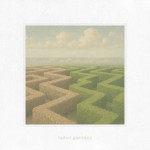
Artist: Gabriele Baldocci (@)
Title: Faded Gardens
Format: Download Only (MP3 + Lossless)
Label: MKMA Records
Rated:

Title: Faded Gardens
Format: Download Only (MP3 + Lossless)
Label: MKMA Records
Rated:
Some albums try to impress you with scale: orchestras swelling like cinematic weather systems, electronics buzzing like overcaffeinated insects. Then someone sits down at a piano and plays a handful of notes that sound suspiciously like a memory. Irritatingly effective, that trick.
With "Faded Gardens", Gabriele Baldocci chooses the minimalist weapon of recollection. No grand architectural concept, no conceptual manifesto disguised as liner notes. Just a cycle of intimate piano pieces orbiting childhood, illness, and the strange circularity of becoming a parent. The whole thing unfolds like a set of photographs left too long in sunlight: the colors fade, but the emotional outlines sharpen.
Baldocci is not some dreamy amateur scribbling between concerts. The Livorno-born pianist built an international career interpreting canonical repertoire before turning increasingly toward composition. Critics have long praised his formidable technique and interpretative intelligence, and his résumé reads like a polite brag list: collaborations with musicians such as Martha Argerich, recordings ranging from Chopin to Liszt’s transcriptions of Beethoven symphonies, and even a playful detour where Queen songs were reimagined as if Liszt himself had written them. The man clearly enjoys walking between worlds: classical orthodoxy, improvisation, and a more cinematic neoclassical language.
"Faded Gardens" sits squarely in that latter territory. The piano remains the central voice, but it behaves less like a virtuoso instrument and more like a narrator whispering slightly unreliable memories.
The emotional core of the album lies in what Baldocci calls the “Trilogy of Becoming”: “Verde Luce”, “Silent Watch”, and “Asa Nisi Masa”. These pieces revisit his childhood hospitalization after an autoimmune diagnosis that kept him isolated for long periods.
“Verde Luce” hovers in a suspended harmonic space, its quiet repetitions recalling the hypnotic cruelty of hospital nights. The green emergency light above the door becomes a strange guardian star, blinking over a child who cannot sleep. “Silent Watch” shifts the perspective: the music becomes steadier, almost maternal, reflecting the silent presence of a mother sitting beside the bed, helpless but vigilant. By the time “Asa Nisi Masa” arrives, the emotional register deepens. The title nods toward the word "anima", the soul. The piece moves carefully, as if each note must check whether the ground beneath it still exists.
Yet the album is not an exercise in tasteful melancholy. That would be far too predictable. Childhood is rarely one thing at a time, and Baldocci understands this.
“Ashen Firefly” is a small miracle of narrative imagination: a bedtime scene where the glow of a father’s cigarette becomes a tiny fairy dancing in the dark. You can almost hear the flicker. “Origami” unfolds and refolds its musical ideas with delicate symmetry, while “Paper Wings” carries the quiet optimism of every child who believes gravity is merely a suggestion.
Then there is “At the Playground”, written with Martha Argerich in mind. It’s brief, playful, and slightly mischievous, like a memory of running through a park while the ghosts of Chopin and Schumann hover somewhere in the background, mildly amused.
“Night Whispers”, dedicated to Baldocci’s son Alessandro, forms the emotional hinge of the album. Here the perspective flips. The once-isolated child is now a father listening to the strange philosophical confessions children make just before sleep. Anyone who has ever heard a five-year-old ask a question about the universe at 10:37 p.m. will recognize the mood.
The closing stretch, particularly “The Inner Field” and the title track, settles into something quieter and more reflective. Not resolution exactly. More like acceptance that memory does not behave linearly. Childhood and adulthood become two ends of the same thread.
Technically, Baldocci avoids the grand gestures one might expect from a pianist with his background. The writing favors clarity, simple motifs, and emotional pacing over virtuoso fireworks. Occasionally the harmonic language leans toward the cinematic neoclassical idiom that currently fills streaming playlists everywhere. That aesthetic can sometimes feel overly polished in lesser hands. Here it works because the emotional narrative underneath is too specific to be generic.
The result is a record that behaves less like a recital and more like a private diary written in sound. A fragile one.
Which brings us back to the title. "Faded Gardens" is not about nostalgia in the sugary sense. It is about the strange archaeology of memory. Gardens grow, wither, and grow again. Children become parents. Illness becomes story. Music becomes the thread stitching the fragments together.
Not a bad job for eighty-eight keys and a human being stubborn enough to keep turning memory into sound before it disappears.
With "Faded Gardens", Gabriele Baldocci chooses the minimalist weapon of recollection. No grand architectural concept, no conceptual manifesto disguised as liner notes. Just a cycle of intimate piano pieces orbiting childhood, illness, and the strange circularity of becoming a parent. The whole thing unfolds like a set of photographs left too long in sunlight: the colors fade, but the emotional outlines sharpen.
Baldocci is not some dreamy amateur scribbling between concerts. The Livorno-born pianist built an international career interpreting canonical repertoire before turning increasingly toward composition. Critics have long praised his formidable technique and interpretative intelligence, and his résumé reads like a polite brag list: collaborations with musicians such as Martha Argerich, recordings ranging from Chopin to Liszt’s transcriptions of Beethoven symphonies, and even a playful detour where Queen songs were reimagined as if Liszt himself had written them. The man clearly enjoys walking between worlds: classical orthodoxy, improvisation, and a more cinematic neoclassical language.
"Faded Gardens" sits squarely in that latter territory. The piano remains the central voice, but it behaves less like a virtuoso instrument and more like a narrator whispering slightly unreliable memories.
The emotional core of the album lies in what Baldocci calls the “Trilogy of Becoming”: “Verde Luce”, “Silent Watch”, and “Asa Nisi Masa”. These pieces revisit his childhood hospitalization after an autoimmune diagnosis that kept him isolated for long periods.
“Verde Luce” hovers in a suspended harmonic space, its quiet repetitions recalling the hypnotic cruelty of hospital nights. The green emergency light above the door becomes a strange guardian star, blinking over a child who cannot sleep. “Silent Watch” shifts the perspective: the music becomes steadier, almost maternal, reflecting the silent presence of a mother sitting beside the bed, helpless but vigilant. By the time “Asa Nisi Masa” arrives, the emotional register deepens. The title nods toward the word "anima", the soul. The piece moves carefully, as if each note must check whether the ground beneath it still exists.
Yet the album is not an exercise in tasteful melancholy. That would be far too predictable. Childhood is rarely one thing at a time, and Baldocci understands this.
“Ashen Firefly” is a small miracle of narrative imagination: a bedtime scene where the glow of a father’s cigarette becomes a tiny fairy dancing in the dark. You can almost hear the flicker. “Origami” unfolds and refolds its musical ideas with delicate symmetry, while “Paper Wings” carries the quiet optimism of every child who believes gravity is merely a suggestion.
Then there is “At the Playground”, written with Martha Argerich in mind. It’s brief, playful, and slightly mischievous, like a memory of running through a park while the ghosts of Chopin and Schumann hover somewhere in the background, mildly amused.
“Night Whispers”, dedicated to Baldocci’s son Alessandro, forms the emotional hinge of the album. Here the perspective flips. The once-isolated child is now a father listening to the strange philosophical confessions children make just before sleep. Anyone who has ever heard a five-year-old ask a question about the universe at 10:37 p.m. will recognize the mood.
The closing stretch, particularly “The Inner Field” and the title track, settles into something quieter and more reflective. Not resolution exactly. More like acceptance that memory does not behave linearly. Childhood and adulthood become two ends of the same thread.
Technically, Baldocci avoids the grand gestures one might expect from a pianist with his background. The writing favors clarity, simple motifs, and emotional pacing over virtuoso fireworks. Occasionally the harmonic language leans toward the cinematic neoclassical idiom that currently fills streaming playlists everywhere. That aesthetic can sometimes feel overly polished in lesser hands. Here it works because the emotional narrative underneath is too specific to be generic.
The result is a record that behaves less like a recital and more like a private diary written in sound. A fragile one.
Which brings us back to the title. "Faded Gardens" is not about nostalgia in the sugary sense. It is about the strange archaeology of memory. Gardens grow, wither, and grow again. Children become parents. Illness becomes story. Music becomes the thread stitching the fragments together.
Not a bad job for eighty-eight keys and a human being stubborn enough to keep turning memory into sound before it disappears.
Matilde Meireles: Four Tales

Cities are usually described through their skylines, traffic, or architectural bravado. Rarely through their rivers actually speaking. Which is unfortunate, because water has been patiently composing the soundtrack of urban life long before humans decided to build bridges over it.
With "Four Tales", Matilde Meireles approaches the city from precisely that overlooked perspective: listening downward, toward the currents, the metal infrastructures touching them, and the fragile ecosystems vibrating along their edges. The album, released by Crónica, grows out of DRIFT Belfast floating pavilion project, a collaborative architectural and sonic experiment that temporarily anchored itself along the River Lagan during the Belfast 2024 cultural programme. The pavilion itself functioned as a kind of “floating instrument”, inviting visitors to pause, listen, and reconsider the relationship between city and river.
Translating such a spatial and communal experience into a record is not exactly a trivial exercise. Sound installations often resist documentation the way clouds resist photography. Yet "Four Tales" manages to retain something essential from the original project: the sense that listening is not just a sensory act but a form of attention, perhaps even care.
The album unfolds in four long pieces, each acting less like a track and more like a chapter in a slowly drifting narrative.
“One” begins with water itself. Field recordings collected across multiple geographies ripple through the piece: the gentle currents of the Lagan, distant rivers in Portugal, Spain and England, the calm sea in Greece, even a storm in Mozambique. The composition behaves like a hydrological map drawn with sound rather than ink. Metallic resonances from the pavilion’s scaffolding and the tactile friction of cotton ropes enter the texture, creating a dialogue between natural movement and human-built structures. The result is quietly immersive, like standing beside a river long enough that the landscape begins to reveal its smaller rhythms.
“Two” shifts the perspective slightly, tracing an imagined sonic journey between two points along the Lagan. Micro and macro events coexist: underwater murmurs, atmospheric disturbances, electromagnetic interference humming through urban infrastructure. Meireles arranges these layers with a patient sense of pacing, allowing them to breathe rather than forcing them into tidy narrative arcs. The piece feels less composed than cultivated, as if the composer were tending a garden of vibrations rather than arranging a score.
With “Three”, the album takes an unexpectedly reflective turn. Raw biodiversity recordings made around Stranmillis Weir are assembled alongside a spoken narration cataloguing species both present and absent. The device is deceptively simple yet conceptually sharp: a reminder that field recording is always partial, always incomplete. Technology captures fragments, but the ecosystem remains larger than the microphone’s reach. It is a subtle meditation on presence and absence, observation and imagination.
Finally “Four” offers an excerpt from a live performance that took place on the pavilion itself, where improvisers interacted with the surrounding environment. Percussion, amplified objects, field recordings and the unusual resonance of the tromba marina intertwine with the acoustic properties of the floating structure. The piece carries a gentle unpredictability, the feeling that the river and the performers are negotiating the music together in real time.
Meireles has long worked at the intersection of sound art, environmental awareness and social engagement, and "Four Tales" neatly condenses these concerns into a single project. Her background in interdisciplinary sonic research, including years spent working in SARC: Centre for Interdisciplinary Research in Sound and Music at Queen’s University Belfast, clearly informs the methodical yet poetic way she approaches listening.
What keeps the album from drifting into academic dryness is its quiet sense of wonder. The compositions never lecture the listener about ecology or urban infrastructure. Instead, they invite a slower pace of perception. Spend enough time with these sounds and the city begins to feel less like a static grid of buildings and more like a living mesh of currents, animals, machines and human footsteps.
In a world obsessed with louder signals and faster rhythms, "Four Tales" proposes something mildly radical: stop, lean closer, and listen to the river.
It has been telling stories the whole time.
With "Four Tales", Matilde Meireles approaches the city from precisely that overlooked perspective: listening downward, toward the currents, the metal infrastructures touching them, and the fragile ecosystems vibrating along their edges. The album, released by Crónica, grows out of DRIFT Belfast floating pavilion project, a collaborative architectural and sonic experiment that temporarily anchored itself along the River Lagan during the Belfast 2024 cultural programme. The pavilion itself functioned as a kind of “floating instrument”, inviting visitors to pause, listen, and reconsider the relationship between city and river.
Translating such a spatial and communal experience into a record is not exactly a trivial exercise. Sound installations often resist documentation the way clouds resist photography. Yet "Four Tales" manages to retain something essential from the original project: the sense that listening is not just a sensory act but a form of attention, perhaps even care.
The album unfolds in four long pieces, each acting less like a track and more like a chapter in a slowly drifting narrative.
“One” begins with water itself. Field recordings collected across multiple geographies ripple through the piece: the gentle currents of the Lagan, distant rivers in Portugal, Spain and England, the calm sea in Greece, even a storm in Mozambique. The composition behaves like a hydrological map drawn with sound rather than ink. Metallic resonances from the pavilion’s scaffolding and the tactile friction of cotton ropes enter the texture, creating a dialogue between natural movement and human-built structures. The result is quietly immersive, like standing beside a river long enough that the landscape begins to reveal its smaller rhythms.
“Two” shifts the perspective slightly, tracing an imagined sonic journey between two points along the Lagan. Micro and macro events coexist: underwater murmurs, atmospheric disturbances, electromagnetic interference humming through urban infrastructure. Meireles arranges these layers with a patient sense of pacing, allowing them to breathe rather than forcing them into tidy narrative arcs. The piece feels less composed than cultivated, as if the composer were tending a garden of vibrations rather than arranging a score.
With “Three”, the album takes an unexpectedly reflective turn. Raw biodiversity recordings made around Stranmillis Weir are assembled alongside a spoken narration cataloguing species both present and absent. The device is deceptively simple yet conceptually sharp: a reminder that field recording is always partial, always incomplete. Technology captures fragments, but the ecosystem remains larger than the microphone’s reach. It is a subtle meditation on presence and absence, observation and imagination.
Finally “Four” offers an excerpt from a live performance that took place on the pavilion itself, where improvisers interacted with the surrounding environment. Percussion, amplified objects, field recordings and the unusual resonance of the tromba marina intertwine with the acoustic properties of the floating structure. The piece carries a gentle unpredictability, the feeling that the river and the performers are negotiating the music together in real time.
Meireles has long worked at the intersection of sound art, environmental awareness and social engagement, and "Four Tales" neatly condenses these concerns into a single project. Her background in interdisciplinary sonic research, including years spent working in SARC: Centre for Interdisciplinary Research in Sound and Music at Queen’s University Belfast, clearly informs the methodical yet poetic way she approaches listening.
What keeps the album from drifting into academic dryness is its quiet sense of wonder. The compositions never lecture the listener about ecology or urban infrastructure. Instead, they invite a slower pace of perception. Spend enough time with these sounds and the city begins to feel less like a static grid of buildings and more like a living mesh of currents, animals, machines and human footsteps.
In a world obsessed with louder signals and faster rhythms, "Four Tales" proposes something mildly radical: stop, lean closer, and listen to the river.
It has been telling stories the whole time.
It Dockumer Lokaeltsje: Loop of Sloop

Forty years is a long time in music. Entire genres are born, flourish, collapse, and get rediscovered by people wearing carefully distressed denim jackets. Yet some bands manage to move through those decades without ever quite learning how to behave. It Dockumer Lokaeltsje clearly belongs to that category.
Their new record, "Loop of Sloop", released by Makkum Records, arrives with the sort of mischievous conceptual logic that only veteran punk groups seem capable of inventing. Back in the early eighties the Frisian trio reportedly wrote their debut album "WIL MET U NEUKEN" in a single afternoon, a gesture of chaotic spontaneity that became part of their legend. This time the process apparently ran in reverse: first they recorded an album, and only afterward did they extract ten songs from it. Which is either an avant-garde compositional method or a wonderfully elaborate joke. Possibly both.
The band itself, formed in Friesland and still proudly operating in the Frisian language, has always occupied a peculiar corner of European underground music. Punk, yes, but with the slightly crooked humor and stubborn independence that often characterize scenes from smaller linguistic cultures. When a band sings in Frisian, they are automatically liberated from many of the clichés of global rock. The language itself becomes part of the attitude.
Listening to "Loop of Sloop" feels a bit like opening an old toolbox and discovering that all the instruments inside are still functional but slightly rusted in interesting ways. The songs are short, impatient, and gloriously unstable. Most hover around two minutes or less, delivered with the kind of ragged urgency that suggests the band is simultaneously performing and trying to outrun its own momentum.
The opening tracks rattle forward with a nervous, skeletal energy. Guitars scrape and jab rather than form polite chords, while the rhythm section behaves like a machine that was assembled correctly but refuses to run smoothly. The spirit of confrontational post-punk lurks in the background; fleeting echoes of bands such as Shellac, DNA, Teenage Jesus and the Jerks and The Ex flicker through the arrangements. But these influences appear only briefly before the band swerves somewhere else, as if unwilling to linger too long in anyone else’s territory.
What keeps the album engaging is its sense of barely controlled collapse. The songs feel as though they might disintegrate at any moment. “Foarjanker”, for instance, barely crosses the one-minute mark before vanishing like a small explosion. “Helskip” expands slightly into a heavier groove, while “De klok tebek” moves with the twitchy logic of a band rewinding time and tripping over the tape.
The second side continues the controlled chaos. “Nim de Huawei” adds a faintly satirical tone to the proceedings, while “Twa flikers” and “Wekker wurde dingen dwaan” push the group’s minimalist punk mechanics into even tighter bursts of nervous energy. By the time the title track arrives, the record feels less like a sequence of songs and more like a compact manifesto: fast, crooked, stubbornly alive.
There is also something quietly touching about the album’s self-declared “posthumous” status. The band jokes that since they now have more past than future, they have decided to exist in a kind of living afterlife. In practice this means playing shows and releasing records as if the project were already a ghost of itself. It is a darkly comic concept, but also oddly liberating. If you are technically already posthumous, expectations become irrelevant.
That attitude permeates "Loop of Sloop". The music does not attempt to modernize itself or compete with contemporary punk trends. Instead it doubles down on the raw spirit that defined the band’s earliest days. The result is a record that sounds both nostalgic and strangely fresh, like a radio transmission from a parallel timeline where punk never bothered growing up.
Perhaps that is the real charm of this album. It reminds us that underground music has always thrived on a certain kind of cheerful stubbornness. Styles evolve, technologies change, scenes come and go, but somewhere there are still musicians who pick up battered instruments and produce two-minute bursts of noise simply because it feels necessary.
After forty years, It Dockumer Lokaeltsje clearly still feels that necessity. Which is impressive. Many bands spend decades polishing their legacy into something respectable. These Frisian troublemakers seem far more interested in rattling it until the screws come loose.
Their new record, "Loop of Sloop", released by Makkum Records, arrives with the sort of mischievous conceptual logic that only veteran punk groups seem capable of inventing. Back in the early eighties the Frisian trio reportedly wrote their debut album "WIL MET U NEUKEN" in a single afternoon, a gesture of chaotic spontaneity that became part of their legend. This time the process apparently ran in reverse: first they recorded an album, and only afterward did they extract ten songs from it. Which is either an avant-garde compositional method or a wonderfully elaborate joke. Possibly both.
The band itself, formed in Friesland and still proudly operating in the Frisian language, has always occupied a peculiar corner of European underground music. Punk, yes, but with the slightly crooked humor and stubborn independence that often characterize scenes from smaller linguistic cultures. When a band sings in Frisian, they are automatically liberated from many of the clichés of global rock. The language itself becomes part of the attitude.
Listening to "Loop of Sloop" feels a bit like opening an old toolbox and discovering that all the instruments inside are still functional but slightly rusted in interesting ways. The songs are short, impatient, and gloriously unstable. Most hover around two minutes or less, delivered with the kind of ragged urgency that suggests the band is simultaneously performing and trying to outrun its own momentum.
The opening tracks rattle forward with a nervous, skeletal energy. Guitars scrape and jab rather than form polite chords, while the rhythm section behaves like a machine that was assembled correctly but refuses to run smoothly. The spirit of confrontational post-punk lurks in the background; fleeting echoes of bands such as Shellac, DNA, Teenage Jesus and the Jerks and The Ex flicker through the arrangements. But these influences appear only briefly before the band swerves somewhere else, as if unwilling to linger too long in anyone else’s territory.
What keeps the album engaging is its sense of barely controlled collapse. The songs feel as though they might disintegrate at any moment. “Foarjanker”, for instance, barely crosses the one-minute mark before vanishing like a small explosion. “Helskip” expands slightly into a heavier groove, while “De klok tebek” moves with the twitchy logic of a band rewinding time and tripping over the tape.
The second side continues the controlled chaos. “Nim de Huawei” adds a faintly satirical tone to the proceedings, while “Twa flikers” and “Wekker wurde dingen dwaan” push the group’s minimalist punk mechanics into even tighter bursts of nervous energy. By the time the title track arrives, the record feels less like a sequence of songs and more like a compact manifesto: fast, crooked, stubbornly alive.
There is also something quietly touching about the album’s self-declared “posthumous” status. The band jokes that since they now have more past than future, they have decided to exist in a kind of living afterlife. In practice this means playing shows and releasing records as if the project were already a ghost of itself. It is a darkly comic concept, but also oddly liberating. If you are technically already posthumous, expectations become irrelevant.
That attitude permeates "Loop of Sloop". The music does not attempt to modernize itself or compete with contemporary punk trends. Instead it doubles down on the raw spirit that defined the band’s earliest days. The result is a record that sounds both nostalgic and strangely fresh, like a radio transmission from a parallel timeline where punk never bothered growing up.
Perhaps that is the real charm of this album. It reminds us that underground music has always thrived on a certain kind of cheerful stubbornness. Styles evolve, technologies change, scenes come and go, but somewhere there are still musicians who pick up battered instruments and produce two-minute bursts of noise simply because it feels necessary.
After forty years, It Dockumer Lokaeltsje clearly still feels that necessity. Which is impressive. Many bands spend decades polishing their legacy into something respectable. These Frisian troublemakers seem far more interested in rattling it until the screws come loose.