
Browse by Genre
Industrial Music / Industrial Metal / Aggro Industrial / Electro Metal
Industrial Noise / Power Noise / Harsh Noise
Synth Pop / Electro Pop / Synth-Electronica
Techno / Trance / Goa / Drum'n'Bass / Jungle / Tribal / Trip-Hop
Ambient / Electronica / Ethereal / Dub / Soundscapes / Abstract
Experimental / Avantgarde / Weird & Wired / Glitch / Noise / Field Recording
Dark / Gothic / Wave / New Wave / Dark Wave / Industrial Gothic
New Music / Downtown / Avantgarde Jazz / New Classical / World
Search Reviews
Music Reviews
微風ゾーン Bifuu_ZONE: The West
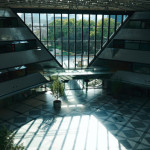
Artist: 微風ゾーン Bifuu_ZONE
Title: The West
Format: Tape + Download
Label: Constellation Tatsu (@)
Rated:


Title: The West
Format: Tape + Download
Label: Constellation Tatsu (@)
Rated:
There is a peculiar modern obsession with “liminal spaces” that often reduces them to internet horror aesthetics: abandoned malls, fluorescent corridors, empty swimming pools at night, humanity collectively deciding that slightly vacant architecture is somehow terrifying. Meanwhile actual liminality, the emotional and philosophical experience of transition, erosion, impermanence, and unresolved presence, is far subtler and far stranger. The West understands this distinction beautifully.
Released through Constellation Tatsu, the album by Bifuu_ZONE approaches spatial ambient music not as haunted spectacle but as quiet continuation. The project’s name itself, loosely translating to “a zone of gentle breeze”, already signals its intentions clearly. This is not music interested in overwhelming the listener with dystopian atmosphere or nostalgic collapse. Instead, "The West" inhabits spaces where time softens structures gradually, where memory settles into architecture like dust carried by weather.
Created by Tsudio Studio, whose broader work has traversed ambient, vaporwave-adjacent electronics, and spatial sound design through labels like Local Visions and ULTRA-VYBE, the album feels remarkably focused in its restraint. Each track is inspired by locations west of Osaka, yet the music avoids direct field-recording realism or documentary impulses. These are imagined acoustic environments, emotional architectures translated into tone and resonance.
The result unfolds less like a sequence of compositions than a slow walk through partially remembered buildings after rain.
“Cosmo Sound In” opens the record with diffuse pads and soft harmonic drift that immediately establish the album’s emotional climate. There is openness everywhere. The sounds seem less placed than suspended, gently hovering within vast interior spaces. The alto saxophone contributions by mori_de_kurasu become crucial here, introducing breath and fragile human presence into otherwise spacious electronic environments. The instrument never dominates. Instead, it appears almost like condensation briefly forming on glass before disappearing again.
One of the album’s greatest strengths lies in how attentively it treats silence and decay. Ambient music often collapses into passive wallpaper because it fears emptiness, endlessly filling space with texture until nothing meaningful remains. Bifuu_ZONE understands that stillness itself carries emotional information. Gaps matter. Resonance matters. The fading edge of a tone matters.
“RIC Midnight” exemplifies this beautifully. The track unfolds with a kind of nocturnal patience, its harmonic movement so gradual it almost escapes conscious detection. Yet beneath the calm surface, tiny shifts continuously alter the emotional temperature. Listening closely feels like observing light change across concrete over several hours. Human civilization spends billions constructing permanent monuments only for moss, rain, and time to quietly outperform every architect eventually.
The conceptual framework surrounding impermanence and “post-liminal space” could easily have become pretentious in lesser hands. Contemporary ambient culture occasionally mistakes vague philosophical vocabulary for actual depth. But "The West" earns its conceptual ambitions because the music genuinely embodies its ideas. The Japanese sensibility toward impermanence referenced in the release materials is not merely decorative framing; it permeates the album structurally. These tracks do not seek resolution or climax. They accept transience as condition.
“RESO” and “Meteor Plaza” continue this delicate balancing act between architectural spaciousness and emotional intimacy. The textures feel weathered rather than pristine, subtly eroded around the edges. There is a softness to the production that prevents the album from becoming sterile digital ambience. One senses air moving through rooms, distant reflections, surfaces aging slowly.
The saxophone returns most poignantly on “Lamer”, where mori_de_kurasu’s playing introduces an almost human vulnerability into the otherwise restrained environment. Breath becomes audible against the larger stillness. The contrast is quietly devastating. Not dramatic sadness exactly, but awareness of scale: the fleeting body inside structures that outlast it.
“Suma Rikyu Park” and “TWIN21” perhaps best reveal Tsudio Studio’s skill for emotional understatement. The compositions drift carefully between melancholy and serenity without collapsing fully into either. This ambiguity becomes the album’s emotional core. "The West" is not mournful about impermanence. Nor does it romanticize decay. It simply observes transformation with unusual tenderness.
By the time “Herbis Ent” closes the record, the listener has entered a distinctly altered perceptual state. The album slows internal time. Architectural references dissolve into emotional resonance. Places become atmospheres rather than coordinates.
There are echoes here of certain strands of Japanese ambient and environmental music traditions, perhaps distant affinities with figures like Hiroshi Yoshimura or the spatial sensitivity of Midori Takada, yet "The West" never feels derivative or trapped inside retro ambient nostalgia. Its relationship with space feels contemporary precisely because it resists overstimulation.
And that restraint is increasingly radical. In a cultural moment obsessed with acceleration, constant visibility, and emotional over-articulation, Bifuu_ZONE creates music that trusts quiet perception. These tracks do not demand attention aggressively. They wait patiently for the listener to slow down enough to notice what remains after movement ends.
A remarkably subtle record, then, full of disappearing edges, architectural ghosts, and soft transformations. Not music about emptiness, but about what continues breathing gently inside spaces after certainty has already departed.
Released through Constellation Tatsu, the album by Bifuu_ZONE approaches spatial ambient music not as haunted spectacle but as quiet continuation. The project’s name itself, loosely translating to “a zone of gentle breeze”, already signals its intentions clearly. This is not music interested in overwhelming the listener with dystopian atmosphere or nostalgic collapse. Instead, "The West" inhabits spaces where time softens structures gradually, where memory settles into architecture like dust carried by weather.
Created by Tsudio Studio, whose broader work has traversed ambient, vaporwave-adjacent electronics, and spatial sound design through labels like Local Visions and ULTRA-VYBE, the album feels remarkably focused in its restraint. Each track is inspired by locations west of Osaka, yet the music avoids direct field-recording realism or documentary impulses. These are imagined acoustic environments, emotional architectures translated into tone and resonance.
The result unfolds less like a sequence of compositions than a slow walk through partially remembered buildings after rain.
“Cosmo Sound In” opens the record with diffuse pads and soft harmonic drift that immediately establish the album’s emotional climate. There is openness everywhere. The sounds seem less placed than suspended, gently hovering within vast interior spaces. The alto saxophone contributions by mori_de_kurasu become crucial here, introducing breath and fragile human presence into otherwise spacious electronic environments. The instrument never dominates. Instead, it appears almost like condensation briefly forming on glass before disappearing again.
One of the album’s greatest strengths lies in how attentively it treats silence and decay. Ambient music often collapses into passive wallpaper because it fears emptiness, endlessly filling space with texture until nothing meaningful remains. Bifuu_ZONE understands that stillness itself carries emotional information. Gaps matter. Resonance matters. The fading edge of a tone matters.
“RIC Midnight” exemplifies this beautifully. The track unfolds with a kind of nocturnal patience, its harmonic movement so gradual it almost escapes conscious detection. Yet beneath the calm surface, tiny shifts continuously alter the emotional temperature. Listening closely feels like observing light change across concrete over several hours. Human civilization spends billions constructing permanent monuments only for moss, rain, and time to quietly outperform every architect eventually.
The conceptual framework surrounding impermanence and “post-liminal space” could easily have become pretentious in lesser hands. Contemporary ambient culture occasionally mistakes vague philosophical vocabulary for actual depth. But "The West" earns its conceptual ambitions because the music genuinely embodies its ideas. The Japanese sensibility toward impermanence referenced in the release materials is not merely decorative framing; it permeates the album structurally. These tracks do not seek resolution or climax. They accept transience as condition.
“RESO” and “Meteor Plaza” continue this delicate balancing act between architectural spaciousness and emotional intimacy. The textures feel weathered rather than pristine, subtly eroded around the edges. There is a softness to the production that prevents the album from becoming sterile digital ambience. One senses air moving through rooms, distant reflections, surfaces aging slowly.
The saxophone returns most poignantly on “Lamer”, where mori_de_kurasu’s playing introduces an almost human vulnerability into the otherwise restrained environment. Breath becomes audible against the larger stillness. The contrast is quietly devastating. Not dramatic sadness exactly, but awareness of scale: the fleeting body inside structures that outlast it.
“Suma Rikyu Park” and “TWIN21” perhaps best reveal Tsudio Studio’s skill for emotional understatement. The compositions drift carefully between melancholy and serenity without collapsing fully into either. This ambiguity becomes the album’s emotional core. "The West" is not mournful about impermanence. Nor does it romanticize decay. It simply observes transformation with unusual tenderness.
By the time “Herbis Ent” closes the record, the listener has entered a distinctly altered perceptual state. The album slows internal time. Architectural references dissolve into emotional resonance. Places become atmospheres rather than coordinates.
There are echoes here of certain strands of Japanese ambient and environmental music traditions, perhaps distant affinities with figures like Hiroshi Yoshimura or the spatial sensitivity of Midori Takada, yet "The West" never feels derivative or trapped inside retro ambient nostalgia. Its relationship with space feels contemporary precisely because it resists overstimulation.
And that restraint is increasingly radical. In a cultural moment obsessed with acceleration, constant visibility, and emotional over-articulation, Bifuu_ZONE creates music that trusts quiet perception. These tracks do not demand attention aggressively. They wait patiently for the listener to slow down enough to notice what remains after movement ends.
A remarkably subtle record, then, full of disappearing edges, architectural ghosts, and soft transformations. Not music about emptiness, but about what continues breathing gently inside spaces after certainty has already departed.
Anton Toorell: Solos II
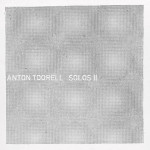
Artist: Anton Toorell (@)
Title: Solos II
Format: 12" + Download
Label: Thanatosis Produktion (@)
Rated:
Title: Solos II
Format: 12" + Download
Label: Thanatosis Produktion (@)
Rated:
There is a particular danger surrounding solo guitar records. Too often they become demonstrations of technical fluency disguised as spiritual revelation, endless cascades of notes desperately trying to convince the listener that complexity itself constitutes meaning. Fortunately, Solos II by Anton Toorell avoids nearly all of those traps by pursuing something far more elusive: resonance not merely as sound, but as environment, physical process, and altered state of attention.
Released by Thanatosis Produktion, "Solos II" expands upon the open-tuned acoustic investigations of Toorell’s 2022 debut while simultaneously stripping the process back toward something more exposed and elemental. Where many contemporary experimental guitar records layer electronics until the instrument becomes almost unrecognizable, Toorell instead moves closer to the material reality of strings, wood, air, and architectural space itself. The result feels both rigorously constructed and strangely weightless.
The central technique alone sounds almost absurdly impractical: playing two guitars simultaneously, one positioned conventionally and the other laid across the lap, with each hand performing independent functions. In lesser hands this could easily become an exercise in conceptual athletics, the sort of thing critics describe as innovative while secretly wondering whether anyone actually enjoys listening to it. Yet Toorell’s approach never feels demonstrative. The complexity dissolves into flow.
That may be the album’s most remarkable quality. One hears not effort but movement.
The opening “Volta”, stretching close to seventeen minutes, unfolds like an evolving lattice of shimmering harmonics and cyclical figures. Repetition becomes less structural device than breathing pattern. Tiny tonal shifts accumulate gradually, producing a sensation of suspended motion somewhere between minimalism, folk memory, and acoustic illusionism. The piece seems simultaneously ancient and impossibly delicate, as though somebody had translated water reflections into tunings.
Toorell’s relationship with repetition is particularly fascinating. There are obvious distant affinities with figures like Terry Riley or even aspects of early Seefeel, especially in the hypnotic cycling structures of “Cripta”, yet Toorell avoids both minimalist rigidity and post-rock haze. His repetitions breathe unevenly. Human touch remains audible everywhere: tiny hesitations, accidental resonances, minute fluctuations in attack and decay. The music continuously reminds the listener that transcendence, when it occurs, emerges through physical imperfection rather than mechanical precision.
The recording environment plays an enormous role in shaping the album’s identity. Captured inside a sixteenth-century wine cellar at Palazzo Stabile in Piemonte, the room itself becomes an active participant in the music. Reverberation is not applied decoration here; it is compositional material. Notes bloom, linger, collide with architectural surfaces, and return transformed. Toorell reportedly searched for tunings that would open up the room, and one can genuinely hear that dialogue throughout the album. The space listens back.
This interaction between performer, instrument, and architecture gives "Solos II" an almost ecological quality. The music does not dominate the environment but negotiates with it. One becomes increasingly aware of resonance as physical event rather than abstract sonic property. The cellar breathes through the guitars. The guitars expose the cellar’s hidden frequencies. Human beings continue building streaming algorithms to compress sound into disposable background texture while records like this quietly insist that listening remains a bodily experience.
“Cripta” perhaps best demonstrates Toorell’s compositional intelligence. The looping structures spiral inward hypnotically, producing subtle psychoacoustic effects where harmonics appear to drift independently from the strings generating them. At moments the piece resembles an acoustic mirage, simultaneously intimate and spatially disorienting. There is motion everywhere, yet no urgency. Toorell trusts duration enough to let perception reorganize itself naturally.
Then comes “Scala”, the shortest and perhaps most emotionally revealing piece on the album. After the denser cyclical movement of the earlier works, its calmer pacing allows the recording space to emerge even more clearly. One hears air moving around notes, the room’s quiet response to vibration, the fragile physicality of acoustic sound unfolding in real time. The track feels almost ceremonial in its restraint. Toorell’s methods are undoubtedly intricate, informed by jazz studies, electroacoustic composition, and years of collaborative experimentation across Scandinavian improvised music scenes. Yet none of that knowledge calcifies into academic severity. The album remains deeply tactile, almost luminous in places.
There is also something quietly radical about its patience. These three extended pieces do not chase climax or emotional manipulation. Instead, they create conditions for attention itself to deepen. Listening becomes immersive not through overwhelming density, but through sustained intimacy with microscopic variation. By the midpoint of “Volta” or “Cripta”, one begins noticing harmonic movements so subtle they would vanish entirely under ordinary distracted listening conditions.
And perhaps that is where the album’s emotional power truly resides. "Solos II" invites the listener into a different relationship with time, resonance, and physical presence. The music exists somewhere between improvisation and architecture, between meditative ritual and mechanical process, between the rigor of structure and the unpredictability of touch.
A deceptively modest record, then, but one containing immense spatial and emotional depth. Anton Toorell does not simply play guitars here. He allows them to converse with stone, air, repetition, and silence itself until the distinctions begin dissolving.
Released by Thanatosis Produktion, "Solos II" expands upon the open-tuned acoustic investigations of Toorell’s 2022 debut while simultaneously stripping the process back toward something more exposed and elemental. Where many contemporary experimental guitar records layer electronics until the instrument becomes almost unrecognizable, Toorell instead moves closer to the material reality of strings, wood, air, and architectural space itself. The result feels both rigorously constructed and strangely weightless.
The central technique alone sounds almost absurdly impractical: playing two guitars simultaneously, one positioned conventionally and the other laid across the lap, with each hand performing independent functions. In lesser hands this could easily become an exercise in conceptual athletics, the sort of thing critics describe as innovative while secretly wondering whether anyone actually enjoys listening to it. Yet Toorell’s approach never feels demonstrative. The complexity dissolves into flow.
That may be the album’s most remarkable quality. One hears not effort but movement.
The opening “Volta”, stretching close to seventeen minutes, unfolds like an evolving lattice of shimmering harmonics and cyclical figures. Repetition becomes less structural device than breathing pattern. Tiny tonal shifts accumulate gradually, producing a sensation of suspended motion somewhere between minimalism, folk memory, and acoustic illusionism. The piece seems simultaneously ancient and impossibly delicate, as though somebody had translated water reflections into tunings.
Toorell’s relationship with repetition is particularly fascinating. There are obvious distant affinities with figures like Terry Riley or even aspects of early Seefeel, especially in the hypnotic cycling structures of “Cripta”, yet Toorell avoids both minimalist rigidity and post-rock haze. His repetitions breathe unevenly. Human touch remains audible everywhere: tiny hesitations, accidental resonances, minute fluctuations in attack and decay. The music continuously reminds the listener that transcendence, when it occurs, emerges through physical imperfection rather than mechanical precision.
The recording environment plays an enormous role in shaping the album’s identity. Captured inside a sixteenth-century wine cellar at Palazzo Stabile in Piemonte, the room itself becomes an active participant in the music. Reverberation is not applied decoration here; it is compositional material. Notes bloom, linger, collide with architectural surfaces, and return transformed. Toorell reportedly searched for tunings that would open up the room, and one can genuinely hear that dialogue throughout the album. The space listens back.
This interaction between performer, instrument, and architecture gives "Solos II" an almost ecological quality. The music does not dominate the environment but negotiates with it. One becomes increasingly aware of resonance as physical event rather than abstract sonic property. The cellar breathes through the guitars. The guitars expose the cellar’s hidden frequencies. Human beings continue building streaming algorithms to compress sound into disposable background texture while records like this quietly insist that listening remains a bodily experience.
“Cripta” perhaps best demonstrates Toorell’s compositional intelligence. The looping structures spiral inward hypnotically, producing subtle psychoacoustic effects where harmonics appear to drift independently from the strings generating them. At moments the piece resembles an acoustic mirage, simultaneously intimate and spatially disorienting. There is motion everywhere, yet no urgency. Toorell trusts duration enough to let perception reorganize itself naturally.
Then comes “Scala”, the shortest and perhaps most emotionally revealing piece on the album. After the denser cyclical movement of the earlier works, its calmer pacing allows the recording space to emerge even more clearly. One hears air moving around notes, the room’s quiet response to vibration, the fragile physicality of acoustic sound unfolding in real time. The track feels almost ceremonial in its restraint. Toorell’s methods are undoubtedly intricate, informed by jazz studies, electroacoustic composition, and years of collaborative experimentation across Scandinavian improvised music scenes. Yet none of that knowledge calcifies into academic severity. The album remains deeply tactile, almost luminous in places.
There is also something quietly radical about its patience. These three extended pieces do not chase climax or emotional manipulation. Instead, they create conditions for attention itself to deepen. Listening becomes immersive not through overwhelming density, but through sustained intimacy with microscopic variation. By the midpoint of “Volta” or “Cripta”, one begins noticing harmonic movements so subtle they would vanish entirely under ordinary distracted listening conditions.
And perhaps that is where the album’s emotional power truly resides. "Solos II" invites the listener into a different relationship with time, resonance, and physical presence. The music exists somewhere between improvisation and architecture, between meditative ritual and mechanical process, between the rigor of structure and the unpredictability of touch.
A deceptively modest record, then, but one containing immense spatial and emotional depth. Anton Toorell does not simply play guitars here. He allows them to converse with stone, air, repetition, and silence itself until the distinctions begin dissolving.
Laura Kampman: Here and here

Artist: Laura Kampman (@)
Title: Here and here
Format: Download Only (MP3 + Lossless)
Label: Futura Resistenza (@)
Rated:
Title: Here and here
Format: Download Only (MP3 + Lossless)
Label: Futura Resistenza (@)
Rated:
Grief has a peculiar habit of ignoring physical laws. People disappear, yet continue occupying rooms, gestures, habits, conversations, entire emotional climates. A voice returns while washing dishes. A memory appears in supermarket lighting. Someone laughs in another room for half a second before the brain reluctantly corrects itself. Human beings call this “moving on” while secretly carrying entire invisible populations inside themselves. Efficient species, truly.
Here and here by Laura Kampman understands this strange doubleness with remarkable tenderness. Released through Futura Resistenza, the brief two-track release continues the emotional and sonic trajectory begun on "Coming Into Daily Life", the quietly devastating work that emerged from Kampman’s processing of her father’s death and established her as one of the more emotionally precise voices operating in contemporary experimental folk and intimate ambient songwriting.
What makes "Here and here" so affecting is its refusal to dramatize absence. Kampman does not transform grief into grand tragedy or cinematic catharsis. Instead, she focuses on its quieter mechanics: the way memory duplicates reality, the way absent people continue accompanying us through ordinary moments, the way emotional presence becomes spatial. The title itself captures this beautifully. Someone is gone, yet also “here and here,” dispersed across consciousness and environment simultaneously.
The main track unfolds with extraordinary restraint. Soft guitar figures, analogue synth textures, fragments of field recordings, and delicate voice-note traces drift together with such intimacy that the music often feels overheard rather than performed. Kampman’s voice remains central, but never dominating. She sings as though carefully placing fragile objects into open air, aware they might break under excessive force.
There is a rare honesty in this approach. Many contemporary intimate-songwriter records mistake vulnerability for confession overload, flooding listeners with emotional exposition until subtlety suffocates completely. Kampman instead trusts implication. Silence becomes compositional material. Small sounds carry enormous emotional weight. A slight pause, a barely audible environmental texture, the soft intrusion of recorded memory: these details shape the emotional architecture more profoundly than dramatic declarations ever could.
The production contributes enormously to the atmosphere. Because Kampman wrote, recorded, and mixed the material herself, the record retains a deeply personal scale. Nothing feels outsourced or polished into neutrality. The analogue synths hover like distant emotional weather while the field recordings ground the songs in lived physicality. One senses rooms, movement, breathing, passing time.
The flute passages by Iver Kim are especially beautiful in how naturally they extend the emotional space of the compositions. Rather than functioning as decorative instrumentation, the flute becomes almost architectural, widening the sonic horizon without disturbing the fragile intimacy at the center. There are moments where it feels less like accompaniment than memory itself moving through the arrangement.
“Flute Song”, the short B-side derived from Kim’s original recordings, might initially seem slight at under a minute, yet it functions perfectly as emotional afterimage. The piece lingers like a room still holding warmth after someone has left. Its brevity becomes part of its power. Kampman understands that certain emotional states resist elaboration. Extending them further would only diminish their truth.
Stylistically, one could perhaps place "Here and here" somewhere between ambient folk minimalism, diary-like sound art, and fragile bedroom composition, but genre labels feel increasingly irrelevant here. Kampman’s work belongs more to an emotional tradition than a musical category. There are distant affinities with artists like Grouper or Julianna Barwick in the way atmosphere and intimacy intertwine, yet Kampman’s voice remains distinctly her own: quieter, perhaps more grounded in physical memory than abstraction.
The release also quietly demonstrates something increasingly rare in contemporary music culture: patience. These songs do not compete for attention. They do not escalate dramatically or engineer emotional payoff through obvious climaxes. Instead, they invite careful listening, rewarding emotional openness rather than passive consumption. A risky strategy in an era where people often encounter music while simultaneously doomscrolling, answering emails, and microwaving dinner beneath fluorescent lighting. Civilization keeps inventing new technologies to avoid fully experiencing feelings, then wonders why loneliness persists.
Yet "Here and here" does not wallow in sadness. Beneath the melancholy lies warmth, even gratitude. Kampman seems less interested in mourning disappearance than in exploring how love continues altering perception after physical absence. The record becomes not merely about loss, but about the strange persistence of connection itself.
And perhaps that is why these two small pieces resonate so deeply. They acknowledge something most people understand instinctively but struggle to articulate: that the people we carry emotionally never remain fixed in the past. They continue evolving inside us, accompanying new memories, inhabiting new spaces, appearing unexpectedly in ordinary light.
A tiny release, almost whisper-sized, yet filled with immense emotional precision. Some records demand attention loudly. "Here and here" simply waits quietly until the listener is ready to notice what was already present all along.
Here and here by Laura Kampman understands this strange doubleness with remarkable tenderness. Released through Futura Resistenza, the brief two-track release continues the emotional and sonic trajectory begun on "Coming Into Daily Life", the quietly devastating work that emerged from Kampman’s processing of her father’s death and established her as one of the more emotionally precise voices operating in contemporary experimental folk and intimate ambient songwriting.
What makes "Here and here" so affecting is its refusal to dramatize absence. Kampman does not transform grief into grand tragedy or cinematic catharsis. Instead, she focuses on its quieter mechanics: the way memory duplicates reality, the way absent people continue accompanying us through ordinary moments, the way emotional presence becomes spatial. The title itself captures this beautifully. Someone is gone, yet also “here and here,” dispersed across consciousness and environment simultaneously.
The main track unfolds with extraordinary restraint. Soft guitar figures, analogue synth textures, fragments of field recordings, and delicate voice-note traces drift together with such intimacy that the music often feels overheard rather than performed. Kampman’s voice remains central, but never dominating. She sings as though carefully placing fragile objects into open air, aware they might break under excessive force.
There is a rare honesty in this approach. Many contemporary intimate-songwriter records mistake vulnerability for confession overload, flooding listeners with emotional exposition until subtlety suffocates completely. Kampman instead trusts implication. Silence becomes compositional material. Small sounds carry enormous emotional weight. A slight pause, a barely audible environmental texture, the soft intrusion of recorded memory: these details shape the emotional architecture more profoundly than dramatic declarations ever could.
The production contributes enormously to the atmosphere. Because Kampman wrote, recorded, and mixed the material herself, the record retains a deeply personal scale. Nothing feels outsourced or polished into neutrality. The analogue synths hover like distant emotional weather while the field recordings ground the songs in lived physicality. One senses rooms, movement, breathing, passing time.
The flute passages by Iver Kim are especially beautiful in how naturally they extend the emotional space of the compositions. Rather than functioning as decorative instrumentation, the flute becomes almost architectural, widening the sonic horizon without disturbing the fragile intimacy at the center. There are moments where it feels less like accompaniment than memory itself moving through the arrangement.
“Flute Song”, the short B-side derived from Kim’s original recordings, might initially seem slight at under a minute, yet it functions perfectly as emotional afterimage. The piece lingers like a room still holding warmth after someone has left. Its brevity becomes part of its power. Kampman understands that certain emotional states resist elaboration. Extending them further would only diminish their truth.
Stylistically, one could perhaps place "Here and here" somewhere between ambient folk minimalism, diary-like sound art, and fragile bedroom composition, but genre labels feel increasingly irrelevant here. Kampman’s work belongs more to an emotional tradition than a musical category. There are distant affinities with artists like Grouper or Julianna Barwick in the way atmosphere and intimacy intertwine, yet Kampman’s voice remains distinctly her own: quieter, perhaps more grounded in physical memory than abstraction.
The release also quietly demonstrates something increasingly rare in contemporary music culture: patience. These songs do not compete for attention. They do not escalate dramatically or engineer emotional payoff through obvious climaxes. Instead, they invite careful listening, rewarding emotional openness rather than passive consumption. A risky strategy in an era where people often encounter music while simultaneously doomscrolling, answering emails, and microwaving dinner beneath fluorescent lighting. Civilization keeps inventing new technologies to avoid fully experiencing feelings, then wonders why loneliness persists.
Yet "Here and here" does not wallow in sadness. Beneath the melancholy lies warmth, even gratitude. Kampman seems less interested in mourning disappearance than in exploring how love continues altering perception after physical absence. The record becomes not merely about loss, but about the strange persistence of connection itself.
And perhaps that is why these two small pieces resonate so deeply. They acknowledge something most people understand instinctively but struggle to articulate: that the people we carry emotionally never remain fixed in the past. They continue evolving inside us, accompanying new memories, inhabiting new spaces, appearing unexpectedly in ordinary light.
A tiny release, almost whisper-sized, yet filled with immense emotional precision. Some records demand attention loudly. "Here and here" simply waits quietly until the listener is ready to notice what was already present all along.
Dekad: A Distorted View

Before writing anything about Dekad’s new album, I would like to express my solidarity with BOREDOMproduct, which had to suspend its label activities for a year after being affected by the wildfire that struck a vast area of Marseille in the summer of 2025. That said, let’s turn to J.B. Lacassagne’s project, here assisted by Member U-0176 on production. The new album A Distorted View arrives four years after Nowhere Lines and three years after Videodrama, the album by The Overlookers, a project formed by J.B. together with Creature XY of Foretaste. A Distorted View finds its strength in the instrumental department, where E.B.M. and synth-pop blend as if it were a collaboration between Depeche Mode’s Black Celebration era and early And One (I’m not sure why, but the track “I Should Have” particularly brought this comparison to mind). The sounds are never banal, and the rhythmic sections are meticulously crafted: instead of standard kick and snare patterns, you’ll often hear processed and modified percussive elements. This richness intertwines beautifully with the synth textures, creating a never-dull sonic tapestry that shifts with each track. In my opinion, this is the album’s greatest asset, along with its consistently catchy and inventive melodies. Lyrically, rather than depicting specific situations, the songs explore emotional states that highlight the fragility and uncertainty of the human psyche during personal crises triggered by relationships or social circumstances. To give you an idea, here’s an excerpt from “Crystal”: “Reality’s collapsing / My mind slowly fracturing / Shadows in the corner of my eyes / Whispers linger in my ears / Fading illusion / Broken confusion / In a distorted state / Nothing is ever straight". The only "weak" point lies in the vocal delivery, which remains within a fairly narrow harmonic range throughout the album. This makes the voice sound somewhat uniform from track to track. This is the reason why I’m deducting half a point from my overall score. Nevertheless, A Distorted View is undoubtedly an album that deserves your attention.
KMRU: Kin
There is a peculiar kind of listening required for Kin by Joseph Kamaru. Not passive listening, certainly. This is not music for productivity playlists, boutique hotel lobbies, or the increasingly tragic cultural ritual of pretending to meditate while checking notifications every forty seconds. "Kin" asks for concentration the way fog asks for slower driving: not as aesthetic preference, but survival mechanism.
Released by Editions Mego, the record arrives five years after KMRU’s remarkable "Peel", an album that established the Nairobi-born, Berlin-based artist as one of the most compelling figures working within experimental electronic music and sound art. Since then, Kamaru’s trajectory has expanded steadily through festivals, collaborations, installations, and a growing international recognition that still somehow feels secondary to the actual listening experience. Fame remains a strange concept when your art primarily involves microscopic manipulations of air pressure and emotional uncertainty.
The title "Kin" immediately suggests proximity, relation, ancestry, belonging. Yet the album itself resists fixed identity at every turn. Kamaru approaches sound less as stable material than as something continuously dissolving and reassembling itself. His compositions often feel suspended between emergence and disappearance, as though entire sonic environments were being remembered rather than constructed.
The shadow of Peter Rehberg inevitably lingers over the album. Originally sparked by conversations about what a successor to "Peel" might become, the project was interrupted by Rehberg’s death in 2021, an event that clearly altered its emotional gravity. One can feel that interruption throughout "Kin". Not in any overtly elegiac sense, but in the album’s relationship to absence, delay, and unfinished transformation. This is music haunted not by ghosts exactly, but by interrupted conversations.
“With Trees Where We Can See” opens with deceptive warmth. Soft melodic swells invite the listener inward, almost suggesting ambient serenity, before subtle distortions begin unsettling the surface. Kamaru excels at these gradual destabilizations. His music rarely announces tension dramatically; instead, it accumulates unease molecule by molecule. The result is immersive without becoming comforting.
The collaboration with Christian Fennesz on “Blurred” becomes one of the album’s defining moments. Fennesz’s unmistakable guitar textures drift through Kamaru’s spatial architecture like light refracted through damaged glass. Twang, drone, and harmonic erosion intertwine patiently across twelve minutes that feel simultaneously intimate and vast. It is less a duet than an environmental merger, two sonic vocabularies dissolving into a third unstable language.
KMRU’s handling of texture remains extraordinary throughout. Many artists working in drone or electroacoustic abstraction focus so heavily on atmosphere that the music becomes emotionally inert, beautiful perhaps but strangely bloodless. Kamaru avoids this trap by treating texture itself as emotional narrative. Every hiss, distortion, distant rumble, and harmonic shimmer carries psychological weight. The sounds do not merely occupy space; they imply memory, tension, and movement beneath the audible surface.
“They Are Here” introduces darker tonal territory. Layers gather like weather systems over an industrial coastline, melancholic yet oddly magnetic. The track seems to vibrate directly against the nervous system rather than the intellect. Kamaru has a remarkable ability to make electronic abstraction feel bodily. Listening becomes less interpretation than physical exposure.
“Maybe” pushes further into instability. Pulses flicker beneath turbulent electronic currents, creating a strange euphoric anxiety, as though transcendence itself had become technologically unreliable. There are moments where the composition threatens to collapse into noise entirely, yet Kamaru always maintains a fragile internal coherence. Chaos is carefully shaped here, not merely unleashed.
Then comes “We Are”, perhaps the album’s most abrasive piece. The track tears through itself with fragmented rhythmic aggression that occasionally recalls the nervous digital mutations of Aphex Twin, though filtered through KMRU’s far more spatial and emotionally ambiguous sensibility. It feels like machinery attempting to remember human feeling through corrupted data.
The twenty-minute closer “By Absence” functions as both conclusion and conceptual key. Acoustic resonances drift through kaleidoscopic electronic layers in a way that continuously destabilizes foreground and background. Sounds emerge, vanish, return transformed. The piece breathes with immense patience, refusing climax in favor of gradual immersion. By the end, the distinction between organic and synthetic, presence and disappearance, feels almost irrelevant.
What makes "Kin" so rewarding is its resistance to immediate readability. Kamaru builds records that reveal themselves incrementally, through repeated immersion rather than instant impact. This is not difficult music in the academic sense, nor does it posture intellectually. Instead, it operates according to slower perceptual rhythms, asking listeners to inhabit uncertainty without demanding resolution.
And perhaps that is where the album’s emotional force truly resides. "Kin" is full of relationships that never fully stabilize: between Nairobi and Berlin, acoustic and electronic sound, memory and distortion, collaboration and solitude, mourning and continuation. Kamaru understands that ambiguity is not absence of meaning but its unstable condition.
The record also quietly demonstrates how far experimental electronic music can still evolve without collapsing into nostalgia or conceptual exhaustion. So much contemporary ambient and drone music feels content recycling inherited aesthetics, endlessly rearranging soft textures like interior decorators for emotionally fatigued algorithms. KMRU instead approaches sound as living matter: unstable, relational, deeply physical.
"Kin" does not simply ask to be heard. It asks to be entered slowly, like unfamiliar weather. And once inside, its shifting architectures linger long after the final frequencies disappear.
Released by Editions Mego, the record arrives five years after KMRU’s remarkable "Peel", an album that established the Nairobi-born, Berlin-based artist as one of the most compelling figures working within experimental electronic music and sound art. Since then, Kamaru’s trajectory has expanded steadily through festivals, collaborations, installations, and a growing international recognition that still somehow feels secondary to the actual listening experience. Fame remains a strange concept when your art primarily involves microscopic manipulations of air pressure and emotional uncertainty.
The title "Kin" immediately suggests proximity, relation, ancestry, belonging. Yet the album itself resists fixed identity at every turn. Kamaru approaches sound less as stable material than as something continuously dissolving and reassembling itself. His compositions often feel suspended between emergence and disappearance, as though entire sonic environments were being remembered rather than constructed.
The shadow of Peter Rehberg inevitably lingers over the album. Originally sparked by conversations about what a successor to "Peel" might become, the project was interrupted by Rehberg’s death in 2021, an event that clearly altered its emotional gravity. One can feel that interruption throughout "Kin". Not in any overtly elegiac sense, but in the album’s relationship to absence, delay, and unfinished transformation. This is music haunted not by ghosts exactly, but by interrupted conversations.
“With Trees Where We Can See” opens with deceptive warmth. Soft melodic swells invite the listener inward, almost suggesting ambient serenity, before subtle distortions begin unsettling the surface. Kamaru excels at these gradual destabilizations. His music rarely announces tension dramatically; instead, it accumulates unease molecule by molecule. The result is immersive without becoming comforting.
The collaboration with Christian Fennesz on “Blurred” becomes one of the album’s defining moments. Fennesz’s unmistakable guitar textures drift through Kamaru’s spatial architecture like light refracted through damaged glass. Twang, drone, and harmonic erosion intertwine patiently across twelve minutes that feel simultaneously intimate and vast. It is less a duet than an environmental merger, two sonic vocabularies dissolving into a third unstable language.
KMRU’s handling of texture remains extraordinary throughout. Many artists working in drone or electroacoustic abstraction focus so heavily on atmosphere that the music becomes emotionally inert, beautiful perhaps but strangely bloodless. Kamaru avoids this trap by treating texture itself as emotional narrative. Every hiss, distortion, distant rumble, and harmonic shimmer carries psychological weight. The sounds do not merely occupy space; they imply memory, tension, and movement beneath the audible surface.
“They Are Here” introduces darker tonal territory. Layers gather like weather systems over an industrial coastline, melancholic yet oddly magnetic. The track seems to vibrate directly against the nervous system rather than the intellect. Kamaru has a remarkable ability to make electronic abstraction feel bodily. Listening becomes less interpretation than physical exposure.
“Maybe” pushes further into instability. Pulses flicker beneath turbulent electronic currents, creating a strange euphoric anxiety, as though transcendence itself had become technologically unreliable. There are moments where the composition threatens to collapse into noise entirely, yet Kamaru always maintains a fragile internal coherence. Chaos is carefully shaped here, not merely unleashed.
Then comes “We Are”, perhaps the album’s most abrasive piece. The track tears through itself with fragmented rhythmic aggression that occasionally recalls the nervous digital mutations of Aphex Twin, though filtered through KMRU’s far more spatial and emotionally ambiguous sensibility. It feels like machinery attempting to remember human feeling through corrupted data.
The twenty-minute closer “By Absence” functions as both conclusion and conceptual key. Acoustic resonances drift through kaleidoscopic electronic layers in a way that continuously destabilizes foreground and background. Sounds emerge, vanish, return transformed. The piece breathes with immense patience, refusing climax in favor of gradual immersion. By the end, the distinction between organic and synthetic, presence and disappearance, feels almost irrelevant.
What makes "Kin" so rewarding is its resistance to immediate readability. Kamaru builds records that reveal themselves incrementally, through repeated immersion rather than instant impact. This is not difficult music in the academic sense, nor does it posture intellectually. Instead, it operates according to slower perceptual rhythms, asking listeners to inhabit uncertainty without demanding resolution.
And perhaps that is where the album’s emotional force truly resides. "Kin" is full of relationships that never fully stabilize: between Nairobi and Berlin, acoustic and electronic sound, memory and distortion, collaboration and solitude, mourning and continuation. Kamaru understands that ambiguity is not absence of meaning but its unstable condition.
The record also quietly demonstrates how far experimental electronic music can still evolve without collapsing into nostalgia or conceptual exhaustion. So much contemporary ambient and drone music feels content recycling inherited aesthetics, endlessly rearranging soft textures like interior decorators for emotionally fatigued algorithms. KMRU instead approaches sound as living matter: unstable, relational, deeply physical.
"Kin" does not simply ask to be heard. It asks to be entered slowly, like unfamiliar weather. And once inside, its shifting architectures linger long after the final frequencies disappear.