
Browse by Genre
Industrial Music / Industrial Metal / Aggro Industrial / Electro Metal
Industrial Noise / Power Noise / Harsh Noise
Synth Pop / Electro Pop / Synth-Electronica
Techno / Trance / Goa / Drum'n'Bass / Jungle / Tribal / Trip-Hop
Ambient / Electronica / Ethereal / Dub / Soundscapes / Abstract
Experimental / Avantgarde / Weird & Wired / Glitch / Noise / Field Recording
Dark / Gothic / Wave / New Wave / Dark Wave / Industrial Gothic
New Music / Downtown / Avantgarde Jazz / New Classical / World
Search Reviews
Music Reviews
Jannis Anastasakis: Solaris
Artist: Jannis Anastasakis (@)
Title: Solaris
Format: Download Only (MP3 + Lossless)
Label: Room40 (@)
Rated:

Title: Solaris
Format: Download Only (MP3 + Lossless)
Label: Room40 (@)
Rated:
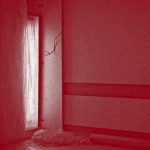
Adapting "Solaris" is already a risky move. Adapting it inside an abandoned-feeling medical corridor, then turning that experience into an album, is the kind of idea that sounds either profound or catastrophically self-serious. "Solaris" by Jannis Anastasakis manages to land somewhere more interesting: a work that understands atmosphere as a living thing, not just a decorative fog machine.
Anastasakis, a guitarist with a long history in experimental and electroacoustic contexts, approaches sound less as composition and more as placement. This makes sense, given the origin story. Commissioned for a stage adaptation of Solaris and inevitably haunted by Solaris, the music was initially designed to inhabit space rather than command attention. And you can hear that. These pieces don’t begin so much as they emerge, like something already present in the walls.
“The Arrival” sets the tone with deceptive restraint, a slow seep rather than a statement. From there, the album unfolds as a sequence of presences rather than tracks. “Visitors” and “Sartorius / Harey” feel less like narrative cues and more like disturbances in perception, subtle shifts in pressure that suggest something watching back. Which, given the source material, is exactly the point.
The instrumentation reads like a small laboratory of controlled unease: electric guitar stretched into texture, synthesizers that hum rather than declare, a musical saw that does what it always does best, which is sounding like something that shouldn’t be alive but clearly is. The addition of improvised noise elements and that peculiar “soundbox” gives the album a tactile quality, as if you could run your hand across it and get slightly cut.
What’s striking is how Anastasakis resists the obvious temptation to dramatize. No sweeping sci-fi gestures, no grand emotional cues telling you when to feel existential dread. Instead, the album cultivates a kind of quiet persistence. It lingers. It observes. It lets unease accumulate in small increments, which is far more effective than the usual cinematic crescendo.
The transition from functional stage music to autonomous listening experience is handled with surprising care. Freed from the constraints of theatrical timing, these pieces don’t expand outward so much as they deepen. The corridor is still there, metaphorically speaking. You’re just walking it alone now, without actors to distract you.
If there’s something faintly ironic here, it’s that a work born to accompany bodies in space ends up being so introspective. This is not music that illustrates "Solaris"; it internalizes it. Memory, projection, the instability of perception. All the usual philosophical baggage, but stripped of rhetoric and reduced to texture and tone.
Room40, under Lawrence English’s curatorial eye, has long specialized in this kind of carefully sculpted ambiguity, and "Solaris" fits neatly into that lineage without feeling derivative. It’s too specific, too tied to its peculiar origin, to be just another entry in the ambient-experimental catalog.
In the end, the album does something quietly unsettling: it refuses to resolve into either narrative or abstraction. It hovers in between, like a thought you can’t quite finish. You expect closure, or at least a gesture toward it. Instead, you get a corridor that keeps extending just a little further than it should.
Anastasakis, a guitarist with a long history in experimental and electroacoustic contexts, approaches sound less as composition and more as placement. This makes sense, given the origin story. Commissioned for a stage adaptation of Solaris and inevitably haunted by Solaris, the music was initially designed to inhabit space rather than command attention. And you can hear that. These pieces don’t begin so much as they emerge, like something already present in the walls.
“The Arrival” sets the tone with deceptive restraint, a slow seep rather than a statement. From there, the album unfolds as a sequence of presences rather than tracks. “Visitors” and “Sartorius / Harey” feel less like narrative cues and more like disturbances in perception, subtle shifts in pressure that suggest something watching back. Which, given the source material, is exactly the point.
The instrumentation reads like a small laboratory of controlled unease: electric guitar stretched into texture, synthesizers that hum rather than declare, a musical saw that does what it always does best, which is sounding like something that shouldn’t be alive but clearly is. The addition of improvised noise elements and that peculiar “soundbox” gives the album a tactile quality, as if you could run your hand across it and get slightly cut.
What’s striking is how Anastasakis resists the obvious temptation to dramatize. No sweeping sci-fi gestures, no grand emotional cues telling you when to feel existential dread. Instead, the album cultivates a kind of quiet persistence. It lingers. It observes. It lets unease accumulate in small increments, which is far more effective than the usual cinematic crescendo.
The transition from functional stage music to autonomous listening experience is handled with surprising care. Freed from the constraints of theatrical timing, these pieces don’t expand outward so much as they deepen. The corridor is still there, metaphorically speaking. You’re just walking it alone now, without actors to distract you.
If there’s something faintly ironic here, it’s that a work born to accompany bodies in space ends up being so introspective. This is not music that illustrates "Solaris"; it internalizes it. Memory, projection, the instability of perception. All the usual philosophical baggage, but stripped of rhetoric and reduced to texture and tone.
Room40, under Lawrence English’s curatorial eye, has long specialized in this kind of carefully sculpted ambiguity, and "Solaris" fits neatly into that lineage without feeling derivative. It’s too specific, too tied to its peculiar origin, to be just another entry in the ambient-experimental catalog.
In the end, the album does something quietly unsettling: it refuses to resolve into either narrative or abstraction. It hovers in between, like a thought you can’t quite finish. You expect closure, or at least a gesture toward it. Instead, you get a corridor that keeps extending just a little further than it should.
maninkari: L’océan rêve dans sa loisiveté – Fourth session
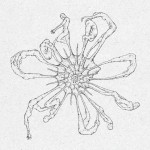
There is always a risk, with records that speak of “ritual” and “spirit instruments”, that they collapse under the weight of their own vocabulary. Incense without fire. Fortunately, maninkari seem largely uninterested in explaining themselves, which already improves the situation.
"L’océan rêve dans sa loisiveté – Fourth session", released by Rope Worm, continues the duo’s long-standing exploration of sound as a kind of slow, interior architecture. The project, led by Olivier and Frédéric (names that feel almost deliberately understated given the music’s ambitions), operates in that ambiguous territory where composition and improvisation stop arguing and start cohabiting uneasily.
The instrumentation alone suggests a certain refusal of convenience: viola, cello, cymbalum, frame drums, wind elements. Nothing here is designed for immediacy. Sustained tones dominate, often circling minor tonalities that never quite resolve, as if resolution itself were a vulgarity best avoided. The result is a sound that doesn’t progress so much as accumulate, layer by patient layer.
The shorter pieces - those cryptically titled fragments like "[-v-] 33" or "[-v-] 34" - function almost like apertures. Brief openings where textures shift, where the ear recalibrates before being drawn back into denser terrain. Then come the longer stretches, particularly "[-v-] 36", where time begins to loosen its grip. Not in a dramatic, cinematic way, but more like a quiet erosion. You stop counting minutes. You start noticing weight, resonance, decay.
There’s a persistent sense of circular motion throughout the album. Not loops in the electronic sense, but gestures that return, slightly altered, as if the music were thinking its way through itself. The cymbalum, in particular, adds a brittle luminosity, a kind of metallic shimmer that hovers above the darker drone of strings and percussion. It’s beautiful, though not in any immediately comforting way.
What distinguishes this “fourth session” from becoming mere ambient drift is its tension. Beneath the meditative surface, there is friction. Bow against string, skin against drum, breath against air. The music resists dissolving into background. It insists, quietly but persistently, on being listened to.
Conceptually, the album leans toward a kind of anti-modern stance: a retreat from the hyper-articulated, over-mediated present into something slower, more tactile. And yet, it never feels nostalgic. There’s no attempt to reconstruct a lost past. Instead, it builds a parallel space where time behaves differently, where attention is not constantly fragmented.
The phrase “the mortality of fire by the rational ego” (one of those lines that sounds either profound or slightly unhinged depending on your mood) actually fits better than expected. There is a sense here of something being subdued, contained, not extinguished but held at a lower intensity. A controlled burn, if you prefer less poetic language.
In the end, "L’océan rêve dans sa loisiveté – Fourth session" is less about transcendence than about duration. About staying within a sound long enough for it to reveal its internal weather. It doesn’t guide you anywhere. It simply opens a space and waits.
Which, in a world addicted to acceleration, feels almost suspiciously patient.
"L’océan rêve dans sa loisiveté – Fourth session", released by Rope Worm, continues the duo’s long-standing exploration of sound as a kind of slow, interior architecture. The project, led by Olivier and Frédéric (names that feel almost deliberately understated given the music’s ambitions), operates in that ambiguous territory where composition and improvisation stop arguing and start cohabiting uneasily.
The instrumentation alone suggests a certain refusal of convenience: viola, cello, cymbalum, frame drums, wind elements. Nothing here is designed for immediacy. Sustained tones dominate, often circling minor tonalities that never quite resolve, as if resolution itself were a vulgarity best avoided. The result is a sound that doesn’t progress so much as accumulate, layer by patient layer.
The shorter pieces - those cryptically titled fragments like "[-v-] 33" or "[-v-] 34" - function almost like apertures. Brief openings where textures shift, where the ear recalibrates before being drawn back into denser terrain. Then come the longer stretches, particularly "[-v-] 36", where time begins to loosen its grip. Not in a dramatic, cinematic way, but more like a quiet erosion. You stop counting minutes. You start noticing weight, resonance, decay.
There’s a persistent sense of circular motion throughout the album. Not loops in the electronic sense, but gestures that return, slightly altered, as if the music were thinking its way through itself. The cymbalum, in particular, adds a brittle luminosity, a kind of metallic shimmer that hovers above the darker drone of strings and percussion. It’s beautiful, though not in any immediately comforting way.
What distinguishes this “fourth session” from becoming mere ambient drift is its tension. Beneath the meditative surface, there is friction. Bow against string, skin against drum, breath against air. The music resists dissolving into background. It insists, quietly but persistently, on being listened to.
Conceptually, the album leans toward a kind of anti-modern stance: a retreat from the hyper-articulated, over-mediated present into something slower, more tactile. And yet, it never feels nostalgic. There’s no attempt to reconstruct a lost past. Instead, it builds a parallel space where time behaves differently, where attention is not constantly fragmented.
The phrase “the mortality of fire by the rational ego” (one of those lines that sounds either profound or slightly unhinged depending on your mood) actually fits better than expected. There is a sense here of something being subdued, contained, not extinguished but held at a lower intensity. A controlled burn, if you prefer less poetic language.
In the end, "L’océan rêve dans sa loisiveté – Fourth session" is less about transcendence than about duration. About staying within a sound long enough for it to reveal its internal weather. It doesn’t guide you anywhere. It simply opens a space and waits.
Which, in a world addicted to acceleration, feels almost suspiciously patient.
bohbi: Factory Dimensia
Artist: bohbi (http://antonzim.com/) (@)
Title: Factory Dimensia
Format: CD + Download
Label: Umland Records (@)
Rated:

Title: Factory Dimensia
Format: CD + Download
Label: Umland Records (@)
Rated:
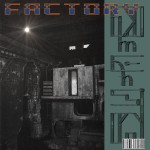
Some records try to be coherent. Others prefer to be honest about the fact that coherence is mostly a social construct we cling to so we don’t spiral mid-commute. "Factory Dimensia", by Anton Zimmermann under his alias bohbi, belongs firmly to the second category.
Zimmermann - drummer, producer, and apparently someone with a high tolerance for internal noise - builds this album like a system under stress. Industrial grit, punk abrasion, and jazz elasticity are thrown together not to fuse cleanly, but to rub against each other until something sparks. The result is a sound that feels less composed than provoked.
From the opening "What Am I Doing This For?" (a title that doubles as a reasonable question for both artist and listener), the album establishes its central tension: propulsion versus collapse. Drums don’t just keep time, they interrogate it. Rhythms lurch, accelerate, fragment. You get the sense that structure is being tested rather than trusted.
What keeps "Factory Dimensia" from dissolving into pure chaos is its strange relationship with melody. Even at its most abrasive, there are fragments of something almost tender hiding underneath. A piano line here, a Rhodes shimmer there, a sax phrase that briefly suggests order before being swallowed again. It’s as if the album can’t decide whether it wants to confront you or confess something.
The ensemble plays a crucial role in maintaining this instability. The presence of players like Jan Klare - switching between sax, clarinet, flute, and EWI - adds a kind of shape-shifting quality, where timbre itself becomes unreliable. One moment you’re in something resembling a free jazz environment, the next you’re knee-deep in a distorted, almost industrial groove that feels like it escaped from a malfunctioning factory floor.
Tracks like "Confusion Or Illusion? (In A Memory)" flirt with introspection, though never long enough to become comfortable. Meanwhile, "24/7 Grind" does exactly what the title promises: it hammers away with a persistence that feels both energizing and faintly exhausting, like productivity culture turned into sound.
There’s also a willingness to embrace cliché - intentionally, almost defiantly. Romantic gestures appear, then get undercut. Kitsch surfaces, then mutates. Instead of avoiding these elements, Zimmermann uses them as raw material, bending them until they lose their original function. It’s a risky move, but here it mostly works, precisely because nothing is allowed to settle.
The dystopian undertone is hard to miss. Not the cinematic, apocalyptic kind, but something more banal and therefore more unsettling: the sense of being trapped in repetitive systems, of noise becoming background until it suddenly isn’t. "Factory Dimensia" mirrors that condition, shifting between immersion and overload, clarity and distortion.
And yet, for all its rough edges, there’s a peculiar warmth running through the album. Not comfort, exactly, but a kind of stubborn humanity. The mess feels lived-in. The contradictions feel intentional, or at least accepted.
In the end, "Factory Dimensia" doesn’t resolve its tensions. It amplifies them, loops them, occasionally dances on them. It’s less a finished object than a process caught in motion, still negotiating with itself.
Not the easiest listen. But then again, neither is thinking too much about why you’re doing any of this in the first place.
Zimmermann - drummer, producer, and apparently someone with a high tolerance for internal noise - builds this album like a system under stress. Industrial grit, punk abrasion, and jazz elasticity are thrown together not to fuse cleanly, but to rub against each other until something sparks. The result is a sound that feels less composed than provoked.
From the opening "What Am I Doing This For?" (a title that doubles as a reasonable question for both artist and listener), the album establishes its central tension: propulsion versus collapse. Drums don’t just keep time, they interrogate it. Rhythms lurch, accelerate, fragment. You get the sense that structure is being tested rather than trusted.
What keeps "Factory Dimensia" from dissolving into pure chaos is its strange relationship with melody. Even at its most abrasive, there are fragments of something almost tender hiding underneath. A piano line here, a Rhodes shimmer there, a sax phrase that briefly suggests order before being swallowed again. It’s as if the album can’t decide whether it wants to confront you or confess something.
The ensemble plays a crucial role in maintaining this instability. The presence of players like Jan Klare - switching between sax, clarinet, flute, and EWI - adds a kind of shape-shifting quality, where timbre itself becomes unreliable. One moment you’re in something resembling a free jazz environment, the next you’re knee-deep in a distorted, almost industrial groove that feels like it escaped from a malfunctioning factory floor.
Tracks like "Confusion Or Illusion? (In A Memory)" flirt with introspection, though never long enough to become comfortable. Meanwhile, "24/7 Grind" does exactly what the title promises: it hammers away with a persistence that feels both energizing and faintly exhausting, like productivity culture turned into sound.
There’s also a willingness to embrace cliché - intentionally, almost defiantly. Romantic gestures appear, then get undercut. Kitsch surfaces, then mutates. Instead of avoiding these elements, Zimmermann uses them as raw material, bending them until they lose their original function. It’s a risky move, but here it mostly works, precisely because nothing is allowed to settle.
The dystopian undertone is hard to miss. Not the cinematic, apocalyptic kind, but something more banal and therefore more unsettling: the sense of being trapped in repetitive systems, of noise becoming background until it suddenly isn’t. "Factory Dimensia" mirrors that condition, shifting between immersion and overload, clarity and distortion.
And yet, for all its rough edges, there’s a peculiar warmth running through the album. Not comfort, exactly, but a kind of stubborn humanity. The mess feels lived-in. The contradictions feel intentional, or at least accepted.
In the end, "Factory Dimensia" doesn’t resolve its tensions. It amplifies them, loops them, occasionally dances on them. It’s less a finished object than a process caught in motion, still negotiating with itself.
Not the easiest listen. But then again, neither is thinking too much about why you’re doing any of this in the first place.
Popsysze: Powięź
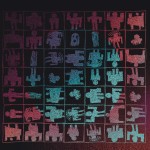
Some bands evolve like organisms. Others mutate like software updates: same structure, slightly more unstable, occasionally more interesting. Popsysze sit somewhere in between, and "Powiez" - their fifth album and third for Zoharum Records - feels less like a reinvention than a tightening of connective tissue. Which is fitting, given that the title itself refers to fascia: that invisible network holding everything together while nobody really thinks about it.
Musically, the trio continues to operate in that fertile no-man’s-land between psychedelic electronica, krautrock repetition, and post-rock expansion. The difference here is density. Where earlier material sometimes drifted, "Powiez" clings. Layers accumulate, rhythms lock in, textures hover just long enough to become environments rather than gestures.
The opening diptych, "Nero 1" and "Nero 2", sets the tone with a kind of deliberate propulsion. Motorik pulses are present, but not dogmatic. They breathe, stretch, occasionally fray at the edges. There’s a sense that the band enjoys structure but doesn’t entirely trust it, which is usually where things get interesting.
Across the album, traces of Afrobeat and desert blues surface like half-remembered radio signals. Not quotations, not even fully formed influences, but tonal ghosts: a rhythmic sway here, a distant melodic contour there. They feel less imported than absorbed, as if Popsysze had left these sounds out in the open long enough for them to weather into something else.
Electronics play a more assertive role this time, but not in the predictable “let’s modernize things” sense. Instead, they function as a kind of atmospheric pressure, compressing and expanding the acoustic elements. The result is a sound that feels simultaneously grounded and suspended, like something trying to decide whether it belongs to a band or a system.
The conceptual thread is where "Powiez" quietly sharpens its teeth. Beneath the swirling textures and extended forms lies a preoccupation with contemporary digital life: algorithms, social media, the slow erosion of attention. The track "Fomo" makes this explicit, though the anxiety runs throughout the record. Not in an overtly critical way, but as a background condition. A low-level hum of unease, like a notification you can’t quite silence.
What’s compelling is how this theme is mirrored in the music’s structure. Repetition becomes both hypnotic and slightly oppressive. Loops suggest continuity, but also entrapment. The listener is drawn in, held there, and gently reminded that immersion is not always the same as freedom.
There’s also a certain dry humor in all this. A band exploring the dangers of dopamine-driven digital environments through long-form, patient compositions that demand sustained attention. It’s almost confrontational in its refusal to be easily consumed. No quick hits, no algorithm-friendly hooks. Just seven tracks that insist on taking their time, like a quiet act of resistance.
"Mrugniecie 1" and "2" - literally “blink” - play with perception in a subtler way, shifting between moments of clarity and blur. Meanwhile, "Nienasycenie" (insatiability) stretches its core idea until it becomes slightly uncomfortable, as if testing how long desire can sustain itself before collapsing into fatigue.
In the end, "Powiez" doesn’t offer resolution. It offers connection. Between genres, between acoustic and electronic, between human impulse and technological mediation. It’s not a dramatic statement, and it doesn’t pretend to be. More like a slow, deliberate weaving of threads that were already there, now pulled tighter.
Not revolutionary, as they themselves admit. But quietly persuasive in the way it makes you aware of the systems you’re already inside.
Musically, the trio continues to operate in that fertile no-man’s-land between psychedelic electronica, krautrock repetition, and post-rock expansion. The difference here is density. Where earlier material sometimes drifted, "Powiez" clings. Layers accumulate, rhythms lock in, textures hover just long enough to become environments rather than gestures.
The opening diptych, "Nero 1" and "Nero 2", sets the tone with a kind of deliberate propulsion. Motorik pulses are present, but not dogmatic. They breathe, stretch, occasionally fray at the edges. There’s a sense that the band enjoys structure but doesn’t entirely trust it, which is usually where things get interesting.
Across the album, traces of Afrobeat and desert blues surface like half-remembered radio signals. Not quotations, not even fully formed influences, but tonal ghosts: a rhythmic sway here, a distant melodic contour there. They feel less imported than absorbed, as if Popsysze had left these sounds out in the open long enough for them to weather into something else.
Electronics play a more assertive role this time, but not in the predictable “let’s modernize things” sense. Instead, they function as a kind of atmospheric pressure, compressing and expanding the acoustic elements. The result is a sound that feels simultaneously grounded and suspended, like something trying to decide whether it belongs to a band or a system.
The conceptual thread is where "Powiez" quietly sharpens its teeth. Beneath the swirling textures and extended forms lies a preoccupation with contemporary digital life: algorithms, social media, the slow erosion of attention. The track "Fomo" makes this explicit, though the anxiety runs throughout the record. Not in an overtly critical way, but as a background condition. A low-level hum of unease, like a notification you can’t quite silence.
What’s compelling is how this theme is mirrored in the music’s structure. Repetition becomes both hypnotic and slightly oppressive. Loops suggest continuity, but also entrapment. The listener is drawn in, held there, and gently reminded that immersion is not always the same as freedom.
There’s also a certain dry humor in all this. A band exploring the dangers of dopamine-driven digital environments through long-form, patient compositions that demand sustained attention. It’s almost confrontational in its refusal to be easily consumed. No quick hits, no algorithm-friendly hooks. Just seven tracks that insist on taking their time, like a quiet act of resistance.
"Mrugniecie 1" and "2" - literally “blink” - play with perception in a subtler way, shifting between moments of clarity and blur. Meanwhile, "Nienasycenie" (insatiability) stretches its core idea until it becomes slightly uncomfortable, as if testing how long desire can sustain itself before collapsing into fatigue.
In the end, "Powiez" doesn’t offer resolution. It offers connection. Between genres, between acoustic and electronic, between human impulse and technological mediation. It’s not a dramatic statement, and it doesn’t pretend to be. More like a slow, deliberate weaving of threads that were already there, now pulled tighter.
Not revolutionary, as they themselves admit. But quietly persuasive in the way it makes you aware of the systems you’re already inside.
Åubin: Cargo
There’s something oddly reassuring about trains. Not the delays, obviously, or the existential dread of platform announcements, but the rhythm: that stubborn, repetitive insistence that something is moving forward, whether you understand the destination or not. Lubin builds "Cargo" entirely inside that logic, and then quietly dismantles it.
This third album is less about trains as objects and more about trains as systems of thought. Over nearly a year of field recordings and compositional work, Lubin reduces railway sound to its skeletal essence: pulses, friction, metallic breath. What remains is not documentary in the traditional sense, but something closer to an internalized infrastructure. The railway stops being a place and becomes a condition.
The track titles - "201 E", "ST 44", "TEM 2" - read like technical labels, almost bureaucratic in their precision. And yet the music they contain is anything but rigid. Beneath the mechanical naming lies a fluid, unstable sound world where glitchy electronics dissolve into field recordings and back again. It’s as if the machines themselves were trying to remember how they sound.
Opening pieces establish the central grammar: repetition as propulsion, texture as narrative. The rhythmic patterns mimic the cadence of wheels on tracks, but never settle into something comfortably loopable. There’s always a slight misalignment, a micro-hesitation that keeps the listener alert. You’re not riding the train. You’re listening from inside its nervous system.
What’s interesting is how "Cargo" avoids the obvious romanticism of travel. No sweeping vistas, no sentimental departures. Movement here is stripped of spectacle. It becomes cyclical, almost claustrophobic. The sense of journey is present, but without arrival. A loop rather than a line.
At times, the album drifts into something resembling a dream of industry: blurred edges, softened impacts, a kind of low-resolution memory of machinery. The glitch elements don’t disrupt so much as corrode, gently destabilizing the rhythmic grid. It’s minimalism, but with a faint anxiety running underneath, like a system that knows it might fail but keeps running anyway.
There’s a quiet intelligence in how Lubin handles time. Tracks stretch without feeling long, compress without feeling abrupt. The longest piece, "Newag 15D", unfolds like a slow recalibration of perception. By the end, rhythm no longer feels like something external. It has migrated inward, syncing with the body in a way that is slightly unsettling if you think about it too much.
If there’s humor here, it’s buried deep. The idea of turning freight trains into introspective, almost meditative compositions carries a certain dry absurdity. Industrial logistics reimagined as emotional cartography. Somewhere, a cargo manifest is being read as poetry.
What "Cargo" ultimately suggests is that infrastructure is never just functional. It accumulates memory, symbolism, even a kind of unconscious meaning. By focusing so closely on the sonic residue of railways, Lubin exposes the thin line between movement and stasis, between system and experience.
It’s not a journey in the traditional sense. More like being gently locked inside a moving mechanism and realizing, after a while, that you’ve started to breathe with it.
This third album is less about trains as objects and more about trains as systems of thought. Over nearly a year of field recordings and compositional work, Lubin reduces railway sound to its skeletal essence: pulses, friction, metallic breath. What remains is not documentary in the traditional sense, but something closer to an internalized infrastructure. The railway stops being a place and becomes a condition.
The track titles - "201 E", "ST 44", "TEM 2" - read like technical labels, almost bureaucratic in their precision. And yet the music they contain is anything but rigid. Beneath the mechanical naming lies a fluid, unstable sound world where glitchy electronics dissolve into field recordings and back again. It’s as if the machines themselves were trying to remember how they sound.
Opening pieces establish the central grammar: repetition as propulsion, texture as narrative. The rhythmic patterns mimic the cadence of wheels on tracks, but never settle into something comfortably loopable. There’s always a slight misalignment, a micro-hesitation that keeps the listener alert. You’re not riding the train. You’re listening from inside its nervous system.
What’s interesting is how "Cargo" avoids the obvious romanticism of travel. No sweeping vistas, no sentimental departures. Movement here is stripped of spectacle. It becomes cyclical, almost claustrophobic. The sense of journey is present, but without arrival. A loop rather than a line.
At times, the album drifts into something resembling a dream of industry: blurred edges, softened impacts, a kind of low-resolution memory of machinery. The glitch elements don’t disrupt so much as corrode, gently destabilizing the rhythmic grid. It’s minimalism, but with a faint anxiety running underneath, like a system that knows it might fail but keeps running anyway.
There’s a quiet intelligence in how Lubin handles time. Tracks stretch without feeling long, compress without feeling abrupt. The longest piece, "Newag 15D", unfolds like a slow recalibration of perception. By the end, rhythm no longer feels like something external. It has migrated inward, syncing with the body in a way that is slightly unsettling if you think about it too much.
If there’s humor here, it’s buried deep. The idea of turning freight trains into introspective, almost meditative compositions carries a certain dry absurdity. Industrial logistics reimagined as emotional cartography. Somewhere, a cargo manifest is being read as poetry.
What "Cargo" ultimately suggests is that infrastructure is never just functional. It accumulates memory, symbolism, even a kind of unconscious meaning. By focusing so closely on the sonic residue of railways, Lubin exposes the thin line between movement and stasis, between system and experience.
It’s not a journey in the traditional sense. More like being gently locked inside a moving mechanism and realizing, after a while, that you’ve started to breathe with it.