
Browse by Genre
Industrial Music / Industrial Metal / Aggro Industrial / Electro Metal
Industrial Noise / Power Noise / Harsh Noise
Synth Pop / Electro Pop / Synth-Electronica
Techno / Trance / Goa / Drum'n'Bass / Jungle / Tribal / Trip-Hop
Ambient / Electronica / Ethereal / Dub / Soundscapes / Abstract
Experimental / Avantgarde / Weird & Wired / Glitch / Noise / Field Recording
Dark / Gothic / Wave / New Wave / Dark Wave / Industrial Gothic
New Music / Downtown / Avantgarde Jazz / New Classical / World
Search Reviews
Music Reviews
Androctonyx: Respawning as a Pearl
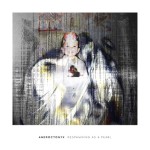
Artist: Androctonyx
Title: Respawning as a Pearl
Format: Download Only (MP3 + Lossless)
Label: Adventurous Music (@)
Rated:

Title: Respawning as a Pearl
Format: Download Only (MP3 + Lossless)
Label: Adventurous Music (@)
Rated:
There is a certain ambition in naming your debut "Respawning as a Pearl". It suggests death, irritation, pressure, rebirth, and at least one philosophical footnote. Subtle it is not. Fortunately, Androctonyx does not aim for subtlety. He aims for transformation.
Behind the alias stands Lucas Gendre, born in the south of France, initially trained in film and philosophy before redirecting his attention toward what he calls power ambient. That background matters. You can hear cinema in the spatial scale of this record, and philosophy in its insistence on becoming rather than being. The album draws from post-cyberpunk atmospheres reminiscent of "Blame!" and from the ancient Gnostic poem “The Hymn of the Pearl”. High-tech dystopia meets early Christian mysticism. Marseille to Mesopotamia, via MAX/MSP.
The premise alone could collapse under its own weight. It does not, largely because the music was created in a single improvised take. That decision keeps the project from turning into conceptual homework. Instead, it breathes, glitches, falters, and surges forward as if discovering itself in real time.
The four-part structure unfolds as a gradual crystallization. Part 1 begins in instability. Electronic debris flickers at the edges. Malfunctioning MAX/MSP processes sputter and recalibrate. Rather than polishing these glitches away, Gendre leans into them. Failure becomes generative. The sound feels raw, unstable, almost embryonic.
By Part 2, shimmering waves emerge, often resembling altered pipe-organ tones stretched beyond liturgical decorum. These are not churchly harmonies meant to soothe. They vibrate with tension, as if the sacred had been routed through damaged circuitry. Layers accumulate slowly, each frequency pressing against the next, building density without resorting to percussive drama.
Part 3 deepens the immersion. Here, the “pearl” metaphor becomes more convincing. The music thickens, its surfaces iridescent but not smooth. Dopaminergic bursts, to borrow the album’s own language, manifest as sudden intensifications in the harmonic field. The listener is drawn into a zone where saturation borders on overload, yet never tips into noise for its own sake. There is intention behind the excess.
The final and longest section, Part 4, feels like emergence. Not triumphant, not euphoric in a simplistic way, but expanded. The earlier glitches seem subsumed into a broader, more coherent flow. The arc is subtle yet perceptible: from malfunction to bloom. From mud to nacre. The transformation is neither clean nor complete, which makes it believable.
The mastering by Lawrence English adds a final layer of authority. The low frequencies carry weight without becoming opaque, while higher textures retain their shimmer. The result is immersive but not suffocating.
What distinguishes "Respawning as a Pearl" from the endless tide of ambient releases is its sense of risk. The improvisational core means there are moments that feel exposed, almost precarious. That vulnerability aligns with the album’s thematic focus on early-stage transformation. This is not the polished gem displayed in a velvet case. It is the irritant lodged in flesh, the slow accretion around it, the discomfort that precedes form.
Gendre’s philosophical background surfaces not through explicit references but through structure. The album treats identity as process. Sound is not fixed material but evolving state. The cybernetic and the mystical are not opposites here; they are parallel metaphors for transcendence through rupture.
As a debut, it is remarkably assured without being rigid. It does not try to impress with complexity for its own sake. Instead, it commits to duration, saturation, and the patient unfolding of texture. The result is intimate yet expansive, meditative yet charged.
Some pearls are cultivated under controlled conditions. This one feels grown in storm water, imperfect and luminous.
Behind the alias stands Lucas Gendre, born in the south of France, initially trained in film and philosophy before redirecting his attention toward what he calls power ambient. That background matters. You can hear cinema in the spatial scale of this record, and philosophy in its insistence on becoming rather than being. The album draws from post-cyberpunk atmospheres reminiscent of "Blame!" and from the ancient Gnostic poem “The Hymn of the Pearl”. High-tech dystopia meets early Christian mysticism. Marseille to Mesopotamia, via MAX/MSP.
The premise alone could collapse under its own weight. It does not, largely because the music was created in a single improvised take. That decision keeps the project from turning into conceptual homework. Instead, it breathes, glitches, falters, and surges forward as if discovering itself in real time.
The four-part structure unfolds as a gradual crystallization. Part 1 begins in instability. Electronic debris flickers at the edges. Malfunctioning MAX/MSP processes sputter and recalibrate. Rather than polishing these glitches away, Gendre leans into them. Failure becomes generative. The sound feels raw, unstable, almost embryonic.
By Part 2, shimmering waves emerge, often resembling altered pipe-organ tones stretched beyond liturgical decorum. These are not churchly harmonies meant to soothe. They vibrate with tension, as if the sacred had been routed through damaged circuitry. Layers accumulate slowly, each frequency pressing against the next, building density without resorting to percussive drama.
Part 3 deepens the immersion. Here, the “pearl” metaphor becomes more convincing. The music thickens, its surfaces iridescent but not smooth. Dopaminergic bursts, to borrow the album’s own language, manifest as sudden intensifications in the harmonic field. The listener is drawn into a zone where saturation borders on overload, yet never tips into noise for its own sake. There is intention behind the excess.
The final and longest section, Part 4, feels like emergence. Not triumphant, not euphoric in a simplistic way, but expanded. The earlier glitches seem subsumed into a broader, more coherent flow. The arc is subtle yet perceptible: from malfunction to bloom. From mud to nacre. The transformation is neither clean nor complete, which makes it believable.
The mastering by Lawrence English adds a final layer of authority. The low frequencies carry weight without becoming opaque, while higher textures retain their shimmer. The result is immersive but not suffocating.
What distinguishes "Respawning as a Pearl" from the endless tide of ambient releases is its sense of risk. The improvisational core means there are moments that feel exposed, almost precarious. That vulnerability aligns with the album’s thematic focus on early-stage transformation. This is not the polished gem displayed in a velvet case. It is the irritant lodged in flesh, the slow accretion around it, the discomfort that precedes form.
Gendre’s philosophical background surfaces not through explicit references but through structure. The album treats identity as process. Sound is not fixed material but evolving state. The cybernetic and the mystical are not opposites here; they are parallel metaphors for transcendence through rupture.
As a debut, it is remarkably assured without being rigid. It does not try to impress with complexity for its own sake. Instead, it commits to duration, saturation, and the patient unfolding of texture. The result is intimate yet expansive, meditative yet charged.
Some pearls are cultivated under controlled conditions. This one feels grown in storm water, imperfect and luminous.
miska lamberg: Evening, window
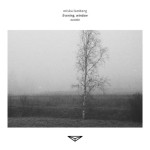
Artist: miska lamberg (@)
Title: Evening, window
Format: Tape + Download
Label: Dragon's Eye Recordings (@)
Rated:
Title: Evening, window
Format: Tape + Download
Label: Dragon's Eye Recordings (@)
Rated:
There are artists who build worlds from oscillators and plug-ins, and then there is miska lamberg, who listens to the world first and only then decides it might already be enough. "Evening, window", released on Dragon’s Eye Recordings, is a debut that does not introduce a new sonic vocabulary so much as rearrange the one we have been ignoring all along.
Based in Helsinki, lamberg identifies primarily as a listener. That detail is not decorative biography. It explains everything. Sensitive to noise, attuned to environmental fragility, and active in projects such as the KATOAVA collective, lamberg approaches composition as a form of recycling. Field recordings become raw material. Rainfall, distant traffic, animal calls, the low hum of “modern” infrastructure bleeding into what we still insist on calling nature. Nothing is erased. Nothing is overly polished. The editing remains minimal, closer to collage than to traditional studio craft.
The opening track, "Half-memories absorb us", establishes the method with disarming clarity. Layers of everyday sound overlap until distinctions blur. It becomes difficult to tell whether the wind is carrying birds or engines, whether the city has infiltrated the forest or the forest has quietly reclaimed the city. Ethereal melodic fragments hover above this texture, then fracture. The effect is neither soothing nor abrasive. It is unsettled, like recalling something important but not quite grasping its shape.
Ambient music often promises calm as a service. "Evening, window" declines that contract. The prevailing mood is a restrained, persistent melancholy, one that feels inseparable from the Nordic winter atmosphere invoked in the album notes. Darkness here is not theatrical. It is seasonal. It lingers.
"Seeing only faces turned away" deepens that emotional contour. The title suggests estrangement, and the soundscape follows suit. Field recordings stretch into elongated tones, blurring into something almost melodic yet never fully resolving. There is a sense of distance, as if the listener were standing just outside a room where something meaningful is happening but cannot quite enter.
The brief but striking "The strings that hold now to then, snapped" introduces a sharper edge. Textures tighten, frequencies scrape more audibly against one another. It feels like rupture, like the moment when nostalgia collapses under its own weight. Lamberg does not dramatize the break; they let it resonate quietly.
On "I remember the day the world lost color", the grayscale metaphor becomes nearly tactile. The piece unfolds in muted layers, subtle shifts in tone suggesting desaturation. Yet even here, small sonic details glint at the periphery. Memory, after all, rarely fades evenly.
"Its monotony is unrelenting" explores repetition not as comfort but as pressure. The steady recurrence of environmental sounds takes on a slightly oppressive quality, reflecting perhaps the cyclical nature of both climate and recollection. There is an understated political undertone in lamberg’s environmental focus. By reusing existing sounds instead of generating new ones, they gesture toward sustainability as aesthetic principle.
The closing track, "A gradual decline", offers no grand catharsis. It recedes slowly, as if daylight were thinning across snow. The album ends not with silence but with a softened persistence, a reminder that the world continues sounding whether we attend to it or not.
Comparisons to hauntological tendencies in contemporary ambient are inevitable. Fragments feel like echoes of a past that is not entirely past. Yet lamberg avoids retro fixation. These are not borrowed ghosts from media archives. They are local, lived acoustics, tied to specific environments and daily routines. The familiarity is personal rather than nostalgic.
"Evening, window" doesn't impose narrative where atmosphere suffices. Lamberg trusts accumulation. They allow overlooked details to gather weight until they form emotional architecture. The result is intimate without being confessional, restrained without being cold.
It turns out the evening window is not a metaphor so much as a position. Stand there long enough, listen carefully enough, and even the smallest sound begins to feel like a story.
Based in Helsinki, lamberg identifies primarily as a listener. That detail is not decorative biography. It explains everything. Sensitive to noise, attuned to environmental fragility, and active in projects such as the KATOAVA collective, lamberg approaches composition as a form of recycling. Field recordings become raw material. Rainfall, distant traffic, animal calls, the low hum of “modern” infrastructure bleeding into what we still insist on calling nature. Nothing is erased. Nothing is overly polished. The editing remains minimal, closer to collage than to traditional studio craft.
The opening track, "Half-memories absorb us", establishes the method with disarming clarity. Layers of everyday sound overlap until distinctions blur. It becomes difficult to tell whether the wind is carrying birds or engines, whether the city has infiltrated the forest or the forest has quietly reclaimed the city. Ethereal melodic fragments hover above this texture, then fracture. The effect is neither soothing nor abrasive. It is unsettled, like recalling something important but not quite grasping its shape.
Ambient music often promises calm as a service. "Evening, window" declines that contract. The prevailing mood is a restrained, persistent melancholy, one that feels inseparable from the Nordic winter atmosphere invoked in the album notes. Darkness here is not theatrical. It is seasonal. It lingers.
"Seeing only faces turned away" deepens that emotional contour. The title suggests estrangement, and the soundscape follows suit. Field recordings stretch into elongated tones, blurring into something almost melodic yet never fully resolving. There is a sense of distance, as if the listener were standing just outside a room where something meaningful is happening but cannot quite enter.
The brief but striking "The strings that hold now to then, snapped" introduces a sharper edge. Textures tighten, frequencies scrape more audibly against one another. It feels like rupture, like the moment when nostalgia collapses under its own weight. Lamberg does not dramatize the break; they let it resonate quietly.
On "I remember the day the world lost color", the grayscale metaphor becomes nearly tactile. The piece unfolds in muted layers, subtle shifts in tone suggesting desaturation. Yet even here, small sonic details glint at the periphery. Memory, after all, rarely fades evenly.
"Its monotony is unrelenting" explores repetition not as comfort but as pressure. The steady recurrence of environmental sounds takes on a slightly oppressive quality, reflecting perhaps the cyclical nature of both climate and recollection. There is an understated political undertone in lamberg’s environmental focus. By reusing existing sounds instead of generating new ones, they gesture toward sustainability as aesthetic principle.
The closing track, "A gradual decline", offers no grand catharsis. It recedes slowly, as if daylight were thinning across snow. The album ends not with silence but with a softened persistence, a reminder that the world continues sounding whether we attend to it or not.
Comparisons to hauntological tendencies in contemporary ambient are inevitable. Fragments feel like echoes of a past that is not entirely past. Yet lamberg avoids retro fixation. These are not borrowed ghosts from media archives. They are local, lived acoustics, tied to specific environments and daily routines. The familiarity is personal rather than nostalgic.
"Evening, window" doesn't impose narrative where atmosphere suffices. Lamberg trusts accumulation. They allow overlooked details to gather weight until they form emotional architecture. The result is intimate without being confessional, restrained without being cold.
It turns out the evening window is not a metaphor so much as a position. Stand there long enough, listen carefully enough, and even the smallest sound begins to feel like a story.
Rytis Mažulis: Tempered Tempus
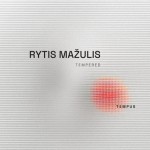
Artist: Rytis Mažulis
Title: Tempered Tempus
Format: CD + Download
Label: Music Information Centre Lithuania (@)
Rated:

Title: Tempered Tempus
Format: CD + Download
Label: Music Information Centre Lithuania (@)
Rated:
There are composers who try to fill the world with sound, and then there is Rytis Mazulis, who calmly takes a single semitone, places it under a microscope, and proceeds to dissect it as if time itself were a specimen slide. "Tempered Tempus", released by Music Information Centre Lithuania, is less an album than a controlled experiment in perception. Two pieces, just under an hour in total, and enough micro-intervallic tension to make your inner ear question its own career choices.
Mazulis has spent decades refining what is often described as radical minimalism, though “minimal” feels misleading. There is nothing sparse about the psychological density of this music. Born in 1961, trained under Julius Juzeliunas, later head of the Composition Department at the Lithuanian Academy of Music and Theatre, and recipient of the Lithuanian National Culture and Arts Prize, Mazulis has built a reputation not by multiplying materials but by restricting them until they combust. His work has long circulated internationally, yet this is the first portrait album issued in Lithuania since the late 1990s, marking the beginning of a two-part cycle. The timing feels deliberate, almost defiant.
Schisma (2007) is the first incision. The title refers both to the acoustical term for a minute interval in tuning systems and to the idea of a split, a fracture. The half-tone is divided into the smallest audible units; time follows suit. The result is a polyphonic micro-canon for cello and fourteen virtual instruments, each operating at its own slightly divergent tempo. The performer, Anton Lukoszevieze, stands at the centre of this vortex, bow in hand, threading a “melody” that feels increasingly unstable as its harmonic ground dissolves into hairline cracks.
Listening to "Schisma" is uncannily clinical. The texture resembles a diagnostic procedure for the brain’s tolerance of ambiguity. Intervals hover in the uneasy space between consonance and abrasion. The canon is strict, but its strictness produces vertigo. One becomes aware not of thematic development in any conventional sense, but of microscopic displacements accumulating over time. The piece does not shout; it insists. It demands a specific kind of attention, one that accepts multipolarity as a basic condition. Endurance is required, but not as punishment. More as initiation.
If "Schisma" is about fracture, Solipse (2018) turns inward. Commissioned for the Tectonics Festival in Glasgow and dedicated to Lukoszevieze, it is conceived for cello and phonogram, the electronic layer realised in collaboration with Julius Aglinskas. Here, micro-intervals are arranged according to a statistically derived arithmetic progression. That sounds dry. It is not. The gradual expansion of pitch space creates a slow, hypnotic drift, as if the music were exhaling in increments too subtle to measure without instruments.
The title suggests solipsism, and indeed the piece feels monistic: a single consciousness unfolding within itself. The cello line interacts with its pre-recorded double in a dialogue that never quite becomes a duet. Instead, it is a mirroring process, slightly misaligned, producing a shimmering hyper-dissonance. Mazulis’ frequent use of computer technology underlines the repetitive principle, yet the live instrument keeps the texture alive, imperfect, almost vulnerable. The transformation is glacial, but it is real. By the end, one’s sense of temporal proportion has shifted, quietly but irrevocably.
Lukoszevieze proves an ideal interpreter. Founder of the experimental ensemble Apartment House and a longstanding advocate of contemporary repertoire, he approaches Mazulis’ demands not as exotic challenges but as natural extensions of musical practice. His tone remains focused even when the harmonic field fractures into microtonal dust. The recording, made at the Music Innovation Studies Centre in Vilnius, captures this balance between austerity and organic resonance with remarkable clarity.
Recent events underscore Mazulis’ continued relevance: a new version of "Canon Mensurabilis" premiered at the 2025 Huddersfield Contemporary Music Festival, and a nomination for the Prince Pierre of Monaco Foundation’s Musical Composition Prize places him firmly within a broader European conversation. What distinguishes him, however, is not institutional recognition but consistency of vision. Few composers pursue a single idea so relentlessly without collapsing into self-parody.
"Tempered Tempus" does not offer comfort listening. It is precise, ascetic, and occasionally unnerving. Yet within its narrow parameters lies a strangely expansive experience. By subdividing pitch and time to near-absurd degrees, Mazulis opens a space where perception itself becomes audible. The album feels like a study in limits, and in the quiet ecstasy that can emerge when those limits are accepted rather than denied.
One finishes the disc slightly altered, as if the internal clock had been recalibrated by a patient, uncompromising hand. Not many records can claim that. Fewer still would dare try.
Mazulis has spent decades refining what is often described as radical minimalism, though “minimal” feels misleading. There is nothing sparse about the psychological density of this music. Born in 1961, trained under Julius Juzeliunas, later head of the Composition Department at the Lithuanian Academy of Music and Theatre, and recipient of the Lithuanian National Culture and Arts Prize, Mazulis has built a reputation not by multiplying materials but by restricting them until they combust. His work has long circulated internationally, yet this is the first portrait album issued in Lithuania since the late 1990s, marking the beginning of a two-part cycle. The timing feels deliberate, almost defiant.
Schisma (2007) is the first incision. The title refers both to the acoustical term for a minute interval in tuning systems and to the idea of a split, a fracture. The half-tone is divided into the smallest audible units; time follows suit. The result is a polyphonic micro-canon for cello and fourteen virtual instruments, each operating at its own slightly divergent tempo. The performer, Anton Lukoszevieze, stands at the centre of this vortex, bow in hand, threading a “melody” that feels increasingly unstable as its harmonic ground dissolves into hairline cracks.
Listening to "Schisma" is uncannily clinical. The texture resembles a diagnostic procedure for the brain’s tolerance of ambiguity. Intervals hover in the uneasy space between consonance and abrasion. The canon is strict, but its strictness produces vertigo. One becomes aware not of thematic development in any conventional sense, but of microscopic displacements accumulating over time. The piece does not shout; it insists. It demands a specific kind of attention, one that accepts multipolarity as a basic condition. Endurance is required, but not as punishment. More as initiation.
If "Schisma" is about fracture, Solipse (2018) turns inward. Commissioned for the Tectonics Festival in Glasgow and dedicated to Lukoszevieze, it is conceived for cello and phonogram, the electronic layer realised in collaboration with Julius Aglinskas. Here, micro-intervals are arranged according to a statistically derived arithmetic progression. That sounds dry. It is not. The gradual expansion of pitch space creates a slow, hypnotic drift, as if the music were exhaling in increments too subtle to measure without instruments.
The title suggests solipsism, and indeed the piece feels monistic: a single consciousness unfolding within itself. The cello line interacts with its pre-recorded double in a dialogue that never quite becomes a duet. Instead, it is a mirroring process, slightly misaligned, producing a shimmering hyper-dissonance. Mazulis’ frequent use of computer technology underlines the repetitive principle, yet the live instrument keeps the texture alive, imperfect, almost vulnerable. The transformation is glacial, but it is real. By the end, one’s sense of temporal proportion has shifted, quietly but irrevocably.
Lukoszevieze proves an ideal interpreter. Founder of the experimental ensemble Apartment House and a longstanding advocate of contemporary repertoire, he approaches Mazulis’ demands not as exotic challenges but as natural extensions of musical practice. His tone remains focused even when the harmonic field fractures into microtonal dust. The recording, made at the Music Innovation Studies Centre in Vilnius, captures this balance between austerity and organic resonance with remarkable clarity.
Recent events underscore Mazulis’ continued relevance: a new version of "Canon Mensurabilis" premiered at the 2025 Huddersfield Contemporary Music Festival, and a nomination for the Prince Pierre of Monaco Foundation’s Musical Composition Prize places him firmly within a broader European conversation. What distinguishes him, however, is not institutional recognition but consistency of vision. Few composers pursue a single idea so relentlessly without collapsing into self-parody.
"Tempered Tempus" does not offer comfort listening. It is precise, ascetic, and occasionally unnerving. Yet within its narrow parameters lies a strangely expansive experience. By subdividing pitch and time to near-absurd degrees, Mazulis opens a space where perception itself becomes audible. The album feels like a study in limits, and in the quiet ecstasy that can emerge when those limits are accepted rather than denied.
One finishes the disc slightly altered, as if the internal clock had been recalibrated by a patient, uncompromising hand. Not many records can claim that. Fewer still would dare try.
Eric Angelo Bessel: Mirror At Night
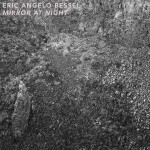
Artist: Eric Angelo Bessel (@)
Title: Mirror At Night
Format: 12" + Download
Label: self-released
Rated:
Title: Mirror At Night
Format: 12" + Download
Label: self-released
Rated:
'Mirror At Night' is the second solo album by the male half of Lore City, from Portland, Oregon. It's funny how this review came about. I received a 7" vinyl record in the mail titled "Mirror At Night B-Sides" when I wasn't even aware Bessel had a new album out (released October 31, 2025). The release date for this record (they call it an EP but really it's just a 2-sided single) is February 25th for preview and Mach 27th for the physical product.
So this review is for both the album and the single. Eric's first solo album ('Visitation') was ambient and so is 'Mirror At Night,' consisting of twelve brief tracks, most of which barely exceed the four minute mark. Kicking things off with "Tendons," the track seems to rely solely on manipulated guitar sonics that incorporates elements of feedback. "Snow Globe" has a more expansive sound with shimmering echo and heavily modified synth pads. "Scavengers" incorporates interesting synth programming with heavily chambered ambience. Somewhat spooky, or ghostly. "Recombinant" has a more experimental temperament with broken melodies floating and bumping into each other in a weightless dimension. "Non-diegetic Sound" is typically ambient with sustained, richly textured chordal pads. There is a sense of motion on the aptly titled "Moving Walkway" and some sonics in it could allude to a transportation hub or station. The briefest track, "Hesitation" (only 1:43) is primarily sustained melancholy strings. "Headlamps" takes echo effects to a new level but manages to coax something nearly melodic out of the chaos. It kind of reminds me of radio music from a distant station that comes in waves when the signal is not strong. It's all heavenly clouds on "Coming Around" and there is a subtle melodic loop in the drift. "Clearing" is richly orchestral and sonically the opposite of the previous track. I'm imagining Poseidon's orchestra tuning up. So what stays afloat in this ocean of sound? Must be the next track, "Buoy," adrift on the sea of sonority. Finally, we end up in the "Aphotic Zone," a murky trip into the underwater depths. Quite an interesting episodic album.
As for the 'Mirror At Night B-Sides,' these are two track not on the album. The A-side is "Double Helix" (4:31) and "Upstate" (4:08) as the B-side. While the A-side of the B-sides is a little better than the B-side of the B-sides with its echoey shimmering slice of ambience, it sounds more like an effect that should lead to something else and not stand alone. To me, this is merely a curiosity piece and less interesting than anything on the album. I think the ten-buck price tag will limit the appeal to vinyl collectors of oddities on wax with money to burn. Just buy (download) the album and leave it at that as it is a dollar cheaper, or $22.00 if you want it on vinyl.
So this review is for both the album and the single. Eric's first solo album ('Visitation') was ambient and so is 'Mirror At Night,' consisting of twelve brief tracks, most of which barely exceed the four minute mark. Kicking things off with "Tendons," the track seems to rely solely on manipulated guitar sonics that incorporates elements of feedback. "Snow Globe" has a more expansive sound with shimmering echo and heavily modified synth pads. "Scavengers" incorporates interesting synth programming with heavily chambered ambience. Somewhat spooky, or ghostly. "Recombinant" has a more experimental temperament with broken melodies floating and bumping into each other in a weightless dimension. "Non-diegetic Sound" is typically ambient with sustained, richly textured chordal pads. There is a sense of motion on the aptly titled "Moving Walkway" and some sonics in it could allude to a transportation hub or station. The briefest track, "Hesitation" (only 1:43) is primarily sustained melancholy strings. "Headlamps" takes echo effects to a new level but manages to coax something nearly melodic out of the chaos. It kind of reminds me of radio music from a distant station that comes in waves when the signal is not strong. It's all heavenly clouds on "Coming Around" and there is a subtle melodic loop in the drift. "Clearing" is richly orchestral and sonically the opposite of the previous track. I'm imagining Poseidon's orchestra tuning up. So what stays afloat in this ocean of sound? Must be the next track, "Buoy," adrift on the sea of sonority. Finally, we end up in the "Aphotic Zone," a murky trip into the underwater depths. Quite an interesting episodic album.
As for the 'Mirror At Night B-Sides,' these are two track not on the album. The A-side is "Double Helix" (4:31) and "Upstate" (4:08) as the B-side. While the A-side of the B-sides is a little better than the B-side of the B-sides with its echoey shimmering slice of ambience, it sounds more like an effect that should lead to something else and not stand alone. To me, this is merely a curiosity piece and less interesting than anything on the album. I think the ten-buck price tag will limit the appeal to vinyl collectors of oddities on wax with money to burn. Just buy (download) the album and leave it at that as it is a dollar cheaper, or $22.00 if you want it on vinyl.
theAdelaidean: Nine Breaths
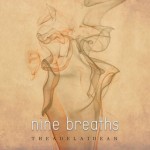
Artist: theAdelaidean (@)
Title: Nine Breaths
Format: Download Only (MP3 + Lossless)
Label: Projekt (@)
Rated:
Title: Nine Breaths
Format: Download Only (MP3 + Lossless)
Label: Projekt (@)
Rated:
Ambient music often promises transcendence and delivers wallpaper. "Nine Breaths" by theAdelaidean aims smaller and, paradoxically, reaches further. It does not attempt to soundtrack the cosmos. It studies dust in a beam of light and treats it like revelation.
Behind the moniker stands Sean Williams, known in another literary universe as a #1 "New York Times"-bestselling author and award-winning poet. Here, prose discipline and poetic economy migrate into sound. The concept borrows from the haiku’s brevity, the idea that a single breath can contain an entire emotional shift. Each track corresponds to a short poem, and rather than illustrating them in a literal way, the music expands their internal atmosphere.
The palette is restrained: sustained drones, gently evolving synth layers, thick but soft harmonic beds. There is no percussive insistence, no theatrical crescendo. The focus is on micro-variation. Frequencies drift, overlap, dissolve. The production avoids sharp edges, favoring a rounded resonance that feels less like composition and more like a slowly inhaled thought.
"The Unforeseen" opens with a fragile spaciousness. Tones hover as if uncertain of their own gravity. It mirrors the haiku about a shattered window framing what lies beyond. The music does not dramatize the break; it lingers in the opening. "Sunrise", stretching past ten minutes, unfolds with incremental harmonic brightening. It avoids sentimental uplift. Instead, it suggests the quiet mechanics of light expanding across a surface.
On "Resonant Woods", layered textures accumulate in subtle dialogue, evoking the poem’s “call and response”. There is a suggestion of depth, like standing within a forest where echoes blur direction. "Tremble in Worship" introduces faint tremors within the drone field, barely perceptible fluctuations that keep the stillness alive. The effect is meditative without becoming inert.
"Courting Dust" may be the album’s most delicate moment. High-frequency shimmer interacts with lower sustained tones, producing a sensation of particles suspended mid-air. It would be easy to dismiss this as pleasant ambience, but the detail work resists that reduction. Each layer enters with intention.
"Cathedral Under Construction" builds slowly, not in volume but in density. Harmonic overtones stack carefully, as if architecture were forming from vapor. "Loss" compresses its emotional weight into a shorter frame, a muted resonance that never spills into melodrama. "Spiraling Thought" circles gently around a central tonal axis, echoing the haiku’s interrupted motion.
Then there is "Horizon". At over an hour, it occupies the entire second disc alone. This is either bold minimalism or a test of patience, depending on your temperament. The track evolves at a glacial pace, expanding and thinning in long arcs. It asks for surrender. If you are inclined to check your phone every few minutes, the piece will outlast your attention span without apology. If you remain, it gradually reframes perception. Subtle modulations become events. Silence gains contour.
What distinguishes "Nine Breaths" is its refusal to equate stillness with emptiness. The album suggests that beneath routine moments lies a layered emotional topography. Williams’ literary background is audible not through grand gestures, but through restraint. He understands negative space. He allows implication to do the heavy lifting.
This is not background music for productivity playlists. It is closer to an invitation to slow down and notice the small internal shifts that occur between inhalation and exhalation. The record implies that every breath contains a composition, if one listens carefully enough.
In a culture addicted to acceleration, "Nine Breaths" proposes something almost subversive: depth without spectacle. It does not demand transformation. It simply demonstrates how quietly it can happen.
Behind the moniker stands Sean Williams, known in another literary universe as a #1 "New York Times"-bestselling author and award-winning poet. Here, prose discipline and poetic economy migrate into sound. The concept borrows from the haiku’s brevity, the idea that a single breath can contain an entire emotional shift. Each track corresponds to a short poem, and rather than illustrating them in a literal way, the music expands their internal atmosphere.
The palette is restrained: sustained drones, gently evolving synth layers, thick but soft harmonic beds. There is no percussive insistence, no theatrical crescendo. The focus is on micro-variation. Frequencies drift, overlap, dissolve. The production avoids sharp edges, favoring a rounded resonance that feels less like composition and more like a slowly inhaled thought.
"The Unforeseen" opens with a fragile spaciousness. Tones hover as if uncertain of their own gravity. It mirrors the haiku about a shattered window framing what lies beyond. The music does not dramatize the break; it lingers in the opening. "Sunrise", stretching past ten minutes, unfolds with incremental harmonic brightening. It avoids sentimental uplift. Instead, it suggests the quiet mechanics of light expanding across a surface.
On "Resonant Woods", layered textures accumulate in subtle dialogue, evoking the poem’s “call and response”. There is a suggestion of depth, like standing within a forest where echoes blur direction. "Tremble in Worship" introduces faint tremors within the drone field, barely perceptible fluctuations that keep the stillness alive. The effect is meditative without becoming inert.
"Courting Dust" may be the album’s most delicate moment. High-frequency shimmer interacts with lower sustained tones, producing a sensation of particles suspended mid-air. It would be easy to dismiss this as pleasant ambience, but the detail work resists that reduction. Each layer enters with intention.
"Cathedral Under Construction" builds slowly, not in volume but in density. Harmonic overtones stack carefully, as if architecture were forming from vapor. "Loss" compresses its emotional weight into a shorter frame, a muted resonance that never spills into melodrama. "Spiraling Thought" circles gently around a central tonal axis, echoing the haiku’s interrupted motion.
Then there is "Horizon". At over an hour, it occupies the entire second disc alone. This is either bold minimalism or a test of patience, depending on your temperament. The track evolves at a glacial pace, expanding and thinning in long arcs. It asks for surrender. If you are inclined to check your phone every few minutes, the piece will outlast your attention span without apology. If you remain, it gradually reframes perception. Subtle modulations become events. Silence gains contour.
What distinguishes "Nine Breaths" is its refusal to equate stillness with emptiness. The album suggests that beneath routine moments lies a layered emotional topography. Williams’ literary background is audible not through grand gestures, but through restraint. He understands negative space. He allows implication to do the heavy lifting.
This is not background music for productivity playlists. It is closer to an invitation to slow down and notice the small internal shifts that occur between inhalation and exhalation. The record implies that every breath contains a composition, if one listens carefully enough.
In a culture addicted to acceleration, "Nine Breaths" proposes something almost subversive: depth without spectacle. It does not demand transformation. It simply demonstrates how quietly it can happen.