
Browse by Genre
Industrial Music / Industrial Metal / Aggro Industrial / Electro Metal
Industrial Noise / Power Noise / Harsh Noise
Synth Pop / Electro Pop / Synth-Electronica
Techno / Trance / Goa / Drum'n'Bass / Jungle / Tribal / Trip-Hop
Ambient / Electronica / Ethereal / Dub / Soundscapes / Abstract
Experimental / Avantgarde / Weird & Wired / Glitch / Noise / Field Recording
Dark / Gothic / Wave / New Wave / Dark Wave / Industrial Gothic
New Music / Downtown / Avantgarde Jazz / New Classical / World
Search Reviews
Music Reviews
Negative Agent: Terminal Days
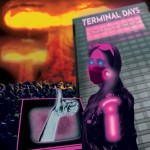

Industrial music has always had an awkward relationship with the future. It spent decades warning us about surveillance, corporate power, dehumanization and technological dependency, only to discover that reality was taking notes. "Terminal Days", the debut album from New York's Negative Agent, arrives in a political and cultural climate where dystopian fiction increasingly resembles yesterday's news feed. Rather than offering detached science fiction, Brian Stillman channels that uncomfortable overlap into an album that refuses neutrality. It is loud, confrontational, often sarcastic, and entirely unconcerned with appearing diplomatic.
Stillman is hardly a newcomer to the industrial underground. Having been immersed in New York's goth and industrial scene since the early 1990s and co-running the long-lived Contempt club night for over a decade, he understands that industrial music was never merely about distorted drum machines or intimidating aesthetics. At its strongest, it has always weaponized rhythm against complacency, from the mechanized assaults of Ministry and Front Line Assembly to the metallic futurism of Fear Factory and the post-punk fury of Killing Joke. "Terminal Days" consciously places itself within that lineage while updating its targets for the algorithmic age.
The album opens with "Mind Wipe", immediately establishing its central anxiety: the gradual replacement of human agency by data extraction, artificial intelligence, corporate manipulation and endless digital mediation. The lyrics could easily collapse under the weight of their own outrage, yet Stillman avoids turning the song into a lecture by wrapping every accusation inside muscular riffs, tightly programmed electronics and memorable hooks. The anger is genuine, but so is the craftsmanship.
That balance continues throughout the record. "Pain Control" shifts its attention toward systemic inequality and political corruption, combining relentless guitars with pounding electronic percussion that recalls the dancefloor instincts of classic electro-industrial. One of the album's strengths is its refusal to separate protest from pleasure. These songs are built to move bodies as much as consciences. Humans have always coped with catastrophe by dancing. Sometimes history resembles an apocalypse with surprisingly good bass response.
The title track, "Terminal Days", arguably represents the album's conceptual centre. Here the recurring themes of technological alienation, algorithmic control and cultural erosion merge into imagery that feels simultaneously cyberpunk and painfully contemporary. Rather than relying on futuristic fantasy, the song describes a world where creativity itself risks becoming another commodity to be mined, optimized and monetized. The production reinforces this tension beautifully, layering grinding guitars with nervous synthesizers and glitch-like textures that never overwhelm the songs themselves.
Perhaps the album's most provocative moment arrives with "Fascist Beatdown". Its deliberately blunt title leaves little room for interpretative gymnastics, and its tongue-in-cheek swagger injects a welcome dose of black humour into otherwise bleak subject matter. Industrial has often flirted with authoritarian imagery in deliberately ambiguous ways, sometimes to uncomfortable effect. Negative Agent rejects ambiguity entirely, opting instead for open confrontation wrapped inside a chorus designed for sweaty clubs rather than academic debates.
Elsewhere, "Boot Licker" examines the psychology of complicity rather than overt oppression, suggesting that authoritarian systems survive not only through power but through ordinary acts of surrender. Meanwhile "Dead in Berlin" broadens the album's narrative scope, drawing on Cold War iconography and espionage cinema to create one of the record's most atmospheric pieces. Echoes of David Bowie and Brian Eno hover over its rain-soaked streets without becoming empty nostalgia, transforming Berlin into both a physical city and a metaphor for fractured identities.
Musically, "Terminal Days" rarely tries to reinvent industrial metal. Instead, it refines familiar vocabulary with conviction and attention to dynamics. Thick guitar walls collide with precise electronic programming, while guest appearances from Steve Wiener and Greg Schwan add subtle variation without distracting from Stillman's singular vision. The closing Voidscan remix of "Fascist Beatdown" naturally shifts the emphasis toward club functionality, reminding listeners that resistance occasionally wears combat boots and occasionally dancing shoes.
What ultimately separates "Terminal Days" from many overtly political records is its awareness that outrage alone rarely produces memorable music. Stillman understands pacing, melody and texture. Even when the lyrics deliver uncompromising criticism of surveillance capitalism, authoritarian politics or technological evangelism, the compositions remain engaging as songs rather than functioning solely as ideological pamphlets.
Whether one shares every political conclusion is almost beside the point. The album succeeds because it captures an emotional landscape familiar to many contemporary listeners: exhaustion, disbelief, anger, dark humour and the stubborn refusal to surrender completely. Its vision of America may be bleak, but beneath the distortion lies an insistence that speaking out still matters, even when the machines seem to be winning.
"Terminal Days" is not interested in comforting anyone. It is interested in shaking shoulders, rattling speakers and reminding listeners that industrial music was never supposed to provide safe spaces. It was built to make comfortable people uncomfortable, and uncomfortable people feel a little less alone. On that front, Negative Agent's debut lands with impressive force.
Stillman is hardly a newcomer to the industrial underground. Having been immersed in New York's goth and industrial scene since the early 1990s and co-running the long-lived Contempt club night for over a decade, he understands that industrial music was never merely about distorted drum machines or intimidating aesthetics. At its strongest, it has always weaponized rhythm against complacency, from the mechanized assaults of Ministry and Front Line Assembly to the metallic futurism of Fear Factory and the post-punk fury of Killing Joke. "Terminal Days" consciously places itself within that lineage while updating its targets for the algorithmic age.
The album opens with "Mind Wipe", immediately establishing its central anxiety: the gradual replacement of human agency by data extraction, artificial intelligence, corporate manipulation and endless digital mediation. The lyrics could easily collapse under the weight of their own outrage, yet Stillman avoids turning the song into a lecture by wrapping every accusation inside muscular riffs, tightly programmed electronics and memorable hooks. The anger is genuine, but so is the craftsmanship.
That balance continues throughout the record. "Pain Control" shifts its attention toward systemic inequality and political corruption, combining relentless guitars with pounding electronic percussion that recalls the dancefloor instincts of classic electro-industrial. One of the album's strengths is its refusal to separate protest from pleasure. These songs are built to move bodies as much as consciences. Humans have always coped with catastrophe by dancing. Sometimes history resembles an apocalypse with surprisingly good bass response.
The title track, "Terminal Days", arguably represents the album's conceptual centre. Here the recurring themes of technological alienation, algorithmic control and cultural erosion merge into imagery that feels simultaneously cyberpunk and painfully contemporary. Rather than relying on futuristic fantasy, the song describes a world where creativity itself risks becoming another commodity to be mined, optimized and monetized. The production reinforces this tension beautifully, layering grinding guitars with nervous synthesizers and glitch-like textures that never overwhelm the songs themselves.
Perhaps the album's most provocative moment arrives with "Fascist Beatdown". Its deliberately blunt title leaves little room for interpretative gymnastics, and its tongue-in-cheek swagger injects a welcome dose of black humour into otherwise bleak subject matter. Industrial has often flirted with authoritarian imagery in deliberately ambiguous ways, sometimes to uncomfortable effect. Negative Agent rejects ambiguity entirely, opting instead for open confrontation wrapped inside a chorus designed for sweaty clubs rather than academic debates.
Elsewhere, "Boot Licker" examines the psychology of complicity rather than overt oppression, suggesting that authoritarian systems survive not only through power but through ordinary acts of surrender. Meanwhile "Dead in Berlin" broadens the album's narrative scope, drawing on Cold War iconography and espionage cinema to create one of the record's most atmospheric pieces. Echoes of David Bowie and Brian Eno hover over its rain-soaked streets without becoming empty nostalgia, transforming Berlin into both a physical city and a metaphor for fractured identities.
Musically, "Terminal Days" rarely tries to reinvent industrial metal. Instead, it refines familiar vocabulary with conviction and attention to dynamics. Thick guitar walls collide with precise electronic programming, while guest appearances from Steve Wiener and Greg Schwan add subtle variation without distracting from Stillman's singular vision. The closing Voidscan remix of "Fascist Beatdown" naturally shifts the emphasis toward club functionality, reminding listeners that resistance occasionally wears combat boots and occasionally dancing shoes.
What ultimately separates "Terminal Days" from many overtly political records is its awareness that outrage alone rarely produces memorable music. Stillman understands pacing, melody and texture. Even when the lyrics deliver uncompromising criticism of surveillance capitalism, authoritarian politics or technological evangelism, the compositions remain engaging as songs rather than functioning solely as ideological pamphlets.
Whether one shares every political conclusion is almost beside the point. The album succeeds because it captures an emotional landscape familiar to many contemporary listeners: exhaustion, disbelief, anger, dark humour and the stubborn refusal to surrender completely. Its vision of America may be bleak, but beneath the distortion lies an insistence that speaking out still matters, even when the machines seem to be winning.
"Terminal Days" is not interested in comforting anyone. It is interested in shaking shoulders, rattling speakers and reminding listeners that industrial music was never supposed to provide safe spaces. It was built to make comfortable people uncomfortable, and uncomfortable people feel a little less alone. On that front, Negative Agent's debut lands with impressive force.
AMAS & Frithjof-Martin Grabner: SRDGN X LPZG
Artist: AMAS & Frithjof-Martin Grabner (@)
Title: SRDGN X LPZG
Format: LP
Label: AMAS_STUDIO (@)
Rated:

Title: SRDGN X LPZG
Format: LP
Label: AMAS_STUDIO (@)
Rated:
Johann Sebastian Bach has been remixed, sampled, orchestrated, jazzified, electronicized and otherwise recruited into more musical causes than he could probably have imagined. At this point, announcing yet another "reinterpretation" of the Leipzig master risks sounding like the cultural equivalent of repainting the Mona Lisa with glow-in-the-dark nail polish. Fortunately, "SRDGN X LPZG" takes a far more interesting route. Rather than dressing Bach in contemporary clothes, AMAS strip his music down to its architectural skeleton, searching for the repetitive logic and mathematical elegance that have quietly linked Baroque composition to minimalism for decades.
The duo's concept is deceptively simple yet remarkably ambitious. During an extended creative process divided between the rugged landscapes of southern Sardinia and the disciplined atmosphere of Leipzig, AMAS extracted rhythmic and harmonic DNA from fourteen Bach compositions, reducing them into minimalist electronic frameworks enriched by field recordings. Instead of preserving familiar melodies, they preserve relationships: patterns, tensions, proportions. The result feels less like arranging Bach than reverse-engineering his thought process.
The second half of the equation arrives through Frithjof-Martin Grabner, one of Germany's most respected double bass players, whose career spans classical performance, chamber music and countless contemporary collaborations. His improvisations never function as decorative soloing. Instead, they become another environmental element, sometimes earthy and tactile, sometimes so heavily processed that the bass dissolves into ambiguous textures hovering between acoustic resonance and synthetic illusion. There are moments where identifying the instrument becomes almost impossible, and that uncertainty is precisely where much of the album's fascination resides.
From the opening pulse of "ANKUNFT", the record establishes an atmosphere of patient movement. Tracks such as "WEITE" and "NACHT" expand with understated confidence, allowing tiny shifts in harmony and timbre to accumulate emotional weight rather than announcing themselves dramatically. Elsewhere, "RAUSCH" and "CHAOS" introduce denser rhythmic currents without abandoning the contemplative core, while "KLARHEIT" and the closing "ABSCHIED" suggest a fragile reconciliation between precision and intuition.
Listeners familiar with dub techno will immediately recognize the spacious production aesthetic: deep reverberations, restrained low-end movement, and an almost geological sense of time. Yet unlike many productions built around hypnotic repetition, "SRDGN X LPZG" never feels mechanically loop-based. Every cycle breathes. Every recurrence carries microscopic alterations, recalling both Steve Reich's phase experiments and the organic patience of contemporary electroacoustic composition.
The Sardinian field recordings deserve particular mention. Rather than functioning as picturesque postcards from the Mediterranean, they integrate seamlessly into the musical language, blurring distinctions between environment and composition. Wind, distant ambience and subtle environmental textures become structural voices rather than ornamental background. Geography itself participates in the music, quietly reminding us that places have rhythms just as people do.
One of the album's most rewarding qualities is its refusal to indulge in obvious virtuosity. Despite Grabner's formidable technique and AMAS' sophisticated production methods, the project consistently privileges atmosphere over demonstration. The reference to Miles Davis' "Ascenseur pour l'échafaud" sessions is not accidental: intuition repeatedly wins over calculation, even though immense calculation clearly underpins the entire construction. Like a beautifully engineered bridge, the album works best when listeners stop admiring the engineering and simply cross it.
There is also something quietly humorous about the whole enterprise. Bach, often imprisoned behind marble busts and academic reverence, finds himself wandering through dub echoes, environmental recordings and hypnotic loops without losing an ounce of dignity. If anything, "SRDGN X LPZG" suggests that the old Kantor may have always contained these possibilities. After all, counterpoint is already a form of controlled repetition; minimalism merely stretches the thread until its hidden geometry becomes visible.
AMAS demonstrate remarkable restraint throughout the seventy-plus minutes, resisting the temptation to overwhelm listeners with conceptual explanations. The music trusts repetition to reveal meaning gradually, much as landscapes disclose themselves differently depending on how long one remains within them. Sardinia's expansive horizons and Leipzig's intellectual heritage become less opposing poles than complementary states of listening.
Ultimately, "SRDGN X LPZG" succeeds because it approaches history neither as sacred relic nor disposable raw material. It treats Bach as a living system whose internal mechanics continue generating unexpected futures. In an era where many cross-genre experiments seem content to place unlikely ingredients into the same bowl and call it innovation, AMAS instead search for common roots buried beneath centuries of musical evolution. The result is neither homage nor deconstruction, but an elegant conversation across time, where Baroque order, ambient drift and dub-techno repetition quietly discover they have been speaking related dialects all along.
The duo's concept is deceptively simple yet remarkably ambitious. During an extended creative process divided between the rugged landscapes of southern Sardinia and the disciplined atmosphere of Leipzig, AMAS extracted rhythmic and harmonic DNA from fourteen Bach compositions, reducing them into minimalist electronic frameworks enriched by field recordings. Instead of preserving familiar melodies, they preserve relationships: patterns, tensions, proportions. The result feels less like arranging Bach than reverse-engineering his thought process.
The second half of the equation arrives through Frithjof-Martin Grabner, one of Germany's most respected double bass players, whose career spans classical performance, chamber music and countless contemporary collaborations. His improvisations never function as decorative soloing. Instead, they become another environmental element, sometimes earthy and tactile, sometimes so heavily processed that the bass dissolves into ambiguous textures hovering between acoustic resonance and synthetic illusion. There are moments where identifying the instrument becomes almost impossible, and that uncertainty is precisely where much of the album's fascination resides.
From the opening pulse of "ANKUNFT", the record establishes an atmosphere of patient movement. Tracks such as "WEITE" and "NACHT" expand with understated confidence, allowing tiny shifts in harmony and timbre to accumulate emotional weight rather than announcing themselves dramatically. Elsewhere, "RAUSCH" and "CHAOS" introduce denser rhythmic currents without abandoning the contemplative core, while "KLARHEIT" and the closing "ABSCHIED" suggest a fragile reconciliation between precision and intuition.
Listeners familiar with dub techno will immediately recognize the spacious production aesthetic: deep reverberations, restrained low-end movement, and an almost geological sense of time. Yet unlike many productions built around hypnotic repetition, "SRDGN X LPZG" never feels mechanically loop-based. Every cycle breathes. Every recurrence carries microscopic alterations, recalling both Steve Reich's phase experiments and the organic patience of contemporary electroacoustic composition.
The Sardinian field recordings deserve particular mention. Rather than functioning as picturesque postcards from the Mediterranean, they integrate seamlessly into the musical language, blurring distinctions between environment and composition. Wind, distant ambience and subtle environmental textures become structural voices rather than ornamental background. Geography itself participates in the music, quietly reminding us that places have rhythms just as people do.
One of the album's most rewarding qualities is its refusal to indulge in obvious virtuosity. Despite Grabner's formidable technique and AMAS' sophisticated production methods, the project consistently privileges atmosphere over demonstration. The reference to Miles Davis' "Ascenseur pour l'échafaud" sessions is not accidental: intuition repeatedly wins over calculation, even though immense calculation clearly underpins the entire construction. Like a beautifully engineered bridge, the album works best when listeners stop admiring the engineering and simply cross it.
There is also something quietly humorous about the whole enterprise. Bach, often imprisoned behind marble busts and academic reverence, finds himself wandering through dub echoes, environmental recordings and hypnotic loops without losing an ounce of dignity. If anything, "SRDGN X LPZG" suggests that the old Kantor may have always contained these possibilities. After all, counterpoint is already a form of controlled repetition; minimalism merely stretches the thread until its hidden geometry becomes visible.
AMAS demonstrate remarkable restraint throughout the seventy-plus minutes, resisting the temptation to overwhelm listeners with conceptual explanations. The music trusts repetition to reveal meaning gradually, much as landscapes disclose themselves differently depending on how long one remains within them. Sardinia's expansive horizons and Leipzig's intellectual heritage become less opposing poles than complementary states of listening.
Ultimately, "SRDGN X LPZG" succeeds because it approaches history neither as sacred relic nor disposable raw material. It treats Bach as a living system whose internal mechanics continue generating unexpected futures. In an era where many cross-genre experiments seem content to place unlikely ingredients into the same bowl and call it innovation, AMAS instead search for common roots buried beneath centuries of musical evolution. The result is neither homage nor deconstruction, but an elegant conversation across time, where Baroque order, ambient drift and dub-techno repetition quietly discover they have been speaking related dialects all along.
Akio Suzuki: Soundsphere
There are artists who compose music, and there are artists who spend a lifetime asking a single, deceptively simple question: "what is sound before we decide to call it music?" Akio Suzuki belongs firmly to the latter category. For more than six decades, the Japanese sound artist, performer, and inventor has quietly occupied a singular place within experimental music, building instruments, activating spaces, and transforming listening itself into the central act of creation. Long before "sound art" became a fashionable umbrella term, Suzuki was already exploring echoes in abandoned architecture, treating landscapes as collaborators rather than backdrops.
"Soundsphere", reissued by Room40 from a remarkable 1990 recording at Eindhoven's legendary Het Apollohuis, serves less as a historical document than as evidence that genuinely radical ideas refuse to age. If anything, the album feels more contemporary today than many releases made with infinitely more sophisticated technology. Apparently, decades of software updates remain no match for a curious mind armed with springs, glass, air, and patience.
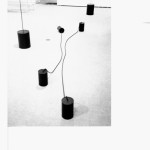
The recording revolves around two of Suzuki's self-designed instruments: the Analapos, an extraordinary echo instrument developed in the early 1970s, and his reinterpretation of the Glass Harmonica. Yet calling them "instruments" almost undersells their function. They behave more like acoustic ecosystems, encouraging interactions rather than performances. Suzuki doesn't dominate them. He negotiates with them.
The opening "De Koolmees: Suzuki Type - Glass Harmonica" immediately establishes the album's peculiar gravity. Glass tones shimmer with astonishing delicacy, suspended somewhere between ritual, meditation, and laboratory experiment. Harmonics bloom and dissolve before they fully settle, producing a constantly shifting field of resonance. Rather than progressing toward a climax, the piece expands sideways, inviting the listener to inhabit its internal architecture. One quickly realizes that silence here isn't the absence of sound; it's another instrument joining the ensemble.
The three Analapos pieces reveal Suzuki's astonishing command of resonance. "Analapos A: Voice" intertwines breath and vocal vibration with the instrument's coiled springs, creating drones that seem simultaneously human and geological. His voice doesn't sing in any conventional sense. Instead, it activates the instrument's body until one can no longer distinguish performer from object. It feels as though the room itself has quietly decided to start humming.
"Multiple Stand" broadens the palette further, layering metallic resonance into slowly evolving harmonic constellations. Nothing arrives in a hurry. Every gesture appears to test the physical limits of vibration, allowing microscopic changes in texture to become dramatic events. The experience demands attention but rewards it generously, like watching sunlight crawl across a wall until you suddenly notice the wall has become an entire landscape.
The closing "Object For A Single Person" may be the album's most intimate statement. Sparse interventions generate vast acoustic consequences, reminding us that scale in music has surprisingly little to do with volume. Suzuki consistently demonstrates how minimal physical action can generate enormous perceptual space.
Lawrence English's careful remastering deserves recognition without drawing attention to itself. The transfer preserves the fragile dynamics and intricate resonances with admirable transparency, allowing every overtone to retain its physical presence. Rather than polishing history, the mastering simply removes the dust from an already luminous object.
There is also something quietly moving about revisiting this material today. Much contemporary experimental music embraces complexity through accumulation: more processing, more layers, more conceptual framing. Suzuki moves in precisely the opposite direction. He removes almost everything until listening itself becomes the composition. It is a reminder that innovation sometimes arrives not by inventing new sounds, but by hearing familiar ones with impossible concentration.
"Soundsphere" is not nostalgic, despite its archival origins. It feels strangely prophetic. At a time when algorithms increasingly predict our musical preferences before we even know them ourselves, Suzuki proposes something beautifully inconvenient: genuine listening cannot be automated. It requires curiosity, vulnerability, and the willingness to become slightly lost inside a vibrating piece of metal or a singing glass tube.
Some albums ask to be understood. "Soundsphere" simply asks to be heard, deeply and without haste. That turns out to be a far more demanding request, and perhaps a far more generous one.
"Soundsphere", reissued by Room40 from a remarkable 1990 recording at Eindhoven's legendary Het Apollohuis, serves less as a historical document than as evidence that genuinely radical ideas refuse to age. If anything, the album feels more contemporary today than many releases made with infinitely more sophisticated technology. Apparently, decades of software updates remain no match for a curious mind armed with springs, glass, air, and patience.
The recording revolves around two of Suzuki's self-designed instruments: the Analapos, an extraordinary echo instrument developed in the early 1970s, and his reinterpretation of the Glass Harmonica. Yet calling them "instruments" almost undersells their function. They behave more like acoustic ecosystems, encouraging interactions rather than performances. Suzuki doesn't dominate them. He negotiates with them.
The opening "De Koolmees: Suzuki Type - Glass Harmonica" immediately establishes the album's peculiar gravity. Glass tones shimmer with astonishing delicacy, suspended somewhere between ritual, meditation, and laboratory experiment. Harmonics bloom and dissolve before they fully settle, producing a constantly shifting field of resonance. Rather than progressing toward a climax, the piece expands sideways, inviting the listener to inhabit its internal architecture. One quickly realizes that silence here isn't the absence of sound; it's another instrument joining the ensemble.
The three Analapos pieces reveal Suzuki's astonishing command of resonance. "Analapos A: Voice" intertwines breath and vocal vibration with the instrument's coiled springs, creating drones that seem simultaneously human and geological. His voice doesn't sing in any conventional sense. Instead, it activates the instrument's body until one can no longer distinguish performer from object. It feels as though the room itself has quietly decided to start humming.
"Multiple Stand" broadens the palette further, layering metallic resonance into slowly evolving harmonic constellations. Nothing arrives in a hurry. Every gesture appears to test the physical limits of vibration, allowing microscopic changes in texture to become dramatic events. The experience demands attention but rewards it generously, like watching sunlight crawl across a wall until you suddenly notice the wall has become an entire landscape.
The closing "Object For A Single Person" may be the album's most intimate statement. Sparse interventions generate vast acoustic consequences, reminding us that scale in music has surprisingly little to do with volume. Suzuki consistently demonstrates how minimal physical action can generate enormous perceptual space.
Lawrence English's careful remastering deserves recognition without drawing attention to itself. The transfer preserves the fragile dynamics and intricate resonances with admirable transparency, allowing every overtone to retain its physical presence. Rather than polishing history, the mastering simply removes the dust from an already luminous object.
There is also something quietly moving about revisiting this material today. Much contemporary experimental music embraces complexity through accumulation: more processing, more layers, more conceptual framing. Suzuki moves in precisely the opposite direction. He removes almost everything until listening itself becomes the composition. It is a reminder that innovation sometimes arrives not by inventing new sounds, but by hearing familiar ones with impossible concentration.
"Soundsphere" is not nostalgic, despite its archival origins. It feels strangely prophetic. At a time when algorithms increasingly predict our musical preferences before we even know them ourselves, Suzuki proposes something beautifully inconvenient: genuine listening cannot be automated. It requires curiosity, vulnerability, and the willingness to become slightly lost inside a vibrating piece of metal or a singing glass tube.
Some albums ask to be understood. "Soundsphere" simply asks to be heard, deeply and without haste. That turns out to be a far more demanding request, and perhaps a far more generous one.
Justina Repečkaitė: Tapestries
Artist: Justina Repečkaitė (@)
Title: Tapestries
Format: CD
Label: Music Information Centre Lithuania (@)
Rated:
Title: Tapestries
Format: CD
Label: Music Information Centre Lithuania (@)
Rated:
There are composers who write music as if they were building monuments, and others who compose as if they were patiently weaving threads. Lithuanian composer Justina Repeckaite undoubtedly belongs to the latter category. Her debut portrait album, "Tapestries", gathers works spanning more than a decade, from 2012 to 2024, but this is far more than a retrospective. It feels like wandering through a carefully curated exhibition where each room reveals another facet of an artistic language shaped equally by architecture, medieval symbolism, acoustics, and an unusually tactile understanding of sound.
Now based in Paris after studies in Lithuania, France, and at the renowned IRCAM, Repeckaite has quietly become one of the Baltic region's most compelling contemporary voices. Her catalogue reveals an obsession with materiality: sounds are rarely treated as abstract entities but as textures that can be folded, embroidered, layered or carved, much like the textile metaphors that recur throughout her work. Architecture, illuminated manuscripts, stained glass and ancient craftsmanship are not decorative references but structural models that influence the music's internal logic.
The album opens with "Chartres", inspired by the famous cathedral's South Rose Window. One could easily fear an exercise in programmatic illustration, but Repeckaite avoids picturesque gestures altogether. Instead, overlapping orchestral layers gradually assemble into something resembling light passing through coloured glass. Rather than depicting the cathedral, she captures the experience of standing inside it, where geometry quietly transforms into emotion.
Throughout the programme, her fascination with the human voice emerges repeatedly, often in unexpected ways. "Incantare" asks the flautist to sing while playing, creating unstable timbral collisions between breath, melody and whispered incantations. Built entirely from recordings of the composer's own voice, the electronic layer never feels artificial. It breathes, rustles and hovers like an invisible chorus somewhere between folklore and psychoacoustics. One begins listening for melodies, only to discover that breathing itself has become the melody.
"Tapisserie", arguably her signature work, embodies her compositional philosophy most clearly. Individual instrumental attacks are interwoven until they lose their separate identities, becoming a single living fabric whose colours constantly shift without ever unraveling. The process resembles watching an artisan at work from so close that the final image disappears, replaced by the hypnotic rhythm of the weaving itself.
Repeckaite frequently draws inspiration from historical sources without becoming nostalgic. "La Cité des Dames", based on Christine de Pizan's fifteenth-century proto-feminist text, transforms six soprano lines into a luminous polyphonic architecture. Particularly remarkable is Kanae Mizobuchi's performance, patiently layering every vocal part herself until the composition becomes an intimate conversation between multiple versions of the same voice. It is simultaneously fragile and monumental, like discovering that a cathedral has been built entirely from whispers.
Elsewhere, "Sturnus vulgaris cohibitus" transforms lockdown observations of starlings into an unpredictable dialogue between piano and electronically animated birdsong. The concept could easily have collapsed into novelty, but instead becomes an elegant meditation on coexistence, where the pianist seems less interested in controlling nature than negotiating with it. The birds, predictably, refuse to behave according to the score. One suspects they never signed the recording contract.
The orchestral "Vellum" demonstrates Repeckaite's growing confidence with large forces, building its harmonic language from the resonant behaviour of percussion membranes while drawing poetic parallels between parchment and skin, manuscript and vibration. Even when the orchestra reaches moments of considerable intensity, the music never loses its extraordinary sense of precision. Every gesture feels inevitable rather than merely dramatic.
The album concludes with "La muë", perhaps the collection's most ambitious work, combining serpent, children's choir and electronics in a meditation on vocal transformation inspired by an eighteenth-century scientific treatise. Here Repeckaite once again demonstrates her remarkable ability to merge historical materials with cutting-edge technology without allowing either to dominate. Ancient instruments, spatial audio processing and human voices become parts of the same evolving organism.
What makes "Tapestries" particularly rewarding is its refusal to separate intellectual ambition from sensory pleasure. Contemporary composition sometimes risks becoming either academically opaque or emotionally simplistic. Repeckaite occupies a far more interesting middle ground. Her music is meticulously constructed, yet never feels imprisoned by its own concepts. Beneath the architectural proportions, mathematical relationships and elaborate timbral research lies an unmistakable curiosity about how humans actually listen.
Perhaps that explains why the album succeeds so completely as a portrait. Like an intricately woven textile, its beauty is visible from afar, but its real fascination emerges only when leaning closer, discovering that every thread carries its own story while remaining inseparable from the whole. In an era obsessed with immediate impact, "Tapestries" quietly reminds us that some of the most enduring works reveal themselves stitch by stitch.
Now based in Paris after studies in Lithuania, France, and at the renowned IRCAM, Repeckaite has quietly become one of the Baltic region's most compelling contemporary voices. Her catalogue reveals an obsession with materiality: sounds are rarely treated as abstract entities but as textures that can be folded, embroidered, layered or carved, much like the textile metaphors that recur throughout her work. Architecture, illuminated manuscripts, stained glass and ancient craftsmanship are not decorative references but structural models that influence the music's internal logic.
The album opens with "Chartres", inspired by the famous cathedral's South Rose Window. One could easily fear an exercise in programmatic illustration, but Repeckaite avoids picturesque gestures altogether. Instead, overlapping orchestral layers gradually assemble into something resembling light passing through coloured glass. Rather than depicting the cathedral, she captures the experience of standing inside it, where geometry quietly transforms into emotion.
Throughout the programme, her fascination with the human voice emerges repeatedly, often in unexpected ways. "Incantare" asks the flautist to sing while playing, creating unstable timbral collisions between breath, melody and whispered incantations. Built entirely from recordings of the composer's own voice, the electronic layer never feels artificial. It breathes, rustles and hovers like an invisible chorus somewhere between folklore and psychoacoustics. One begins listening for melodies, only to discover that breathing itself has become the melody.
"Tapisserie", arguably her signature work, embodies her compositional philosophy most clearly. Individual instrumental attacks are interwoven until they lose their separate identities, becoming a single living fabric whose colours constantly shift without ever unraveling. The process resembles watching an artisan at work from so close that the final image disappears, replaced by the hypnotic rhythm of the weaving itself.
Repeckaite frequently draws inspiration from historical sources without becoming nostalgic. "La Cité des Dames", based on Christine de Pizan's fifteenth-century proto-feminist text, transforms six soprano lines into a luminous polyphonic architecture. Particularly remarkable is Kanae Mizobuchi's performance, patiently layering every vocal part herself until the composition becomes an intimate conversation between multiple versions of the same voice. It is simultaneously fragile and monumental, like discovering that a cathedral has been built entirely from whispers.
Elsewhere, "Sturnus vulgaris cohibitus" transforms lockdown observations of starlings into an unpredictable dialogue between piano and electronically animated birdsong. The concept could easily have collapsed into novelty, but instead becomes an elegant meditation on coexistence, where the pianist seems less interested in controlling nature than negotiating with it. The birds, predictably, refuse to behave according to the score. One suspects they never signed the recording contract.
The orchestral "Vellum" demonstrates Repeckaite's growing confidence with large forces, building its harmonic language from the resonant behaviour of percussion membranes while drawing poetic parallels between parchment and skin, manuscript and vibration. Even when the orchestra reaches moments of considerable intensity, the music never loses its extraordinary sense of precision. Every gesture feels inevitable rather than merely dramatic.
The album concludes with "La muë", perhaps the collection's most ambitious work, combining serpent, children's choir and electronics in a meditation on vocal transformation inspired by an eighteenth-century scientific treatise. Here Repeckaite once again demonstrates her remarkable ability to merge historical materials with cutting-edge technology without allowing either to dominate. Ancient instruments, spatial audio processing and human voices become parts of the same evolving organism.
What makes "Tapestries" particularly rewarding is its refusal to separate intellectual ambition from sensory pleasure. Contemporary composition sometimes risks becoming either academically opaque or emotionally simplistic. Repeckaite occupies a far more interesting middle ground. Her music is meticulously constructed, yet never feels imprisoned by its own concepts. Beneath the architectural proportions, mathematical relationships and elaborate timbral research lies an unmistakable curiosity about how humans actually listen.
Perhaps that explains why the album succeeds so completely as a portrait. Like an intricately woven textile, its beauty is visible from afar, but its real fascination emerges only when leaning closer, discovering that every thread carries its own story while remaining inseparable from the whole. In an era obsessed with immediate impact, "Tapestries" quietly reminds us that some of the most enduring works reveal themselves stitch by stitch.
Celer: Poulaine

Few artists have mapped the emotional geography of stillness with the consistency of Will Long. Whether working alongside Danielle Baquet during Celer's formative years or continuing the project alone after 2009, Long has turned ambient music into an exercise in perception rather than decoration. His vast discography often feels like an endless diary written in drones and dissolving memories, where each release quietly expands the vocabulary of absence. "Poulaine", originally conceived between 2007 and 2009 as the sonic counterpart to an exhibition of fourteenth-century manuscripts, returns through Room40 not merely as a reissue but as a document from a particularly fertile period in Celer's evolution, restored and contextualized without sacrificing its youthful uncertainty.
The story behind the album is almost as compelling as the music itself. Long recalls long nights spent with Danielle Baquet surrounded by medieval imagery, improvised tape loops, notebooks filled with fragments of poetry, and a hybrid workflow balancing analogue experimentation with digital processing. Rather than treating the manuscripts as historical objects, they approached them like mirrors whose reflections became increasingly distorted with every layer of tape reversal, reverberation and manipulation. It is an approach that now feels surprisingly prophetic. At a time when algorithmic perfection dominates so much contemporary production, "Poulaine" proudly preserves every fingerprint left by experimentation.
The opening "Misinterpreted Renaissance" immediately announces that this is not an exercise in historical reconstruction. Medieval paintings become blurred memories rather than visual references, translated into slow-moving harmonic vapours that seem suspended between chapel acoustics and faulty cassette machines. Throughout the thirteen concise compositions, Long avoids the monumental scale often associated with ambient music. Instead, each miniature behaves like a small illuminated manuscript itself: modest in duration, yet packed with microscopic details that only reveal themselves through patient listening.
Track titles such as "Floating Cells", "Empty Buckets Over The Sky", "Fleshy Trumpets", or the wonderfully philosophical "Wonder If It Was Really Worth It To Wonder" suggest surrealist poetry more than compositional roadmaps. Thankfully, the music follows suit. One almost expects Salvador Dalí to wander through a monastery carrying a reel-to-reel recorder. Thankfully he never did. Conservators already have enough nightmares without surrealists introducing magnetic tape into the fourteenth century.
Despite its conceptual origins, "Poulaine" never feels academic. Long's gift has always been his ability to let technical processes disappear behind emotional resonance. The elaborate chain of reversals, stereo manipulations and looping techniques described in the accompanying notes ultimately serves a simple purpose: to create uncertainty. Sounds arrive before they seem to exist, reverberations anticipate events that never quite happen, while melodies emerge like partially remembered dreams whose details dissolve the moment one tries to grasp them.
There is also something quietly touching about hearing this album today, knowing the collaborative relationship between Long and Baquet belongs to another chapter of Celer's history. The record becomes not simply an exploration of medieval art but an accidental portrait of two creative trajectories briefly intersecting before continuing in different directions. Long himself hints at this transient communion, and the music carries that bittersweet awareness without lapsing into sentimentality. Nostalgia here is not polished into something comforting; it remains slightly blurred, as memories generally are once enough years have passed.
Lawrence English's new mastering allows these fragile constructions additional breathing space while respecting the original material's intimate character. Nothing has been artificially enlarged. Instead, the subtle grain of tape, the gentle imperfections and the delicate spatial relationships feel newly illuminated, making this version less a restoration than the careful cleaning of an old fresco whose colours had quietly survived beneath centuries of dust.
"Poulaine" may not possess the overwhelming expansiveness of some later Celer releases, but that restraint is precisely its strength. It captures a fascinating moment when analogue process, personal history, visual art and emotional intuition briefly aligned without trying to explain themselves. Like the medieval manuscripts that inspired it, the work resists complete interpretation. Some margins remain undeciphered, some symbols never surrender their meaning.
Perhaps that is the album's greatest lesson. Not every archive exists to provide answers. Sometimes it simply reminds us that beauty often survives precisely because we never entirely understand it.
The story behind the album is almost as compelling as the music itself. Long recalls long nights spent with Danielle Baquet surrounded by medieval imagery, improvised tape loops, notebooks filled with fragments of poetry, and a hybrid workflow balancing analogue experimentation with digital processing. Rather than treating the manuscripts as historical objects, they approached them like mirrors whose reflections became increasingly distorted with every layer of tape reversal, reverberation and manipulation. It is an approach that now feels surprisingly prophetic. At a time when algorithmic perfection dominates so much contemporary production, "Poulaine" proudly preserves every fingerprint left by experimentation.
The opening "Misinterpreted Renaissance" immediately announces that this is not an exercise in historical reconstruction. Medieval paintings become blurred memories rather than visual references, translated into slow-moving harmonic vapours that seem suspended between chapel acoustics and faulty cassette machines. Throughout the thirteen concise compositions, Long avoids the monumental scale often associated with ambient music. Instead, each miniature behaves like a small illuminated manuscript itself: modest in duration, yet packed with microscopic details that only reveal themselves through patient listening.
Track titles such as "Floating Cells", "Empty Buckets Over The Sky", "Fleshy Trumpets", or the wonderfully philosophical "Wonder If It Was Really Worth It To Wonder" suggest surrealist poetry more than compositional roadmaps. Thankfully, the music follows suit. One almost expects Salvador Dalí to wander through a monastery carrying a reel-to-reel recorder. Thankfully he never did. Conservators already have enough nightmares without surrealists introducing magnetic tape into the fourteenth century.
Despite its conceptual origins, "Poulaine" never feels academic. Long's gift has always been his ability to let technical processes disappear behind emotional resonance. The elaborate chain of reversals, stereo manipulations and looping techniques described in the accompanying notes ultimately serves a simple purpose: to create uncertainty. Sounds arrive before they seem to exist, reverberations anticipate events that never quite happen, while melodies emerge like partially remembered dreams whose details dissolve the moment one tries to grasp them.
There is also something quietly touching about hearing this album today, knowing the collaborative relationship between Long and Baquet belongs to another chapter of Celer's history. The record becomes not simply an exploration of medieval art but an accidental portrait of two creative trajectories briefly intersecting before continuing in different directions. Long himself hints at this transient communion, and the music carries that bittersweet awareness without lapsing into sentimentality. Nostalgia here is not polished into something comforting; it remains slightly blurred, as memories generally are once enough years have passed.
Lawrence English's new mastering allows these fragile constructions additional breathing space while respecting the original material's intimate character. Nothing has been artificially enlarged. Instead, the subtle grain of tape, the gentle imperfections and the delicate spatial relationships feel newly illuminated, making this version less a restoration than the careful cleaning of an old fresco whose colours had quietly survived beneath centuries of dust.
"Poulaine" may not possess the overwhelming expansiveness of some later Celer releases, but that restraint is precisely its strength. It captures a fascinating moment when analogue process, personal history, visual art and emotional intuition briefly aligned without trying to explain themselves. Like the medieval manuscripts that inspired it, the work resists complete interpretation. Some margins remain undeciphered, some symbols never surrender their meaning.
Perhaps that is the album's greatest lesson. Not every archive exists to provide answers. Sometimes it simply reminds us that beauty often survives precisely because we never entirely understand it.