
Browse by Genre
Industrial Music / Industrial Metal / Aggro Industrial / Electro Metal
Industrial Noise / Power Noise / Harsh Noise
Synth Pop / Electro Pop / Synth-Electronica
Techno / Trance / Goa / Drum'n'Bass / Jungle / Tribal / Trip-Hop
Ambient / Electronica / Ethereal / Dub / Soundscapes / Abstract
Experimental / Avantgarde / Weird & Wired / Glitch / Noise / Field Recording
Dark / Gothic / Wave / New Wave / Dark Wave / Industrial Gothic
New Music / Downtown / Avantgarde Jazz / New Classical / World
Search Reviews
Music Reviews
Personal System ?????? : Transcoastal Night Drive

Artist: Personal System ??????
Title: Transcoastal Night Drive
Format: Tape + Download
Label: Constellation Tatsu (@)
Rated:

Title: Transcoastal Night Drive
Format: Tape + Download
Label: Constellation Tatsu (@)
Rated:
There is a very specific emotional territory occupied by nighttime driving music. Not “driving music” in the conventional sense, where advertisers imagine attractive people accelerating through mountain roads while emotionally supported by corporate indie rock. No, the real version: empty highways, sodium-vapor lights, distant radio static, the strange loneliness that arrives around 2 a.m. when gas stations begin resembling temporary shelters from existence itself. Transcoastal Night Drive understands that atmosphere with uncanny precision.
Released through Constellation Tatsu, the record by Personal System unfolds less like a conventional album and more like a drifting nocturnal transmission intercepted somewhere between memory and motion. Across seven concise tracks, it constructs an environment suspended between ambient music, vaporwave nostalgia, environmental sound design, and cinematic dream logic. The result feels oddly intimate despite its deliberate distance.
The opening “Last Gas Station Before the Horizon” immediately frames the experience with remarkable economy. Passing cars, distant gulls, low environmental hums: the scene is sketched rather than overstated. One can almost smell fluorescent-lit coffee and overheated asphalt. The concept of the album as an imagined radio broadcast drifting through the drive is especially effective because it transforms the listener into both traveler and receiver, moving physically through space while emotionally tuning into fragments of atmosphere.
This sense of transmission permeates the entire record. “Blurred Streetlights” glows softly with synth textures that feel less composed than remembered. The melodies remain understated, hovering at the edge of consciousness like thoughts that surface briefly before dissolving back into the night. Personal System understands that nostalgia functions most powerfully when incomplete. Too much detail kills the dream. Humanity continues trying to recreate the past in high-definition while memory itself survives primarily through distortion and emotional exaggeration.
Stylistically, the album occupies territory adjacent to vaporwave and late-night ambient traditions, yet it avoids many of the clichés that increasingly burden those genres. There is no ironic overdependence on retro signifiers, no exhausting avalanche of VHS aesthetics desperately trying to manufacture emotion through cultural shorthand. Instead, "Transcoastal Night Drive" approaches nostalgia more subtly, as atmospheric condition rather than aesthetic costume.
“In the Midnight Breeze” becomes one of the album’s emotional centerpieces. The track stretches into gentle rhythmic drift, balancing motion and stillness beautifully. Synth pads shimmer softly beneath understated melodic gestures while the arrangement maintains an almost tidal pacing. Listening feels less like following a composition than watching landscapes pass through a windshield without needing to name them.
“The Gentle Movement of Palm Leaves” introduces one of the album’s most evocative titles, and fortunately the music fulfills its promise. The track carries a humid softness, its textures swaying delicately without collapsing into decorative ambience. There is something deeply geographical about these compositions, though the locations remain intentionally vague. Coastal roads, fading motels, distant neon reflections: not real places exactly, but emotional cartographies assembled from collective memory and cinematic residue.
“Silver Moon ” perhaps best captures the album’s balancing act between serenity and melancholy. The melodies drift with quiet patience while subtle harmonic shifts introduce emotional ambiguity beneath the surface calm. One senses solitude throughout the record, but not despair. More the reflective loneliness of transit itself, that peculiar state where movement temporarily suspends ordinary identity. Long nighttime drives have always functioned as accidental philosophy sessions for exhausted humans trapped alone with their thoughts and overpriced gasoline.
The production deserves particular praise for its restraint. Personal System avoids over-layering or excessive polish, allowing the spaces between sounds to remain active. This openness gives the album its dreamlike permeability. Environmental textures and melodic fragments coexist naturally rather than competing for attention.
“Echoes Along the Coast” continues the slow drift inward, feeling almost like a memory of previous tracks rather than a distinct new statement. That circularity works beautifully within the album’s conceptual structure. Time behaves differently during long nocturnal travel. Minutes stretch, locations blur, songs repeat emotionally even when they technically change.
Then comes “Peaceful Blue”, the closing arrival at dawn. The track does not offer triumphant resolution or cinematic closure. Instead, it settles gently into stillness, capturing the fragile emotional neutrality of early morning after extended motion. The deep blue before sunrise has always carried a peculiar psychological quality: exhaustion mixed with possibility, melancholy softened by light beginning to return. The album ends not with answers, but with quiet continuation.
There are perhaps echoes here of artists associated with ambient drift and liminal electronic nostalgia, from Brian Eno to certain strands of late-night vaporwave and environmental electronic music, but "Transcoastal Night Drive" ultimately succeeds because it avoids becoming trapped inside genre self-awareness. It trusts atmosphere enough to let small gestures resonate fully.
Most importantly, the album understands that travel itself is rarely about destination. The emotional reality of driving through the night lies in suspension: between places, between memories, between versions of oneself. Personal System captures that beautifully across these modest but carefully shaped compositions.
A small record, then, but one capable of subtly altering the emotional temperature of a room. Or perhaps more accurately, of turning any room temporarily into the inside of a moving car somewhere beneath an endless coastal sky.
Released through Constellation Tatsu, the record by Personal System unfolds less like a conventional album and more like a drifting nocturnal transmission intercepted somewhere between memory and motion. Across seven concise tracks, it constructs an environment suspended between ambient music, vaporwave nostalgia, environmental sound design, and cinematic dream logic. The result feels oddly intimate despite its deliberate distance.
The opening “Last Gas Station Before the Horizon” immediately frames the experience with remarkable economy. Passing cars, distant gulls, low environmental hums: the scene is sketched rather than overstated. One can almost smell fluorescent-lit coffee and overheated asphalt. The concept of the album as an imagined radio broadcast drifting through the drive is especially effective because it transforms the listener into both traveler and receiver, moving physically through space while emotionally tuning into fragments of atmosphere.
This sense of transmission permeates the entire record. “Blurred Streetlights” glows softly with synth textures that feel less composed than remembered. The melodies remain understated, hovering at the edge of consciousness like thoughts that surface briefly before dissolving back into the night. Personal System understands that nostalgia functions most powerfully when incomplete. Too much detail kills the dream. Humanity continues trying to recreate the past in high-definition while memory itself survives primarily through distortion and emotional exaggeration.
Stylistically, the album occupies territory adjacent to vaporwave and late-night ambient traditions, yet it avoids many of the clichés that increasingly burden those genres. There is no ironic overdependence on retro signifiers, no exhausting avalanche of VHS aesthetics desperately trying to manufacture emotion through cultural shorthand. Instead, "Transcoastal Night Drive" approaches nostalgia more subtly, as atmospheric condition rather than aesthetic costume.
“In the Midnight Breeze” becomes one of the album’s emotional centerpieces. The track stretches into gentle rhythmic drift, balancing motion and stillness beautifully. Synth pads shimmer softly beneath understated melodic gestures while the arrangement maintains an almost tidal pacing. Listening feels less like following a composition than watching landscapes pass through a windshield without needing to name them.
“The Gentle Movement of Palm Leaves” introduces one of the album’s most evocative titles, and fortunately the music fulfills its promise. The track carries a humid softness, its textures swaying delicately without collapsing into decorative ambience. There is something deeply geographical about these compositions, though the locations remain intentionally vague. Coastal roads, fading motels, distant neon reflections: not real places exactly, but emotional cartographies assembled from collective memory and cinematic residue.
“Silver Moon ” perhaps best captures the album’s balancing act between serenity and melancholy. The melodies drift with quiet patience while subtle harmonic shifts introduce emotional ambiguity beneath the surface calm. One senses solitude throughout the record, but not despair. More the reflective loneliness of transit itself, that peculiar state where movement temporarily suspends ordinary identity. Long nighttime drives have always functioned as accidental philosophy sessions for exhausted humans trapped alone with their thoughts and overpriced gasoline.
The production deserves particular praise for its restraint. Personal System avoids over-layering or excessive polish, allowing the spaces between sounds to remain active. This openness gives the album its dreamlike permeability. Environmental textures and melodic fragments coexist naturally rather than competing for attention.
“Echoes Along the Coast” continues the slow drift inward, feeling almost like a memory of previous tracks rather than a distinct new statement. That circularity works beautifully within the album’s conceptual structure. Time behaves differently during long nocturnal travel. Minutes stretch, locations blur, songs repeat emotionally even when they technically change.
Then comes “Peaceful Blue”, the closing arrival at dawn. The track does not offer triumphant resolution or cinematic closure. Instead, it settles gently into stillness, capturing the fragile emotional neutrality of early morning after extended motion. The deep blue before sunrise has always carried a peculiar psychological quality: exhaustion mixed with possibility, melancholy softened by light beginning to return. The album ends not with answers, but with quiet continuation.
There are perhaps echoes here of artists associated with ambient drift and liminal electronic nostalgia, from Brian Eno to certain strands of late-night vaporwave and environmental electronic music, but "Transcoastal Night Drive" ultimately succeeds because it avoids becoming trapped inside genre self-awareness. It trusts atmosphere enough to let small gestures resonate fully.
Most importantly, the album understands that travel itself is rarely about destination. The emotional reality of driving through the night lies in suspension: between places, between memories, between versions of oneself. Personal System captures that beautifully across these modest but carefully shaped compositions.
A small record, then, but one capable of subtly altering the emotional temperature of a room. Or perhaps more accurately, of turning any room temporarily into the inside of a moving car somewhere beneath an endless coastal sky.
Stefan Goldmann: Automation Studies vol.1
Artist: Stefan Goldmann
Title: Automation Studies vol.1
Format: CD x 3 (triple CD)
Label: Macro
Rated:

Title: Automation Studies vol.1
Format: CD x 3 (triple CD)
Label: Macro
Rated:
There is something wonderfully stubborn about Automation Studies Vol. 1. In an era where software updates expire faster than political promises and entire musical aesthetics are discarded every six months by exhausted algorithms, Stefan Goldmann has chosen to excavate his earliest electroacoustic experiments from the turn of the millennium and present them not as nostalgic artifacts, but as living systems still capable of mutating in real time.
Released through Macro Recordings, this sprawling triple-CD set documents compositions originally created between 1999 and 2001 using the internal synthesis and effects architecture of the TC Fireworx processor. Which, admittedly, sounds at first like the sort of sentence capable of instantly emptying a dinner party. Yet the remarkable thing about "Automation Studies Vol. 1" is how emotionally and physically alive it feels despite its deeply technical origins.
Goldmann has always occupied an unusual position within contemporary electronic music. While many producers speak vaguely about “pushing boundaries” before releasing the same kick drum for the seventeenth consecutive year, Goldmann genuinely interrogates systems: rhythm, tuning, spatiality, digitization, media archaeology. His career has moved fluidly between Berghain, electroacoustic composition, site-specific installations, theoretical writing, and institutional commissions, yet none of these contexts seem to fully contain his work. He approaches sound less as entertainment product than as behavioral phenomenon.
What emerges across these seventeen pieces is not simply an archive of early experiments, but the blueprint of an entire aesthetic philosophy already taking shape. The automated synthesis chains inside the Fireworx generate continuously shifting sonic ecologies where repetition exists without exact recurrence. Goldmann describes them almost like flowing rivers, and the metaphor fits: stable currents carrying endless microscopic variation beneath the surface.
“Council”, the opening fifteen-minute piece, immediately establishes the album’s strange temporal logic. Metallic resonances, granular pulses, and evolving harmonic debris accumulate with machine-like consistency, yet the textures never fully settle into predictability. The music seems to think itself forward. Listening becomes less about anticipating progression and more about inhabiting a continuously reorganizing environment.
This tension between automation and instability runs throughout the collection. Goldmann’s systems are algorithmic, but never sterile. Unlike much generative electronic music, which often feels content demonstrating process for its own sake, these pieces possess psychological density. There is friction inside the machinery. The sounds scrape against one another, hesitate, collide, mutate unexpectedly. One senses not cold precision but active negotiation between composer and system.
“Wear and Tear I” and “Grater” explore this beautifully. Their abrasive textures carry an oddly tactile quality, as though digital signal processing had somehow developed rust, fatigue, or nervous exhaustion. Goldmann seems fascinated by the imperfections emerging from automated behavior, the points where technological structures begin producing accidental emotional residue. Humanity keeps trying to build flawless systems while simultaneously being emotionally devastated by slightly distorted cassette tapes. A species committed to contradiction.
The longer works are particularly absorbing. “Feeder”, stretching over half an hour, unfolds like a self-regulating industrial ecosystem operating beneath an abandoned city. Rhythmic implications emerge only to dissolve again into shimmering interference and unstable harmonics. The piece rewards close listening because its details never stop shifting. Tiny fluctuations become monumental over time.
“Data Loss” feels especially revealing within the context of Goldmann’s broader interests in digitization artifacts and media decay. Here glitches, eroded frequencies, and unstable textures are not treated as decorative aesthetics but as structural conditions. The track does not romanticize malfunction; it composes through it. One hears systems remembering themselves imperfectly.
There are moments where the influence of electroacoustic traditions becomes unmistakable. Echoes of Karlheinz Stockhausen, Pierre Schaeffer, or even certain aspects of Iannis Xenakis drift through the album’s architecture. Yet Goldmann avoids academic stiffness by grounding these investigations in physical sonic impact. Even at its most abstract, the music remains bodily. Frequencies press against the listener rather than floating conceptually above them.
“Phobos Lab” and “Chamber of Atonement” perhaps represent the collection at its most immersive. These extended compositions function almost like autonomous weather systems, gradually revealing internal logics through prolonged exposure. Goldmann’s handling of duration is masterful here. He understands that long-form electronic music succeeds not through constant escalation, but through sustained perceptual transformation. After twenty minutes inside these sound fields, one begins hearing differently altogether.
The album’s title itself becomes increasingly meaningful. These are indeed “automation studies”, but not in the cold scientific sense. Goldmann investigates what happens when automated systems produce textures that feel uncannily alive, unstable, even emotional. The machine is not replacing human expression here; it is becoming another terrain through which expression mutates.
By the time “Angry Skies” closes the collection, the listener has travelled through nearly four hours of evolving electronic matter that somehow feels simultaneously ancient and futuristic. That temporal ambiguity may be the album’s greatest achievement. Despite originating from technology over two decades old, "Automation Studies Vol. 1" rarely sounds dated. If anything, it sounds strangely ahead of much current algorithmic composition precisely because it refuses polished digital perfection.
Instead, Goldmann embraces complexity, instability, and sonic friction. These pieces breathe, corrode, shimmer, and occasionally threaten collapse. They remind us that machines do not become artistically interesting when they imitate human certainty, but when they expose uncertainty within their own systems.
A triple-CD release devoted to early electroacoustic algorithms should probably feel like homework. Instead, "Automation Studies Vol. 1" unfolds like an archaeological dig through the subconscious of electronic sound itself: rigorous, hypnotic, occasionally unsettling, and unexpectedly beautiful in its restless refusal to remain fixed.
Released through Macro Recordings, this sprawling triple-CD set documents compositions originally created between 1999 and 2001 using the internal synthesis and effects architecture of the TC Fireworx processor. Which, admittedly, sounds at first like the sort of sentence capable of instantly emptying a dinner party. Yet the remarkable thing about "Automation Studies Vol. 1" is how emotionally and physically alive it feels despite its deeply technical origins.
Goldmann has always occupied an unusual position within contemporary electronic music. While many producers speak vaguely about “pushing boundaries” before releasing the same kick drum for the seventeenth consecutive year, Goldmann genuinely interrogates systems: rhythm, tuning, spatiality, digitization, media archaeology. His career has moved fluidly between Berghain, electroacoustic composition, site-specific installations, theoretical writing, and institutional commissions, yet none of these contexts seem to fully contain his work. He approaches sound less as entertainment product than as behavioral phenomenon.
What emerges across these seventeen pieces is not simply an archive of early experiments, but the blueprint of an entire aesthetic philosophy already taking shape. The automated synthesis chains inside the Fireworx generate continuously shifting sonic ecologies where repetition exists without exact recurrence. Goldmann describes them almost like flowing rivers, and the metaphor fits: stable currents carrying endless microscopic variation beneath the surface.
“Council”, the opening fifteen-minute piece, immediately establishes the album’s strange temporal logic. Metallic resonances, granular pulses, and evolving harmonic debris accumulate with machine-like consistency, yet the textures never fully settle into predictability. The music seems to think itself forward. Listening becomes less about anticipating progression and more about inhabiting a continuously reorganizing environment.
This tension between automation and instability runs throughout the collection. Goldmann’s systems are algorithmic, but never sterile. Unlike much generative electronic music, which often feels content demonstrating process for its own sake, these pieces possess psychological density. There is friction inside the machinery. The sounds scrape against one another, hesitate, collide, mutate unexpectedly. One senses not cold precision but active negotiation between composer and system.
“Wear and Tear I” and “Grater” explore this beautifully. Their abrasive textures carry an oddly tactile quality, as though digital signal processing had somehow developed rust, fatigue, or nervous exhaustion. Goldmann seems fascinated by the imperfections emerging from automated behavior, the points where technological structures begin producing accidental emotional residue. Humanity keeps trying to build flawless systems while simultaneously being emotionally devastated by slightly distorted cassette tapes. A species committed to contradiction.
The longer works are particularly absorbing. “Feeder”, stretching over half an hour, unfolds like a self-regulating industrial ecosystem operating beneath an abandoned city. Rhythmic implications emerge only to dissolve again into shimmering interference and unstable harmonics. The piece rewards close listening because its details never stop shifting. Tiny fluctuations become monumental over time.
“Data Loss” feels especially revealing within the context of Goldmann’s broader interests in digitization artifacts and media decay. Here glitches, eroded frequencies, and unstable textures are not treated as decorative aesthetics but as structural conditions. The track does not romanticize malfunction; it composes through it. One hears systems remembering themselves imperfectly.
There are moments where the influence of electroacoustic traditions becomes unmistakable. Echoes of Karlheinz Stockhausen, Pierre Schaeffer, or even certain aspects of Iannis Xenakis drift through the album’s architecture. Yet Goldmann avoids academic stiffness by grounding these investigations in physical sonic impact. Even at its most abstract, the music remains bodily. Frequencies press against the listener rather than floating conceptually above them.
“Phobos Lab” and “Chamber of Atonement” perhaps represent the collection at its most immersive. These extended compositions function almost like autonomous weather systems, gradually revealing internal logics through prolonged exposure. Goldmann’s handling of duration is masterful here. He understands that long-form electronic music succeeds not through constant escalation, but through sustained perceptual transformation. After twenty minutes inside these sound fields, one begins hearing differently altogether.
The album’s title itself becomes increasingly meaningful. These are indeed “automation studies”, but not in the cold scientific sense. Goldmann investigates what happens when automated systems produce textures that feel uncannily alive, unstable, even emotional. The machine is not replacing human expression here; it is becoming another terrain through which expression mutates.
By the time “Angry Skies” closes the collection, the listener has travelled through nearly four hours of evolving electronic matter that somehow feels simultaneously ancient and futuristic. That temporal ambiguity may be the album’s greatest achievement. Despite originating from technology over two decades old, "Automation Studies Vol. 1" rarely sounds dated. If anything, it sounds strangely ahead of much current algorithmic composition precisely because it refuses polished digital perfection.
Instead, Goldmann embraces complexity, instability, and sonic friction. These pieces breathe, corrode, shimmer, and occasionally threaten collapse. They remind us that machines do not become artistically interesting when they imitate human certainty, but when they expose uncertainty within their own systems.
A triple-CD release devoted to early electroacoustic algorithms should probably feel like homework. Instead, "Automation Studies Vol. 1" unfolds like an archaeological dig through the subconscious of electronic sound itself: rigorous, hypnotic, occasionally unsettling, and unexpectedly beautiful in its restless refusal to remain fixed.
微風ゾーン Bifuu_ZONE: The West

Artist: 微風ゾーン Bifuu_ZONE
Title: The West
Format: Tape + Download
Label: Constellation Tatsu (@)
Rated:
Title: The West
Format: Tape + Download
Label: Constellation Tatsu (@)
Rated:
There is a peculiar modern obsession with “liminal spaces” that often reduces them to internet horror aesthetics: abandoned malls, fluorescent corridors, empty swimming pools at night, humanity collectively deciding that slightly vacant architecture is somehow terrifying. Meanwhile actual liminality, the emotional and philosophical experience of transition, erosion, impermanence, and unresolved presence, is far subtler and far stranger. The West understands this distinction beautifully.
Released through Constellation Tatsu, the album by Bifuu_ZONE approaches spatial ambient music not as haunted spectacle but as quiet continuation. The project’s name itself, loosely translating to “a zone of gentle breeze”, already signals its intentions clearly. This is not music interested in overwhelming the listener with dystopian atmosphere or nostalgic collapse. Instead, "The West" inhabits spaces where time softens structures gradually, where memory settles into architecture like dust carried by weather.
Created by Tsudio Studio, whose broader work has traversed ambient, vaporwave-adjacent electronics, and spatial sound design through labels like Local Visions and ULTRA-VYBE, the album feels remarkably focused in its restraint. Each track is inspired by locations west of Osaka, yet the music avoids direct field-recording realism or documentary impulses. These are imagined acoustic environments, emotional architectures translated into tone and resonance.
The result unfolds less like a sequence of compositions than a slow walk through partially remembered buildings after rain.
“Cosmo Sound In” opens the record with diffuse pads and soft harmonic drift that immediately establish the album’s emotional climate. There is openness everywhere. The sounds seem less placed than suspended, gently hovering within vast interior spaces. The alto saxophone contributions by mori_de_kurasu become crucial here, introducing breath and fragile human presence into otherwise spacious electronic environments. The instrument never dominates. Instead, it appears almost like condensation briefly forming on glass before disappearing again.
One of the album’s greatest strengths lies in how attentively it treats silence and decay. Ambient music often collapses into passive wallpaper because it fears emptiness, endlessly filling space with texture until nothing meaningful remains. Bifuu_ZONE understands that stillness itself carries emotional information. Gaps matter. Resonance matters. The fading edge of a tone matters.
“RIC Midnight” exemplifies this beautifully. The track unfolds with a kind of nocturnal patience, its harmonic movement so gradual it almost escapes conscious detection. Yet beneath the calm surface, tiny shifts continuously alter the emotional temperature. Listening closely feels like observing light change across concrete over several hours. Human civilization spends billions constructing permanent monuments only for moss, rain, and time to quietly outperform every architect eventually.
The conceptual framework surrounding impermanence and “post-liminal space” could easily have become pretentious in lesser hands. Contemporary ambient culture occasionally mistakes vague philosophical vocabulary for actual depth. But "The West" earns its conceptual ambitions because the music genuinely embodies its ideas. The Japanese sensibility toward impermanence referenced in the release materials is not merely decorative framing; it permeates the album structurally. These tracks do not seek resolution or climax. They accept transience as condition.
“RESO” and “Meteor Plaza” continue this delicate balancing act between architectural spaciousness and emotional intimacy. The textures feel weathered rather than pristine, subtly eroded around the edges. There is a softness to the production that prevents the album from becoming sterile digital ambience. One senses air moving through rooms, distant reflections, surfaces aging slowly.
The saxophone returns most poignantly on “Lamer”, where mori_de_kurasu’s playing introduces an almost human vulnerability into the otherwise restrained environment. Breath becomes audible against the larger stillness. The contrast is quietly devastating. Not dramatic sadness exactly, but awareness of scale: the fleeting body inside structures that outlast it.
“Suma Rikyu Park” and “TWIN21” perhaps best reveal Tsudio Studio’s skill for emotional understatement. The compositions drift carefully between melancholy and serenity without collapsing fully into either. This ambiguity becomes the album’s emotional core. "The West" is not mournful about impermanence. Nor does it romanticize decay. It simply observes transformation with unusual tenderness.
By the time “Herbis Ent” closes the record, the listener has entered a distinctly altered perceptual state. The album slows internal time. Architectural references dissolve into emotional resonance. Places become atmospheres rather than coordinates.
There are echoes here of certain strands of Japanese ambient and environmental music traditions, perhaps distant affinities with figures like Hiroshi Yoshimura or the spatial sensitivity of Midori Takada, yet "The West" never feels derivative or trapped inside retro ambient nostalgia. Its relationship with space feels contemporary precisely because it resists overstimulation.
And that restraint is increasingly radical. In a cultural moment obsessed with acceleration, constant visibility, and emotional over-articulation, Bifuu_ZONE creates music that trusts quiet perception. These tracks do not demand attention aggressively. They wait patiently for the listener to slow down enough to notice what remains after movement ends.
A remarkably subtle record, then, full of disappearing edges, architectural ghosts, and soft transformations. Not music about emptiness, but about what continues breathing gently inside spaces after certainty has already departed.
Released through Constellation Tatsu, the album by Bifuu_ZONE approaches spatial ambient music not as haunted spectacle but as quiet continuation. The project’s name itself, loosely translating to “a zone of gentle breeze”, already signals its intentions clearly. This is not music interested in overwhelming the listener with dystopian atmosphere or nostalgic collapse. Instead, "The West" inhabits spaces where time softens structures gradually, where memory settles into architecture like dust carried by weather.
Created by Tsudio Studio, whose broader work has traversed ambient, vaporwave-adjacent electronics, and spatial sound design through labels like Local Visions and ULTRA-VYBE, the album feels remarkably focused in its restraint. Each track is inspired by locations west of Osaka, yet the music avoids direct field-recording realism or documentary impulses. These are imagined acoustic environments, emotional architectures translated into tone and resonance.
The result unfolds less like a sequence of compositions than a slow walk through partially remembered buildings after rain.
“Cosmo Sound In” opens the record with diffuse pads and soft harmonic drift that immediately establish the album’s emotional climate. There is openness everywhere. The sounds seem less placed than suspended, gently hovering within vast interior spaces. The alto saxophone contributions by mori_de_kurasu become crucial here, introducing breath and fragile human presence into otherwise spacious electronic environments. The instrument never dominates. Instead, it appears almost like condensation briefly forming on glass before disappearing again.
One of the album’s greatest strengths lies in how attentively it treats silence and decay. Ambient music often collapses into passive wallpaper because it fears emptiness, endlessly filling space with texture until nothing meaningful remains. Bifuu_ZONE understands that stillness itself carries emotional information. Gaps matter. Resonance matters. The fading edge of a tone matters.
“RIC Midnight” exemplifies this beautifully. The track unfolds with a kind of nocturnal patience, its harmonic movement so gradual it almost escapes conscious detection. Yet beneath the calm surface, tiny shifts continuously alter the emotional temperature. Listening closely feels like observing light change across concrete over several hours. Human civilization spends billions constructing permanent monuments only for moss, rain, and time to quietly outperform every architect eventually.
The conceptual framework surrounding impermanence and “post-liminal space” could easily have become pretentious in lesser hands. Contemporary ambient culture occasionally mistakes vague philosophical vocabulary for actual depth. But "The West" earns its conceptual ambitions because the music genuinely embodies its ideas. The Japanese sensibility toward impermanence referenced in the release materials is not merely decorative framing; it permeates the album structurally. These tracks do not seek resolution or climax. They accept transience as condition.
“RESO” and “Meteor Plaza” continue this delicate balancing act between architectural spaciousness and emotional intimacy. The textures feel weathered rather than pristine, subtly eroded around the edges. There is a softness to the production that prevents the album from becoming sterile digital ambience. One senses air moving through rooms, distant reflections, surfaces aging slowly.
The saxophone returns most poignantly on “Lamer”, where mori_de_kurasu’s playing introduces an almost human vulnerability into the otherwise restrained environment. Breath becomes audible against the larger stillness. The contrast is quietly devastating. Not dramatic sadness exactly, but awareness of scale: the fleeting body inside structures that outlast it.
“Suma Rikyu Park” and “TWIN21” perhaps best reveal Tsudio Studio’s skill for emotional understatement. The compositions drift carefully between melancholy and serenity without collapsing fully into either. This ambiguity becomes the album’s emotional core. "The West" is not mournful about impermanence. Nor does it romanticize decay. It simply observes transformation with unusual tenderness.
By the time “Herbis Ent” closes the record, the listener has entered a distinctly altered perceptual state. The album slows internal time. Architectural references dissolve into emotional resonance. Places become atmospheres rather than coordinates.
There are echoes here of certain strands of Japanese ambient and environmental music traditions, perhaps distant affinities with figures like Hiroshi Yoshimura or the spatial sensitivity of Midori Takada, yet "The West" never feels derivative or trapped inside retro ambient nostalgia. Its relationship with space feels contemporary precisely because it resists overstimulation.
And that restraint is increasingly radical. In a cultural moment obsessed with acceleration, constant visibility, and emotional over-articulation, Bifuu_ZONE creates music that trusts quiet perception. These tracks do not demand attention aggressively. They wait patiently for the listener to slow down enough to notice what remains after movement ends.
A remarkably subtle record, then, full of disappearing edges, architectural ghosts, and soft transformations. Not music about emptiness, but about what continues breathing gently inside spaces after certainty has already departed.
Anton Toorell: Solos II
Artist: Anton Toorell (@)
Title: Solos II
Format: 12" + Download
Label: Thanatosis Produktion (@)
Rated:
Title: Solos II
Format: 12" + Download
Label: Thanatosis Produktion (@)
Rated:
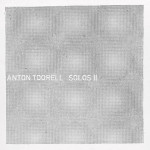
There is a particular danger surrounding solo guitar records. Too often they become demonstrations of technical fluency disguised as spiritual revelation, endless cascades of notes desperately trying to convince the listener that complexity itself constitutes meaning. Fortunately, Solos II by Anton Toorell avoids nearly all of those traps by pursuing something far more elusive: resonance not merely as sound, but as environment, physical process, and altered state of attention.
Released by Thanatosis Produktion, "Solos II" expands upon the open-tuned acoustic investigations of Toorell’s 2022 debut while simultaneously stripping the process back toward something more exposed and elemental. Where many contemporary experimental guitar records layer electronics until the instrument becomes almost unrecognizable, Toorell instead moves closer to the material reality of strings, wood, air, and architectural space itself. The result feels both rigorously constructed and strangely weightless.
The central technique alone sounds almost absurdly impractical: playing two guitars simultaneously, one positioned conventionally and the other laid across the lap, with each hand performing independent functions. In lesser hands this could easily become an exercise in conceptual athletics, the sort of thing critics describe as innovative while secretly wondering whether anyone actually enjoys listening to it. Yet Toorell’s approach never feels demonstrative. The complexity dissolves into flow.
That may be the album’s most remarkable quality. One hears not effort but movement.
The opening “Volta”, stretching close to seventeen minutes, unfolds like an evolving lattice of shimmering harmonics and cyclical figures. Repetition becomes less structural device than breathing pattern. Tiny tonal shifts accumulate gradually, producing a sensation of suspended motion somewhere between minimalism, folk memory, and acoustic illusionism. The piece seems simultaneously ancient and impossibly delicate, as though somebody had translated water reflections into tunings.
Toorell’s relationship with repetition is particularly fascinating. There are obvious distant affinities with figures like Terry Riley or even aspects of early Seefeel, especially in the hypnotic cycling structures of “Cripta”, yet Toorell avoids both minimalist rigidity and post-rock haze. His repetitions breathe unevenly. Human touch remains audible everywhere: tiny hesitations, accidental resonances, minute fluctuations in attack and decay. The music continuously reminds the listener that transcendence, when it occurs, emerges through physical imperfection rather than mechanical precision.
The recording environment plays an enormous role in shaping the album’s identity. Captured inside a sixteenth-century wine cellar at Palazzo Stabile in Piemonte, the room itself becomes an active participant in the music. Reverberation is not applied decoration here; it is compositional material. Notes bloom, linger, collide with architectural surfaces, and return transformed. Toorell reportedly searched for tunings that would open up the room, and one can genuinely hear that dialogue throughout the album. The space listens back.
This interaction between performer, instrument, and architecture gives "Solos II" an almost ecological quality. The music does not dominate the environment but negotiates with it. One becomes increasingly aware of resonance as physical event rather than abstract sonic property. The cellar breathes through the guitars. The guitars expose the cellar’s hidden frequencies. Human beings continue building streaming algorithms to compress sound into disposable background texture while records like this quietly insist that listening remains a bodily experience.
“Cripta” perhaps best demonstrates Toorell’s compositional intelligence. The looping structures spiral inward hypnotically, producing subtle psychoacoustic effects where harmonics appear to drift independently from the strings generating them. At moments the piece resembles an acoustic mirage, simultaneously intimate and spatially disorienting. There is motion everywhere, yet no urgency. Toorell trusts duration enough to let perception reorganize itself naturally.
Then comes “Scala”, the shortest and perhaps most emotionally revealing piece on the album. After the denser cyclical movement of the earlier works, its calmer pacing allows the recording space to emerge even more clearly. One hears air moving around notes, the room’s quiet response to vibration, the fragile physicality of acoustic sound unfolding in real time. The track feels almost ceremonial in its restraint. Toorell’s methods are undoubtedly intricate, informed by jazz studies, electroacoustic composition, and years of collaborative experimentation across Scandinavian improvised music scenes. Yet none of that knowledge calcifies into academic severity. The album remains deeply tactile, almost luminous in places.
There is also something quietly radical about its patience. These three extended pieces do not chase climax or emotional manipulation. Instead, they create conditions for attention itself to deepen. Listening becomes immersive not through overwhelming density, but through sustained intimacy with microscopic variation. By the midpoint of “Volta” or “Cripta”, one begins noticing harmonic movements so subtle they would vanish entirely under ordinary distracted listening conditions.
And perhaps that is where the album’s emotional power truly resides. "Solos II" invites the listener into a different relationship with time, resonance, and physical presence. The music exists somewhere between improvisation and architecture, between meditative ritual and mechanical process, between the rigor of structure and the unpredictability of touch.
A deceptively modest record, then, but one containing immense spatial and emotional depth. Anton Toorell does not simply play guitars here. He allows them to converse with stone, air, repetition, and silence itself until the distinctions begin dissolving.
Released by Thanatosis Produktion, "Solos II" expands upon the open-tuned acoustic investigations of Toorell’s 2022 debut while simultaneously stripping the process back toward something more exposed and elemental. Where many contemporary experimental guitar records layer electronics until the instrument becomes almost unrecognizable, Toorell instead moves closer to the material reality of strings, wood, air, and architectural space itself. The result feels both rigorously constructed and strangely weightless.
The central technique alone sounds almost absurdly impractical: playing two guitars simultaneously, one positioned conventionally and the other laid across the lap, with each hand performing independent functions. In lesser hands this could easily become an exercise in conceptual athletics, the sort of thing critics describe as innovative while secretly wondering whether anyone actually enjoys listening to it. Yet Toorell’s approach never feels demonstrative. The complexity dissolves into flow.
That may be the album’s most remarkable quality. One hears not effort but movement.
The opening “Volta”, stretching close to seventeen minutes, unfolds like an evolving lattice of shimmering harmonics and cyclical figures. Repetition becomes less structural device than breathing pattern. Tiny tonal shifts accumulate gradually, producing a sensation of suspended motion somewhere between minimalism, folk memory, and acoustic illusionism. The piece seems simultaneously ancient and impossibly delicate, as though somebody had translated water reflections into tunings.
Toorell’s relationship with repetition is particularly fascinating. There are obvious distant affinities with figures like Terry Riley or even aspects of early Seefeel, especially in the hypnotic cycling structures of “Cripta”, yet Toorell avoids both minimalist rigidity and post-rock haze. His repetitions breathe unevenly. Human touch remains audible everywhere: tiny hesitations, accidental resonances, minute fluctuations in attack and decay. The music continuously reminds the listener that transcendence, when it occurs, emerges through physical imperfection rather than mechanical precision.
The recording environment plays an enormous role in shaping the album’s identity. Captured inside a sixteenth-century wine cellar at Palazzo Stabile in Piemonte, the room itself becomes an active participant in the music. Reverberation is not applied decoration here; it is compositional material. Notes bloom, linger, collide with architectural surfaces, and return transformed. Toorell reportedly searched for tunings that would open up the room, and one can genuinely hear that dialogue throughout the album. The space listens back.
This interaction between performer, instrument, and architecture gives "Solos II" an almost ecological quality. The music does not dominate the environment but negotiates with it. One becomes increasingly aware of resonance as physical event rather than abstract sonic property. The cellar breathes through the guitars. The guitars expose the cellar’s hidden frequencies. Human beings continue building streaming algorithms to compress sound into disposable background texture while records like this quietly insist that listening remains a bodily experience.
“Cripta” perhaps best demonstrates Toorell’s compositional intelligence. The looping structures spiral inward hypnotically, producing subtle psychoacoustic effects where harmonics appear to drift independently from the strings generating them. At moments the piece resembles an acoustic mirage, simultaneously intimate and spatially disorienting. There is motion everywhere, yet no urgency. Toorell trusts duration enough to let perception reorganize itself naturally.
Then comes “Scala”, the shortest and perhaps most emotionally revealing piece on the album. After the denser cyclical movement of the earlier works, its calmer pacing allows the recording space to emerge even more clearly. One hears air moving around notes, the room’s quiet response to vibration, the fragile physicality of acoustic sound unfolding in real time. The track feels almost ceremonial in its restraint. Toorell’s methods are undoubtedly intricate, informed by jazz studies, electroacoustic composition, and years of collaborative experimentation across Scandinavian improvised music scenes. Yet none of that knowledge calcifies into academic severity. The album remains deeply tactile, almost luminous in places.
There is also something quietly radical about its patience. These three extended pieces do not chase climax or emotional manipulation. Instead, they create conditions for attention itself to deepen. Listening becomes immersive not through overwhelming density, but through sustained intimacy with microscopic variation. By the midpoint of “Volta” or “Cripta”, one begins noticing harmonic movements so subtle they would vanish entirely under ordinary distracted listening conditions.
And perhaps that is where the album’s emotional power truly resides. "Solos II" invites the listener into a different relationship with time, resonance, and physical presence. The music exists somewhere between improvisation and architecture, between meditative ritual and mechanical process, between the rigor of structure and the unpredictability of touch.
A deceptively modest record, then, but one containing immense spatial and emotional depth. Anton Toorell does not simply play guitars here. He allows them to converse with stone, air, repetition, and silence itself until the distinctions begin dissolving.
Laura Kampman: Here and here

Artist: Laura Kampman (@)
Title: Here and here
Format: Download Only (MP3 + Lossless)
Label: Futura Resistenza (@)
Rated:
Title: Here and here
Format: Download Only (MP3 + Lossless)
Label: Futura Resistenza (@)
Rated:
Grief has a peculiar habit of ignoring physical laws. People disappear, yet continue occupying rooms, gestures, habits, conversations, entire emotional climates. A voice returns while washing dishes. A memory appears in supermarket lighting. Someone laughs in another room for half a second before the brain reluctantly corrects itself. Human beings call this “moving on” while secretly carrying entire invisible populations inside themselves. Efficient species, truly.
Here and here by Laura Kampman understands this strange doubleness with remarkable tenderness. Released through Futura Resistenza, the brief two-track release continues the emotional and sonic trajectory begun on "Coming Into Daily Life", the quietly devastating work that emerged from Kampman’s processing of her father’s death and established her as one of the more emotionally precise voices operating in contemporary experimental folk and intimate ambient songwriting.
What makes "Here and here" so affecting is its refusal to dramatize absence. Kampman does not transform grief into grand tragedy or cinematic catharsis. Instead, she focuses on its quieter mechanics: the way memory duplicates reality, the way absent people continue accompanying us through ordinary moments, the way emotional presence becomes spatial. The title itself captures this beautifully. Someone is gone, yet also “here and here,” dispersed across consciousness and environment simultaneously.
The main track unfolds with extraordinary restraint. Soft guitar figures, analogue synth textures, fragments of field recordings, and delicate voice-note traces drift together with such intimacy that the music often feels overheard rather than performed. Kampman’s voice remains central, but never dominating. She sings as though carefully placing fragile objects into open air, aware they might break under excessive force.
There is a rare honesty in this approach. Many contemporary intimate-songwriter records mistake vulnerability for confession overload, flooding listeners with emotional exposition until subtlety suffocates completely. Kampman instead trusts implication. Silence becomes compositional material. Small sounds carry enormous emotional weight. A slight pause, a barely audible environmental texture, the soft intrusion of recorded memory: these details shape the emotional architecture more profoundly than dramatic declarations ever could.
The production contributes enormously to the atmosphere. Because Kampman wrote, recorded, and mixed the material herself, the record retains a deeply personal scale. Nothing feels outsourced or polished into neutrality. The analogue synths hover like distant emotional weather while the field recordings ground the songs in lived physicality. One senses rooms, movement, breathing, passing time.
The flute passages by Iver Kim are especially beautiful in how naturally they extend the emotional space of the compositions. Rather than functioning as decorative instrumentation, the flute becomes almost architectural, widening the sonic horizon without disturbing the fragile intimacy at the center. There are moments where it feels less like accompaniment than memory itself moving through the arrangement.
“Flute Song”, the short B-side derived from Kim’s original recordings, might initially seem slight at under a minute, yet it functions perfectly as emotional afterimage. The piece lingers like a room still holding warmth after someone has left. Its brevity becomes part of its power. Kampman understands that certain emotional states resist elaboration. Extending them further would only diminish their truth.
Stylistically, one could perhaps place "Here and here" somewhere between ambient folk minimalism, diary-like sound art, and fragile bedroom composition, but genre labels feel increasingly irrelevant here. Kampman’s work belongs more to an emotional tradition than a musical category. There are distant affinities with artists like Grouper or Julianna Barwick in the way atmosphere and intimacy intertwine, yet Kampman’s voice remains distinctly her own: quieter, perhaps more grounded in physical memory than abstraction.
The release also quietly demonstrates something increasingly rare in contemporary music culture: patience. These songs do not compete for attention. They do not escalate dramatically or engineer emotional payoff through obvious climaxes. Instead, they invite careful listening, rewarding emotional openness rather than passive consumption. A risky strategy in an era where people often encounter music while simultaneously doomscrolling, answering emails, and microwaving dinner beneath fluorescent lighting. Civilization keeps inventing new technologies to avoid fully experiencing feelings, then wonders why loneliness persists.
Yet "Here and here" does not wallow in sadness. Beneath the melancholy lies warmth, even gratitude. Kampman seems less interested in mourning disappearance than in exploring how love continues altering perception after physical absence. The record becomes not merely about loss, but about the strange persistence of connection itself.
And perhaps that is why these two small pieces resonate so deeply. They acknowledge something most people understand instinctively but struggle to articulate: that the people we carry emotionally never remain fixed in the past. They continue evolving inside us, accompanying new memories, inhabiting new spaces, appearing unexpectedly in ordinary light.
A tiny release, almost whisper-sized, yet filled with immense emotional precision. Some records demand attention loudly. "Here and here" simply waits quietly until the listener is ready to notice what was already present all along.
Here and here by Laura Kampman understands this strange doubleness with remarkable tenderness. Released through Futura Resistenza, the brief two-track release continues the emotional and sonic trajectory begun on "Coming Into Daily Life", the quietly devastating work that emerged from Kampman’s processing of her father’s death and established her as one of the more emotionally precise voices operating in contemporary experimental folk and intimate ambient songwriting.
What makes "Here and here" so affecting is its refusal to dramatize absence. Kampman does not transform grief into grand tragedy or cinematic catharsis. Instead, she focuses on its quieter mechanics: the way memory duplicates reality, the way absent people continue accompanying us through ordinary moments, the way emotional presence becomes spatial. The title itself captures this beautifully. Someone is gone, yet also “here and here,” dispersed across consciousness and environment simultaneously.
The main track unfolds with extraordinary restraint. Soft guitar figures, analogue synth textures, fragments of field recordings, and delicate voice-note traces drift together with such intimacy that the music often feels overheard rather than performed. Kampman’s voice remains central, but never dominating. She sings as though carefully placing fragile objects into open air, aware they might break under excessive force.
There is a rare honesty in this approach. Many contemporary intimate-songwriter records mistake vulnerability for confession overload, flooding listeners with emotional exposition until subtlety suffocates completely. Kampman instead trusts implication. Silence becomes compositional material. Small sounds carry enormous emotional weight. A slight pause, a barely audible environmental texture, the soft intrusion of recorded memory: these details shape the emotional architecture more profoundly than dramatic declarations ever could.
The production contributes enormously to the atmosphere. Because Kampman wrote, recorded, and mixed the material herself, the record retains a deeply personal scale. Nothing feels outsourced or polished into neutrality. The analogue synths hover like distant emotional weather while the field recordings ground the songs in lived physicality. One senses rooms, movement, breathing, passing time.
The flute passages by Iver Kim are especially beautiful in how naturally they extend the emotional space of the compositions. Rather than functioning as decorative instrumentation, the flute becomes almost architectural, widening the sonic horizon without disturbing the fragile intimacy at the center. There are moments where it feels less like accompaniment than memory itself moving through the arrangement.
“Flute Song”, the short B-side derived from Kim’s original recordings, might initially seem slight at under a minute, yet it functions perfectly as emotional afterimage. The piece lingers like a room still holding warmth after someone has left. Its brevity becomes part of its power. Kampman understands that certain emotional states resist elaboration. Extending them further would only diminish their truth.
Stylistically, one could perhaps place "Here and here" somewhere between ambient folk minimalism, diary-like sound art, and fragile bedroom composition, but genre labels feel increasingly irrelevant here. Kampman’s work belongs more to an emotional tradition than a musical category. There are distant affinities with artists like Grouper or Julianna Barwick in the way atmosphere and intimacy intertwine, yet Kampman’s voice remains distinctly her own: quieter, perhaps more grounded in physical memory than abstraction.
The release also quietly demonstrates something increasingly rare in contemporary music culture: patience. These songs do not compete for attention. They do not escalate dramatically or engineer emotional payoff through obvious climaxes. Instead, they invite careful listening, rewarding emotional openness rather than passive consumption. A risky strategy in an era where people often encounter music while simultaneously doomscrolling, answering emails, and microwaving dinner beneath fluorescent lighting. Civilization keeps inventing new technologies to avoid fully experiencing feelings, then wonders why loneliness persists.
Yet "Here and here" does not wallow in sadness. Beneath the melancholy lies warmth, even gratitude. Kampman seems less interested in mourning disappearance than in exploring how love continues altering perception after physical absence. The record becomes not merely about loss, but about the strange persistence of connection itself.
And perhaps that is why these two small pieces resonate so deeply. They acknowledge something most people understand instinctively but struggle to articulate: that the people we carry emotionally never remain fixed in the past. They continue evolving inside us, accompanying new memories, inhabiting new spaces, appearing unexpectedly in ordinary light.
A tiny release, almost whisper-sized, yet filled with immense emotional precision. Some records demand attention loudly. "Here and here" simply waits quietly until the listener is ready to notice what was already present all along.