
Wednesday, June 17, 2026
Browse by Genre
Industrial Music / Industrial Metal / Aggro Industrial / Electro Metal
Industrial Noise / Power Noise / Harsh Noise
Synth Pop / Electro Pop / Synth-Electronica
Techno / Trance / Goa / Drum'n'Bass / Jungle / Tribal / Trip-Hop
Ambient / Electronica / Ethereal / Dub / Soundscapes / Abstract
Experimental / Avantgarde / Weird & Wired / Glitch / Noise / Field Recording
Dark / Gothic / Wave / New Wave / Dark Wave / Industrial Gothic
New Music / Downtown / Avantgarde Jazz / New Classical / World
Search Reviews
Music Reviews
Christof Migone: Auditorium (Chaos, Quiet, Fail)
Artist: Christof Migone (@)
Title: Auditorium (Chaos, Quiet, Fail)
Format: CD
Label: The Dim Coast
Rated:


Title: Auditorium (Chaos, Quiet, Fail)
Format: CD
Label: The Dim Coast
Rated:
Imagine you’re at an art installation, but instead of admiring what’s on the wall, you’re there to listen to someone failing spectacularly at an audio piece. It’s less a concert and more an existential exercise in "not" listening while listening. That’s what Christof Migone’s "Auditorium (Chaos, Quiet, Fail)" feels like: a meticulous, controlled, and possibly absurd exploration of the sound of silence, failure, and collective confusion. It’s like being invited to a dinner party where no one says anything, yet you can’t stop hearing everything.
The album begins with “Auditorium (Q)”, a nearly 15-minute meditation that’s more about the anticipation of sound than sound itself. We’re plunged into a space that feels haunted by echoes of past failures, but the real genius lies in the fact that "nothing much happens". There’s a kind of Cagean brilliance in this — a modern nod to “I have nothing to say, and I am saying it”, except here, you’re waiting for that moment when Migone finally delivers... but instead, you hear the squeak of a chair, the subtle rustle of a shirt sleeve, or maybe someone exhaling loudly because they’re also wondering, “Is this it?”.
It’s the sound of "audience" rather than "performance". Migone takes the concept of ambient noise and runs with it - no, sprints with it - until it’s an art form all its own. It’s like being trapped inside a John Cage symposium where everyone forgot to play the instruments, and all that’s left is the rustling of programs.
The second track, “Auditorium (C)”, builds on this concept of tension and release, but here’s where it gets more chaotic. You start to hear the bodies in the room as much as the room itself. Is that laughter? Is someone burping? Or maybe it’s a collective sigh of relief that we’re finally getting some human noise amidst the void. What Migone captures here is "the performance of being present" — a shared experience where the people in the room are both performers and audience members, and we, the distant listeners, are invited to voyeuristically listen to them listen.
As for “Auditorium (Chaos)”, this is where the train fully derails - but in the most delightful way possible. If “Quiet” was about subtlety, “Chaos” is the loud, unruly sibling that knocks over your drink at a family reunion. People are talking, instruments are being played seemingly at random, and there’s a sense of gleeful disorder that’s infectious. It’s the sound of people giving up on decorum and just enjoying the act of making noise, whether it was intended. The best part? None of this was supposed to happen. It’s like Migone set the stage for high art and instead got a soundscape of wine-fueled improvisation.
But let’s talk about the pièce de résistance: “Auditorium (Fail)”. The original failed piece, a sonic artifact that Migone consciously sabotaged, is the heart of this project. It’s here, wrapped in layers of irony and intention, that we get to experience the failure that was never meant to be heard. It’s both fascinating and, well, a little frustrating. This track embodies the ultimate anti-climax: the sound of someone trying to create something profound and deciding, halfway through, to let it rot. There’s something both endearing and exasperating about this. It's like Migone is saying, “Here’s my failure. Enjoy it”, and you kind of "do", because the absurdity is captivating.
Yet beneath all this irony and conceptual play, there’s something deeply emotional in "Auditorium (Chaos, Quiet, Fail)". The idea of listening to others listen—of being present in their presence without ever being there—taps into something human. It’s an exploration of shared experience, of collective vulnerability, and ultimately, of failure as a form of art. Migone succeeds where he wanted to fail, and in doing so, he draws us into a sonic world where the boundaries between success and failure blur.
Fans of sound art will find this album a masterclass in conceptual audio. For those who want a tune, a melody, or even a hint of rhythm, look elsewhere. This is music at its most abstract, a refusal of form and an embrace of everything left in its wake. It’s not about what’s played; it’s about what’s not played, what’s barely heard, and what we imagine in the gaps. It’s Cage’s ghost laughing somewhere in the background, while the rest of us sit in uncomfortable silence.
The album begins with “Auditorium (Q)”, a nearly 15-minute meditation that’s more about the anticipation of sound than sound itself. We’re plunged into a space that feels haunted by echoes of past failures, but the real genius lies in the fact that "nothing much happens". There’s a kind of Cagean brilliance in this — a modern nod to “I have nothing to say, and I am saying it”, except here, you’re waiting for that moment when Migone finally delivers... but instead, you hear the squeak of a chair, the subtle rustle of a shirt sleeve, or maybe someone exhaling loudly because they’re also wondering, “Is this it?”.
It’s the sound of "audience" rather than "performance". Migone takes the concept of ambient noise and runs with it - no, sprints with it - until it’s an art form all its own. It’s like being trapped inside a John Cage symposium where everyone forgot to play the instruments, and all that’s left is the rustling of programs.
The second track, “Auditorium (C)”, builds on this concept of tension and release, but here’s where it gets more chaotic. You start to hear the bodies in the room as much as the room itself. Is that laughter? Is someone burping? Or maybe it’s a collective sigh of relief that we’re finally getting some human noise amidst the void. What Migone captures here is "the performance of being present" — a shared experience where the people in the room are both performers and audience members, and we, the distant listeners, are invited to voyeuristically listen to them listen.
As for “Auditorium (Chaos)”, this is where the train fully derails - but in the most delightful way possible. If “Quiet” was about subtlety, “Chaos” is the loud, unruly sibling that knocks over your drink at a family reunion. People are talking, instruments are being played seemingly at random, and there’s a sense of gleeful disorder that’s infectious. It’s the sound of people giving up on decorum and just enjoying the act of making noise, whether it was intended. The best part? None of this was supposed to happen. It’s like Migone set the stage for high art and instead got a soundscape of wine-fueled improvisation.
But let’s talk about the pièce de résistance: “Auditorium (Fail)”. The original failed piece, a sonic artifact that Migone consciously sabotaged, is the heart of this project. It’s here, wrapped in layers of irony and intention, that we get to experience the failure that was never meant to be heard. It’s both fascinating and, well, a little frustrating. This track embodies the ultimate anti-climax: the sound of someone trying to create something profound and deciding, halfway through, to let it rot. There’s something both endearing and exasperating about this. It's like Migone is saying, “Here’s my failure. Enjoy it”, and you kind of "do", because the absurdity is captivating.
Yet beneath all this irony and conceptual play, there’s something deeply emotional in "Auditorium (Chaos, Quiet, Fail)". The idea of listening to others listen—of being present in their presence without ever being there—taps into something human. It’s an exploration of shared experience, of collective vulnerability, and ultimately, of failure as a form of art. Migone succeeds where he wanted to fail, and in doing so, he draws us into a sonic world where the boundaries between success and failure blur.
Fans of sound art will find this album a masterclass in conceptual audio. For those who want a tune, a melody, or even a hint of rhythm, look elsewhere. This is music at its most abstract, a refusal of form and an embrace of everything left in its wake. It’s not about what’s played; it’s about what’s not played, what’s barely heard, and what we imagine in the gaps. It’s Cage’s ghost laughing somewhere in the background, while the rest of us sit in uncomfortable silence.
Boris Hauf: CLARK3 - from the edges tongues grow

Artist: Boris Hauf (@)
Title: CLARK3 - from the edges tongues grow
Format: Download Only (MP3 + Lossless)
Label: Shameless Records (@)
Rated:
Title: CLARK3 - from the edges tongues grow
Format: Download Only (MP3 + Lossless)
Label: Shameless Records (@)
Rated:
When Philip K. Dick envisioned his paranoid futures and dystopian misfits, I doubt he imagined they’d be soundtracked by disassembled beats and synths that hum like malfunctioning robots. But here we are with "CLARK3", the latest sonic adventure from Boris Hauf under his CLARK project. As described in the album notes, "From the Edges Tongues Grow" tackles everything from climate collapse to automation, all while pretending to be "just" a synth-heavy, beat-driven affair.
Right away, it’s clear this isn’t your average techno album. From the moment “08v3” kicks in, you’re greeted with fragmented, glitchy rhythms that seem as if they’re stumbling through a field of alien debris. It’s as if the machines have taken over, but they’re not quite sure how to work yet. There's an almost retro-futuristic quality to the way the sounds melt together, recalling the analog warmth of early Kraftwerk, but warped and reshaped by Boris Hauf’s more modernist inclinations. Think "Philip Glass" meets "Aphex Twin", but they’ve both forgotten the rulebook.
What makes "CLARK3" stand out is the space it leaves for disintegration. The album seems obsessed with the idea of decay and breakdown - much like the crumbling society it critiques. “stangl’s” feels like it’s built out of the rubble of a factory somewhere, with its sparse beat patterns repeating themselves into a hypnotic, almost oppressive groove. It’s as if the machines have gone on autopilot, endlessly reproducing their functions, but with a malfunction somewhere deep in the system.
Tracks like “cherryy” and “hw26 om” up the ante, juxtaposing eerie synth lines with bursts of fractured rhythms. There’s something deeply unsettling about the way the sounds unfold here—they don’t follow a clear trajectory, which is part of the charm. It’s all about "processual repetition", but not in a soothing, minimalist sense. Instead, it feels like you’re locked in a loop of infinite regress, with each cycle breaking down a little more until you’re left with echoes of what came before. It’s a challenge to the listener: are you willing to submit to the machines, or do you fight your way out?
While Hauf’s approach might seem clinical, there’s a strange warmth lurking beneath the surface. Tracks like “five, a half” and “burslow” have moments where the synths swell and flutter in an almost human way - like there’s a ghost in the machine trying to communicate. And the album’s longest tracks, “song” and “aphelion,” are where this concept reaches its peak. These compositions stretch out into cosmic landscapes, where space (both literal and sonic) becomes the ultimate canvas. It’s as if you’re floating aimlessly through a starship that’s long since lost its crew.
Where "CLARK3" succeeds most is in its ability to create a world that feels both familiar and alien. Hauf pulls from a wide range of influences—there are hints of "Brian Eno" in the sprawling soundscapes, a touch of "Pan Sonic" in the minimalist brutality of the beats, and even a nod to "Oneohtrix Point Never" in the way it blurs the lines between synthetic and organic. Yet it never feels derivative. This is music that’s as much about the gaps as it is about the sounds. The empty spaces left between the blips and bloops are where the real tension lies.
"From the Edges Tongues Grow" is not just an album - it’s a statement. A reflection on our precarious present, where humanity edges closer to the abyss, all while the machines keep whirring away. Whether you find it hypnotic or maddening, one thing’s for sure: Boris Hauf has created a piece of work that feels eerily in tune with the times, and whether we like it or not, we might just be dancing to this apocalyptic beat.
Final thought? CLARK3 isn't going to save the world. But at least it'll make sure we have a killer soundtrack as it burns.
Right away, it’s clear this isn’t your average techno album. From the moment “08v3” kicks in, you’re greeted with fragmented, glitchy rhythms that seem as if they’re stumbling through a field of alien debris. It’s as if the machines have taken over, but they’re not quite sure how to work yet. There's an almost retro-futuristic quality to the way the sounds melt together, recalling the analog warmth of early Kraftwerk, but warped and reshaped by Boris Hauf’s more modernist inclinations. Think "Philip Glass" meets "Aphex Twin", but they’ve both forgotten the rulebook.
What makes "CLARK3" stand out is the space it leaves for disintegration. The album seems obsessed with the idea of decay and breakdown - much like the crumbling society it critiques. “stangl’s” feels like it’s built out of the rubble of a factory somewhere, with its sparse beat patterns repeating themselves into a hypnotic, almost oppressive groove. It’s as if the machines have gone on autopilot, endlessly reproducing their functions, but with a malfunction somewhere deep in the system.
Tracks like “cherryy” and “hw26 om” up the ante, juxtaposing eerie synth lines with bursts of fractured rhythms. There’s something deeply unsettling about the way the sounds unfold here—they don’t follow a clear trajectory, which is part of the charm. It’s all about "processual repetition", but not in a soothing, minimalist sense. Instead, it feels like you’re locked in a loop of infinite regress, with each cycle breaking down a little more until you’re left with echoes of what came before. It’s a challenge to the listener: are you willing to submit to the machines, or do you fight your way out?
While Hauf’s approach might seem clinical, there’s a strange warmth lurking beneath the surface. Tracks like “five, a half” and “burslow” have moments where the synths swell and flutter in an almost human way - like there’s a ghost in the machine trying to communicate. And the album’s longest tracks, “song” and “aphelion,” are where this concept reaches its peak. These compositions stretch out into cosmic landscapes, where space (both literal and sonic) becomes the ultimate canvas. It’s as if you’re floating aimlessly through a starship that’s long since lost its crew.
Where "CLARK3" succeeds most is in its ability to create a world that feels both familiar and alien. Hauf pulls from a wide range of influences—there are hints of "Brian Eno" in the sprawling soundscapes, a touch of "Pan Sonic" in the minimalist brutality of the beats, and even a nod to "Oneohtrix Point Never" in the way it blurs the lines between synthetic and organic. Yet it never feels derivative. This is music that’s as much about the gaps as it is about the sounds. The empty spaces left between the blips and bloops are where the real tension lies.
"From the Edges Tongues Grow" is not just an album - it’s a statement. A reflection on our precarious present, where humanity edges closer to the abyss, all while the machines keep whirring away. Whether you find it hypnotic or maddening, one thing’s for sure: Boris Hauf has created a piece of work that feels eerily in tune with the times, and whether we like it or not, we might just be dancing to this apocalyptic beat.
Final thought? CLARK3 isn't going to save the world. But at least it'll make sure we have a killer soundtrack as it burns.
Haythem Mahbouli: Last Man On Earth
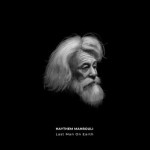
Let’s face it: the "end of the world" concept has been done to death in music. It’s a tried and true formula - apocalyptic themes, an ambient soundscape, a slow descent into the void. So, when the Tunisian composer Haythem Mahbouli announces "Last Man on Earth", you might roll your eyes and think, “Great, another bleak soundtrack to our collective demise”. But here’s the kicker: Mahbouli isn’t just following the pack. He’s leading it.
Coming off the heels of his debut album "Catching Moments in Time" - which earned comparisons to the lofty likes of Arvo PÄrt, Jóhann Jóhannsson, and Brian Eno—Mahbouli’s "Last Man on Earth" is, on the surface, a concept album that could easily drift into cliché. But instead of playing it safe with generic atmospherics and sad piano motifs, Mahbouli crafts something intimate and grand, detailed yet sprawling.
The album, like the title suggests, is a sonic exploration of humanity’s extinction, but it’s less about the fiery spectacle of collapse and more about the quiet moments afterward. The strings and choir — masterfully performed by the Budapest Scoring Orchestra - bring a cinematic scale, but it’s Mahbouli’s piano and synth work that ground the whole thing in something deeply human. His orchestration doesn’t shout “LOOK AT ME”, but instead whispers the inevitable truth: everything ends, and it’s probably our fault.
Let’s start with “The Chosen Ones”. If you’re expecting a bombastic intro to set the scene for humanity’s final days, think again. The track starts quietly, almost tentatively, with Mahbouli’s piano laced with a sense of impending doom. The strings sneak in, not overwhelming the piece but cradling it, as if trying to comfort you in the face of what’s coming.
“Farewell to Earth” takes this unease and ramps it up a notch. The brass section - recorded remotely, a true artifact of the pandemic era - doesn’t just fill the room, it "looms". It’s a farewell, yes, but not a peaceful one. The sheer tension Mahbouli manages to inject into the track is palpable, and you can feel the weight of humanity’s failures pressing down with each crescendo.
But it’s in the quieter moments that Mahbouli’s genius really shines. Tracks like “Aftermath” and “Flashback” strip away the grandeur and leave you with a haunting sense of isolation. There’s no bombastic string section or choir here, just sparse, melancholic synth lines that stretch on like the empty planet itself. Mahbouli understands that the end isn’t a Hollywood blockbuster - it’s a slow, lonely affair. The kind where silence says more than any orchestra ever could.
Then there’s the title track, “Last Man on Earth”, which encapsulates everything Mahbouli has been building towards. There’s a sense of finality here, a quiet resignation. The sick, breathless man at the center of this musical journey isn’t raging against the dying of the light - he’s barely whispering. The piano echoes like a heartbeat, the strings drift like clouds, and the choir’s presence feels more like a distant memory than a heavenly choir. It’s devastatingly beautiful.
If I had to nitpick - and isn’t that the point of reviews?—I might say the album leans a bit too heavily on its concept. At times, the tracks feel more like score pieces than standalone compositions, and without the guiding narrative, some listeners might feel adrift. But maybe that’s the point? "Last Man on Earth" isn’t a collection of songs, it’s a single cohesive journey through our collective extinction. If that makes you feel a little lost, well, good.
At the end of it all, Mahbouli delivers something rare: a concept album that’s both emotionally resonant and musically adventurous. Sure, it’s a meditation on humanity’s downfall, but it’s also deeply personal, intimate even. It’s not so much about the end of the world as it is about the end of "your" world - the small, personal catastrophes that feel just as devastating as the real thing.
So, if you’re in the mood to contemplate the end of everything while wrapped in lush orchestration and delicate piano lines, "Last Man on Earth" is your ticket. Just don’t expect a happy ending.
Coming off the heels of his debut album "Catching Moments in Time" - which earned comparisons to the lofty likes of Arvo PÄrt, Jóhann Jóhannsson, and Brian Eno—Mahbouli’s "Last Man on Earth" is, on the surface, a concept album that could easily drift into cliché. But instead of playing it safe with generic atmospherics and sad piano motifs, Mahbouli crafts something intimate and grand, detailed yet sprawling.
The album, like the title suggests, is a sonic exploration of humanity’s extinction, but it’s less about the fiery spectacle of collapse and more about the quiet moments afterward. The strings and choir — masterfully performed by the Budapest Scoring Orchestra - bring a cinematic scale, but it’s Mahbouli’s piano and synth work that ground the whole thing in something deeply human. His orchestration doesn’t shout “LOOK AT ME”, but instead whispers the inevitable truth: everything ends, and it’s probably our fault.
Let’s start with “The Chosen Ones”. If you’re expecting a bombastic intro to set the scene for humanity’s final days, think again. The track starts quietly, almost tentatively, with Mahbouli’s piano laced with a sense of impending doom. The strings sneak in, not overwhelming the piece but cradling it, as if trying to comfort you in the face of what’s coming.
“Farewell to Earth” takes this unease and ramps it up a notch. The brass section - recorded remotely, a true artifact of the pandemic era - doesn’t just fill the room, it "looms". It’s a farewell, yes, but not a peaceful one. The sheer tension Mahbouli manages to inject into the track is palpable, and you can feel the weight of humanity’s failures pressing down with each crescendo.
But it’s in the quieter moments that Mahbouli’s genius really shines. Tracks like “Aftermath” and “Flashback” strip away the grandeur and leave you with a haunting sense of isolation. There’s no bombastic string section or choir here, just sparse, melancholic synth lines that stretch on like the empty planet itself. Mahbouli understands that the end isn’t a Hollywood blockbuster - it’s a slow, lonely affair. The kind where silence says more than any orchestra ever could.
Then there’s the title track, “Last Man on Earth”, which encapsulates everything Mahbouli has been building towards. There’s a sense of finality here, a quiet resignation. The sick, breathless man at the center of this musical journey isn’t raging against the dying of the light - he’s barely whispering. The piano echoes like a heartbeat, the strings drift like clouds, and the choir’s presence feels more like a distant memory than a heavenly choir. It’s devastatingly beautiful.
If I had to nitpick - and isn’t that the point of reviews?—I might say the album leans a bit too heavily on its concept. At times, the tracks feel more like score pieces than standalone compositions, and without the guiding narrative, some listeners might feel adrift. But maybe that’s the point? "Last Man on Earth" isn’t a collection of songs, it’s a single cohesive journey through our collective extinction. If that makes you feel a little lost, well, good.
At the end of it all, Mahbouli delivers something rare: a concept album that’s both emotionally resonant and musically adventurous. Sure, it’s a meditation on humanity’s downfall, but it’s also deeply personal, intimate even. It’s not so much about the end of the world as it is about the end of "your" world - the small, personal catastrophes that feel just as devastating as the real thing.
So, if you’re in the mood to contemplate the end of everything while wrapped in lush orchestration and delicate piano lines, "Last Man on Earth" is your ticket. Just don’t expect a happy ending.
Andrea Silvia Giordano / Fanny Meteier: sorry babe, I have weird legs

Artist: Andrea Silvia Giordano / Fanny Meteier (@)
Title: sorry babe, I have weird legs
Format: Download Only (MP3 + Lossless)
Label: Thanatosis Produktion (@)
Rated:
Title: sorry babe, I have weird legs
Format: Download Only (MP3 + Lossless)
Label: Thanatosis Produktion (@)
Rated:
Sometimes, music is like a mirror, reflecting our world with clarity and grace. And sometimes, music is more like a fun house mirror, twisting reality into something unrecognizable yet strangely compelling. "Sorry Babe, I Have Weird Legs" is decidedly in the latter category, delivering a wild, unpredictable ride that’s as messy as it is magnetic.
Andrea Silvia Giordano and Fanny Meteier have concocted an EP that thumbs its nose at convention. Forget polished production or neatly packaged compositions — this is "music" that’s rough around the edges, proudly so. The duo has crafted a sonic experience that feels punk at its core, not in the loud and fast sense, but in its raw, DIY spirit and refusal to play by anyone else’s rules.
From the get-go, you’re thrown into a world where nothing is quite what it seems. The tracks on "Sorry Babe, I Have Weird Legs" are like audio vignettes — short, sharp, and never overstaying their welcome. Each one is a burst of creative energy, full of unexpected twists and turns that keep you on your toes. Just when you think you’ve got a handle on where a track is headed, it swerves left and leaves you scrambling to catch up.
Giordano’s voice, electronics, and flute mouthpiece meld with Meteier’s tuba and voice to create sounds that are as likely to make you laugh as they are to make you think. There’s a sense of playfulness here, a willingness to embrace the absurd, yet beneath it all is a serious commitment to pushing the boundaries of a sound, that is led by vocal experiments. The voice, I was saying, is a dominant element, though often hastily. It regularly seems to slither and wind like a snake through the apertures of the instruments, to the point where it sometimes crushes them like a boa, making them unrecognizable or swallowing them whole. The duo isn’t afraid to get weird, and that’s what makes this EP so refreshing.
In a way, the music frequently feels like a conversation — sometimes coherent, sometimes chaotic, but always full of personality. It’s as if Giordano and Meteier are constantly bouncing ideas off each other, riffing on a theme until it mutates into something entirely different. The result is a collection of tracks that are as unpredictable as they are captivating, a testament to the power of collaboration when both parties are willing to go all-in.
"Sorry Babe, I Have Weird Legs" isn’t for everyone, but that’s precisely the point. It’s a record that revels in its own eccentricities, daring you to embrace the chaos or be left behind. For those willing to dive in, it offers a unique, visceral experience that’s unlike anything else out there—a raw, unfiltered snapshot of two artists who clearly have no interest in playing it safe.
So if you’re tired of the same old, same old, give this EP a spin. Just don’t expect it to go easy on you—this is music with weird legs, and it’s ready to kick down some doors.
Andrea Silvia Giordano and Fanny Meteier have concocted an EP that thumbs its nose at convention. Forget polished production or neatly packaged compositions — this is "music" that’s rough around the edges, proudly so. The duo has crafted a sonic experience that feels punk at its core, not in the loud and fast sense, but in its raw, DIY spirit and refusal to play by anyone else’s rules.
From the get-go, you’re thrown into a world where nothing is quite what it seems. The tracks on "Sorry Babe, I Have Weird Legs" are like audio vignettes — short, sharp, and never overstaying their welcome. Each one is a burst of creative energy, full of unexpected twists and turns that keep you on your toes. Just when you think you’ve got a handle on where a track is headed, it swerves left and leaves you scrambling to catch up.
Giordano’s voice, electronics, and flute mouthpiece meld with Meteier’s tuba and voice to create sounds that are as likely to make you laugh as they are to make you think. There’s a sense of playfulness here, a willingness to embrace the absurd, yet beneath it all is a serious commitment to pushing the boundaries of a sound, that is led by vocal experiments. The voice, I was saying, is a dominant element, though often hastily. It regularly seems to slither and wind like a snake through the apertures of the instruments, to the point where it sometimes crushes them like a boa, making them unrecognizable or swallowing them whole. The duo isn’t afraid to get weird, and that’s what makes this EP so refreshing.
In a way, the music frequently feels like a conversation — sometimes coherent, sometimes chaotic, but always full of personality. It’s as if Giordano and Meteier are constantly bouncing ideas off each other, riffing on a theme until it mutates into something entirely different. The result is a collection of tracks that are as unpredictable as they are captivating, a testament to the power of collaboration when both parties are willing to go all-in.
"Sorry Babe, I Have Weird Legs" isn’t for everyone, but that’s precisely the point. It’s a record that revels in its own eccentricities, daring you to embrace the chaos or be left behind. For those willing to dive in, it offers a unique, visceral experience that’s unlike anything else out there—a raw, unfiltered snapshot of two artists who clearly have no interest in playing it safe.
So if you’re tired of the same old, same old, give this EP a spin. Just don’t expect it to go easy on you—this is music with weird legs, and it’s ready to kick down some doors.
Zimoun: Dust Resonance
If there’s an album that makes you question the definition of music, Zimoun’s "Dust Resonance" is it. The Swiss artist, known more for his kinetic sound installations than traditional compositions, has turned his attention to the humble guitar — but don’t expect any strumming, shredding, or even a recognizable chord. Instead, imagine a world where the guitar is less a musical instrument and more a generator of abstract sonic textures, shaped by dust, dirt, and a near-obsessive attention to the minute details of decay.
From the outset, "Dust Resonance" announces itself as an experiment, a collection of sounds that are as much about what they aren’t as what they are. The title itself is almost a dare — resonance, yes, but with dust? Zimoun seems to be challenging us to find the beauty in what’s left behind when the music fades and all that remains is the ambient hum of existence.
“DR Part 1” opens with what can only be described as the sound of an amp struggling to wake up from a deep, dusty sleep. There’s a warmth here, but it’s the kind of warmth you feel when you’re wrapped in a blanket you’ve just pulled out of the attic—comforting, but tinged with the musty scent of neglect. The guitar, if you can even call it that, is buried beneath layers of static, soil, and perhaps a bit of existential dread. This is not an album you listen to; it’s one you absorb, preferably while lying flat on the floor, staring at the ceiling, contemplating your life choices.
As the album progresses through its parts — nine in total — there’s a growing sense that Zimoun is less interested in creating music and more in capturing the sound of music decomposing. “DR Part 3” is particularly unsettling, with its brief, almost abrupt presence — like a memory of a sound that never quite materializes- due to the sudden amalgamation of frequencies into a more solid sonic wall. It’s as if Zimoun recorded the ghost of a note rather than the note itself, and in doing so, he’s crafted something that feels profoundly eerie.
But it’s not all gloom and doom. There’s an ironic playfulness to "Dust Resonance", a wink, and a nod to those who dare to dig deeper. The Magnatone tube amplifier from the 1960s, with its warm tones now distorted and fragmented, serves as a reminder that even the most sophisticated technology eventually succumbs to time. And in Zimoun’s hands, that process is not just acknowledged — it’s celebrated. It’s as if he’s taken the most pristine, well-crafted guitar sound and then deliberately run it through a gauntlet of dust, stones, and years of neglect, just to see what would happen.
“DR Part 5” is perhaps the closest thing the album has to a traditional ambient track for its subtle dynamics with its gentle reverb and more spacious sound setting. Yet even here, Zimoun can’t resist the urge to remind us that we’re not floating in a tranquil sea but rather drifting through a haze of particles and echoes than almost immediately coalesce with the previously spread drone. The sound is both vast and claustrophobic, as if you’re standing in the middle of a desert that’s somehow closing in on you.
By the time you reach “DR Part 9”, you might feel as though you’ve journeyed through a landscape that’s more mental than physical — a place where sound and silence blur, where the organic and synthetic merge, and where the very act of listening becomes a meditative, almost psychedelic experience. Zimoun’s final manipulation of the multiband equalizer is less about adjusting the sound and more about warping your perception of it. The result is an album that’s both unsettling and oddly comforting, like the sound of rain on a windowpane when you’re warm inside.
"Dust & Resonance" is not for everyone. It’s an album that demands patience, attention, and a willingness to embrace the more homogeneous abstract you could have experienced before its listening.
From the outset, "Dust Resonance" announces itself as an experiment, a collection of sounds that are as much about what they aren’t as what they are. The title itself is almost a dare — resonance, yes, but with dust? Zimoun seems to be challenging us to find the beauty in what’s left behind when the music fades and all that remains is the ambient hum of existence.
“DR Part 1” opens with what can only be described as the sound of an amp struggling to wake up from a deep, dusty sleep. There’s a warmth here, but it’s the kind of warmth you feel when you’re wrapped in a blanket you’ve just pulled out of the attic—comforting, but tinged with the musty scent of neglect. The guitar, if you can even call it that, is buried beneath layers of static, soil, and perhaps a bit of existential dread. This is not an album you listen to; it’s one you absorb, preferably while lying flat on the floor, staring at the ceiling, contemplating your life choices.
As the album progresses through its parts — nine in total — there’s a growing sense that Zimoun is less interested in creating music and more in capturing the sound of music decomposing. “DR Part 3” is particularly unsettling, with its brief, almost abrupt presence — like a memory of a sound that never quite materializes- due to the sudden amalgamation of frequencies into a more solid sonic wall. It’s as if Zimoun recorded the ghost of a note rather than the note itself, and in doing so, he’s crafted something that feels profoundly eerie.
But it’s not all gloom and doom. There’s an ironic playfulness to "Dust Resonance", a wink, and a nod to those who dare to dig deeper. The Magnatone tube amplifier from the 1960s, with its warm tones now distorted and fragmented, serves as a reminder that even the most sophisticated technology eventually succumbs to time. And in Zimoun’s hands, that process is not just acknowledged — it’s celebrated. It’s as if he’s taken the most pristine, well-crafted guitar sound and then deliberately run it through a gauntlet of dust, stones, and years of neglect, just to see what would happen.
“DR Part 5” is perhaps the closest thing the album has to a traditional ambient track for its subtle dynamics with its gentle reverb and more spacious sound setting. Yet even here, Zimoun can’t resist the urge to remind us that we’re not floating in a tranquil sea but rather drifting through a haze of particles and echoes than almost immediately coalesce with the previously spread drone. The sound is both vast and claustrophobic, as if you’re standing in the middle of a desert that’s somehow closing in on you.
By the time you reach “DR Part 9”, you might feel as though you’ve journeyed through a landscape that’s more mental than physical — a place where sound and silence blur, where the organic and synthetic merge, and where the very act of listening becomes a meditative, almost psychedelic experience. Zimoun’s final manipulation of the multiband equalizer is less about adjusting the sound and more about warping your perception of it. The result is an album that’s both unsettling and oddly comforting, like the sound of rain on a windowpane when you’re warm inside.
"Dust & Resonance" is not for everyone. It’s an album that demands patience, attention, and a willingness to embrace the more homogeneous abstract you could have experienced before its listening.