
Browse by Genre
Industrial Music / Industrial Metal / Aggro Industrial / Electro Metal
Industrial Noise / Power Noise / Harsh Noise
Synth Pop / Electro Pop / Synth-Electronica
Techno / Trance / Goa / Drum'n'Bass / Jungle / Tribal / Trip-Hop
Ambient / Electronica / Ethereal / Dub / Soundscapes / Abstract
Experimental / Avantgarde / Weird & Wired / Glitch / Noise / Field Recording
Dark / Gothic / Wave / New Wave / Dark Wave / Industrial Gothic
New Music / Downtown / Avantgarde Jazz / New Classical / World
Search Reviews
Music Reviews
LHAM: Tertium Quid

LHAM stands for Leaving Hardly A Mark, an Italian group comprised of Giuseppe Verticchio (Nimh, Hall of Mirrors, Twist of Fate...) and Bruno De Angelis (Mana ERG), and 'Tertium Quid' is their fourth album (third on the 13/Silentes label). Prior releases are comprised of strong cinematic ambient atmospheres, and I suspect the music of 'Tertium Quid' to be along the same lines. Opening with the sounds of an orchestra tuning up, then the conductor tapping his baton and voicing the rhetorical question, "Shall we begin?" the music does mirror something along the lines of an ambient cinematic overture. Things get futuristic on "Legacy Human," sounding somewhat like a Blade Runner atmosphere, very sci-fi, very dramatic, and yet there are emotional elements later in the composition that moved it out of replicant/robot territory. The first whisper of guitar appears in "Because You're Dead," a beautifully orchestrated piece with a reality check voice-over. There are more subtle instrumental touches here than you might imagine.
"Neutral Angels" may remind listeners of Vangelis and Tangerine Dream's more cinematic efforts, dome elegantly with a repetitive, simple, but effective chord progression. "Sleeping Chronos" strikes me as a nighttime atmosphere, but more like a dream than a snooze. The voices at the conclusion carry it upwards to the heavens. You might expect silence on a track titled "Nothing," but you won't get it. There is nothing laid back about the music on this track, and the theme of existentialism runs strong in it. More than halfway through the track becomes really bold, powerful,and progressive in its majesty.
"Summa Irru" (Tamil for "Just Be") refers to a state of spiritual stillness and presence, characterized by both mental and physical quietude. It's a practice of remaining inwardly, without engaging in external situations or responding to them. This track is somewhat reflective of that practice, a sense of calm while the world is not. "Symbol or Aenigma" may or may not have something to do with Lucio Fulci's 1988 supernatural horror film, 'Aenigma'. There is a dialogue sample on this one but I do not know if it was from the film. We're back in space, steeped in cosmic ambience on "Pyrrha Sub Astro." Ending in the "Lowlands" with changing media chatter (radio/TV transmissions) we come to realize that little of it matters in the long run. It is everything and noting. It is all around us, yet eludes us. The title "Tertium Quid" refers to an unidentified third element that is in combination with two known ones. The phrase is associated with alchemy. There is certainly some superb musical alchemy on this unclassifiable album. CD limited to 200 copies. Highly recommended!
"Neutral Angels" may remind listeners of Vangelis and Tangerine Dream's more cinematic efforts, dome elegantly with a repetitive, simple, but effective chord progression. "Sleeping Chronos" strikes me as a nighttime atmosphere, but more like a dream than a snooze. The voices at the conclusion carry it upwards to the heavens. You might expect silence on a track titled "Nothing," but you won't get it. There is nothing laid back about the music on this track, and the theme of existentialism runs strong in it. More than halfway through the track becomes really bold, powerful,and progressive in its majesty.
"Summa Irru" (Tamil for "Just Be") refers to a state of spiritual stillness and presence, characterized by both mental and physical quietude. It's a practice of remaining inwardly, without engaging in external situations or responding to them. This track is somewhat reflective of that practice, a sense of calm while the world is not. "Symbol or Aenigma" may or may not have something to do with Lucio Fulci's 1988 supernatural horror film, 'Aenigma'. There is a dialogue sample on this one but I do not know if it was from the film. We're back in space, steeped in cosmic ambience on "Pyrrha Sub Astro." Ending in the "Lowlands" with changing media chatter (radio/TV transmissions) we come to realize that little of it matters in the long run. It is everything and noting. It is all around us, yet eludes us. The title "Tertium Quid" refers to an unidentified third element that is in combination with two known ones. The phrase is associated with alchemy. There is certainly some superb musical alchemy on this unclassifiable album. CD limited to 200 copies. Highly recommended!
Julien Demoulin: A Trial Of Distances
Artist: Julien Demoulin
Title: A Trial Of Distances
Format: CD + Download
Label: Sound In Silence Records (@)
Rated:

Title: A Trial Of Distances
Format: CD + Download
Label: Sound In Silence Records (@)
Rated:
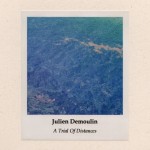
'A Trial Of Distances' is French ambient music artist Julien Demoulin's fourth release on the Sound In Silence label, consisting of a long-form suite for brass and synthesizers, divided into three parts, plus three remixes and reworks by HTDC (How To Disappear Completely), .foundation and Zakè, with a total duration of 60 minutes. Emotional themes, deep chords of eerie synths and melancholic drones are all balanced with lovely brass sounds of trumpet, trombone and flugelhorn, provided by Kelly O'Donohue.
The ambience in these complexly layered chordal clusters blend seamlessly into an elongated soundscape you would be hard pressed to pick apart. It comes on in waves, and although I can tell there is brass in there, separating the synths from the brass would be no easy task. Compositions have strong melodic content while no exhibiting form you would typify as melodies. The way Kelly's brass is used on this album fits hand-in-glove with Demoulin's technique. These tracks are rich and vibrant, and great at porteying some sort of eternal je ne sais quoi, but I did not care for either the .foundation rework (Track 5) nor the Zakè remix (Track 6) because of the staticky noise that was incorporated into both of them. I found it distracting and unpppealing. I don't know why people find noise (especially green noise) relaxing. To me, it just sounds like the CD has defects, which it doesn't. For that, I just can't rate the album higher. Limited to 200 numbered CDr copies in the usual custom handmade Sound In Silence packaging.
The ambience in these complexly layered chordal clusters blend seamlessly into an elongated soundscape you would be hard pressed to pick apart. It comes on in waves, and although I can tell there is brass in there, separating the synths from the brass would be no easy task. Compositions have strong melodic content while no exhibiting form you would typify as melodies. The way Kelly's brass is used on this album fits hand-in-glove with Demoulin's technique. These tracks are rich and vibrant, and great at porteying some sort of eternal je ne sais quoi, but I did not care for either the .foundation rework (Track 5) nor the Zakè remix (Track 6) because of the staticky noise that was incorporated into both of them. I found it distracting and unpppealing. I don't know why people find noise (especially green noise) relaxing. To me, it just sounds like the CD has defects, which it doesn't. For that, I just can't rate the album higher. Limited to 200 numbered CDr copies in the usual custom handmade Sound In Silence packaging.
Death-Static: Time Is Ignorance
Artist: Death-Static
Title: Time Is Ignorance
Format: CD + Download
Label: Sound In Silence Records (@)
Rated:
Title: Time Is Ignorance
Format: CD + Download
Label: Sound In Silence Records (@)
Rated:
Death-Static is the new solo project of Gareth S. Brown, a Leeds-based musician who has previously released music, either as a member of the bands Hood and Canvas or solo under his real name and the aliases of The Unpleasants, Jerstice and Royal-Librarian. He is a current/occasional member of Memory Drawings and The Declining Winter, and has collaborated in the past with Western Edges, Joshua Norton Cabal and Soar Throat. His music has been released on labels such as Domino Records, Misplaced Music, Home Assembly Music, Hibernate Recordings, Zozaya Records, Second Language, Signal Records and many others. My only familiarity with the work of this artist comes through Memory Drawing releases on the SIS label which I have reviewed here previously. Those recordings are quite different than what we have here.
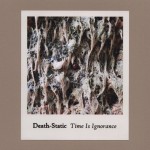
'Time Is Ignorance' is comprised of six ambient compositions of melancholic textures and dark soundscapes with single word titles, for a total duration of 50 minutes. "Final" (odd name for a first track) begins nicely enough with a repeated single tone in the mid and bass range, followed later with a higher pitched tone which expands into something harmonically richer. While the mid and bass continue pulsing, the higher tones sustain, then turn organy. I find this reminiscent of the minimal experimentation of Moebius & Plank. It's a long hypnotic piece (9:03) but does not wear out its welcome. "Rentry" is established on a base of long-form synth chordal pads with organ undertones, melodic in a church-of-the-sky sort of way. More organ on "Delay" which obviously gets its title from some delay plug-in employed on the chord progressions. Some tinkling keyboard melody is added towards the end. Sparse, minimal, broken, repeated piano melodies are the mainstay of "Return," before other subtle elements arrive several minutes into the piece. The melody is expanded upon chordally, but I found this one way too long to maintain my interest. A halo of flies or a hive of bees? That's what you'll be wondering about the buzzing in "Latent Body." Out of the honeycomb arises an ambient underpinning making this one of the most interesting track on the album. We're down to the last track on "Ready," a long one at 11:08, and at its base it is a series of lengthy sustained tones in a sample repeating progression. Over that comes (later) a high, bellish three-note sequence. Following that, organ chords slowly riffing along the same lines. The organ grows in prominence. It has a kind of religious motif, sort of like a new age funeral. And there we have it. For me, there is a bit too much organ on the album, but some parts would be well worth your time. Limited to 200 numbered CDr copies in the usual custom handmade Sound In Silence packaging.
'Time Is Ignorance' is comprised of six ambient compositions of melancholic textures and dark soundscapes with single word titles, for a total duration of 50 minutes. "Final" (odd name for a first track) begins nicely enough with a repeated single tone in the mid and bass range, followed later with a higher pitched tone which expands into something harmonically richer. While the mid and bass continue pulsing, the higher tones sustain, then turn organy. I find this reminiscent of the minimal experimentation of Moebius & Plank. It's a long hypnotic piece (9:03) but does not wear out its welcome. "Rentry" is established on a base of long-form synth chordal pads with organ undertones, melodic in a church-of-the-sky sort of way. More organ on "Delay" which obviously gets its title from some delay plug-in employed on the chord progressions. Some tinkling keyboard melody is added towards the end. Sparse, minimal, broken, repeated piano melodies are the mainstay of "Return," before other subtle elements arrive several minutes into the piece. The melody is expanded upon chordally, but I found this one way too long to maintain my interest. A halo of flies or a hive of bees? That's what you'll be wondering about the buzzing in "Latent Body." Out of the honeycomb arises an ambient underpinning making this one of the most interesting track on the album. We're down to the last track on "Ready," a long one at 11:08, and at its base it is a series of lengthy sustained tones in a sample repeating progression. Over that comes (later) a high, bellish three-note sequence. Following that, organ chords slowly riffing along the same lines. The organ grows in prominence. It has a kind of religious motif, sort of like a new age funeral. And there we have it. For me, there is a bit too much organ on the album, but some parts would be well worth your time. Limited to 200 numbered CDr copies in the usual custom handmade Sound In Silence packaging.
Corrado Maria De Santis: City Of Tethers

Artist: Corrado Maria De Santis (@)
Title: City Of Tethers
Format: CD + Download
Label: Owl Totem Recordings/Fonodroom (@)
Distributor: Fonodroom
Rated:
Title: City Of Tethers
Format: CD + Download
Label: Owl Totem Recordings/Fonodroom (@)
Distributor: Fonodroom
Rated:
Corrado Maria De Santis (Midira Records, Lost Tribe Sound) is an Italian guitarist and sound artist, who merges improvised guitar with computer-generated sounds, shaping ambient drones and subtle glitch textures. The album 'City of Tethers' is inspired by a passage from Italo Calvino’s 'Invisible Cities', particularly the description of the city of Ottavia. This city is suspended over an abyss, held up by a net that its inhabitants know will eventually give way. “Suspended over the void, the lives of Ottavia’s inhabitants are less uncertain than in other cities. They know the net will not last,” Calvino writes. The image of Ottavia has become a powerful symbol of fragility and interconnection. The suspended city evokes the delicate balance between human relationships, societal structures, and environmental instability, offering a striking metaphor for the precariousness of modern life.
In 'City of Tethers', these ideas are mirrored in expansive, layered soundscapes that explore the fragility of the systems we rely on. The album captures a sense of precariousness and interconnectedness, evoking images of complex, unstable balance—much like Ottavia, a city suspended between two mountains, dependent on a fragile aerial web.
The above text can be found on the artist's Bandcamp site, but we have to begin somewhere. This is another ambient drone album, somewhat similar to label-mate Alessandro Batbanera's latest offering, but different, of course in its style and execution. There are only 5 tracks with a total time of about 40 minutes. Title track "City of Tethers" is largely a dark drone piece with a slight noise component. "Entangled Uncertainties" has some Foley shuffling/scraping sound in the beginning ushering in a two-chord drone loop that seems to be constantly expanding, fostering unease as it does. Heading down into "The Ravine," alarm-like metallic ringing is the first sound to emerge. It blends into a complex, layered dark drone that picks up intensity as it moves forward. Ah, this must be what's underneath the 'City Of Tethers' in the title. (Don't look down; you might get vertigo and fall in!) The title, "Dusk's Embrace" seems simple enough, but the drones employed on this one are not. At first pulsing, then supplemented by synth strings, layer upon layer they emerge out of the darkness, as the night enfolds you. It gradually becomes all-encompassing until it eventually subsides into drizzle. The Foley effects (unidentifiable sounds) are more present at the beginning of "Floatin' on the Edge" than anywhere else on the album. Over a droney background and a mournful, gloomy synth melody you get the impression of some clandestine activity taking place that could be the prelude to the eve of destruction. The track's increasing intensity heralds apprehension and trepidation to nearly the breaking point. It has the feeling of increased velocity in motion that is mind-blowing. But of course, it has to end somewhere, and ends quite similarly as where it began. WOW! An intense album that does not hold back in dark ambience. I didn't really get "the suspended city" theme out of what I heard, but I sure did like the album, and most dark ambient lovers should as well. CD is limited to 100 copies.
In 'City of Tethers', these ideas are mirrored in expansive, layered soundscapes that explore the fragility of the systems we rely on. The album captures a sense of precariousness and interconnectedness, evoking images of complex, unstable balance—much like Ottavia, a city suspended between two mountains, dependent on a fragile aerial web.
The above text can be found on the artist's Bandcamp site, but we have to begin somewhere. This is another ambient drone album, somewhat similar to label-mate Alessandro Batbanera's latest offering, but different, of course in its style and execution. There are only 5 tracks with a total time of about 40 minutes. Title track "City of Tethers" is largely a dark drone piece with a slight noise component. "Entangled Uncertainties" has some Foley shuffling/scraping sound in the beginning ushering in a two-chord drone loop that seems to be constantly expanding, fostering unease as it does. Heading down into "The Ravine," alarm-like metallic ringing is the first sound to emerge. It blends into a complex, layered dark drone that picks up intensity as it moves forward. Ah, this must be what's underneath the 'City Of Tethers' in the title. (Don't look down; you might get vertigo and fall in!) The title, "Dusk's Embrace" seems simple enough, but the drones employed on this one are not. At first pulsing, then supplemented by synth strings, layer upon layer they emerge out of the darkness, as the night enfolds you. It gradually becomes all-encompassing until it eventually subsides into drizzle. The Foley effects (unidentifiable sounds) are more present at the beginning of "Floatin' on the Edge" than anywhere else on the album. Over a droney background and a mournful, gloomy synth melody you get the impression of some clandestine activity taking place that could be the prelude to the eve of destruction. The track's increasing intensity heralds apprehension and trepidation to nearly the breaking point. It has the feeling of increased velocity in motion that is mind-blowing. But of course, it has to end somewhere, and ends quite similarly as where it began. WOW! An intense album that does not hold back in dark ambience. I didn't really get "the suspended city" theme out of what I heard, but I sure did like the album, and most dark ambient lovers should as well. CD is limited to 100 copies.
Alessandro Barbanera: In Darkness Let Me Dwell
Artist: Alessandro Barbanera
Title: In Darkness Let Me Dwell
Format: CD + Download
Label: Owl Totem Recordings/Fonodroom (@)
Distributor: Fonodroom
Rated:

Title: In Darkness Let Me Dwell
Format: CD + Download
Label: Owl Totem Recordings/Fonodroom (@)
Distributor: Fonodroom
Rated:
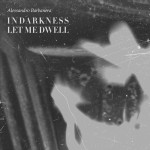
Alessandro Barbanera (ROHS! Lontano Series) is a musician, composer, sound artist, guitar maker from Assisi, Italy. "In Darkness Let Me Dwell" is a quote from a piece by Renaissance lutenist John Dowland (1563-1626). In a dreamlike and nocturnal atmosphere, filled with rain and decaying sounds, the album deconstructs, reworks and wants to pay homage to the imagery and clichés of cinema noir, ranging from classic 40s and 50s movies, up to the works by David Lynch ("Twin Peaks", "Mulholland Drive", "Blue Velvet"), passing through films such as "The Element of Crime" by Lars von Trier, or "Cure" by Kiyoshi Kurosawa.
The first thing you will notice on the opening track, "When Darkness Drops Again" is the large amount of staticky noise and distortion in the drone atmosphere. It kind of comes and goes, receding and reasserting in waves. This must be intentional as with modern recording techniques no professional would release a mastered product with accidental distortion. There is a most pronounced rising and falling in the drone clouds, more lightly cracking distortion (almost like rain?) during the quiet acoustic guitar passage which seemed a bit distracting to me. Later in the piece synth voices emerge providing a light and minimalist ending. "Traces To Nowhere" sounds amorphously dream-like with a mild thunderstorm in the background, a brief, repeating, beeping monotone sequence, the sound of a bottle rolling, and other indefinable sounds. "Vanished Girl" uses some deeper, darker, more ominous drones with a variety of indefinable Foley sounds/samples, getting noisy at times in twisted sonic manipulation, then changing to a single drone-tone which changes, expanding over time into something nearly melodic. "Time Is Running Out" begins with sounds reverberating in a well with lighter drones emerging from the darkness. The drones open up into a harmonically rich ambience, maybe letting the sun shine through. It increases in intensity until it is nearly sonically too bright for ears, then subsides. Once again there seems to be some intentional crackling distortion on "Past Lives," with a a film noirish chordal sequence, some heavy breathing, and a generally creepy atmosphere. Other sonic elements emerge, as well as a more harrowing dronescape where metallic sounds are forged into ambient rays of malevolence. It dies down into something less abrasive but full of staticky residue.
Alessandro spends some time "Pacifying The Ghosts" with a more heavenly atmospheric drone piece, smooth and serene, eschewing static noise and Foley sounds. It slides seamlessly into "Chinese Box" (hey, I have one of those) which is comprised of seemingly random tones deeply chambered in reverb, tinging sounds (both forwards and backwards) and other Foley sounds. A lot of this album was really great, but I had a hard time getting used to the staticky noise found where mentioned. A nice find brought to me by Artem Ostapchuk (of Kryptogen Rundfunk), formerly of the (now defunct) Russian Zhelezobeton label who now runs Fonodroom. CD is limited to 100 copies.
The first thing you will notice on the opening track, "When Darkness Drops Again" is the large amount of staticky noise and distortion in the drone atmosphere. It kind of comes and goes, receding and reasserting in waves. This must be intentional as with modern recording techniques no professional would release a mastered product with accidental distortion. There is a most pronounced rising and falling in the drone clouds, more lightly cracking distortion (almost like rain?) during the quiet acoustic guitar passage which seemed a bit distracting to me. Later in the piece synth voices emerge providing a light and minimalist ending. "Traces To Nowhere" sounds amorphously dream-like with a mild thunderstorm in the background, a brief, repeating, beeping monotone sequence, the sound of a bottle rolling, and other indefinable sounds. "Vanished Girl" uses some deeper, darker, more ominous drones with a variety of indefinable Foley sounds/samples, getting noisy at times in twisted sonic manipulation, then changing to a single drone-tone which changes, expanding over time into something nearly melodic. "Time Is Running Out" begins with sounds reverberating in a well with lighter drones emerging from the darkness. The drones open up into a harmonically rich ambience, maybe letting the sun shine through. It increases in intensity until it is nearly sonically too bright for ears, then subsides. Once again there seems to be some intentional crackling distortion on "Past Lives," with a a film noirish chordal sequence, some heavy breathing, and a generally creepy atmosphere. Other sonic elements emerge, as well as a more harrowing dronescape where metallic sounds are forged into ambient rays of malevolence. It dies down into something less abrasive but full of staticky residue.
Alessandro spends some time "Pacifying The Ghosts" with a more heavenly atmospheric drone piece, smooth and serene, eschewing static noise and Foley sounds. It slides seamlessly into "Chinese Box" (hey, I have one of those) which is comprised of seemingly random tones deeply chambered in reverb, tinging sounds (both forwards and backwards) and other Foley sounds. A lot of this album was really great, but I had a hard time getting used to the staticky noise found where mentioned. A nice find brought to me by Artem Ostapchuk (of Kryptogen Rundfunk), formerly of the (now defunct) Russian Zhelezobeton label who now runs Fonodroom. CD is limited to 100 copies.