
Browse by Genre
Industrial Music / Industrial Metal / Aggro Industrial / Electro Metal
Industrial Noise / Power Noise / Harsh Noise
Synth Pop / Electro Pop / Synth-Electronica
Techno / Trance / Goa / Drum'n'Bass / Jungle / Tribal / Trip-Hop
Ambient / Electronica / Ethereal / Dub / Soundscapes / Abstract
Experimental / Avantgarde / Weird & Wired / Glitch / Noise / Field Recording
Dark / Gothic / Wave / New Wave / Dark Wave / Industrial Gothic
New Music / Downtown / Avantgarde Jazz / New Classical / World
Search Reviews
Music Reviews
Charlie Werber: Krater
"Chicago-based drummer/composer Charlie Werber unveils 'Krater,' his first release under his own name, an album that transcends the boundaries of rhythm, time and consciousness. Featuring a collaboration with Daniel O'Sullivan (Ulver, Sun O))), Guapo), ‘Krater’ explores circular rhythm, the dissolution of dualities, and the fusion of opposites through sound. Built upon the foundation of Werber's extensive work in avant-garde and progressive music- spanning projects such as The Flying Luttenbachers, Chiromancer, Murmur, Lovely Little Girls and Guzzlemug, ‘Krater’ marks a moment of singular artistic expression. At its core, 'Krater' is a study in ouroboric polymeters: circular rhythmic structures that bypass traditional compositional storytelling in favor of a dynamic interplay between listener and pattern."
Well, that's all the promo flavor-text above, so let's delve into what the music on this album really sounds like. There are two long tracks, over 22 minutes per album side, with Werber being responsible for the composition and playing his drum kit, and Daniel O’Sullivan- all other instrumentation, vocals, additional composition on "Krater 1," mixing, and engineering. The drumming on "Krater 0" (side 1) is consistent and methodical throughout; absolutely tribal, highly repetitive, nearly loop-like but I bet it wasn’t looped but played out from start to finish. O'Sullivan contributes wordless OM vocals, like a chanted mantra giving the rhythm an Eastern flavor. That lasts for a while, then the voice changes a bit, and other sounds are introduced - a plucked string here and there, sometimes effected, sometimes not, violin, flute, all played rather abstractly with no concession to melody, merely for effect. Yes, there is a jammy, improvisational quality to the piece, which is the feature, not the bug. In a certain sense, it carries all the joy and enthusiasm of a drum circle, but a lot more formalized and professional. More instruments come and go in the mix- blippy synth, harmonium, odd vocal sounds, chirping birds, etc., etc. A very trance-like transcendental piece of music that would comfortably fit in the meditative world music category.
"Krater 1" begins with a similar rhythm and a repeated, multitracked wordless vocal by O'Sullivan with a harmonium pad underpinning. Six minutes in, the voices drop out, except for repeated unintelligible phrases and effected, plucked strings that emerge very similar to those in "Krater O," with other instruments mirroring side 1. At this point I'm reminded of the Third Ear Band, a British group from back in the late '60s/early '70s that wove mystical music magic with oboe, viola, cello and percussion. While "Krater 1" sounds very similar to "Krater 0" there are subtle differences, and "Krater 1" seems more fully realized. For one thing, there is a good deal more drone and instrumental groove. It's not the individual elements that make the music interesting though, it's their use in the totality of the composition. Just like life, things happen, arise and fade away. The overall feeling though is one of intense purpose, a celebration of what makes life worth living and the pulse of the essence of it all. While I would have liked both sides to have been substantially different from each other, I see what the artist is trying to achieve, and I believe, for the most part, both of these guys have succeeded very well in this. The album is only twenty bucks, a worthy purchase IMHO.
Well, that's all the promo flavor-text above, so let's delve into what the music on this album really sounds like. There are two long tracks, over 22 minutes per album side, with Werber being responsible for the composition and playing his drum kit, and Daniel O’Sullivan- all other instrumentation, vocals, additional composition on "Krater 1," mixing, and engineering. The drumming on "Krater 0" (side 1) is consistent and methodical throughout; absolutely tribal, highly repetitive, nearly loop-like but I bet it wasn’t looped but played out from start to finish. O'Sullivan contributes wordless OM vocals, like a chanted mantra giving the rhythm an Eastern flavor. That lasts for a while, then the voice changes a bit, and other sounds are introduced - a plucked string here and there, sometimes effected, sometimes not, violin, flute, all played rather abstractly with no concession to melody, merely for effect. Yes, there is a jammy, improvisational quality to the piece, which is the feature, not the bug. In a certain sense, it carries all the joy and enthusiasm of a drum circle, but a lot more formalized and professional. More instruments come and go in the mix- blippy synth, harmonium, odd vocal sounds, chirping birds, etc., etc. A very trance-like transcendental piece of music that would comfortably fit in the meditative world music category.
"Krater 1" begins with a similar rhythm and a repeated, multitracked wordless vocal by O'Sullivan with a harmonium pad underpinning. Six minutes in, the voices drop out, except for repeated unintelligible phrases and effected, plucked strings that emerge very similar to those in "Krater O," with other instruments mirroring side 1. At this point I'm reminded of the Third Ear Band, a British group from back in the late '60s/early '70s that wove mystical music magic with oboe, viola, cello and percussion. While "Krater 1" sounds very similar to "Krater 0" there are subtle differences, and "Krater 1" seems more fully realized. For one thing, there is a good deal more drone and instrumental groove. It's not the individual elements that make the music interesting though, it's their use in the totality of the composition. Just like life, things happen, arise and fade away. The overall feeling though is one of intense purpose, a celebration of what makes life worth living and the pulse of the essence of it all. While I would have liked both sides to have been substantially different from each other, I see what the artist is trying to achieve, and I believe, for the most part, both of these guys have succeeded very well in this. The album is only twenty bucks, a worthy purchase IMHO.
Adrian Sherwood: The Collapse of Everything

Artist: Adrian Sherwood
Title: The Collapse of Everything
Format: CD & 12" + Download
Label: On-U Sound Records (@)
Rated:

Title: The Collapse of Everything
Format: CD & 12" + Download
Label: On-U Sound Records (@)
Rated:
English record producer & musician Adrian Sherwood has been around for a long, long time and might be best known to reader of Chain D.L.K. for his remixes of tracks by Einstürzende Neubauten, Ministry, Skinny Puppy, Cabaret Voltaire, KMFDM, Nine Inch Nails, etc., etc., but his primary genre is Dub, of which I'm certainly no authority of, but I'll give it ago anyway. His latest album, aptly titled 'The Collapse of Everything'; includes the participation of Brian Eno, Doug Wimbish, Keith Le Blanc, Cyrus Richards, and more.
It begins with the title track, a laid back number with flutes, electric piano, electric guitar, and just the right amount of percussion set in the kind of dubby ambience you might expect.Too brief. Could have gone on for ten more minutes. "Dub Inspector" is a little slower with world music influences and a still prominent flute. "The Well Is Poisoned (Dub)" heads into darker, more psychotropic territory, plenty of echo, more minimal instrumentation, but a highly charged ambience. The melancholy sax and flute interplay in "Body Roll" is spot on and makes me think of wandering lonely streets in some foreign country where I don't know anybody. "Battles Without Honor And Humanity" is a dead-slow oddity to be sure. Held together by synth blips and plucked stringed instruments, it lumbers across a landscape you'd rather not be in.
I had to chuckle at the title, "Spaghetti Best Western," and wondered if that's where Ennio Morricone or Sergio Leone stay when they've visited the U.S.; probably not. Of course, there is the obligatory lonesome harmonica and twangy guitar on this one, and while atmospheric, it's rather tongue-in-cheek.(Could have gotten this on a Stan Ridgway album.) "The Great Rewilding" is purely dub ambience while "Spirits (Further Education)" offers a bit more in the way of structure. "Hiroshima Dub Match" is a plodding slog through the rice paddies of your mind with a vaguely oriental ambience and just the right amount of wah-wah guitar. Ending with "The Grand Designer," this seems to be the most progressive and fully realized track on the album, a great way to end it. BTW, I think I failed to mention that 'The Collapse of Everything' is an instrumental album, leaving a lot to your imagination. It should go down well with Sherwood's fanbase, and dub aficionados in general.
It begins with the title track, a laid back number with flutes, electric piano, electric guitar, and just the right amount of percussion set in the kind of dubby ambience you might expect.Too brief. Could have gone on for ten more minutes. "Dub Inspector" is a little slower with world music influences and a still prominent flute. "The Well Is Poisoned (Dub)" heads into darker, more psychotropic territory, plenty of echo, more minimal instrumentation, but a highly charged ambience. The melancholy sax and flute interplay in "Body Roll" is spot on and makes me think of wandering lonely streets in some foreign country where I don't know anybody. "Battles Without Honor And Humanity" is a dead-slow oddity to be sure. Held together by synth blips and plucked stringed instruments, it lumbers across a landscape you'd rather not be in.
I had to chuckle at the title, "Spaghetti Best Western," and wondered if that's where Ennio Morricone or Sergio Leone stay when they've visited the U.S.; probably not. Of course, there is the obligatory lonesome harmonica and twangy guitar on this one, and while atmospheric, it's rather tongue-in-cheek.(Could have gotten this on a Stan Ridgway album.) "The Great Rewilding" is purely dub ambience while "Spirits (Further Education)" offers a bit more in the way of structure. "Hiroshima Dub Match" is a plodding slog through the rice paddies of your mind with a vaguely oriental ambience and just the right amount of wah-wah guitar. Ending with "The Grand Designer," this seems to be the most progressive and fully realized track on the album, a great way to end it. BTW, I think I failed to mention that 'The Collapse of Everything' is an instrumental album, leaving a lot to your imagination. It should go down well with Sherwood's fanbase, and dub aficionados in general.
The Deep Bells: Liberté
Artist: The Deep Bells (@)
Title: Liberté
Format: CD + Download
Label: Sound In Silence Records (@)
Rated:

Title: Liberté
Format: CD + Download
Label: Sound In Silence Records (@)
Rated:
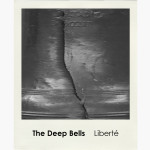
The Deep Bells is a collaboration between Yellow6 and The Corrupting Sea that has been 20 years in the making. Having met through The Corrupting Sea’s love of Yellow6’s music circa the early 2000’s, Jon Attwood (Yellow6) and Jason T. Lamoreaux (TCS) have become fast friends over the course of those years. 'Liberté' is their debut album. The core of the album’s ethos lies within the current geopolitical issues impacting much of the world. The cover image emphasizes the crack in the liberty bell found in Philadelphia in the United States. It references the massive divide among humans at any given moment through our history but especially in this current moment. The title, Liberté, is a reference to the French’s ability to revolt against those in power who would take advantage of and target citizens using the government as a cudgel.
I really do appreciate the fascism vs. freedom theme that Attwood and Lamoreaux espouse, but without the backstory text, you'd be hard pressed to find it in the music on 'Liberté' Just going by some of the titles on The Corrupting Sea's Bandcamp site, it seems as though Kentuckian Jason Lamoreaux is the more political of the two. It's the music, not the concept that speaks volumes to the listener, so let's delve into it.
The album is 8 tracks in 74 minutes, slightly lengthy for a Sound In Silence release. Beginning with "City," there is a repeating figure of a plucked sound over ambient processed guitar with an ambient wash in the background. The plucked sound is slightly out of tune but it disappears not far into the mix, while the rest remains. There is either a bit of slide guitar or the sound of a string being detuned adding a wooziness to the atmosphere. It goes on a bit too long, but that's okay. "Not All History Is Preserved" features tinkling bells and a shakuhachi-like flute over ambient guitar drone, and ominous minor guitar chords. The vibe I'm getting from this is an awakening of sorts, preceding a call to action. "Pooled" is the most song-like piece so far, with a slowly repeating melodic guitar theme over a background of ambient pads. There is a haziness about it giving it a trance-psychedelic quality. "Shelter" mixes piano and guitar chord progressions that may seem out of sync, but they're really not. With something this defined (less ambient) the repetition really stands out and as there is little that changes; it seems as though the composers just put it on autopilot.
"Shout Shout" is the longest track on the album (15:26) and also the coolest. The backwards guitar in the beginning heralds the entrance into the psychedelic realm, and while there is repetition, it seems as though the music folds in on itself like the layers of puff pastry dough in a croissant. It keeps morphing and morphing with heavier chords emerging through the ambient marshes. This is a mushroom trip likely to rearrange your psyche, building in intensity all the way through. But like all psychedelic trips, it gradually subsides, leaving you imprinted with a fading memory of its glorious haze. There is a different sort of atmosphere on "The Falls," reminiscent of something off of one of Eno's ambient albums (can't recall which, perhaps one with Harold Budd?) with interplay between piano and guitar. The changes are subtle on this one and unless you listen really carefully, you're not apt to notice them at all. "Time Ticks" is another lengthy piece (12:19) and what gives this piece its personality is the slow slide guitar over ambient piano and guitar. Repetitious but glorious, more trance-psychedelic, and the second best track on the album. I like how it falls apart towards the end but still keeps going, like color trails on the after-trip. They could have ended it here and had a fine album. They probably should have ended it before the final piece, "Times Of Change" (12:26) which offers some rather aimless improvisation, especially on the part of the piano. Otherwise, this is a very cool ambient album with a heaping does of psychedelia. Maybe that's the ticket, revive the late '60s, drop some psychotropics and head to the next protest march!
I really do appreciate the fascism vs. freedom theme that Attwood and Lamoreaux espouse, but without the backstory text, you'd be hard pressed to find it in the music on 'Liberté' Just going by some of the titles on The Corrupting Sea's Bandcamp site, it seems as though Kentuckian Jason Lamoreaux is the more political of the two. It's the music, not the concept that speaks volumes to the listener, so let's delve into it.
The album is 8 tracks in 74 minutes, slightly lengthy for a Sound In Silence release. Beginning with "City," there is a repeating figure of a plucked sound over ambient processed guitar with an ambient wash in the background. The plucked sound is slightly out of tune but it disappears not far into the mix, while the rest remains. There is either a bit of slide guitar or the sound of a string being detuned adding a wooziness to the atmosphere. It goes on a bit too long, but that's okay. "Not All History Is Preserved" features tinkling bells and a shakuhachi-like flute over ambient guitar drone, and ominous minor guitar chords. The vibe I'm getting from this is an awakening of sorts, preceding a call to action. "Pooled" is the most song-like piece so far, with a slowly repeating melodic guitar theme over a background of ambient pads. There is a haziness about it giving it a trance-psychedelic quality. "Shelter" mixes piano and guitar chord progressions that may seem out of sync, but they're really not. With something this defined (less ambient) the repetition really stands out and as there is little that changes; it seems as though the composers just put it on autopilot.
"Shout Shout" is the longest track on the album (15:26) and also the coolest. The backwards guitar in the beginning heralds the entrance into the psychedelic realm, and while there is repetition, it seems as though the music folds in on itself like the layers of puff pastry dough in a croissant. It keeps morphing and morphing with heavier chords emerging through the ambient marshes. This is a mushroom trip likely to rearrange your psyche, building in intensity all the way through. But like all psychedelic trips, it gradually subsides, leaving you imprinted with a fading memory of its glorious haze. There is a different sort of atmosphere on "The Falls," reminiscent of something off of one of Eno's ambient albums (can't recall which, perhaps one with Harold Budd?) with interplay between piano and guitar. The changes are subtle on this one and unless you listen really carefully, you're not apt to notice them at all. "Time Ticks" is another lengthy piece (12:19) and what gives this piece its personality is the slow slide guitar over ambient piano and guitar. Repetitious but glorious, more trance-psychedelic, and the second best track on the album. I like how it falls apart towards the end but still keeps going, like color trails on the after-trip. They could have ended it here and had a fine album. They probably should have ended it before the final piece, "Times Of Change" (12:26) which offers some rather aimless improvisation, especially on the part of the piano. Otherwise, this is a very cool ambient album with a heaping does of psychedelia. Maybe that's the ticket, revive the late '60s, drop some psychotropics and head to the next protest march!
Wil Bolton: Stari Grad

Artist: Wil Bolton
Title: Stari Grad
Format: CD + Download
Label: Sound In Silence Records (@)
Rated:
Title: Stari Grad
Format: CD + Download
Label: Sound In Silence Records (@)
Rated:
Haven't heard anything by UK ambient artist Will Bolton since his 'Surface Reflections' album in 2019. 'Stari Grad' features two long-form tracks recorded during Wil Bolton’s residency at Radio Belgrade’s Electronic Studio in June 2024. Named after the Serbian capital city’s old town area where the studio is located, it features environmental sounds recorded in nearby streets during the sweltering heat of early summer alongside thick, buzzing tones patched on the studio’s massive 1970s EMS Synthi 100 synthesizer. Additional reverb was added back at the artist’s studio in East London and the final mixes were carefully mastered by George Mastrokostas (Absent Without Leave) in Athens.
The first piece, "Skadarlija" (21:00) features harmonium-like sustained chordal drone with measured bass tones at intervals amidst birds and other quiet-side city ambience (footsteps on the pavement, a rumbling cart), and later, filtered synth drone. With that, you can kind of sense the heat rising off the sidewalk. Fans of minimal environmental ambient might like this one, as that is surely exactly what this is. "Venizeloslova" (also 21:00) is the second piece, with an ambiance more reflective of the seashore with the ebb and flow of noise with an overlay of of synth drones. This could also be highway traffic at a distance, perhaps in the rain, a wet roadway? I'd rather be at the seashore though, especially in the summer heat. Interestingly, there is a feeling of loneliness and isolation. Definitely of the Brian Eno school of minimal ambient music, meant to be passive and innocuous; wallpaper music for places without walls.
For more than twenty years Wil Bolton has been making predominantly sound-based artworks for both music releases and installations, often enhanced with video or photography. His work has been shown in many exhibitions and festivals and has also worked on projects with video artists, choreographers and dancers. He is co-owner of the electronic label Boltfish Recordings and has also released several albums and EPs under the moniker of Cheju. From time to time he has also collaborated with other sound-like musicians on projects like Ashlar, Le Moors, Anzio Green, The Ashes Of Piemonte, Wil & Tarl, Biotron Shelf and others. Under his own name he has offered many releases, which gained high worldwide praises, on labels such as Home Normal, Hibernate Recordings, Eilean Rec., Dronarivm, Dauw, Fluid Audio, Time Released Sound and many others.
The first piece, "Skadarlija" (21:00) features harmonium-like sustained chordal drone with measured bass tones at intervals amidst birds and other quiet-side city ambience (footsteps on the pavement, a rumbling cart), and later, filtered synth drone. With that, you can kind of sense the heat rising off the sidewalk. Fans of minimal environmental ambient might like this one, as that is surely exactly what this is. "Venizeloslova" (also 21:00) is the second piece, with an ambiance more reflective of the seashore with the ebb and flow of noise with an overlay of of synth drones. This could also be highway traffic at a distance, perhaps in the rain, a wet roadway? I'd rather be at the seashore though, especially in the summer heat. Interestingly, there is a feeling of loneliness and isolation. Definitely of the Brian Eno school of minimal ambient music, meant to be passive and innocuous; wallpaper music for places without walls.
For more than twenty years Wil Bolton has been making predominantly sound-based artworks for both music releases and installations, often enhanced with video or photography. His work has been shown in many exhibitions and festivals and has also worked on projects with video artists, choreographers and dancers. He is co-owner of the electronic label Boltfish Recordings and has also released several albums and EPs under the moniker of Cheju. From time to time he has also collaborated with other sound-like musicians on projects like Ashlar, Le Moors, Anzio Green, The Ashes Of Piemonte, Wil & Tarl, Biotron Shelf and others. Under his own name he has offered many releases, which gained high worldwide praises, on labels such as Home Normal, Hibernate Recordings, Eilean Rec., Dronarivm, Dauw, Fluid Audio, Time Released Sound and many others.
The Whimbrels: s/t

Artist: The Whimbrels (@)
Title: s/t
Format: CD & 12" + Download
Label: Dromedary Records (@)
Rated:
Title: s/t
Format: CD & 12" + Download
Label: Dromedary Records (@)
Rated:
A "whimbrel" is a robust, large shorebird in the sandpiper family with a very long, curved bill and relatively long neck and legs which has little to do conceptually with this band. The Whimbrels are a New York City based band with an NYC pedigree, 3 guitarists, 1 bassist and 1 drummer. The pedigree comes from involvement with other projects - longtime Swans member Norm Westberg, Arad Evans (Glenn Branca Ensemble)), and Luke Schwartz (Glenn Branca, Whaton Tiers Ensemble). The lesser-knowns are bassist Matt Hunter (New Radiant Storm King, Matt Hunter and the Dusty Fates, among others) and drummer Steve Dibenedetto (downtown artist better known for his paintings than being in name bands) round out the roster. So what kind of music do we have on 'The Whimbrels' self-titled debut album? Well, they call themselves a "power art rock" band, but musicians were never spot on at genre classifications; that seems to be the domain of music writers. Then again I suppose any genre mash-up could work on the extended plan, but I see this outfit as more No Wave with touches of experimental and noise, just trying to fit them into our genre parameters somewhere. Their inclusion for review here is partly due to the persistent efforts of their publicist, sending me real product, and the roots of their music careers. Would we deny Swans a review because they don't fit into a comfortable genre nook? Hell no. Never have, never will. But this is certainly not Swans-like by any stretch of the imagination.
An album of merely seven track in about 38 minutes, the album opens with strumming guitar riffs on "She is the Leader," before it settles into a rhythmic groove. Can't help but think of Joy Division on this one, until the storytelling vocals come in. (BTW, both Arad and Matt handle vocal duties.) The song is amiable and engaging, and has anticipated break with a bit of noisy experimentalism. What's not to like here? "Monarchs" suffers from understated vocals but I though the bass lines were pretty cool. About halfway through it changes pacer and turns into something else a bit slower, but I wasn't convinced. More abstract and disjunct is "Distant Land," a change of pace from jangly rhythms with spoke-sung vocals on the verse, and a little more melodic on the chorus. The Frippish sustained guitar lines helped this one, but one again, understated vocals lacking personality don't help. Now for a crazy post-punk rocker - "That's How It Was," reminds me of the many bands I saw at Max's Kansas City, CBGB's and elsewhere in the mid-to-late '70s. Vocals on this one are very upfront and it has an absolutely raw and alive sound. Keeping up the momentum with "Scream For Me" I hear everything from the Velvets to the Stooges but again the vocal is a bit anemic. The mysteriously spooky 'Eclipse Eye" works on all levels as the subdued vocals perfectly fit the tensely atmospheric music, and just might be the surprise standout of the album. It loses a bit atmospherically when the rhythm is bolstered, but returns to the fold before the end. So with the finale, "Four Moons of Galileo," we get a big hammer-'n-strum buildup from the wall of guitars before launching into something almost completely different, jammy and improvisational. Gears are shifted rhythmically again to other riffs, and the direction is...well, elsewhere? lost?
The album sounds self-produced and I think suffers for it. These guys had some good ideas, and probably had a good time doing it, but there is just not enough standout material to capture the ears of new listeners among the gazillion choice out there. Not bad, but could have been better.
An album of merely seven track in about 38 minutes, the album opens with strumming guitar riffs on "She is the Leader," before it settles into a rhythmic groove. Can't help but think of Joy Division on this one, until the storytelling vocals come in. (BTW, both Arad and Matt handle vocal duties.) The song is amiable and engaging, and has anticipated break with a bit of noisy experimentalism. What's not to like here? "Monarchs" suffers from understated vocals but I though the bass lines were pretty cool. About halfway through it changes pacer and turns into something else a bit slower, but I wasn't convinced. More abstract and disjunct is "Distant Land," a change of pace from jangly rhythms with spoke-sung vocals on the verse, and a little more melodic on the chorus. The Frippish sustained guitar lines helped this one, but one again, understated vocals lacking personality don't help. Now for a crazy post-punk rocker - "That's How It Was," reminds me of the many bands I saw at Max's Kansas City, CBGB's and elsewhere in the mid-to-late '70s. Vocals on this one are very upfront and it has an absolutely raw and alive sound. Keeping up the momentum with "Scream For Me" I hear everything from the Velvets to the Stooges but again the vocal is a bit anemic. The mysteriously spooky 'Eclipse Eye" works on all levels as the subdued vocals perfectly fit the tensely atmospheric music, and just might be the surprise standout of the album. It loses a bit atmospherically when the rhythm is bolstered, but returns to the fold before the end. So with the finale, "Four Moons of Galileo," we get a big hammer-'n-strum buildup from the wall of guitars before launching into something almost completely different, jammy and improvisational. Gears are shifted rhythmically again to other riffs, and the direction is...well, elsewhere? lost?
The album sounds self-produced and I think suffers for it. These guys had some good ideas, and probably had a good time doing it, but there is just not enough standout material to capture the ears of new listeners among the gazillion choice out there. Not bad, but could have been better.