
Monday, November 23, 2026
Browse by Genre
Industrial Music / Industrial Metal / Aggro Industrial / Electro Metal
Industrial Noise / Power Noise / Harsh Noise
Synth Pop / Electro Pop / Synth-Electronica
Techno / Trance / Goa / Drum'n'Bass / Jungle / Tribal / Trip-Hop
Ambient / Electronica / Ethereal / Dub / Soundscapes / Abstract
Experimental / Avantgarde / Weird & Wired / Glitch / Noise / Field Recording
Dark / Gothic / Wave / New Wave / Dark Wave / Industrial Gothic
New Music / Downtown / Avantgarde Jazz / New Classical / World
Search Reviews
Music Reviews
Accident Fantôme: Objets enchâssés dans des anneaux planétaires

Artist: Accident Fantôme (@)
Title: Objets enchâssés dans des anneaux planétaires
Format: LP
Label: moli del tro
Rated:
Title: Objets enchâssés dans des anneaux planétaires
Format: LP
Label: moli del tro
Rated:
There are collaborations that feel like simple encounters between musicians, and others that resemble some strange geological event: two different layers of matter collide, pressure accumulates, unexpected minerals appear. Objets ench'ssés dans des anneaux planétaires, the first release from Accident Fantôme, belongs to the second category. It does not sound like a project assembled by adding ingredients to a recipe. It feels more like something excavated.
The meeting between Accident du Travail and Fantôme Josepha brings together two already distinctive French experimental formations. On one side, Accident du Travail, the duo formed by Julie Normal and Olivier Demeaux, have spent years exploring fragile electronic territories through unusual instruments, especially the ondes Martenot, that wonderfully eccentric invention from 1928 which seems permanently suspended between science-fiction machinery and haunted cathedral furniture. On the other, Fantôme Josepha have developed a darker language where coldwave, spectral folk and analogue electronics coexist in a world that could easily provide the soundtrack for a medieval ghost discovering electricity.
The result of this encounter is an album born in a very specific place: a small village in the Meuse region, recorded inside a church containing a restored 18th-century pipe organ. The location is not merely a backdrop. Its resonance becomes one of the musicians. The architecture, the silence, the accumulated history of the surrounding landscape all enter the music. The phrase “Tarkovsky in the land of the trenches” may sound like an impossible cinematic cocktail prepared by someone who accidentally mixed a war documentary with a cosmic pilgrimage, yet it captures something essential: a meeting between memory, nature and metaphysical uncertainty.
Objets ench'ssés dans des anneaux planétaires is not an album interested in traditional progression. It moves according to a different logic, closer to geological time than human impatience. The opening piece “Cosmos” stretches across more than ten minutes, allowing the characteristic combination of ondes Martenot, harp, organ, guitar and electronics to slowly reveal its internal structure. The music does not announce itself with dramatic gestures; it appears gradually, like a landscape becoming visible as fog disappears.
The presence of the harp is particularly fascinating. In a less adventurous context, the instrument might suggest elegance or delicacy, perhaps even a certain decorative refinement. Here, Josepha Mougenot’s playing avoids any predictable angelic associations. The harp becomes an unstable, almost spectral element, intertwining with Julie Normal’s ondes Martenot and Olivier Demeaux’s keyboards to create textures that feel both ancient and futuristic.
Arnaud Marcaille’s 12-string electric guitar provides another crucial dimension. Rather than functioning as a conventional melodic instrument, it creates a ghostly pulse, a thread connecting the more abstract passages to something physical. Its presence prevents the album from floating away completely into pure abstraction. There is always a body beneath the apparition.
Tracks such as “Rhubarbe Bleue” and “Poe Toaster” reveal the project’s fascination with the strange and the uncanny. The latter title, referencing the mysterious figure associated with Edgar Allan Poe’s grave, perfectly fits the album’s atmosphere: somewhere between ritual, literary obsession and elegant absurdity. Humans have always had a curious relationship with ghosts. We claim not to believe in them, then spend centuries building monuments, writing books and recording albums about their possible existence. Very efficient denial, really.
The centrepiece of the record is “Euporie”, a fifteen-minute composition that fully embraces the collective language of Accident Fantôme. Here, drones, organ resonance, electronic textures and fragile melodic fragments coexist without competing for attention. The music creates tension through balance rather than confrontation. Silence is not an empty space but an active participant, shaping what appears and disappears.
Despite the album’s cosmic title and mystical atmosphere, there is nothing overly grandiose about it. This is not music trying to imitate the universe, a common temptation among experimental artists who occasionally seem convinced that adding a little reverb grants access to the secrets of galaxies. Accident Fantôme works differently. The cosmic dimension emerges from small details: a vibrating string, a breath of electronics, the natural decay of a room.
The mastering by James Plotkin contributes to preserving this delicate equilibrium, allowing the record’s darker and more abrasive edges to coexist with its moments of fragile beauty. The production never transforms the instruments into anonymous textures. Each sound retains its physical origin, its imperfections and its history.
Ultimately, Objets ench'ssés dans des anneaux planétaires is a record about coexistence: between old and new instruments, human gestures and electronic processes, forgotten histories and imagined futures. It carries traces of gothic atmosphere, drone, ambient experimentation and cinematic composition, but refuses to settle comfortably inside any of those categories.
Perhaps the most beautiful contradiction of the album is that it feels both ancient and unborn. It sounds like something discovered beneath layers of earth, yet also like a message sent from a future civilisation that has learned to communicate through resonance instead of language.
A planetary ring, after all, is made of fragments. Dust, ice, rock, remnants of collisions. Accident Fantôme understands that beauty often emerges precisely from these scattered pieces. Not from perfection, but from things that have survived impact.
Tristan Allen: Osni the Flare
Artist: Tristan Allen (@)
Title: Osni the Flare
Format: CD & 12" + Download
Label: RVNG Intl. (@)
Rated:

Title: Osni the Flare
Format: CD & 12" + Download
Label: RVNG Intl. (@)
Rated:
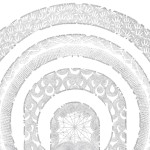
Fantasy has always been a risky language for contemporary music. It is surprisingly easy to confuse myth with escapism, or symbolism with decorative eccentricity. Dragons, enchanted forests and invented worlds often collapse under the weight of their own ambition, leaving listeners admiring elaborate concepts while quietly wondering where the music wandered off to. Tristan Allen avoids that trap almost entirely. "Osni The Flare" never asks us to believe in its mythology as fiction. Instead, it reminds us that myths are simply emotional truths wearing improbable costumes.
The second chapter of Allen's projected trilogy, following the remarkable "Tin Iso and The Dawn", tells the story of Osni, the first mortal in Allen's carefully constructed universe, whose discovery of fire transforms them into a deity. On paper it reads like an ancient folktale rediscovered in an attic somewhere between Scandinavia, Japan and an overgrown corner of a child's imagination. In practice, it becomes something much stranger: a chamber opera without words, a puppet theatre performed through sound, and an exquisitely detailed meditation on transformation.
Allen's artistic path helps explain why "Osni The Flare" feels so singular without ever seeming deliberately eccentric. A classically trained pianist who studied at Berklee, they have wandered through experimental electronics, metal, contemporary composition and improvisation before finding an unexpected home in New York's puppetry community. That detour turns out not to be a detour at all. Puppetry and composition share the same essential challenge: convincing an audience that inanimate matter possesses an inner life. Allen approaches sound exactly as a master puppeteer approaches wood, string and cloth. Every tiny gesture matters because every tiny gesture contributes to the illusion that something impossible has quietly become alive.
This philosophy permeates every corner of the album. Recorded largely in Allen's Brooklyn apartment overlooking Cypress Hills Cemetery, "Osni The Flare" assembles an astonishing collection of sonic fragments into an organic whole. Toy pianos, bird-shaped ocarinas, Balinese flutes, harmonium, pump organ, battered Casio keyboards, bells, music boxes, upright bass, field recordings, homemade sound effects and wordless voices coexist without ever sounding like an inventory of curiosities. Lesser composers collect unusual instruments the way tourists collect refrigerator magnets, hoping novelty alone will generate meaning. Allen instead discovers a shared emotional grammar among these disparate objects.
The opening "Osni Opening" immediately establishes this intimate, handcrafted universe. Piano serves as both home and threshold, introducing a melodic language that feels strangely ancient despite being entirely original. The music never quotes folklore directly, yet it carries the quiet inevitability of stories passed orally across generations.
The first act, "Garden" and "Loon", unfolds with remarkable tenderness. Allen's decision to use wordless vocals proves inspired. Inspired in the genuine sense of the word, not the exhausted marketing version that now describes everything from symphonies to artisanal sandwiches. Freed from literal language, the voice becomes another landscape rather than a narrator, allowing listeners to inhabit Osni's journey without predetermined interpretation. The melodies drift somewhere between lullaby, ritual and distant memory.
As the narrative darkens through "Dragon" and "Pyre", Allen resists the temptation toward cinematic spectacle. Fire itself is never represented through bombastic crescendos. Instead, it emerges through microscopic details: fingernail clicks transformed into crackling embers, slowly decaying resonances, fragile harmonic shifts that seem to generate heat rather than simply describe it. The mythical dragon speaks in an invented language, yet the emotional weight remains entirely comprehensible. One need not understand every syllable to recognise hunger, danger or awe.
The album's central achievement may lie in how it treats scale. Although the story concerns gods, creation myths and elemental forces, the music remains profoundly domestic. Many sounds originate from objects found around Allen's apartment or patiently manipulated by hand. Music boxes are individually sampled and retuned. Cheap flutes become sacred instruments. Even a failing Casio keyboard contributes unexpected warmth. The extraordinary emerges from the ordinary through attention rather than expense. It is a comforting thought in an age where creativity is too often measured by software updates instead of imagination.
The third act, particularly "Umbra" and "Rite", enters increasingly ambiguous territory where mortality and divinity gradually exchange places. Here Allen's background in sound design becomes especially apparent. Rather than constructing traditional harmonic progressions, they sculpt spaces where melodies appear suspended inside evolving textures. The influence of gamelan music, hinted at in the bass-centred melodic writing, combines beautifully with contemporary electroacoustic techniques, producing something that feels simultaneously ceremonial and deeply personal.
The closing sequence, "Flood", "Everglow" and the brief "Osni Closing", offers resolution without finality. The transformation of Osni into the deity of fire is treated not as triumph but as acceptance. Every ending simultaneously opens another beginning. Even the album's final hidden detail, the involuntary whistle of puppet engineer Jim Freeman, quietly preserved in the closing moments, reinforces the record's humanity. After nearly an hour of meticulous world-building, Allen leaves us with the accidental sound of someone simply existing. It is a wonderfully humble gesture.
Paul Corley's mix deserves special mention for preserving the astonishing amount of detail without sacrificing coherence. Every miniature sound retains its tactile presence while contributing to an immersive whole. The production never overwhelms; it invites exploration. Each revisit reveals another carefully hidden thread connecting one act to the next.
"Osni The Flare" is ultimately less interested in fantasy than in belief itself. Fire here represents creation, love, mortality and memory all at once. Allen understands that myths endure not because they explain the world literally, but because they continue explaining us. Their album captures something many contemporary experimental works forget in the pursuit of conceptual sophistication: wonder is not childish. It is one of the most demanding artistic achievements imaginable.
Like the finest puppet performances, "Osni The Flare" succeeds through what puppeteers sometimes call "the true lie". We know perfectly well that strings are being pulled, tiny instruments are being wound, samples are being rearranged, and imaginary gods do not walk among us. Yet for forty-five luminous minutes, none of that seems remotely important. The fire burns anyway.
Loom & Thread: Dispersion
Improvisation has always carried an odd contradiction. It celebrates the present moment while quietly accumulating memories of everything that has just happened. "Dispersion", the second album by the Leipzig-based trio Loom & Thread, pushes that contradiction even further. Here, memory does not simply linger in the musicians' minds; it becomes raw material, sampled, fragmented and redistributed until the distinction between live interaction and remembered sound dissolves almost completely.
The premise could easily have produced an overly cerebral exercise. Instead, "Dispersion" remains remarkably physical. Even when the listener is unable to identify who is producing which sound, there is never any doubt that human bodies are driving the music. It breathes, hesitates, accelerates and occasionally collides with itself in ways no algorithm would willingly tolerate. Computers tend to prefer certainty. Musicians, fortunately, still enjoy getting pleasantly lost.
The trio itself is already an unusual organism. Pianist and sampler Tom Schneider, double bassist Tobias Fröhlich and drummer Daniel Klein operate within the familiar framework of the piano trio while constantly undermining its conventions. Schneider, whose work ranges from the deconstruction of canonical contemporary compositions to mechanically extended piano installations and the acclaimed solo album "Isotopes", has developed sampling not as decorative technology but as an extension of improvisational thinking. His sampler behaves less like a playback device than an additional performer with a very selective memory.
Fröhlich anchors the ensemble with a bass language that continually shifts between propulsion and restraint, while Klein's drumming avoids the predictable role of rhythmic authority. Instead, his playing generates flexible environments where pulse remains negotiable rather than imposed. Their collective experience in contemporary jazz, free improvisation and experimental composition is immediately apparent, yet "Dispersion" rarely sounds concerned with stylistic identity. It is interested in processes instead.
The album's central innovation lies in its treatment of absent collaborators. Rather than inviting saxophonists Victor Fox and Asger Nissen or vibraphonists Volker Heuken and Daniel Klein himself to perform alongside the trio, Loom & Thread sampled extended improvisations, dissecting individual attacks, resonances and harmonic residues before weaving these sonic fragments into their own performances. The result is strangely uncanny. A vibraphone shimmer appears where no vibraphone exists. A saxophone multiphonic seems to emerge from inside the piano rather than beside it. These sounds no longer belong to their original performers; they have become free-floating particles circulating through the trio's evolving ecosystem.
Opening pieces such as "Twill Weave" and "Shoals" establish this unstable terrain with admirable subtlety. Acoustic interplay remains at the forefront, yet tiny spectral intrusions continuously challenge the listener's assumptions. One begins searching for invisible musicians, only to realise the ghosts are embedded within the instruments already present.
The title track perhaps offers the clearest articulation of the album's philosophy. Rather than layering electronic elements over acoustic performance, Schneider redistributes fragments so seamlessly that cause and effect become almost impossible to separate. Every resonance seems capable of generating another. Every gesture leaves traces that may unexpectedly return several minutes later in altered form.
Throughout the record, brevity becomes one of the trio's greatest strengths. Many pieces barely exceed two minutes, some lasting little more than a minute. Yet these miniature studies never feel incomplete. Instead, they resemble carefully observed sketches that collectively assemble a far larger picture. "Driftin'", "Overturn", "Knitted" and "Workaround" function almost like punctuation marks, allowing the more expansive explorations of "Spheres" or "DC" additional breathing space.
Perhaps the album's most impressive quality is its refusal to fetishise complexity. Beneath the sophisticated conceptual framework lies an intuitive musicality that never disappears beneath theory. The trio's interactions remain playful, alert and occasionally mischievous. A sampled saxophone burst might suddenly redirect an improvisation, while an unexpected harmonic fragment opens entirely new pathways through what initially seemed familiar terrain. The musicians respond instinctively rather than academically.
This sense of perpetual negotiation extends to the album's broader aesthetic. "Dispersion" occupies a fascinating middle ground between contemporary jazz, electroacoustic composition, post-minimalism and live electronics without ever settling comfortably into any of them. Macro has consistently championed artists willing to inhabit these liminal spaces, and Loom & Thread prove particularly well suited to the label's catalogue. Like several of Macro's most adventurous releases, this is music that values permeability over categorisation.
Martin Dressler's recording captures the trio with remarkable transparency, while Martin Ruch's mix and mastering preserve the delicate equilibrium between acoustic immediacy and digital intervention. Nothing feels artificially polished. Every resonance retains its tactile grain, every sampled fragment remains integrated into the physical space rather than floating above it.
The album's title ultimately proves more revealing than it first appears. In physics, dispersion describes the separation of complex phenomena into their constituent parts. Loom & Thread perform almost the opposite operation. They take isolated sounds, detached gestures and borrowed timbres, dispersing them so thoroughly throughout the music that individual identities gradually disappear into collective experience.
By the closing "Workaround", one realises that the record has quietly altered the act of listening itself. Instruments cease to function as stable sources. Memory becomes performance. Presence includes absence. The trio has not expanded by adding more musicians, but by allowing other voices to echo inside their own until authorship itself becomes beautifully, productively blurred. It is a subtle reminder that no improvisation is ever entirely spontaneous. Every note carries traces of encounters, influences and forgotten conversations. "Dispersion" simply lets those hidden companions step, briefly and elegantly, into the light.
Simon Goff: Sparks
Artist: Simon Goff (@)
Title: Sparks
Format: Download Only (MP3 + Lossless)
Label: Grand Chess Records (@)
Rated:

Title: Sparks
Format: Download Only (MP3 + Lossless)
Label: Grand Chess Records (@)
Rated:
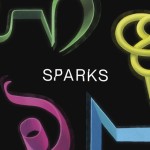
Some records are content to exist as finished statements. Others behave more like conversations, accepting that every musical idea carries within it the possibility of another life. "Sparks" belongs firmly to the latter category. Rather than treating the remix as a promotional afterthought, Simon Goff transforms it into an extension of composition itself, inviting four artists with markedly different sensibilities to revisit the material from "Spark Like Living Mothers" and reveal what remained dormant beneath its surface.
It is a deceptively simple premise. Thomas Tallis wrote "If Ye Love Me" nearly five centuries ago. Goff reimagined that Renaissance motet through the language of contemporary electronics, strings and immersive textures on "Spark Like Living Mothers". Now Kaitlyn Aurelia Smith, Masayoshi Fujita, Anne Müller and Pye Corner Audio each reinterpret Goff's reinterpretation. At every stage, something is lost, something is gained, and something entirely unforeseen quietly appears. Creative influence, after all, rarely travels in straight lines. It resembles a flame passed from one candle to another. The light remains recognisable, even though the fire is never quite the same.
This notion of artistic inheritance has long been central to Goff's work. Although many listeners first encountered him through his collaborations with Hildur Guðnadóttir on the Grammy-winning scores for "Chernobyl" and "Joker", or through his increasingly acclaimed film and television compositions, his solo output occupies a more intimate territory. A classically trained violinist based in Berlin, Goff has steadily developed a vocabulary where bowed strings, electronics, field recordings and subtle studio manipulation coexist without hierarchy. His albums never feel interested in showcasing technical sophistication, despite the considerable craft behind them. Instead, they seek emotional precision, often arriving somewhere between memory and architecture.
"Sparks" demonstrates another aspect of that generosity. It requires considerable confidence to hand deeply personal material to other composers and accept that it may return wearing entirely different clothes. Humans tend to struggle with lending books because they fear coffee stains. Goff lends entire compositions and somehow emerges with four compelling new perspectives.
Kaitlyn Aurelia Smith opens the EP with "Beyond the Clouds", immediately dissolving the boundaries between organic warmth and synthetic shimmer that have defined much of her remarkable catalogue. Her modular synthesis never overwhelms the original piece. Instead, it behaves almost like sunlight refracted through moving water, surrounding Goff's harmonic language with constantly shifting iridescence. The result feels buoyant without becoming weightless, retaining an emotional gravity beneath its luminous surface.
Masayoshi Fujita approaches "Now Their Pain is Sugar" from a markedly different direction. Known for his exquisite command of the vibraphone and his understated compositional elegance, Fujita strips the material back to its skeletal beauty. Every note appears carefully considered, every resonance allowed to bloom naturally before gently dissolving. His version possesses the quiet confidence of someone who understands that silence is rarely empty; it is simply waiting for the right sound to inhabit it.
Anne Müller's reworking of "The Learning of the Eye" perhaps comes closest to Goff's own emotional vocabulary while still establishing an unmistakably personal voice. Her long-standing exploration of the cello as both lyrical instrument and textural source allows the composition to breathe with remarkable tenderness. Layers emerge almost imperceptibly, producing a fragile intimacy that never slips into sentimentality. Like much of Müller's finest work, the piece seems less interested in expressing emotion than in creating a space where emotions may safely unfold.
The closing contribution, Pye Corner Audio's expansive reimagining of "The Yet to Come", shifts the atmosphere entirely. Stretching towards ten minutes, it introduces an understated pulse that subtly recalls analogue electronics, vintage soundtrack aesthetics and haunted late-night transmissions without ever becoming nostalgic. Martin Jenkins has long demonstrated an uncanny ability to create music that feels simultaneously futuristic and strangely remembered, as though discovered on a forgotten videotape from a future that never happened. His interpretation gently darkens the EP, not as a conclusion but as an invitation to continue wandering beyond it.
What makes "Sparks" particularly satisfying is its refusal to become a stylistic showcase. The participating artists certainly retain their distinctive identities, yet none approach the material as an opportunity for radical reinvention at any cost. There is mutual respect embedded throughout the project. Each remix listens before it speaks. That quality feels increasingly rare in contemporary electronic culture, where transformation sometimes becomes indistinguishable from replacement.
The production deserves equal recognition. Mastered by Stefan Betke, whose work as Pole and engineer has shaped countless landmarks in experimental electronic music, the EP maintains exceptional clarity even when textures become densely layered. Tiny harmonic interactions remain audible without sacrificing warmth, preserving the tactile quality that has always distinguished Goff's recordings.
Perhaps the most rewarding aspect of "Sparks" is the question it quietly leaves unresolved. Which version is the original? Tallis' sacred polyphony? Goff's contemporary meditation? These four reinterpretations? The answer, of course, is all of them and none of them. Music does not remain alive because it resists change. It survives because every generation finds another way of hearing it.
In that sense, "Sparks" is less a remix collection than a meditation on artistic continuity. It reminds us that influence is not a chain of ownership but a series of generous misunderstandings, each artist discovering something the previous one could not quite hear. The smallest spark, after all, rarely illuminates the same landscape twice.
VV.AA.: XKatedral Anthology III
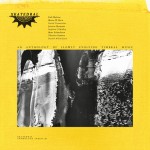
A label's tenth anniversary often arrives wrapped in nostalgia, complete with retrospective declarations and carefully polished myths. XKatedral chooses a more fitting celebration. "Anthology Series III" does not look backwards in search of monuments; it listens across a decade of work to reveal a network of ideas still in motion. Rather than asking what has been achieved, it quietly asks what sound can continue becoming when composers remain patient enough to follow its smallest transformations.
Across eight pieces written between 2014 and 2025, the anthology gathers artists who have helped define XKatedral's identity without ever reducing them to a shared aesthetic formula. Synthetic sound, acoustic instruments, algorithmic processes and spectral thinking form the common vocabulary, but each composer speaks with unmistakably individual inflection. The result feels less like a compilation than a carefully curated exhibition where every room changes the way the previous one is remembered.
The opening miniature, "My Falling Sinks", immediately demonstrates Kali Malone's remarkable gift for making restraint feel emotionally expansive. Built around a descending melody performed on a justly tuned organ with contributions from cellist Lucy Railton and guitarist Stephen O'Malley, the piece lasts barely four minutes, yet it seems to suspend ordinary notions of duration. The unusual tuning system lends each interval an almost tactile quality, as though harmony had briefly escaped the compromises of equal temperament and rediscovered its natural proportions.
From this quiet beginning, Maria W Horn unfolds "Empyrean Flare", one of the anthology's defining statements. Inspired in part by the Tintinnabuli principles developed by Arvo PÄrt, Horn animates supersaw oscillators through slowly circling harmonic motion while subtle glissandi gradually destabilise the apparent serenity. Analog tape saturation adds warmth without softening the composition's underlying tension. It resembles light filtered through thick clouds, beautiful precisely because it never settles into certainty.
David Granström's "Tessellation" shifts the emphasis toward generative synthesis, yet avoids the detached elegance often associated with algorithmic composition. Repeating tape loops establish patterns that continuously reorganise themselves, creating the sensation that structure is emerging spontaneously rather than being imposed from above. Mathematics becomes strangely lyrical here, suggesting that equations occasionally possess better emotional intelligence than the people writing them. A mildly unsettling thought, but the music makes a convincing case.
One of the anthology's quiet revelations is Jessica Ekomane's "To Whoever Shall Inherit The Earth". Recorded almost accidentally during a late-night session, the work carries an intimacy that no amount of meticulous planning could manufacture. Ekomane has consistently explored perception through complex electronic systems, yet here the emphasis falls on fragility rather than architecture. The title hints at legacy, but the music feels deeply rooted in the fleeting present, preserving an unrepeatable moment before it disappears.
Stephen O'Malley's "Smoking Mother" offers perhaps the anthology's most surprising contribution. Best known for overwhelming amplifier-driven soundscapes, O'Malley instead reveals a composer fascinated by resonance, ritual and gradual accumulation. Drawing distant inspiration from figures as diverse as Krzysztof Penderecki, Popol Vuh and the great Dhrupad master Zia Mohiuddin Dagar, the piece unfolds with meditative authority rather than sheer force. It is a reminder that intensity does not always require high volume. Sometimes it simply requires unwavering attention.
That same attentiveness permeates Mats Erlandsson's "Att Böja SjÄlarna", where violin and voice gently inhabit a spacious electronic environment. The title translates roughly as "To Bend Souls", and the music embraces that ambiguity without theatricality. Gaianeh Pilossian's violin and Sara Fors' voice never dominate the electronic textures; instead, they appear like fragile human traces inside an immense acoustic landscape.
The closing pair provides an elegant conclusion. Theodor Kentros' intriguingly titled "This Will Be My Last Piece For Organ" is less a farewell than an investigation into the organ's unstable acoustic behaviour, recreating its shifting frequencies through oscillators and resonant feedback. Whether it truly marks the composer's final encounter with the instrument is almost beside the point. Composers have a habit of making dramatic promises to themselves, only to return a few years later after hearing one particularly persuasive overtone.
Daniel M. Karlsson's "Fault Lines" ends the anthology with quiet grandeur. Built through deterministic generative methods and enriched by vocal performances from Sara Fors, Ansis Btiš and Artrs ukurs, the work explores fracture without collapse. Harmonic planes drift against one another like tectonic plates moving too slowly for ordinary perception, yet carrying immense emotional weight beneath the surface. It is an apt conclusion for a collection devoted to subtle transformation.
As with the previous volumes, the remastering preserves extraordinary clarity while allowing each work's physical presence to emerge naturally. Stephen O'Malley's understated design, Kali Malone's visual direction and Jordana Loeb's screen print reinforce XKatedral's long-standing commitment to presenting sound as a complete aesthetic experience rather than an isolated object.
Taken together, the three "Anthology" volumes document more than a decade of remarkable music, but "Series III" perhaps best captures XKatedral's deeper philosophy. These composers are not interested in novelty for its own sake, nor in preserving tradition as though it belonged behind museum glass. Instead, they treat sound as an endlessly evolving material whose smallest movements can reshape entire emotional landscapes. In doing so, they remind us that some of the most profound musical journeys occur not through dramatic departures, but through the almost imperceptible act of listening more carefully than before.