
Tuesday, November 24, 2026
Browse by Genre
Industrial Music / Industrial Metal / Aggro Industrial / Electro Metal
Industrial Noise / Power Noise / Harsh Noise
Synth Pop / Electro Pop / Synth-Electronica
Techno / Trance / Goa / Drum'n'Bass / Jungle / Tribal / Trip-Hop
Ambient / Electronica / Ethereal / Dub / Soundscapes / Abstract
Experimental / Avantgarde / Weird & Wired / Glitch / Noise / Field Recording
Dark / Gothic / Wave / New Wave / Dark Wave / Industrial Gothic
New Music / Downtown / Avantgarde Jazz / New Classical / World
Search Reviews
Music Reviews
ZÖJ: May The Devil's Ear Be Deaf
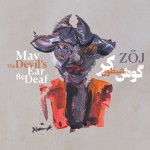
Artist: ZÖJ (@)
Title: May The Devil's Ear Be Deaf
Format: CD + Download
Label: Parenthèses Records (@)
Rated:

Title: May The Devil's Ear Be Deaf
Format: CD + Download
Label: Parenthèses Records (@)
Rated:
Some expressions refuse to travel neatly across languages. The Persian phrase that lends its name to ZÖJ's third album is one of them. "May the devil's ear be deaf" is at once a blessing, a superstition, and a quiet acknowledgment that beauty has always attracted unwanted attention. It is the verbal equivalent of knocking on wood after speaking of happiness, except it carries centuries of cultural memory behind it. Appropriately, ZÖJ transform this fragile wish into music that feels equally protective and exposed, as though every note were offered to the world while simultaneously hoping the wrong ears never hear it.
The Australian duo, formed by Iranian-born vocalist and kamancheh virtuoso Gelareh Pour alongside drummer and percussionist Brian O'Dwyer, has steadily established itself as one of the most compelling voices in contemporary intercultural music. Rather than treating different musical traditions as decorative ingredients to be mixed for cosmopolitan effect, ZÖJ pursue something considerably rarer: a genuine dialogue in which neither tradition dominates nor dilutes the other. Their work emerges from mutual listening rather than cultural arithmetic, and that distinction makes all the difference.
Recorded live at the Banff Centre in Canada without overdubs or studio polishing, "May The Devil's Ear Be Deaf" embraces risk as part of its expressive vocabulary. Every sound exists because it happened exactly once. There are no opportunities for correction, no digital safety nets waiting backstage. In an era where recordings are often edited until they resemble architectural blueprints more than performances, such commitment feels quietly radical. Perfection, it turns out, is sometimes the least interesting thing musicians can pursue.
Across four expansive pieces, the duo inhabits a landscape where Persian poetry, free improvisation, chamber music, contemporary classical sensibilities and exploratory jazz coexist without ever feeling artificially stitched together. Gelareh Pour's voice becomes more than a vehicle for language. It sighs, mourns, rises and fractures with extraordinary emotional precision, often dissolving into the sustained cries of the kamancheh until instrument and singer appear to share the same breath. O'Dwyer's percussion, meanwhile, avoids the temptation to anchor or decorate. His playing responds like weather: sometimes turbulent, sometimes barely perceptible, but always altering the emotional pressure of the surrounding space.
The opening "Termites", built around Mahmud Moshref Azad Tehrani's haunting poem, unfolds with remarkable restraint. Fear is not portrayed through violence but through delicate instability. The recurring image of paper, vulnerable to rain and insects alike, mirrors the music itself: every phrase seems almost too fragile to survive its own resonance. Yet it persists. There is quiet courage in that persistence.
Elsewhere, "Woe to the Ear" draws upon the mystical poetry of Hushang Ebtehaj, meditating on the eternal distance between hearing and understanding. The irony is delicious. Humans have spent millennia confusing the two with astonishing consistency. We attend concerts, consume podcasts, argue online and call it listening. ZÖJ gently expose the difference. Their music demands attention that extends beyond the ears, asking the listener to remain present even when meaning escapes immediate comprehension.
What distinguishes this album from many cross-cultural collaborations is its refusal to exoticise its own sources. Persian musical language is never presented as something mysterious for Western ears to marvel at, nor is contemporary improvisation treated as inherently more progressive than tradition. Instead, both become living practices capable of questioning one another. This reciprocity lends the performances remarkable dignity.
The production deserves equal praise. The live recording captures subtle interactions between voice, bow, drum and room without flattening their dynamic range. Silence becomes an active participant throughout the album, allowing resonance to linger naturally instead of being filled with unnecessary information. One frequently hears not only the instruments themselves but the air they disturb.
Beneath the album's considerable technical accomplishment lies something profoundly human. Its central concern is vulnerability: how to create beauty despite knowing that beauty itself can invite loss, envy or destruction. Rather than retreating into caution, ZÖJ respond with openness. Their music acknowledges fear without surrendering to it.
"May The Devil's Ear Be Deaf" ultimately feels less like a collection of compositions than a carefully guarded ritual, one in which memory, poetry and improvisation become different dialects of the same emotional language. It reminds us that tenderness is not the opposite of strength but one of its most demanding forms. And perhaps that old Persian blessing contains another hidden truth: sometimes the devil does not need to be defeated. Sometimes it is enough that, for forty minutes, it simply fails to hear.
Emil Mark: Mellemtid
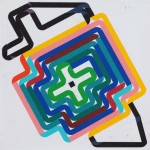
Artist: Emil Mark
Title: Mellemtid
Format: Download Only (MP3 + Lossless)
Label: Tonal Union (@)
Rated:

Title: Mellemtid
Format: Download Only (MP3 + Lossless)
Label: Tonal Union (@)
Rated:
Every generation eventually discovers the pipe organ and decides it can be something other than the soundtrack to solemn Sundays and gothic architecture. Some approach it with scholarly reverence, others with cinematic grandeur. Danish composer Emil Mark chooses a more refreshing strategy: he treats it like an intriguing machine he has just found abandoned in a basement and cannot resist taking apart to see how it works. As it happens, that is almost exactly how "Mellemtid" came into being.
Mark's debut for Tonal Union emerged from a fortunate coincidence during his studies in Electronic Music and Sound Art at the Danish National Academy of Music, where several forgotten practice organs quietly awaited someone curious enough to wake them. Having never seriously played the instrument before, he approached it without the burden of tradition. Rather than asking what an organ "should" sound like, he asked what it could become when filtered through sampling, digital processing and an ear shaped as much by minimalism as contemporary electronic music.
That innocence proves to be one of the record's greatest strengths. Mark is clearly aware of the lineage extending from Bach and Messiaen to more recent figures such as Kali Malone and Sara Davachi, yet "Mellemtid" never feels like an attempt to occupy the same shelf. It speaks another dialect altogether. The historical weight of the instrument remains present, but it is carried lightly, almost playfully, like someone wearing an antique coat with modern sneakers.
The composer's influences reveal themselves subtly. The structural patience of Morton Feldman, the process-oriented thinking of Steve Reich, the attentive listening advocated by Pauline Oliveros, even the restrained geometry of painter Agnes Martin all leave fingerprints on the music without ever becoming quotations. Mark absorbs these ideas rather than displaying them, allowing simple melodic cells and gently shifting repetitions to generate surprisingly rich emotional spaces.
Opening piece "Blomster" immediately establishes this approach. Beneath its delicate organ figures lies an understated melodic instinct that borders on pop without surrendering to obvious hooks. It feels welcoming rather than austere, inviting listeners into an environment where repetition functions less as hypnosis than quiet companionship.
That balance between accessibility and formal rigor continues throughout the EP. "I Vinden", inspired by Agnes Martin's minimalist visual language, unfolds through carefully arranged patterns whose apparent simplicity conceals meticulous internal movement. Tiny harmonic shifts gradually alter the emotional climate, much as changing sunlight transforms the same landscape over the course of an afternoon.
Perhaps the most fascinating aspect of "Mellemtid" is the dialogue between acoustic reality and digital intervention. Mark records the organs closely, isolating their pipes, mechanical noises and resonant bodies before reshaping them inside Ableton. Yet the electronic processing never feels like an attempt to disguise the source material. Instead, it extends the instrument's physical presence into impossible acoustic architectures. One sometimes loses track of where wood and metal end and software begins. In an era obsessed with authenticity, Mark quietly suggests that transformation can be just as truthful.
"Med Tog" exemplifies this beautifully. Built around subtle temporal displacements between repeating voices, the piece creates gentle harmonic instability without ever becoming disorienting. Lines drift slightly apart before finding unexpected alignments again, producing the sensation of several clocks agreeing on approximately the same time while refusing absolute precision. Considering that the album's title roughly translates as "meantime" and alludes to intermediate cycling times, the relationship between movement and temporality becomes one of its hidden conceptual threads.
Then comes "Rejser", which Mark jokingly describes as his own EDM track. It is a wonderfully misleading description. There are no drops, no explosive climaxes, no obligatory invitations to raise one's hands toward the nearest lighting rig. Instead, repetition itself becomes propulsion. The piece dances internally, generating momentum through evolving patterns rather than percussion. It is dance music for people who suspect that standing still can also be a choreography.
Throughout its five concise compositions, "Mellemtid" demonstrates remarkable restraint. Many contemporary ambient and minimalist releases mistake duration for depth, stretching modest ideas until patience becomes an endurance sport. Mark avoids that temptation. Every piece ends with the satisfying feeling that it has explored precisely the amount of territory it needed, no more and no less.
This sense of proportion reflects the composer's broader artistic personality. Although this EP centers on the organ, Mark has repeatedly described himself primarily as a multi-instrumentalist interested in exploring different sound worlds rather than establishing a permanent identity around a single instrument. That openness gives "Mellemtid" an appealing sense of discovery. It sounds less like the arrival of an established master than the beginning of an artist asking unusually good questions.
The irony, of course, is that one of Western music's oldest and most monumental instruments becomes, in Mark's hands, surprisingly light on its feet. The organ stops preaching and starts wondering. Its centuries of accumulated authority dissolve into curiosity, and curiosity has always made for better company.
For a debut, "Mellemtid" possesses an uncommon confidence. It neither rebels against tradition nor bows before it. Instead, Emil Mark simply opens the basement door, listens carefully to what history sounds like in the present tense, and invites us inside. Some discoveries begin with grand artistic manifestos. Others begin because someone wandered downstairs and noticed an old instrument waiting patiently in the dark. This EP reminds us that the second kind often lasts longer.
Jérôme Bouve & Delphine Dora: Vents d'aether
Artist: Jérôme Bouve & Delphine Dora (@)
Title: Vents d'aether
Format: 12" + Download
Label: Hallow Ground (@)
Rated:
Title: Vents d'aether
Format: 12" + Download
Label: Hallow Ground (@)
Rated:
There are albums that document performances, and others that document places. "Vents d'aether" somehow manages to do both while quietly suggesting that the distinction may be artificial. On this remarkable first collaboration between Jérôme Bouve and Delphine Dora, the true protagonist is neither the organ nor the harmonium, nor even the performers themselves. It is the invisible conversation between architecture, memory and air. After all, churches have been collecting echoes for centuries. It would be rude not to let them contribute.
Released by the consistently adventurous Hallow Ground, "Vents d'aether" originates from a deceptively simple idea. Bouve had long imagined recording the organs and harmoniums scattered across the churches of the Cotentin peninsula in Normandy, treating them not as interchangeable instruments but as unique acoustic organisms, each carrying its own history in wood, stone and metal. Finding Delphine Dora proved decisive. Few contemporary musicians possess her extraordinary sensitivity to improvisation, where technical mastery is always placed in service of intuition rather than display.
Over the past two decades, Dora has quietly become one of the most singular figures in the European experimental underground. Her prolific discography moves effortlessly between avant-folk, free improvisation, chamber minimalism, electroacoustic composition and dreamlike songcraft, always guided by a rare ability to preserve vulnerability without sacrificing formal sophistication. Whether working with piano, organ, voice or found sounds, she consistently treats music less as composition than as attentive listening made audible.
That philosophy permeates every moment of "Vents d'aether". The six pieces began as lengthy improvisations recorded inside various churches before being carefully shaped in the studio and enriched with field recordings by SA~RA. Yet "enriched" almost feels misleading. These environmental sounds never function as decorative ambience. They remain fully integrated musical elements, inseparable from the instruments themselves. Wind, distant movement, subtle resonances and environmental textures do not accompany the music. They are the music.
The monumental opening title piece immediately establishes the album's unusual temporal logic. Lasting nearly twenty minutes, "Vent d'Aether" unfolds with extraordinary patience. Harmonium drones breathe beneath slowly shifting organ harmonies while Dora's voice appears only occasionally, less as language than as another vibrating material within the acoustic field. One gradually stops distinguishing between intentional gesture and architectural resonance. Sound seems to emerge directly from the stones themselves.
This dissolution of boundaries reflects Bouve's broader artistic practice. His work frequently explores environmental recording, site-specific listening and the transformation of physical spaces into compositional partners. Here, his careful recording, editing and spatial sensibility become every bit as important as the instrumental performances. The churches themselves cease functioning as recording venues and become active collaborators.
Following the expansive opening, the shorter pieces reveal different facets of the project's delicate architecture. "Réville V" and the various "Le Vast" movements resemble intimate sketches rather than miniature compositions. Their brevity prevents contemplation from hardening into ritual. Instead, each fragment feels like discovering another room within the same ancient building, where light enters through slightly different windows and silence acquires subtly altered colours.
Perhaps the album's greatest achievement lies in its treatment of improvisation. Contemporary improvised music often celebrates spontaneity through abundance, filling every available moment with activity. Bouve and Dora pursue the opposite path. Their improvisations seem built from restraint, trusting hesitation as much as certainty. Every sustained chord appears carefully weighed against the acoustics surrounding it. Every silence feels deliberately inhabited rather than merely empty.
The field recordings supplied by SA~RA deepen this impression beautifully. Rather than announcing themselves as documentary material, they blur temporal perspectives, making it increasingly difficult to determine where present performance ends and accumulated memory begins. One has the curious sensation that previous centuries remain faintly audible beneath the contemporary recording, not through historical reconstruction but through resonance itself.
Lawrence English's mastering deserves particular recognition. As both mastering engineer and accomplished composer deeply invested in questions of acoustic perception, he preserves the extraordinary dynamic subtlety of these recordings without imposing artificial clarity. The result retains all the organic complexity of sound unfolding inside real architectural spaces. One almost feels the changing air pressure around individual notes.
The closing "Montfarville V", co-composed and performed by both artists, gently introduces church bells near its conclusion, completing the album with quiet inevitability rather than dramatic resolution. The bells do not signal an ending so much as remind us that these buildings continue existing beyond the recording session, continuing their patient dialogue with weather, time and anyone willing to listen.
There is something quietly radical about "Vents d'aether". In an age increasingly fascinated by limitless digital possibility, Bouve and Dora return to some of humanity's oldest technologies: air moving through pipes, fingers pressing keys, stone reflecting sound. The result never feels nostalgic. Instead, it suggests that genuine innovation sometimes begins by listening more carefully to what has always been present.
Ultimately, "Vents d'aether" is less concerned with producing beautiful sounds than with revealing how beauty already inhabits particular places, waiting for attentive collaborators to uncover it. Bouve and Dora do not impose meaning upon these churches. They enter respectfully, allow the buildings to speak in their own patient language, and leave us with an album that feels suspended somewhere between geography, memory and prayer. Not necessarily prayer in any religious sense, but in its oldest meaning: an act of sustained attention toward something larger than oneself. In increasingly distracted times, that may be the rarest form of devotion available.
Jozef Van Wissem: This Is My Blood
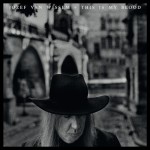
Artist: Jozef Van Wissem (@)
Title: This Is My Blood
Format: CD & 12" + Download
Label: Incunabulum Records (@)
Rated:
Title: This Is My Blood
Format: CD & 12" + Download
Label: Incunabulum Records (@)
Rated:
There are musicians who spend entire careers trying to modernise ancient instruments. Jozef Van Wissem has always chosen a stranger and far more convincing route: he lets the ancient instrument quietly modernise us instead. For over three decades the Dutch composer and lutenist has treated the Renaissance and Baroque lute not as a museum relic but as an unsettling contemporary voice, capable of conversing with drones, electronics, industrial textures and minimalist repetition without ever sounding like an academic experiment. If anything, his black Baroque lute often feels less nostalgic than many brand-new synthesizers. Wood, it turns out, ages more gracefully than software.
"This Is My Blood" continues the singular path Van Wissem has refined across an extensive catalogue and numerous collaborations, most famously with filmmaker Jim Jarmusch, whose partnership culminated in the Cannes Soundtrack Award-winning score for "Only Lovers Left Alive". His work for cinema, from "Nosferatu" to "Irma Vep", has consistently demonstrated his ability to treat music as architecture rather than accompaniment, allowing silence, resonance and repetition to shape emotional space with remarkable precision. That cinematic sensibility permeates this latest release, although its landscapes feel intensely inward.
The album opens and closes with two improvisations originally conceived for Joaquim Pujol's film "Maquina", creating a circular structure that immediately suggests journey rather than destination. "What The Eternal Beginning Is" emerges almost hesitantly from silence, each plucked string carrying extraordinary weight. The Colorado desert that inspired these recordings becomes less a geographical location than a psychological terrain, vast enough for thoughts to echo against themselves.
Long-form listening has become something of an endangered species. Contemporary culture politely suggests that profound experiences should preferably fit between two notifications. Van Wissem, characteristically indifferent to such practical advice, builds compositions that unfold according to their own internal respiration. Nothing here hurries toward resolution. Time stretches, folds back upon itself and occasionally seems to stop altogether.
The title "This Is My Blood" inevitably evokes religious imagery, yet Van Wissem has long occupied a fascinating space where Christian symbolism functions less as doctrine than as poetic vocabulary. His recurring themes of suffering, redemption, mortality and transcendence are presented with remarkable ambiguity. Rather than preaching belief, he investigates the emotional architecture these symbols have built across centuries. Even listeners untouched by religious traditions may find themselves responding to the ritualistic gravity embedded within these pieces.
The magnificent "Praise Shall Sound From Shore To Shore, Until The Sun Shall Rise And Set No More" demonstrates this perfectly. Its repeating lute figures gradually accumulate subtle electronic shadows until the distinction between acoustic performance and spectral resonance begins to dissolve. Minimal changes produce disproportionately powerful emotional shifts, a compositional strategy recalling both Renaissance counterpoint and twentieth-century minimalism without belonging entirely to either tradition.
Throughout the album Van Wissem balances opposites with extraordinary discipline. His Renaissance and Baroque lutes remain unmistakably physical, every string vibration retaining its tactile presence, while electronics quietly extend rather than overwhelm their natural resonance. Drones emerge like distant weather systems. Beats appear sparingly, never seeking rhythmic dominance but gently disturbing the otherwise timeless surface. Even darkness is handled with unusual restraint. Rather than embracing gothic excess, Van Wissem cultivates an atmosphere where melancholy becomes luminous rather than oppressive.
"Concerning Our Saviours Silence" and "How You Must Enter Into Suffering" continue this exploration with almost monastic concentration. Their titles suggest theological meditation, yet the music avoids solemnity. Instead, the repeated figures function almost like breathing exercises, encouraging attentive listening rather than passive consumption. Van Wissem understands that repetition is never simple duplication. Every return arrives slightly altered by memory, expectation and the listener's own shifting perception.
The album's emotional centre arrives with "Remission", the sole vocal piece. Van Wissem's understated delivery has always possessed an almost incantatory quality, neither traditionally expressive nor emotionally detached. Here his voice feels less like narrative than confession whispered across centuries. The lyrics, sparse and direct, reinforce the album's ongoing meditation on loss, endurance and fragile hope without succumbing to melodrama.
The closing pair, "All You Do All You Bare" and "What The Eternal End Is", complete the circle with remarkable elegance. The final track mirrors the opening composition without merely repeating it, suggesting that beginnings and endings are perhaps distinguished only by perspective. After nearly forty minutes, one realises that very little has happened in conventional musical terms. Yet internally, something has shifted. Van Wissem specialises in precisely this paradox: music that appears static while quietly reorganising one's sense of time.
There is considerable courage in making records like this today. They refuse easy categorisation, avoid fashionable production tricks and demand genuine attention from their audience. In exchange, they offer something increasingly uncommon: the possibility of contemplation without instruction, mystery without obscurity, and beauty without sentimentality.
"This Is My Blood" is not an album that seeks immediate affection. Like many sacred spaces, abandoned buildings or ancient texts, it reveals itself gradually to those willing to remain present. Jozef Van Wissem once again demonstrates that the lute is far from an obsolete instrument. In his hands it becomes a vessel through which centuries continue speaking to one another, reminding us that while technologies inevitably age, the human search for meaning remains stubbornly, beautifully unresolved.
Røed Quartet: Red Nose Hymn
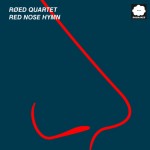
There is a curious confidence in naming your debut after a red nose. It immediately suggests that solemnity will not be mistaken for seriousness. Jazz, after all, has spent decades proving that technical sophistication and playfulness are perfectly capable of sharing the same stage, although musicians occasionally forget this and audiences politely pretend not to notice. "Red Nose Hymn" understands that the best improvisation often carries a smile just beneath its concentration.
Led by Norwegian saxophonist Aksel Røed, the newly formed Røed Quartet arrives with a record that feels remarkably assured for a first outing. Conceived initially for a commissioned performance at the Tedansfestival in 2024, the ensemble has evolved into something far more organic than a temporary project. Alongside trumpeter and flugelhorn player Lyder Røed, bassist Ola Høyer, and Swedish drummer Cornelia Nilsson, Aksel has assembled a quartet whose greatest strength lies not in dazzling virtuosity, though there is plenty of that, but in the quality of their collective listening.
The album openly acknowledges its debt to the golden age of 1960s jazz, yet never lapses into historical reenactment. Echoes of the post-bop revolution inevitably emerge throughout the record. One occasionally hears the conversational elasticity of Wayne Shorter's classic quartets, the melodic generosity associated with Blue Note recordings, or the spacious lyricism that has long characterised Scandinavian jazz. Yet these influences remain exactly that: points of departure rather than destinations. The music consistently sounds like four contemporary musicians speaking their own language while remaining fluent in jazz history.
Aksel Røed himself has steadily become one of the more compelling voices within Norway's vibrant jazz scene, working across projects that comfortably blur the boundaries between straight-ahead improvisation, progressive rock and freer forms of expression. His playing combines muscular tenor phrasing with an unusually lyrical instinct, capable of moving from robust declarations to whispering introspection without ever sounding self-conscious. Throughout "Red Nose Hymn", he avoids the temptation to dominate proceedings, preferring instead to shape conversations that allow every member of the quartet equal narrative weight.
That democratic spirit becomes immediately apparent in the opening "One Half Step for Me (A Whole Step for My Brother)". Even its title hints at affectionate humour, transforming a simple intervallic joke into something unexpectedly warm. The piece unfolds through elegant thematic development before opening into improvisations that never feel like obligatory solo showcases. Each musician builds upon ideas left suspended by the previous voice, creating a genuine sense of dialogue rather than sequential monologues.
The beautifully titled "Fanfare for Judee" introduces another dimension altogether. Whether consciously invoking the fragile introspection of Judee Sill or simply sharing her emotional atmosphere, the composition balances ceremonial grandeur with remarkable tenderness. Lyder Røed's trumpet and flugelhorn deserve particular praise here. His tone possesses that increasingly rare combination of clarity and vulnerability, capable of singing without excessive sentimentality. Rather than soaring above the ensemble, his lines seem to emerge naturally from within its harmonic fabric.
The title track occupies the emotional centre of the record. "Red Nose Hymn" plays wonderfully with apparent contradictions. A hymn traditionally suggests reverence, while a red nose evokes clowns, absurdity or perhaps quiet embarrassment. The composition itself inhabits precisely that delicate territory where dignity and vulnerability coexist. There is something profoundly human in acknowledging that grace occasionally arrives wearing ridiculous shoes.
Behind the melodic accessibility lies sophisticated craftsmanship. The quartet consistently favours subtle rhythmic elasticity over overt complexity. Cornelia Nilsson's drumming exemplifies this philosophy beautifully. Rather than filling every available space with displays of technical prowess, she shapes momentum through texture, dynamics and impeccable timing. Her playing constantly reminds us that restraint is often the most demanding form of virtuosity.
Ola Høyer's bass provides the album's quiet gravitational centre. Whether anchoring harmonies or engaging in fluid counterpoint, his contribution remains essential without ever demanding attention for its own sake. Like excellent architecture, one notices its importance most clearly when imagining its absence.
"Between the Wish and the World" perhaps best encapsulates the quartet's aesthetic. The title alone suggests that familiar territory where aspiration collides with reality, and the music mirrors that emotional ambiguity through patient thematic development and understated harmonic shifts. It is jazz that trusts implication more than declaration, allowing listeners to inhabit emotional spaces rather than simply observe them.
The closing "Time to Go" resists grand finales or explosive climaxes. Instead, it departs with quiet confidence, leaving behind the satisfying impression of a conversation concluded naturally rather than artificially extended. That sense of proportion characterises the album as a whole. Nothing feels excessive. Every note appears to have earned its place.
Recorded by Vetle Junker and sensitively mixed and mastered by Arne Martin Nybo, the production captures the quartet with admirable transparency. The acoustic space remains open enough for every instrumental interaction to breathe, preserving both intimacy and immediacy. One almost forgets the presence of microphones altogether, always a reliable sign that recording has become invisible.
"Red Nose Hymn" ultimately succeeds because it refuses both nostalgia and novelty for their own sake. Instead, it embraces a more demanding ambition: making honest music within a tradition that remains very much alive. The quartet demonstrates that jazz history is not a museum to be preserved behind glass but a language still capable of generating fresh conversations.
In a cultural landscape increasingly obsessed with constant reinvention, there is something quietly refreshing about musicians who understand that originality often emerges not from rejecting the past, but from listening to it carefully enough to discover where its unfinished sentences might still lead. The Røed Quartet has taken an impressive first step along that path, reminding us that sometimes the most memorable hymns are those unafraid to carry a little laughter inside their reverence.