
Monday, November 23, 2026
Browse by Genre
Industrial Music / Industrial Metal / Aggro Industrial / Electro Metal
Industrial Noise / Power Noise / Harsh Noise
Synth Pop / Electro Pop / Synth-Electronica
Techno / Trance / Goa / Drum'n'Bass / Jungle / Tribal / Trip-Hop
Ambient / Electronica / Ethereal / Dub / Soundscapes / Abstract
Experimental / Avantgarde / Weird & Wired / Glitch / Noise / Field Recording
Dark / Gothic / Wave / New Wave / Dark Wave / Industrial Gothic
New Music / Downtown / Avantgarde Jazz / New Classical / World
Search Reviews
Music Reviews
Pieuvre: Away From Human Behaviour

Artist: Pieuvre
Title: Away From Human Behaviour
Format: Tape + Download
Label: Kitchen Leg/Adagio 830 (@)
Rated:


Title: Away From Human Behaviour
Format: Tape + Download
Label: Kitchen Leg/Adagio 830 (@)
Rated:
Berlin has long had a peculiar talent for producing bands that sound as though they have escaped from the margins of an art-school notebook. Not polished enough for the mainstream, too playful to be trapped inside academic experimentation, they thrive somewhere between rehearsal rooms, DIY venues and photocopied manifestos. Pieuvre comfortably belong to that lineage. Their second cassette, "Away From Human Behaviour", released jointly by Kitchen Leg Records and Adagio 830, feels less like a carefully calculated sophomore effort than another dispatch from a parallel city where post-punk never became a nostalgia act because it never stopped evolving.
The trio, formed by Pia, Lina and Fege, has already established a distinctive identity within Berlin's underground. Their debut "Hyperstretch" hinted at a chemistry built on jagged guitars, elastic basslines and rhythmic precision, but this new release sharpens that language considerably. They draw obvious inspiration from late-70s and early-80s post-punk, yet refuse to become another band endlessly rearranging the furniture left behind by Gang of Four, Delta 5 or ESG. Instead, they borrow the attitude rather than the blueprint.
What immediately distinguishes Pieuvre is their refusal to sound comfortable. Their songs constantly lean forward, as though equilibrium itself were suspicious. Guitars jab instead of shimmer, rhythms twitch rather than groove conventionally, while melodies emerge almost accidentally from the surrounding angularity. The result is surprisingly danceable, although the dancing involved probably resembles someone enthusiastically trying to assemble IKEA furniture without instructions. Which, in fairness, is also an accurate metaphor for modern adulthood.
Lyrically, "Away From Human Behaviour" explores alienation without surrendering to fashionable cynicism. Work, consumer culture, identity and everyday absurdity become recurring subjects, but Pieuvre approach them with wit instead of resignation. Their observations rarely become preachy because humour remains one of their sharpest political tools. Rather than shouting slogans, they expose contradictions until they begin laughing at themselves.
The multilingual vocals reinforce this sense of fragmented modern existence. English, German and Portuguese coexist naturally throughout the album, reflecting both Berlin's international identity and the band's own refusal to settle inside neat cultural categories. Language becomes another rhythmic element, each syllable contributing its own texture and cadence.
The opening "Geisterbahn" immediately throws listeners into Pieuvre's world with nervous momentum and restless energy. There is something carnival-like beneath its tension, appropriate for a title referencing the ghost train. It suggests that contemporary life itself has become an amusement ride where everyone pretends to be having fun while quietly wondering where the emergency exit might be.
"Cactus" develops one of the album's recurring fascinations: the comparison between human behaviour and the natural world. The promotional notes jokingly ask what distinguishes us from a plant or an inanimate object. The answer, judging from this record, may simply be that humans invented office meetings.
That thread continues brilliantly into "Home Office", perhaps the album's most pointed social observation. Rather than treating remote work as either paradise or dystopia, Pieuvre capture its strange psychological limbo, where domestic intimacy gradually becomes colonised by productivity metrics. Somewhere between the kitchen table and the laptop screen, many people discovered they were commuting without actually travelling anywhere.
Elsewhere, "Executive Love" skewers corporate language with delicious irreverence, while "Wardrobe" and "Roommate" transform seemingly mundane situations into subtle reflections on identity and coexistence. Even "Blueberry Cake", whose title promises comforting domesticity, carries enough irony to remind us that sweetness and unease often arrive together.
Musically, the trio display admirable restraint. These are compact songs, rarely overstaying their welcome. Nothing feels ornamental. Every guitar stab, bass figure and rhythmic accent serves the momentum. Their no-wave influences remain evident, particularly in the deliberately abrasive guitar textures, but there is also a welcome sense of melody that prevents the album from becoming an exercise in aesthetic severity.
One of Pieuvre's greatest strengths lies in their collective identity. No individual appears interested in dominating the music. The songs emerge through interaction rather than hierarchy, reinforcing the communal spirit that has always animated the best underground scenes. This also mirrors the philosophy of Kitchen Leg Records, whose catalogue has consistently championed DIY ethics over commercial polish, embracing cassette culture not as retro fetishism but as an ongoing act of artistic independence.
Andrew Kemp's cover artwork complements the record beautifully, suggesting organisms that exist somewhere between biological and mechanical life. It quietly echoes the album's central question: what exactly separates human beings from the objects and systems they create? The answer becomes increasingly ambiguous as modern existence grows more automated.
There is, perhaps, one delightful contradiction at the heart of "Away From Human Behaviour". Despite its title, this is an intensely human album. Its humour, frustration, awkwardness and curiosity could not belong to anything else. Plants do not worry about alienation. Rocks rarely question capitalism. Octopuses, admittedly, remain suspiciously intelligent, but even they probably have better work-life balance than most of us.
Pieuvre never pretend to possess solutions. Instead, they document the strange choreography of contemporary existence with intelligence, irreverence and infectious energy. They understand that laughter and discomfort are close relatives, particularly when amplified through scratchy guitars and taut rhythms.
In a musical landscape increasingly divided between algorithm-friendly predictability and self-serious experimentation, "Away From Human Behaviour" occupies a far more interesting territory. It is clever without becoming smug, political without becoming didactic, playful without sacrificing substance. Like the best post-punk, it invites you to dance first and think later, only to realise, halfway through the second listen, that it has been making surprisingly sharp observations all along.
Matthias Muche: Trombone Alone
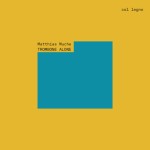
The trombone occupies a curious place in the collective imagination. In symphony orchestras it often announces destiny, catastrophe or divine judgement. In jazz it can swagger, growl and dance. In cartoons it has spent decades slipping on metaphorical banana peels. Poor instrument. It contains multitudes, yet is frequently reduced to comic glissandi or solemn fanfares. Cologne-based composer and trombonist Matthias Muche has devoted a significant part of his artistic practice to rescuing the trombone from such convenient stereotypes, treating it not merely as an instrument, but as a physical environment, a resonant architecture, almost a place one can inhabit.
"Trombone Alone", released by Col Legno, gathers five solo works that distil this vision into its most concentrated form. Muche, recipient of the WDR Jazz Prize for Improvisation in 2021, has developed his language through encounters with figures such as George Lewis, Vinko Globokar, Ray Anderson and Anthony Moore, musicians and thinkers who each, in their own way, questioned what an instrument could be. Here, however, theory quietly dissolves into experience. One does not listen to these pieces as much as enter them.
Recorded in the generous acoustic of a church in Bielefeld, the album immediately establishes space as an active participant. Reverberation is not a decorative afterthought but an essential material, a second performer answering, extending and occasionally contradicting the trombone. The opening "Solo BELLER", featuring spoken text by Anthony Moore, introduces this dimension with measured calm, as if mapping the room before setting out into it. It feels less like the beginning of a concert and more like crossing the threshold of an installation.
And perhaps installation is indeed the right word. These pieces are not organised around melody in the traditional sense, nor do they seek the dramatic arcs often expected from solo instrumental performances. Instead, Muche builds situations. Air, breath, metal, resonance and silence become compositional elements of equal importance. The trombone is extended through objects, altered air paths and electroacoustic interventions, redirecting sound back into the instrument's own body until it becomes difficult to distinguish cause from reflection.
This could sound forbiddingly academic on paper. Fortunately, sound possesses a stubborn resistance to paperwork.
"Solo GLEITER" unfolds like an exploration of invisible currents, tones sliding and bending as though searching for hidden passageways inside the instrument. "Solo QUATER" introduces greater density, yet never feels crowded; each sound appears carefully placed, like stones in a Zen garden where absence matters as much as presence. "Solo BUTTER", despite its deceptively soft title, contains some of the album's most fascinating textures, balancing fragility with a rough physicality that reminds the listener that music begins with breath pushing against resistance.
The closing "Solo GLOCKEN" brings bells into dialogue with the trombone, subtly dissolving the boundary between instrument and environment. By the end, one realises that the church itself has been performing all along. Buildings, after all, are merely very slow instruments waiting for someone to play them.
Muche's work is often described in terms of embodiment, and rightly so. There is an unmistakable sense of effort here: the movement of air, the pressure of lips against metal, the negotiation between body and object. Yet this never becomes a display of virtuosity in the conventional sense. There are no dazzling cascades of notes designed to provoke applause. In fact, "Trombone Alone" quietly questions the very idea of instrumental mastery. Technical brilliance is replaced by attentiveness, by an ethics of listening.
That may be the album's most valuable contribution. Contemporary life increasingly resembles a contest to determine who can demand our attention most aggressively. Notifications flash, algorithms insist, content accelerates. Muche offers the opposite: an invitation to slow perception down. These compositions do not tell the listener what to feel. They create conditions in which feeling may emerge naturally, unpredictably.
There is also an understated poetry in the album's brittleness. Sounds crack, fade, hesitate, reveal their material origins. Nothing is polished into anonymous perfection. Ancient Greek aesthetics associated beauty with a certain fragility, and "Trombone Alone" seems to understand this intuitively. A sound that risks disappearing often becomes more compelling than one that insists on its permanence.
Listeners familiar with Muche's large ensemble project BONECRUSHER, where these works have also been expanded for twelve trombones and percussion, may recognise some of the underlying ideas. Yet the solo versions possess a special clarity. Here, stripped of orchestral scale, the relationship between body, instrument and space becomes fully visible.
This is not an album for passive consumption. It asks for participation, or at least attention. But it rewards that attention generously. What begins as an exploration of the trombone gradually becomes an exploration of listening itself: how we perceive sound, how space shapes meaning, how silence alters memory.
In the end, "Trombone Alone" reminds us that music need not always rush toward melody, climax or resolution. Sometimes it is enough to stand in a room, listen carefully, and discover that even a single breath travelling through a length of brass can contain an entire landscape.
Siril Malmedal Hauge & Kjetil Mulelid: I Remember Oranges
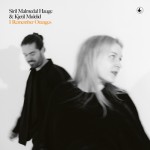
Artist: Siril Malmedal Hauge & Kjetil Mulelid (@)
Title: I Remember Oranges
Format: CD
Label: Svale Records (@)
Rated:
Title: I Remember Oranges
Format: CD
Label: Svale Records (@)
Rated:
There is a peculiar courage in recording music that leaves its fingerprints intact. In an age where every breath can be corrected, every note aligned, and every silence treated as a production flaw, "I Remember Oranges" chooses a far more demanding path: it trusts the moment. Most of these performances were captured live, often in a single take, allowing hesitation, intuition and shared breathing to become part of the composition itself. It is less an album than a conversation that happened to be preserved.
That approach feels entirely natural for Norwegian vocalist and songwriter Siril Malmedal Hauge and pianist Kjetil Mulelid, whose musical relationship has quietly matured over more than a decade. Both have become defining figures of a new Scandinavian jazz generation, collecting critical acclaim, Spellemann nominations and international audiences without ever appearing interested in chasing fashionable trends. Their partnership, formally established as a duo in 2022 after years of collaborating in larger ensembles, is built on something less spectacular but infinitely more valuable: trust. It is the kind of musical trust that cannot be rehearsed into existence; it accumulates slowly through airports, soundchecks, missed trains, late-night conversations and hundreds of concerts.
The title, borrowed from Molly Drake's "I Remember", immediately reveals the album's emotional landscape. Memory here is not presented as nostalgia but as an imperfect, living organism. We rarely remember events exactly as they happened. Instead, we remember fragments: a colour, a scent, the texture of a voice, the impossible brightness of an orange in a foreign marketplace. Human memory has always been a terrible archivist and an excellent poet.
That idea quietly threads its way through the record. The original compositions and carefully chosen covers never compete for attention but seem to complete one another, forming a meditation on connection, absence and the curious way shared experiences eventually become private possessions. Even the album's sequencing feels carefully considered, flowing like recollections rather than chapters.
"Where Will You Go?" establishes the emotional vocabulary from the outset. Its lyrics contemplate loss without surrendering to despair, wondering whether those we miss survive in rain against a window, humming moons or the earth beneath our feet. Rather than dramatizing grief, Hauge approaches it with remarkable gentleness, acknowledging that memories rarely disappear. They simply drift in and out of focus.
Throughout the album, her voice refuses theatrical excess. She sings with extraordinary restraint, allowing emotional weight to emerge through nuance instead of volume. It is tempting to describe her delivery as fragile, but that would be misleading. There is considerable strength in resisting unnecessary emphasis. Like someone speaking quietly in a room where everyone is already listening, she understands that intimacy rarely requires amplification.
Opposite her, Mulelid proves once again why he has become one of Norway's most distinctive contemporary pianists. His playing constantly balances lyricism with harmonic curiosity. Classical influences remain evident, yet they never overshadow his improvisational instincts. Rather than accompanying the voice, his piano anticipates it, answers it, occasionally questions it. The silence between notes becomes as meaningful as the notes themselves.
The guest appearances deepen rather than interrupt the duo's language. Trumpeter Mathias Eick, whose unmistakably luminous tone has become synonymous with modern Nordic jazz, appears on "Cranes", adding another layer of longing to a composition already rich with imagery of migration, remembrance and continuity. The trumpet never dominates the piece; instead, it behaves like another memory floating across the horizon. Meanwhile, Johanne Flottorp's Hardanger fiddle on "Poem" introduces a subtle folk resonance that beautifully complements lyrics exploring vulnerability and the fear of exposing one's unguarded self. The traditional instrument feels less like an exotic colour and more like another emotional register within the conversation.
The repertoire also says much about the duo's artistic identity. Covering Ornette Coleman's almost ascetic "What Reason Could I Give?", Randy Newman's warmly human "Feels Like Home", Molly Drake's quietly devastating meditation on memory and, finally, "Moon River" could easily have resulted in an uneven collection of standards. Instead, every borrowed composition sounds as though it naturally belongs inside the same emotional architecture. They are interpreted rather than performed, absorbed into the duo's own vocabulary instead of preserved behind respectful glass.
The original songs arguably reveal even greater depth when viewed alongside the accompanying lyrics. "Ventetid", sung in Nynorsk, transforms waiting into an act of creation, colouring anticipation with hope rather than frustration. "La Petite Rose", inspired by "The Little Prince", reflects on lifelong friendship through images of planets drifting apart while memories continue orbiting one another. "Poem" may be the emotional centrepiece, asking one of the simplest yet most frightening questions possible: "If I show you who I really am, will you remain?" It is astonishing how much vulnerability can fit inside so few words.
Perhaps what makes "I Remember Oranges" so affecting is its complete lack of urgency. It never attempts to impress. Contemporary music often behaves like someone frantically waving both arms, desperate not to disappear beneath the endless flood of new releases. This album simply sits down beside you and waits. Eventually you realise you've stopped looking at your phone. A remarkable achievement, really. Entire mindfulness industries have built fortunes trying to accomplish exactly that.
Sonically, the production mirrors the philosophy behind the performances. There is air around every phrase, enough space for resonance to bloom naturally. Mike Hartung's recording, Bård Ingebrigtsen's mix and Helge Sten's mastering avoid polishing away the subtle imperfections that make these performances feel inhabited rather than manufactured.
Ultimately, "I Remember Oranges" reminds us that music does not always need to astonish in order to endure. Sometimes its greatest achievement lies in making us notice what already exists: the quiet miracle of listening closely, the peculiar architecture of memory, the fragile threads connecting one human being to another. Like the fruit in Molly Drake's song, these moments eventually fade from sight, but their colour lingers somewhere inside us.
Not every album demands repeated listening. Some simply earn it. This is one of them.
Radwan Ghazi Moumneh & Frédéric D. Oberland: Eternal Life No End | ليلةظلماءملعونة،كحياةطالبيه
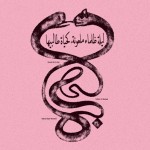
Artist: Radwan Ghazi Moumneh & Frédéric D. Oberland (@)
Title: Eternal Life No End | ليلةظلماءملعونة،كحياةطالبيه
Format: CD & 12" + Download
Label: Constellation Records (@)
Rated:
Title: Eternal Life No End | ليلةظلماءملعونة،كحياةطالبيه
Format: CD & 12" + Download
Label: Constellation Records (@)
Rated:
There are records that seek escape. Others offer consolation. "Eternal Life No End" attempts neither. It chooses instead to remain inside discomfort, refusing to dilute grief into something aesthetically digestible. That may sound intimidating, but Radwan Ghazi Moumneh and Frédéric D. Oberland understand that difficult emotions do not necessarily require difficult listening. They require honest listening, which is considerably rarer.
The collaboration feels almost inevitable. Moumneh, the Lebanese-Canadian composer, producer and driving force behind Jerusalem In My Heart, has spent well over a decade reshaping Arabic musical traditions through modular electronics, tape manipulation and deeply personal vocal performance. His work consistently dissolves boundaries between ritual, memory and experimentation. Oberland, meanwhile, has established himself as one of France's most adventurous composers through Oiseaux-Tempête, creating music where post-rock, electroacoustic composition, free improvisation and Mediterranean musical traditions converge into cinematic, politically conscious soundscapes. Their artistic paths have crossed repeatedly over the years through performances, recordings and mutual collaborations, making this first dedicated duo album feel less like a beginning than the crystallisation of an already mature conversation.
That conversation unfolds against an unmistakable historical backdrop. Conceived amid the ongoing devastation affecting Palestine and the wider SWANA region, "Eternal Life No End" is openly shaped by outrage, mourning and resistance. Yet the album avoids becoming a straightforward political statement. Rather than documenting events, it explores their emotional afterlife: the psychic fractures left behind by violence, displacement and collective amnesia.
The opening pair, "Squeal Of Swine" and "Dagger Eyes", wastes little time establishing the album's emotional terrain. Low-frequency synthesizers pulse beneath hand percussion while Moumneh's buzuk and electronically transformed rababa generate dense harmonic currents that seem constantly on the verge of disintegration. His voice enters not as a conventional lead but as another elemental force, simultaneously intimate and incantatory. Even without understanding Arabic, one feels the extraordinary weight carried by every syllable. Meaning travels through timbre before translation ever becomes necessary.
This has long been one of Moumneh's greatest strengths. His singing never performs identity as an aesthetic gesture; it embodies lived experience. Oberland understands this completely, wisely allowing the voice to occupy the centre without reducing the surrounding instrumentation to accompaniment. Instead, saxophone, clarineau, modular synthesis and percussion weave an unstable environment around it, amplifying emotional resonance rather than illustrating it.
The instrumental passages prove equally compelling. "A Dream That Never Arrived" introduces an almost fractured dancehall pulse that continuously threatens to stabilise before dissolving back into shimmering electroacoustic abstraction. It is one of the album's most fascinating contradictions: rhythm exists, but certainty does not. The body is invited to move while the mind remains suspended in unresolved questions.
Elsewhere, shorter interludes such as "A Shadow With No Silhouette" function almost like inhalations between larger emotional movements. Silence becomes a compositional material every bit as expressive as sound itself. The duo demonstrates remarkable confidence in allowing absence to carry meaning, trusting listeners to inhabit these spaces rather than rushing to fill them.
Perhaps the album's greatest achievement lies in its refusal to exoticise its own musical vocabulary. Arabic melodic traditions, modular electronics, free improvisation and contemporary sound design coexist without hierarchy. None of these elements are presented as cultural artefacts or stylistic novelties. They simply belong together because, within the artists' lived realities, they already do. This quiet rejection of categorisation feels almost radical in itself.
Constellation Records has long cultivated artists capable of transforming political consciousness into adventurous musical language, from Godspeed You! Black Emperor to more recent explorations of electroacoustic composition. "Eternal Life No End" fits comfortably within that lineage while expanding it toward different geographies and sonic histories. It shares the label's commitment to emotional intensity without relying on overwhelming volume or grandiose climaxes. Instead, tension accumulates through texture, repetition and carefully controlled instability.
There is an almost paradoxical beauty running throughout the record. Not beauty in the sense of prettiness, but beauty as resilience. Every distorted drone, every fractured melody and every trembling vocal phrase suggests that creation itself can become an act of defiance. The title hints at endlessness, while the Arabic subtitle, translated more literally as "A dark, cursed night, like the seekers themselves," reminds us that endurance rarely arrives in comforting forms.
One could argue that this is protest music. One could equally describe it as electroacoustic improvisation, contemporary folk, ritual ambient or experimental composition. None of those labels are entirely wrong, yet none fully explain what happens here. Moumneh and Oberland are ultimately less interested in genres than in emotional states, constructing a work where lament, memory and hope remain inseparable.
By the closing moments of "Walked And Walked", there is no triumphant resolution waiting at the horizon. The journey remains unfinished, as history itself remains unfinished. But perhaps that is precisely the point. Some paths are not walked because they promise arrival. They are walked because refusing to stop is, in itself, an affirmation that neither memory nor dignity can be permanently erased. In "Eternal Life No End", sound becomes exactly that kind of movement: persistent, wounded and, against all odds, still capable of carrying light through the longest of nights.
ZÖJ: May The Devil's Ear Be Deaf

Artist: ZÖJ (@)
Title: May The Devil's Ear Be Deaf
Format: CD + Download
Label: Parenthèses Records (@)
Rated:
Title: May The Devil's Ear Be Deaf
Format: CD + Download
Label: Parenthèses Records (@)
Rated:
Some expressions refuse to travel neatly across languages. The Persian phrase that lends its name to ZÖJ's third album is one of them. "May the devil's ear be deaf" is at once a blessing, a superstition, and a quiet acknowledgment that beauty has always attracted unwanted attention. It is the verbal equivalent of knocking on wood after speaking of happiness, except it carries centuries of cultural memory behind it. Appropriately, ZÖJ transform this fragile wish into music that feels equally protective and exposed, as though every note were offered to the world while simultaneously hoping the wrong ears never hear it.
The Australian duo, formed by Iranian-born vocalist and kamancheh virtuoso Gelareh Pour alongside drummer and percussionist Brian O'Dwyer, has steadily established itself as one of the most compelling voices in contemporary intercultural music. Rather than treating different musical traditions as decorative ingredients to be mixed for cosmopolitan effect, ZÖJ pursue something considerably rarer: a genuine dialogue in which neither tradition dominates nor dilutes the other. Their work emerges from mutual listening rather than cultural arithmetic, and that distinction makes all the difference.
Recorded live at the Banff Centre in Canada without overdubs or studio polishing, "May The Devil's Ear Be Deaf" embraces risk as part of its expressive vocabulary. Every sound exists because it happened exactly once. There are no opportunities for correction, no digital safety nets waiting backstage. In an era where recordings are often edited until they resemble architectural blueprints more than performances, such commitment feels quietly radical. Perfection, it turns out, is sometimes the least interesting thing musicians can pursue.
Across four expansive pieces, the duo inhabits a landscape where Persian poetry, free improvisation, chamber music, contemporary classical sensibilities and exploratory jazz coexist without ever feeling artificially stitched together. Gelareh Pour's voice becomes more than a vehicle for language. It sighs, mourns, rises and fractures with extraordinary emotional precision, often dissolving into the sustained cries of the kamancheh until instrument and singer appear to share the same breath. O'Dwyer's percussion, meanwhile, avoids the temptation to anchor or decorate. His playing responds like weather: sometimes turbulent, sometimes barely perceptible, but always altering the emotional pressure of the surrounding space.
The opening "Termites", built around Mahmud Moshref Azad Tehrani's haunting poem, unfolds with remarkable restraint. Fear is not portrayed through violence but through delicate instability. The recurring image of paper, vulnerable to rain and insects alike, mirrors the music itself: every phrase seems almost too fragile to survive its own resonance. Yet it persists. There is quiet courage in that persistence.
Elsewhere, "Woe to the Ear" draws upon the mystical poetry of Hushang Ebtehaj, meditating on the eternal distance between hearing and understanding. The irony is delicious. Humans have spent millennia confusing the two with astonishing consistency. We attend concerts, consume podcasts, argue online and call it listening. ZÖJ gently expose the difference. Their music demands attention that extends beyond the ears, asking the listener to remain present even when meaning escapes immediate comprehension.
What distinguishes this album from many cross-cultural collaborations is its refusal to exoticise its own sources. Persian musical language is never presented as something mysterious for Western ears to marvel at, nor is contemporary improvisation treated as inherently more progressive than tradition. Instead, both become living practices capable of questioning one another. This reciprocity lends the performances remarkable dignity.
The production deserves equal praise. The live recording captures subtle interactions between voice, bow, drum and room without flattening their dynamic range. Silence becomes an active participant throughout the album, allowing resonance to linger naturally instead of being filled with unnecessary information. One frequently hears not only the instruments themselves but the air they disturb.
Beneath the album's considerable technical accomplishment lies something profoundly human. Its central concern is vulnerability: how to create beauty despite knowing that beauty itself can invite loss, envy or destruction. Rather than retreating into caution, ZÖJ respond with openness. Their music acknowledges fear without surrendering to it.
"May The Devil's Ear Be Deaf" ultimately feels less like a collection of compositions than a carefully guarded ritual, one in which memory, poetry and improvisation become different dialects of the same emotional language. It reminds us that tenderness is not the opposite of strength but one of its most demanding forms. And perhaps that old Persian blessing contains another hidden truth: sometimes the devil does not need to be defeated. Sometimes it is enough that, for forty minutes, it simply fails to hear.