
Sunday, October 18, 2026
Browse by Genre
Industrial Music / Industrial Metal / Aggro Industrial / Electro Metal
Industrial Noise / Power Noise / Harsh Noise
Synth Pop / Electro Pop / Synth-Electronica
Techno / Trance / Goa / Drum'n'Bass / Jungle / Tribal / Trip-Hop
Ambient / Electronica / Ethereal / Dub / Soundscapes / Abstract
Experimental / Avantgarde / Weird & Wired / Glitch / Noise / Field Recording
Dark / Gothic / Wave / New Wave / Dark Wave / Industrial Gothic
New Music / Downtown / Avantgarde Jazz / New Classical / World
Search Reviews
Music Reviews
Atonauer: Ocean in A
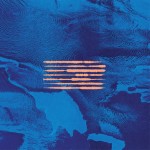
There are many ways of making an album about the ocean. One can record waves, imitate waves, invoke the sublime, stare meaningfully at the horizon and, if absolutely necessary, put a whale somewhere on the cover. Lauri Wuolio chooses a stranger route. For "Ocean in A", his debut as Atonauer, the ocean is not so much represented as approached through a chain of transformations: blue becomes sound, sound becomes vibration, vibration becomes time, and time becomes something that refuses to stay still even when the music barely seems to move.
Atonauer is a new artistic persona for Wuolio, the Finnish composer and sound artist already known internationally through Kumea Sound, whose work has explored handpan-based music, electronics, resonance and spatial experience. The character appeared to him in a dream in 2023 and subsequently developed through writing, drawings and music. Wuolio's background makes the project less surprising than it initially sounds: he studied time- and space-related arts at the Finnish Academy of Fine Arts, has worked extensively across film, theatre, dance and installation, and has spent years considering sound as something that occupies physical space rather than merely travelling through it. His official biography describes Atonauer as a move toward post-ambient, drone and experimental music, and "Ocean in A" as a deliberately simplified exploration of sustained tones and spatial textures.
The strangest and most beautiful part of the album's origin story is the jar. Wuolio had been making abstract blue paintings in Europe until the colour itself began to acquire too much historical baggage. Rather than continuing to paint blue, he scraped the pigment from the canvases, sealed it in a glass jar and carried it with him to America, along with a Sony Walkman and very little else. In New York, a broken Roland Space Echo supplied by his friend Taka, together with Joachim Sala's experimental filtering devices, transformed urban recordings into harmonic abstraction. At some point, blue stopped being something to look at. It became something to hear.
This is more than an eccentric anecdote. It explains why "Ocean in A" feels less like music attempting to describe the sea than an investigation into how one sensory experience can migrate into another. The album is not particularly interested in making us hear “the ocean” in the literal sense. Instead, it asks what qualities associated with blue, depth, water and distance might survive after the image has been removed. What remains is resonance.
The answer begins with "A1", whose low drone is accompanied by a mechanical breathing sound and a series of pulses that refuse to settle into a common tempo. The effect is remarkably physical. The track seems to breathe without possessing a single body, as though several organisms had accidentally synchronised for a moment and then remembered they had better things to do. The entire album revolves around the note A, which functions less as a conventional key than as a fixed point from which the surrounding frequencies can wander.
That choice is crucial. Atonauer's minimalism is not primarily about reducing the number of sounds; it is about increasing the amount of attention available to each one. A single sustained tone can acquire internal movement through overtones, modulation, feedback and tiny changes in density. The note remains apparently static while its surroundings keep revealing new behaviour. Music Map likewise identifies the A as a gravitational centre rather than a conventional constraint, with drones and harmonics generating movement through minute variations rather than conventional harmonic progression.
"A2" moves further into that upper register of perception, where the fundamental tone becomes less important than the frequencies hovering around it. It is the sonic equivalent of looking at one colour until the colour stops being a single thing. The apparent simplicity begins to contain several layers of activity. This is one of the record's most convincing achievements: Wuolio makes stillness feel populated.
Then "A3" reveals the importance of the New York experience. The broken Space Echo and filtering experiments do not merely provide vintage equipment fetishism, although there is certainly enough malfunctioning analogue hardware here to satisfy the traditional experimental-music requirement that at least one machine must appear to have been rescued from a basement. Their real function is transformational. City noise becomes harmonic fog; mechanical imperfection becomes compositional material. The external world is not recorded and presented as documentary evidence. It is reduced, reorganised and allowed to lose its original identity.
That process continues through "A4", perhaps the album's most delicate piece. A minimal whistle passing through the Space Echo acquires the distant character of a foghorn, and suddenly the music seems to inhabit the strange hour before morning properly begins. It is not quite melancholy, not quite peaceful. There is a suspended emotional state here, the peculiar emptiness in which nothing has happened yet but something inevitably will. The attached notes describe it as a moment before emotional impact, and that seems exactly right.
At the centre sits "A5", the eight-minute heart of the record. Here Wuolio's earlier experiments with the Tascam Portastudio and a salvaged 1950s Buescher saxophone become part of the album's transformation of painting into sound. The saxophone is not deployed as a conventional melodic instrument. Its materiality becomes another source of resonance, another surface to be rubbed, stretched and listened to. The ocean finally appears not as scenery but as pressure: something physically overwhelming whose emotional force is even harder to contain.
This distinction matters because "Ocean in A" is ultimately less interested in beauty than in proximity. Wuolio's own framing repeatedly returns to the impossibility of completely comprehending or containing the ocean, blue or time. The album therefore avoids the temptation to provide a musical equivalent of a postcard. It stays close to the phenomenon without pretending to possess it.
"A6" makes that philosophy considerably more concrete. When the old Space Echo begins malfunctioning again, its mechanical noises are fed back into the tape until they produce ghostly, almost choral harmonies. Control becomes an accidental participant. The machine effectively starts composing, or at least starts refusing to obey. This is where the album's technological and philosophical sides meet most successfully: the equipment is not simply a tool used to realise an idea. Its failures become part of the idea.
There is a pleasing circularity in the final "A7". Rhythm returns, but not as a conventional beat. Space itself becomes rhythmic, while the sustained materials accumulated throughout the album begin to suggest the possibility of song. The ending therefore does not resolve the oceanic metaphor. It expands it. What began as breath and a single note has become a much larger question about duration, movement and the limits of representation.
Some external responses have understandably concentrated on the album's minimalism and its submerged, darkly expansive atmosphere. One review also points to the transatlantic journey between Finland and New York as an important dimension of the work. That geographical reading is useful, but "Ocean in A" ultimately makes geography feel secondary to transformation. Finland becomes New York, painting becomes sound, a broken effects unit becomes an instrument, and a particular pitch becomes a place from which an entire album can be imagined.
Wuolio's wider practice helps explain this unusual elasticity. Through Kumea Sound he has worked extensively with handpans and resonant acoustic instruments, while his film, theatre, dance and installation work has accustomed him to thinking about sound in relation to image, movement and physical environment. His long-running interest in spatial experience is especially relevant here: "Ocean in A" does not merely produce a sequence of sounds, it constructs a space in which those sounds can continue happening after the listener has stopped looking for conventional musical events.
The danger with music this restrained is obvious. Minimalism can become minimal effort. A drone can be profound, but it can also be a very expensive way of discovering that nothing happens for eight minutes. "Ocean in A" mostly avoids that trap because Wuolio understands that repetition only becomes interesting when the listener's perception is changing inside it. The sound may remain nearly still, but we do not. That difference is the real engine of the album.
And perhaps that is what the jar of blue ultimately represents. It was never possible to carry the ocean in it. Nor was it possible to carry blue intact from one medium into another. The pigment had to be abandoned as pigment, just as the ocean has to be abandoned as scenery. What survives is the impulse to keep translating one experience into another, knowing perfectly well that something will be lost.
"Ocean in A" is therefore not an album that captures the sea. It is an album about the futility, and strange necessity, of trying. Its seven movements stay anchored to one note while imagining an almost immeasurable space around it. Its machines break, its sounds dissolve, its rhythms wander, and its central colour disappears into vibration. The result is music that understands a useful truth: sometimes the only honest way to hold something vast is to stop trying to hold it at all.
Atonauer is a new artistic persona for Wuolio, the Finnish composer and sound artist already known internationally through Kumea Sound, whose work has explored handpan-based music, electronics, resonance and spatial experience. The character appeared to him in a dream in 2023 and subsequently developed through writing, drawings and music. Wuolio's background makes the project less surprising than it initially sounds: he studied time- and space-related arts at the Finnish Academy of Fine Arts, has worked extensively across film, theatre, dance and installation, and has spent years considering sound as something that occupies physical space rather than merely travelling through it. His official biography describes Atonauer as a move toward post-ambient, drone and experimental music, and "Ocean in A" as a deliberately simplified exploration of sustained tones and spatial textures.
The strangest and most beautiful part of the album's origin story is the jar. Wuolio had been making abstract blue paintings in Europe until the colour itself began to acquire too much historical baggage. Rather than continuing to paint blue, he scraped the pigment from the canvases, sealed it in a glass jar and carried it with him to America, along with a Sony Walkman and very little else. In New York, a broken Roland Space Echo supplied by his friend Taka, together with Joachim Sala's experimental filtering devices, transformed urban recordings into harmonic abstraction. At some point, blue stopped being something to look at. It became something to hear.
This is more than an eccentric anecdote. It explains why "Ocean in A" feels less like music attempting to describe the sea than an investigation into how one sensory experience can migrate into another. The album is not particularly interested in making us hear “the ocean” in the literal sense. Instead, it asks what qualities associated with blue, depth, water and distance might survive after the image has been removed. What remains is resonance.
The answer begins with "A1", whose low drone is accompanied by a mechanical breathing sound and a series of pulses that refuse to settle into a common tempo. The effect is remarkably physical. The track seems to breathe without possessing a single body, as though several organisms had accidentally synchronised for a moment and then remembered they had better things to do. The entire album revolves around the note A, which functions less as a conventional key than as a fixed point from which the surrounding frequencies can wander.
That choice is crucial. Atonauer's minimalism is not primarily about reducing the number of sounds; it is about increasing the amount of attention available to each one. A single sustained tone can acquire internal movement through overtones, modulation, feedback and tiny changes in density. The note remains apparently static while its surroundings keep revealing new behaviour. Music Map likewise identifies the A as a gravitational centre rather than a conventional constraint, with drones and harmonics generating movement through minute variations rather than conventional harmonic progression.
"A2" moves further into that upper register of perception, where the fundamental tone becomes less important than the frequencies hovering around it. It is the sonic equivalent of looking at one colour until the colour stops being a single thing. The apparent simplicity begins to contain several layers of activity. This is one of the record's most convincing achievements: Wuolio makes stillness feel populated.
Then "A3" reveals the importance of the New York experience. The broken Space Echo and filtering experiments do not merely provide vintage equipment fetishism, although there is certainly enough malfunctioning analogue hardware here to satisfy the traditional experimental-music requirement that at least one machine must appear to have been rescued from a basement. Their real function is transformational. City noise becomes harmonic fog; mechanical imperfection becomes compositional material. The external world is not recorded and presented as documentary evidence. It is reduced, reorganised and allowed to lose its original identity.
That process continues through "A4", perhaps the album's most delicate piece. A minimal whistle passing through the Space Echo acquires the distant character of a foghorn, and suddenly the music seems to inhabit the strange hour before morning properly begins. It is not quite melancholy, not quite peaceful. There is a suspended emotional state here, the peculiar emptiness in which nothing has happened yet but something inevitably will. The attached notes describe it as a moment before emotional impact, and that seems exactly right.
At the centre sits "A5", the eight-minute heart of the record. Here Wuolio's earlier experiments with the Tascam Portastudio and a salvaged 1950s Buescher saxophone become part of the album's transformation of painting into sound. The saxophone is not deployed as a conventional melodic instrument. Its materiality becomes another source of resonance, another surface to be rubbed, stretched and listened to. The ocean finally appears not as scenery but as pressure: something physically overwhelming whose emotional force is even harder to contain.
This distinction matters because "Ocean in A" is ultimately less interested in beauty than in proximity. Wuolio's own framing repeatedly returns to the impossibility of completely comprehending or containing the ocean, blue or time. The album therefore avoids the temptation to provide a musical equivalent of a postcard. It stays close to the phenomenon without pretending to possess it.
"A6" makes that philosophy considerably more concrete. When the old Space Echo begins malfunctioning again, its mechanical noises are fed back into the tape until they produce ghostly, almost choral harmonies. Control becomes an accidental participant. The machine effectively starts composing, or at least starts refusing to obey. This is where the album's technological and philosophical sides meet most successfully: the equipment is not simply a tool used to realise an idea. Its failures become part of the idea.
There is a pleasing circularity in the final "A7". Rhythm returns, but not as a conventional beat. Space itself becomes rhythmic, while the sustained materials accumulated throughout the album begin to suggest the possibility of song. The ending therefore does not resolve the oceanic metaphor. It expands it. What began as breath and a single note has become a much larger question about duration, movement and the limits of representation.
Some external responses have understandably concentrated on the album's minimalism and its submerged, darkly expansive atmosphere. One review also points to the transatlantic journey between Finland and New York as an important dimension of the work. That geographical reading is useful, but "Ocean in A" ultimately makes geography feel secondary to transformation. Finland becomes New York, painting becomes sound, a broken effects unit becomes an instrument, and a particular pitch becomes a place from which an entire album can be imagined.
Wuolio's wider practice helps explain this unusual elasticity. Through Kumea Sound he has worked extensively with handpans and resonant acoustic instruments, while his film, theatre, dance and installation work has accustomed him to thinking about sound in relation to image, movement and physical environment. His long-running interest in spatial experience is especially relevant here: "Ocean in A" does not merely produce a sequence of sounds, it constructs a space in which those sounds can continue happening after the listener has stopped looking for conventional musical events.
The danger with music this restrained is obvious. Minimalism can become minimal effort. A drone can be profound, but it can also be a very expensive way of discovering that nothing happens for eight minutes. "Ocean in A" mostly avoids that trap because Wuolio understands that repetition only becomes interesting when the listener's perception is changing inside it. The sound may remain nearly still, but we do not. That difference is the real engine of the album.
And perhaps that is what the jar of blue ultimately represents. It was never possible to carry the ocean in it. Nor was it possible to carry blue intact from one medium into another. The pigment had to be abandoned as pigment, just as the ocean has to be abandoned as scenery. What survives is the impulse to keep translating one experience into another, knowing perfectly well that something will be lost.
"Ocean in A" is therefore not an album that captures the sea. It is an album about the futility, and strange necessity, of trying. Its seven movements stay anchored to one note while imagining an almost immeasurable space around it. Its machines break, its sounds dissolve, its rhythms wander, and its central colour disappears into vibration. The result is music that understands a useful truth: sometimes the only honest way to hold something vast is to stop trying to hold it at all.
Manja Ristić: lights shimmered like whispers in the depths of the trees
Artist: Manja Ristić (@)
Title: lights shimmered like whispers in the depths of the trees
Format: CD + Download
Label: Sawyer Editions
Rated:

Title: lights shimmered like whispers in the depths of the trees
Format: CD + Download
Label: Sawyer Editions
Rated:
There are albums about memory, and then there are albums that seem to understand that memory is a rather untidy substance. It does not sit politely in chronological order, waiting for somebody to retrieve it. It leaks into bodies, places, habits, landscapes and family stories, occasionally resurfacing because a particular sound, smell or patch of ground has decided that the past is not finished with us yet. "lights shimmered like whispers in the depths of the trees", the latest work by Manja Ristic, belongs firmly to the second category.
Ristic is a Belgrade-born violinist, sound artist, curator and researcher whose work has for years occupied the borderlands between electroacoustic composition, improvisation, field recording and sound installation. Trained at the Belgrade Music Academy and later at the Royal College of Music in London, she has developed a particularly recognisable practice around environmental listening, hydrophone recordings, violin, analogue electronics and found materials. Her recent work has repeatedly returned to questions of ecological damage, memory and the historical traces embedded in landscapes, but without treating field recordings as postcards from interesting places.
That distinction matters here because "lights shimmered..." is ostensibly concerned with something deeply personal: Ristic's grandmother Negosava, born Stefanovi, and the generation of young people who helped rebuild post-war Yugoslavia with their labour. There are abandoned railway lines, forests, industrial remnants and the uneasy inheritance of a country whose physical reconstruction became part of its mythology. It would have been very easy to turn this into a sonic documentary, complete with archival voices and appropriately sorrowful historical punctuation. Ristic chooses something much less literal.
The album consists of just two pieces, “thick green bed of a land” and “bore its wounds in silence”, running sixteen and twenty-three minutes respectively. Their titles already establish the basic tension: vegetation and injury, shelter and damage, fertility and historical violence. Yet the music does not translate those oppositions into obvious effects. Instead, it lets them accumulate gradually, through field recordings gathered across Italy, Portugal, Croatia and Austria, underwater recordings from rivers and coastal environments, violin and cello, the extraordinary EMS Synthi 100 from the Electronic Studio of Radio Belgrade, and a piano once belonging to Austrian artist Karl Katzinger, also known as John Tylo.
The geographical spread is considerable, but the album never feels like an audio scrapbook. This is partly because Ristic is remarkably careful about the density of her materials. Water is not simply “water”; vegetation is not simply “nature”; industrial spaces are not automatically made to sound sinister. The recordings are allowed to retain their ambiguity. A distant movement may be mechanical or organic. A vibration might belong to an instrument, a structure, a current or some combination of all four. The listener is repeatedly placed in the uncomfortable but productive position of having to decide what exactly is being heard.
“Thick green bed of a land” develops with particular patience. Environmental sounds emerge and recede without the reassuring hierarchy of foreground and background that conventional composition tends to impose. The electronic material does not arrive to announce itself as the “musical” component. It inhabits the same acoustic territory as the recordings, sometimes almost indistinguishably. Violin and other instrumental sounds appear less as melodies than as extensions of the surrounding acoustic environment, allowing pitch to materialise briefly before being absorbed again into texture.
This is one of Ristic's great strengths. She has a talent for making instrumental sounds feel as though they have been discovered rather than inserted. Her previous works, including "Dew" and "Sargassum aeterna", have used violin, EMS Synthi 100 and hydrophone recordings to construct similarly porous relationships between composed material and environmental sound. In "Dew", for instance, train stations, lakes, rain, underwater sounds and instrumental material become part of an intimate meditation on memory rather than functioning as illustrative effects. "Sargassum aeterna" expanded the method into a darker ecological imagination, using field and hydrophone recordings from several locations alongside violin and electronics.
Here the emotional charge is more familial, and consequently more difficult to keep at arm's length. The dedication to Negosava gives the album a human centre, but Ristic wisely avoids sentimentalising her grandmother. There is no attempt to reconstruct her life in musical form. Instead, the work asks what remains when the individual is gone but the places, gestures and consequences of a generation's actions remain.
That question becomes particularly resonant in the references to railway construction. The abandoned tracks in the accompanying narrative are almost brutally ordinary. People built them because they believed they would carry something into the future; eventually the trains never came, the infrastructure was abandoned, and the material was dismantled or sold. History is full of such projects, although official history tends to photograph the successful ones and quietly forget the rest. Ristic's music is interested in precisely that residue.
The forest, consequently, is not presented as an untouched refuge standing outside history. It remembers the human presence that preceded it. The railway, meanwhile, is not simply a symbol of failed modernity. It becomes another layer in the landscape, alongside roots, water, industrial contamination, footsteps and stories. Nature and history are not opposites here. They have been rubbing against each other for decades.
“Bore its wounds in silence” deepens this idea. The second piece is less concerned with establishing a particular location than with allowing sounds to accumulate into something resembling geological memory. Hydrophone recordings are especially effective because underwater sound immediately disrupts our normal assumptions about distance. Familiar phenomena become strange when heard through water. A vibration can seem enormous, intimate or impossibly remote. Ristic uses that acoustic uncertainty to loosen the boundary between physical environment and recollection.
There is also something quietly unsettling about the album's use of the body. The text accompanying the work invokes epigenetics, ancestral experience and the transmission of memory across generations. Scientifically, that territory needs more caution than poetic language usually provides. Human beings are not literally carrying their grandparents' memories around in their DNA like tiny family USB sticks. But as an artistic proposition, the idea becomes considerably more interesting when Ristic translates it into sound. What does inherited experience feel like when it cannot be narrated directly? Perhaps something like a recurring vibration whose original source has disappeared.
The album never attempts to answer that question definitively. Instead, it creates conditions in which the question can remain audible.
This is also why the environmental recordings avoid becoming merely picturesque. Recent writing on Ristic's work has noted the tension between the recognisable world captured by her microphones and the subtle transformations that turn those recordings into compositions. One particularly perceptive response to this release points out that the autobiographical and genealogical material is communicated through atmosphere rather than explicit narrative, allowing the listener to recognise that these are constructed works rather than straightforward documentary recordings.
That is probably the best way to approach "lights shimmered...". It is not a story being told through sound. It is a story being allowed to lose its edges.
The use of the EMS Synthi 100 is significant in this respect. The instrument carries its own historical associations, particularly within the experimental tradition of the Electronic Studio of Radio Belgrade, but Ristic does not treat it as an exotic relic to be wheeled onto the stage whenever the music needs an official certificate of experimentalism. Its electronic tones enter into dialogue with the hydrophone recordings, acoustic instruments and environmental sounds. Technology becomes another historical layer rather than a sign of progress.
The same applies to the piano once owned by Karl Katzinger. Its provenance could easily become a piece of collector trivia, but within Ristic's larger practice it makes sense as another object carrying traces of previous lives. The instruments are not merely tools for producing sounds. They arrive already burdened with histories.
And this may be where the album's title becomes most convincing. The lights in the trees are not presented as a beautiful visual spectacle. They are fleeting signs of something that cannot be held still. A memory behaves similarly. It appears, changes the emotional temperature of a moment, and disappears before one can inspect it properly. The title's whispered shimmer is therefore less decorative than it initially sounds.
There is, however, nothing especially whispery about some of the album's underlying tensions. Industrial spaces, toxic residues, post-war reconstruction and ecological transformation remain present even when the music becomes quiet. Ristic's earlier work has often approached environmental crisis without resorting to the conventional vocabulary of catastrophe, and that restraint remains valuable here. A ruined landscape does not need to scream in order to tell us that something happened there.
In fact, the quietness can make the political dimension more effective. Grand declarations tend to tell us what we should think. Ristic's landscapes instead ask us to notice what is still there. The abandoned railway, the forest, the contaminated industrial structure, the river, the body: none of them delivers a speech. They simply continue existing after the people who gave them their original meaning have moved on.
There is a gentle irony in the album's treatment of endurance. The humans imagine themselves as builders, destroyers, historians and owners; the landscape simply waits long enough to outlive most of those categories. The railway disappears. The forest remains. The grandmother dies. The story continues. The toxic residue persists with the stubbornness of a particularly unpleasant family heirloom.
Still, "lights shimmered like whispers in the depths of the trees" is not pessimistic in any straightforward sense. Its melancholy is balanced by an extraordinary attentiveness to survival. The title image itself contains light. The green bed of the land is thick, not dead. Water continues to move. Sounds continue to circulate. The past may be wounded, distorted and incomplete, but it has not become silent.
Ristic's most impressive achievement is therefore one of scale. She can move from the intimate body to a river, from a grandmother to a generation, from a railway embankment to the long history of a landscape without making any of those things feel like merely convenient symbols. Everything remains material. Wood, water, metal, skin, strings, soil, circuitry and memory occupy the same perceptual field.
Two long tracks are enough because the album is not really interested in giving us more events. It is interested in making the existing ones last long enough for their relationships to become visible. That requires patience, but not the kind usually associated with “slow music”. The patience here belongs to observation. Ristic listens until the distinctions between environment, instrument and recollection become unstable.
And perhaps that is what inheritance actually sounds like: not a message passed intact from one generation to another, but a collection of faint disturbances whose original causes have become difficult to identify. Someone built a railway. Someone walked through a forest. Someone remembered. Someone recorded the water. Someone else listens decades later and discovers that none of these things has entirely disappeared.
The forest, after all, does not need to remember in the human sense. It only needs to remain.
Ristic is a Belgrade-born violinist, sound artist, curator and researcher whose work has for years occupied the borderlands between electroacoustic composition, improvisation, field recording and sound installation. Trained at the Belgrade Music Academy and later at the Royal College of Music in London, she has developed a particularly recognisable practice around environmental listening, hydrophone recordings, violin, analogue electronics and found materials. Her recent work has repeatedly returned to questions of ecological damage, memory and the historical traces embedded in landscapes, but without treating field recordings as postcards from interesting places.
That distinction matters here because "lights shimmered..." is ostensibly concerned with something deeply personal: Ristic's grandmother Negosava, born Stefanovi, and the generation of young people who helped rebuild post-war Yugoslavia with their labour. There are abandoned railway lines, forests, industrial remnants and the uneasy inheritance of a country whose physical reconstruction became part of its mythology. It would have been very easy to turn this into a sonic documentary, complete with archival voices and appropriately sorrowful historical punctuation. Ristic chooses something much less literal.
The album consists of just two pieces, “thick green bed of a land” and “bore its wounds in silence”, running sixteen and twenty-three minutes respectively. Their titles already establish the basic tension: vegetation and injury, shelter and damage, fertility and historical violence. Yet the music does not translate those oppositions into obvious effects. Instead, it lets them accumulate gradually, through field recordings gathered across Italy, Portugal, Croatia and Austria, underwater recordings from rivers and coastal environments, violin and cello, the extraordinary EMS Synthi 100 from the Electronic Studio of Radio Belgrade, and a piano once belonging to Austrian artist Karl Katzinger, also known as John Tylo.
The geographical spread is considerable, but the album never feels like an audio scrapbook. This is partly because Ristic is remarkably careful about the density of her materials. Water is not simply “water”; vegetation is not simply “nature”; industrial spaces are not automatically made to sound sinister. The recordings are allowed to retain their ambiguity. A distant movement may be mechanical or organic. A vibration might belong to an instrument, a structure, a current or some combination of all four. The listener is repeatedly placed in the uncomfortable but productive position of having to decide what exactly is being heard.
“Thick green bed of a land” develops with particular patience. Environmental sounds emerge and recede without the reassuring hierarchy of foreground and background that conventional composition tends to impose. The electronic material does not arrive to announce itself as the “musical” component. It inhabits the same acoustic territory as the recordings, sometimes almost indistinguishably. Violin and other instrumental sounds appear less as melodies than as extensions of the surrounding acoustic environment, allowing pitch to materialise briefly before being absorbed again into texture.
This is one of Ristic's great strengths. She has a talent for making instrumental sounds feel as though they have been discovered rather than inserted. Her previous works, including "Dew" and "Sargassum aeterna", have used violin, EMS Synthi 100 and hydrophone recordings to construct similarly porous relationships between composed material and environmental sound. In "Dew", for instance, train stations, lakes, rain, underwater sounds and instrumental material become part of an intimate meditation on memory rather than functioning as illustrative effects. "Sargassum aeterna" expanded the method into a darker ecological imagination, using field and hydrophone recordings from several locations alongside violin and electronics.
Here the emotional charge is more familial, and consequently more difficult to keep at arm's length. The dedication to Negosava gives the album a human centre, but Ristic wisely avoids sentimentalising her grandmother. There is no attempt to reconstruct her life in musical form. Instead, the work asks what remains when the individual is gone but the places, gestures and consequences of a generation's actions remain.
That question becomes particularly resonant in the references to railway construction. The abandoned tracks in the accompanying narrative are almost brutally ordinary. People built them because they believed they would carry something into the future; eventually the trains never came, the infrastructure was abandoned, and the material was dismantled or sold. History is full of such projects, although official history tends to photograph the successful ones and quietly forget the rest. Ristic's music is interested in precisely that residue.
The forest, consequently, is not presented as an untouched refuge standing outside history. It remembers the human presence that preceded it. The railway, meanwhile, is not simply a symbol of failed modernity. It becomes another layer in the landscape, alongside roots, water, industrial contamination, footsteps and stories. Nature and history are not opposites here. They have been rubbing against each other for decades.
“Bore its wounds in silence” deepens this idea. The second piece is less concerned with establishing a particular location than with allowing sounds to accumulate into something resembling geological memory. Hydrophone recordings are especially effective because underwater sound immediately disrupts our normal assumptions about distance. Familiar phenomena become strange when heard through water. A vibration can seem enormous, intimate or impossibly remote. Ristic uses that acoustic uncertainty to loosen the boundary between physical environment and recollection.
There is also something quietly unsettling about the album's use of the body. The text accompanying the work invokes epigenetics, ancestral experience and the transmission of memory across generations. Scientifically, that territory needs more caution than poetic language usually provides. Human beings are not literally carrying their grandparents' memories around in their DNA like tiny family USB sticks. But as an artistic proposition, the idea becomes considerably more interesting when Ristic translates it into sound. What does inherited experience feel like when it cannot be narrated directly? Perhaps something like a recurring vibration whose original source has disappeared.
The album never attempts to answer that question definitively. Instead, it creates conditions in which the question can remain audible.
This is also why the environmental recordings avoid becoming merely picturesque. Recent writing on Ristic's work has noted the tension between the recognisable world captured by her microphones and the subtle transformations that turn those recordings into compositions. One particularly perceptive response to this release points out that the autobiographical and genealogical material is communicated through atmosphere rather than explicit narrative, allowing the listener to recognise that these are constructed works rather than straightforward documentary recordings.
That is probably the best way to approach "lights shimmered...". It is not a story being told through sound. It is a story being allowed to lose its edges.
The use of the EMS Synthi 100 is significant in this respect. The instrument carries its own historical associations, particularly within the experimental tradition of the Electronic Studio of Radio Belgrade, but Ristic does not treat it as an exotic relic to be wheeled onto the stage whenever the music needs an official certificate of experimentalism. Its electronic tones enter into dialogue with the hydrophone recordings, acoustic instruments and environmental sounds. Technology becomes another historical layer rather than a sign of progress.
The same applies to the piano once owned by Karl Katzinger. Its provenance could easily become a piece of collector trivia, but within Ristic's larger practice it makes sense as another object carrying traces of previous lives. The instruments are not merely tools for producing sounds. They arrive already burdened with histories.
And this may be where the album's title becomes most convincing. The lights in the trees are not presented as a beautiful visual spectacle. They are fleeting signs of something that cannot be held still. A memory behaves similarly. It appears, changes the emotional temperature of a moment, and disappears before one can inspect it properly. The title's whispered shimmer is therefore less decorative than it initially sounds.
There is, however, nothing especially whispery about some of the album's underlying tensions. Industrial spaces, toxic residues, post-war reconstruction and ecological transformation remain present even when the music becomes quiet. Ristic's earlier work has often approached environmental crisis without resorting to the conventional vocabulary of catastrophe, and that restraint remains valuable here. A ruined landscape does not need to scream in order to tell us that something happened there.
In fact, the quietness can make the political dimension more effective. Grand declarations tend to tell us what we should think. Ristic's landscapes instead ask us to notice what is still there. The abandoned railway, the forest, the contaminated industrial structure, the river, the body: none of them delivers a speech. They simply continue existing after the people who gave them their original meaning have moved on.
There is a gentle irony in the album's treatment of endurance. The humans imagine themselves as builders, destroyers, historians and owners; the landscape simply waits long enough to outlive most of those categories. The railway disappears. The forest remains. The grandmother dies. The story continues. The toxic residue persists with the stubbornness of a particularly unpleasant family heirloom.
Still, "lights shimmered like whispers in the depths of the trees" is not pessimistic in any straightforward sense. Its melancholy is balanced by an extraordinary attentiveness to survival. The title image itself contains light. The green bed of the land is thick, not dead. Water continues to move. Sounds continue to circulate. The past may be wounded, distorted and incomplete, but it has not become silent.
Ristic's most impressive achievement is therefore one of scale. She can move from the intimate body to a river, from a grandmother to a generation, from a railway embankment to the long history of a landscape without making any of those things feel like merely convenient symbols. Everything remains material. Wood, water, metal, skin, strings, soil, circuitry and memory occupy the same perceptual field.
Two long tracks are enough because the album is not really interested in giving us more events. It is interested in making the existing ones last long enough for their relationships to become visible. That requires patience, but not the kind usually associated with “slow music”. The patience here belongs to observation. Ristic listens until the distinctions between environment, instrument and recollection become unstable.
And perhaps that is what inheritance actually sounds like: not a message passed intact from one generation to another, but a collection of faint disturbances whose original causes have become difficult to identify. Someone built a railway. Someone walked through a forest. Someone remembered. Someone recorded the water. Someone else listens decades later and discovers that none of these things has entirely disappeared.
The forest, after all, does not need to remember in the human sense. It only needs to remain.
Sainkho Namtchylak / Mirco Magnani: Beyond Fine Lines

Artist: Sainkho Namtchylak / Mirco Magnani
Title: Beyond Fine Lines
Format: CD
Label: Fluid Audio/Undogmatisch (@)
Rated:
Title: Beyond Fine Lines
Format: CD
Label: Fluid Audio/Undogmatisch (@)
Rated:
Humanity has spent a remarkable amount of time drawing lines between things that may not be as separate as we would like to believe: life and death, peace and war, the body and whatever supposedly survives it, reason and the less manageable contents of the mind. We then build entire systems around these distinctions and act surprised when the boundaries become difficult to maintain. "Beyond Fine Lines", the collaboration between Sainkho Namtchylak and Mirco Magnani, takes this ancient habit of dividing experience and subjects it to a musical examination that is contemplative without being entirely peaceful. Its ten pieces move between introspection, poetic declaration and experimental sound, seeking connections across the apparent gaps rather than offering another grand theory of existence. There are no easy answers here, which is probably just as well: the market for definitive answers is already overcrowded.
Namtchylak’s voice is the album’s most immediately arresting presence, but describing it simply as the centre of the music would understate its function. Born in Tuva, in southern Siberia near the Mongolian border, she developed a distinctive artistic language informed by Tuvan overtone singing, Siberian spiritual traditions, formal vocal study and decades of experimentation across jazz and avant-garde music. Her voice can carry words with an almost conversational intimacy before moving into sounds that seem to belong to a different register of physical expression. She does not merely sing over Magnani’s compositions; she changes their emotional proportions. A syllable, a breath or a sudden shift in vocal intensity can make the surrounding arrangement feel newly exposed. The effect is not that of a virtuoso demonstrating the number of things a voice can do, but of an artist testing how much thought, memory and unease can pass through it.
Magnani provides the musical architecture, creating compositions that leave room for this vocal mobility without dissolving into shapeless accompaniment. His background in groups such as Minox and Technophonic Chamber Orchestra, as well as his work across electronic music and audiovisual projects, is relevant to the way he approaches the material: structure is present, but it does not need to announce itself with a marching band and a laminated diagram. The arrangements offer a setting in which melody, atmosphere and improvisational gesture can coexist. The album emerged from a collaboration that began with two tracks for Magnani’s "Zarathustra – Der Grosse Mittag", and the familiarity established there seems to have allowed the pair to develop a more sustained exchange. The division of credits is telling, too: Magnani composed the music for six tracks with Namtchylak supplying lyrics, while the other four are credited to both artists for the music. The distinction suggests not a simple singer-and-composer arrangement but a relationship in which the voice can also influence the shape of the composition itself.
The title track establishes the album’s central concern with division and connection, placing hope amid the uneasy territory between peace and conflict. This is not a particularly reassuring starting point, though reassurance would hardly be the most convincing response to a world that continues to confuse aggression with strength. “City Bell Hums” expands the perspective, presenting the city as a place of damaged ideals, frustrated affection and collective desperation. The urban environment becomes more than a backdrop: it is a social and emotional structure in which private longing and public violence are difficult to disentangle. There is a tension between the scale of these concerns and the intimacy of Namtchylak’s delivery. The words address large, almost impossible subjects, yet the voice keeps bringing them back to the vulnerable individual who has to live among their consequences.
“Buran” and “Shambala Dreamin’” shift the album towards more suggestive territory, where symbolic language and evocative sound resist the demand for a fixed interpretation. The spiritual references are not presented as an instruction manual for transcendence, and the music does not pretend that attaching an exotic-sounding destination to a track title automatically produces enlightenment. Instead, these pieces contribute to an atmosphere in which the material and the metaphysical can remain in conversation. “Earthcoming” and “Divine Ethereality” continue this exploration, their titles proposing movement between grounded existence and something less tangible. The contrast is productive precisely because the album never completely resolves it. Whatever lies beyond ordinary perception remains a possibility, not a product conveniently available for delivery by the end of the track.
On “Poets-Beacon”, the creative act acquires a more openly defiant dimension. Poetry appears as a form of persistence, a way of keeping consciousness active in circumstances that might otherwise reduce it to survival. The idea could easily become pompous, especially when the poet is elevated into a heroic figure appointed to illuminate the universe. Namtchylak’s wider approach to language and vocal expression, however, gives the theme a physical edge: the voice is not an abstract emblem of artistic freedom but the means by which that freedom is enacted. “Body on Stage” develops a related tension between the physical body and its symbolic significance. Performance makes the body visible, but it also turns it into a site where nature, thought and cultural meaning meet. There is an intriguing circularity here: the voice is produced by a body, yet its expressive possibilities seem to exceed the limits ordinarily assigned to that body.
“No Hurry, No Rush” introduces a deceptively practical philosophy. Its emphasis on moving calmly, distinguishing essentials from distractions and resisting needless agitation might sound like advice from a particularly patient life coach, were it not for the music’s more complicated atmosphere and the recognition that no amount of personal serenity allows anyone to opt out of the world. Calmness is not presented as a magical solution to every difficulty. It is closer to a discipline of attention, an attempt to act without adding unnecessary confusion to an already confused situation. The closing “Golden-Red Leaves of Autumn” returns to mortality, renewal and the briefness of individual life. Its seasonal imagery carries both loss and the promise of continuation, but the sentiment avoids becoming entirely sentimental because the underlying question remains unresolved: how should one value the life one has when its ending cannot be negotiated away? The answer, such as it is, lies in attention to the present rather than in a confident description of whatever might follow.
The album’s principal limitation is also connected to its ambitions. Its philosophical vocabulary occasionally approaches the universal and the abstract so directly that individual ideas risk becoming familiar emblems: the city of broken dreams, the poet as beacon, the passage from death towards rebirth. Such symbols are hardly new, and the record is most compelling when Namtchylak’s distinctive vocal presence and Magnani’s arrangements give them a particular emotional weight rather than asking them to carry the entire argument alone. But this is a tension worth accepting. A work concerned with shared human experience will inevitably encounter some well-travelled ideas; originality depends less on discovering an entirely new subject than on finding a way to inhabit it honestly.
"Beyond Fine Lines" ultimately succeeds through the dialogue between a voice that refuses to remain within conventional vocal boundaries and compositions that provide shape without insisting on complete control. Its contemplation is not an escape from reality so much as an effort to look at reality without immediately reducing it to slogans, categories or convenient conclusions. The music allows fragility and resilience to coexist, and its quieter passages do not cancel the force of its more intense expressions. There is no guarantee that listening will make anyone wiser, kinder or less inclined to argue with strangers on the internet. Such transformations may be beyond the reasonable remit of a ten-track album. But Namtchylak and Magnani offer something more credible than a promise of transcendence: a space in which uncertainty can be experienced without being mistaken for failure, and in which the boundaries separating one condition from another remain open to reconsideration.
Namtchylak’s voice is the album’s most immediately arresting presence, but describing it simply as the centre of the music would understate its function. Born in Tuva, in southern Siberia near the Mongolian border, she developed a distinctive artistic language informed by Tuvan overtone singing, Siberian spiritual traditions, formal vocal study and decades of experimentation across jazz and avant-garde music. Her voice can carry words with an almost conversational intimacy before moving into sounds that seem to belong to a different register of physical expression. She does not merely sing over Magnani’s compositions; she changes their emotional proportions. A syllable, a breath or a sudden shift in vocal intensity can make the surrounding arrangement feel newly exposed. The effect is not that of a virtuoso demonstrating the number of things a voice can do, but of an artist testing how much thought, memory and unease can pass through it.
Magnani provides the musical architecture, creating compositions that leave room for this vocal mobility without dissolving into shapeless accompaniment. His background in groups such as Minox and Technophonic Chamber Orchestra, as well as his work across electronic music and audiovisual projects, is relevant to the way he approaches the material: structure is present, but it does not need to announce itself with a marching band and a laminated diagram. The arrangements offer a setting in which melody, atmosphere and improvisational gesture can coexist. The album emerged from a collaboration that began with two tracks for Magnani’s "Zarathustra – Der Grosse Mittag", and the familiarity established there seems to have allowed the pair to develop a more sustained exchange. The division of credits is telling, too: Magnani composed the music for six tracks with Namtchylak supplying lyrics, while the other four are credited to both artists for the music. The distinction suggests not a simple singer-and-composer arrangement but a relationship in which the voice can also influence the shape of the composition itself.
The title track establishes the album’s central concern with division and connection, placing hope amid the uneasy territory between peace and conflict. This is not a particularly reassuring starting point, though reassurance would hardly be the most convincing response to a world that continues to confuse aggression with strength. “City Bell Hums” expands the perspective, presenting the city as a place of damaged ideals, frustrated affection and collective desperation. The urban environment becomes more than a backdrop: it is a social and emotional structure in which private longing and public violence are difficult to disentangle. There is a tension between the scale of these concerns and the intimacy of Namtchylak’s delivery. The words address large, almost impossible subjects, yet the voice keeps bringing them back to the vulnerable individual who has to live among their consequences.
“Buran” and “Shambala Dreamin’” shift the album towards more suggestive territory, where symbolic language and evocative sound resist the demand for a fixed interpretation. The spiritual references are not presented as an instruction manual for transcendence, and the music does not pretend that attaching an exotic-sounding destination to a track title automatically produces enlightenment. Instead, these pieces contribute to an atmosphere in which the material and the metaphysical can remain in conversation. “Earthcoming” and “Divine Ethereality” continue this exploration, their titles proposing movement between grounded existence and something less tangible. The contrast is productive precisely because the album never completely resolves it. Whatever lies beyond ordinary perception remains a possibility, not a product conveniently available for delivery by the end of the track.
On “Poets-Beacon”, the creative act acquires a more openly defiant dimension. Poetry appears as a form of persistence, a way of keeping consciousness active in circumstances that might otherwise reduce it to survival. The idea could easily become pompous, especially when the poet is elevated into a heroic figure appointed to illuminate the universe. Namtchylak’s wider approach to language and vocal expression, however, gives the theme a physical edge: the voice is not an abstract emblem of artistic freedom but the means by which that freedom is enacted. “Body on Stage” develops a related tension between the physical body and its symbolic significance. Performance makes the body visible, but it also turns it into a site where nature, thought and cultural meaning meet. There is an intriguing circularity here: the voice is produced by a body, yet its expressive possibilities seem to exceed the limits ordinarily assigned to that body.
“No Hurry, No Rush” introduces a deceptively practical philosophy. Its emphasis on moving calmly, distinguishing essentials from distractions and resisting needless agitation might sound like advice from a particularly patient life coach, were it not for the music’s more complicated atmosphere and the recognition that no amount of personal serenity allows anyone to opt out of the world. Calmness is not presented as a magical solution to every difficulty. It is closer to a discipline of attention, an attempt to act without adding unnecessary confusion to an already confused situation. The closing “Golden-Red Leaves of Autumn” returns to mortality, renewal and the briefness of individual life. Its seasonal imagery carries both loss and the promise of continuation, but the sentiment avoids becoming entirely sentimental because the underlying question remains unresolved: how should one value the life one has when its ending cannot be negotiated away? The answer, such as it is, lies in attention to the present rather than in a confident description of whatever might follow.
The album’s principal limitation is also connected to its ambitions. Its philosophical vocabulary occasionally approaches the universal and the abstract so directly that individual ideas risk becoming familiar emblems: the city of broken dreams, the poet as beacon, the passage from death towards rebirth. Such symbols are hardly new, and the record is most compelling when Namtchylak’s distinctive vocal presence and Magnani’s arrangements give them a particular emotional weight rather than asking them to carry the entire argument alone. But this is a tension worth accepting. A work concerned with shared human experience will inevitably encounter some well-travelled ideas; originality depends less on discovering an entirely new subject than on finding a way to inhabit it honestly.
"Beyond Fine Lines" ultimately succeeds through the dialogue between a voice that refuses to remain within conventional vocal boundaries and compositions that provide shape without insisting on complete control. Its contemplation is not an escape from reality so much as an effort to look at reality without immediately reducing it to slogans, categories or convenient conclusions. The music allows fragility and resilience to coexist, and its quieter passages do not cancel the force of its more intense expressions. There is no guarantee that listening will make anyone wiser, kinder or less inclined to argue with strangers on the internet. Such transformations may be beyond the reasonable remit of a ten-track album. But Namtchylak and Magnani offer something more credible than a promise of transcendence: a space in which uncertainty can be experienced without being mistaken for failure, and in which the boundaries separating one condition from another remain open to reconsideration.
H. Takahashi: Body Trip (Remixed & Remastered)

Artist: H. Takahashi (@)
Title: Body Trip (Remixed & Remastered)
Format: CD x 2 + Download
Label: Constellation Tatsu (@)
Rated:
Title: Body Trip (Remixed & Remastered)
Format: CD x 2 + Download
Label: Constellation Tatsu (@)
Rated:
Ten years is a respectable interval in ambient music. It is long enough for an album to become a personal ritual, for its melodies to acquire the emotional significance of familiar places, and for listeners to develop strong opinions about sounds that, to an untrained observer, might resemble a particularly tasteful electrical fault. H. Takahashi’s "Body Trip", originally released in 2016, has endured because its minimal electronic compositions leave room for the listener without treating emptiness as an achievement in itself. Delicate synthesizer tones, gently repeating figures and small melodic shifts create music that feels suspended without becoming inert. This anniversary edition revisits the original through two complementary perspectives: a remastered presentation of the twelve tracks and a second disc of reinterpretations by a varied group of contemporary electronic artists. It is both a return and an experiment in musical perspective, asking what happens when a familiar composition is entrusted to somebody else’s imagination.
Takahashi is a Tokyo-based composer and architect whose work extends beyond his solo recordings into projects such as UNKNOWN ME, ATORIS and H TO O. He also runs Kankyo Records, a record shop devoted to ambient, environmental and experimental music. That architectural background offers a useful way of approaching his compositions, provided we resist the temptation to turn every piece of electronic music into a metaphor for buildings. His tracks are often defined by proportion, spacing and the delicate relationship between individual elements. A sound may be simple in isolation, yet its placement changes the character of everything around it. There is little need for dramatic development when a tiny alteration in repetition can make a passage feel newly alive. Takahashi’s minimalism is less about removing material than about discovering how much can happen before a composition begins to look busy.
The remixed disc opens with David Edren’s version of “Enter”, which establishes an invitingly different atmosphere without discarding the original’s restraint. Small percussive details and choral textures give the music a more tangible presence, while Edren’s version of “Quiet”, placed at the end of the disc, explores a similarly contemplative register. These bookends make a persuasive case for reinterpretation as a form of attentive listening: Edren seems interested in what can be drawn out of the compositions rather than in proving that he could have made them better. Kohei Oyamada, meanwhile, revisits three pieces, “Pipeline”, “Metabolism” and “Highball”, using brighter electronic gestures and more animated patterns. His versions introduce a livelier internal motion, as if the original music had quietly discovered that standing still was optional.
The most striking transformations come when artists allow the material to move beyond the expectations associated with ambient music. K-LONE gives “Tera” a dub-informed, micro-house sensibility, introducing a more recognisable rhythmic framework without sacrificing its understated character. The Vernon Spring’s “Pulse” brings acoustic piano into the picture, lending the composition a more immediate, tactile quality. TOMC’s “Absorption” finds a light, almost bossa-nova-like sway, while Matthew David’s brief treatment of “Limestone” adds a more lopsided, beat-oriented momentum. Leif’s “Hotspring” moves through hazier textures, and COLA REN’s “Drain” explores a more defined melodic profile. Loris S. Sarid’s “Reproduction” completes a set in which the source material becomes a meeting point for distinct musical temperaments rather than an instruction to maintain a uniform mood.
This variety is the collection’s real strength. Remix albums can easily become exercises in professional politeness, with every contributor making a few tasteful adjustments before handing the original back in pristine condition. Here, the approaches differ enough to make the sequence engaging. Some artists preserve the music’s open-ended calm; others introduce rhythmic detail, more conspicuous melodic gestures or a different sense of physical movement. The results are not all equally radical, nor do they need to be. The point is that the tracks become more legible in different ways. One version draws attention to rhythm, another to timbre, another to the emotional implications of a simple melodic figure. Listening to these variations can make the original compositions seem less fixed than they first appeared.
The second disc, containing the remastered versions of all twelve original tracks, is essential to that exchange. Without it, the remixes would risk becoming an assortment of attractive interpretations detached from the music that inspired them. Hearing the source material alongside the new versions restores the relationship between the two and gives the set a more convincing shape. The original “Enter” remains concise and understated; “Pipeline” and “Metabolism” reveal how much subtle movement can be carried by repetition; “Tera” maintains its measured pace; and “Pulse” demonstrates how little a composition needs to change in order to establish a distinct emotional temperature. The shorter pieces, particularly “Limestone”, work as miniature studies in economy, while “Quiet” provides a longer closing reflection. The remaster does not need to turn these tracks into something unrecognisable. Its value lies in presenting their internal detail with renewed clarity.
There is also something quietly revealing about the sequence of the two discs. The remixes come first, so the listener encounters the album through the imaginations of others before returning to Takahashi’s original arrangements. That order encourages comparison without turning it into a competition. The source tracks are not merely raw material awaiting improvement, and the remixes are not footnotes to the original. Each version offers a different account of the same musical idea. The exercise is less about discovering which artist has the best answer than about recognising how many answers a relatively small set of sounds can support.
Takahashi’s music has often been associated with the contemporary Japanese ambient and environmental tradition, but "Body Trip" is not simply a piece of decorative serenity. Its repetitions and restrained melodic shifts create a sense of duration in which small details can acquire disproportionate significance. The remixers make that quality more apparent by changing the balance between stillness and movement. The album’s quietness proves surprisingly adaptable: it can accommodate piano, dub-inflected rhythm, intricate electronic patterns and hazier textural approaches without losing its identity. Calm, it turns out, is not a fixed tempo or a ban on interesting things happening.
As a ten-year retrospective, "Body Trip (Remixed & Remastered)" avoids the museum-like solemnity that often accompanies anniversary editions. It gives the original recording room to breathe while allowing a younger and cross-generational group of artists to test its boundaries. The remastered disc rewards familiarity; the remix disc makes familiarity less comfortable, in the best sense. Together they demonstrate that minimalism need not be a sealed aesthetic, and that a composition can retain its character while acquiring new accents, new rhythms and new shades of feeling. Nobody needs to be transported to another dimension, achieve perfect mindfulness or purchase a ceremonial cushion to appreciate the result. Sometimes it is enough to hear a piece of music twice, through different ears, and discover that the second hearing has quietly changed the first.
Takahashi is a Tokyo-based composer and architect whose work extends beyond his solo recordings into projects such as UNKNOWN ME, ATORIS and H TO O. He also runs Kankyo Records, a record shop devoted to ambient, environmental and experimental music. That architectural background offers a useful way of approaching his compositions, provided we resist the temptation to turn every piece of electronic music into a metaphor for buildings. His tracks are often defined by proportion, spacing and the delicate relationship between individual elements. A sound may be simple in isolation, yet its placement changes the character of everything around it. There is little need for dramatic development when a tiny alteration in repetition can make a passage feel newly alive. Takahashi’s minimalism is less about removing material than about discovering how much can happen before a composition begins to look busy.
The remixed disc opens with David Edren’s version of “Enter”, which establishes an invitingly different atmosphere without discarding the original’s restraint. Small percussive details and choral textures give the music a more tangible presence, while Edren’s version of “Quiet”, placed at the end of the disc, explores a similarly contemplative register. These bookends make a persuasive case for reinterpretation as a form of attentive listening: Edren seems interested in what can be drawn out of the compositions rather than in proving that he could have made them better. Kohei Oyamada, meanwhile, revisits three pieces, “Pipeline”, “Metabolism” and “Highball”, using brighter electronic gestures and more animated patterns. His versions introduce a livelier internal motion, as if the original music had quietly discovered that standing still was optional.
The most striking transformations come when artists allow the material to move beyond the expectations associated with ambient music. K-LONE gives “Tera” a dub-informed, micro-house sensibility, introducing a more recognisable rhythmic framework without sacrificing its understated character. The Vernon Spring’s “Pulse” brings acoustic piano into the picture, lending the composition a more immediate, tactile quality. TOMC’s “Absorption” finds a light, almost bossa-nova-like sway, while Matthew David’s brief treatment of “Limestone” adds a more lopsided, beat-oriented momentum. Leif’s “Hotspring” moves through hazier textures, and COLA REN’s “Drain” explores a more defined melodic profile. Loris S. Sarid’s “Reproduction” completes a set in which the source material becomes a meeting point for distinct musical temperaments rather than an instruction to maintain a uniform mood.
This variety is the collection’s real strength. Remix albums can easily become exercises in professional politeness, with every contributor making a few tasteful adjustments before handing the original back in pristine condition. Here, the approaches differ enough to make the sequence engaging. Some artists preserve the music’s open-ended calm; others introduce rhythmic detail, more conspicuous melodic gestures or a different sense of physical movement. The results are not all equally radical, nor do they need to be. The point is that the tracks become more legible in different ways. One version draws attention to rhythm, another to timbre, another to the emotional implications of a simple melodic figure. Listening to these variations can make the original compositions seem less fixed than they first appeared.
The second disc, containing the remastered versions of all twelve original tracks, is essential to that exchange. Without it, the remixes would risk becoming an assortment of attractive interpretations detached from the music that inspired them. Hearing the source material alongside the new versions restores the relationship between the two and gives the set a more convincing shape. The original “Enter” remains concise and understated; “Pipeline” and “Metabolism” reveal how much subtle movement can be carried by repetition; “Tera” maintains its measured pace; and “Pulse” demonstrates how little a composition needs to change in order to establish a distinct emotional temperature. The shorter pieces, particularly “Limestone”, work as miniature studies in economy, while “Quiet” provides a longer closing reflection. The remaster does not need to turn these tracks into something unrecognisable. Its value lies in presenting their internal detail with renewed clarity.
There is also something quietly revealing about the sequence of the two discs. The remixes come first, so the listener encounters the album through the imaginations of others before returning to Takahashi’s original arrangements. That order encourages comparison without turning it into a competition. The source tracks are not merely raw material awaiting improvement, and the remixes are not footnotes to the original. Each version offers a different account of the same musical idea. The exercise is less about discovering which artist has the best answer than about recognising how many answers a relatively small set of sounds can support.
Takahashi’s music has often been associated with the contemporary Japanese ambient and environmental tradition, but "Body Trip" is not simply a piece of decorative serenity. Its repetitions and restrained melodic shifts create a sense of duration in which small details can acquire disproportionate significance. The remixers make that quality more apparent by changing the balance between stillness and movement. The album’s quietness proves surprisingly adaptable: it can accommodate piano, dub-inflected rhythm, intricate electronic patterns and hazier textural approaches without losing its identity. Calm, it turns out, is not a fixed tempo or a ban on interesting things happening.
As a ten-year retrospective, "Body Trip (Remixed & Remastered)" avoids the museum-like solemnity that often accompanies anniversary editions. It gives the original recording room to breathe while allowing a younger and cross-generational group of artists to test its boundaries. The remastered disc rewards familiarity; the remix disc makes familiarity less comfortable, in the best sense. Together they demonstrate that minimalism need not be a sealed aesthetic, and that a composition can retain its character while acquiring new accents, new rhythms and new shades of feeling. Nobody needs to be transported to another dimension, achieve perfect mindfulness or purchase a ceremonial cushion to appreciate the result. Sometimes it is enough to hear a piece of music twice, through different ears, and discover that the second hearing has quietly changed the first.
Nicolas Debade: Fragments of Soaring Vessels

Artist: Nicolas Debade
Title: Fragments of Soaring Vessels
Format: CD + Download
Label: Elli Records (@)
Rated:

Title: Fragments of Soaring Vessels
Format: CD + Download
Label: Elli Records (@)
Rated:
There is something reassuringly undignified about the collision between spiritual aspiration and domestic inconvenience. One may be contemplating the fragility of existence, the collapse of religious conviction or the passage of time, only to discover that the radiator has started making a noise or that moth larvae are quietly converting an expensive carpet into a communal dining arrangement. Nicolas Debade understands that these experiences are not necessarily as far apart as they appear. "Fragments of Soaring Vessels" sets abstract questions alongside the unruly evidence of everyday life, creating five compositions in which transcendence, anxiety, mechanical behaviour and accidental discovery repeatedly interfere with one another. Its title suggests objects that ought to be airborne, yet the music remains attentive to the materials from which they are made, and to the possibility that even the most ambitious construction might come apart in mid-flight.
Debade is well equipped to negotiate the territory between conceptual thinking and unruly sound. A composer, sound artist and researcher with a background in classical piano, he is a member of INA GRM, the French institution whose history is closely connected with the development of musique concrète and electroacoustic composition. His own practice ranges across electronic music, noise, field recording and acoustic sources, with an interest in the ways technology can alter our perception of familiar materials. That research background is relevant, but "Fragments of Soaring Vessels" never feels like a dissertation that has accidentally acquired a soundtrack. Its ideas are embedded in the behaviour of the sounds themselves. Debade works with recordings from the Calanques of Marseille, water heaters and radiators, cutlery and shards of glass, alongside synthesizers, guitar, bass, piano, theremin, voice and hackbrett. This is not an invitation to identify every item in an audio version of a particularly eccentric household inventory. The sources are transformed until their original identities become unstable, then allowed to retain just enough of their character to keep the music grounded.
"The Inexpressible Feeling of Dereliction" begins with a psychological crisis rather than a physical one: the moment when a deeply religious person experiences a devastating loss of faith and must reconsider the devotion that previously gave life its meaning. Debade approaches the subject without resorting to the obvious musical shorthand of solemn chords, ominous drones or an electronic equivalent of stained glass falling from the ceiling. Instead, sounds emerge and recede with an uneasy sense of discontinuity. Electronic textures and fragments of acoustic material occupy a space in which apparent stability can no longer be trusted. The composition does not attempt to explain what disillusionment feels like, as though an emotional state could be translated into a universally recognised collection of frequencies. It presents a more elusive condition: the mind continuing to search for an order that has ceased to persuade it. The title may be grand, but the musical argument is persuasive precisely because it does not insist on a grand conclusion.
"Interlope" changes the mood considerably. Here, the synthesizers seem to have developed separate personalities, some shrieking, others singing, all apparently convinced that their own contribution deserves immediate attention. The resulting exchanges are capricious and faintly comic, suggesting a gathering of machines, insects and animals whose shared language consists largely of interruption. Debade’s sound design gives the electronic material a peculiar physicality: tones twitch, squeal, chatter and mutate, avoiding the polished impersonality sometimes associated with synthesizer music. The piece has an almost theatrical quality, but without assigning its performers stable roles. A sound that initially seems mechanical may acquire an organic inflection; something apparently alive may suddenly reveal an unnervingly artificial edge. The distinction between creature and device becomes less useful than the question of how each sound reacts to the others. Anyone who has ever tried to hold a sensible conversation in a room full of people determined to be interesting will recognise the underlying social problem.
Then "Antic Moth" brings the argument down to carpet level. Its premise is almost comically precise: a desire to create something contemplative and spiritual is undermined by an infestation of moth larvae, whose repeated attacks eventually defeat the attempt to preserve a beautiful Persian rug. Yet the episode offers more than a good anecdote about the limitations of interior design. It captures the way anxiety can colonise the very activity intended to relieve it. The search for serenity becomes inseparable from the effort to control the conditions that threaten it, and every attempt to restore calm produces another reason to remain alert. Debade gives this conflict an unstable musical form, moving between more delicate material and harsher, more intrusive gestures. The effect is not simply that peaceful music gets interrupted by noise. Rather, the possibility of peace itself becomes suspect, because attention has been captured by the thing that refuses to go away. The moths, unlike most philosophical problems, have the considerable advantage of being hungry and entirely indifferent to the quality of one's intentions.
At nineteen minutes, "Melamboreas" is the album’s centre of gravity. The title refers to the ancient Greek term for the Mistral, the powerful wind that blows through southern France, and the composition was developed in a multiphonic version for the GRM Acousmonium at Maison de la Radio in May 2024. Its concerns extend beyond the weather: departure, erosion, renewal and the shifting relationship between remembered and forgotten experience all inform its gradual development. Debade describes the piece as a form of organised chaos, and the phrase is apt, provided that organisation is understood as a process rather than a tidy arrangement. Raw recordings, electronic sounds and digital transformations accumulate, disintegrate and reconfigure themselves. Some passages seem almost immobile, as if their constituent elements have become trapped in a substance too dense to move freely; elsewhere, the music develops a slow, inexorable momentum. The contrast between these conditions creates a compelling uncertainty about whether anything is actually changing or whether we are simply discovering new details in something that has been there all along.
The length of "Melamboreas" gives these changes room to register without turning the composition into a demonstration of endurance. Debade is patient, but not merely atmospheric. His material has grain, resistance and a sense of internal pressure; quieter stretches do not necessarily offer relief, while denser passages do not automatically signify crisis. The music keeps revising the listener’s sense of scale. A small sound may seem to contain an enormous amount of space, while a thick electronic texture can feel curiously static. The Mistral is an appropriate reference because wind is both a physical event and a force that makes other things perceptible through their reaction to it. Here, the movement of sound exposes the unstable relationship between an object, its surroundings and the memory of what it once was. There is no need to turn that into a grand metaphor for human existence. The composition is sufficiently absorbing without being appointed spokesperson for the universe.
The bonus track, "Ulysses’ Last Journey", occupies a more intimate position. Composed and recorded in the immediate aftermath of the departure of a faithful companion, it carries a personal weight that differs from the conceptual premises of the preceding pieces. The title evokes the end of an odyssey, but the music does not require a narrative to explain its emotional significance. Its comparatively brief duration and subdued character allow it to function as a quiet dedication, with grief acknowledged rather than elaborated into a prescribed sequence of musical gestures. Its place at the end of the album also changes how the earlier material can be heard. The questions of rupture, erosion and persistence acquire a more personal resonance, though the connection remains suggestive rather than explicit. Debade does not attempt to make loss aesthetically convenient. He leaves it its own measure.
Across the album, the apparent differences between the tracks conceal a consistent concern with the failure of neat divisions: spiritual experience and material nuisance, living organism and electronic device, preserved memory and damaged object, deliberate composition and unintended discovery. Debade’s sources may be disparate, but the music is not a random assemblage of interesting noises. The compositions have direction, and their contrasts are carefully managed without being made too comfortable. The production allows fine details to remain audible while giving the denser passages enough weight to avoid sounding like a collection of digital curiosities. There is humour in the work, particularly when its sounds acquire the awkward mannerisms of troublesome creatures, but that humour does not cancel the more serious questions. It makes them more recognisable.
"Fragments of Soaring Vessels" occasionally risks asking its listener to do a little too much interpretative work, particularly when the conceptual descriptions are more explicit than the music’s own signposts. But this ambiguity is also part of its character. The pieces do not behave like illustrations of a set of ideas; they develop their own relationships, sometimes reinforcing the stated intentions, sometimes complicating them. Debade’s achievement lies in making that uncertainty feel productive rather than evasive. These compositions acknowledge that the mind can seek serenity while remaining preoccupied with moths, that a crisis of faith may leave behind more questions than answers, and that a sound can be both a physical event and a trigger for something remembered imperfectly. The vessels in this collection may be fragmented, but their pieces retain enough lift to suggest movement without promising escape. Even the most carefully assembled construction must negotiate the world as it actually is, which is full of broken glass, noisy plumbing and other deeply unimpressed participants.
Debade is well equipped to negotiate the territory between conceptual thinking and unruly sound. A composer, sound artist and researcher with a background in classical piano, he is a member of INA GRM, the French institution whose history is closely connected with the development of musique concrète and electroacoustic composition. His own practice ranges across electronic music, noise, field recording and acoustic sources, with an interest in the ways technology can alter our perception of familiar materials. That research background is relevant, but "Fragments of Soaring Vessels" never feels like a dissertation that has accidentally acquired a soundtrack. Its ideas are embedded in the behaviour of the sounds themselves. Debade works with recordings from the Calanques of Marseille, water heaters and radiators, cutlery and shards of glass, alongside synthesizers, guitar, bass, piano, theremin, voice and hackbrett. This is not an invitation to identify every item in an audio version of a particularly eccentric household inventory. The sources are transformed until their original identities become unstable, then allowed to retain just enough of their character to keep the music grounded.
"The Inexpressible Feeling of Dereliction" begins with a psychological crisis rather than a physical one: the moment when a deeply religious person experiences a devastating loss of faith and must reconsider the devotion that previously gave life its meaning. Debade approaches the subject without resorting to the obvious musical shorthand of solemn chords, ominous drones or an electronic equivalent of stained glass falling from the ceiling. Instead, sounds emerge and recede with an uneasy sense of discontinuity. Electronic textures and fragments of acoustic material occupy a space in which apparent stability can no longer be trusted. The composition does not attempt to explain what disillusionment feels like, as though an emotional state could be translated into a universally recognised collection of frequencies. It presents a more elusive condition: the mind continuing to search for an order that has ceased to persuade it. The title may be grand, but the musical argument is persuasive precisely because it does not insist on a grand conclusion.
"Interlope" changes the mood considerably. Here, the synthesizers seem to have developed separate personalities, some shrieking, others singing, all apparently convinced that their own contribution deserves immediate attention. The resulting exchanges are capricious and faintly comic, suggesting a gathering of machines, insects and animals whose shared language consists largely of interruption. Debade’s sound design gives the electronic material a peculiar physicality: tones twitch, squeal, chatter and mutate, avoiding the polished impersonality sometimes associated with synthesizer music. The piece has an almost theatrical quality, but without assigning its performers stable roles. A sound that initially seems mechanical may acquire an organic inflection; something apparently alive may suddenly reveal an unnervingly artificial edge. The distinction between creature and device becomes less useful than the question of how each sound reacts to the others. Anyone who has ever tried to hold a sensible conversation in a room full of people determined to be interesting will recognise the underlying social problem.
Then "Antic Moth" brings the argument down to carpet level. Its premise is almost comically precise: a desire to create something contemplative and spiritual is undermined by an infestation of moth larvae, whose repeated attacks eventually defeat the attempt to preserve a beautiful Persian rug. Yet the episode offers more than a good anecdote about the limitations of interior design. It captures the way anxiety can colonise the very activity intended to relieve it. The search for serenity becomes inseparable from the effort to control the conditions that threaten it, and every attempt to restore calm produces another reason to remain alert. Debade gives this conflict an unstable musical form, moving between more delicate material and harsher, more intrusive gestures. The effect is not simply that peaceful music gets interrupted by noise. Rather, the possibility of peace itself becomes suspect, because attention has been captured by the thing that refuses to go away. The moths, unlike most philosophical problems, have the considerable advantage of being hungry and entirely indifferent to the quality of one's intentions.
At nineteen minutes, "Melamboreas" is the album’s centre of gravity. The title refers to the ancient Greek term for the Mistral, the powerful wind that blows through southern France, and the composition was developed in a multiphonic version for the GRM Acousmonium at Maison de la Radio in May 2024. Its concerns extend beyond the weather: departure, erosion, renewal and the shifting relationship between remembered and forgotten experience all inform its gradual development. Debade describes the piece as a form of organised chaos, and the phrase is apt, provided that organisation is understood as a process rather than a tidy arrangement. Raw recordings, electronic sounds and digital transformations accumulate, disintegrate and reconfigure themselves. Some passages seem almost immobile, as if their constituent elements have become trapped in a substance too dense to move freely; elsewhere, the music develops a slow, inexorable momentum. The contrast between these conditions creates a compelling uncertainty about whether anything is actually changing or whether we are simply discovering new details in something that has been there all along.
The length of "Melamboreas" gives these changes room to register without turning the composition into a demonstration of endurance. Debade is patient, but not merely atmospheric. His material has grain, resistance and a sense of internal pressure; quieter stretches do not necessarily offer relief, while denser passages do not automatically signify crisis. The music keeps revising the listener’s sense of scale. A small sound may seem to contain an enormous amount of space, while a thick electronic texture can feel curiously static. The Mistral is an appropriate reference because wind is both a physical event and a force that makes other things perceptible through their reaction to it. Here, the movement of sound exposes the unstable relationship between an object, its surroundings and the memory of what it once was. There is no need to turn that into a grand metaphor for human existence. The composition is sufficiently absorbing without being appointed spokesperson for the universe.
The bonus track, "Ulysses’ Last Journey", occupies a more intimate position. Composed and recorded in the immediate aftermath of the departure of a faithful companion, it carries a personal weight that differs from the conceptual premises of the preceding pieces. The title evokes the end of an odyssey, but the music does not require a narrative to explain its emotional significance. Its comparatively brief duration and subdued character allow it to function as a quiet dedication, with grief acknowledged rather than elaborated into a prescribed sequence of musical gestures. Its place at the end of the album also changes how the earlier material can be heard. The questions of rupture, erosion and persistence acquire a more personal resonance, though the connection remains suggestive rather than explicit. Debade does not attempt to make loss aesthetically convenient. He leaves it its own measure.
Across the album, the apparent differences between the tracks conceal a consistent concern with the failure of neat divisions: spiritual experience and material nuisance, living organism and electronic device, preserved memory and damaged object, deliberate composition and unintended discovery. Debade’s sources may be disparate, but the music is not a random assemblage of interesting noises. The compositions have direction, and their contrasts are carefully managed without being made too comfortable. The production allows fine details to remain audible while giving the denser passages enough weight to avoid sounding like a collection of digital curiosities. There is humour in the work, particularly when its sounds acquire the awkward mannerisms of troublesome creatures, but that humour does not cancel the more serious questions. It makes them more recognisable.
"Fragments of Soaring Vessels" occasionally risks asking its listener to do a little too much interpretative work, particularly when the conceptual descriptions are more explicit than the music’s own signposts. But this ambiguity is also part of its character. The pieces do not behave like illustrations of a set of ideas; they develop their own relationships, sometimes reinforcing the stated intentions, sometimes complicating them. Debade’s achievement lies in making that uncertainty feel productive rather than evasive. These compositions acknowledge that the mind can seek serenity while remaining preoccupied with moths, that a crisis of faith may leave behind more questions than answers, and that a sound can be both a physical event and a trigger for something remembered imperfectly. The vessels in this collection may be fragmented, but their pieces retain enough lift to suggest movement without promising escape. Even the most carefully assembled construction must negotiate the world as it actually is, which is full of broken glass, noisy plumbing and other deeply unimpressed participants.