
Monday, October 19, 2026
Browse by Genre
Industrial Music / Industrial Metal / Aggro Industrial / Electro Metal
Industrial Noise / Power Noise / Harsh Noise
Synth Pop / Electro Pop / Synth-Electronica
Techno / Trance / Goa / Drum'n'Bass / Jungle / Tribal / Trip-Hop
Ambient / Electronica / Ethereal / Dub / Soundscapes / Abstract
Experimental / Avantgarde / Weird & Wired / Glitch / Noise / Field Recording
Dark / Gothic / Wave / New Wave / Dark Wave / Industrial Gothic
New Music / Downtown / Avantgarde Jazz / New Classical / World
Search Reviews
Music Reviews
Frank Meyer & Roman Leykam: Aural Documents

Artist: Frank Meyer & Roman Leykam
Title: Aural Documents
Format: CD + Download
Label: Frank Mark Arts (@)
Rated:

Title: Aural Documents
Format: CD + Download
Label: Frank Mark Arts (@)
Rated:
Frank Meyer and Roman Leykam have been working together for decades, yet what makes their partnership compelling is not familiarity but the opposite: an enduring willingness to surprise one another. Their collaborations have consistently occupied an elusive territory where ambient music, electroacoustic experimentation, free improvisation and abstract sound design intersect without feeling obliged to declare citizenship in any of those nations. "Aural Documents" continues that journey, presenting ten pieces recorded between 2022 and 2024 that treat sound less as a vehicle for melody than as evidence of a conversation unfolding in real time. Their long-running collaboration has gradually developed a distinctive language built on planned spontaneity, timbral exploration and an openness to unexpected detours.
The title is particularly apt. These are indeed documents, but not in the bureaucratic sense. They resemble field notes from expeditions into unstable sonic terrain, observations captured before anyone had the chance to translate them into something more conventional. Each track feels like an attempt to preserve a fleeting configuration of ideas rather than polish it into permanence.
From the opening "Different Angles", the duo establishes an aesthetic of perpetual negotiation. Guitar treatments, electronics and subtly shifting textures circle one another without obvious hierarchy. One instrument suggests a direction, another quietly questions it, until the music settles into a fragile equilibrium that remains wonderfully susceptible to collapse. It is improvisation understood not as virtuosic display but as collective listening.
This quality permeates "Memory Box" and "A Finer Point of Things", where small gestures accumulate into surprisingly rich architectures. Instead of dramatic developments, Meyer and Leykam favour gradual transformations. Sounds are introduced almost incidentally, altered almost imperceptibly, then quietly withdrawn before they become predictable. The effect resembles watching clouds reshape themselves: the movement is continuous, yet you only realise how much has changed after several minutes.
"Spirit of Contradiction" may be the album's unofficial manifesto. Rather than resolving opposing musical impulses, it lets them coexist. Ambient serenity rubs against nervous abstraction, harmonic warmth collides with abrasive textures, rhythmic suggestion appears only to evaporate moments later. Thankfully, contradiction remains far healthier in music than on social media, where it usually ends with someone typing entirely in capital letters.
Throughout the album, silence functions as an equal partner. "Renewal" and the beautifully titled "As Ice Dissolves Into Water" demonstrate remarkable patience, allowing resonance and decay to become compositional materials in their own right. Nothing feels hurried. Every pause carries structural importance, inviting listeners to hear not only what is played but also the acoustic space surrounding each event.
The closing sequence deepens this impression. "Exuberance" offers an almost mischievous burst of kinetic energy before "Prying Eyes", "A Wealth of Implications" and "Wavering Shadow" return to more introspective terrain. The latter, especially, feels like a landscape viewed at dusk, where familiar shapes gradually surrender their certainty and become something altogether more ambiguous. There are echoes of kosmische music, electroacoustic composition, ambient improvisation and experimental jazz, but these references remain peripheral rather than defining. Meyer and Leykam have reached a point where influences are fully metabolised, leaving behind a vocabulary that feels distinctly their own. Longtime followers of Frank Mark Arts will recognise familiar concerns, yet "Aural Documents" possesses a particular clarity and confidence that suggests two artists increasingly comfortable with leaving questions unanswered.
Ultimately, "Aural Documents" asks for a different mode of listening. It is less interested in memorable hooks than in attentive perception, less concerned with destinations than with the subtle shifts occurring along the way. These recordings preserve moments that could easily have vanished the instant they were created, reminding us that improvisation is not merely about invention. It is also about trust: trust in another musician, trust in uncertainty, and trust that even the most elusive sounds can leave remarkably durable traces in memory.
The title is particularly apt. These are indeed documents, but not in the bureaucratic sense. They resemble field notes from expeditions into unstable sonic terrain, observations captured before anyone had the chance to translate them into something more conventional. Each track feels like an attempt to preserve a fleeting configuration of ideas rather than polish it into permanence.
From the opening "Different Angles", the duo establishes an aesthetic of perpetual negotiation. Guitar treatments, electronics and subtly shifting textures circle one another without obvious hierarchy. One instrument suggests a direction, another quietly questions it, until the music settles into a fragile equilibrium that remains wonderfully susceptible to collapse. It is improvisation understood not as virtuosic display but as collective listening.
This quality permeates "Memory Box" and "A Finer Point of Things", where small gestures accumulate into surprisingly rich architectures. Instead of dramatic developments, Meyer and Leykam favour gradual transformations. Sounds are introduced almost incidentally, altered almost imperceptibly, then quietly withdrawn before they become predictable. The effect resembles watching clouds reshape themselves: the movement is continuous, yet you only realise how much has changed after several minutes.
"Spirit of Contradiction" may be the album's unofficial manifesto. Rather than resolving opposing musical impulses, it lets them coexist. Ambient serenity rubs against nervous abstraction, harmonic warmth collides with abrasive textures, rhythmic suggestion appears only to evaporate moments later. Thankfully, contradiction remains far healthier in music than on social media, where it usually ends with someone typing entirely in capital letters.
Throughout the album, silence functions as an equal partner. "Renewal" and the beautifully titled "As Ice Dissolves Into Water" demonstrate remarkable patience, allowing resonance and decay to become compositional materials in their own right. Nothing feels hurried. Every pause carries structural importance, inviting listeners to hear not only what is played but also the acoustic space surrounding each event.
The closing sequence deepens this impression. "Exuberance" offers an almost mischievous burst of kinetic energy before "Prying Eyes", "A Wealth of Implications" and "Wavering Shadow" return to more introspective terrain. The latter, especially, feels like a landscape viewed at dusk, where familiar shapes gradually surrender their certainty and become something altogether more ambiguous. There are echoes of kosmische music, electroacoustic composition, ambient improvisation and experimental jazz, but these references remain peripheral rather than defining. Meyer and Leykam have reached a point where influences are fully metabolised, leaving behind a vocabulary that feels distinctly their own. Longtime followers of Frank Mark Arts will recognise familiar concerns, yet "Aural Documents" possesses a particular clarity and confidence that suggests two artists increasingly comfortable with leaving questions unanswered.
Ultimately, "Aural Documents" asks for a different mode of listening. It is less interested in memorable hooks than in attentive perception, less concerned with destinations than with the subtle shifts occurring along the way. These recordings preserve moments that could easily have vanished the instant they were created, reminding us that improvisation is not merely about invention. It is also about trust: trust in another musician, trust in uncertainty, and trust that even the most elusive sounds can leave remarkably durable traces in memory.
VV.AA.: XKatedral Anthology III
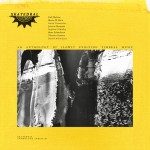
A label's tenth anniversary often arrives wrapped in nostalgia, complete with retrospective declarations and carefully polished myths. XKatedral chooses a more fitting celebration. "Anthology Series III" does not look backwards in search of monuments; it listens across a decade of work to reveal a network of ideas still in motion. Rather than asking what has been achieved, it quietly asks what sound can continue becoming when composers remain patient enough to follow its smallest transformations.
Across eight pieces written between 2014 and 2025, the anthology gathers artists who have helped define XKatedral's identity without ever reducing them to a shared aesthetic formula. Synthetic sound, acoustic instruments, algorithmic processes and spectral thinking form the common vocabulary, but each composer speaks with unmistakably individual inflection. The result feels less like a compilation than a carefully curated exhibition where every room changes the way the previous one is remembered.
The opening miniature, "My Falling Sinks", immediately demonstrates Kali Malone's remarkable gift for making restraint feel emotionally expansive. Built around a descending melody performed on a justly tuned organ with contributions from cellist Lucy Railton and guitarist Stephen O'Malley, the piece lasts barely four minutes, yet it seems to suspend ordinary notions of duration. The unusual tuning system lends each interval an almost tactile quality, as though harmony had briefly escaped the compromises of equal temperament and rediscovered its natural proportions.
From this quiet beginning, Maria W Horn unfolds "Empyrean Flare", one of the anthology's defining statements. Inspired in part by the Tintinnabuli principles developed by Arvo PÄrt, Horn animates supersaw oscillators through slowly circling harmonic motion while subtle glissandi gradually destabilise the apparent serenity. Analog tape saturation adds warmth without softening the composition's underlying tension. It resembles light filtered through thick clouds, beautiful precisely because it never settles into certainty.
David Granström's "Tessellation" shifts the emphasis toward generative synthesis, yet avoids the detached elegance often associated with algorithmic composition. Repeating tape loops establish patterns that continuously reorganise themselves, creating the sensation that structure is emerging spontaneously rather than being imposed from above. Mathematics becomes strangely lyrical here, suggesting that equations occasionally possess better emotional intelligence than the people writing them. A mildly unsettling thought, but the music makes a convincing case.
One of the anthology's quiet revelations is Jessica Ekomane's "To Whoever Shall Inherit The Earth". Recorded almost accidentally during a late-night session, the work carries an intimacy that no amount of meticulous planning could manufacture. Ekomane has consistently explored perception through complex electronic systems, yet here the emphasis falls on fragility rather than architecture. The title hints at legacy, but the music feels deeply rooted in the fleeting present, preserving an unrepeatable moment before it disappears.
Stephen O'Malley's "Smoking Mother" offers perhaps the anthology's most surprising contribution. Best known for overwhelming amplifier-driven soundscapes, O'Malley instead reveals a composer fascinated by resonance, ritual and gradual accumulation. Drawing distant inspiration from figures as diverse as Krzysztof Penderecki, Popol Vuh and the great Dhrupad master Zia Mohiuddin Dagar, the piece unfolds with meditative authority rather than sheer force. It is a reminder that intensity does not always require high volume. Sometimes it simply requires unwavering attention.
That same attentiveness permeates Mats Erlandsson's "Att Böja SjÄlarna", where violin and voice gently inhabit a spacious electronic environment. The title translates roughly as "To Bend Souls", and the music embraces that ambiguity without theatricality. Gaianeh Pilossian's violin and Sara Fors' voice never dominate the electronic textures; instead, they appear like fragile human traces inside an immense acoustic landscape.
The closing pair provides an elegant conclusion. Theodor Kentros' intriguingly titled "This Will Be My Last Piece For Organ" is less a farewell than an investigation into the organ's unstable acoustic behaviour, recreating its shifting frequencies through oscillators and resonant feedback. Whether it truly marks the composer's final encounter with the instrument is almost beside the point. Composers have a habit of making dramatic promises to themselves, only to return a few years later after hearing one particularly persuasive overtone.
Daniel M. Karlsson's "Fault Lines" ends the anthology with quiet grandeur. Built through deterministic generative methods and enriched by vocal performances from Sara Fors, Ansis Btiš and Artrs ukurs, the work explores fracture without collapse. Harmonic planes drift against one another like tectonic plates moving too slowly for ordinary perception, yet carrying immense emotional weight beneath the surface. It is an apt conclusion for a collection devoted to subtle transformation.
As with the previous volumes, the remastering preserves extraordinary clarity while allowing each work's physical presence to emerge naturally. Stephen O'Malley's understated design, Kali Malone's visual direction and Jordana Loeb's screen print reinforce XKatedral's long-standing commitment to presenting sound as a complete aesthetic experience rather than an isolated object.
Taken together, the three "Anthology" volumes document more than a decade of remarkable music, but "Series III" perhaps best captures XKatedral's deeper philosophy. These composers are not interested in novelty for its own sake, nor in preserving tradition as though it belonged behind museum glass. Instead, they treat sound as an endlessly evolving material whose smallest movements can reshape entire emotional landscapes. In doing so, they remind us that some of the most profound musical journeys occur not through dramatic departures, but through the almost imperceptible act of listening more carefully than before.
Across eight pieces written between 2014 and 2025, the anthology gathers artists who have helped define XKatedral's identity without ever reducing them to a shared aesthetic formula. Synthetic sound, acoustic instruments, algorithmic processes and spectral thinking form the common vocabulary, but each composer speaks with unmistakably individual inflection. The result feels less like a compilation than a carefully curated exhibition where every room changes the way the previous one is remembered.
The opening miniature, "My Falling Sinks", immediately demonstrates Kali Malone's remarkable gift for making restraint feel emotionally expansive. Built around a descending melody performed on a justly tuned organ with contributions from cellist Lucy Railton and guitarist Stephen O'Malley, the piece lasts barely four minutes, yet it seems to suspend ordinary notions of duration. The unusual tuning system lends each interval an almost tactile quality, as though harmony had briefly escaped the compromises of equal temperament and rediscovered its natural proportions.
From this quiet beginning, Maria W Horn unfolds "Empyrean Flare", one of the anthology's defining statements. Inspired in part by the Tintinnabuli principles developed by Arvo PÄrt, Horn animates supersaw oscillators through slowly circling harmonic motion while subtle glissandi gradually destabilise the apparent serenity. Analog tape saturation adds warmth without softening the composition's underlying tension. It resembles light filtered through thick clouds, beautiful precisely because it never settles into certainty.
David Granström's "Tessellation" shifts the emphasis toward generative synthesis, yet avoids the detached elegance often associated with algorithmic composition. Repeating tape loops establish patterns that continuously reorganise themselves, creating the sensation that structure is emerging spontaneously rather than being imposed from above. Mathematics becomes strangely lyrical here, suggesting that equations occasionally possess better emotional intelligence than the people writing them. A mildly unsettling thought, but the music makes a convincing case.
One of the anthology's quiet revelations is Jessica Ekomane's "To Whoever Shall Inherit The Earth". Recorded almost accidentally during a late-night session, the work carries an intimacy that no amount of meticulous planning could manufacture. Ekomane has consistently explored perception through complex electronic systems, yet here the emphasis falls on fragility rather than architecture. The title hints at legacy, but the music feels deeply rooted in the fleeting present, preserving an unrepeatable moment before it disappears.
Stephen O'Malley's "Smoking Mother" offers perhaps the anthology's most surprising contribution. Best known for overwhelming amplifier-driven soundscapes, O'Malley instead reveals a composer fascinated by resonance, ritual and gradual accumulation. Drawing distant inspiration from figures as diverse as Krzysztof Penderecki, Popol Vuh and the great Dhrupad master Zia Mohiuddin Dagar, the piece unfolds with meditative authority rather than sheer force. It is a reminder that intensity does not always require high volume. Sometimes it simply requires unwavering attention.
That same attentiveness permeates Mats Erlandsson's "Att Böja SjÄlarna", where violin and voice gently inhabit a spacious electronic environment. The title translates roughly as "To Bend Souls", and the music embraces that ambiguity without theatricality. Gaianeh Pilossian's violin and Sara Fors' voice never dominate the electronic textures; instead, they appear like fragile human traces inside an immense acoustic landscape.
The closing pair provides an elegant conclusion. Theodor Kentros' intriguingly titled "This Will Be My Last Piece For Organ" is less a farewell than an investigation into the organ's unstable acoustic behaviour, recreating its shifting frequencies through oscillators and resonant feedback. Whether it truly marks the composer's final encounter with the instrument is almost beside the point. Composers have a habit of making dramatic promises to themselves, only to return a few years later after hearing one particularly persuasive overtone.
Daniel M. Karlsson's "Fault Lines" ends the anthology with quiet grandeur. Built through deterministic generative methods and enriched by vocal performances from Sara Fors, Ansis Btiš and Artrs ukurs, the work explores fracture without collapse. Harmonic planes drift against one another like tectonic plates moving too slowly for ordinary perception, yet carrying immense emotional weight beneath the surface. It is an apt conclusion for a collection devoted to subtle transformation.
As with the previous volumes, the remastering preserves extraordinary clarity while allowing each work's physical presence to emerge naturally. Stephen O'Malley's understated design, Kali Malone's visual direction and Jordana Loeb's screen print reinforce XKatedral's long-standing commitment to presenting sound as a complete aesthetic experience rather than an isolated object.
Taken together, the three "Anthology" volumes document more than a decade of remarkable music, but "Series III" perhaps best captures XKatedral's deeper philosophy. These composers are not interested in novelty for its own sake, nor in preserving tradition as though it belonged behind museum glass. Instead, they treat sound as an endlessly evolving material whose smallest movements can reshape entire emotional landscapes. In doing so, they remind us that some of the most profound musical journeys occur not through dramatic departures, but through the almost imperceptible act of listening more carefully than before.
Carl Stone & Asuna: Imu Plastos

There is something wonderfully suspicious about an experimental album built from toy instruments. One expects whimsy, perhaps a charming detour into nostalgia. Imu Plastos quickly reveals that this expectation is exactly the trap. Carl Stone and Asuna take the sonic debris of childhood, feed it through layers of real-time sampling and digital transformation, then return it to us so thoroughly mutated that it feels less like remembering a toy box and more like discovering an alien civilization that learned music from discarded plastic objects.
The collaboration brings together two generations of Japanese experimental music. Carl Stone, often described as one of the pioneers of computer-based sampled composition, emerged from the American experimental scene before relocating to Japan, where his work has continued to reshape ideas about repetition, digital manipulation and the musical potential of found sound. His influence on contemporary electronic composition is immense, though he has always worn that status lightly, preferring curiosity over canonization.
Asuna (Asuna Arashi) arrives from a very different but equally singular trajectory. Known internationally for his extraordinary “100 Keyboards” performances, he has spent years constructing immersive environments from toy keyboards, small electronic devices and objects that most musicians would overlook while searching for more respectable equipment. Respectability has never produced particularly interesting music anyway.
Their first meeting at an experimental festival in Kanazawa in 2024 apparently generated an immediate creative loop. Asuna played more than a hundred toy instruments, samplers and synthesizers; Stone sampled and processed those sounds in real time; Asuna then captured Stone's transformed material and fed it back into his own system. The process resembled two mirrors facing each other, except the reflections were made of squeaking plastic, fragmented melodies and digital ghosts.
The studio album preserves this feedback architecture while pushing it into stranger territory. The most fascinating conceptual twist lies in the editing: the sampled and processed sounds are often presented before the original source material, reversing the usual relationship between object and sample. Cause and effect become delightfully unstable. One hears a strange electronic texture, then later encounters the toy fragment from which it was derived, as though the future were retroactively inventing its own past.
The track titles, all anagrams of Carl Stone & Asuna, are more than a clever puzzle. They mirror the album's entire methodology, where sounds are continuously rearranged, recontextualized and turned inside out. Imu Plastos itself combines a linguistic root connected to taking or sampling with another related to plasticity and toys, encapsulating the record's central obsession with transformation.
Musically, the album is remarkably varied despite its tightly constrained source material. The opening “Casual Resonant” functions like a brief orientation ritual before “Nascent Arousal” begins introducing the duo's peculiar sense of rhythm, where tiny percussive fragments seem to stumble into complex patterns by accident. The centrepiece, “As Aural Consent”, unfolds over nearly eleven minutes of constantly shifting textures, moving from almost cartoonish melodic fragments to dense, shimmering electronic swarms that feel simultaneously playful and unsettling.
What makes Imu Plastos particularly compelling is its refusal to choose between humour and sophistication. The toy origins of many sounds remain audible, and the album clearly enjoys their inherent absurdity. Yet beneath the surface lies an intricate exploration of temporality, memory and digital mediation. Stone's sampling practice has always treated recorded sound as malleable material rather than documentary evidence, while Asuna's world of inexpensive electronic objects challenges hierarchies between serious instruments and mass-produced noise makers.
The result often feels like listening to a parade that has wandered off its planned route and discovered a hidden dimension behind the fairground. “A Salsa Nocturne” hints at dance music without ever fully becoming dance music, while “As Toucans Learn” creates the delightful sensation that tropical birds have enrolled in a seminar on granular synthesis. Even the more contemplative pieces, such as “A Nacreous Slant”, retain a sense of curious movement, as though every sound were still deciding what it wants to become.
Lawrence English's mastering deserves particular praise for preserving both the microscopic detail and the surprising warmth of the recordings. The album could easily have become a brittle exercise in digital complexity, but it remains tactile throughout, full of tiny mechanical imperfections and resonances that remind us these transformations began with physical objects.
Room40 has long specialized in releases that blur boundaries between composition, improvisation and sound art, and Imu Plastos fits beautifully within that catalogue while maintaining a distinctly eccentric identity. It is experimental music that does not mistake seriousness for solemnity. Stone and Asuna understand that wonder is often a more radical artistic strategy than austerity.
Perhaps the album's greatest achievement is that it makes sampling feel mysterious again. In an era when digital manipulation is ubiquitous, Imu Plastos restores the sense that recording and transforming a sound can still be an act of discovery rather than routine production. By the end, one begins to suspect that every forgotten toy in every attic might contain an undiscovered electronic universe waiting for someone curious enough to press the right button.
The collaboration brings together two generations of Japanese experimental music. Carl Stone, often described as one of the pioneers of computer-based sampled composition, emerged from the American experimental scene before relocating to Japan, where his work has continued to reshape ideas about repetition, digital manipulation and the musical potential of found sound. His influence on contemporary electronic composition is immense, though he has always worn that status lightly, preferring curiosity over canonization.
Asuna (Asuna Arashi) arrives from a very different but equally singular trajectory. Known internationally for his extraordinary “100 Keyboards” performances, he has spent years constructing immersive environments from toy keyboards, small electronic devices and objects that most musicians would overlook while searching for more respectable equipment. Respectability has never produced particularly interesting music anyway.
Their first meeting at an experimental festival in Kanazawa in 2024 apparently generated an immediate creative loop. Asuna played more than a hundred toy instruments, samplers and synthesizers; Stone sampled and processed those sounds in real time; Asuna then captured Stone's transformed material and fed it back into his own system. The process resembled two mirrors facing each other, except the reflections were made of squeaking plastic, fragmented melodies and digital ghosts.
The studio album preserves this feedback architecture while pushing it into stranger territory. The most fascinating conceptual twist lies in the editing: the sampled and processed sounds are often presented before the original source material, reversing the usual relationship between object and sample. Cause and effect become delightfully unstable. One hears a strange electronic texture, then later encounters the toy fragment from which it was derived, as though the future were retroactively inventing its own past.
The track titles, all anagrams of Carl Stone & Asuna, are more than a clever puzzle. They mirror the album's entire methodology, where sounds are continuously rearranged, recontextualized and turned inside out. Imu Plastos itself combines a linguistic root connected to taking or sampling with another related to plasticity and toys, encapsulating the record's central obsession with transformation.
Musically, the album is remarkably varied despite its tightly constrained source material. The opening “Casual Resonant” functions like a brief orientation ritual before “Nascent Arousal” begins introducing the duo's peculiar sense of rhythm, where tiny percussive fragments seem to stumble into complex patterns by accident. The centrepiece, “As Aural Consent”, unfolds over nearly eleven minutes of constantly shifting textures, moving from almost cartoonish melodic fragments to dense, shimmering electronic swarms that feel simultaneously playful and unsettling.
What makes Imu Plastos particularly compelling is its refusal to choose between humour and sophistication. The toy origins of many sounds remain audible, and the album clearly enjoys their inherent absurdity. Yet beneath the surface lies an intricate exploration of temporality, memory and digital mediation. Stone's sampling practice has always treated recorded sound as malleable material rather than documentary evidence, while Asuna's world of inexpensive electronic objects challenges hierarchies between serious instruments and mass-produced noise makers.
The result often feels like listening to a parade that has wandered off its planned route and discovered a hidden dimension behind the fairground. “A Salsa Nocturne” hints at dance music without ever fully becoming dance music, while “As Toucans Learn” creates the delightful sensation that tropical birds have enrolled in a seminar on granular synthesis. Even the more contemplative pieces, such as “A Nacreous Slant”, retain a sense of curious movement, as though every sound were still deciding what it wants to become.
Lawrence English's mastering deserves particular praise for preserving both the microscopic detail and the surprising warmth of the recordings. The album could easily have become a brittle exercise in digital complexity, but it remains tactile throughout, full of tiny mechanical imperfections and resonances that remind us these transformations began with physical objects.
Room40 has long specialized in releases that blur boundaries between composition, improvisation and sound art, and Imu Plastos fits beautifully within that catalogue while maintaining a distinctly eccentric identity. It is experimental music that does not mistake seriousness for solemnity. Stone and Asuna understand that wonder is often a more radical artistic strategy than austerity.
Perhaps the album's greatest achievement is that it makes sampling feel mysterious again. In an era when digital manipulation is ubiquitous, Imu Plastos restores the sense that recording and transforming a sound can still be an act of discovery rather than routine production. By the end, one begins to suspect that every forgotten toy in every attic might contain an undiscovered electronic universe waiting for someone curious enough to press the right button.
Shane Aspegren: Spiritual Cannibalism

Artist: Shane Aspegren
Title: Spiritual Cannibalism
Format: 12"
Label: Prohibited Records (@)
Rated:
Title: Spiritual Cannibalism
Format: 12"
Label: Prohibited Records (@)
Rated:
The sea has always been an excellent editor. Throw enough stories into it and, after years of patient erosion, it returns only fragments polished beyond recognition. Shane Aspegren seems fascinated by this process. On "Spiritual Cannibalism", he dives beneath the familiar surface of both sound and memory, emerging not with picturesque recordings of marine life or postcard serenity, but with something far stranger: an ecosystem where tidal currents, industrial machinery and human perception dissolve into one another until distinctions cease to matter.
The American composer, percussionist and multidisciplinary artist has never been easy to pin down. Many listeners first encountered him as one half of the adventurous electronic duo Berg Sans Nipple, while others know him through collaborations spanning indie rock, experimental composition, contemporary dance, installation art and film scoring. Across projects as diverse as Blood Wine or Honey, Ça Va Chéri, or his work with artists including Arto Lindsay, Conor Oberst and Songs: Ohia, Aspegren has consistently treated rhythm less as a fixed pulse than as a living organism. His more recent solo releases have increasingly abandoned conventional structures in favour of immersive sonic environments, exploring the physical properties of vibration itself. "Spiritual Cannibalism" feels like a natural continuation of that evolution, perhaps even one of its clearest statements.
The album's conceptual foundation is deceptively simple. Hydrophone recordings captured beneath Hong Kong's Victoria Harbour become the primary raw material from which the three extended compositions emerge. Yet this is no field-recording documentary. By the time Aspegren has processed these underwater currents, mechanical drones and accidental recordings of trains travelling beneath the harbour, the source material has been metabolised into something almost geological. The title suddenly makes sense: these sounds have not merely been sampled, they have been digested.
The opening title track immediately establishes an unusual listening perspective. Rather than placing the audience in front of an acoustic event, Aspegren seems to position us inside the medium through which sound travels. Frequencies bend and diffuse with the peculiar elasticity of water, while low-end vibrations arrive less as audible notes than as shifting pressure against the body. Listening through headphones becomes an almost tactile experience. One occasionally catches oneself wondering whether the room has subtly changed shape, which is either excellent sound design or evidence that humans remain wonderfully susceptible to acoustic suggestion.
"Passing Beneath The Sea's Floor" pushes the ambiguity even further. The recorded trains become spectral presences rather than recognisable vehicles. They resemble distant tectonic movements, immense creatures communicating through infrasonic calls, or perhaps forgotten engines still running somewhere beneath civilisation long after everyone has gone home. Aspegren avoids obvious cinematic gestures; there are no sudden climaxes or dramatic reveals. Instead, tension accumulates through microscopic transformations. The music breathes with remarkable patience, allowing textures to evolve at the pace of natural processes rather than narrative expectations.
The closing "Resonant Harbour", originally commissioned as a standalone work, serves as both culmination and expansion. At nearly thirteen minutes, it unfolds with the quiet confidence of an artist who understands that duration is not measured by clocks but by attention. Layers gradually reveal hidden harmonic relationships within what initially appeared to be pure noise. Industrial resonance unexpectedly acquires warmth; mechanical repetition begins to resemble ritual. The distinction between environment and composition quietly collapses.
What distinguishes "Spiritual Cannibalism" from many works operating within electroacoustic or drone traditions is its refusal to romanticise either nature or technology. The harbour itself is neither pristine wilderness nor dystopian machine. It is a living interface where shipping traffic, geological forces, infrastructure, tides and human activity continuously reshape one another. Aspegren captures precisely this state of coexistence without assigning moral priorities. His compositions acknowledge that contemporary landscapes are rarely untouched and that beauty frequently emerges from complicated entanglements rather than idyllic purity.
There is also an understated philosophical dimension underpinning the record. The notion of "spiritual cannibalism" suggests absorbing external experiences until they become inseparable from one's own identity. That process mirrors listening itself. Every meaningful encounter with sound leaves subtle traces behind, altering perception in ways that cannot easily be quantified. Aspegren's music invites precisely this slow internalisation. Rather than demanding interpretation, it encourages prolonged exposure.
Production throughout is exceptionally refined without becoming clinically polished. Matthew David McQueen's mastering preserves the enormous dynamic subtlety of the material, allowing whispering textures and subterranean frequencies to coexist without either overwhelming the other. Silence, too, plays an active compositional role, functioning less as absence than as another acoustic habitat waiting to be inhabited.
For listeners expecting conventional ambient music, "Spiritual Cannibalism" may initially feel unusually dense. For those willing to surrender expectations, however, its rewards steadily accumulate. This is not music that paints underwater landscapes so much as it alters one's sense of hearing itself. By the end, the harbour no longer exists merely as a geographical location but as a state of perception, where every vibration carries invisible histories and every mechanical hum contains the possibility of transcendence.
The sea keeps its secrets by constantly moving. Shane Aspegren does not attempt to decode them. Instead, he listens carefully enough to discover that mystery itself may be the most resonant instrument of all.
The American composer, percussionist and multidisciplinary artist has never been easy to pin down. Many listeners first encountered him as one half of the adventurous electronic duo Berg Sans Nipple, while others know him through collaborations spanning indie rock, experimental composition, contemporary dance, installation art and film scoring. Across projects as diverse as Blood Wine or Honey, Ça Va Chéri, or his work with artists including Arto Lindsay, Conor Oberst and Songs: Ohia, Aspegren has consistently treated rhythm less as a fixed pulse than as a living organism. His more recent solo releases have increasingly abandoned conventional structures in favour of immersive sonic environments, exploring the physical properties of vibration itself. "Spiritual Cannibalism" feels like a natural continuation of that evolution, perhaps even one of its clearest statements.
The album's conceptual foundation is deceptively simple. Hydrophone recordings captured beneath Hong Kong's Victoria Harbour become the primary raw material from which the three extended compositions emerge. Yet this is no field-recording documentary. By the time Aspegren has processed these underwater currents, mechanical drones and accidental recordings of trains travelling beneath the harbour, the source material has been metabolised into something almost geological. The title suddenly makes sense: these sounds have not merely been sampled, they have been digested.
The opening title track immediately establishes an unusual listening perspective. Rather than placing the audience in front of an acoustic event, Aspegren seems to position us inside the medium through which sound travels. Frequencies bend and diffuse with the peculiar elasticity of water, while low-end vibrations arrive less as audible notes than as shifting pressure against the body. Listening through headphones becomes an almost tactile experience. One occasionally catches oneself wondering whether the room has subtly changed shape, which is either excellent sound design or evidence that humans remain wonderfully susceptible to acoustic suggestion.
"Passing Beneath The Sea's Floor" pushes the ambiguity even further. The recorded trains become spectral presences rather than recognisable vehicles. They resemble distant tectonic movements, immense creatures communicating through infrasonic calls, or perhaps forgotten engines still running somewhere beneath civilisation long after everyone has gone home. Aspegren avoids obvious cinematic gestures; there are no sudden climaxes or dramatic reveals. Instead, tension accumulates through microscopic transformations. The music breathes with remarkable patience, allowing textures to evolve at the pace of natural processes rather than narrative expectations.
The closing "Resonant Harbour", originally commissioned as a standalone work, serves as both culmination and expansion. At nearly thirteen minutes, it unfolds with the quiet confidence of an artist who understands that duration is not measured by clocks but by attention. Layers gradually reveal hidden harmonic relationships within what initially appeared to be pure noise. Industrial resonance unexpectedly acquires warmth; mechanical repetition begins to resemble ritual. The distinction between environment and composition quietly collapses.
What distinguishes "Spiritual Cannibalism" from many works operating within electroacoustic or drone traditions is its refusal to romanticise either nature or technology. The harbour itself is neither pristine wilderness nor dystopian machine. It is a living interface where shipping traffic, geological forces, infrastructure, tides and human activity continuously reshape one another. Aspegren captures precisely this state of coexistence without assigning moral priorities. His compositions acknowledge that contemporary landscapes are rarely untouched and that beauty frequently emerges from complicated entanglements rather than idyllic purity.
There is also an understated philosophical dimension underpinning the record. The notion of "spiritual cannibalism" suggests absorbing external experiences until they become inseparable from one's own identity. That process mirrors listening itself. Every meaningful encounter with sound leaves subtle traces behind, altering perception in ways that cannot easily be quantified. Aspegren's music invites precisely this slow internalisation. Rather than demanding interpretation, it encourages prolonged exposure.
Production throughout is exceptionally refined without becoming clinically polished. Matthew David McQueen's mastering preserves the enormous dynamic subtlety of the material, allowing whispering textures and subterranean frequencies to coexist without either overwhelming the other. Silence, too, plays an active compositional role, functioning less as absence than as another acoustic habitat waiting to be inhabited.
For listeners expecting conventional ambient music, "Spiritual Cannibalism" may initially feel unusually dense. For those willing to surrender expectations, however, its rewards steadily accumulate. This is not music that paints underwater landscapes so much as it alters one's sense of hearing itself. By the end, the harbour no longer exists merely as a geographical location but as a state of perception, where every vibration carries invisible histories and every mechanical hum contains the possibility of transcendence.
The sea keeps its secrets by constantly moving. Shane Aspegren does not attempt to decode them. Instead, he listens carefully enough to discover that mystery itself may be the most resonant instrument of all.
Espen Reinertsen: Venus er i håret

Artist: Espen Reinertsen
Title: Venus er i håret
Format: 12" + Download
Label: SusannaSonata (@)
Rated:

Title: Venus er i håret
Format: 12" + Download
Label: SusannaSonata (@)
Rated:
Nostalgia is a dangerous ingredient.
Use too much of it and music becomes a museum, lovingly dusted but lifeless. Use just enough, however, and memory ceases to be about the past and instead becomes another instrument, capable of playing melodies that never quite existed. Espen Reinertsen understands this distinction remarkably well. "Venus er i håret" is soaked in familiar sounds, yet never settles for mere recollection. It is an album that remembers rather than recreates.
Nearly a decade after "Nattsyntese", the Norwegian composer, saxophonist, vocalist and producer returns to Susanna Wallumrød's SusannaSonata label with a record that quietly expands his already distinctive musical language. Reinertsen has long occupied an unusual position within Norway's adventurous music scene. As a collaborator he has appeared alongside artists as diverse as Jenny Hval, Jennifer Walshe, Toshimaru Nakamura, Christian Wallumrød and many others, moving comfortably between contemporary composition, free improvisation and experimental jazz. His solo work, however, has always followed its own peculiar orbit, one where pop songs behave like dreams and electronic textures seem to possess emotional memory.
Describing "Venus er i håret" simply as avant-pop feels accurate but incomplete.
Its five extended compositions certainly contain songs. They have verses, recurring melodies and lyrics delivered with quiet intimacy. Yet each one gradually mutates into something less predictable. Reinertsen has spoken of his affection for traditional songs that unexpectedly transform into long instrumental passages, "like an animal with different head and body". That image perfectly captures the album's architecture. Familiar forms gently dissolve into drifting instrumental landscapes before quietly finding their way home again.
One immediately notices the electronics.
The press material references vintage gaming consoles, and indeed the synthesizers frequently evoke early home computers and 8-bit sound chips. Fortunately, this never descends into fashionable retro aesthetics. These electronic voices do not exist to remind listeners of childhood afternoons spent staring at CRT monitors. Instead, they function almost psychologically, as sonic representations of memory itself: slightly pixelated, incomplete, emotionally vivid despite their technical simplicity.
It is an inspired choice.
Memory rarely arrives in high definition.
Around these shimmering electronic figures, Reinertsen constructs surprisingly lush arrangements. Flute, bass clarinet, saxophone, trumpet and subtle programming intermingle with Erik Nylander's wonderfully responsive drumming and Eivind Lønning's restrained trumpet work. Rather than creating dramatic contrasts between acoustic and electronic instruments, the trio allows them to dissolve into one another until distinctions become irrelevant.
Nylander's contribution deserves particular praise.
His drumming rarely provides straightforward pulse. Instead, rhythms constantly shift, hesitate and reconfigure themselves, introducing small disruptions that prevent the songs from ever becoming too comfortable. There is movement throughout the album, but it feels dreamlike rather than mechanical, as though each groove were remembering how it used to dance.
Reinertsen's voice may initially surprise listeners more familiar with his work as a saxophonist.
Soft, vulnerable and almost conversational, it carries little of the theatrical flourish often associated with experimental pop. Instead, he sings with remarkable restraint, allowing fragility to become expressive rather than dramatic. His delivery occasionally recalls the emotional openness of Robert Wyatt, though without imitation, while remaining entirely his own. Over repeated listens the voice gradually becomes less a focal point than another carefully integrated texture within the album's unusually rich sonic ecology.
The songs themselves seem deliberately resistant to grand statements.
Reinertsen has suggested that there are no overarching themes beyond whatever listeners choose to discover. Yet recurring images of memory, bodies, oceans and shifting identities quietly accumulate. The remarkable "Muskelminner fra arkanoidepoken" ("Muscle Memories from the Arkanoid Era") perhaps captures the album's emotional core most clearly, intertwining nostalgic electronic timbres with reflections on physical and emotional memory in ways that feel simultaneously playful and deeply melancholic.
It is impossible not to smile at a record capable of making vintage computer sounds feel genuinely moving.
Human beings, after all, possess a curious talent for attaching profound emotions to objects originally designed to produce cheerful beeps while tiny spaceships destroyed geometric shapes.
The closing title track offers perhaps the album's finest synthesis of its many contradictions. What begins as a gentle ballad slowly expands into a luminous instrumental coda where electronics, winds and subtle rhythmic transformations seem to drift beyond the song itself. One senses Reinertsen becoming increasingly interested in atmosphere without abandoning melody, in abstraction without sacrificing intimacy.
Throughout "Venus er i håret", beauty emerges not from perfection but from constant transformation.
Nothing remains static for long. Harmonies bloom unexpectedly before dissolving. Rhythms mutate almost imperceptibly. Familiar sonic references continually acquire new meanings. The album's emotional landscape feels suspended somewhere between waking memory and hypnagogic imagination, where details remain strangely vivid even as their original contexts disappear.
There is also admirable confidence in its pacing.
With only five compositions spread across nearly forty minutes, Reinertsen allows every musical idea sufficient room to unfold organically. Instrumental passages never feel indulgent, nor do vocal sections appear merely transitional. Instead, each piece breathes according to its own internal logic, unconcerned with conventional song duration or commercial efficiency.
Perhaps that is what makes "Venus er i håret" so quietly affecting.
It never insists upon its originality, despite possessing plenty of it.
Instead, Reinertsen simply invites listeners into a deeply personal world where avant-pop, chamber music, folktronica, jazz and dreamlike songwriting coexist without anxiety over categorization. The result is not experimental for its own sake, but exploratory in the truest sense: curious, generous and open-ended.
Venus may indeed be hiding somewhere in the hair.
More importantly, Reinertsen reminds us that sometimes the smallest, strangest sounds carry the longest memories.
Use too much of it and music becomes a museum, lovingly dusted but lifeless. Use just enough, however, and memory ceases to be about the past and instead becomes another instrument, capable of playing melodies that never quite existed. Espen Reinertsen understands this distinction remarkably well. "Venus er i håret" is soaked in familiar sounds, yet never settles for mere recollection. It is an album that remembers rather than recreates.
Nearly a decade after "Nattsyntese", the Norwegian composer, saxophonist, vocalist and producer returns to Susanna Wallumrød's SusannaSonata label with a record that quietly expands his already distinctive musical language. Reinertsen has long occupied an unusual position within Norway's adventurous music scene. As a collaborator he has appeared alongside artists as diverse as Jenny Hval, Jennifer Walshe, Toshimaru Nakamura, Christian Wallumrød and many others, moving comfortably between contemporary composition, free improvisation and experimental jazz. His solo work, however, has always followed its own peculiar orbit, one where pop songs behave like dreams and electronic textures seem to possess emotional memory.
Describing "Venus er i håret" simply as avant-pop feels accurate but incomplete.
Its five extended compositions certainly contain songs. They have verses, recurring melodies and lyrics delivered with quiet intimacy. Yet each one gradually mutates into something less predictable. Reinertsen has spoken of his affection for traditional songs that unexpectedly transform into long instrumental passages, "like an animal with different head and body". That image perfectly captures the album's architecture. Familiar forms gently dissolve into drifting instrumental landscapes before quietly finding their way home again.
One immediately notices the electronics.
The press material references vintage gaming consoles, and indeed the synthesizers frequently evoke early home computers and 8-bit sound chips. Fortunately, this never descends into fashionable retro aesthetics. These electronic voices do not exist to remind listeners of childhood afternoons spent staring at CRT monitors. Instead, they function almost psychologically, as sonic representations of memory itself: slightly pixelated, incomplete, emotionally vivid despite their technical simplicity.
It is an inspired choice.
Memory rarely arrives in high definition.
Around these shimmering electronic figures, Reinertsen constructs surprisingly lush arrangements. Flute, bass clarinet, saxophone, trumpet and subtle programming intermingle with Erik Nylander's wonderfully responsive drumming and Eivind Lønning's restrained trumpet work. Rather than creating dramatic contrasts between acoustic and electronic instruments, the trio allows them to dissolve into one another until distinctions become irrelevant.
Nylander's contribution deserves particular praise.
His drumming rarely provides straightforward pulse. Instead, rhythms constantly shift, hesitate and reconfigure themselves, introducing small disruptions that prevent the songs from ever becoming too comfortable. There is movement throughout the album, but it feels dreamlike rather than mechanical, as though each groove were remembering how it used to dance.
Reinertsen's voice may initially surprise listeners more familiar with his work as a saxophonist.
Soft, vulnerable and almost conversational, it carries little of the theatrical flourish often associated with experimental pop. Instead, he sings with remarkable restraint, allowing fragility to become expressive rather than dramatic. His delivery occasionally recalls the emotional openness of Robert Wyatt, though without imitation, while remaining entirely his own. Over repeated listens the voice gradually becomes less a focal point than another carefully integrated texture within the album's unusually rich sonic ecology.
The songs themselves seem deliberately resistant to grand statements.
Reinertsen has suggested that there are no overarching themes beyond whatever listeners choose to discover. Yet recurring images of memory, bodies, oceans and shifting identities quietly accumulate. The remarkable "Muskelminner fra arkanoidepoken" ("Muscle Memories from the Arkanoid Era") perhaps captures the album's emotional core most clearly, intertwining nostalgic electronic timbres with reflections on physical and emotional memory in ways that feel simultaneously playful and deeply melancholic.
It is impossible not to smile at a record capable of making vintage computer sounds feel genuinely moving.
Human beings, after all, possess a curious talent for attaching profound emotions to objects originally designed to produce cheerful beeps while tiny spaceships destroyed geometric shapes.
The closing title track offers perhaps the album's finest synthesis of its many contradictions. What begins as a gentle ballad slowly expands into a luminous instrumental coda where electronics, winds and subtle rhythmic transformations seem to drift beyond the song itself. One senses Reinertsen becoming increasingly interested in atmosphere without abandoning melody, in abstraction without sacrificing intimacy.
Throughout "Venus er i håret", beauty emerges not from perfection but from constant transformation.
Nothing remains static for long. Harmonies bloom unexpectedly before dissolving. Rhythms mutate almost imperceptibly. Familiar sonic references continually acquire new meanings. The album's emotional landscape feels suspended somewhere between waking memory and hypnagogic imagination, where details remain strangely vivid even as their original contexts disappear.
There is also admirable confidence in its pacing.
With only five compositions spread across nearly forty minutes, Reinertsen allows every musical idea sufficient room to unfold organically. Instrumental passages never feel indulgent, nor do vocal sections appear merely transitional. Instead, each piece breathes according to its own internal logic, unconcerned with conventional song duration or commercial efficiency.
Perhaps that is what makes "Venus er i håret" so quietly affecting.
It never insists upon its originality, despite possessing plenty of it.
Instead, Reinertsen simply invites listeners into a deeply personal world where avant-pop, chamber music, folktronica, jazz and dreamlike songwriting coexist without anxiety over categorization. The result is not experimental for its own sake, but exploratory in the truest sense: curious, generous and open-ended.
Venus may indeed be hiding somewhere in the hair.
More importantly, Reinertsen reminds us that sometimes the smallest, strangest sounds carry the longest memories.