
Monday, October 19, 2026
Browse by Genre
Industrial Music / Industrial Metal / Aggro Industrial / Electro Metal
Industrial Noise / Power Noise / Harsh Noise
Synth Pop / Electro Pop / Synth-Electronica
Techno / Trance / Goa / Drum'n'Bass / Jungle / Tribal / Trip-Hop
Ambient / Electronica / Ethereal / Dub / Soundscapes / Abstract
Experimental / Avantgarde / Weird & Wired / Glitch / Noise / Field Recording
Dark / Gothic / Wave / New Wave / Dark Wave / Industrial Gothic
New Music / Downtown / Avantgarde Jazz / New Classical / World
Search Reviews
Music Reviews
Rafal Iwanski: Transformations II
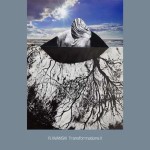
Artist: Rafal Iwanski (@)
Title: Transformations II
Format: CD + Download
Label: Antenna Non Grata / Eter Records (@)
Rated:

Title: Transformations II
Format: CD + Download
Label: Antenna Non Grata / Eter Records (@)
Rated:
Rafa Iwanski has returned, and so have we. Fresh from absorbing "Transformations I" (albeit two years late, but what is time in the land of drones and reverberations?), we now turn to its successor, "Transformations II", which, like its predecessor, arrives steeped in deep tradition and futuristic exploration. Released via Antenna Non Grata and Eter Records, this latest work continues Iwanski's sonic archaeology of African idiophones, organic percussion, and advanced electronic processing. If "Transformations I" was an intricate ritual unfolding under the night sky, "Transformations II" is the same ceremony rewired into a hallucinatory dream - its rhythms sharper, its echoes deeper, its spirit untamed.
For the uninitiated, Rafa Iwanski (a.k.a. X-Navi:Et) has long been a key figure in Poland’s experimental and electroacoustic music scene. Known for his work with Voices of the Cosmos, ||ALA|MEDA||, HATI, and various other sonic projects, he specializes in blurring the boundaries between ancient acoustic resonance and modern electronic manipulation. His fascination with plucked idiophones (kalimbas, sanzas, zanzulas) and other ritualistic percussion instruments continues here, but with an expanded arsenal that now includes drum machines, ocarinas, flutes, pipes, and a well-placed wah-wah tube. If "Transformations I" felt like a meditative descent into uncharted terrain, "Transformations II" pulses with an urgency that demands full sensory immersion.
The album's rhythmic foundation is noticeably more pronounced, as noted in early reviews. "E. System Y" even flirts with danceability, though one better suited for a shamanic rave in an undiscovered biome than any conventional club. Elsewhere, tracks like "Sun-Sum" and "Fascinomas" weave together ambient drift and textural intricacies, recalling the likes of Laraaji or Carlos Niño but with a darker undercurrent. "Transformations II" is less about transcendental bliss and more about confronting the unknowable with wide-eyed curiosity.
The production remains meticulously detailed. Contact and condenser microphones capture the raw acoustic textures, while effects from Soma Laboratory, Electro-Harmonix, and Boss reshape them into something both alien and primordial. Field recordings further blur the lines between organic and synthetic, making some moments feel like an anthropological study set in an alternate timeline.
Where "Transformations I" had moments of sprawling contemplation ("Hyper-Continuum" dared to stretch past 15 minutes), this album refines its focus into concise, yet no less immersive, compositions. "Schizopolis" is a brief but brilliant exercise in fractured minimalism, while "Interzona" pulses with an unsettling, mechanized energy. "Acirfa Das" (read it backwards) hints at the artist’s ongoing dialogue between past and future, tradition and deconstruction.
If the late Jon Hassell once dreamed of a Fourth World, Iwanski might be mapping a Fifth - one where echoes of distant lands are not merely layered into the mix, but transmuted into something unrecognizable yet strangely familiar. This is not just world music stripped of its baggage; it’s world-building through sound.
Ultimately, "Transformations II" is not a mere sequel but an evolution - more rhythmic, more immersive, and even more enigmatic. If "Transformations I" set the stage for a deep-listening experience, this album invites the listener to actively navigate the shifting sonic terrain. And just as before, one thing remains certain: we are still playing catch-up to Iwanski’s visionary soundscapes.
Highly recommended for seekers of uncharted auditory dimensions.
(And yes, this time, we promise not to wait two years for "Transformations III", should it ever materialize.)
For the uninitiated, Rafa Iwanski (a.k.a. X-Navi:Et) has long been a key figure in Poland’s experimental and electroacoustic music scene. Known for his work with Voices of the Cosmos, ||ALA|MEDA||, HATI, and various other sonic projects, he specializes in blurring the boundaries between ancient acoustic resonance and modern electronic manipulation. His fascination with plucked idiophones (kalimbas, sanzas, zanzulas) and other ritualistic percussion instruments continues here, but with an expanded arsenal that now includes drum machines, ocarinas, flutes, pipes, and a well-placed wah-wah tube. If "Transformations I" felt like a meditative descent into uncharted terrain, "Transformations II" pulses with an urgency that demands full sensory immersion.
The album's rhythmic foundation is noticeably more pronounced, as noted in early reviews. "E. System Y" even flirts with danceability, though one better suited for a shamanic rave in an undiscovered biome than any conventional club. Elsewhere, tracks like "Sun-Sum" and "Fascinomas" weave together ambient drift and textural intricacies, recalling the likes of Laraaji or Carlos Niño but with a darker undercurrent. "Transformations II" is less about transcendental bliss and more about confronting the unknowable with wide-eyed curiosity.
The production remains meticulously detailed. Contact and condenser microphones capture the raw acoustic textures, while effects from Soma Laboratory, Electro-Harmonix, and Boss reshape them into something both alien and primordial. Field recordings further blur the lines between organic and synthetic, making some moments feel like an anthropological study set in an alternate timeline.
Where "Transformations I" had moments of sprawling contemplation ("Hyper-Continuum" dared to stretch past 15 minutes), this album refines its focus into concise, yet no less immersive, compositions. "Schizopolis" is a brief but brilliant exercise in fractured minimalism, while "Interzona" pulses with an unsettling, mechanized energy. "Acirfa Das" (read it backwards) hints at the artist’s ongoing dialogue between past and future, tradition and deconstruction.
If the late Jon Hassell once dreamed of a Fourth World, Iwanski might be mapping a Fifth - one where echoes of distant lands are not merely layered into the mix, but transmuted into something unrecognizable yet strangely familiar. This is not just world music stripped of its baggage; it’s world-building through sound.
Ultimately, "Transformations II" is not a mere sequel but an evolution - more rhythmic, more immersive, and even more enigmatic. If "Transformations I" set the stage for a deep-listening experience, this album invites the listener to actively navigate the shifting sonic terrain. And just as before, one thing remains certain: we are still playing catch-up to Iwanski’s visionary soundscapes.
Highly recommended for seekers of uncharted auditory dimensions.
(And yes, this time, we promise not to wait two years for "Transformations III", should it ever materialize.)
Rafal Iwanski: Transformations I
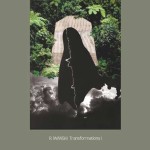
Artist: Rafal Iwanski (@)
Title: Transformations I
Format: CD + Download
Label: Gusstaff Records / Eter Records (@)
Rated:
Title: Transformations I
Format: CD + Download
Label: Gusstaff Records / Eter Records (@)
Rated:
A late review, but time bends strangely in the world of "Transformations I". This one arrived two years after its initial release, tucked inside the package with "Transformations II" (which will be reviewed soon). Perhaps it was meant to simmer in the background, waiting for the right moment to unfurl its spectral resonance. If nothing else, it proves that sound, much like memory, does not follow linear rules.
Rafal Iwanski, known for his work as X-Navi:Et and projects like HATI, Voices of the Cosmos, and the sprawling avant-collectives ||ALA|MEDA|| and Innercity Ensemble, has long been an architect of the liminal. With "Transformations I", he steps deeper into a realm where electroacoustic manipulations and traditional instrumentation coalesce into something both ancient and speculative. A dedication to Jon Hassell signals his intent: Fourth World visions, but with a rougher industrial edge, a kind of "post-ethnic" futurism that doesn’t settle comfortably into the ambient-exotica archetype.
Armed with an arsenal of idiophones - zanza, kalimba, zanzula - augmented by rattles, gongs, and a generous dose of effects (Moog, Soma Laboratory, Boss, and more), Iwanski crafts an album that feels like an aural excavation. Each track is a ritual, an evocation of hidden resonances lurking within vibrating metal and wood. The listener isn't so much an observer as a participant, drawn into shifting sonic environments where sound behaves like light through dense foliage - fractured, organic, and deeply hypnotic.
The album opens with "Forma X", a fourteen-minute initiation rite where cyclical phrases weave in and out of focus, guided by a pulse that feels as much biological as electronic. "Zanzaphonie" dances somewhere between rhythmic hypnosis and dream-state observation, while "KalimbAfrica" hints at the record’s ethno-musical inspiration without succumbing to pastiche. The approach is neither nostalgic nor purist; instead, Iwanski lets the instruments speak in unfamiliar tongues, their harmonics stretched, looped, and distorted until they suggest worlds beyond their geographical origins.
Not every piece operates on the same frequency. "Hyper-Continuum" overstays its welcome at fifteen minutes, its drone-driven density becoming a test of endurance rather than revelation. But then comes "Virtual Paradisum", closing the album in an introspective, almost sacred hush - a moment of deep listening where silence becomes as important as sound.
Is this an easy album? Hardly. But like all great sonic experiments, it rewards patience. Iwanski’s ability to blur the line between archaic instrumentation and modern studio alchemy makes "Transformations I" a singular work - at once meditative, alien, and strangely comforting. A transmission from the past-future, tuned to a frequency just outside of time.
Rafal Iwanski, known for his work as X-Navi:Et and projects like HATI, Voices of the Cosmos, and the sprawling avant-collectives ||ALA|MEDA|| and Innercity Ensemble, has long been an architect of the liminal. With "Transformations I", he steps deeper into a realm where electroacoustic manipulations and traditional instrumentation coalesce into something both ancient and speculative. A dedication to Jon Hassell signals his intent: Fourth World visions, but with a rougher industrial edge, a kind of "post-ethnic" futurism that doesn’t settle comfortably into the ambient-exotica archetype.
Armed with an arsenal of idiophones - zanza, kalimba, zanzula - augmented by rattles, gongs, and a generous dose of effects (Moog, Soma Laboratory, Boss, and more), Iwanski crafts an album that feels like an aural excavation. Each track is a ritual, an evocation of hidden resonances lurking within vibrating metal and wood. The listener isn't so much an observer as a participant, drawn into shifting sonic environments where sound behaves like light through dense foliage - fractured, organic, and deeply hypnotic.
The album opens with "Forma X", a fourteen-minute initiation rite where cyclical phrases weave in and out of focus, guided by a pulse that feels as much biological as electronic. "Zanzaphonie" dances somewhere between rhythmic hypnosis and dream-state observation, while "KalimbAfrica" hints at the record’s ethno-musical inspiration without succumbing to pastiche. The approach is neither nostalgic nor purist; instead, Iwanski lets the instruments speak in unfamiliar tongues, their harmonics stretched, looped, and distorted until they suggest worlds beyond their geographical origins.
Not every piece operates on the same frequency. "Hyper-Continuum" overstays its welcome at fifteen minutes, its drone-driven density becoming a test of endurance rather than revelation. But then comes "Virtual Paradisum", closing the album in an introspective, almost sacred hush - a moment of deep listening where silence becomes as important as sound.
Is this an easy album? Hardly. But like all great sonic experiments, it rewards patience. Iwanski’s ability to blur the line between archaic instrumentation and modern studio alchemy makes "Transformations I" a singular work - at once meditative, alien, and strangely comforting. A transmission from the past-future, tuned to a frequency just outside of time.
Illusion of Safety & ZE'V: s/t

Artist: Illusion of Safety & ZE'V (@)
Title: s/t
Format: CD & 12" + Download
Label: NO PART OF IT (@)
Rated:

Title: s/t
Format: CD & 12" + Download
Label: NO PART OF IT (@)
Rated:
Dan Burke's Illusion of Safety and ZE'V are both artists I have heard of, but never really heard, in spite of numerous releases and collaborations going all the way back to the 1980s. ZE'V (Stefan Joel Weisser) passed away in 2017, so this collaboration obviously happened before then. This album consists of only two tracks - both long ones, over 20 minutes each. "A Strategy of Transformations" begins by sounding like there is something wrong with your CD or digital stream- it sounds broken up and defective until the chute opens and all the sonic garbage comes spilling out. This gives way to a much calmer, more interesting industrial noise atmosphere, with a nice variety of twisted electronic landscapes. Just when you thought it faded out and ended though, it hasn't. There are a few minutes of additional soundscape that involves stringed instrument tuning, electronics and various noises. Not sure I get the point.
While I didn't hear much ZE'V on the first track (he was primarily a percussionist), "Smaller Revolutions" seems to have some of his input, at least in the beginning with some percussive clatter. I can't help but think that what ZE'V put into the music has been so radically altered/modified from the original sound sources as to be mostly unrecognizable, so potentially, it could have been anything. Similarly to "A Strategy of Transformations,"Smaller Revolutions" goes through a variety of sonic changes involving field recordings of human voices, bird sounds, vacuum cleaner, chittering electronics, radio oscillators, a variety of drones and more. While the majority of this piece is relatively calm and quiet, the beginning and end are rather boisterous, but in different ways. I suppose that it's better to go out (and in) with a bang rather than a whimper. This collaboration was a relatively entertaining experience, but it wasn't unlike anything I've ever heard in the genre before. It should be one of NO PART OF IT's better selling albums due to the names involved, and hopefully will spawn some interest in their other releases. If you want this one on vinyl though you'd better act quickly. At last look there were only 3 vinyl copies left.
While I didn't hear much ZE'V on the first track (he was primarily a percussionist), "Smaller Revolutions" seems to have some of his input, at least in the beginning with some percussive clatter. I can't help but think that what ZE'V put into the music has been so radically altered/modified from the original sound sources as to be mostly unrecognizable, so potentially, it could have been anything. Similarly to "A Strategy of Transformations,"Smaller Revolutions" goes through a variety of sonic changes involving field recordings of human voices, bird sounds, vacuum cleaner, chittering electronics, radio oscillators, a variety of drones and more. While the majority of this piece is relatively calm and quiet, the beginning and end are rather boisterous, but in different ways. I suppose that it's better to go out (and in) with a bang rather than a whimper. This collaboration was a relatively entertaining experience, but it wasn't unlike anything I've ever heard in the genre before. It should be one of NO PART OF IT's better selling albums due to the names involved, and hopefully will spawn some interest in their other releases. If you want this one on vinyl though you'd better act quickly. At last look there were only 3 vinyl copies left.
Gj?ll : Sum of Transformations

The most remarkable transformation acting as an addend in this sum by the surprising Icelandic duo Gjöll, made up of the talented musicians Jóhann Eiriksson and Sigurður Harðarsson, is the stylistical turnabout of the band towards an interesting aggregation between dark-ambient elements and krautrock ones, combining an abstract evocatory charm with a deep awareness of the actual phase of human history. Some heavy thuds of delayed guitars on obscure jaculatories declaimed in the language of Vikings (don’t be scared as there’s an English translation on the booklet) in the introductory Natural Anarchy stimulate my imagination associating all these scenic/sonic elements to a sort of shamanic rite in the deepest cave of the known Icelandic volcano Eyjafjöll whereas the mentioned thuds sound like a musical transposition of the ashy explosions inside its belly. The track’s title as well as the conceptual framework of this release appears inspired by Free As a Bird: Natural Anarchism in Action, an essay by the American activist Pattrice Jones, suggesting some nonhierarchical and non-coercive organizational models taken from the so-called animal world as possible alternatives to actual governments., even if things such the famous Troubled Asset Relief Program might induce in arguing there’re some brain-injured monkeys occupying important seats of the Congress or in the bureaus of Fed. The thrilling tickling of a metronome with bumped accent on fourth step timing with your heart-beat while a creeping and disquieting drone sneaks into the cracks of listeners’ thoughts perfectly fits a track entitled Abandon All Hope. The most luminous addend of this sum is The Only True Philosophical Problem - it’s not a wise statement, but just the title of the song -, going on a tangent of delayed echoes, guitar glides and airy sounds close to the consistency Boards Of Canada gave to their sound in Campfire Headphase. By the way Gjöll’s way to shape their chaos looks even harsher and less ethereal than Sigur Ros’s one as it seems they arrive to different goals instead of similar starting point from the conceptual viewpoint - the feral nature of human society -.
Their soundscapes are not going to alienate or dejecting listeners, but look more like to a fertile soil Gjöll acting as patient and thoughtful farmers prepare for their thoughts and actions and after feeding you with luminous sounds they’ll tuck you in for the night with the gloomy atmosphere and a slow agonizing pulsating beat- wonderfully processed - of Tuckling In For The Collapse and that distinctive digital iciness of the intense Dérive - maybe the most entrancing track of the whole album -. A sort of vocal drone blowing superbly among circular sounds becoming gradually more and more obsessive by unexpected lathe-boring noises in Unity With The Earthworms - close to Origami Galaktica’s entrancing dark-ambient - seems to belong to some remote neo-pagan death cult, flapping your ears before the final majestic hosanna to nature, able with its powers to bare the insignificance of human beings by the swarming dark-ambient maestoso of At The Hanging Of The Last Of The Career Politicians - what a great title!!! -. A part of its almost oracular tones and its esoteric appeal, Sum Of Transformations could stand as the definitive portrait of a nature rebalancing itself against human typical lack of equilibrium, a process which open minded people will not face as a nihilistic assumption.
Their soundscapes are not going to alienate or dejecting listeners, but look more like to a fertile soil Gjöll acting as patient and thoughtful farmers prepare for their thoughts and actions and after feeding you with luminous sounds they’ll tuck you in for the night with the gloomy atmosphere and a slow agonizing pulsating beat- wonderfully processed - of Tuckling In For The Collapse and that distinctive digital iciness of the intense Dérive - maybe the most entrancing track of the whole album -. A sort of vocal drone blowing superbly among circular sounds becoming gradually more and more obsessive by unexpected lathe-boring noises in Unity With The Earthworms - close to Origami Galaktica’s entrancing dark-ambient - seems to belong to some remote neo-pagan death cult, flapping your ears before the final majestic hosanna to nature, able with its powers to bare the insignificance of human beings by the swarming dark-ambient maestoso of At The Hanging Of The Last Of The Career Politicians - what a great title!!! -. A part of its almost oracular tones and its esoteric appeal, Sum Of Transformations could stand as the definitive portrait of a nature rebalancing itself against human typical lack of equilibrium, a process which open minded people will not face as a nihilistic assumption.
William Basinski: The Disintegration Loops II
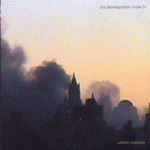
One can't do without some historical data on THE DISINTEGRATION LOOPS II. Two acts of destruction are merged in one creative idea. Two "minuses" have turned into "pluses" with mathematical precision: the falling of NY twins and the once and for all flaking magnetic tape that has been storing William's records for ages. There are no transformations in sight within the cyclical movement of loops. No contrasts, just one big, amorphous cloud, kaleidoscopically lighted from without. Its compositions, once smooth and flexible, have not been reborn, but rather taken another stance, thanks to a magnetic tape. The dynamic reincarnation has hidden the past beyond the silent memory, leaving to us only what's on show here. The curious thing in this album's idea is the intersection of attitudes - the parting with the past in order to create in the present and the saving of the present in order not to forget in the future.
The opportunity to see William's video-installation, which emphasizes the roots of this work, will bring immeasurable rewards. Let us just say that the video is nothing else than the fixing of day-long fading of American emblem - the skyscrapers of World Trade Center. Rolling clouds of smoke and dust, sucked in by the clear sky in an attempt to hide its inappropriate smoothness, the shifts of lighting and the dark silhouettes of city domes and roofs, watching the agonized convulsions of their gaudy neighbors from a distance.
A clarinetist with a classical background, expressive jazz saxophonist and stylish composer William Basinski doesn't live any space for boredom and indifference. His trademark technique - mixing and overdubbing several melodic loops - sounds quite simple, but from this simplicity his delicate and abrasive ambient aquarelles are born.
The first of a couple of long compositions is "D|P 2.2". The crunching and whooshing surround snatches of sound that stir the calm smoothness of light and blurry melodic line. The crackling and droning sounds seem like they're trapped in the cabin of a roller coaster. The slow ascending to the next peak and the shivers of impatience are running through the body as the heart ceases to beat and in the middle of a sigh we are thrown down again to the abyss which is instantaneous, strangely attractive and inescapable. The next round, deceptively similar to the previous one, will find us in completely another, excited state. On the next peak the throw down will not be so sharply felt, we will feel the desire to retain the regular breath in order to be able to see everything that's visible from the point of the beginning of falling. The irrepressible oblivion will turn into the heat of a hunter.
The music of William is not a landscape, it's the air filled with ozone, made sparser by the wind and colored by sun blisters. The stamp of beauty is found on every bit of it, the beauty as the only constant force which is visible even during the saddest moments. The gentle melancholy, which is especially felt in the second composition on the disc "D|P 3", does not break the inner harmony. It is changing the balance of moods, but doesn't bring any mess of feelings. The sound flows freely in our veins, it seems, instead of being limited by space enclosed within the walls. The crystal flow of sound penetrates each living cell, enveloping the insides, filling us with unexplainable freshness, relaxing, giving strength, unobtrusively healing and remaining after it's gone. Hypnotized, we leave the headphones lying on the table after completing this journey together with the music, taking this calm, ever-staying beauty with us. The pulsating atmosphere becomes part of us. It's out of reach for unconsciousness because it's not a phenomenon, but a natural, universal rhythm.
The opportunity to see William's video-installation, which emphasizes the roots of this work, will bring immeasurable rewards. Let us just say that the video is nothing else than the fixing of day-long fading of American emblem - the skyscrapers of World Trade Center. Rolling clouds of smoke and dust, sucked in by the clear sky in an attempt to hide its inappropriate smoothness, the shifts of lighting and the dark silhouettes of city domes and roofs, watching the agonized convulsions of their gaudy neighbors from a distance.
A clarinetist with a classical background, expressive jazz saxophonist and stylish composer William Basinski doesn't live any space for boredom and indifference. His trademark technique - mixing and overdubbing several melodic loops - sounds quite simple, but from this simplicity his delicate and abrasive ambient aquarelles are born.
The first of a couple of long compositions is "D|P 2.2". The crunching and whooshing surround snatches of sound that stir the calm smoothness of light and blurry melodic line. The crackling and droning sounds seem like they're trapped in the cabin of a roller coaster. The slow ascending to the next peak and the shivers of impatience are running through the body as the heart ceases to beat and in the middle of a sigh we are thrown down again to the abyss which is instantaneous, strangely attractive and inescapable. The next round, deceptively similar to the previous one, will find us in completely another, excited state. On the next peak the throw down will not be so sharply felt, we will feel the desire to retain the regular breath in order to be able to see everything that's visible from the point of the beginning of falling. The irrepressible oblivion will turn into the heat of a hunter.
The music of William is not a landscape, it's the air filled with ozone, made sparser by the wind and colored by sun blisters. The stamp of beauty is found on every bit of it, the beauty as the only constant force which is visible even during the saddest moments. The gentle melancholy, which is especially felt in the second composition on the disc "D|P 3", does not break the inner harmony. It is changing the balance of moods, but doesn't bring any mess of feelings. The sound flows freely in our veins, it seems, instead of being limited by space enclosed within the walls. The crystal flow of sound penetrates each living cell, enveloping the insides, filling us with unexplainable freshness, relaxing, giving strength, unobtrusively healing and remaining after it's gone. Hypnotized, we leave the headphones lying on the table after completing this journey together with the music, taking this calm, ever-staying beauty with us. The pulsating atmosphere becomes part of us. It's out of reach for unconsciousness because it's not a phenomenon, but a natural, universal rhythm.